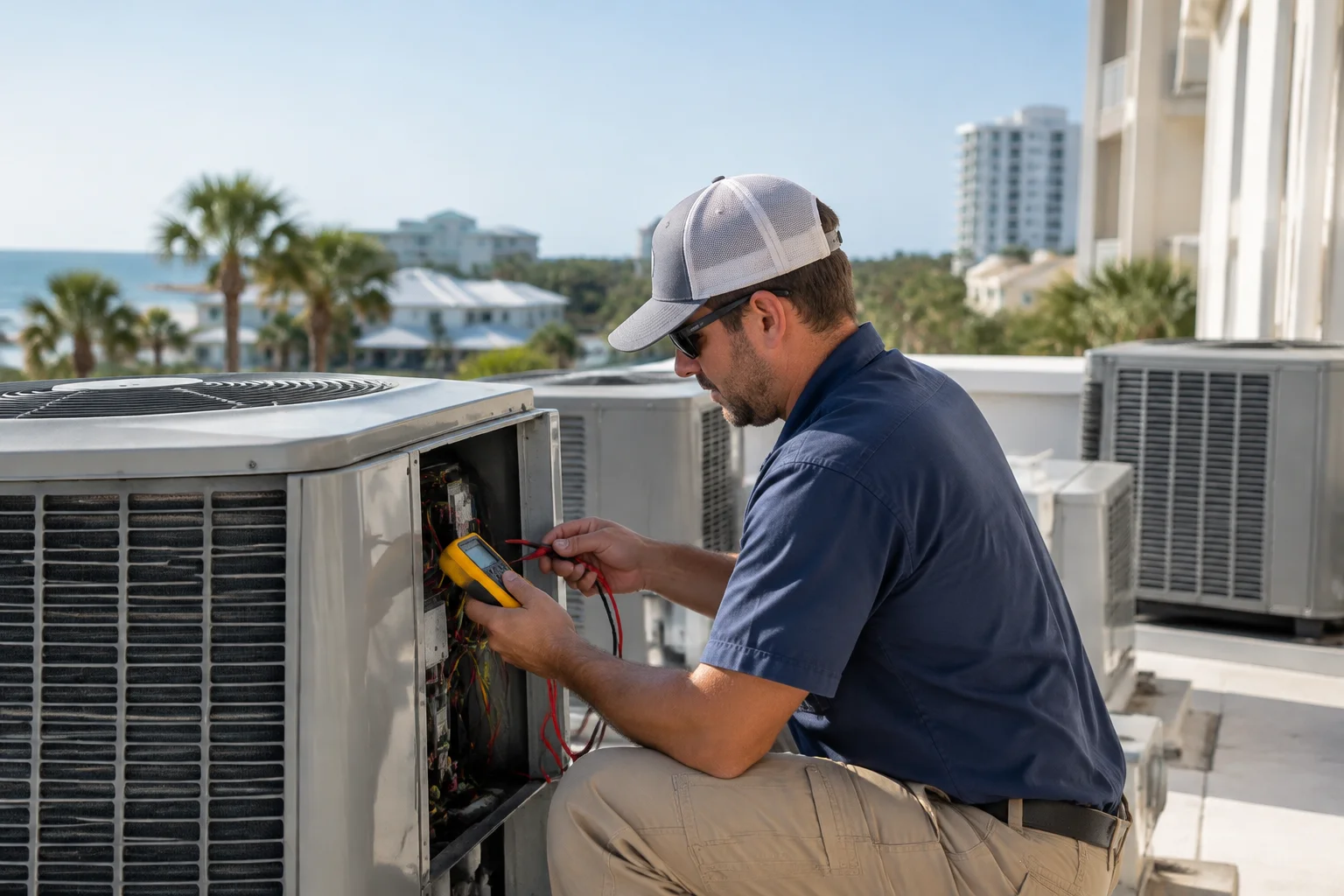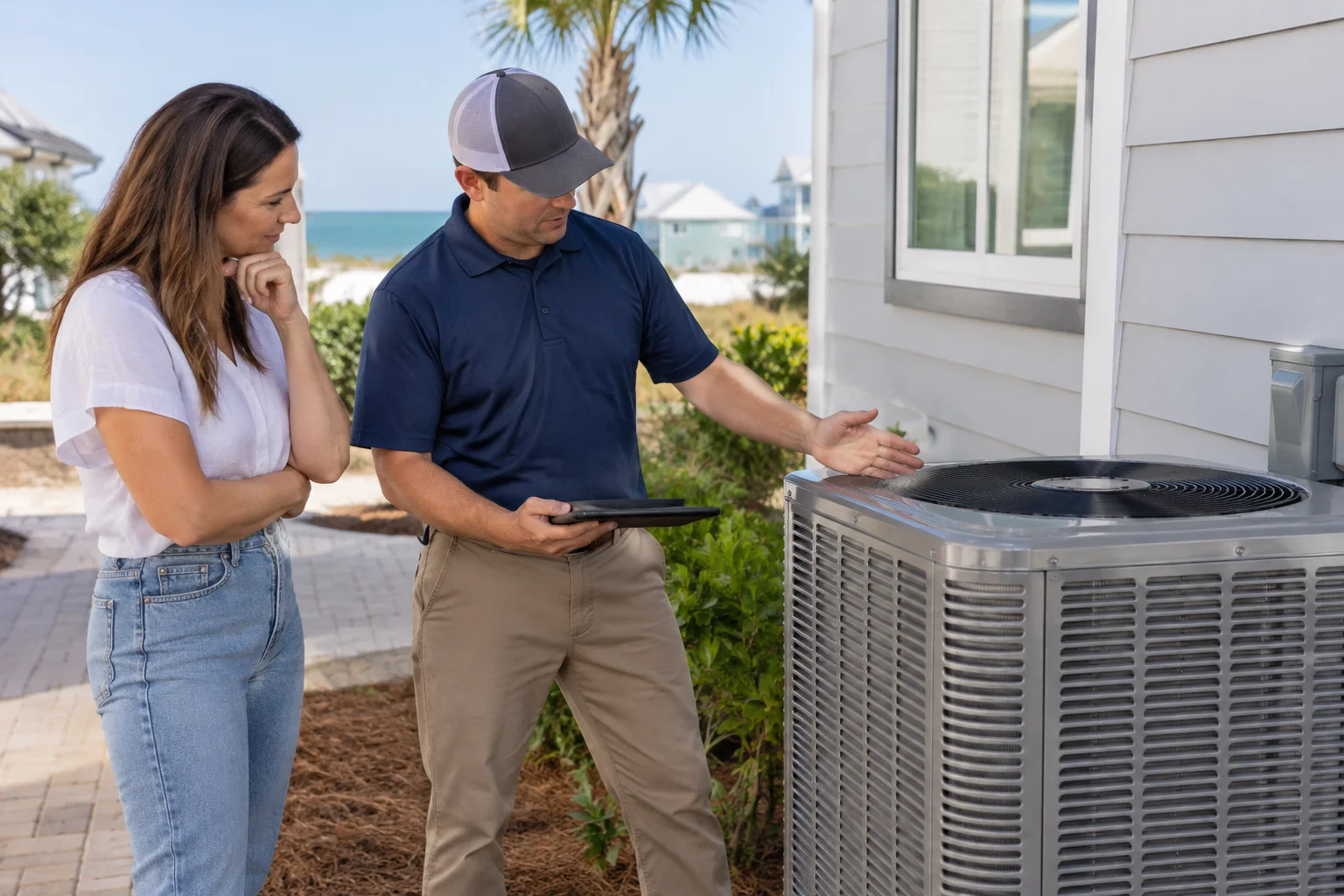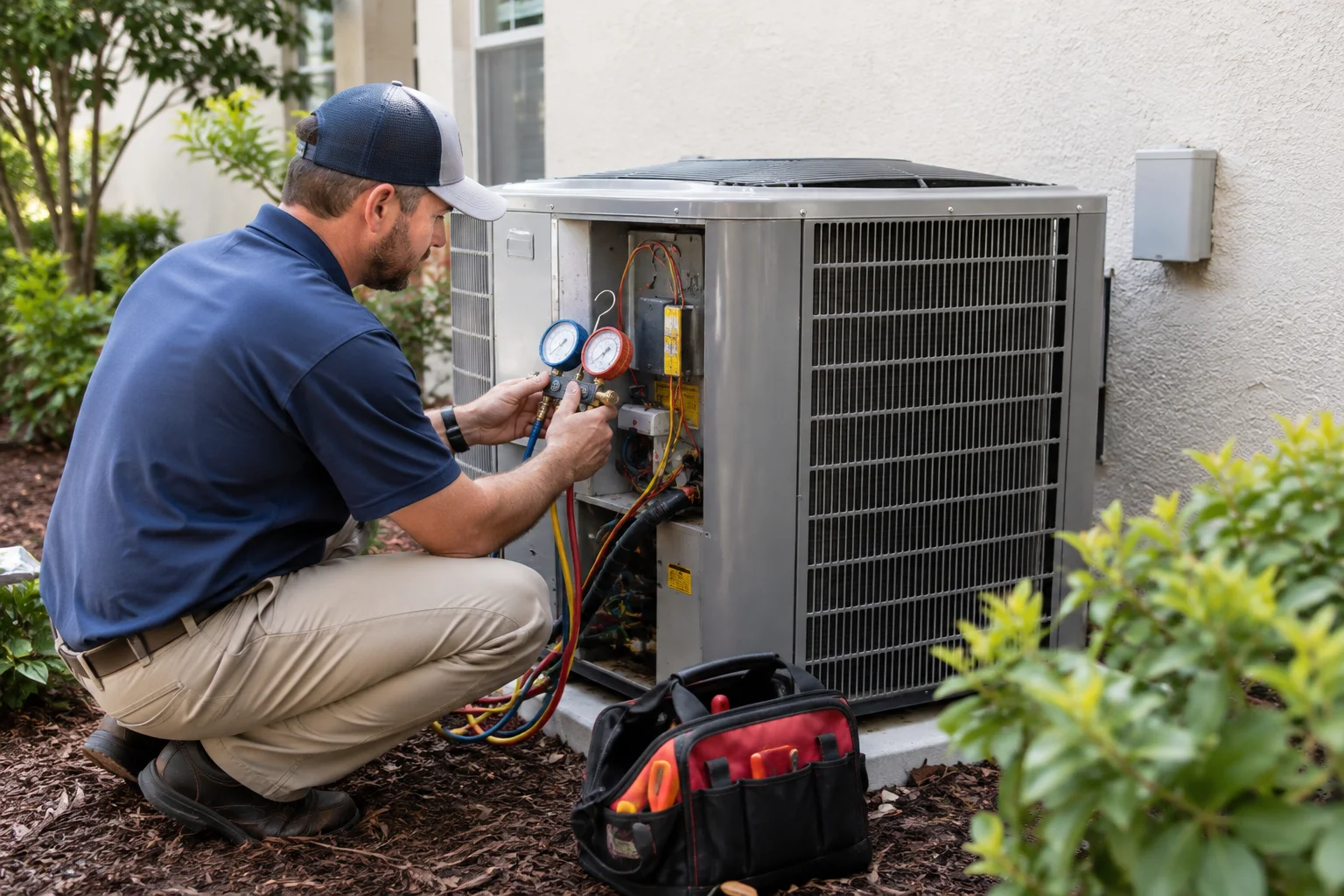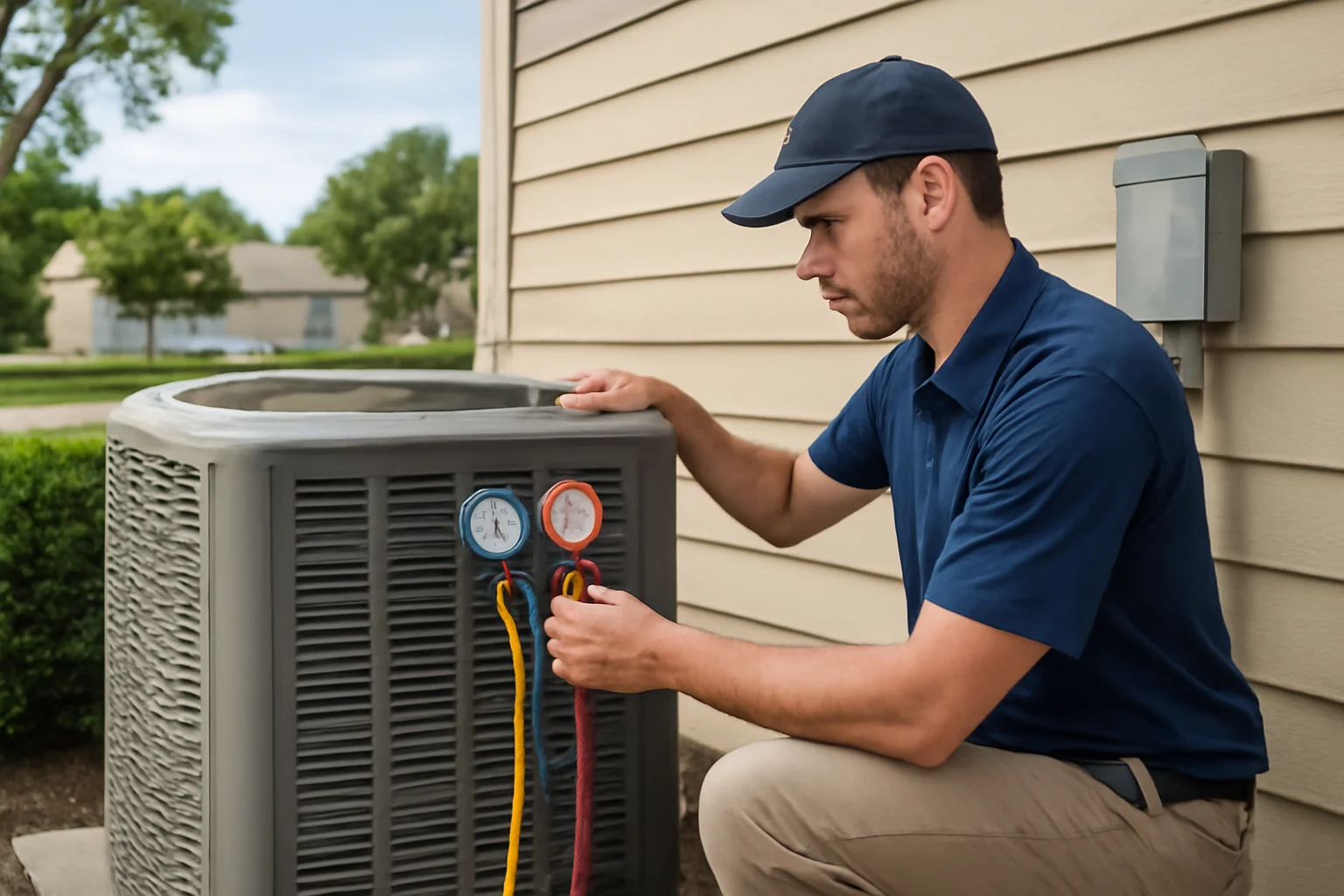
Homes in Cinco Bayou, FL do not just need cold air. They need the right airflow across every room, humidity that stays under control, and a refrigerant system that is installed to run reliably during Florida’s hottest stretches. When an air conditioning installation is planned well, comfort improves and many common callbacks related to airflow and moisture can be avoided.
This guide breaks down what local homeowners should know about air conditioning installation, including how ductwork, condensate drainage, thermostats, and indoor air quality all connect to real-life comfort in Okaloosa County.
Why Cinco Bayou AC installation is different in practice
Florida coastal weather can be tough on HVAC systems. Cinco Bayou sits in the broader Okaloosa County area where summer humidity is often high, and cooling systems must work through long runs. Add in salt air exposure and the way coastal breezes can bring moisture into the home, and you get a clear takeaway: installation quality matters as much as equipment choice.
Even a correctly sized air conditioner can underperform if airflow paths are blocked, ductwork leaks, condensate drainage is wrong, or controls are not configured for how the home actually cools. That is why homeowners searching for an HVAC contractor near me should look beyond “set the unit and go.” The best installation addresses distribution, moisture management, and safe operation of the refrigerant system.
Airflow is the comfort factor, not just the temperature
Many homeowners judge comfort by the thermostat. But comfort in a real home depends heavily on airflow. During installation, contractors should evaluate how air moves from the air handler or furnace section through the supply ducts, returns, and registers.
What good airflow looks like
In a well-installed system, air reaches rooms consistently. You are less likely to see hot spots near sunny windows, rooms that feel stuffy, or a “cold living room and warm bedrooms” pattern. Good airflow also supports humidity control, because the system needs the right volume of air across the indoor coil.
Airflow problems that often start at installation
When an air conditioning installation is rushed or ductwork is not matched to the system, homeowners may notice:
- Weak airflow from vents even though the system runs.
- Short cycling, where the unit turns on and off more frequently than expected.
- Uneven cooling between floors or between rooms.
- Higher energy use because the system keeps running to overcome temperature imbalances.
If you are trying to decide on AC replacement or a new system, it helps to review airflow and ductwork planning early. Homeowners planning an installation can also benefit from reading A Practical Guide to Air Conditioning Installation for Bluewater Bay Homes for a similar coastal context.
Humidity control depends on the full installation setup
In Cinco Bayou, humidity is not a side issue. It directly affects how cold the air feels and how comfortable the home feels when the air conditioner is running. Many comfort complaints come from humidity that stays too high, even when the thermostat temperature looks “on track.”
How humidity is managed during air conditioning installation
During installation, the system should be set up so the indoor coil can remove moisture from the air. That depends on:
- Correct airflow over the coil.
- Proper condensate drainage so collected moisture can drain safely and consistently.
- Thermostat settings and control strategy that match the home’s comfort needs.
- Indoor air quality considerations like filtration and ventilation balance.
Common humidity-related installation issues
Homeowners may see symptoms like sticky air, fogging windows, or musty odors. These can happen when condensate drainage is not routed and trapped correctly, when airflow is restricted, or when the system is not configured to run the right way for dehumidification. In some cases, duct leaks can also pull unwanted humidity into supply lines.
If you are noticing persistent moisture issues, it can be helpful to explore Whole Home Dehumidifiers alongside your cooling system. A dehumidifier is not always required, but it can be a smart complement for certain homes with high indoor humidity.
Refrigerant system installation and why “it runs” is not enough
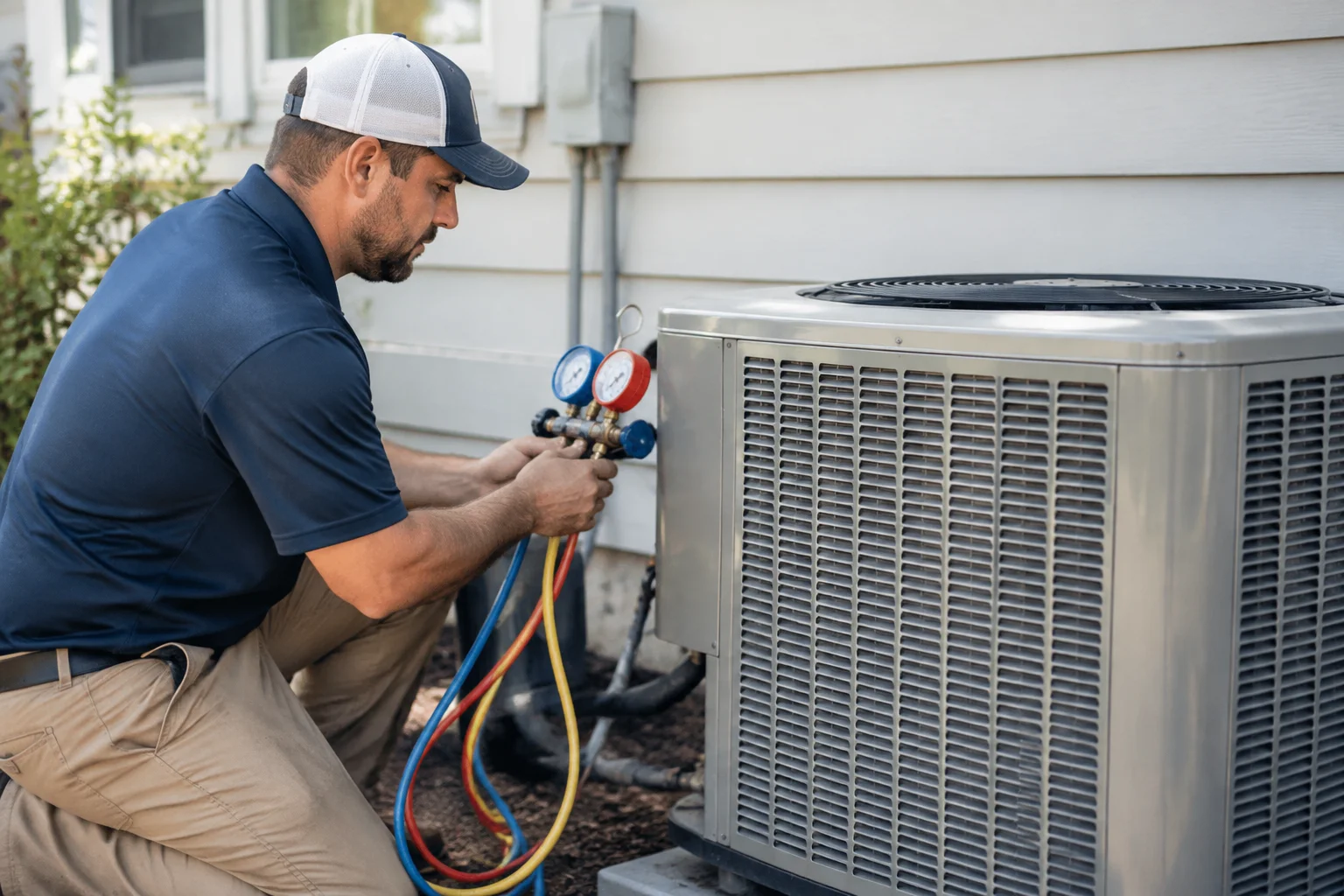
Your air conditioner relies on a refrigerant system to move heat out of the home. The installation process involves connecting refrigerant lines, sealing joints, and ensuring the system is properly set up for safe operation and correct performance.
What homeowners should understand
Refrigerant systems can be sensitive to installation details. Improper setup can lead to poor cooling performance, reduced humidity removal, and unnecessary wear. A contractor should follow the manufacturer’s installation procedures and verify system performance during commissioning.
Homeowners should be cautious about any service that claims to “diagnose refrigerant” or “fix refrigerant problems” without an in-person evaluation. If you suspect refrigerant issues, the safest path is a professional inspection by a local HVAC team that can assess airflow, coil conditions, condensate drainage, thermostat behavior, and system operation as a whole.
Condensate drainage: the hidden comfort and IAQ issue
As the indoor coil cools air, moisture collects and drains through a condensate line. In a humid climate, condensate drainage is a major part of keeping the home dry and maintaining indoor air quality.
Installation details that matter
During installation, a contractor should make sure condensate drainage is:
- Properly routed away from areas that can collect water.
- Correctly trapped and sealed to prevent leaks and airflow issues.
- Free-flowing so water does not back up.
What to watch for after installation
After installation, homeowners should monitor for signs like water around the indoor unit, recurring dampness, or odors that suggest moisture problems. If these show up, address them promptly. Moisture issues can affect comfort and contribute to indoor air quality concerns.
Ductwork and register planning for better distribution
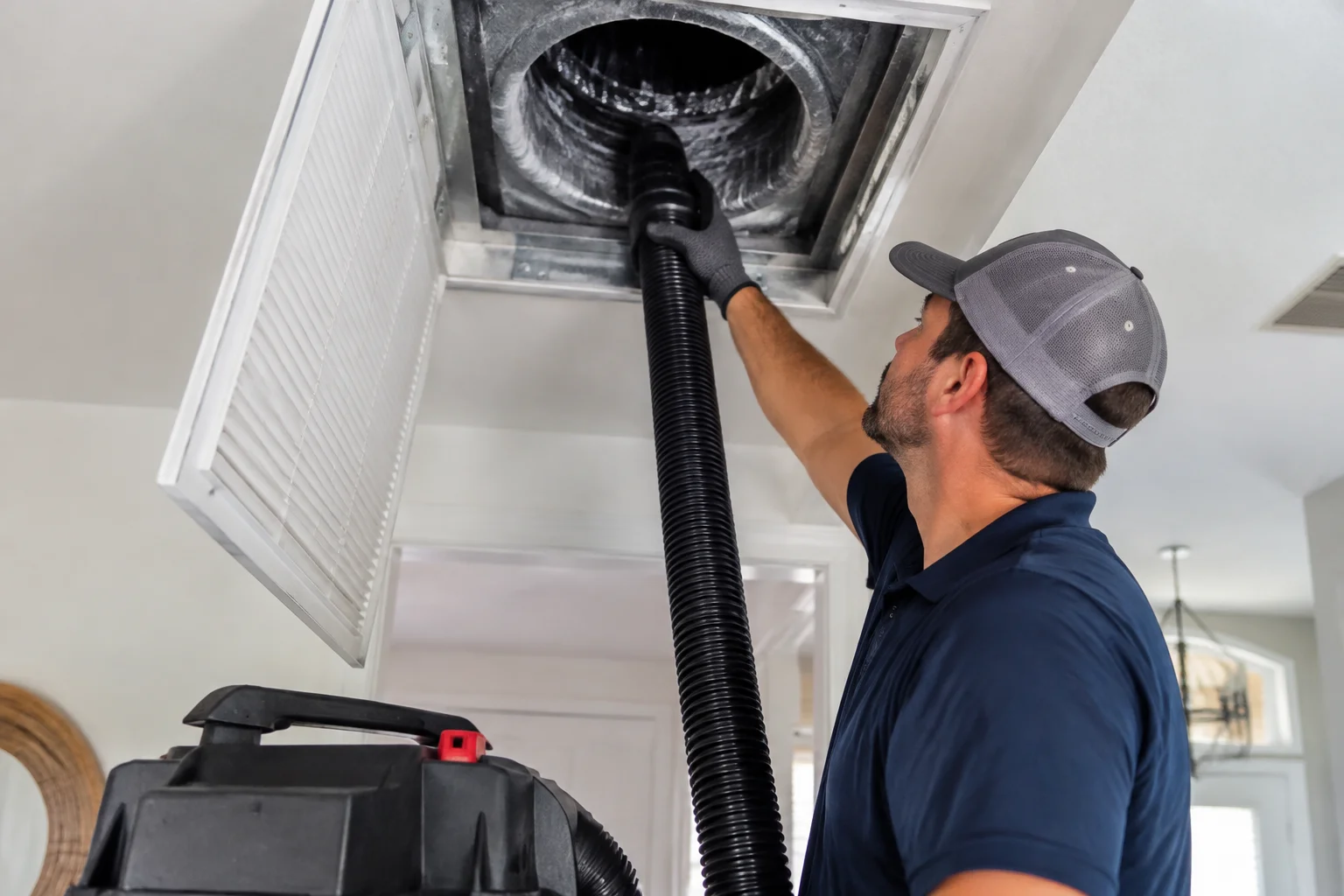
Even the best air conditioning installation can struggle if ductwork is undersized, leaky, or poorly routed. Ductwork is the pathway for conditioned air. In many older homes and some rental properties, ducts may have gaps, crushed sections, or mismatched airflow paths.
Why ductwork quality affects energy use
Leaky ducts can waste conditioned air, forcing the air conditioner to run longer. That increases energy use and can make humidity control harder because the system is not delivering the right airflow to the indoor coil consistently.
Local homeowners often need ductwork services first
If you are noticing hot spots, uneven comfort, or persistent airflow complaints, ductwork improvements may be part of the solution. Consider reviewing Ductwork Services to understand what an HVAC contractor can evaluate during installation planning.
Thermostats and zoning decisions that match how you live
Thermostats do more than turn the system on and off. During installation, thermostat placement and configuration influence comfort and energy use. In homes with multiple floors, sun-facing rooms, or frequent occupancy changes, the thermostat strategy can make a noticeable difference.
Common thermostat and control issues
- Bad location that reads the wrong temperature due to sunlight or drafts.
- Settings that do not support humidity control, leading to a “cool but clammy” feeling.
- Control mismatch with system capabilities or airflow behavior.
For homes that benefit from more tailored comfort, homeowners can also explore Heating Control Systems to understand how better control can support day-to-day comfort. While the topic here is cooling installation, control systems often play a role in how the cooling system performs and how consistently it maintains comfort.
Indoor air quality should be part of the installation plan
Air conditioning does not only cool. It filters and circulates air. In coastal Florida, indoor air quality can be affected by humidity, dust, and everyday airborne particles. Installation choices like filtration and airflow balance can influence how clean and fresh the air feels.
How to think about indoor air quality services
When selecting an HVAC contractor, consider whether they discuss indoor air quality services as part of the overall system. You may want an inspection of current airflow, filter requirements, and how the system handles moisture. If you are searching for indoor air quality services near me, ask whether the contractor will connect IAQ recommendations to the new installation rather than treating IAQ as an afterthought.
If you are already dealing with comfort or odor issues, it can also help to schedule an Air Conditioning Inspection so the team can evaluate the current system’s behavior and identify what should be addressed during the new installation.
Heat pump systems and air conditioning installation considerations
In Northwest Florida, some homes use heat pumps for heating and cooling. If you are considering a heat pump installation, it is still important to plan around airflow and humidity. Heat pumps move heat differently than conventional cooling-only systems, and the indoor airflow setup still matters for comfortable humidity removal.
If you have a home that needs heat pump installation near me or is currently experiencing performance problems, it is worth asking the contractor to explain how they will set up airflow, condensate drainage behavior, and thermostat control for cooling mode. For homeowners troubleshooting comfort issues with existing equipment, search phrases like heat pump repair near me can be useful, but remember that installation planning is often what prevents recurring problems.
Salt air, coastal exposure, and equipment longevity
Homes near the coast face more exposure to salt air and moisture. That can contribute to corrosion on components over time. While homeowners cannot fully control outdoor exposure, professional installation can help with correct placement, airflow clearance, and protective practices that support long-term reliability.
During installation, ask whether the contractor accounts for outdoor unit placement and how they plan to protect components from local conditions. A good residential HVAC service near me experience includes thoughtful installation practices, not just connecting lines.
Signs your installation plan needs a second look
If you are planning a new system or a system replacement, watch for these warning signs during the planning stage and after installation:
- No discussion of ductwork when there are known airflow complaints, uneven temperatures, or rooms that never cool.
- Condensate drainage not addressed or unclear routing and termination.
- Thermostat placement ignored despite sunlight exposure, drafts, or hallway-only sensing.
- Vague answers about airflow, like “the unit will handle it,” without evaluating distribution.
- Pressure to proceed quickly without a proper on-site evaluation.
These issues can lead to higher energy use, humidity problems, and comfort complaints that are frustrating during peak cooling season.
Preventive maintenance that supports the installation you paid for
Even the best air conditioning installation needs preventive HVAC maintenance to keep airflow and moisture control performing as designed. A routine maintenance plan helps the system run efficiently, reduces the chance of unexpected breakdowns, and supports indoor air quality.
What a solid tune-up typically focuses on
During an AC tune up, homeowners should expect attention to airflow, filtration, and overall system operation. Maintenance also helps catch early issues that could become emergency cooling concerns later in the season.
For homeowners searching for AC tune up near me or HVAC maintenance near me, ask how the technician will verify airflow and check components that affect comfort. In Cinco Bayou, where summer humidity and heat drive constant cooling demand, preventive maintenance is not just “nice to have.” It is a practical way to reduce mid-summer surprises.
Emergency cooling concerns and faster recovery
When the air conditioner stops working during a hot, humid day, homeowners often need immediate help. If you are dealing with an outage, emergency cooling situations require a careful approach. A professional technician should assess system behavior, airflow, control settings, and moisture drainage before making any recommendations.
If you are searching for emergency AC repair near me during a cooling crisis, choose a local HVAC team that can explain what they observe on-site and what steps will restore safe, comfortable operation. Installation planning can also reduce the chance of emergency calls later by ensuring the system is set up correctly from the start.
How to choose the right installation for Cinco Bayou homes
Choosing the right installer is one of the most important decisions you can make. Look for a contractor that:
- Performs an on-site evaluation of airflow, ductwork conditions, and comfort issues.
- Discusses humidity control, condensate drainage, and indoor air quality considerations.
- Explains how thermostats and controls will be configured for your home.
- Uses commissioning practices to confirm the system is operating as intended.
- Provides clear communication about the installation process and the steps taken to protect comfort.
If you are comparing options across nearby communities, you may find helpful guidance in Planning Air Conditioning Installation in DeFuniak Springs for a Cooler, More Reliable Home and Choosing the Right Air Conditioning Installation for Freeport Homes That Need to Stay Comfortable. Each area has its own building styles and weather patterns, but airflow and humidity fundamentals carry across the region.
For Cinco Bayou homeowners ready to move forward, review the service page for air conditioning installation in Cinco Bayou and the broader service area overview on this city page.
Questions homeowners can ask before installation starts
When you meet with an HVAC contractor near me, bring a few practical questions. These help confirm the installation will support comfort, humidity control, and safe operation.
- How will you evaluate airflow and ductwork? Ask whether they will inspect supply and return paths and identify restrictions or leaks.
- How will you set up condensate drainage? You want to understand routing, termination, and how the team prevents moisture buildup.
- What thermostat configuration will you recommend for comfort? Discuss placement and settings that support humidity control.
- How will you address indoor air quality? Ask about filtration and how the system’s airflow supports cleaner indoor air.
- How do you confirm the system is operating correctly after installation? Look for commissioning steps and performance checks.
These questions also help separate a basic install from a comfort-focused installation that accounts for Cinco Bayou’s humid cooling season and the realities of coastal homes.
Related comfort topics worth planning alongside installation
Air conditioning installation often overlaps with other HVAC improvements that can make daily comfort easier. If you have noticed airflow issues, comfort imbalance, or humidity problems, consider pairing installation planning with:
- Ductwork Services for distribution improvements: Ductwork Services.
- Whole-home dehumidification options when humidity control needs extra support: Whole Home Dehumidifiers.
- Air conditioning inspections to connect symptoms to installation planning: Air Conditioning Inspection.
For homeowners working within Okaloosa County, the broader service overview at /service-areas/okaloosa-county can also be useful when comparing areas and service options.
Find Air Conditioning Installation in Cinco Bayou, FL
If you need Air Conditioning Installation in Cinco Bayou, FL, visit our local service page or contact A Superior Mechanical today.
Map of Cinco Bayou, FL
Frequently Asked Questions
How does air conditioning installation affect indoor humidity in Cinco Bayou?
Humidity control depends on correct airflow across the indoor coil, proper condensate drainage, and thermostat configuration. If airflow is restricted or drainage is wrong, the home can feel cool but still feel damp.
Can ductwork problems make a new AC feel like it is not cooling well?
Yes. Leaks, undersized ducts, or poor return paths can cause weak airflow and uneven cooling. Even if the unit runs, the system may not deliver the right conditions where you need them most.
What should homeowners ask about condensate drainage during AC installation?
Ask how the contractor will route the condensate line, how it will be trapped and sealed, and how they will ensure it drains properly. This helps prevent moisture and indoor air quality problems.
Is it okay to rely on the thermostat alone for comfort after installation?
The thermostat is important, but comfort also depends on airflow, humidity removal, and thermostat placement. If the thermostat is reading the wrong area or settings do not match the home, comfort can suffer.
What maintenance helps protect the installation and reduce emergency cooling calls?
Preventive HVAC maintenance helps keep airflow and system operation consistent. A seasonal AC tune up and timely inspections can catch issues early before Florida heat and humidity turn them into emergency AC repair needs.
Related Articles
- A Practical Guide to Air Conditioning Installation for Bluewater Bay Homes
- A Practical Look at Air Conditioning Installation for Smarter Maintenance in Fort Walton Beach
- Planning Air Conditioning Installation in DeFuniak Springs for a Cooler, More Reliable Home
- Choosing the Right Air Conditioning Installation for Freeport Homes That Need to Stay Comfortable
Photo Gallery