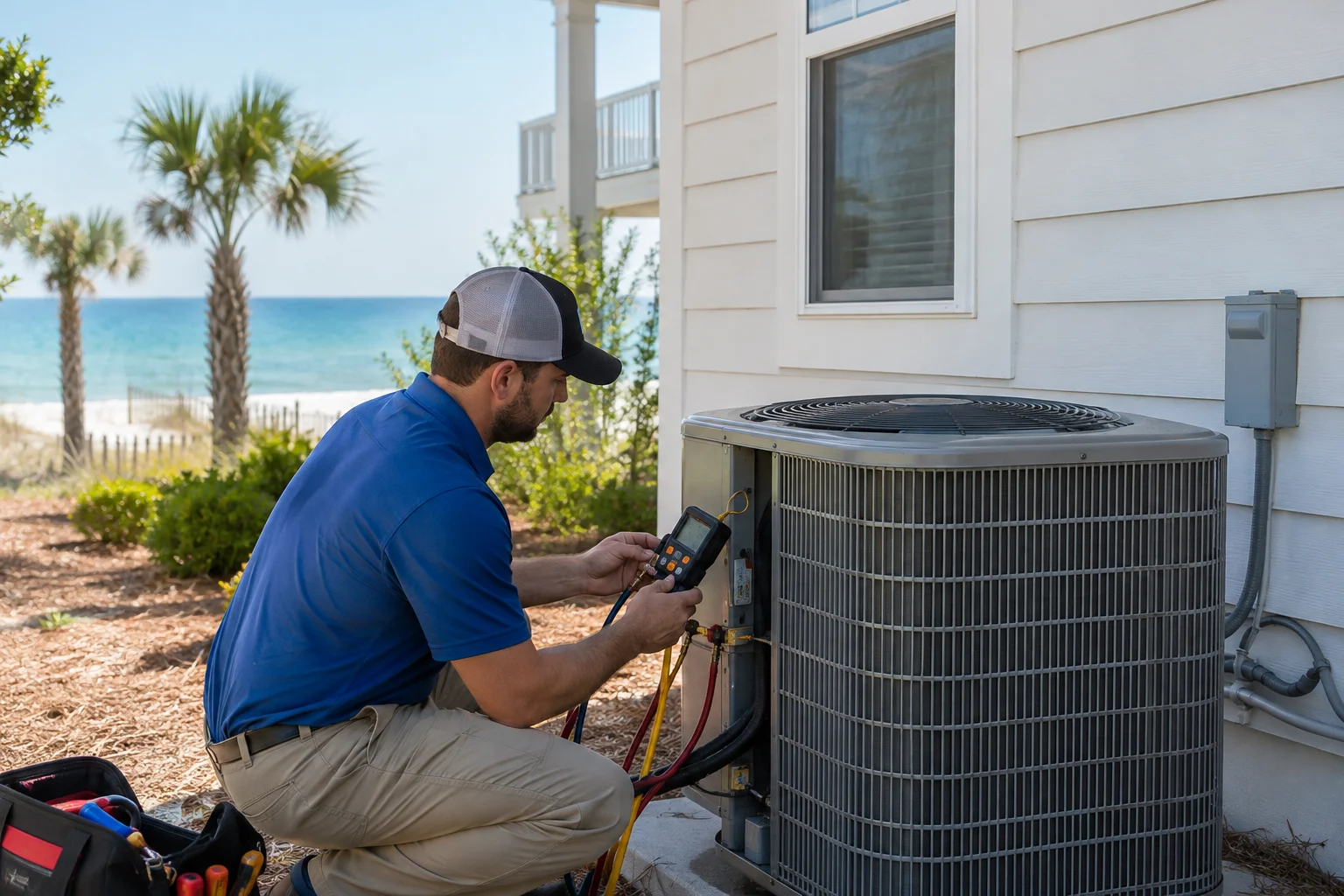
Commercial HVAC systems in 30A, FL work hard. Coastal humidity, salt air, and long cooling seasons can turn small problems into costly downtime. When a business needs commercial HVAC repair in 30A, FL, homeowners and property managers often focus on obvious breakdowns. What gets overlooked is how and why repair problems start in the first place, especially in restaurants, offices, retail spaces, and multi-unit properties across Walton County.
This guide covers common local causes of commercial HVAC repair issues, what signs to watch for, and how preventive maintenance and professional service help you avoid emergency cooling concerns.
30A conditions that quietly stress commercial HVAC systems
It is easy to think of HVAC problems as “wear and tear.” In 30A, conditions can accelerate wear and create failure patterns that look mysterious until you understand the environment.
Humidity and heat load that overloads cooling
30A summers bring sustained heat and humidity. When indoor humidity rises, the system has to remove more moisture while also maintaining temperature. That increases compressor workload, raises strain on refrigerant systems, and can lead to airflow problems that make the unit feel like it is “running but not cooling.”
In commercial spaces with high occupancy, kitchens, or frequent door openings, the load can be even higher. If your building’s cooling demand spikes and the HVAC system is already operating with restricted airflow or dirty components, the repair needs can multiply.
Salt air corrosion that starts before you see it
Salt air does not just affect windows and railings. It can accelerate corrosion on outdoor coils, fan components, and metal surfaces. Over time, corrosion can disrupt heat transfer and contribute to refrigerant system issues, condensate drainage problems, and premature component wear.
Many business owners notice performance drop first, not visible damage. That is why routine inspections matter. A licensed HVAC contractor can look for early corrosion patterns, coil fin damage, and airflow restrictions before they turn into a full repair event.
Coastal airflow restrictions from landscaping and construction
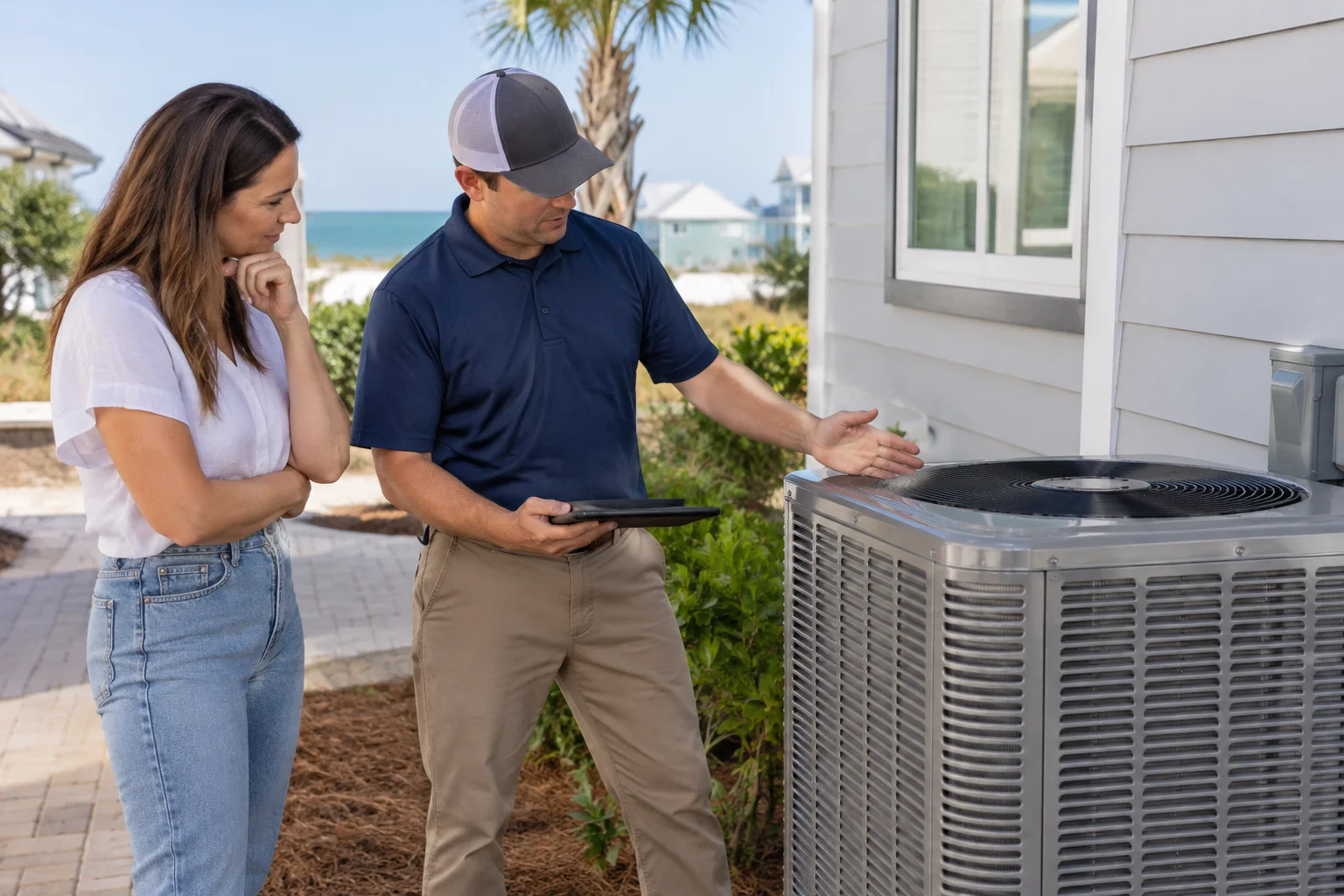
Outdoor units need clear airflow. In coastal areas, landscaping growth, sand buildup, and nearby construction debris can restrict intake and exhaust. Even a partially blocked airflow path can reduce cooling performance and increase energy use.
If you have ever heard “it works, but it takes longer,” airflow restriction is often part of the story. That can also show up as uneven temperatures across offices or storefronts, even when the thermostat is set correctly.
Repair problems that start with the basics people overlook
Some of the most common commercial HVAC repair issues in 30A are caused by overlooked operational details. These are the issues that can keep a system running longer than it should, forcing repairs that might have been avoided.
Thermostat settings and control issues that mask the real problem
Commercial thermostats are not just temperature dials. Scheduling, setpoint limits, and control modes can affect compressor cycling and humidity control. If a thermostat is misconfigured, the system may short cycle, run longer than necessary, or fail to maintain comfort during peak humidity.
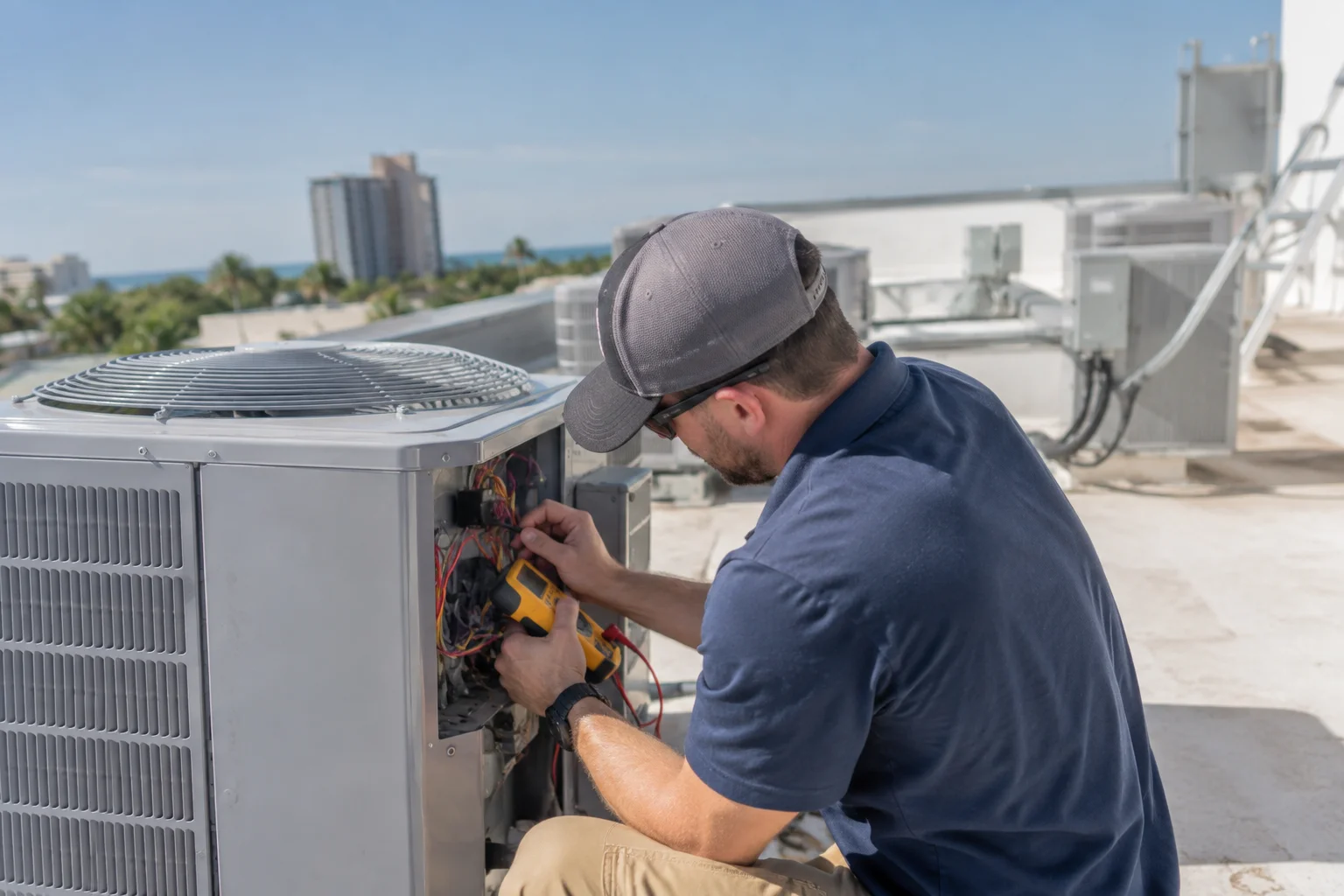
Sometimes the thermostat is fine, but it is not communicating properly with the HVAC control system. That can lead to symptoms that look like “AC repair near me” urgency, when the root cause is control logic or sensor placement. An in-person professional evaluation is important so the repair plan matches the actual issue.
Dirty filters and restricted ductwork airflow
Filters are one of the most overlooked items in commercial HVAC maintenance. When filters are clogged, airflow drops. The system may still run, but it cannot move enough air across coils. That can increase refrigerant system stress and reduce cooling effectiveness.
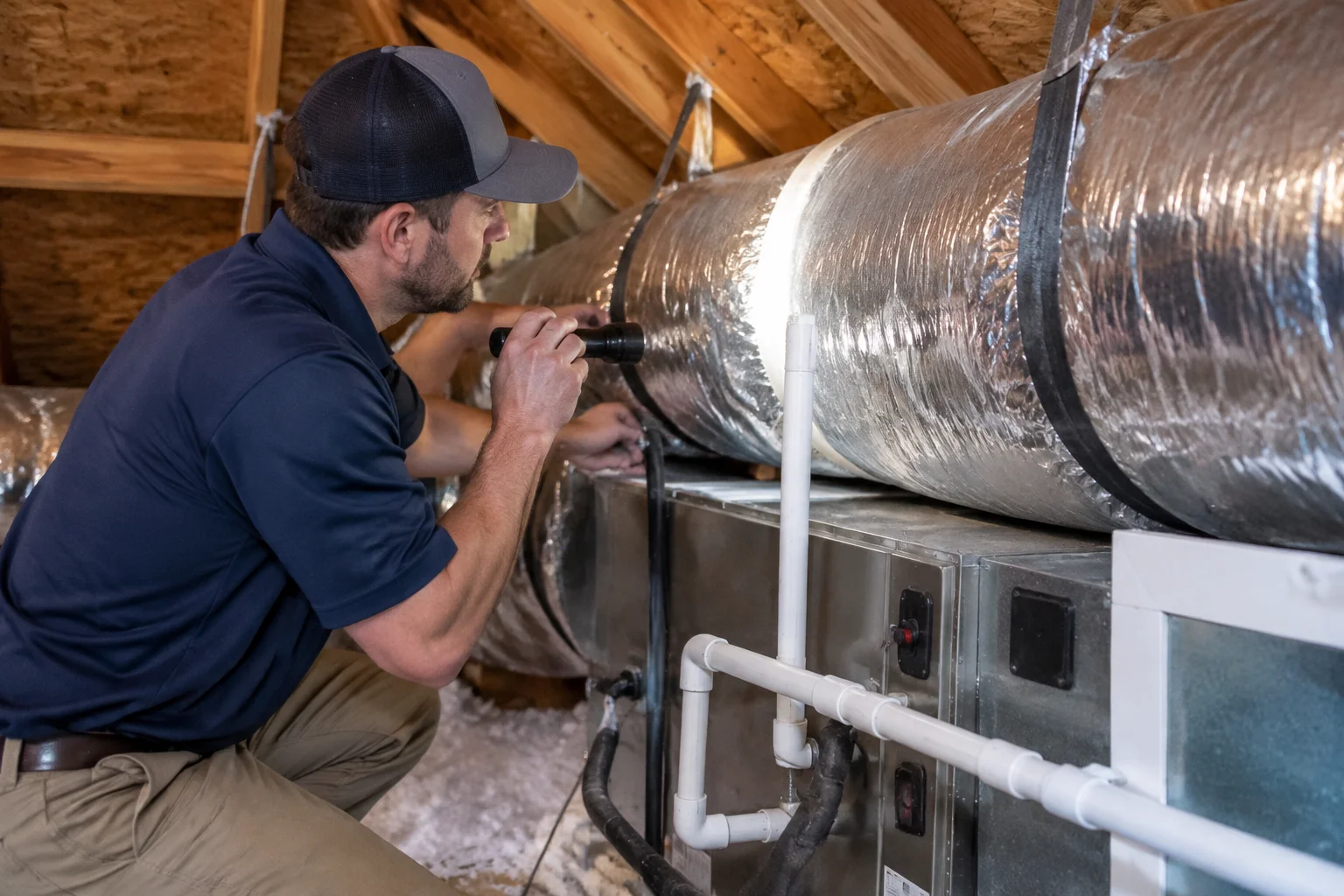
Restricted ductwork can also cause similar symptoms. Ductwork problems are not limited to missing duct sections. They can include poor duct sealing, crushed sections, or ductwork that has collected dust and debris over time. Homeowners searching for AC repair near me often discover the real issue is airflow, not the compressor.
If you are dealing with duct concerns, it can help to review whether you need duct repair near me support as part of a broader HVAC service plan. (Your technician can confirm what is needed after an on-site inspection.)
Condensate drainage issues that create hidden moisture problems
In humid climates, condensate drainage matters. If condensate drainage is restricted or the condensate line is not draining correctly, moisture can build up around indoor components. That can contribute to corrosion, microbial growth risk, and comfort problems that lead to repeat service calls.
Commercial buildings with multiple air handlers, rooftop units, or complex zoning can be especially vulnerable if condensate lines are overlooked during inspections. Moisture problems can also affect indoor air quality, which is a major concern for offices, retail, and restaurants.
Refrigerant system issues and why they show up as “AC repair”
Refrigerant systems are designed to move heat efficiently. When there is a problem, the symptoms can look like basic cooling failure. However, the cause could be airflow, coil condition, controls, or other factors that influence how the system operates.
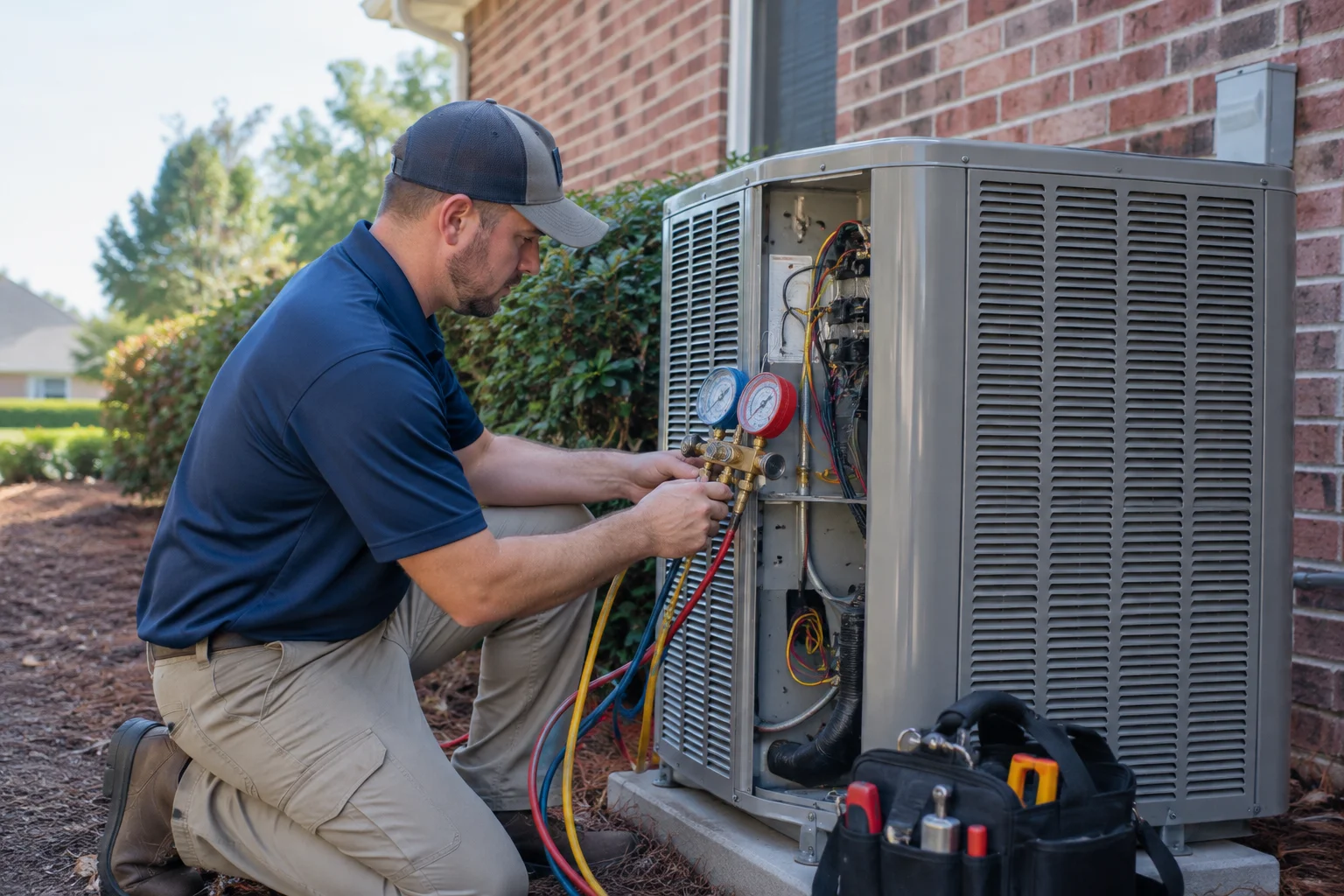
Because refrigerant-related repairs require proper handling and accurate diagnosis, it is not something homeowners should try to troubleshoot on their own. A licensed HVAC contractor can evaluate the system safely and determine whether repair is needed.
Coils that cannot transfer heat because of dirt, corrosion, or airflow imbalance
Even when refrigerant is technically present, cooling can still be poor if coils cannot transfer heat effectively. Coastal salt air can increase corrosion on coil surfaces, while dust and debris can reduce coil performance. If airflow is also restricted, the system can struggle to achieve comfort targets.
These issues often present as weak cooling, higher energy use, and frequent cycling. They can also create emergency cooling concerns if the system fails during peak demand.
Refrigerant system symptoms that overlap with other problems
Low cooling performance, ice formation, or abnormal operating behavior can overlap with multiple causes. That is why professional diagnosis matters. An HVAC company near me search can be tempting, but the right next step is a contractor who can inspect system airflow, condensate drainage, thermostat operation, and refrigerant system conditions as part of a coordinated troubleshooting process.
Indoor air quality and comfort issues that lead to repeated repairs
Commercial HVAC repair is not only about temperature. In 30A, humidity and coastal air can affect indoor air quality. Many businesses only connect comfort complaints to HVAC maintenance after the problem becomes persistent.
Humidity that makes the building feel “stuffy” even when it is cool
When indoor humidity stays high, occupants feel uncomfortable and may complain even if the thermostat reads a reasonable temperature. That can happen when airflow is off, condensate drainage is not functioning properly, or the system is struggling to dehumidify under high load.
For many commercial properties, improving indoor air quality services can reduce complaints and help the HVAC system operate more effectively. If you are looking for indoor air quality services near me, ask about humidity control strategies, filtration options, and airflow verification.
Ventilation and filtration gaps
Some commercial spaces rely on HVAC for both comfort and ventilation. If filtration is inadequate or the system is not moving air as designed, indoor air quality can suffer. That can contribute to odors, dust buildup, and comfort issues that prompt repair calls.
In restaurants and retail spaces, additional contaminants from cooking, cleaning chemicals, and foot traffic can intensify the problem. HVAC maintenance should be coordinated with the building’s usage patterns.
Why ductwork and airflow balance issues become expensive in commercial buildings
Ductwork is often treated as a background component. In reality, ductwork determines whether conditioned air reaches the right areas at the right rate. In commercial properties, airflow balance problems can create hotspots, cold zones, and comfort complaints that lead to repeated thermostat adjustments and emergency AC repair requests.
Uneven temperatures across offices, suites, or storefronts
If one area feels too warm while another feels too cold, it can point to ductwork restrictions, damper issues, or improper airflow distribution. It can also happen when zoning controls are not operating correctly or when filters and returns are not sized or maintained properly.
Before any major repair decisions are made, a professional should verify airflow pathways, return air conditions, and ductwork condition. This is especially important in buildings with multiple air handlers and shared duct runs.
Air leaks and poor sealing in humid coastal environments
Air leaks can pull in humid air or push conditioned air out of the building. In 30A’s climate, that can increase energy use and make dehumidification harder. Over time, the system works longer to compensate, which can lead to additional wear and repair needs.
If your business has chronic comfort complaints, consider pairing HVAC service with duct evaluation and sealing recommendations. A licensed HVAC contractor can help you understand what is feasible for your specific layout.
How preventive maintenance prevents the “it failed at the worst time” scenario
Many commercial HVAC repair headaches start as small issues that were never addressed during routine service. Preventive HVAC maintenance is how you catch problems before they become emergency cooling concerns.
Maintenance that targets the most common 30A failure points
A solid commercial HVAC maintenance plan typically focuses on:
- Checking airflow across coils and verifying proper operation of fans and motors
- Inspecting condensate drainage pathways and indoor moisture control
- Reviewing thermostat schedules and operational modes
- Cleaning or replacing filters based on building use and indoor air quality needs
- Inspecting outdoor coils and components for salt-air corrosion and debris buildup
- Evaluating refrigerant system performance as part of safe, accurate diagnostics
Local businesses often benefit from a schedule tailored to the cooling season and to the specific demands of their building. If you want to explore maintenance options, see Commercial HVAC Maintenance for guidance.
Energy use and comfort drift are early warning signals
When HVAC systems begin to “drift” out of peak performance, energy use can rise before the unit fully fails. Comfort can also become inconsistent. Homeowners and business managers sometimes wait until the system stops working, but that is when emergency AC repair near me searches spike and business downtime becomes unavoidable.
When an HVAC maintenance near me search can prevent a mid-summer breakdown, the difference is often the ability to correct airflow restrictions, drainage issues, and control settings before they escalate.
If you want a deeper look at how maintenance reduces repair risk, read Why Preventive HVAC Service Pays Off for Air Conditioning Repair in 30A, FL.
Common commercial HVAC repair mistakes that prolong problems
Even well-intended actions can delay the right repair. Here are a few common mistakes local businesses make when they think they are solving the problem but are actually extending it.
Trying to “fix” symptoms instead of diagnosing causes
For example, lowering the thermostat to compensate for poor cooling can increase compressor workload. It can also worsen humidity issues if the system is already struggling with airflow or condensate drainage.
Adjusting thermostat schedules may help comfort temporarily, but it does not address underlying issues like restricted ductwork, coil fouling, or control problems. A licensed HVAC contractor should evaluate the system so repairs match the cause.
Ignoring drainage and moisture signs
Some building owners notice water around indoor units or musty odors but treat them as housekeeping issues. In a humid climate, moisture can damage components and degrade indoor air quality. Addressing condensate drainage and indoor humidity control early helps prevent the repair cycle from repeating.
Skipping inspections because “the unit turns on”
Commercial systems can run even when performance is failing. A unit might cycle on and off frequently, blow air that feels cool but does not dehumidify, or struggle under peak demand. These are repair signals, not proof that everything is fine.
For homeowners, this is similar to “AC repair near me” frustration. The goal is to move from guessing to inspection.
When ductless systems and zoning changes add complexity
Some 30A commercial spaces use ductless mini splits for zone control, supplemental comfort, or renovations. Ductless systems can be effective, but they also add variables such as line set routing, outdoor unit placement, and indoor air distribution.
If your property is considering ductless upgrades or you already have ductless equipment, you may also need coordination with airflow and indoor air quality goals. If you are searching for ductless mini split installation near me, choose an experienced commercial HVAC service team that understands coastal conditions, airflow planning, and humidity management.
How to choose a professional commercial HVAC contractor in 30A
Commercial HVAC repair is not a one-size-fits-all job. The right HVAC company near me is the one that treats your building as a system, not a single unit. That means evaluating airflow, condensate drainage, thermostat operation, indoor air quality needs, and refrigerant system performance as part of a coordinated diagnostic approach.
When you contact A Superior Mechanical, you should expect an in-person assessment that matches the symptoms to the likely causes. If you suspect refrigerant system issues, electrical or control concerns, or airflow imbalance, a professional should verify conditions on site rather than guessing.
For businesses that cannot afford downtime, it also helps to have a relationship with a contractor before problems start. If you are planning upgrades or replacements, you can compare options for Air Conditioning Installation and discuss how the system will handle 30A humidity and salt air exposure.
If you are worried about urgent breakdowns during peak season, review Emergency HVAC Services and build an emergency plan before the first hot day of the year.
For seasonal planning, this article can help: How 30A Homes Can Stay Ahead of HVAC Emergencies During Seasonal Stress.
Signs your commercial HVAC needs professional service now
Some symptoms are more than routine wear. They can indicate airflow restrictions, condensate drainage problems, control issues, or refrigerant system concerns that require inspection.
- Cooling is inconsistent, especially during the most humid parts of the day
- Humidity feels high indoors even when the temperature seems close to the setpoint
- Frequent cycling, unusual noises, or “runs but does not cool” behavior
- Water near indoor units, clogged drain lines, or recurring moisture smells
- Hot and cold spots across offices, retail areas, or multi-unit spaces
- Noticeable increases in energy use without a change in occupancy or operations
- Dirty air complaints, dust buildup, or indoor air quality concerns
If you are searching for commercial AC repair near me, treat these signs as an opportunity to schedule professional commercial HVAC service near me rather than waiting for total failure.
Preventive steps you can take between service visits
Even with professional maintenance, there are practical steps that reduce stress on the system and help your HVAC contractor focus on higher-value work.
- Keep outdoor units clear of debris and ensure landscaping does not block airflow
- Replace filters on schedule and confirm the correct filter type for your system
- Review thermostat schedules for accuracy during seasonal use and occupancy changes
- Watch for moisture signs around indoor units and address them promptly
- Document comfort complaints by location and time of day so technicians can troubleshoot efficiently
These steps do not replace professional evaluation, but they reduce the chance that common issues escalate.
If you manage multiple properties across Walton County, it also helps to understand how local conditions affect maintenance planning. You can browse the service area at /service-areas/walton-county/30a and explore how /service-areas/walton-county coverage supports ongoing HVAC care.
For businesses coordinating budgets and upgrades, see Keeping HVAC Financing on Track in 30A, FL Homes to help plan responsibly when repairs and maintenance come up.
Find Commercial HVAC Repair in 30A, FL
If you need Commercial HVAC Repair in 30A, FL, visit our local service page or contact A Superior Mechanical today.
Map of 30A, FL
Frequently Asked Questions
Why does our commercial AC feel like it runs all day but still does not cool well in 30A?
In 30A, humidity and heat load can expose airflow and coil performance problems. Restricted ductwork, dirty filters, outdoor coil buildup, or condensate drainage issues can reduce cooling effectiveness even while the system is operating.
Can salt air cause commercial HVAC repair problems before anything looks damaged?
Yes. Salt air can accelerate corrosion on outdoor coils and metal components. Performance may drop first due to reduced heat transfer or airflow imbalance, so routine inspections help catch the issue early.
What indoor air quality problems are common when HVAC repairs are delayed?
When condensate drainage or airflow is off, indoor humidity can rise and air can feel stale. That can contribute to dust buildup, odors, and comfort complaints. Fixing the HVAC problem supports better indoor air quality.
Is it safe for me to try to diagnose refrigerant issues myself?
No. Refrigerant systems require proper handling and accurate on-site diagnostics. If you suspect refrigerant-related performance issues, schedule a professional commercial HVAC service so the system can be evaluated safely.
How often should commercial HVAC maintenance be scheduled in Walton County?
Most commercial properties benefit from preventive maintenance timed around the cooling season and the building’s usage. A local technician can recommend a schedule based on equipment type, occupancy, and exposure to humidity and salt air.
Related Articles
Photo Gallery