WaterColor, FL feels like paradise, but it is also a tough environment for heating and cooling equipment. Long cooling seasons, high humidity, and salt air from the coast can push HVAC systems harder than many homeowners expect. When the indoor air feels sticky, the air does not move the way it should, or the AC struggles to keep up, the real issue is often airflow and moisture management, not just “temperature.”
Commercial HVAC Services in WaterColor, FL can be a smart model for homeowners because the same fundamentals apply: stable airflow, reliable refrigerant system performance, proper condensate drainage, and indoor air quality controls that keep humidity from building up. If you are searching for commercial HVAC services in WaterColor, this guide explains what to watch, why it happens here, and how preventive maintenance helps reduce the chances of an emergency cooling call.
Why WaterColor’s cooling season stresses HVAC equipment
In WaterColor and across Walton County, the cooling season can feel endless. Warm daytime temperatures often roll right into warm nights, and humidity stays high. That combination forces air conditioning to work on two fronts at the same time: cooling and dehumidification. A system that is technically “running” may still underperform if it cannot move air effectively through ductwork, across coils, and out through condensate drainage.
Coastal conditions add another layer. Salt air can accelerate corrosion on metal components and contribute to dirt buildup on outdoor units. Over time, that can affect heat transfer in the refrigerant system, airflow performance, and the ability of coils to remove moisture efficiently.
When homeowners notice problems, they often see symptoms like:
- Indoor humidity that stays high even when the thermostat is set to cool
- Rooms that feel warmer or colder than others, especially near vents or along duct runs
- Musty odors or air that feels “stale” instead of fresh
- Frequent cycling or longer run times as the system tries to catch up
- Condensate drainage issues, such as water near indoor equipment or a wet smell
These are also the same operational issues that commercial buildings face, which is why a commercial HVAC maintenance mindset can protect residential comfort too.
Heat and humidity problems start with airflow, not just the thermostat
Modern thermostats can make it easy to set a temperature target, but they do not control humidity by themselves. In high-humidity Florida weather, the system needs consistent airflow across the evaporator coil to remove moisture. If airflow is restricted, the coil may not cool properly, and condensate drainage can become less effective.
Common airflow and ductwork issues in WaterColor homes and small commercial spaces include:
- Ductwork leaks that draw in humid air from attics, crawlspaces, or wall cavities
- Blocked or poorly sized duct runs that reduce total airflow
- Dirty filters and restricted return pathways
- Fan and blower performance changes due to dust buildup
- Registers that are closed, obstructed, or incorrectly balanced
Commercial HVAC service programs often emphasize airflow verification because it impacts comfort and energy use. If you are comparing duct sealing and Aeroseal services to other approaches, the key takeaway is that duct sealing supports better airflow delivery and reduces the system’s struggle against leaks. For homeowners, improved ductwork performance can mean fewer hot spots, less humidity rebound, and steadier cooling.
Refrigerant system strain in Florida heat and what homeowners can notice
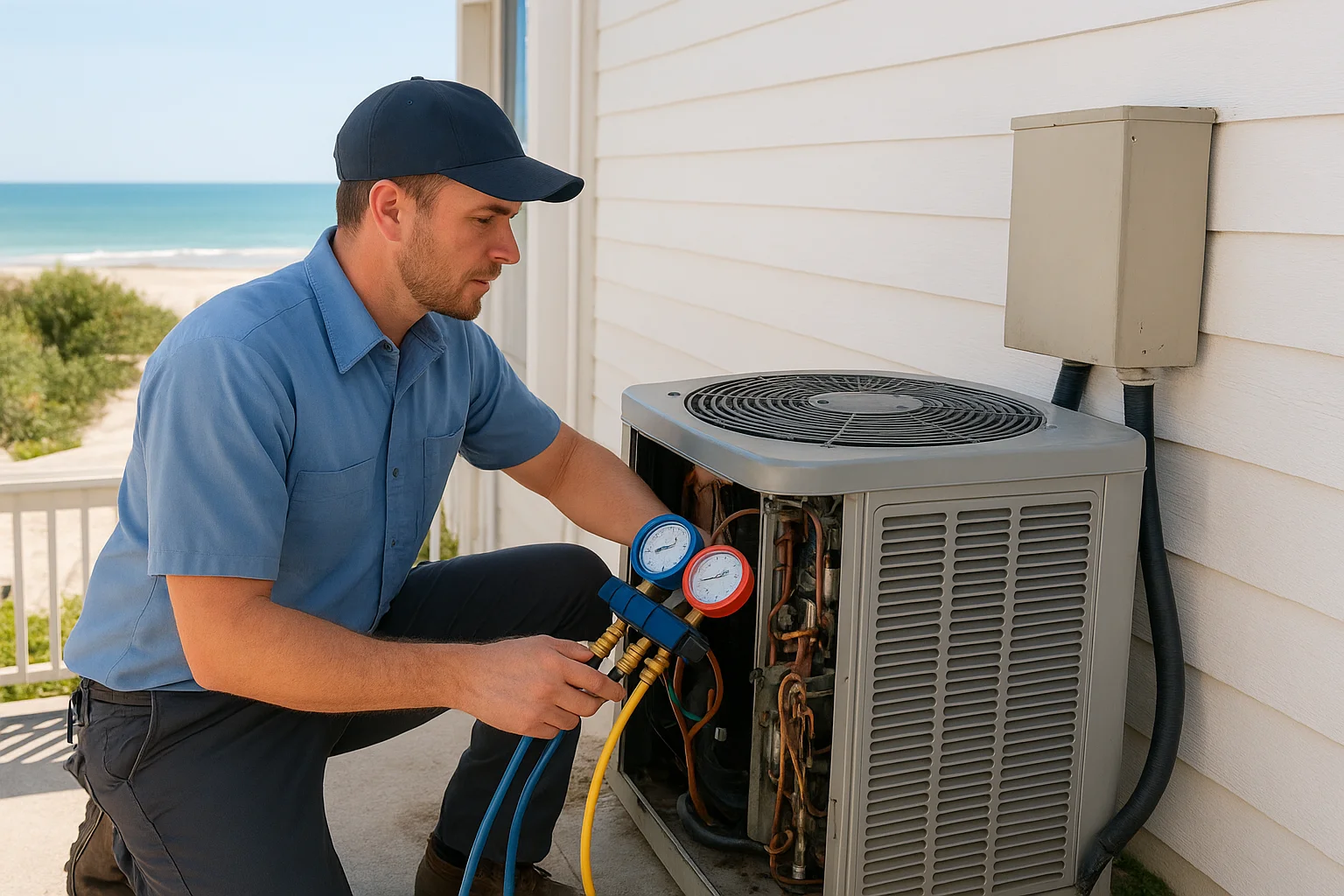
The refrigerant system is designed to move heat efficiently. In Florida’s long cooling seasons, the system spends more hours in cooling mode, which raises wear on compressors, fans, and coil surfaces. When airflow is weak or coils are dirty, refrigerant heat transfer can be less effective, and the system may run longer to reach the thermostat setting.
Homeowners should be careful not to “guess” about refrigerant issues. Refrigerant diagnostics require an in-person evaluation because the correct readings depend on equipment type, airflow conditions, outdoor temperatures, and system configuration.
That said, you can watch for operational patterns that often accompany refrigerant stress:
- Air feels cool at first, then warms up during longer cycles
- Outdoor unit fans run but the system does not seem to remove moisture well
- The system repeatedly starts and stops rather than maintaining stable operation
- Ice formation on coils or abnormal condensation patterns (if visible)
If you suspect an HVAC repair need, it helps to schedule an AC repair or HVAC repair near me appointment where a technician can assess airflow first, then evaluate refrigerant system performance based on what the system is doing in real conditions.
Condensate drainage and moisture control: a frequent humidity culprit
When an air conditioner removes humidity, it creates condensate. That water must drain properly. In humid coastal climates, small drainage problems can quickly become bigger comfort issues, including overflow risk and increased indoor moisture.
Condensate drainage concerns can show up as:
- Water pooling around indoor units or near the base of equipment
- Gurgling sounds from condensate lines
- Musty odors, especially after the system has run for a while
- Signs that the system is not dehumidifying as expected
Commercial HVAC maintenance often includes checks of condensate lines, drain pan condition, and proper drainage flow. For homeowners, these inspections matter because humidity control is not only about comfort. Excess moisture can affect indoor air quality and can contribute to the deterioration of building materials over time.
Indoor air quality suffers when humidity and airflow are out of balance
Humidity does not just make rooms feel warmer. It can also impact indoor air quality by supporting dust and microbial growth when systems are not maintaining proper moisture control. In WaterColor, where coastal air and humid weather are common, indoor air quality can become a year-round concern for both homes and commercial properties.
Improving indoor air quality often starts with:
- Correct filtration for the system and the home’s airflow pattern
- Clean coils and unobstructed air paths so the system can dehumidify
- Balanced supply and return airflow to reduce stagnant zones
- Controls that support consistent operation during humid periods
If you are considering commercial HVAC services because you want healthier indoor air, ask how maintenance addresses humidity management and airflow. A technician should be able to explain what they are checking and how it connects to comfort, including airflow, condensate drainage, and system performance.
Heat pump service and AC service during long humid stretches
Many homes and mixed-use properties in Florida use heat pumps or air conditioning systems. In either case, the equipment may spend extended periods operating under heavy humidity load. Heat pump performance can be affected by airflow and coil condition, and air conditioning performance can suffer when ductwork and filtration do not support proper moisture removal.
Homeowners searching for heat pump installation near me or heat pump repair near me sometimes focus only on comfort temperature. In WaterColor humidity, it is just as important to confirm the system can manage moisture effectively. That means evaluating:
- Whether indoor airflow matches the system’s design needs
- How the thermostat settings and operating schedule affect humidity
- Whether ductwork delivers conditioned air evenly
- Whether condensate drainage and coil cleanliness support dehumidification
If you are comparing options for air conditioner service near me or commercial air conditioning contractor near me, prioritize companies that treat humidity and airflow as core parts of the job, not afterthoughts.
Preventive HVAC maintenance that helps avoid emergency cooling concerns
When the cooling season is long, wear accumulates. Preventive HVAC maintenance is how you protect the system before minor issues become major failures. For homeowners, preventive maintenance is often the difference between a planned service visit and a stressful situation during a hot, humid day.
A strong maintenance approach in WaterColor typically includes:
- Inspection of thermostat operation and system controls to confirm proper sequencing
- Verification of airflow through ductwork and equipment, since airflow affects cooling and humidity removal
- Coil inspection and cleaning recommendations based on observed conditions
- Checks of condensate drainage and drain pan condition
- Assessment of outdoor unit condition, including airflow around the condenser and signs of corrosion from salt air
Commercial HVAC maintenance near me searches often reflect a business owner’s urgency, but the same idea applies to homeowners: planned service reduces the chance of downtime when humidity spikes. If you want to understand why emergency calls happen more often in certain homes, read Keeping WaterColor Homes Comfortable Without the Emergency Call.
Common signs your system is not managing humidity the way it should
You do not need to be an HVAC expert to notice when the system is struggling. Look for patterns that point to airflow limits, moisture control problems, or system performance issues.
Humidity that does not drop after the system runs
If the thermostat setting is met but the air still feels damp, the system may not be removing moisture effectively. That can happen when airflow is restricted, coils are dirty, or condensate drainage is not working as intended.
Hot spots, cold spots, and uneven airflow
Uneven temperatures often point to ductwork leakage, poor balancing, or supply and return mismatches. In humid conditions, leaky ducts can also pull in moisture-laden air, making humidity harder to control.
Short cycling or frequent long run times
Short cycling can indicate control or airflow issues. Long run times can indicate the system is working harder due to restricted airflow, coil buildup, or other performance limitations. Either way, it is a cue to schedule a professional evaluation.
Odors or visible moisture around equipment
Musty odors and moisture near indoor equipment frequently connect to condensate drainage problems or indoor humidity buildup. Addressing the cause early helps protect indoor air quality.
How to choose a commercial HVAC service approach for a home
Even though you may be a homeowner, you can still benefit from service practices common in commercial settings. Commercial systems are often designed for consistent comfort under heavy use. That mindset can translate into better diagnostics and more thorough maintenance for residential properties.
When you contact an HVAC company near WaterColor, ask how they approach the problem:
- Do they start with airflow and system operation checks before drawing conclusions?
- Do they consider ductwork performance and leakage risks relevant to humidity control?
- Do they inspect condensate drainage and indoor moisture pathways?
- Do they discuss how thermostat settings and runtime affect humidity?
- Do they explain what they found and what needs attention now versus later?
If you want to see how local housing and equipment demands can create recurring comfort issues, check Why Commercial HVAC Systems Struggle in WaterColor Homes and How to Stay Ahead of It. It covers how airflow, ductwork, and humidity dynamics can combine to create the kind of problems homeowners feel during peak summer.
When to call for help: the “don’t wait” situations
Some HVAC issues are not worth waiting on, especially during heat and humidity spikes. If you notice any of the following, schedule an appointment promptly. If cooling stops or equipment operation becomes unsafe, treat it as an emergency cooling concern.
- The system will not cool and the indoor temperature rises quickly
- Visible water overflow, repeated condensate backup, or persistent wet odors
- Burning smells, unusual noises, or signs of abnormal operation
- Significant ice buildup on coils that does not resolve
- Airflow is extremely weak, even after checking basic items like filters
For homeowners searching for emergency AC repair near me, it helps to have a local HVAC company you already trust. A Superior Mechanical serves WaterColor and Walton County, and homeowners can also review service details on our WaterColor service area page and the Walton County page for broader coverage information.
Upgrades that support long-term comfort, energy use, and humidity control
When systems age, the combination of Florida heat, humidity, and salt air can lead to declining performance. Upgrades may include improved ductwork, better system sizing, and indoor air quality support. While homeowners may think only about replacement, it is often the system’s ability to move and condition air that determines comfort.
For many WaterColor homes, ductwork improvements can play a major role. If you want to strengthen airflow and reduce leaks, consider Duct Sealing & Aeroseal Services. If your system needs hands-on repair, explore Commercial HVAC Repair. If replacement is on the table after an evaluation, you can also review Commercial HVAC Installation.
Some homeowners also look at geothermal energy systems as part of a long-term strategy for energy use and comfort stability. If that is your direction, see Geothermal Energy Systems. Any change to heating and cooling strategy should still include a careful review of ductwork, airflow, and indoor humidity goals so the home stays comfortable through the full cooling season.
Protecting your home by treating humidity like a primary comfort goal
WaterColor comfort is not just about hitting a temperature number. It is about keeping humidity under control, maintaining airflow, and supporting the refrigerant system so it can do its job efficiently. Commercial HVAC Services in WaterColor, FL offer a practical framework: inspect the full system, manage moisture and condensate drainage, verify airflow, and keep controls and ductwork working together.
If you are trying to avoid repeat breakdowns and reduce the stress of emergency cooling concerns, a preventive HVAC maintenance plan is one of the most direct steps you can take. The right technician will connect the dots between airflow, indoor air quality, humidity removal, and safe operation of the system, so your home stays comfortable during Florida’s longest, stickiest stretches.
To explore service options, visit commercial HVAC services in WaterColor and browse local guidance for homeowners on Commercial HVAC Services in Sandestin, FL: Answers to Common Questions for additional context on how commercial service practices translate to real comfort needs.
Find Commercial HVAC Services in WaterColor, FL
If you need Commercial HVAC Services in WaterColor, FL, visit our local service page or contact A Superior Mechanical today.
Map of WaterColor, FL
Frequently Asked Questions
How does humidity affect my home’s air conditioner performance in WaterColor?
High humidity forces the AC to cool and dehumidify at the same time. If airflow through the system or ductwork is restricted, the evaporator coil may not remove moisture efficiently, so the home can feel damp even after the thermostat reaches the set temperature.
What should I check first if my AC runs but my home still feels sticky?
Start with basic items like confirming the air filter is clean and ensuring vents are not blocked. Then schedule a professional inspection focused on airflow, coil cleanliness, condensate drainage, and how the thermostat is controlling system operation.
Can ductwork problems make my home harder to cool and harder to dehumidify?
Yes. Leaky or poorly balanced ductwork can reduce airflow to rooms, pull in humid air from unconditioned spaces, and create hot spots and cold spots. That makes the system work longer and can reduce effective humidity removal.
When should I call for emergency AC repair in WaterColor?
Call promptly if the system stops cooling, you notice water overflow or repeated condensate backup, you detect burning odors or unusual noises, or you see persistent ice buildup that does not resolve. During a heat and humidity spike, it is better to act quickly.
Is refrigerant service something homeowners should try to troubleshoot themselves?
No. Refrigerant system diagnosis requires in-person evaluation because correct readings depend on airflow, operating conditions, and system configuration. A technician should verify airflow and system performance before making any refrigerant-related conclusions.
Related Articles
Photo Gallery