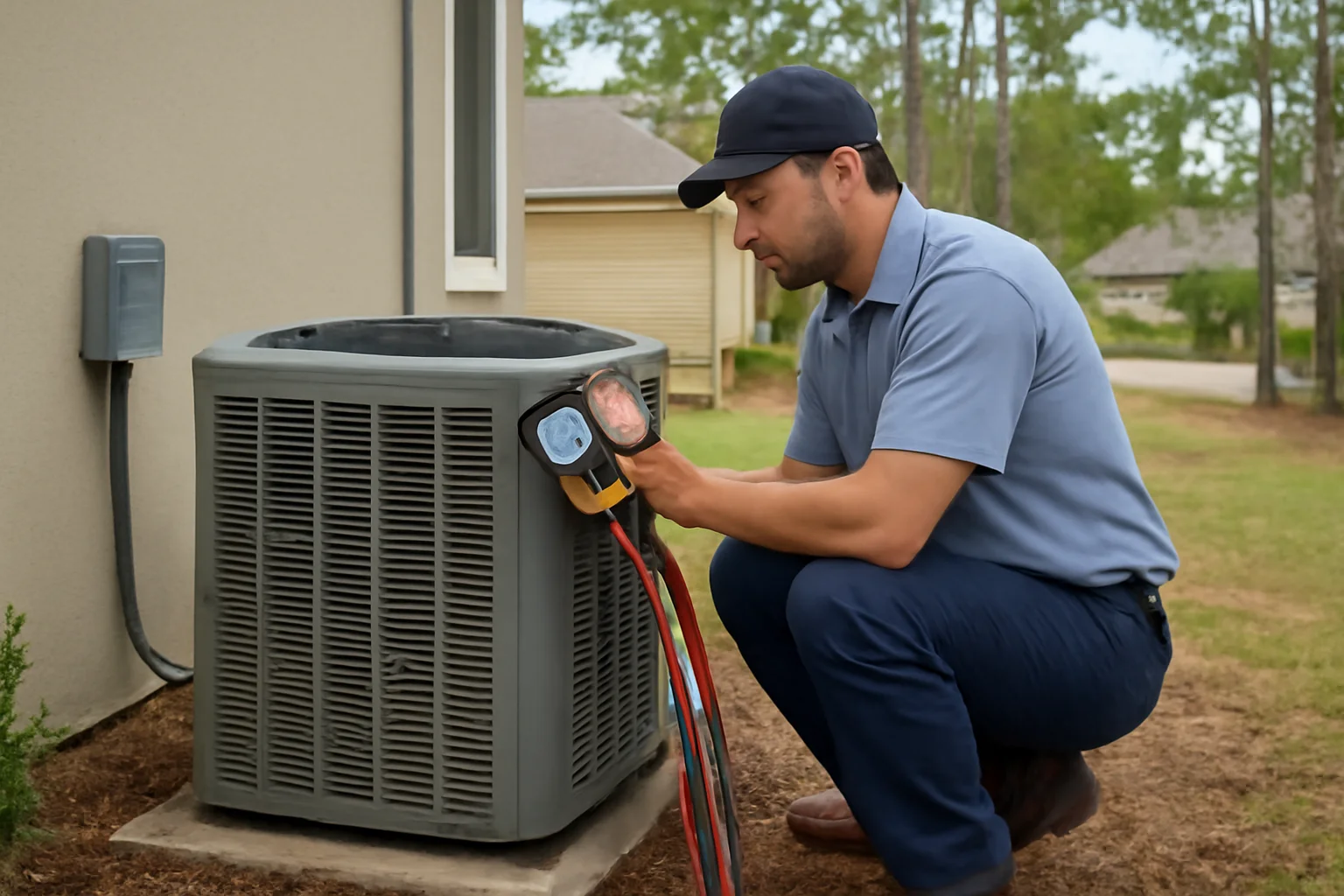
Santa Rosa Beach feels like a vacation for guests, but for property managers the HVAC season can be relentless. Long cooling runs, sticky humidity, and salt air around the Gulf Coast put real strain on air conditioners, heat pumps, ductwork, and the controls that keep managed homes comfortable. When equipment is stressed for weeks at a time, small issues can turn into emergency cooling concerns.
This guide walks through HVAC warning signs that show up during Florida’s cooling season, why they matter for vacation rentals, condos, and multi-property portfolios, and how preventive HVAC maintenance reduces the risk of breakdowns. If you are coordinating property management HVAC services in Santa Rosa Beach, these are the patterns your team should watch for across AC repair, heat pump service, airflow problems, and indoor air quality.
Why Santa Rosa Beach cooling season stresses HVAC equipment
In Santa Rosa Beach, the HVAC workload does not just come from hot days. It comes from humidity. When the air is moisture-rich, systems must run longer to remove humidity and maintain indoor comfort. That extended runtime can increase wear on refrigerant systems, strain motors and fans, and expose condensate drainage components to more frequent water handling.
At the same time, local conditions can accelerate corrosion and buildup. Salt air and coastal moisture can affect outdoor units. Sand and pollen can contribute to clogged filters and dirty coils. And in many managed properties, ductwork may be older, undersized, or partially obstructed by renovations or renovations that were never fully coordinated with HVAC airflow.
Thermostats also play a role. If a thermostat is miscalibrated, improperly wired, or set up for the wrong operating mode, the system may short cycle or run longer than necessary. That adds energy use and increases stress on the refrigerant system and indoor air handler.
HVAC warning signs property managers should not ignore
Some HVAC issues develop quietly and then show up as guest complaints. For property management teams, the goal is to catch these patterns early, before they become air conditioning repair emergencies.
1) The system runs constantly but the home never feels “fully cool”
When cooling is weak or uneven, the cause is often airflow or humidity control. Common contributors include clogged air filters, dirty evaporator coils, ductwork leaks, or blocked registers. If airflow is restricted, the indoor unit cannot transfer heat efficiently, which can cause longer runtimes and higher energy use.
For homeowners and property managers, this is also a good time to review condensate drainage. If condensate drainage is partially blocked, moisture management can suffer, which can lead to musty odors and indoor air quality concerns.
2) Rooms have hot spots, cold spots, or “near the vent” comfort only
Uneven temperatures are a classic symptom of ductwork and airflow problems. Ducts can lose sealing over time, insulation can degrade, and dampers can stick. In multi-zone homes, mismatched airflow between zones can pressure the system to work harder than it should.
Airflow issues also show up as increased noise, higher fan cycling, and callbacks that appear “random” but are actually tied to specific rooms or floor levels. A professional duct inspection can help identify whether the problem is ductwork restrictions, leaks, or improper airflow balancing.
3) Humidity is high even when the thermostat shows the temperature is “on target”
Florida humidity can be a challenge. If the indoor temperature looks acceptable but the home feels sticky, the system may not be removing moisture effectively. That can happen when the evaporator coil is dirty, airflow is restricted, or the system is short cycling.
Humidity problems matter for more than comfort. Excess moisture can increase the risk of mold growth on surfaces and can worsen indoor air quality. For property managers, this can also create recurring guest complaints and higher turnover costs.
4) Condensate drainage issues: water where it should not be
Managed properties can sometimes show water spots near indoor air handlers, clogged condensate lines, or overflow tray issues. Condensate drainage problems can lead to shutdowns, water damage, and indoor air quality problems.
During peak humidity, condensate production rises. If drainage is already borderline, the system can struggle and create emergency cooling concerns when a unit is forced to stop or when water backs up.
5) Strange noises during cooling cycles
Rattling, grinding, squealing, or loud fan sounds can indicate failing components, loose panels, debris on coils, or worn blower parts. Coastal dust and pollen can also contribute to buildup. Noise complaints often escalate quickly because the system is already under thermal stress from long cooling seasons.
6) Airflow feels weak, or the fan speed seems inconsistent
Weak airflow is often filter-related, but it can also point to blower performance, coil cleanliness, or duct restrictions. If the fan is not moving enough air, the system cannot exchange heat correctly. That can cause the refrigerant system to operate outside its ideal conditions, which increases wear and can lead to additional failures.
For homeowners searching for air conditioning inspection near me or HVAC repair near me, this is one of the most important early indicators. It is also a reason to schedule preventive HVAC maintenance before the busiest weeks of the year.
7) Thermostat problems that trigger comfort failures
Thermostats can be a hidden source of HVAC warning signs. A thermostat that reads incorrectly, is set to an inefficient mode, or has sensor issues can cause short cycling or extended run times. In some managed properties, multiple thermostats are replaced over the years without consistent setup or calibration.
If you are coordinating thermostat installation near me or thermostat replacement, make sure the system is configured correctly for the equipment type and operating behavior. A professional can verify wiring and settings during an on-site evaluation.
8) Cooling starts strong, then gets worse after hours
This pattern can indicate airflow problems, coil buildup, or drainage limitations that worsen as the system runs longer. In humid conditions, evaporator coils can accumulate moisture and debris. If the system cannot shed heat efficiently, performance will drop as the day continues.
For property managers, this is also a sign that a quick fix might not hold. A proper inspection should consider airflow, coil condition, and refrigerant system performance based on what the technician can observe on site.
Common causes behind these warning signs
Not every symptom points to the same root problem. Still, several causes show up frequently in Santa Rosa Beach rental and condo properties.
Coils and airflow get dirty faster in humid coastal conditions
Evaporator and condenser coils can accumulate dirt and moisture film. When coils are not clean and airflow is restricted, the system cannot move heat efficiently. That leads to longer runtimes and more stress on motors and fans.
Ductwork leaks and restrictions reduce performance
Even if the indoor unit is functioning, ductwork issues can prevent conditioned air from reaching rooms. Leaks can also allow humidity-laden air to enter the system, which can increase indoor moisture.
Condensate drainage clogs under heavy humidity
Condensate drainage lines can clog from algae, debris, or dust. When humidity is high, condensate production increases. A drainage issue that seems minor at the beginning of the season can become a shutdown risk later.
Refrigerant systems need proper evaluation
Refrigerant systems are part of the cooling equation, but refrigerant-related issues should be evaluated carefully by a licensed technician. Do not rely on remote troubleshooting or assumptions based only on temperature readings. A professional can check system operation and look for the actual cause during an in-person assessment.
Why property managers see more HVAC callbacks during peak months
Many managed properties operate on guest schedules and different thermostat settings. A unit may be turned down for part of the day, then run harder during arrival. That can increase cycling, humidity swings, and the chance that a small airflow restriction becomes a major performance issue.
Also, turnover often means filters are not always changed on the same schedule. Some properties have inconsistent maintenance documentation. And in multi-property portfolios, the same HVAC issues can repeat across buildings if preventive HVAC maintenance is not standardized.
That is where property management HVAC services can make a difference. When a team tracks symptoms, maintenance history, and seasonal performance, it becomes easier to plan repairs and reduce emergency cooling concerns.
Preventive maintenance that protects comfort, airflow, and indoor air quality
Preventive HVAC maintenance is not just about avoiding breakdowns. It supports indoor air quality, helps maintain consistent airflow, and can reduce unnecessary energy use by keeping the system operating efficiently.
Schedule cooling-season tune ups before the hottest stretch
An AC tune up near me search is common right before summer ramps up. For property managers, the best approach is to plan maintenance earlier so technicians can address cleaning, airflow checks, and thermostat setup while scheduling is still manageable. If you are coordinating across multiple units, staging the work across properties helps prevent bottlenecks.
For homeowners, a tune up should include inspection and cleaning where needed, verification of airflow and operating behavior, and checks of drainage components. A local HVAC contractor can also review how the thermostat is being used in the home.
Prioritize filters and airflow paths throughout turnover
Filters are one of the simplest factors affecting airflow and indoor air quality. In humid climates, dirty filters can contribute to dust buildup and worsen the system’s ability to move air. For rentals and condos, having a clear filter replacement routine is an easy way to reduce performance issues.
Check condensate drainage and moisture control
Condensate drainage should be inspected as part of preventive service, especially in coastal humidity. If drainage is slow or partially blocked, the system may not manage moisture properly. That can lead to water damage and indoor air quality complaints.
Use ductwork inspection when comfort is uneven
When rooms are consistently too hot or too cold, ductwork is often the missing piece. A duct inspection can help identify leaks, restrictions, and airflow delivery issues that maintenance alone cannot fix.
Plan for system replacement based on performance, not just age
Some managed properties will need system replacement during a normal ownership cycle. Replacement timing should be based on observed performance, repair history, indoor comfort outcomes, and the condition of components. A professional evaluation is important, since refrigerant systems, airflow, and ductwork all affect the decision.
If you are comparing options, you may also want to review how better HVAC maintenance supports long-term reliability. See Why Better HVAC Maintenance Makes New AC Installations Work Better in Santa Rosa Beach for a maintenance-focused perspective.
Heat pumps and ductless systems: warning signs still apply
Santa Rosa Beach properties may use heat pumps, central AC, or ductless mini split systems. The same cooling-season pressure can appear across these options, but the warning signs can look slightly different.
Heat pump issues can show up as comfort inconsistency
If a heat pump is struggling during humid cooling conditions, it may run longer, struggle with moisture removal, or deliver uneven airflow. Heat pump repair near me searches often increase during peak humidity. A professional can evaluate refrigerant system performance and airflow, and verify operating mode and thermostat behavior.
Ductless mini split systems rely on clean airflow and proper placement
Ductless systems can be a strong fit for certain layouts, but they still require clean indoor units, proper drainage management, and unobstructed airflow. If airflow is blocked or filters are dirty, comfort can degrade and humidity control can suffer.
If ductless is being considered, homeowners commonly search for ductless mini split installation near me. Installation quality affects long-term performance, so it is important to work with a local, licensed HVAC contractor familiar with the humidity and salt air challenges in Walton County.
When to call for emergency AC repair near me
Many HVAC problems can wait for scheduled service, but some situations should be treated as urgent, especially during heat waves or when guests are in the home.
Call for emergency AC repair near me if:
- The system stops cooling entirely and the home cannot maintain safe comfort levels.
- You notice water overflow, active leaks, or a condensate drainage failure that could damage the property.
- There are repeated shutdowns or the system will not restart after a brief period.
- There is a strong burning smell, heavy smoke, or other signs that indicate a serious malfunction.
For property managers who need coverage across multiple properties, it can help to review 24/7 Emergency HVAC Services so you are not scrambling when cooling is needed immediately.
How to reduce risk across a whole portfolio
Property management HVAC services are most effective when they combine inspections, consistent maintenance, and clear documentation. A single home can have a great outcome, but a portfolio improves when processes are standardized.
Consider these practical steps:
- Track recurring complaints by location and by system. Hot spots and humidity issues often repeat in the same rooms.
- Standardize filter schedules during turnover so airflow is not left to chance.
- Use ductwork inspection for persistent uneven temperatures and comfort gaps.
- Document thermostat settings and confirm equipment mode settings after replacements.
- Schedule maintenance before the hottest, most humid weeks so repairs can be planned rather than rushed.
If you manage multiple buildings, it can also help to align decisions across properties. For broader planning guidance, read Better HVAC Decisions for Property Managers and Homeowners in Santa Rosa Beach.
Local HVAC support matters in Walton County
Santa Rosa Beach homes are influenced by Gulf Coast weather, high humidity, and coastal air that can impact outdoor equipment and indoor moisture management. A licensed HVAC contractor with local experience is better positioned to understand how these factors show up in real properties.
When you choose property management HVAC services in Santa Rosa Beach, you are working with a team that can support vacation rentals, condo associations, and multi-property portfolios across Walton County. That matters because HVAC performance is not only about the equipment. It is also about airflow delivery, ductwork condition, indoor air quality, and how thermostats are being used day to day.
For homeowners searching for commercial HVAC service near me or residential HVAC service near me, the same principle applies: systems perform best when they are inspected in context, with attention to airflow, humidity management, and condensate drainage.
If you are planning upcoming work, it is also worth reviewing options for financing so maintenance and repairs can be handled responsibly when they are needed. See A Practical Look at HVAC Financing for Santa Rosa Beach Property Owners.
What to ask during an on-site HVAC inspection
When a technician arrives, you can help the process by being ready to describe what guests or occupants have noticed. Consider sharing:
- How long the system runs before cooling improves or stops improving
- Which rooms feel most humid or most uncomfortable
- Any water spots, condensate smells, or drainage concerns
- Any thermostat changes, lockouts, or unusual behavior
- Recent filter changes and turnover schedule
A qualified technician should evaluate the system based on what is observed on site. They can check airflow, inspect ductwork where appropriate, review condensate drainage, and assess refrigerant system operation as part of a full diagnosis. Do not ask for a refrigerant diagnosis or equipment replacement based on remote clues alone. The right next step depends on the findings from an in-person evaluation.
For homeowners who want to keep systems running through Florida’s long cooling season, pairing early detection with preventive HVAC maintenance is the most practical path. It supports comfort, helps manage humidity, and lowers the odds that a minor airflow or drainage issue becomes an emergency.
To learn more about services available in the area, visit Santa Rosa Beach HVAC service areas and explore AC maintenance and inspections that help keep managed properties comfortable.
Find Property Management HVAC Services in Santa Rosa Beach, FL
If you need Property Management HVAC Services in Santa Rosa Beach, FL, visit our local service page or contact A Superior Mechanical today.
Map of Santa Rosa Beach, FL
Frequently Asked Questions
What are the most common HVAC warning signs during Santa Rosa Beach summer?
The most common signs are constant runtime with weak cooling, uneven temperatures between rooms, higher indoor humidity, and condensate drainage concerns like water near the air handler. These patterns often point to airflow limits, dirty coils, or drainage issues that worsen during peak humidity.
Can ductwork problems cause both comfort issues and indoor air quality problems?
Yes. Leaky or restricted ductwork can reduce airflow and allow humidity-laden air to move where it should not. That can lead to uneven temperatures and can make indoor air quality feel worse, especially in coastal climates where moisture levels run high.
How does condensate drainage affect emergency cooling concerns?
When condensate drainage is partially blocked, the system can struggle to manage moisture. In severe cases it may shut down or create overflow risk. During humid weather, condensate production increases, so drainage issues can quickly become urgent.
Should I replace a system if I see warning signs?
Not automatically. Replacement decisions should be based on an in-person evaluation of performance, airflow, refrigerant system operation, ductwork condition, and repair history. A qualified technician can help determine whether repair, maintenance, or replacement is the right path for the specific property.
What preventive maintenance helps property managers most?
Consistent filter replacement during turnover, cooling-season tune ups, inspections of airflow and condensate drainage, and ductwork inspection when comfort is uneven. These steps support humidity control, consistent airflow, and better indoor air quality through the cooling season.
Related Articles
- A Homeowner’s Guide to Property Management HVAC Services in Santa Rosa Beach
- Why Better HVAC Maintenance Makes New AC Installations Work Better in Santa Rosa Beach
- Better HVAC Decisions for Property Managers and Homeowners in Santa Rosa Beach
- A Practical Look at HVAC Financing for Santa Rosa Beach Property Owners
Photo Gallery