Fort Walton Beach summers feel humid, and many homes feel it in day to day water use. If you have ever seen hard water spots on glass, watched scale build up around faucets and showerheads, or noticed that soap does not lather the way it should, you are not imagining things. In Okaloosa County, water chemistry can be tough enough to impact fixtures, appliances, and even how water feels on skin and hair.
This guide walks you through what water softening services do, how whole home water filtration and reverse osmosis fit in, and what homeowners should look for when choosing clean water systems. If you are searching for water softening services in Fort Walton Beach, FL, this will help you ask the right questions before installation, repair, or maintenance.
Why Fort Walton Beach homes need hard water treatment
Hard water is caused by minerals, most commonly calcium and magnesium, that enter your home through the water supply. When that water heats up, those minerals can cling to surfaces and leave residue. Over time, that residue becomes scale buildup on faucets, showerheads, and inside plumbing lines.
Even if your water looks clear, the effects show up where you can see and feel it:
- Hard water spots on glass after showers or rinsing cups
- Scale buildup around faucets, sink drains, and handheld showerheads
- Dry skin or dull hair after bathing, especially if you notice soap feels “slick” instead of clean
- Soap that does not lather or rinse well
- Visible sediment, discoloration, and odor concerns that make you second guess what you are drinking
In a coastal area like Fort Walton Beach, homes also deal with seasonal changes. Water use can rise during hotter months, and more laundry, more showers, and more cooking water can make hard water symptoms show up faster. That is why local water treatment service matters. A system sized for your household and maintained on schedule can reduce scale, protect appliances, and support better water for drinking and cooking.
What water softening actually does (and what it does not)
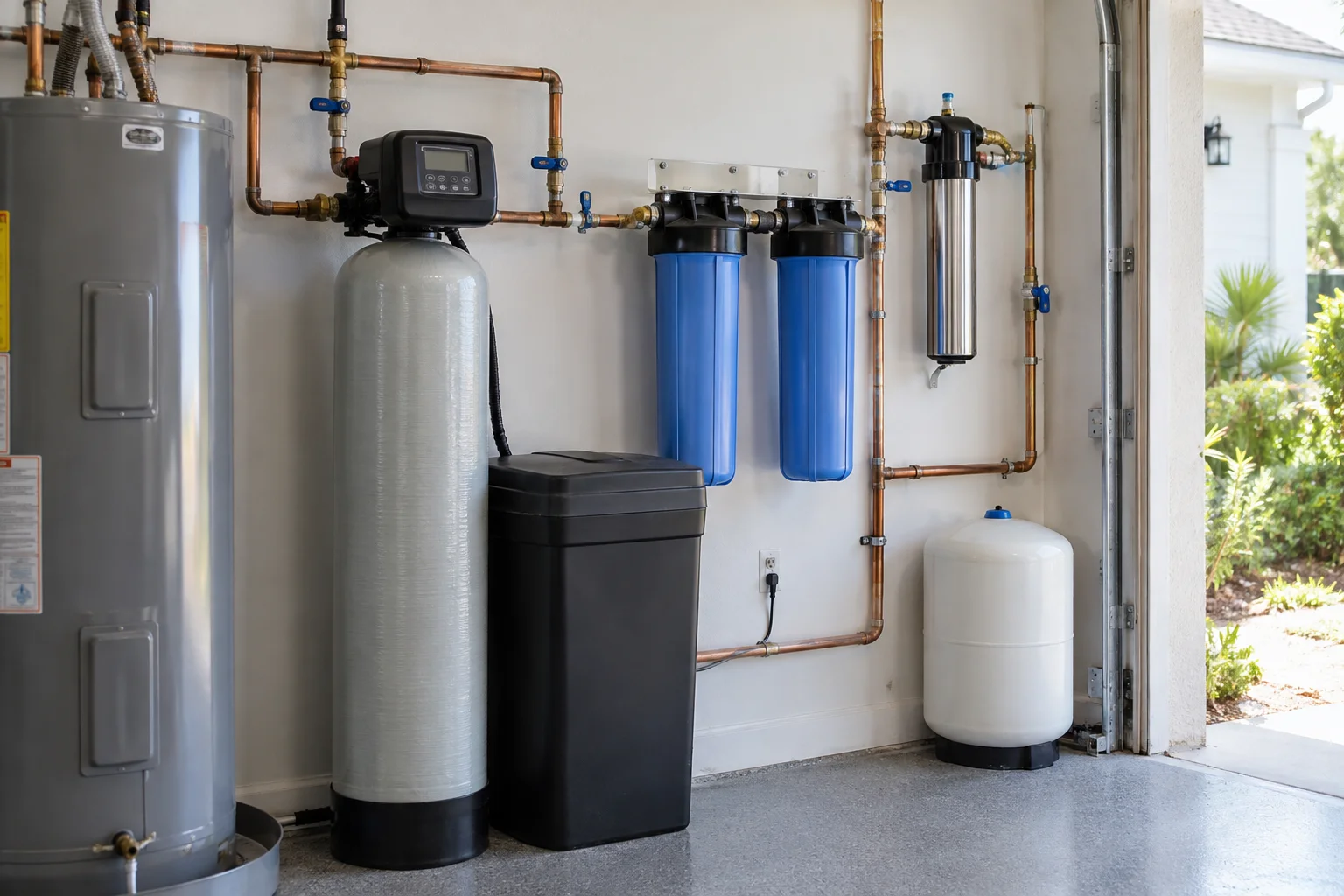
A true water softening system is designed to reduce the hardness minerals that cause scale. Most homeowners choose a traditional water softener that uses a process to exchange hardness minerals for sodium or potassium. The result is water that behaves differently in your home.
When softening is working, you typically notice:
- Less scale buildup on faucets and showerheads
- Cleaner rinsing in the bath and shower
- Better soap performance, meaning soap lathers more easily and rinses more completely
- Appliances that do not wear out as quickly from mineral deposits
Water softening does not automatically solve every water quality issue. If you have concerns like metallic taste, chlorinated or unpleasant taste, cloudy ice cubes, or sediment in household water, you may need additional filtration or a drinking water solution. Many families handle this by combining softening with whole home water filtration or point of use reverse osmosis for kitchen drinking water.
Common signs your home is dealing with hard water
Hard water often shows up in the routines you do every day. Here are the most common signs Fort Walton Beach homeowners report:
Glass, dishes, and fixtures that never look “quite clean”
After washing, do you still see hazy film on drinking glasses? Do dishes feel a little rough or look dull even after drying? These hard water spots on glass and residue on cookware are classic scale and mineral deposit patterns.
Scale buildup around faucets and showerheads
Check your aerators, handheld showerheads, and the base of faucets. If you see crusty buildup that returns quickly after cleaning, scale is likely forming inside plumbing and on fixtures. That buildup can also reduce water flow over time.
Skin and hair feel different after bathing
Many homeowners describe dry skin or dull hair after bathing when hard water is untreated. It can feel like soap does not rinse away well, leaving a film that dries out skin and makes hair look less vibrant.
Soap that does not lather or rinse well
When you use a normal amount of shampoo or laundry detergent and you still feel like you need extra product, that is a sign the water is fighting your cleaning efforts. Better water for drinking and cooking starts with better water for the rest of the home too, because mineral buildup affects how detergents and soaps work.
Appliances wearing out faster
Water heaters, dishwashers, and washing machines can all suffer when scale builds up inside heating components and plumbing. Homeowners often notice more maintenance calls, shorter appliance life, or changes in performance after years of hard water exposure.
Drinking water concerns: taste, odor, and cloudy ice cubes
Hardness is not the only issue that affects comfort and safety. Some homes notice cloudy ice cubes, metallic, chlorinated, or unpleasant taste, or sediment and discoloration at the tap. If coffee tastes off, or cooking water leaves residue, you may be looking at a combination of hardness, sediment, and taste or odor compounds.
Matching the right solution to the problem
Not every home needs the same setup. A good water treatment approach starts with understanding what is driving your symptoms. For many Fort Walton Beach households, the best results come from combining technologies.
Water softening for scale control
If your biggest issues are scale buildup around faucets, spotty glassware, and soap not rinsing well, water softening is usually the foundation. It reduces hardness minerals so your plumbing and fixtures stay cleaner longer.
Whole home water filtration for sediment and water clarity
Whole home water filtration is often chosen for homes that see visible sediment, discoloration, and odor concerns or want consistent water quality throughout the house. With whole home water filtration near me searches becoming more common, many homeowners are learning that filtering water at the point it enters the home can improve laundry, bathing, and cooking water, not just the kitchen sink.
Many systems also pair well with softeners. If you have sediment, taste, or odor concerns, filtration can help reduce those issues before softened water reaches your fixtures and appliances.
Reverse osmosis for drinking water and cooking water
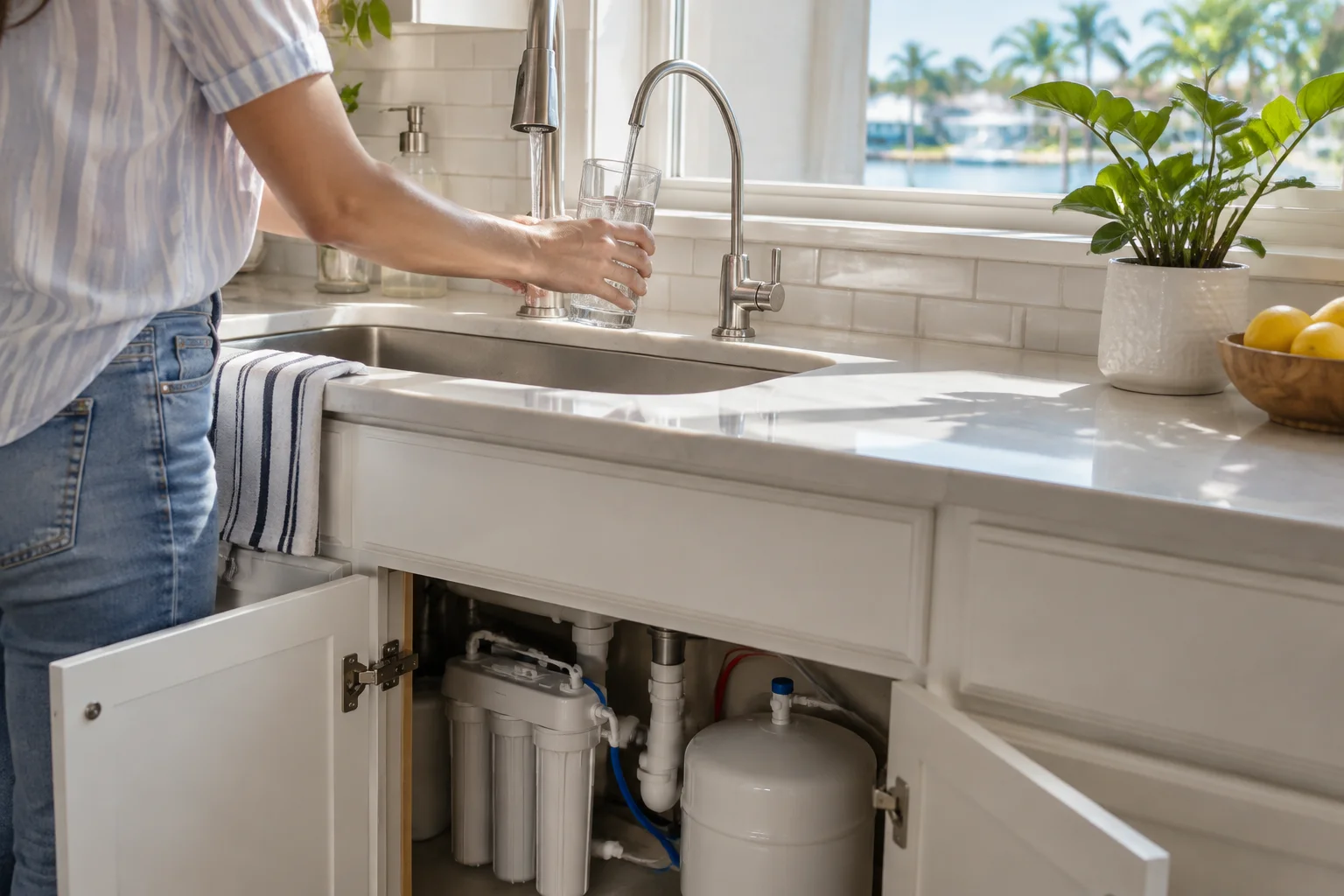
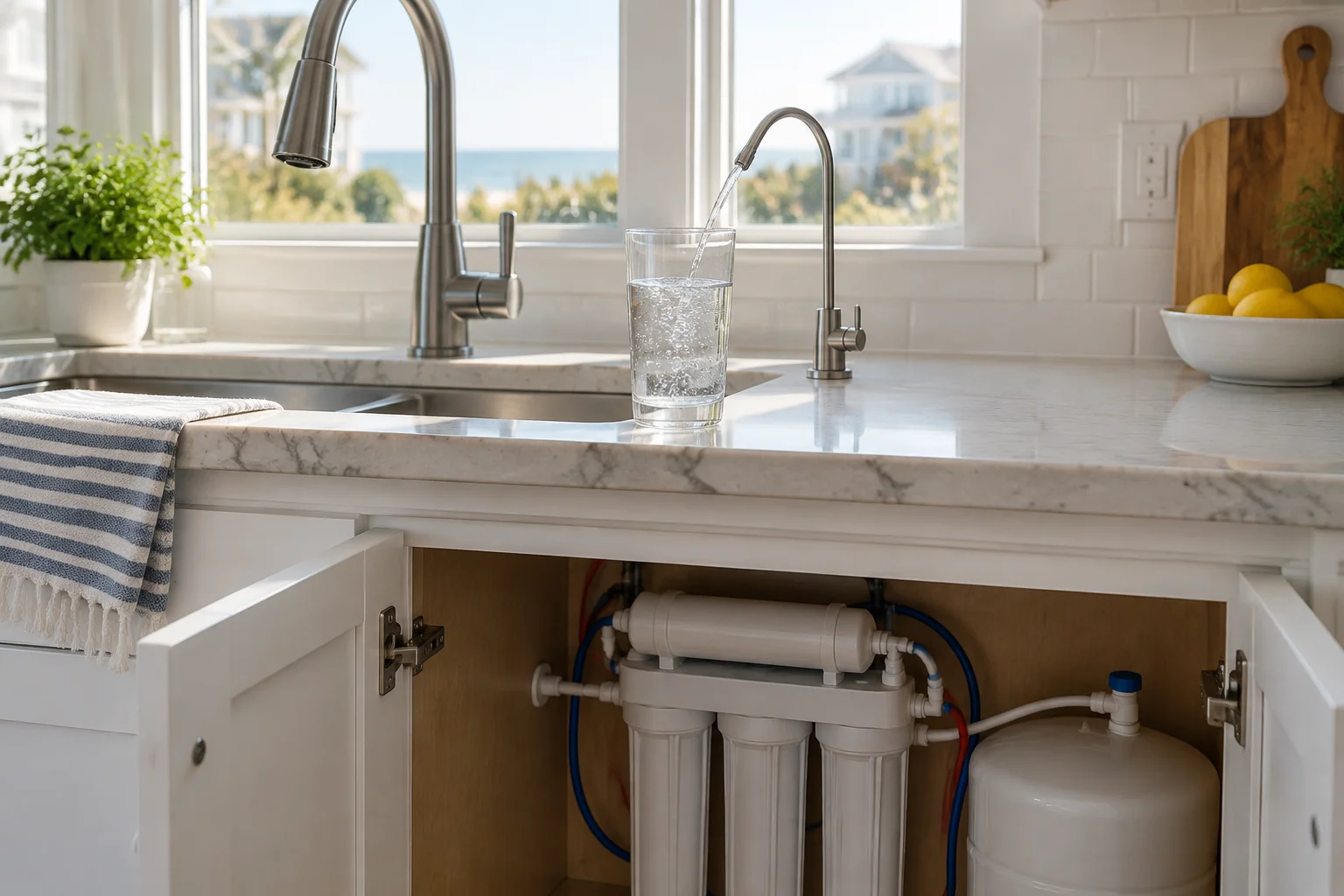
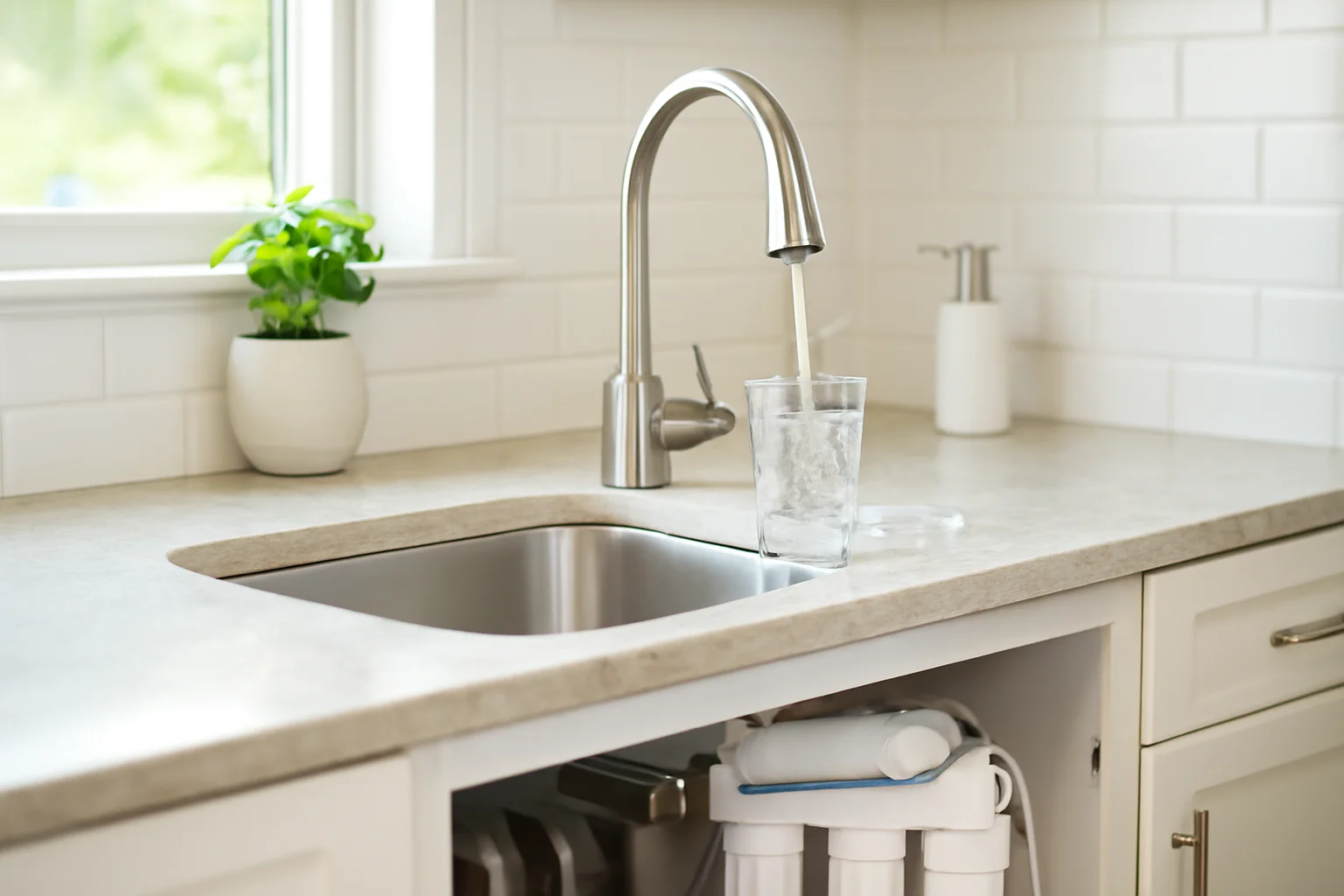
For families who care about everyday drinking water, reverse osmosis (RO) can be a strong option. RO is commonly used as a dedicated system for drinking water and kitchen use, helping address taste, odor, and certain dissolved contaminants.
If you are searching for a reverse osmosis system near me, it helps to think about how you use water. In many Fort Walton Beach kitchens, water is for more than drinking. It is for ice, making coffee, filling the kettle, and cooking rice, pasta, and sauces. If you notice poor tasting coffee and cooking water or cloudy ice cubes, an RO drinking water setup can make a noticeable difference for the whole family.
Where AO Smith water filtration fits into a complete plan
Homeowners often ask about reliable brands and service options. AO Smith water filtration is a popular choice because it is built for whole home and point of use needs, depending on the model and setup. Some households choose AO Smith water filtration combined with softening and additional filtration stages to create a cleaner, more comfortable water system.
If you are comparing options, ask how the system is designed for your home’s water pressure, household size, and water chemistry. A system that is sized correctly and maintained properly will work more consistently.
To explore water treatment options and how systems work together, you can review the resources on our water filtration and reverse osmosis page.
What homeowners should ask before installing a water softener or filtration system
Choosing water softening services is not just about buying equipment. It is about matching the system to your water and your household habits. Here are smart questions to bring to a consultation in Fort Walton Beach:
- What water issues are we treating? Hardness, taste and odor, sediment, or multiple concerns?
- Do we need whole home water filtration near me, or is a kitchen-only solution enough?
- How will the system be sized for our household? Number of people, laundry frequency, and water use patterns matter.
- How do you handle maintenance? Ask about salt settings, filter changes, and service intervals.
- Will we see improvements in the things we notice? For example, less scale buildup on faucets, better soap performance, and clearer ice cubes.
If you are looking for clean water system help, it is also worth reviewing your local service options on our Fort Walton Beach service area page to understand the coverage and support available in Okaloosa County.
Maintenance that keeps soft water and filtered water working
Water treatment systems are not set-and-forget. Maintenance is what helps protect your investment and keep results consistent.
Salt and regeneration settings for softeners
If you have a water softener, you need the correct salt type and enough salt in the brine tank. Regeneration cycles should match your water usage. When a softener is out of adjustment or running low on salt, scale can return and soap performance can drop.
Filter changes for whole home water filtration
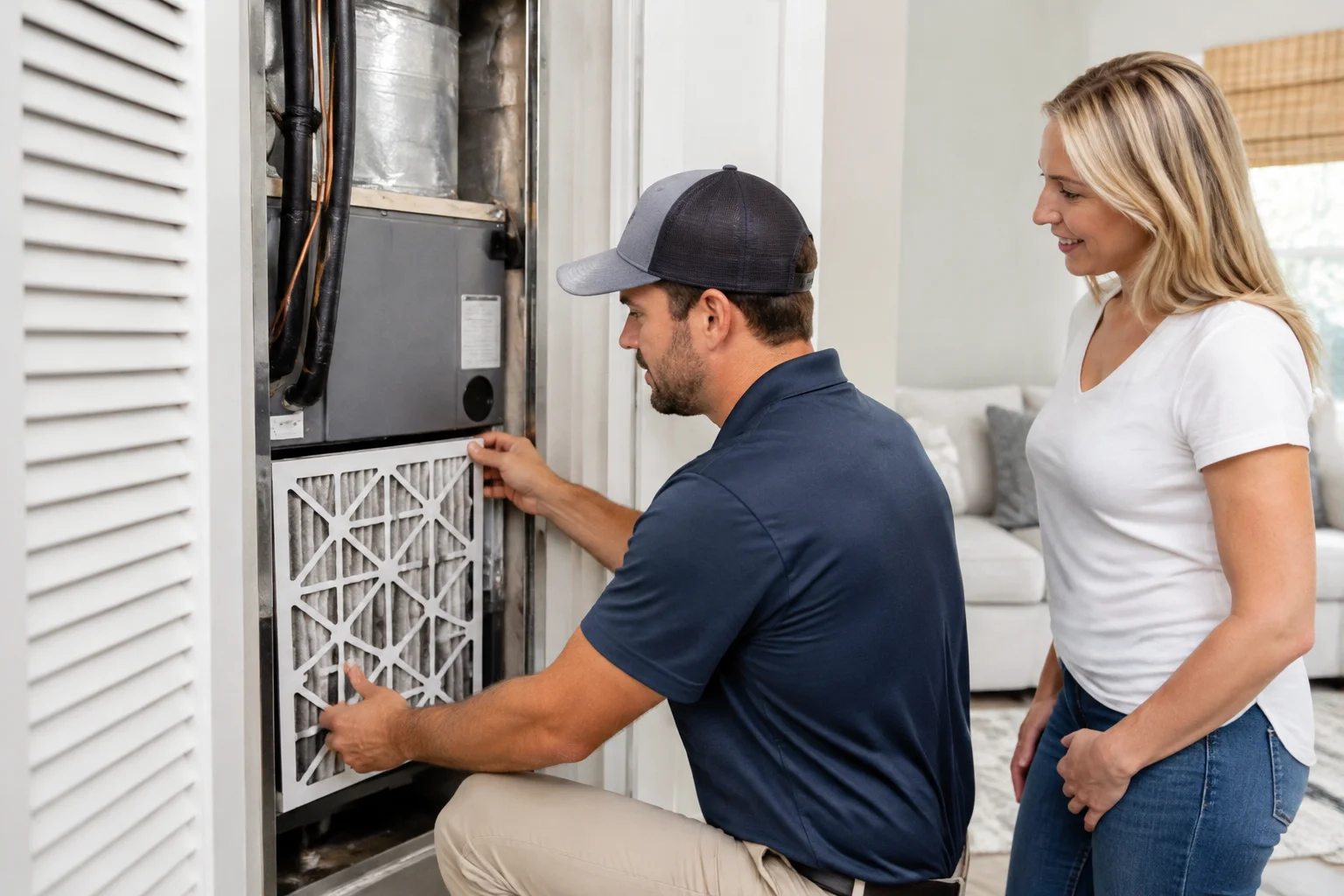
Filters capture sediment and other particles. Over time, they load up and need replacement. If filters are overdue, you may see sediment in household water again or notice that water clarity and odor control are not performing like they used to.
RO maintenance for drinking water
Reverse osmosis systems also require filter and membrane maintenance. Many homeowners notice performance changes when RO systems are due for service, including changes in taste or ice clarity. Keeping up with maintenance helps your system deliver better water for drinking and cooking consistently.
Prevention tips homeowners can do between service visits
While professional maintenance matters, you can also reduce the impact of hard water in daily life.
- Clean fixtures with the right routine so scale does not build up into hard deposits.
- Use water-safe cleaning products and avoid scrubbing that can damage finishes.
- Watch for early changes like faster soap buildup on shower glass, returning hazy spots, or changes in ice clarity.
- Pay attention to appliance symptoms, such as reduced hot water performance or increased maintenance needs.
These steps are helpful, but they do not replace proper hard water treatment. When scale buildup on faucets and showerheads starts returning quickly, it is usually a sign your system needs service, adjustment, or a refresh.
How better water improves everyday Fort Walton Beach life
Water treatment is easy to overlook until you see the difference. A typical Fort Walton Beach day might include a family shower before work, laundry after the beach, and coffee made for everyone before school. When the water is softened and filtered, those routines feel smoother.
Soap lathers more predictably. Laundry rinses cleaner. Kitchen water tastes better, which matters when you are making coffee, filling a water bottle, or preparing meals with tap water. You may also notice fewer mineral spots on glass and less scrubbing around fixtures.
Many homeowners describe it as less time fighting residue and more time enjoying the home. That is the real value of professional water softening services in Fort Walton Beach, FL.
Need water softening services in Fort Walton Beach? Start with the right service page
If you are ready to address hard water spots on glass, scale buildup around faucets, dry skin or dull hair after bathing, and drinking water concerns like cloudy ice cubes or poor tasting coffee water, you can explore the service options at A Superior Mechanical’s water softening services for Fort Walton Beach.
If you are also troubleshooting other water-related issues, these reads may help as you plan repairs and maintenance around your home:
- A Fort Walton Beach Homeowner’s Guide to Water Line Replacement Before Small Problems Spread
- Plumbing warning signs Fort Walton Beach homeowners should not ignore
- Planning Sewer Repair Around Fort Walton Beach Homes and Hard Water
- A Smarter Way to Handle Plumbing Services in Fort Walton Beach Homes
For homeowners searching for water treatment in Okaloosa County, the key is to treat the water you actually have. A combination of water softening, whole home water filtration, and reverse osmosis for drinking water can create a system that works with your lifestyle, your appliances, and your family’s daily routines.
Find Water Softening Services in Fort Walton Beach, FL
If you need Water Softening Services in Fort Walton Beach, FL, visit our local service page or contact A Superior Mechanical today.
For a broader look at whole-home water filtration, reverse osmosis, and water softener options, visit our water filtration, RO, and water softener page.
Map of Fort Walton Beach, FL
Frequently Asked Questions
How do I know if I need a water softener or whole home water filtration?
If you see hard water spots on glass, scale buildup around faucets, and soap does not lather well, a water softener is usually the right starting point. If you also notice visible sediment, discoloration, or unpleasant taste and odor, whole home water filtration can help address those concerns throughout the house.
Will a reverse osmosis system help with cloudy ice cubes and poor tasting coffee water?
Reverse osmosis often improves drinking water taste and clarity, which can reduce issues like cloudy ice cubes and poor tasting coffee and cooking water. Many homeowners pair RO for kitchen use with a whole home filtration and/or water softener system for the rest of the house.
What maintenance does an AO Smith water softener or AO Smith water filtration system require?
Maintenance depends on the model, but most systems need periodic checks and scheduled service. Softening systems require correct salt levels and regeneration settings. Filtration systems require filter replacements on a timeline based on your water conditions. RO systems require membrane and filter maintenance as well.
Can untreated hard water damage appliances in Fort Walton Beach homes?
Yes. Hard water scale can build up inside water heaters, dishwashers, and washing machines, reducing efficiency and shortening appliance life. When hard water treatment becomes part of protecting fixtures and appliances, homeowners often see fewer performance issues over time.
Related Articles
Photo Gallery