Fort Walton Beach homes feel the effects of hard water in everyday ways. You notice it on glassware, feel it after a shower, and see it around faucets and showerheads. Over time, that same mineral buildup can reduce the lifespan of plumbing fixtures and appliances, increase maintenance, and make your water treatment choices more important.
This guide walks homeowners through what can shorten the life of plumbing fixtures when hard water is left untreated, and how a properly sized and maintained water softening system, plus whole home filtration when needed, supports cleaner water systems for better drinking water, bathing, laundry, and cooking water.
Why Fort Walton Beach hard water is tough on fixtures
Homes in Fort Walton Beach and across Okaloosa County often deal with water that contains dissolved minerals, mainly calcium and magnesium. When water is heated or evaporates, those minerals can form scale. That scale is not just an annoying residue. It acts like a slow, abrasive layer inside plumbing components, valves, and appliance lines.
In daily life, hard water shows up fast. You might see hard water spots on dishes after the dishwasher runs. Glasses can look cloudy. Shower doors can develop a chalky film. Soap does not lather or rinse well, so you may end up using more product and still feeling like your skin is not as clean as it should be.
As scale builds up around faucets, showerheads, and plumbing connections, water flow can become restricted. That restriction can contribute to higher stress on components and can also reduce the efficiency of water heaters. The result is a chain reaction: more mineral deposition, more wear, and more frequent repairs.
What shortens the life of plumbing fixtures and appliances
Hard water damage is usually gradual. The fixtures do not fail overnight, but the wear adds up. Here are the most common ways it happens in real Fort Walton Beach homes.
1) Scale buildup around faucets and showerheads
Scale buildup around faucets and showerheads is one of the clearest signs you are dealing with hard water. The mineral deposits can form on aerators, shower nozzles, and valve seats. When mineral buildup on faucets grows, it can change spray patterns and reduce flow. When mineral buildup on showerheads grows, you may notice weaker water pressure and uneven spray.
That matters because restricted flow increases strain on internal parts. It also makes it easier for homeowners to scrub and scrape at fixtures, which can scratch finishes and shorten the life of coatings.
2) Restricted flow inside plumbing and valves
Scale does not only collect on visible surfaces. It can build inside pipes, shutoff valves, and water heater components. Over time, that can reduce water flow and cause temperature swings, especially when multiple fixtures run at once.
When flow is restricted, appliances and fixtures work harder to deliver the same performance. That extra load can lead to earlier wear and more service calls.
3) Water heater efficiency loss
In many homes, the water heater is the biggest “heater” in the house. Hard water scale can accumulate on heating surfaces, making it harder for the heater to transfer heat to the water. You might notice hot water that takes longer to reach the right temperature, or water that does not stay hot as long.
When hard water treatment becomes part of protecting fixtures and appliances, it often helps water heaters run more efficiently and reduces the rate at which scale builds on internal surfaces.
4) Poor soap performance and residue on skin
Soap does not lather or rinse well in hard water. That is a direct clue that minerals are interfering with how soap cleans. Many homeowners describe dry skin or dull hair after bathing, even when they use good shampoos and conditioners.
Hard water can leave a film that makes hair feel less manageable and can contribute to that “tight” skin feeling. While it is not the same as an infection concern, it can drive you to use more products, rinse longer, and still feel like results are inconsistent.
5) Taste, odor, and sediment issues
Hardness is only one part of water quality. Some homes also notice metallic, chlorinated, or unpleasant taste. You may see visible sediment, discoloration, and odor concerns, especially after periods of heavy use or changes in local water conditions.
Even if your main issue is scale, sediment and taste concerns can affect how you experience drinking water and cooking water. Cloudy ice cubes and poor tasting coffee water are common complaints when filtration and softening are not properly addressed.
6) Appliances wearing out faster
Dishwashers, washing machines, and coffee makers are all exposed to mineral content. Scale can clog small passages and reduce performance. Over time, appliances may wear out sooner or require more frequent maintenance.
You might also notice laundry that feels rough compared to what you remember, or a buildup that makes whites look dingy. When you see hard water spots on dishes and a gradual decline in appliance performance, it is a strong signal that your water treatment plan needs attention.
How water softening and filtration work together
Homeowners often search for water softener service near me or water filtration near me because they want one solution that fixes everything. The truth is that different water problems require different tools.
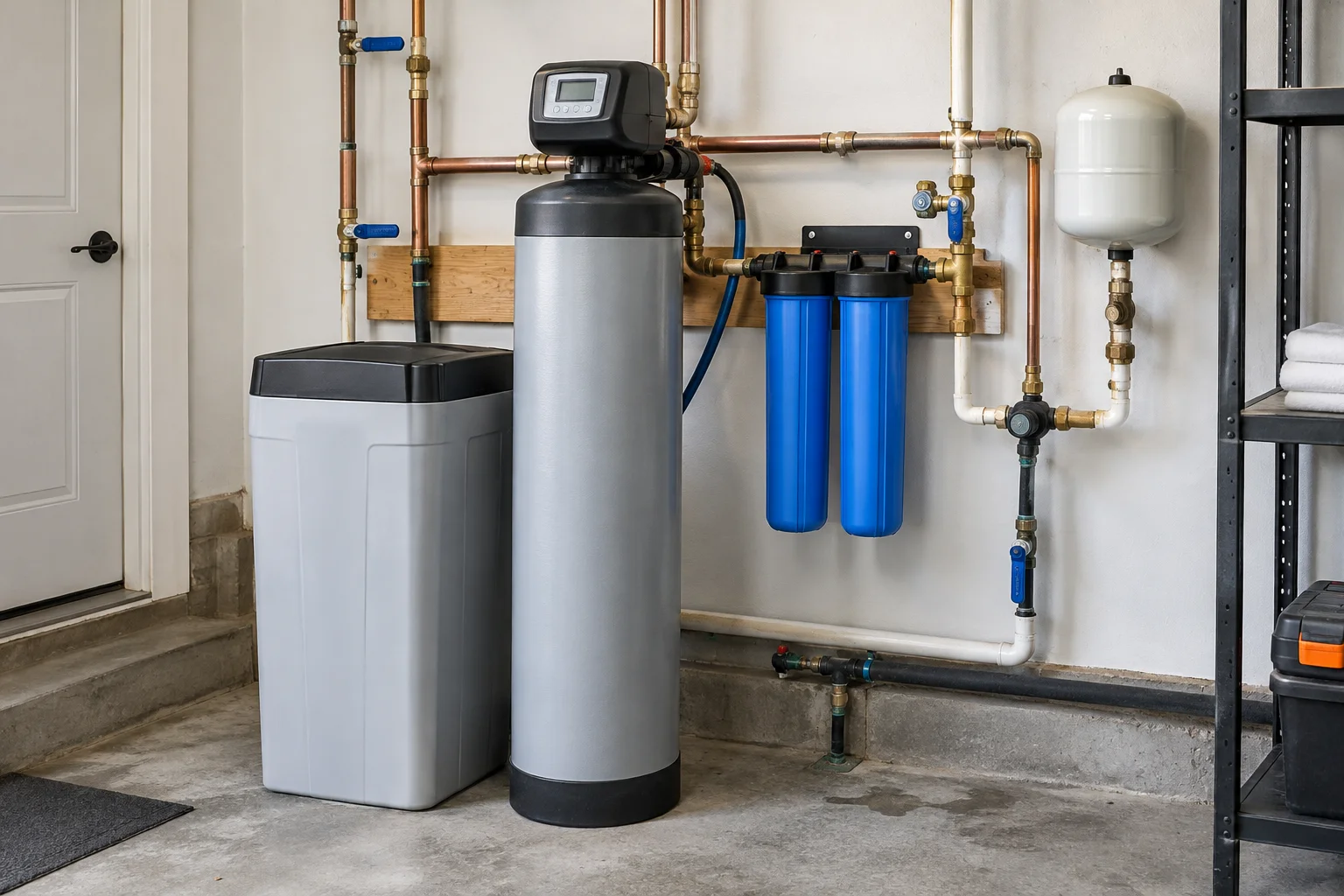
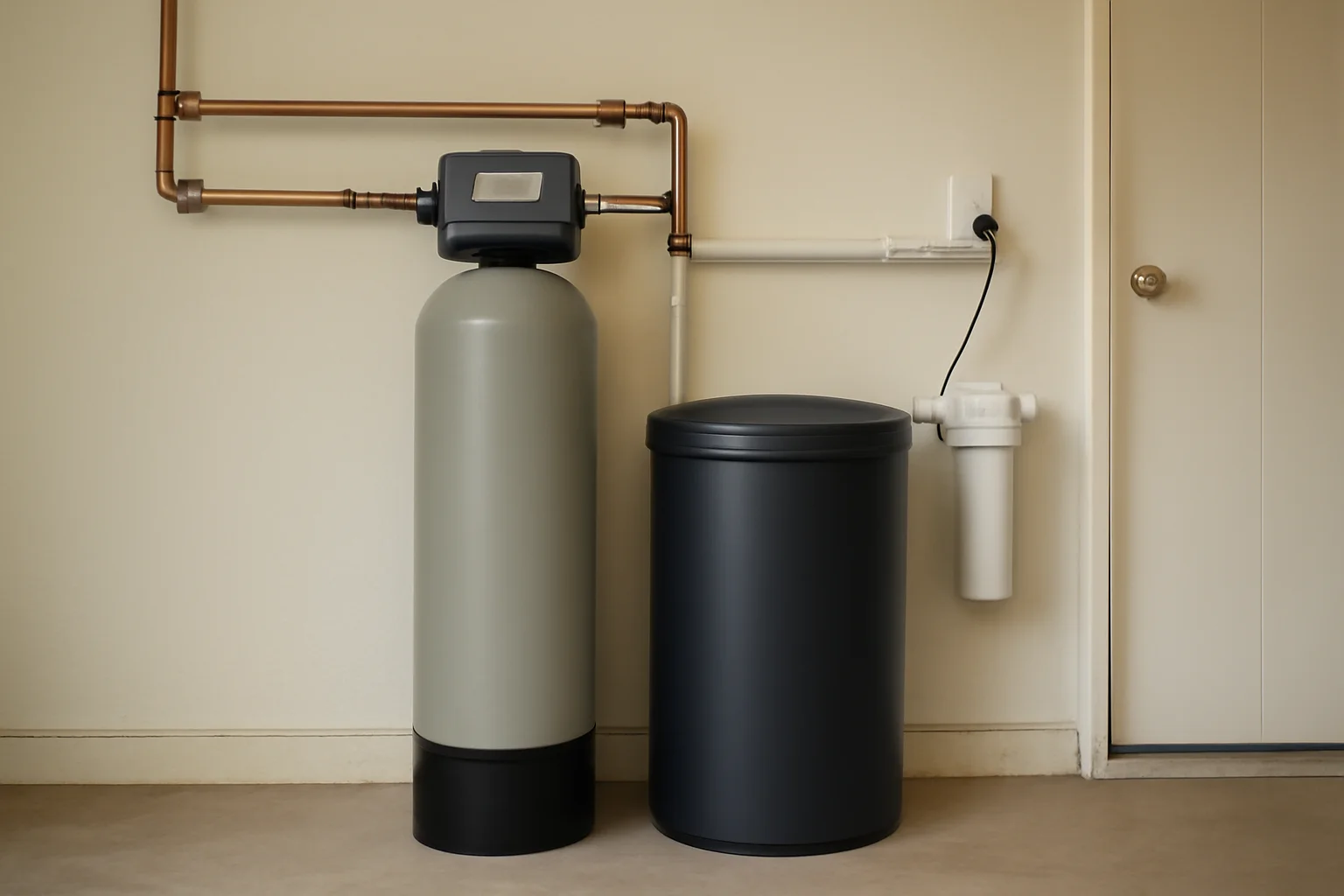
Water softening targets hardness minerals. A softener exchanges calcium and magnesium for sodium or potassium ions, which helps prevent scale formation. That means fewer hard water spots on glass, less scale buildup around faucets and showerheads, and better protection for plumbing and appliances.
Water filtration targets particulates, sediment, and taste and odor concerns. In some homes, whole home filtration is needed before or alongside a softener to help protect components and improve water quality throughout the house.
For homeowners researching clean water systems near me or drinking water filter near me, it helps to think in layers: soften to reduce scale, filter to improve clarity and taste, and use reverse osmosis for targeted drinking water when you want the cleanest option at the tap.
What to look for in a better water softening system
Not all water softeners perform the same. The right system depends on your household size, water hardness levels, and how much water you use daily.
Correct sizing based on your water use and hardness
A properly sized softener regenerates at the right intervals. If it is undersized, it may not keep up, and scale can still form. If it is oversized, it may regenerate too often, which can waste resources and increase maintenance needs.
In Fort Walton Beach homes, a local water treatment service can help you choose a system that matches your conditions in Okaloosa County.
Reliable components and proven brands
Many homeowners prefer Evolve and A. O. Smith systems because they are built for dependable long-term use in real households. A. O. Smith water filtration and softening options are widely used in homes where scale and water quality both matter.
If you are comparing equipment, ask about the control system, resin tank design, and how regeneration is managed. A good installation also matters as much as the equipment.
Installation quality that protects your plumbing
Even a strong system can underperform if it is installed incorrectly. A service professional will consider pipe sizing, bypass setup, drain line routing, and proper placement for service access. That is part of why water treatment near me searches often lead to local installers who understand the homes and plumbing layouts in your area.
Where reverse osmosis fits for drinking and cooking water
Softening improves scale and fixture protection, but it does not always address every taste and water clarity concern. That is where reverse osmosis (RO) can play a role.
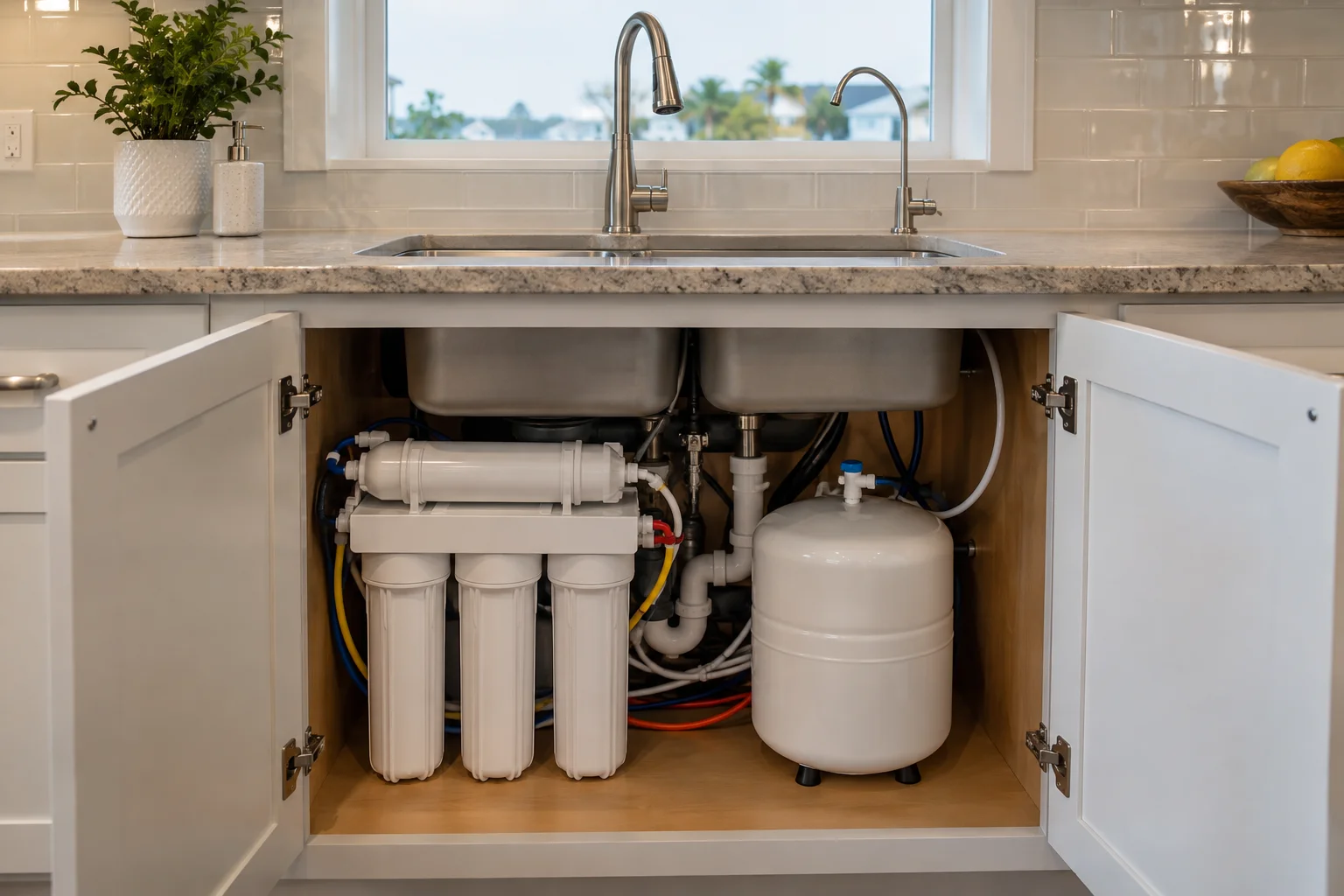
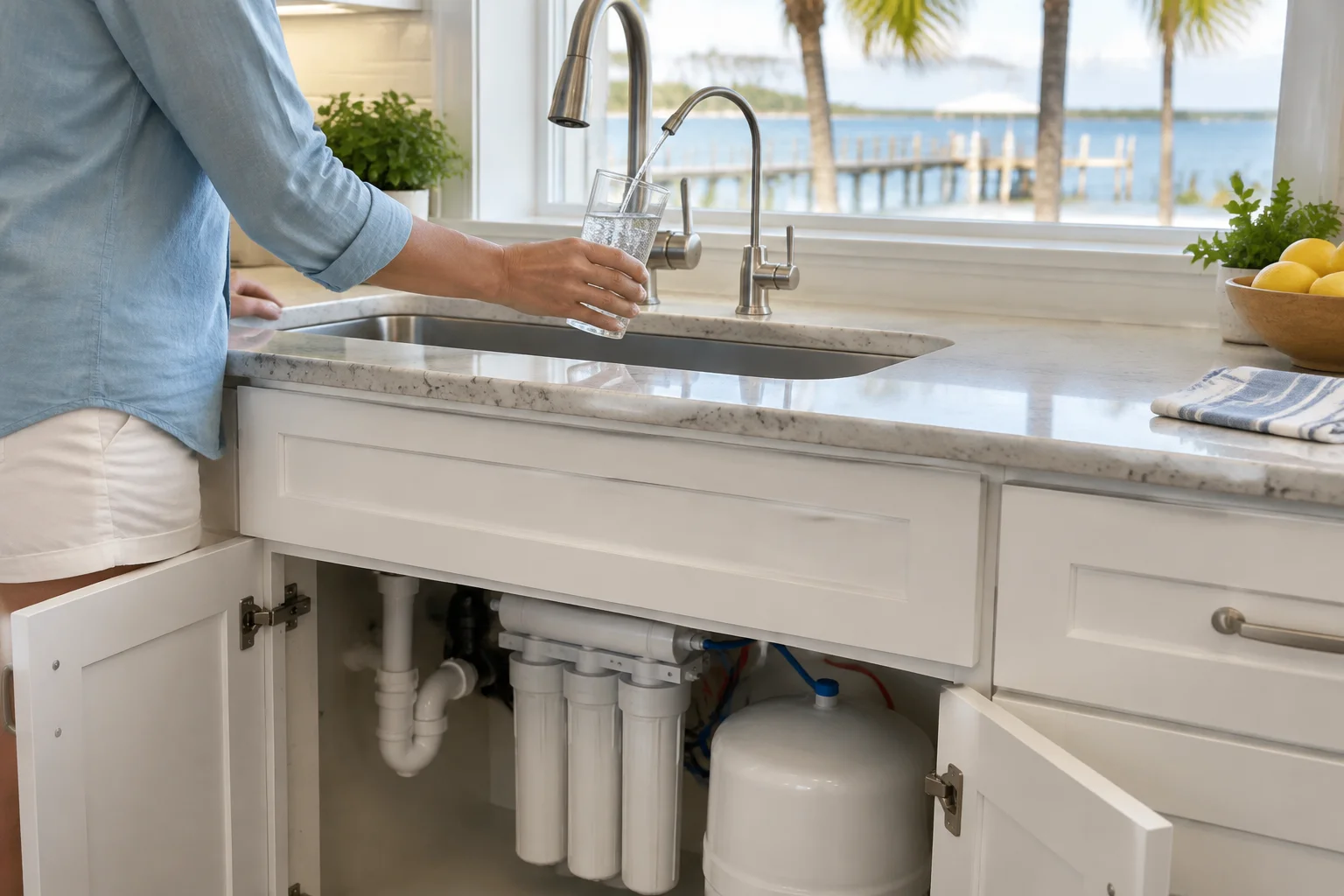
RO systems use a membrane to reduce dissolved solids and can help with cloudy ice cubes, unpleasant taste, and concerns that affect drinking water and cooking water. Many families in Fort Walton Beach want a dedicated system at the kitchen sink for everyday use, especially when they want better drinking water for the whole household.
Think about the routine: morning coffee, kids filling bottles, and cooking water for pasta or rice. When water tastes better and looks clearer, you notice it quickly. If you are also dealing with chlorine taste in water or sediment in household water, a combination of whole home water filtration plus point-of-use reverse osmosis can be a strong approach.
If you are exploring reverse osmosis installation, it is smart to ask how it should integrate with your softener and other filtration components. Many homeowners find that an RO unit works best when upstream filtration reduces sediment stress on the membrane.
Whole home water filtration for a smoother, cleaner routine
Whole house or whole home water filtration is designed to improve water quality throughout the home, not just at one tap. That can help when you are seeing visible sediment, discoloration, and odor concerns, or when you want consistent water quality for laundry, bathing, and cleaning.
Whole home filtration can also support a cleaner overall “clean water systems near me” goal, especially when household water is affecting how soap performs, how fixtures look, and how appliances run.
If you are considering an AO Smith water filtration approach, ask how it pairs with a water softening system for your home. This can be part of an overall hard water treatment plan that protects plumbing and improves day-to-day comfort.
For homeowners who want to compare options, you can review the water softening and filtration approach here: /water-filtration-ro-water-softeners.
Maintenance habits that keep your softener working
A water softening system is not a “set it and forget it forever” appliance. It needs periodic checks and, in many cases, filter changes. Proper maintenance helps prevent scale from returning.
Watch for performance changes
When your softener is working well, you should see fewer hard water spots on dishes and glass. You should also notice improvements in soap rinsing, bathing comfort, and fixture appearance.
If you start seeing scale buildup around faucets and showerheads again, that can be a sign your system needs service or adjustment.
Keep up with filter and media schedules
Some systems include pre-filters or other filtration components. If those media are overdue, sediment can increase and taste or odor concerns can return. Following manufacturer schedules helps protect your system and keeps water quality consistent.
Use the correct salt or treatment settings
Using the wrong type of salt, incorrect settings, or skipping refills can affect softener performance. Your local service team can recommend best practices based on your system type and water conditions.
Local factors in Fort Walton Beach that make service planning smarter
Fort Walton Beach weather and local water conditions can influence how quickly you notice issues. Seasonal changes in water use, fluctuations in household demand, and local infrastructure updates can all affect how water feels in your home.
That is why local water treatment service matters. A service provider familiar with Okaloosa County homes can help you diagnose whether your main issue is hardness alone, or if you also have sediment, taste, or odor concerns that require additional filtration.
If you are looking for water softening system installation in Fort Walton Beach, you can explore the service area details here: /service-areas/okaloosa-county/fort-walton-beach/water-softening-systems-fwb. You can also browse the broader coverage area here: /service-areas/okaloosa-county and the city page: /service-areas/okaloosa-county/fort-walton-beach.
Everyday scenes where better water makes a difference
Better water is not just about protecting pipes. It shows up in daily family routines.
Kitchen mornings
When your water tastes better and looks clearer, coffee water improves. You might notice that ice cubes stop coming out cloudy. Cooking water tastes more consistent, and food preparation feels cleaner.
Bath time
Many families deal with dry skin or dull hair after bathing when hardness is high. With a well-managed softening plan and optional filtration, bathing often feels more comfortable, and rinsing soap off becomes easier.
Laundry and cleaning
When soap does not lather, laundry can feel stiff and cleaning takes longer. Better water softening and whole home filtration can reduce that struggle. You may also see less buildup on fixtures and fewer cleaning sessions spent scrubbing scale off shower doors and faucets.
Long-term fixture confidence
Faucets and showerheads are investments. When scale buildup around faucets and showerheads slows down, finishes stay cleaner longer, flow patterns hold steady, and appliances wear less aggressively.
When to call a professional water treatment team
Homeowners should contact a professional when water quality signs start adding up. Consider scheduling a water evaluation if you notice:
- Hard water spots on glass, dishes, and fixtures that keep returning
- Scale buildup around faucets, showerheads, and visible plumbing connections
- Dry skin or dull hair after bathing
- Metallic, chlorinated, or unpleasant taste
- Cloudy ice cubes, poor tasting coffee water, or off cooking water
- Visible sediment, discoloration, and odor concerns in household water
- Soap does not lather or rinse well
- Appliances wearing out faster than expected
It is also worth calling if you recently replaced a fixture or appliance and the buildup returns quickly. That usually means the root water issue is still present.
For related home maintenance context that overlaps with water quality, you can read: /news/a-fort-walton-beach-homeowner-s-guide-to-water-line-replacement-before-small-problems-spread. If you are also concerned about broader home plumbing health, these posts may help: /news/plumbing-warning-signs-fort-walton-beach-homeowners-should-not-ignore and /news/a-smarter-way-to-handle-plumbing-services-in-fort-walton-beach-homes-2. For homeowners thinking about how water treatment can intersect with drainage and repair decisions, see /news/planning-sewer-repair-around-fort-walton-beach-homes-and-hard-water.
Choosing the right next step for your Fort Walton Beach home
Many homeowners start with the visible problem, like hard water spots on dishes or scale buildup around faucets. The smarter approach is to treat the water so the problem stops coming back.
A Superior Mechanical helps homeowners in Fort Walton Beach and Okaloosa County protect plumbing fixtures and appliances with properly installed water softening systems and coordinated water filtration solutions. That can include Evolve or A. O. Smith water filtration, whole home water filtration, and reverse osmosis for drinking water and cooking water, depending on your home’s needs.
If you want a focused water softening system installation in Fort Walton Beach, review the service page here: /service-areas/okaloosa-county/fort-walton-beach/water-softening-systems-fwb.
Find Water Softening Systems in Fort Walton Beach, FL
If you need Water Softening Systems in Fort Walton Beach, FL, visit our local service page or contact A Superior Mechanical today.
For a broader look at whole-home water filtration, reverse osmosis, and water softener options, visit our water filtration, RO, and water softener page.
Map of Fort Walton Beach, FL
Frequently Asked Questions
Can a water softener really reduce scale buildup around faucets and showerheads?
Yes. Water softening reduces the hardness minerals that form scale. With properly sized and maintained equipment, many homeowners see less scale buildup around faucets, showerheads, and other plumbing surfaces.
Why do my ice cubes look cloudy even if I do not notice sediment in the sink?
Cloudy ice cubes can be caused by dissolved minerals, taste and odor issues, or air and water chemistry changes. A combination of whole home water filtration and, when appropriate, reverse osmosis for drinking water can help improve clarity and taste.
Does reverse osmosis replace a water softener?
Usually not. Reverse osmosis and water softening address different problems. Softening targets hardness to prevent scale. RO focuses on dissolved solids for cleaner tasting drinking water. Many homes use both, depending on water test results and goals.
How do I know whether I need whole home water filtration or just a drinking water filter?
If you notice issues throughout the home, such as soap does not lather, dry skin or dull hair after bathing, sediment in household water, or recurring odor and discoloration, whole home filtration often helps more. If the concern is mostly taste at the kitchen tap, a drinking water filter or reverse osmosis may be enough.
Related Articles
Photo Gallery