A dishwasher finishes its cycle, but the glasses still look spotted. The morning coffee tastes a little off. Another chalky ring appears around the bathroom faucet. These small frustrations can point to water quality issues that deserve a closer look, especially when they affect several rooms at once.
For homeowners considering water purification services in Lower Grand Lagoon, FL, the best starting point is identifying what is actually in the water. A Superior Mechanical provides local water purification services, including testing, AO Smith system installation, whole home treatment, reverse osmosis integration, repairs, and maintenance. The goal is treatment that fits your water and your household, rather than equipment chosen by guesswork.
How Water Problems Show Up Around the House
Water touches almost every part of a normal day. It fills the kids' drinking cups, rinses vegetables for dinner, runs through the washing machine, and supplies every shower. Looking at where problems occur helps narrow down their causes.
Spots, scale, and stubborn soap residue
Hard water contains dissolved calcium and magnesium. When droplets evaporate, those minerals can leave hard water spots on glass, dishes, and fixtures. Repeated deposits may create scale buildup around faucets and showerheads. Inside plumbing and water-using equipment, deposits can also restrict flow or interfere with performance over time.
Soap that does not lather or rinse well is another useful clue. Hardness minerals react with soap, making residue more noticeable on shower walls, laundry, and skin. Dry skin or dull hair after bathing can have several causes, but water hardness may contribute to the feeling. Treatment can reduce mineral-related residue without promising to resolve a skin or hair condition.
Taste, ice, and the family kitchen
Metallic tasting water, chlorine taste in water, or another unpleasant flavor can make a perfectly ordinary kitchen routine frustrating. Coffee may taste harsh, soup may pick up an unwanted note, and family members may avoid the refrigerator dispenser in favor of bottled water.
Cloudy ice cubes are worth discussing, although they do not prove contamination. Trapped air and dissolved minerals can both contribute to cloudiness. Filtration or reverse osmosis may improve ice quality, but freezing conditions still matter. Taste, clarity, and safety are different questions, so a clear glass of water is not a substitute for appropriate testing.
Sediment, discoloration, and odors
Visible sediment in water may come from disturbed supply lines, corrosion, or deteriorating plumbing components. Discoloration can have several causes as well. Note whether the problem affects cold water, hot water, one faucet, or the entire house before calling for service.
Water odor concerns need similar investigation. An odor that appears only at one sink could originate in the drain, while an odor limited to hot water may involve the water heater. Sudden changes, unusual chemical smells, or suspected contamination deserve prompt professional guidance. Do not assume a standard filter makes questionable water safe to drink; follow utility and health department instructions.
Why Lower Grand Lagoon Homes Need an Individual Approach
Lower Grand Lagoon's warm, humid coastal climate makes dependable household water especially important. Showers after beach trips, extra laundry, and visiting family can increase demand. Seasonal homes and vacation rentals may alternate between quiet weeks and heavy use, so treatment should match both everyday needs and peak occupancy.
Coastal location alone does not establish a home's hardness, mineral content, or treatment needs. Municipal supply characteristics, the property's plumbing, and periods of inactivity can all affect water at the tap. Review the current water quality report from your serving utility, then use household testing to investigate concerns specific to your address.
Local service also matters when planning installation space, weather protection, drainage, and future filter access. Homes across Lower Grand Lagoon differ in age, layout, and water demand. A system that suits a compact household may not provide adequate flow for a rental with several bathrooms running at once.
Match the Treatment to the Water Problem
Water treatment is not one interchangeable product. A filter, softener, reverse osmosis system, and UV unit perform different jobs. Some homes need one treatment stage; others benefit from a coordinated setup.
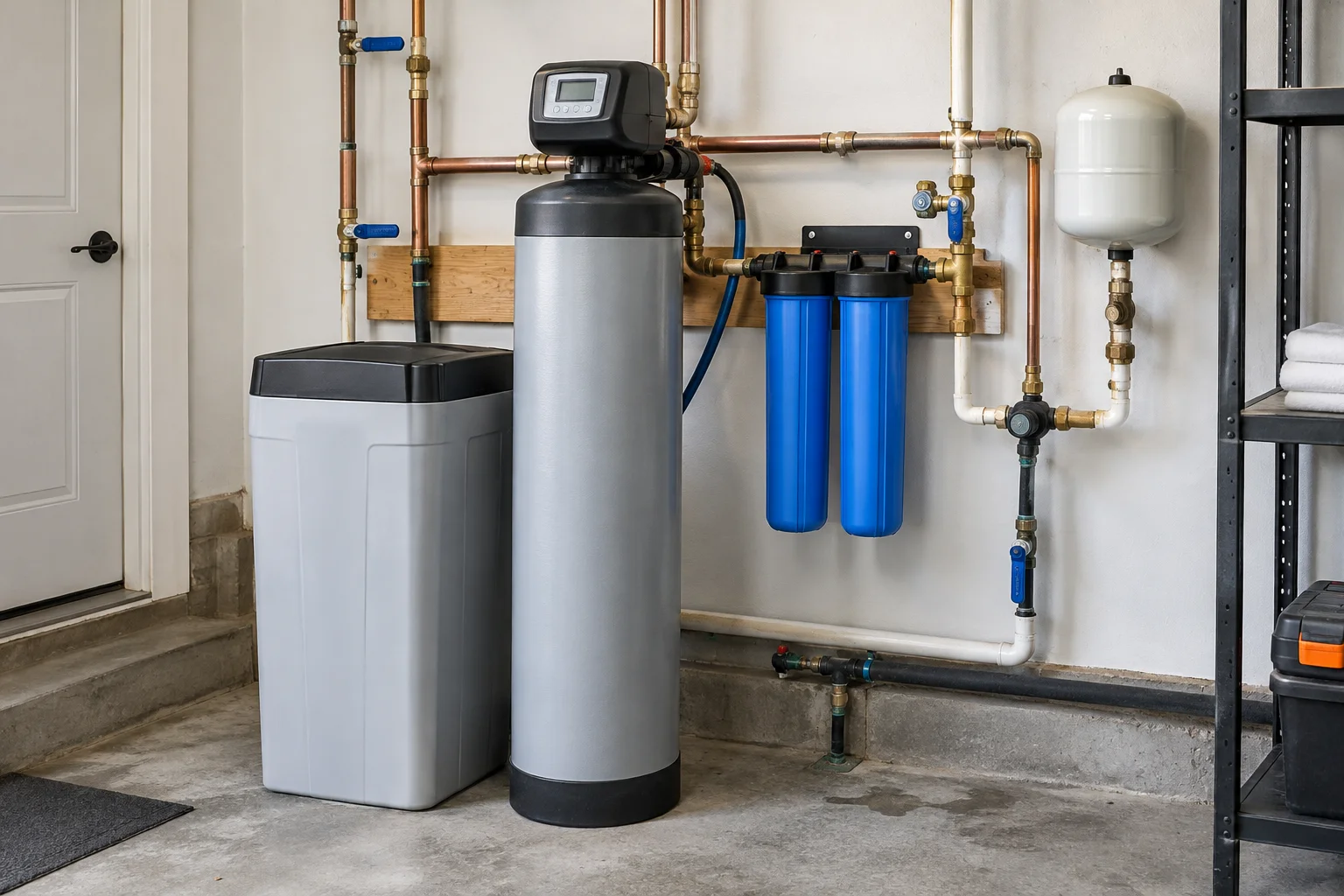
Whole home water filtration for incoming water
Whole home water filtration treats water near its point of entry, before it reaches the connected fixtures. Depending on its media and design, a whole house water filter may address sediment, chlorine taste and odor, or other specifically identified substances.
A sediment filter captures particles within its rated range, but it does not remove dissolved hardness. Activated carbon can reduce certain taste and odor problems, but capabilities vary. If the water supply uses chloramine, equipment needs to be selected for that disinfectant rather than assuming every carbon filter performs equally.
Whole home treatment can make sense when concerns extend beyond drinking water to bathing, laundry, and multiple faucets. The article Cleaner Water, Better Plumbing explores that connection further. Always match filter claims to the actual model and its independently verified performance.
Water softening for mineral-related scale
Water softening targets calcium and magnesium, making it the relevant option when hard water treatment becomes part of protecting fixtures and appliances. A conventional ion-exchange softener removes hardness minerals. A salt-free scale-control device works differently and should not be described as producing softened water.
Reducing hardness can help limit new scale deposits, improve soap performance, and reduce mineral spotting. Hard water can contribute to appliances wearing out faster, especially where heated water encourages deposits. However, treatment cannot guarantee a particular appliance lifespan or repair damage that is already present.
Proper sizing depends on measured hardness and household consumption. Water softener service should also address salt use, regeneration settings, drainage, and whether the system is actually delivering softened water. For people managing sodium intake, discuss drinking-water options and the softener's contribution with an appropriate healthcare professional.
Reverse osmosis for drinking and cooking water
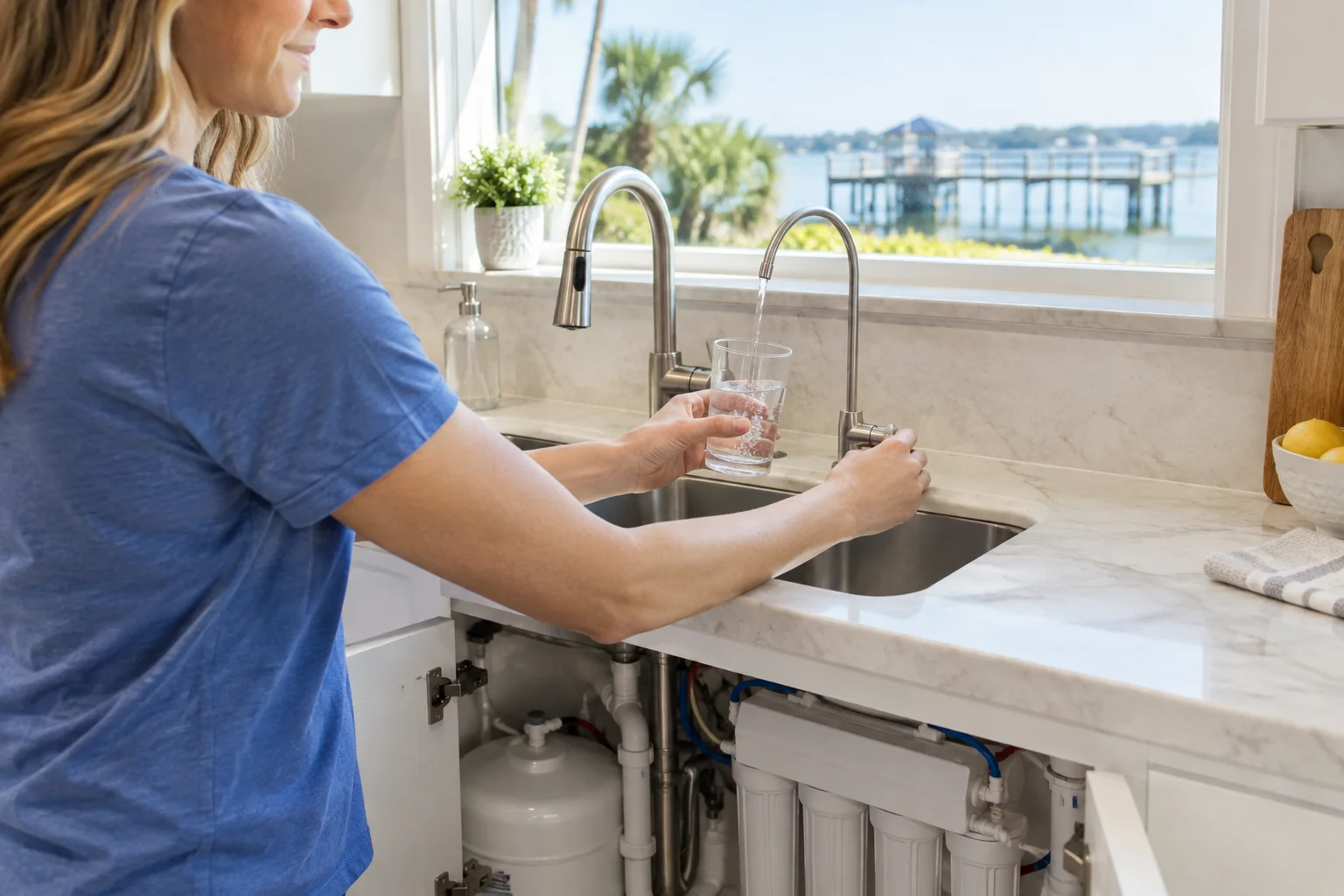
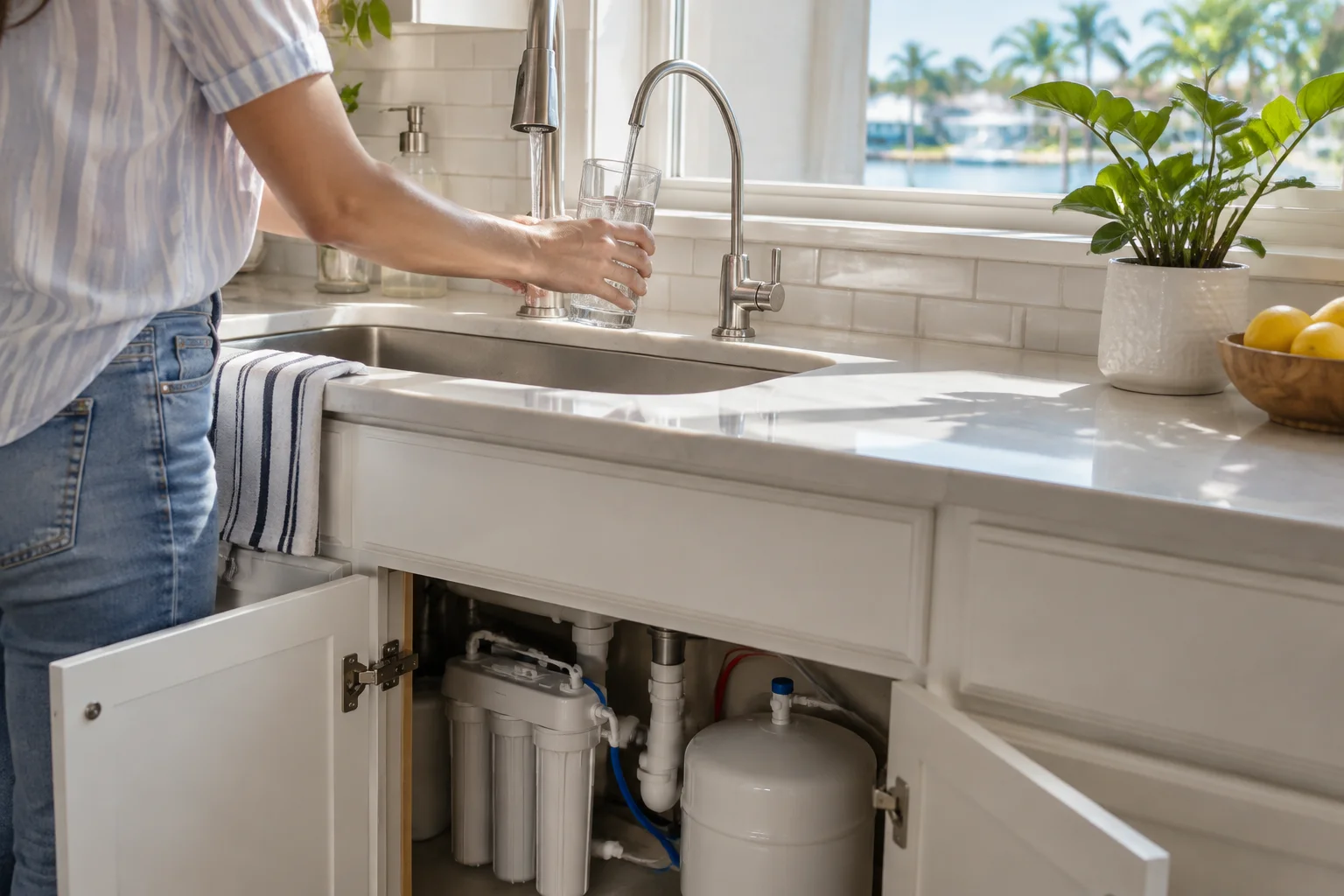
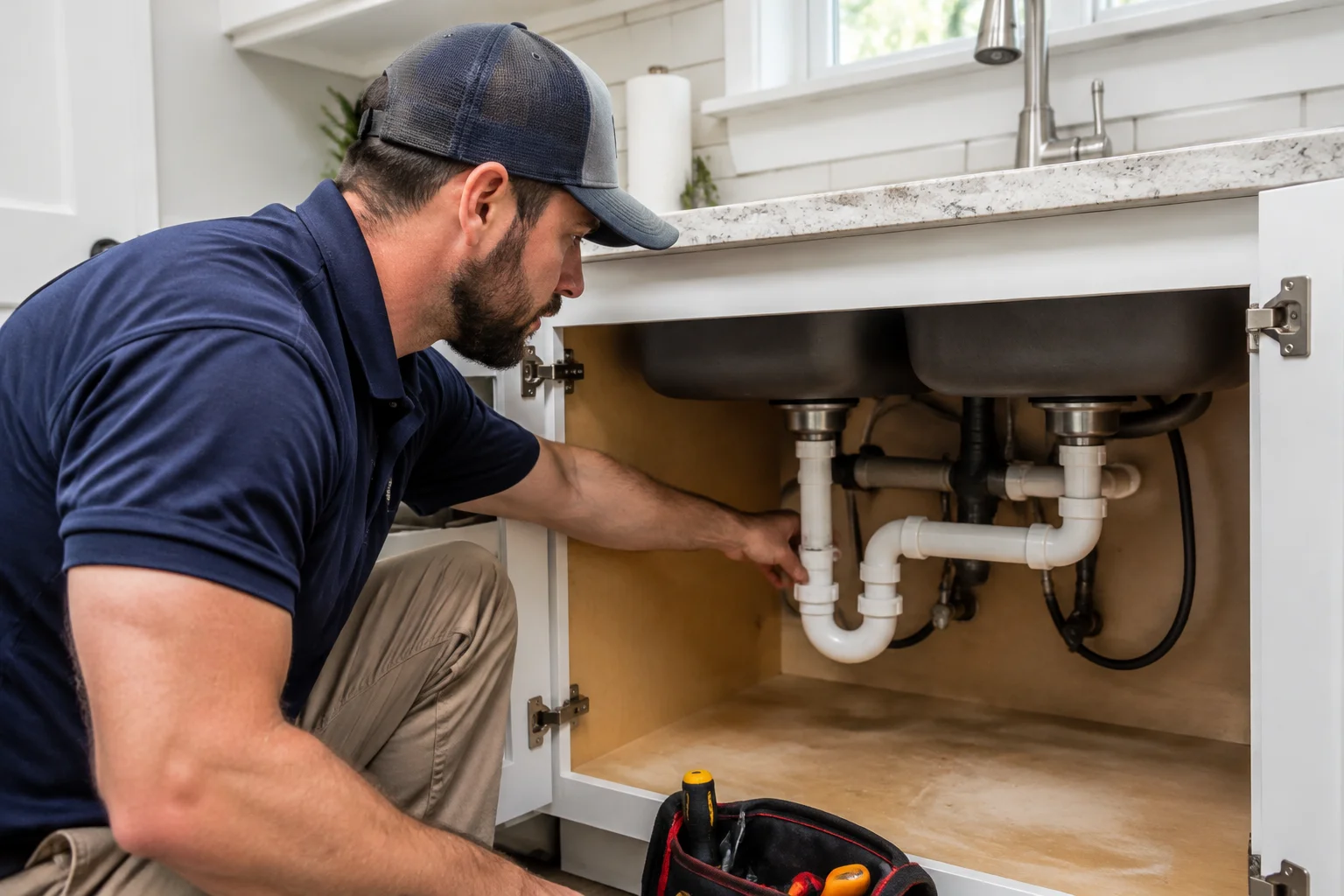
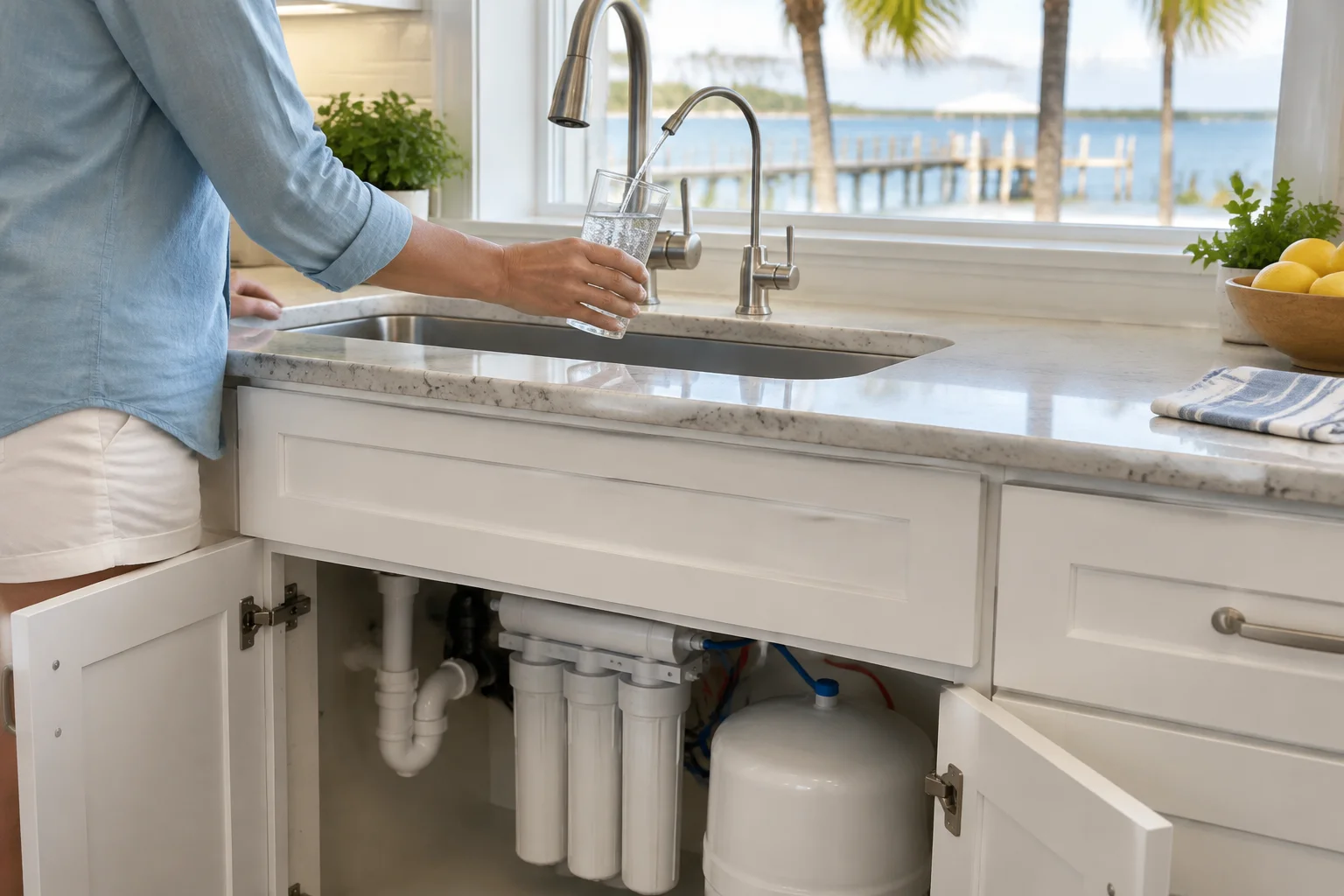
Reverse osmosis is often installed under the kitchen sink to supply a dedicated drinking-water faucet. A properly selected system can reduce many dissolved substances and improve flavor, making it useful for households seeking better water for drinking and cooking.
Picture filling a pasta pot, making iced tea, or preparing coffee without reaching for bottled water. Those everyday uses often drive interest in reverse osmosis installation. Some systems can also serve a refrigerator, provided pressure, tubing, and the appliance's requirements are compatible.
Reverse osmosis is generally a point-of-use solution, not a replacement for whole home scale control. Ask about tested reduction claims, production rate, storage capacity, filter changes, membrane maintenance, and wastewater requirements. The right setup should keep up with your kitchen rather than simply fit inside the cabinet.
AO Smith systems and specialized treatment
AO Smith water filtration includes different treatment options, so the brand name alone does not tell you what a specific system removes. A Superior Mechanical can help match equipment to testing results, available space, service access, and household flow requirements.
UV treatment may be appropriate when testing and water-source conditions indicate a microbial concern. Properly sized and maintained UV equipment inactivates susceptible microorganisms, but it does not remove hardness, sediment, or dissolved chemicals. Pretreatment may be necessary because particles and poor water clarity can interfere with UV performance.
For a broader look at equipment choices, explore A Superior Mechanical's water filtration, reverse osmosis, and water softener services. Clean water systems should be designed around identified needs, not a promise that one device removes everything.
Testing Makes the Installation More Useful
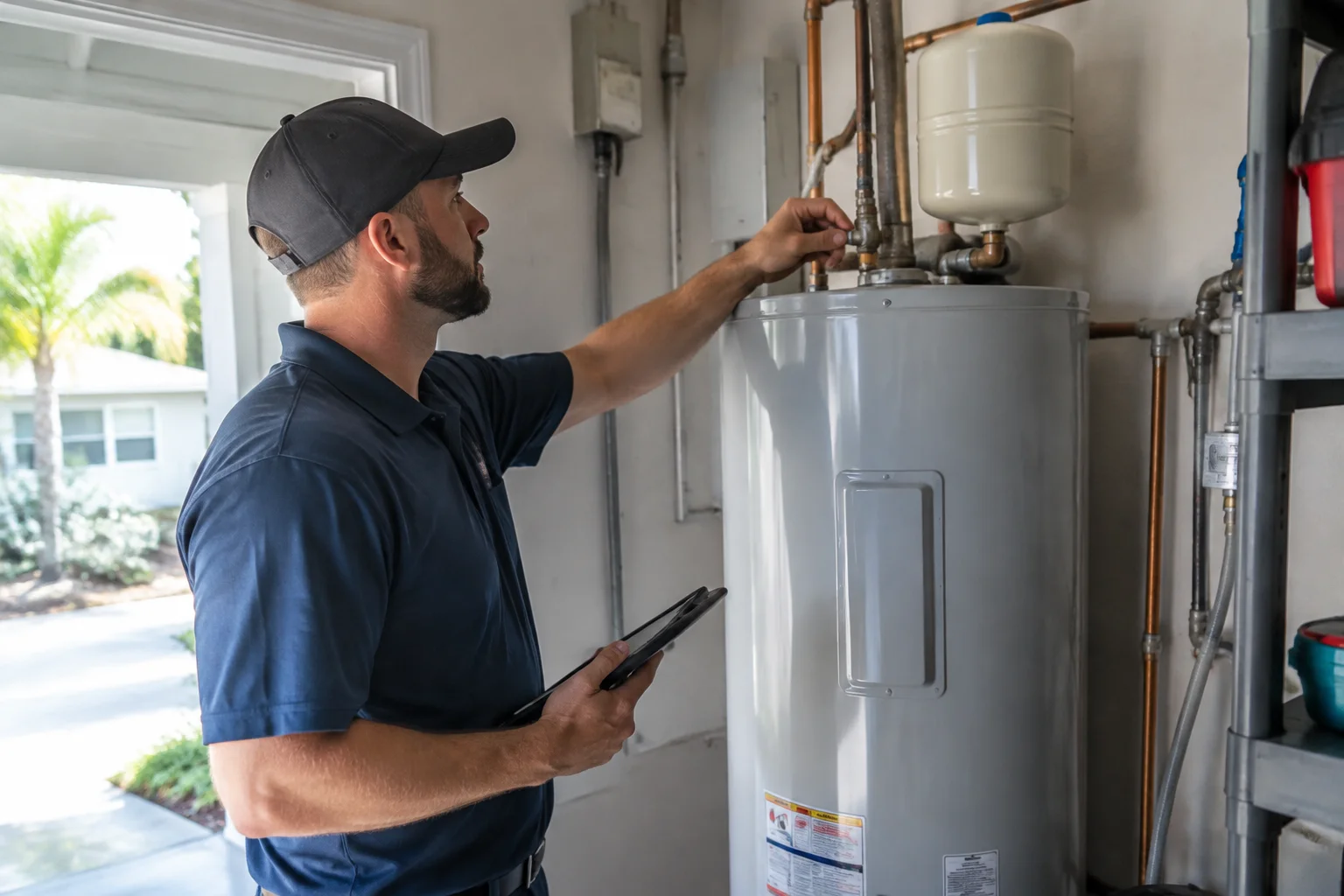
A useful assessment starts with questions: When did the issue begin? Does it happen at every faucet? Is it worse after the house sits vacant? Has nearby utility work occurred? Those details help determine whether treatment, equipment service, or a plumbing repair belongs first.
Basic testing may include hardness, pH, and indicators relevant to taste, staining, or sediment. Additional laboratory analysis may be appropriate for a private well, suspected contamination, or a specific health-related concern. A total dissolved solids reading alone cannot identify individual contaminants or establish drinking-water safety.
Installation planning should also cover peak flow, existing pressure, connection size, bypass valves, drainage where needed, and convenient maintenance access. Homeowners searching for water treatment near me should ask how the recommendation addresses their measured results. A clear explanation is more valuable than a long list of filter features.
Keep Better Water Consistent With Routine Care
Even well-chosen treatment equipment needs attention. Replace cartridges according to the manufacturer's guidance and actual operating conditions. A noticeable pressure drop, returning taste, or reduced production may signal service is needed before the usual interval.
For softeners, check the salt supply, look for salt bridging, and have settings reviewed if occupancy changes. Reverse osmosis systems need scheduled prefilter and postfilter replacement, membrane evaluation, and sanitizing as directed. UV equipment requires lamp replacement and sleeve cleaning according to its maintenance instructions.
Vacation properties need a plan for idle periods. Follow manufacturer guidance for flushing, sanitizing, or returning equipment to service after extended vacancy. Renters and guests should not have to diagnose a neglected filter during a busy weekend. Keep service dates and replacement information somewhere the property manager can easily find them.
Treatment works best alongside sensible household care. Clean faucet aerators, address leaks, and maintain water-using appliances according to their instructions. Regular plumbing maintenance in Lower Grand Lagoon homes can help identify issues that filtration alone will not solve.
Get Help When Cleaning Stops Solving the Problem
If scale quickly returns after cleaning, water tastes unpleasant throughout the house, or a treatment system no longer performs as it once did, arrange an assessment. Persistent sediment, discoloration, and unusual odors should be investigated rather than covered up with a new kitchen filter.
Homeowners searching for water filtration near me should look for testing, clearly explained equipment options, and ongoing maintenance support. Ask which concerns a proposed system addresses, what it does not treat, and how replacement costs fit the household budget.
A Superior Mechanical provides water purification services for homes, rentals, and commercial properties in Lower Grand Lagoon and serves the wider Bay County area. Whether your priority is less scale in the shower, better-tasting coffee, or cleaner water for everyday life, start with a water assessment and a treatment plan built around your property.
Find Water Purification Services in Lower Grand Lagoon, FL
If you need Water Purification Services in Lower Grand Lagoon, FL, visit our local service page or contact A Superior Mechanical today.
For a broader look at whole-home water filtration, reverse osmosis, and water softener options, visit our water filtration, RO, and water softener page.
Map of Lower Grand Lagoon, FL
Frequently Asked Questions
Will a whole home water filter remove hard water spots?
Most standard sediment and carbon filters do not remove the dissolved calcium and magnesium that cause hard water spots. A water softener addresses those minerals. Testing can help determine whether your Lower Grand Lagoon home needs filtration, softening, or both.
Is reverse osmosis a good choice for drinking and cooking water?
Reverse osmosis can improve taste and reduce many dissolved substances when the system is selected and maintained appropriately. An under-sink system usually serves a dedicated kitchen faucet. Check the specific model's verified reduction claims, output, and maintenance requirements before installation.
How do I choose an AO Smith water filtration system for my home?
Start with water testing and an assessment of household demand, plumbing layout, and installation space. Different AO Smith models address different concerns. A Superior Mechanical can help identify suitable options and explain filter replacement, servicing, and whether additional softening, reverse osmosis, or UV treatment is appropriate.
Related Articles
Photo Gallery