Florida heat does not wait for your HVAC system to “figure it out.” In Bid-A-Wee, humidity, salt air, and long cooling seasons can push heating control systems and thermostats to work harder than many homeowners realize. When controls are mismatched to your home’s ductwork, condensate drainage, and airflow, cooling comfort can slip and energy use can rise. That is when small control issues can turn into expensive repairs.
This guide explains how heating control systems influence cooling performance in Bid-A-Wee, what homeowners should watch for, and how preventive HVAC maintenance and professional HVAC service can help keep your system reliable through the hottest weeks of the year.
What “heating control systems” really do for cooling comfort
Most people think of controls as something that manages heat. In practice, heating control systems are part of the broader way your HVAC system regulates temperature, fan operation, and cycles that affect both heating and cooling. In a typical home, the thermostat is the main interface, but the control strategy includes:
Thermostat operation, including setpoints, schedules, and fan settings
System staging and cycling, which influences how often the heating or cooling components turn on and off
Airflow control, such as when the indoor fan runs and how air moves through ductwork
Humidity management, which affects comfort and how hard your air conditioning has to work
In Bid-A-Wee’s climate, cooling performance is tightly linked to humidity control and airflow. If the controls do not match how air actually moves through your home, you can end up with uneven temperatures, lingering moisture, and unnecessary wear on refrigerant systems.
Why Bid-A-Wee humidity and salt air make control problems more expensive
Bid-A-Wee sits in Bay County, where summer humidity can feel relentless. Warm, moist air makes air conditioning work harder because the system must remove moisture while also lowering temperature. Heating control systems and thermostats that are not configured correctly can contribute to:
Short cycling, where the system turns on and off too frequently because the thermostat is not reading conditions accurately or the airflow is restricted
Weak dehumidification, often tied to fan behavior and airflow balance
Overcooling or overheating, caused by incorrect setpoints, sensor placement, or schedule logic
Condensate drainage issues, which can happen when moisture removal is not efficient or airflow is disrupted
Salt air can also accelerate corrosion on outdoor components over time, affecting how smoothly the system responds to control commands. That is another reason professional HVAC service matters. A licensed HVAC contractor near me can evaluate whether the control strategy is working with your actual system condition and local environmental stressors.
Common symptoms homeowners notice when heating control systems are off
Control problems do not always look like a broken part. Often, they show up as comfort complaints that get worse during peak cooling days.
1) Cooling feels uneven room to room
If some rooms stay warm while others get too cold, airflow and ductwork balance may be the culprit. But controls can be a contributing factor. For example, thermostat location or fan settings can cause the system to cycle based on one area while other rooms lag behind.
Homeowners searching for duct repair near me should know that ductwork issues and thermostat settings can overlap. Restricted airflow can prevent proper moisture removal, which makes the system run longer and harder.
2) The system runs a lot, but the house never feels “dry”
Humidity is a big part of comfort in Bid-A-Wee. If the thermostat is set to maintain temperature without addressing humidity behavior, the air conditioning may cool the air but not remove moisture effectively. That can lead to a clammy feel and higher energy use.
Proper indoor air quality also depends on moisture control. When humidity stays elevated, it can encourage biological growth and worsen how the home feels during long summer stretches.
3) Frequent on and off cycles
Short cycling can increase wear on refrigerant systems and other components. Controls that trigger cooling too aggressively, or airflow problems that prevent the system from meeting conditions, can create a cycle pattern that feels “busy” but does not improve comfort.
If you are experiencing AC repair near me because the system seems to run constantly or never seems to reach the setpoint, it is worth having a technician review thermostat behavior, airflow, and system response rather than assuming a single part failure.
4) Strange temperature swings after schedule changes
Smart thermostats and schedules can be helpful, but they can also create unexpected behavior if settings do not match your home. For example, a schedule that expects rapid recovery from setbacks may push the system beyond what the ductwork and airflow can handle comfortably. In humid Florida conditions, this can also affect dehumidification.
5) Indoor air feels stale or smells musty
Musty odors can be linked to moisture and condensate drainage. If heating control systems are not supporting steady cooling and proper moisture removal, condensate drainage can become less reliable. That can contribute to indoor air quality issues beyond just comfort.
If you suspect a moisture-related issue, talk to an HVAC company near me about both controls and the mechanical side of the system. Air conditioning service should be more than temperature adjustments.
How thermostats, sensors, and fan settings affect cooling performance
Thermostats are the control center, but how they are installed and configured matters just as much as the model. A few control details that often impact cooling performance in Bid-A-Wee homes:
Thermostat placement: If the thermostat is near a sunny window, a supply vent, or a hallway draft, it may report inaccurate readings and cause the system to cycle inappropriately.
Fan mode: “Auto” versus “On” changes how long conditioned air is distributed. Running the fan too long can increase comfort issues if humidity removal is not balanced. Running it too little can reduce airflow through ductwork and affect how evenly the system cools.
Setpoint strategy: Large temperature setbacks and aggressive recovery can increase system run time and may reduce dehumidification effectiveness during peak humidity.
Humidity-related behavior: Some systems and control strategies respond differently to indoor humidity. Even when the thermostat primarily targets temperature, the system’s response to that demand still influences moisture removal.
When homeowners search for thermostat installation near me, it is smart to ask whether the contractor will evaluate thermostat placement, fan behavior, and how the control strategy matches your ductwork and comfort goals.
Airflow and ductwork: the hidden partner of heating control systems
Heating control systems rely on the assumption that conditioned air actually reaches the rooms you care about. That is where ductwork and airflow come in. In Bid-A-Wee, older homes and newer builds can both have airflow challenges due to:
Leaky ducts that lose air and reduce system efficiency
Disconnected or poorly routed duct sections that create pressure imbalances
Restricted returns that limit airflow and can increase humidity problems
Blocked registers or furniture placement that limits airflow through supply vents
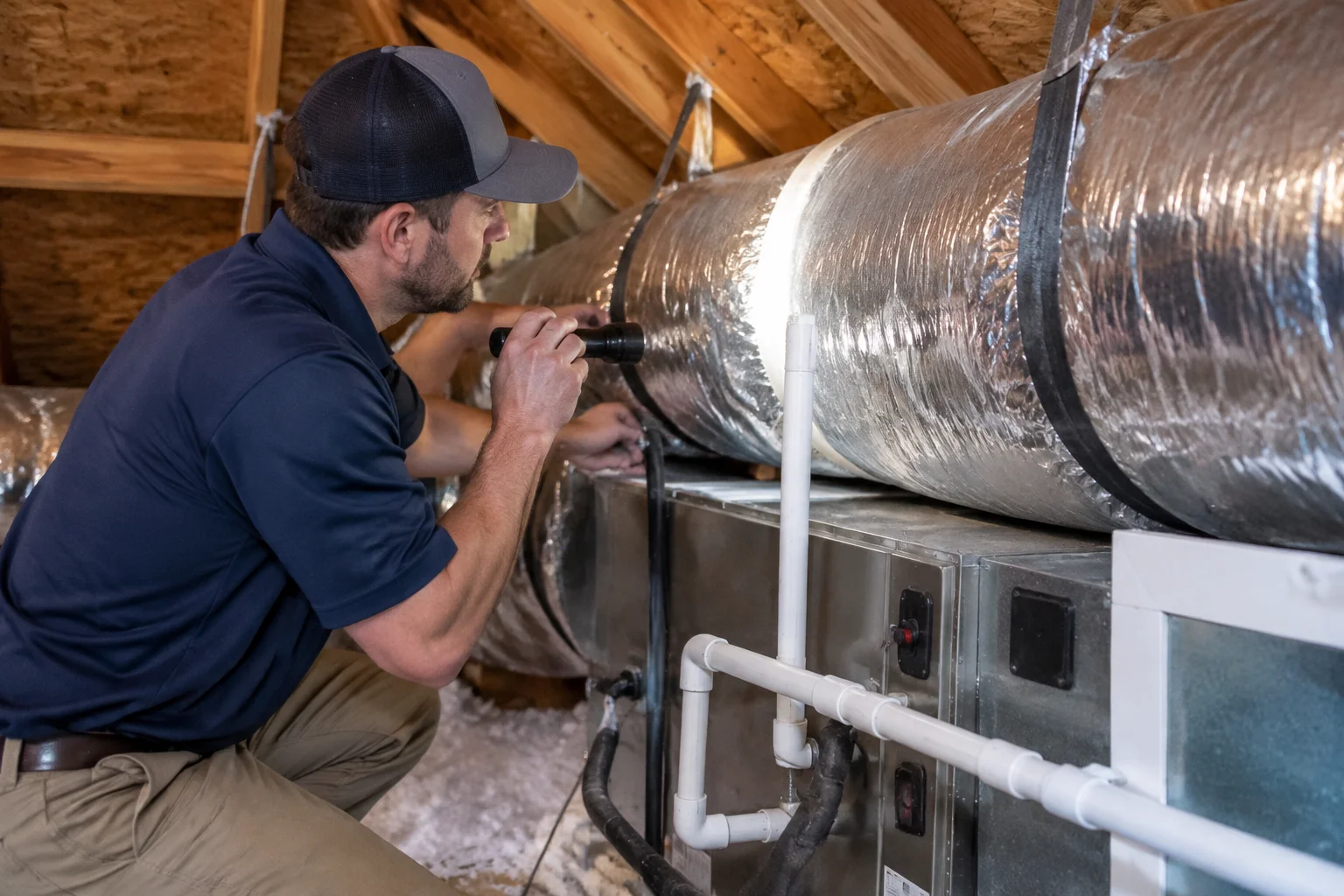
Even if your thermostat is programmed correctly, restricted airflow can cause the system to run longer, cycle more often, and struggle to remove moisture. That is why ductwork service can be part of a broader comfort fix.
If you are considering duct sealing or duct repair, you can explore Duct Sealing for homes where airflow losses may be affecting cooling performance. For homeowners searching for duct cleaning near me, it helps to confirm whether the issue is actually airflow and duct integrity, not just surface-level cleanliness.
Refrigerant systems and condensate drainage: how controls influence mechanical stress
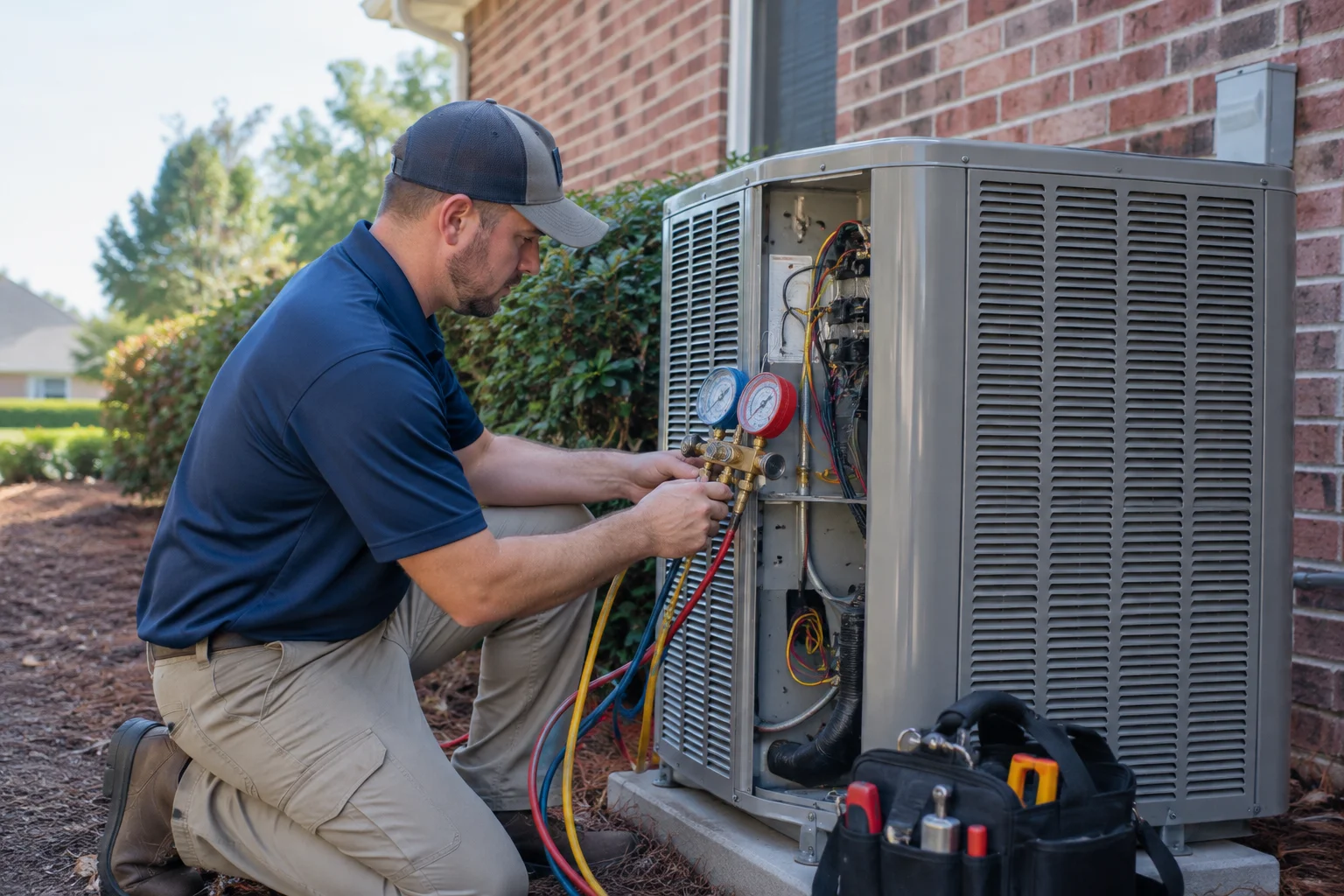
Cooling performance depends on the refrigerant system working as intended. Controls do not “fix” refrigerant problems, and they do not replace a proper evaluation of refrigerant systems and component health. However, thermostat behavior and airflow can change how the system operates, which can influence wear patterns.
For example:
When airflow is restricted, heat transfer can become less efficient, which can make the system work harder to meet temperature demand.
If cooling cycles are too short, the system may not complete a steady operating cycle, affecting moisture removal and the overall comfort outcome.
When humidity is not handled well, condensate drainage can become more noticeable as the system removes more moisture or runs longer than expected.
Condensate drainage is especially relevant in humid Florida months. If drainage is slow or blocked, moisture can back up and cause problems that show up indoors. A technician should inspect drainage pathways and confirm that the system can manage condensate reliably. Homeowners should not attempt to diagnose refrigerant systems or electrical components based on symptoms alone.
If you are seeing repeated cooling issues, it is reasonable to request a full HVAC evaluation that includes controls, airflow, and how the system is operating in your specific home conditions.
Energy use rises when controls and comfort goals do not match the home
Energy use is not just about the thermostat setpoint. It is also about how the HVAC system cycles and how effectively it distributes conditioned air. In Bid-A-Wee’s climate, the system often has to run longer to manage both temperature and humidity. When heating control systems are misconfigured, it can increase:
Run time due to delayed comfort recovery
Short cycling due to inaccurate readings or airflow limits
Reheat or reheating behavior if heating and cooling logic is not coordinated
Fan energy if fan settings cause more circulation than the home can benefit from
Professional residential HVAC service near me can help homeowners understand whether the issue is control strategy, ductwork, indoor air quality, or a mechanical concern. That is usually the fastest path to reducing wasted energy without guessing.
Preventive HVAC maintenance that supports better control performance
Heating control systems perform best when the rest of the HVAC system is in good working order. Preventive HVAC maintenance helps by keeping airflow, moisture removal, and system response stable. For Bid-A-Wee homeowners, preventive maintenance can include:
Filter and airflow checks to support consistent indoor circulation
Indoor coil and drainage inspection to support condensate drainage and moisture control
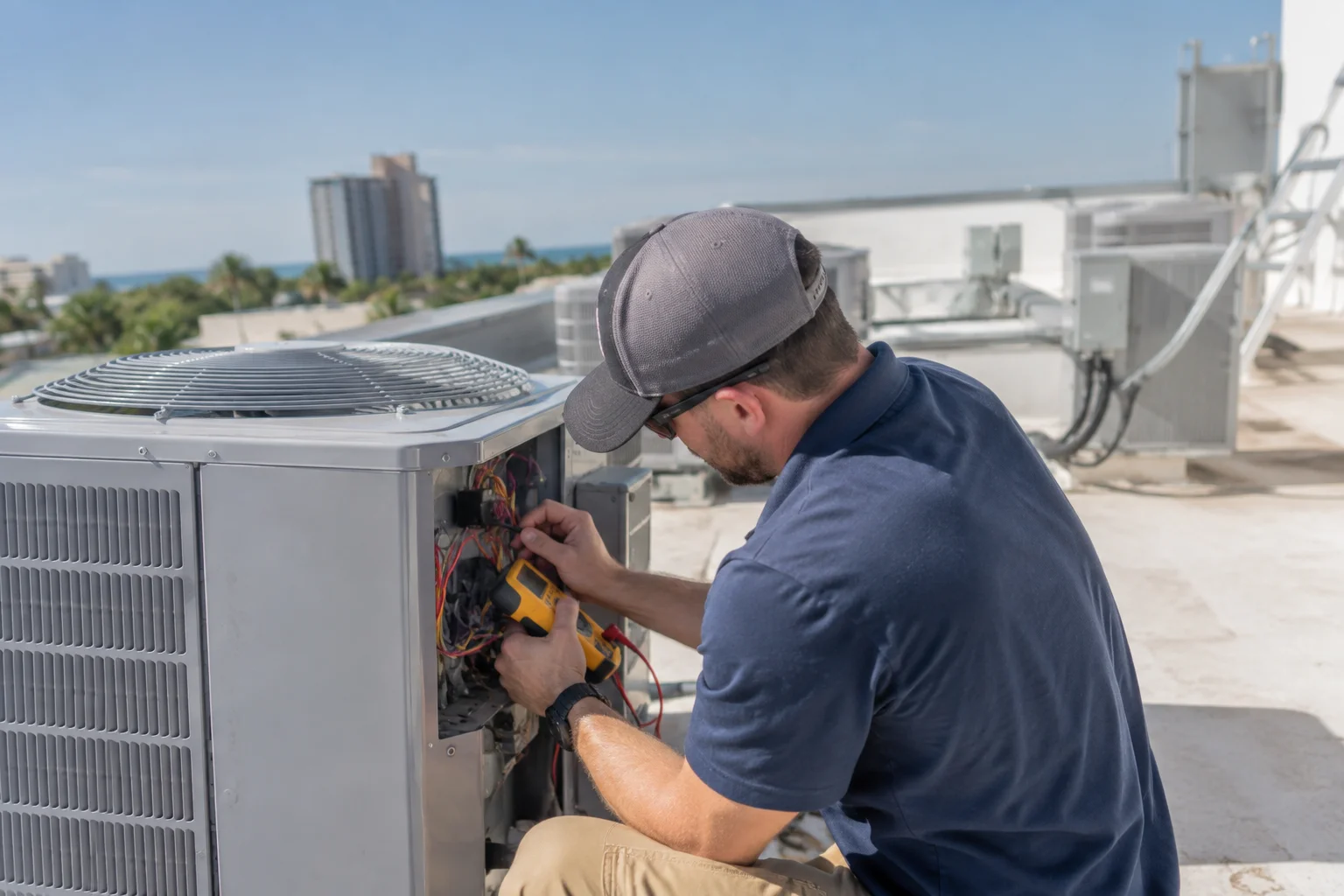
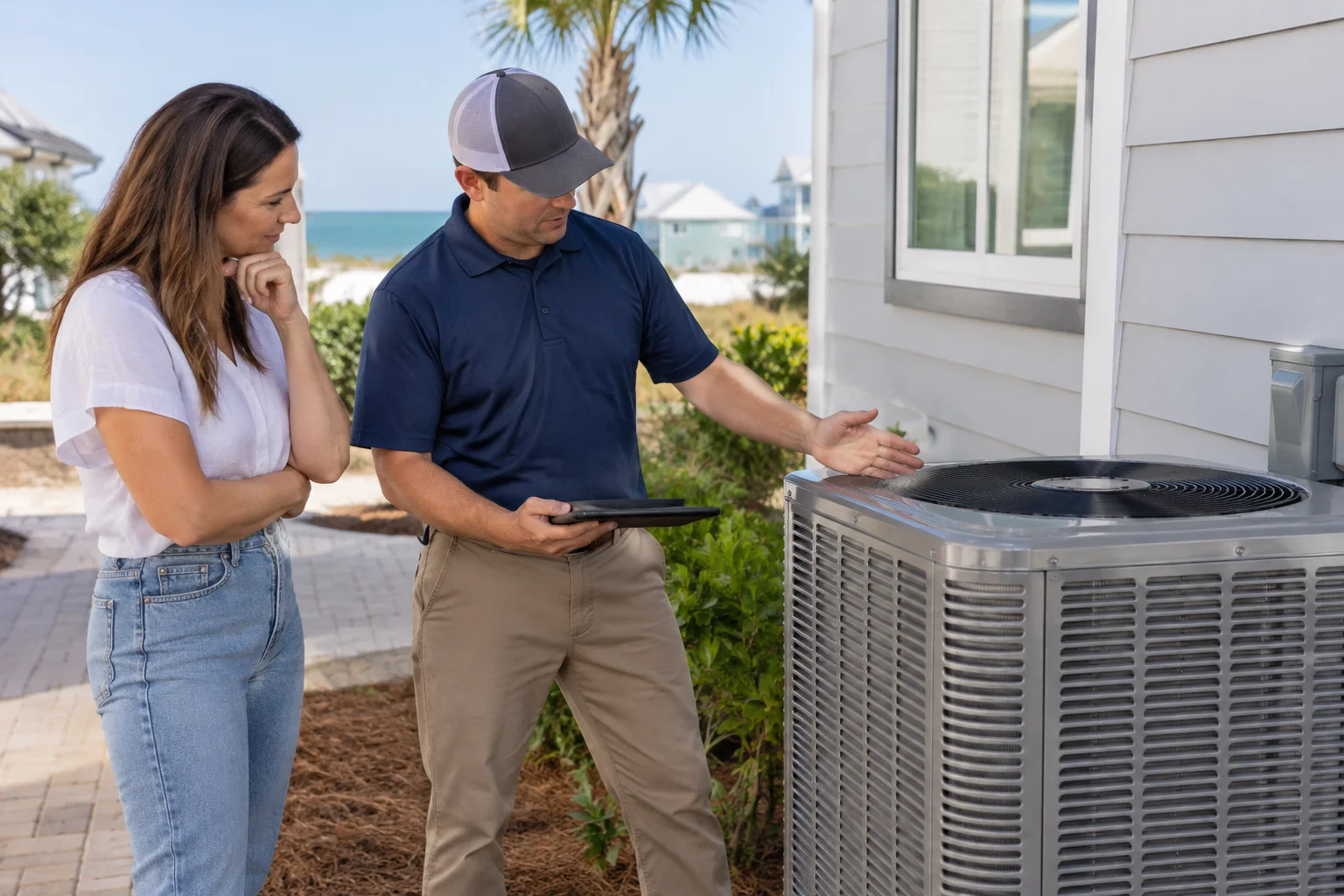
Outdoor unit and airflow verification to help the system respond properly during peak heat
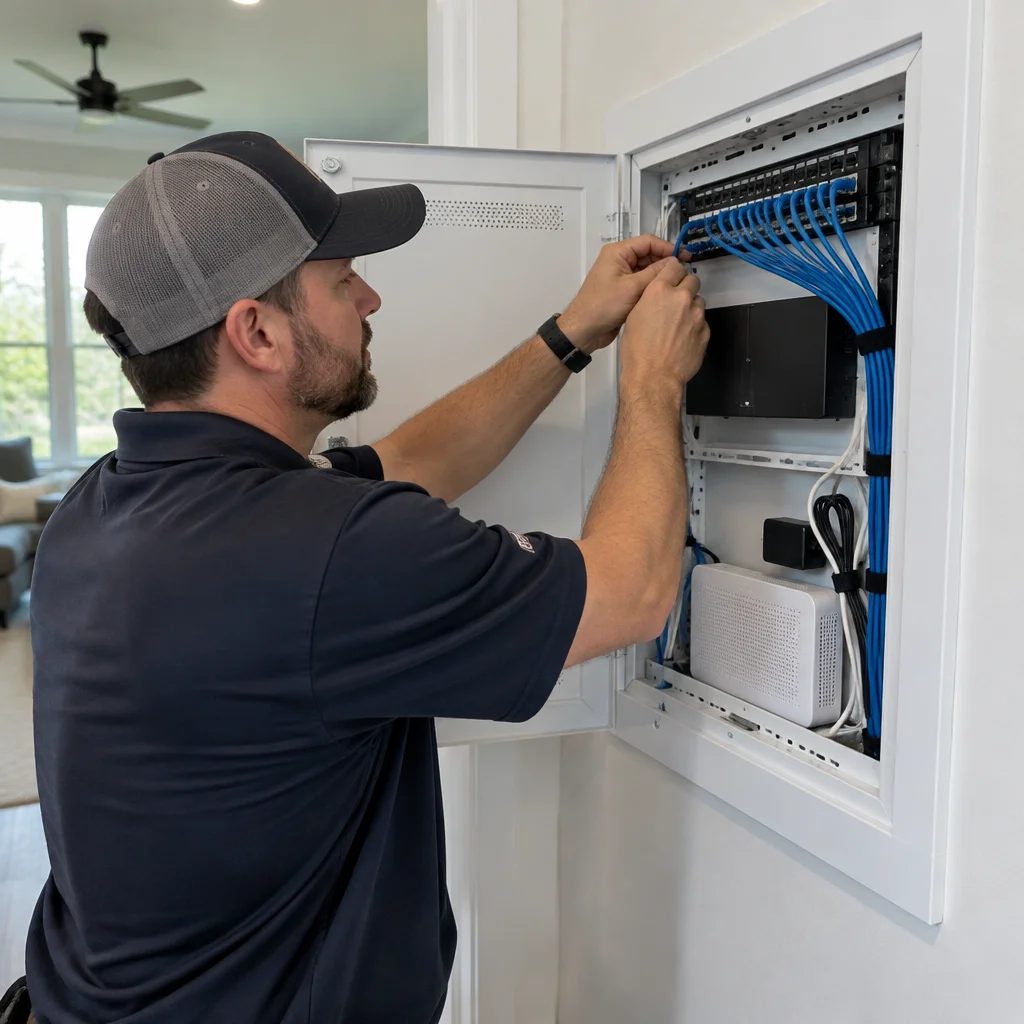
Thermostat and control review to confirm settings, schedules, and sensor behavior match the home
Maintenance also reduces the chance that a control issue is actually caused by a related mechanical problem. If you are looking for a deeper look at how maintenance supports comfort and indoor air quality, read How Preventive HVAC Service Supports Cleaner Indoor Air in Bid-A-Wee.
When to call a professional HVAC contractor in Bid-A-Wee
Some thermostat tweaks can help, but you should involve a licensed HVAC contractor near me when you notice patterns that suggest the system is not operating as it should. Call for help if you experience:
Persistent uneven cooling despite normal thermostat adjustments
Frequent short cycling or sudden changes in cycle behavior
Musty odors, signs of moisture, or concerns about condensate drainage
A new comfort problem after a thermostat change, schedule update, or HVAC service
Cooling failures during peak summer days
Emergency cooling concerns are real in Florida. If your system stops cooling during a severe heat stretch, you may need emergency AC repair near me depending on availability and severity. A professional can also help confirm whether the issue is control-related or mechanical.
Upgrades and system replacement: where heating control systems fit
Sometimes homeowners consider new AC installation near me or a system replacement because the current equipment struggles to keep up. Even when a replacement is the right long-term move, heating control systems should still be part of the planning. A new system is only as comfortable as the control strategy and airflow delivery that supports it.
A Superior Mechanical can help homeowners evaluate how controls, thermostats, ductwork, and indoor humidity goals work together. If you are comparing options for comfort and performance across the Bay County area, start with the city context on our Bid-A-Wee service page or review the specific heating control systems page at /service-areas/bay-county/bid-a-wee/heating-control-systems-bidbcfl.
For households that want to understand how control decisions connect to maintenance, it can also help to read Why Heating Control Systems Matter for Valparaiso Homes to see how similar comfort principles apply across Florida communities.
Practical steps homeowners can take before the next service visit
You do not need to become an HVAC expert to reduce risk and communicate clearly with your technician. These steps can help you avoid expensive troubleshooting later:
Note the pattern: When does the issue happen, what rooms are affected, and how does it change throughout the day?
Check thermostat settings: Confirm temperature setpoints and fan mode. If you changed schedules recently, mention it.
Observe airflow: Are supply vents blowing strongly and are returns clear?
Watch for moisture signs: Condensate drainage concerns can show up as water where it should not be, or as musty odors.
Keep air filters accessible: A clogged filter can affect airflow and control response. Follow the manufacturer guidance for filter replacement.
If you are searching for HVAC service near me and want to focus on controls and comfort performance, bring these observations to your appointment. It helps the HVAC contractor evaluate heating control systems and airflow without guesswork.
How A Superior Mechanical approaches heating control systems in Bid-A-Wee
Heating control systems are not one-size-fits-all, especially in humid Florida conditions. A Superior Mechanical focuses on matching thermostat operation, airflow delivery, and system behavior to your home. That is the difference between “it runs” and “it performs.”
Whether you need heating control systems support, thermostat installation planning, or help addressing recurring cooling comfort problems, the goal is reliable HVAC performance across Bay County, with indoor air quality and humidity control considered as part of the overall system.
If you want to explore related HVAC service options in Bid-A-Wee, you can also look at Air Conditioning Systems and Commercial HVAC Installation for property owners who need consistent comfort across multiple spaces.
Find Heating Control Systems in Bid-A-Wee, FL
If you need Heating Control Systems in Bid-A-Wee, FL, visit our local service page or contact A Superior Mechanical today.
Map of Bid-A-Wee, FL
Frequently Asked Questions
How do heating control systems affect my air conditioning performance in Bid-A-Wee?
Heating control systems include how your thermostat and HVAC controls call for heating or cooling, how the fan runs, and how the system cycles. In Bid-A-Wee, that matters because humidity and airflow affect how well cooling removes moisture and maintains steady comfort.
Why does my AC run but still not cool evenly?
Uneven cooling can come from ductwork and airflow limits, thermostat placement or settings, or system operation that does not match your home. A professional evaluation helps confirm whether the issue is control behavior, airflow delivery, or another mechanical concern.
Can I fix cooling problems by changing my thermostat settings alone?
Sometimes small changes help, especially if the issue is scheduling or fan mode. If you notice short cycling, musty odors, or persistent uneven temperatures, it is best to have an HVAC contractor inspect airflow, condensate drainage, and system response. Controls alone may not address the root cause.
What should I ask about thermostat installation near me?
Ask how the technician will verify thermostat placement, review fan operation and scheduling, and check how your system and ductwork respond in your specific home. For best results, request an evaluation that considers humidity comfort and airflow, not just the thermostat model.
When is emergency AC repair near me necessary?
If your system stops cooling during extreme heat, or you have serious comfort and safety concerns, emergency AC repair may be appropriate. A technician can assess whether the issue is related to controls, airflow, moisture, or a mechanical failure and advise on next steps.
Related Articles
Photo Gallery