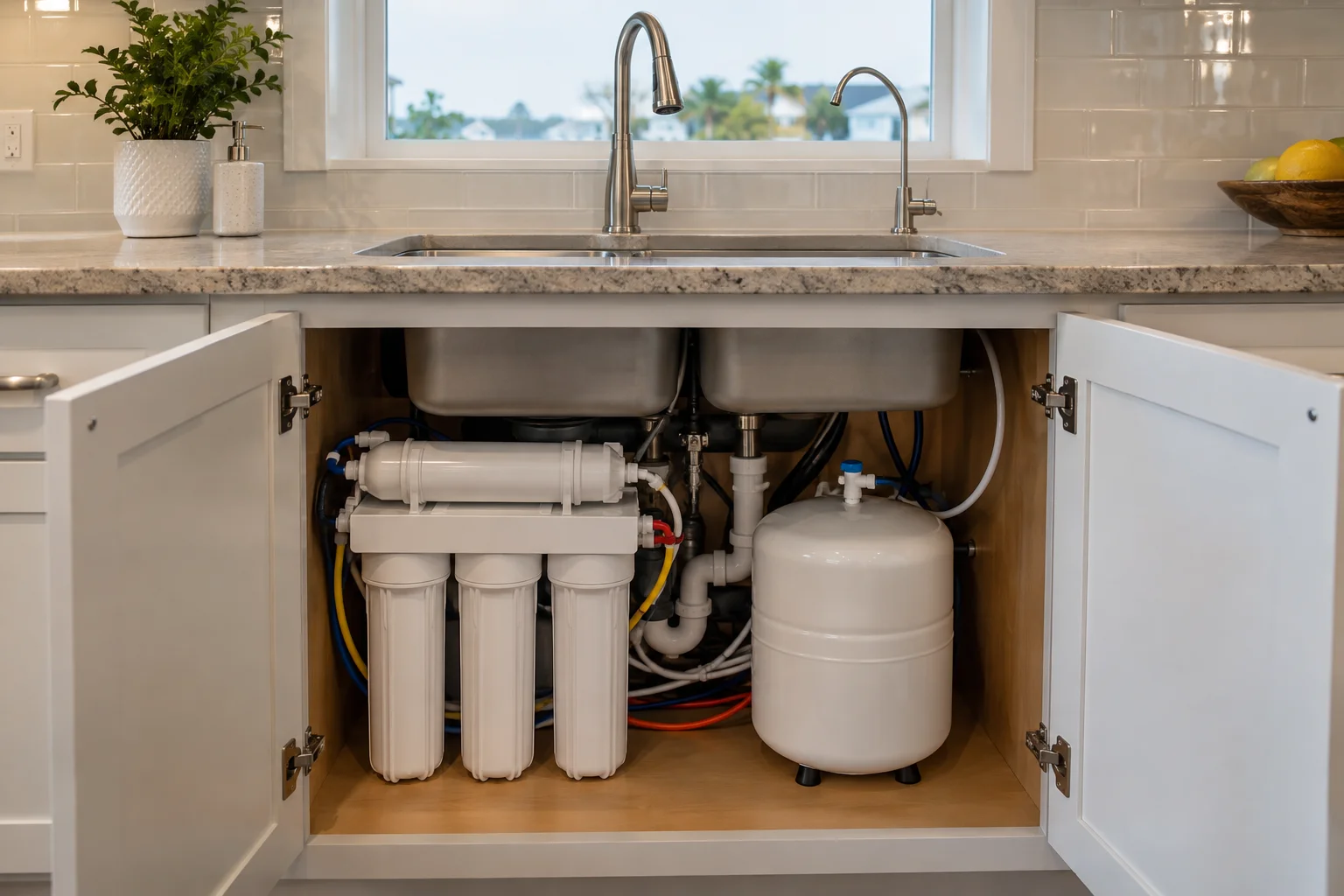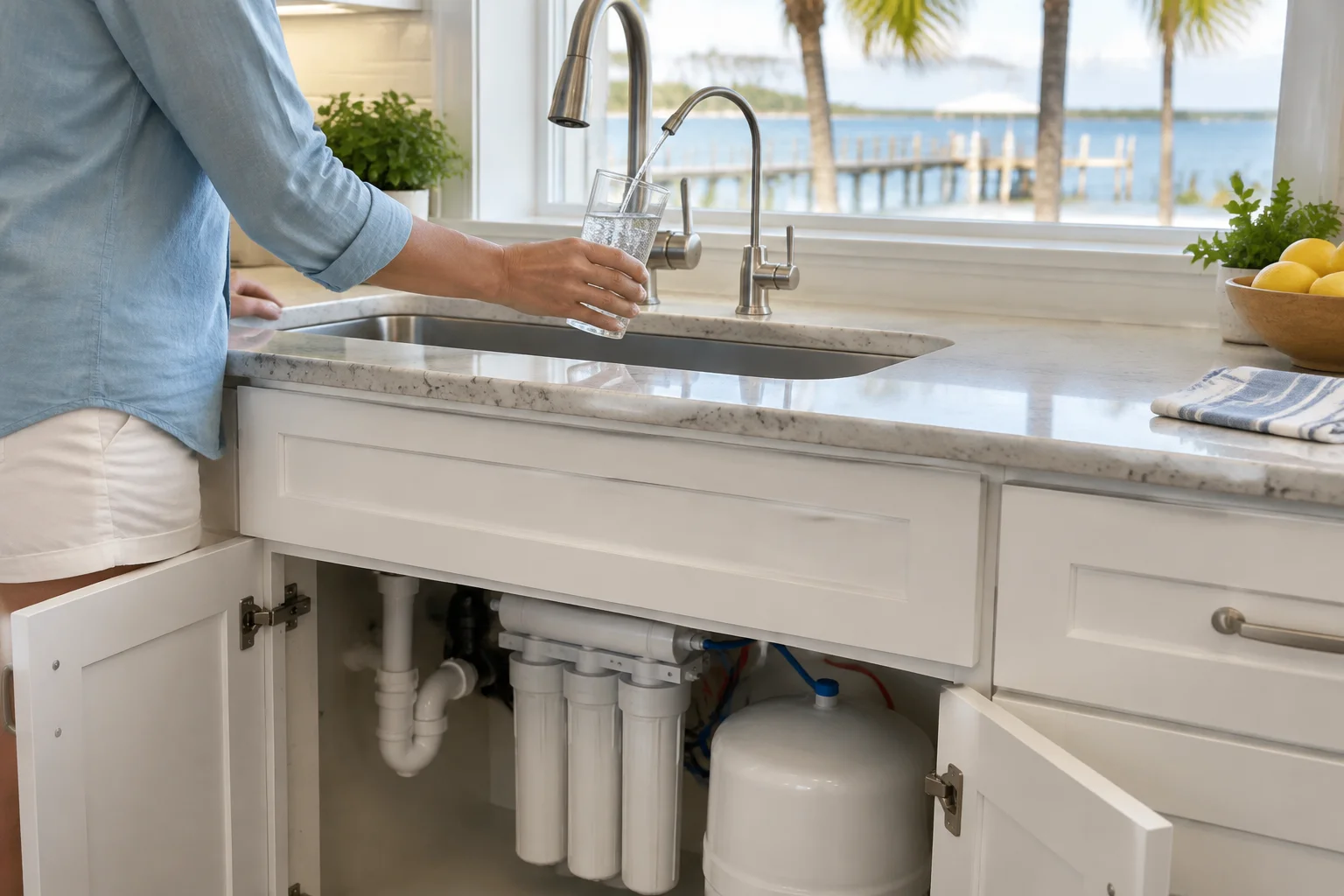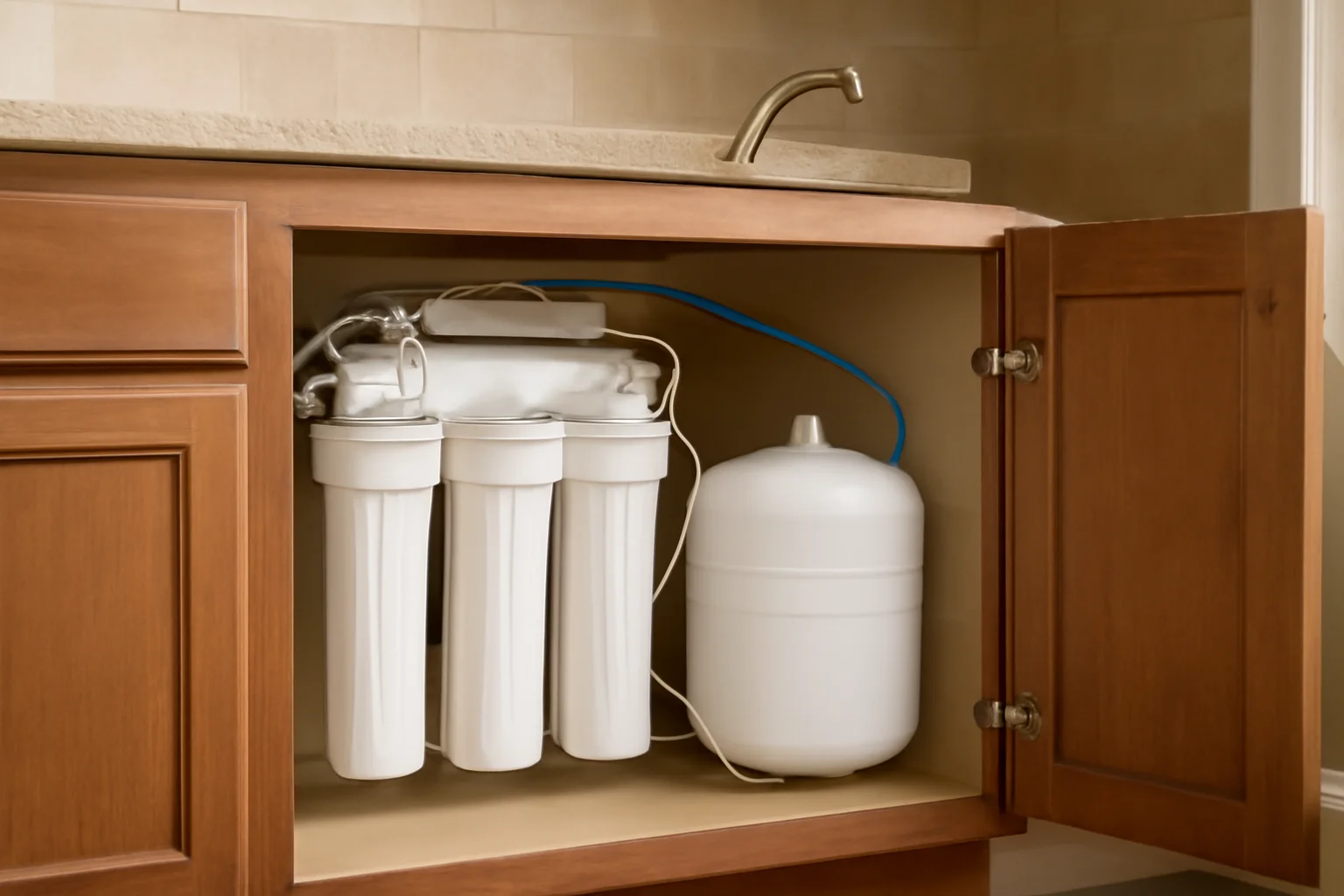
Reverse osmosis (RO) is one of the most popular home water purification methods in Latitude Margaritaville Watersound, FL. It can help reduce sediment, chlorine taste in water, and unwanted contaminants so your family gets cleaner drinking water and better water for cooking.
But an RO system is not a “set it and forget it” appliance. When everyday conditions in the home or the incoming water change, small problems can grow. Over time, those problems can shorten the life of plumbing fixtures and appliances by allowing scale buildup, sediment, and mineral problems to slip through the system or show up downstream.
Why reverse osmosis problems often show up as fixture wear
RO systems work by pushing water through a semi-permeable membrane. That membrane does the heavy lifting, but it still depends on good pre-filtration and proper system maintenance. If the system is not protected from sediment or if it is running outside its intended conditions, you can see two kinds of results:
First, you may notice water quality issues like metallic tasting water, unpleasant odors, cloudy ice cubes, or water that tastes “chlorinated.” Second, you may start seeing hard water effects that accelerate wear: scale buildup on faucets, showerheads, and plumbing lines, plus hard water spots on glass and dishes.
Those effects are not just cosmetic. Scale and sediment can reduce water flow, stress valves, and contribute to premature failure of appliances that use water, including water heaters, dishwashers, and some ice makers.
Incoming water problems that shorten RO life
Homes in Latitude Margaritaville Watersound can experience water quality swings depending on the local supply, household water usage, and how your home plumbing is plumbed. RO systems are sensitive to the water they receive before it reaches the membrane.
Hard water minerals that increase scale buildup
Hard water is a major reason RO systems struggle. When calcium and magnesium are high, the RO membrane and storage tank can accumulate mineral scale. You might not see it immediately, but the system can lose efficiency and output quality. That can lead to poor tasting coffee and cooking water, plus a slow decline in the clarity of drinking water.
In the home, you will often see the “hard water story” play out on everyday surfaces. Hard water spots on glass, dull spots on faucets, scale buildup around showerheads, and rougher-feeling water after bathing are common clues. Dry skin or dull hair after bathing can be a sign that your water treatment is not keeping up.
Sediment in household water that clogs filters and stresses the membrane
Even if your tap water looks clear, fine sediment can be present. That sediment can clog pre-filters, reduce flow, and force the RO system to work harder. When pre-filters are bypassed, overdue, or mismatched to your water, the membrane can foul faster.
Homeowners often first notice sediment and discoloration in ways that seem unrelated to the RO system. You may see visible sediment in the water, discoloration in drinking water, or an odor concern that shows up after the system sits unused for a while.
Chlorine and chloramines that reduce membrane life
Chlorine taste in water and other disinfectants can be tough on RO membranes if the system’s carbon stage is not functioning properly. If the carbon filter is exhausted or incorrectly sized, disinfectants can reach the membrane and shorten its lifespan.
That can show up as metallic tasting water, unpleasant taste, or a decline in how well the system produces clean drinking water for the kitchen.
Common RO system issues homeowners can spot
Not every problem is caused by “bad water.” Sometimes the system itself is the issue, or it is being used differently than intended.
Filters not changed on schedule
Reverse osmosis systems rely on a sequence of filters and membranes. Pre-filters protect the membrane. Carbon filters help with taste and odor. If filters are overdue, the membrane can foul faster, and you can get cloudy ice cubes or a noticeable change in drinking water taste.
For households in Latitude Margaritaville Watersound, it is also common to have periods of lower water use. When an RO system sits unused, stagnant water can develop odors. That makes filter timing and maintenance even more important.
Low water pressure or fluctuating pressure
Many RO systems require a certain inlet pressure to perform correctly. Low pressure can reduce production and cause the system to run inefficiently. Fluctuating pressure can stress components and affect membrane performance.
When an RO system cannot produce properly, homeowners sometimes keep using it anyway, which can lead to inconsistent water quality and faster wear on parts. Over time, that contributes to the overall problem of shortened fixture and appliance life.
A failed or worn RO membrane
The RO membrane does the core filtration. When it wears out, you may see:
- Metallic, chlorinated, or unpleasant taste
- Visible sediment or discoloration in the drinking water
- Cloudy ice cubes
- Water that does not seem as clean for cooking
When the membrane fails, the system may still dispense water, but it may not be removing contaminants as designed.
Tank and system sanitation issues
Most RO systems include a storage tank. If the tank is contaminated or the system is not periodically sanitized, odors and taste changes can develop. This can be especially noticeable in kitchen scenes where family members fill a glass, brew coffee, and use the water for cooking water day after day.
Even if the rest of your home is treated, a problem in the RO storage stage can create inconsistent results at the faucet.
How RO issues can lead to hard water spots and scale buildup
Reverse osmosis is excellent for drinking water, but it does not automatically solve whole-home scale problems unless it is integrated with the right water treatment approach. When RO output declines or when other parts of the plumbing are not protected, scale buildup around faucets, showerheads, and plumbing lines can still accelerate.
Scale buildup on faucets and showerheads
Scale forms when minerals precipitate as water heats or evaporates. You may notice:
- White or chalky deposits around faucets
- Rough spots on showerheads
- Reduced water flow from clogged aerators
These are the same mineral issues that can reduce the lifespan of valves, cartridges, and some appliance components.
Hard water spots on glass and dishes
Hard water spots on glass and dishes are a frequent clue that minerals are getting through somewhere in your water system. If your RO system is not maintaining performance, you may notice the difference at the kitchen sink first. But the broader household impact often appears on dishware, cookware, and bathroom fixtures.
When you are trying to get cleaner drinking water and better water for cooking, inconsistent water quality can make coffee taste flat and can affect how food tastes when minerals are present.
Dry skin and dull hair after bathing
Even with an RO tap for drinking water, many homeowners notice bathing and bathroom water effects when mineral levels are high. Dry skin or dull hair after bathing can be related to mineral hardness and how soap behaves.
Soap that does not lather or rinse well is another common sign. When minerals interfere with soap, you might end up using more product and still feeling residue on skin and hair.
Appliances wear out faster when water treatment is off
When scale and sediment build up in plumbing, appliances have to work harder. That can shorten the service life of:
- Water heaters
- Dishwashers
- Ice makers and refrigerators with ice production
- Washing machines and related plumbing components
Homeowners sometimes notice the change as “appliance age” even when the appliances were installed recently. But it can be water related. If you have cloudy ice cubes, mineral taste, or recurring flow issues, the water side of the equation should be part of troubleshooting.
What to do now: solutions that protect RO performance and plumbing fixtures
The best plan in Latitude Margaritaville Watersound is usually a layered approach. That means protecting the RO system from the start, maintaining it properly, and addressing hardness where it matters.
Use the right pre-treatment and water softening strategy
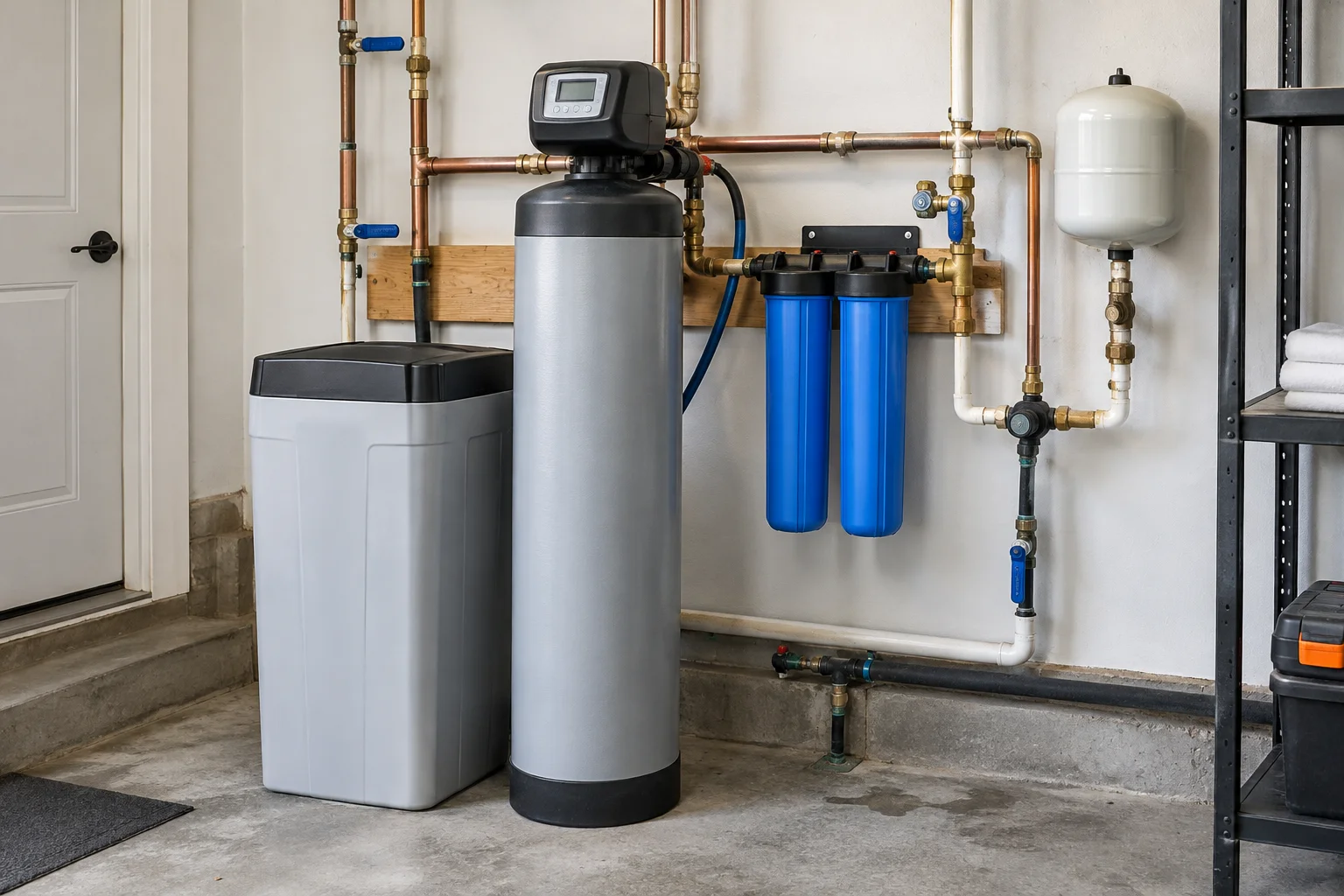
For many homes, water softening is the missing piece. A properly sized AO Smith water softener can reduce hardness before it reaches your plumbing and appliances. That helps limit scale buildup around faucets, showerheads, and internal plumbing surfaces.
When hard water is controlled, the RO system often runs more efficiently because the membrane is less likely to foul quickly. That can support longer RO life and more consistent drinking water quality.
If you are exploring options, you can also ask about whole home water filtration. Whole house water filter systems can help with sediment reduction and overall water clarity before it ever reaches your RO unit.
Consider whole home water filtration for cleaner everyday water
Whole home water filtration can improve water quality across the home, not just at the RO drinking faucet. That matters for laundry, bathing, and kitchen use when you want consistently cleaner water for the whole household routine.
Many homeowners start by upgrading drinking water, then realize that soap performance and shower experience improve when the rest of the home water is treated too. If you have visible sediment, discoloration, or odor concerns, whole home filtration may be the foundation that keeps the RO system from dealing with everything alone.
Keep RO filters and membranes maintained
Maintenance is where most problems are prevented. A professional service visit typically includes checking system performance, inspecting filter stages, and confirming that the membrane and storage components are working as intended.
For homeowners searching for water filtration near me, the goal is not just “repair the RO.” It is to restore the system to the right operating conditions so your drinking water tastes right and your plumbing does not pay the price through scale and sediment.
Choose systems designed for long-term performance, including AO Smith options
AO Smith water filtration solutions are used in many homes for their focus on reliable filtration. If your household is considering an upgrade, ask whether an AO Smith reverse osmosis system fits your water conditions and household usage patterns.
For some homes, pairing RO with a compatible water softening plan and whole home water filtration creates a smoother, more predictable outcome for drinking water and fixture protection.
Local Latitude Margaritaville Watersound factors that make service worth it
In Bay County, Florida, homeowners often deal with warm temperatures, changing water use patterns, and the realities of maintaining a home that may be occupied seasonally. Those factors can affect how quickly filters foul, how water sits in lines, and how noticeable taste and odor changes become.
That is why local water treatment service matters. A local technician understands how RO systems behave in real households, how to troubleshoot taste and odor concerns, and how to recommend a plan that protects both the RO tap and the plumbing throughout your home.
Kitchen and family life: what better water looks like day to day
When RO and the rest of your water treatment are working well, the difference shows up in the places families notice most.
- Drinking water: Better drinking water for glasses after school or a quick refill before heading out, with less metallic, chlorinated, or unpleasant taste.
- Cooking water: Poor tasting coffee and cooking water becomes less of a problem when mineral and taste issues are reduced. Coffee tastes closer to what you expect, and flavors in soups and sauces hold up better.
- Ice and beverages: Cloudy ice cubes are less likely when the RO system is producing clean water consistently.
- Bathing: Dry skin or dull hair after bathing can improve when mineral effects and soap residue are addressed through appropriate water treatment.
- Laundry: Soap that does not lather or rinse well can lead to residue. Cleaner water supports better rinse performance.
Along with that, you tend to see fewer “maintenance surprises” around the home. Fixtures stay cleaner longer, aerators clog less often, and appliances can run with less scale buildup.
When to call a professional for reverse osmosis system repair
If you see any of these issues, it is a good time to schedule an inspection:
- Metallic, chlorinated, or unpleasant taste from the RO faucet
- Cloudy ice cubes or discoloration in drinking water
- Visible sediment in the RO output or odor concerns
- Hard water spots and scale buildup on faucets and showerheads that are getting worse
- Soap that does not lather or rinse well, along with dry skin or dull hair after bathing
- Appliances wearing out faster, lower flow from faucets, or frequent maintenance
You can learn more about RO service options here: /service-areas/bay-county/latitude-margaritaville-watersound/reverse-osmosis-systems-lmwfl. If you are also thinking about broader upgrades, start with /water-filtration-ro-water-softeners. For service area details, visit /service-areas/bay-county/latitude-margaritaville-watersound and /service-areas/bay-county.
Maintenance habits that help RO systems last longer
Homeowners can do a few practical things between service visits:
- Pay attention to taste and clarity: If the drinking water flavor changes or you see cloudy ice cubes, treat it as a maintenance cue.
- Check the RO faucet output: Sudden changes in flow can point to clogged filters or membrane issues.
- Use the system consistently when possible: If the home is seasonal, ask about sanitation and startup steps so odors do not build up.
- Watch for scale buildup on faucets and showerheads: If scale is increasing, it may mean hardness is not being controlled through water softening or whole home filtration.
- Keep an eye on soap performance: If soap does not lather or rinse well, it may be time to evaluate hard water treatment.
If you are trying to reduce plumbing costs while protecting your clean water system, these reads can help: /news/reverse-osmosis-problems-in-latitude-margaritaville-watersound-homes-and-how-to-keep-plumbing-costs-down and /news/keeping-plumbing-trouble-small-in-latitude-margaritaville-watersound-homes.
For homeowners planning repairs or upgrades, it is also useful to review /news/what-homeowners-often-miss-during-plumbing-repair-in-latitude-margaritaville-watersound and /news/how-better-plumbing-maintenance-lowers-the-risk-of-water-damage-during-water-heater-replacement-in-latitude-margaritaville-watersound.
Choosing the right water treatment plan for your home
RO systems can deliver excellent drinking water, but they perform best when the rest of your water treatment supports them. When hard water is managed with water softening, when sediment is reduced with whole home water filtration, and when RO filters and membranes are maintained, you protect both the kitchen faucet and the plumbing fixtures throughout the home.
If you are dealing with hard water spots on glass and dishes, scale buildup around faucets and showerheads, dry skin or dull hair after bathing, cloudy ice cubes, metallic or unpleasant taste, or faster appliance wear, it is worth having your RO system and overall water treatment evaluated together.
Find Reverse Osmosis Systems in Latitude Margaritaville Watersound, FL
If you need Reverse Osmosis Systems in Latitude Margaritaville Watersound, FL, visit our local service page or contact A Superior Mechanical today.
For a broader look at whole-home water filtration, reverse osmosis, and water softener options, visit our water filtration, RO, and water softener page.
Map of Latitude Margaritaville Watersound, FL
Frequently Asked Questions
Can a reverse osmosis system cause hard water scale on faucets and showerheads?
RO typically treats water at the drinking faucet, not the whole home. If your home still has hard water, you can see scale buildup around faucets and hard water spots on glass and dishes. If the RO system is not performing correctly, taste and clarity can also decline, but whole-home scale usually needs water softening and/or whole home water filtration.
Why do I get cloudy ice cubes from my RO faucet?
Cloudy ice cubes often point to a filtration or membrane issue, an exhausted filter stage, or air and mineral carryover when the system is not producing water consistently. It is also common after the system sits unused. A service inspection can confirm what is happening and restore performance.
What is the most common reason an RO system shortens its own lifespan?
Most RO systems fail faster when pre-filters are not changed on schedule or when sediment and hardness are not adequately managed. That can lead to membrane fouling. Improper carbon filtration can also reduce membrane life when disinfectants like chlorine reach the membrane.
Should I add water softening if I already have reverse osmosis for drinking water?
Many homeowners benefit from water softening because it helps reduce scale buildup throughout the plumbing, which protects fixtures and appliances. If you are seeing scale buildup on faucets and showerheads, dry skin or dull hair after bathing, or soap that does not lather well, an AO Smith water softener or a whole home water filter may be the right next step.
Related Articles
- Reverse Osmosis Problems in Latitude Margaritaville Watersound Homes and How to Keep Plumbing Costs Down
- Keeping Plumbing Trouble Small in Latitude Margaritaville Watersound Homes
- What Homeowners Often Miss During Plumbing Repair in Latitude Margaritaville Watersound
- How Better Plumbing Maintenance Lowers the Risk of Water Damage During Water Heater Replacement in Latitude Margaritaville Watersound
Photo Gallery