Ocean City homes are built close to the water, and that means local water conditions can be tough on plumbing and everyday comfort. When a water softening system is working well, you notice it in small ways: soap rinses cleaner, glassware looks clearer, and laundry feels softer. When it is not, the signs show up fast. The good news is that many water quality problems can be caught early, before scale buildup thickens, appliances wear out faster, and drinking water quality becomes a concern.
A Superior Mechanical provides water softening services in Ocean City, FL and helps homeowners troubleshoot water treatment issues before they become expensive. This guide covers what can cause problems with water softening services, what to watch for in your home, and how to protect better water for cooking, bathing, and laundry.
First, what “good” soft water looks like in an Ocean City household
Most homeowners buy a water softener to reduce hard water effects. Hard water is high in minerals, most notably calcium and magnesium. When those minerals are not controlled, you tend to see the same pattern across the home: buildup on fixtures, spotting on glass, and residue that makes soap work harder.
In a well-treated home, you will usually notice:
• Cleaner glass and fewer hard water spots on dishes after washing
• Less scale around faucets and showerheads
• Softer feeling skin and hair after bathing, instead of dry skin or dull hair
• Appliances that do not seem to wear out early from mineral deposits
• Better tasting water for everyday use, with fewer metallic or unpleasant notes
Ocean City is part of Okaloosa County, and coastal weather plus local water chemistry can create conditions where mineral control matters. Even if you already have a system, changes in demand, maintenance timing, or system performance can lead to water quality drift.
Common causes of water softening service problems
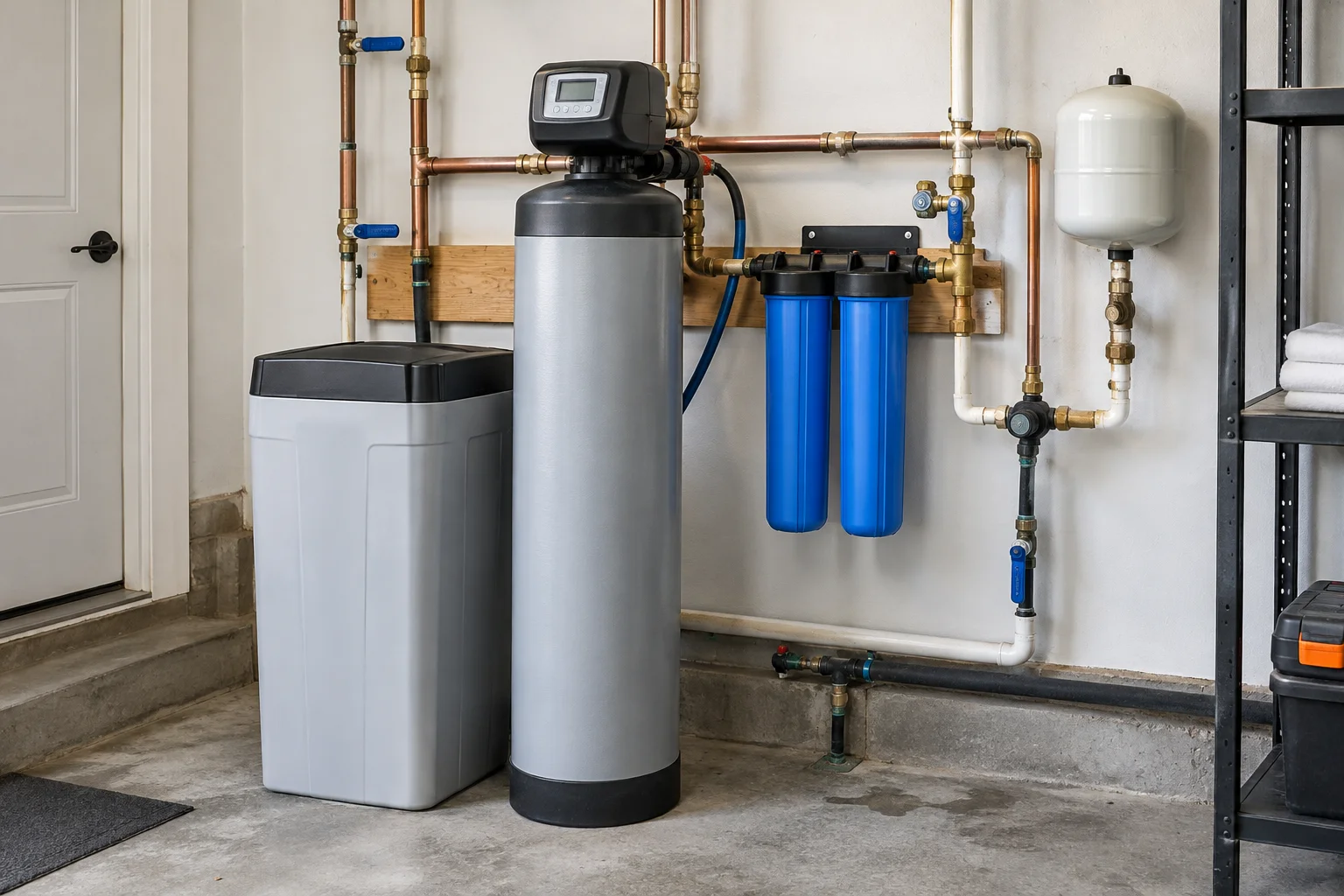
Water softeners are mechanical systems with controls, resin media, brine tanks, and valves. Problems often start small and grow. Below are the most frequent causes homeowners experience, along with the early signs you can check.
1) Salt or brine issues that limit regeneration
One of the most common reasons a water softener stops working is simply that the system is not regenerating properly. That can happen when:
• Salt levels run low
• Salt bridges form inside the brine tank
• The brine line clogs or draws brine inconsistently
• The system is set to regenerate too rarely for your household water use
Early signs often show up in the bathroom and kitchen first. You may notice soap that does not lather or rinses poorly, plus faster buildup on showerheads. In the kitchen, the dishwasher may leave films on plates even when you use the same detergent you always have.
2) Resin media exhaustion
Over time, the softener’s resin bed becomes saturated. When that happens, the system cannot exchange hardness minerals effectively. Homeowners typically see a gradual return of hard water symptoms rather than an immediate failure.
Look for:
• More scale buildup around faucets and showerheads
• Hard water spotting on glassware
• Dry skin or dull hair after bathing
• Appliances that seem to accumulate mineral faster than usual
Resin life depends on water hardness, system design, and maintenance quality. If you have noticed a slow decline, it may be time for a professional evaluation rather than simply adding salt.
3) Incorrect settings, control valve problems, or inaccurate cycle timing
Even when resin is healthy and salt levels are adequate, the control valve must deliver regeneration at the right time and in the right sequence. Settings can drift after service, power interruptions, or programming mistakes.
When cycle timing is off, you may see inconsistent water quality. Some days feel fine, then the next batch of laundry or dishes show residue. If your system has a digital control, it may also show error codes. A water treatment technician can confirm settings and verify valve operation during a service visit.
4) Sediment and particulate concerns that interfere with performance
Another cause of water treatment problems is sediment in household water. Sediment can affect how water flows through the system and can also make water look or smell different. If you have visible sediment, discoloration, and odor concerns, do not assume the softener alone is the fix.
In many Ocean City homes, homeowners choose whole home filtration to protect both water quality and downstream equipment. If you are dealing with sediment, you may benefit from a whole home water filtration approach that supports your softener and improves everyday water.
5) Bypasses, plumbing routing, or improper installation after repairs
After plumbing work, water heaters, or utility closet renovations, softener bypass valves can be left in the wrong position. Even small routing changes can lead to the system not treating all incoming water.
Common clues include:
• Soft water in one area but hard water in another
• Inconsistent results across sinks or showers
• Sudden changes after a contractor visited or after a maintenance call
This is a good reminder that water softener service is not only about media and salt. It is also about verifying that the treated water flow matches the system design.
6) Water chemistry changes and seasonal demand
Local water chemistry can vary, and household demand changes with seasons. More showers for guests, more laundry, and increased appliance use can all push the system beyond its set performance window.
Ocean City’s coastal environment can also influence how homeowners notice problems. For example, high humidity and frequent use of outdoor showers can make scale and soap residue more visible. If you notice that issues spike during certain months, it can point to regeneration frequency or hardness variability that needs adjustment.
Early warning signs in everyday life
Water treatment problems rarely stay hidden. Here are the signs Ocean City homeowners can spot early, tied to what is happening in the system.
Hard water spots on glass, dishes, and fixtures
If you wipe a glass and see persistent spots, or if dishes come out with a dull film, that is a classic indicator that hardness is not being controlled. Scale forms when minerals deposit as water dries. Over time, this can become harder to remove and can also increase cleaning time.
Scale buildup around faucets, showerheads, and plumbing
Scale buildup is not just cosmetic. It can build inside plumbing runs, reduce flow, and contribute to premature wear on appliances that heat water. Check:
• Faucet aerators for crusty deposits
• Showerheads for reduced spray
• Under-sink areas for signs of mineral sediment on plumbing connections
Dry skin or dull hair after bathing
When soap and shampoo do not rinse well, skin can feel tight and hair can look dull. Many homeowners describe dry skin or less manageable hair even when they use the same products they have always used. If the issue started after a period of reduced softener performance, it is worth investigating.
Metallic, chlorinated, or unpleasant taste
Hard water is one issue, but taste and odor concerns can point to other water quality problems. If you notice metallic or chlorinated taste, or if cooking water tastes different, do not ignore it. Drinking water quality affects how you feel about cooking and daily hydration.
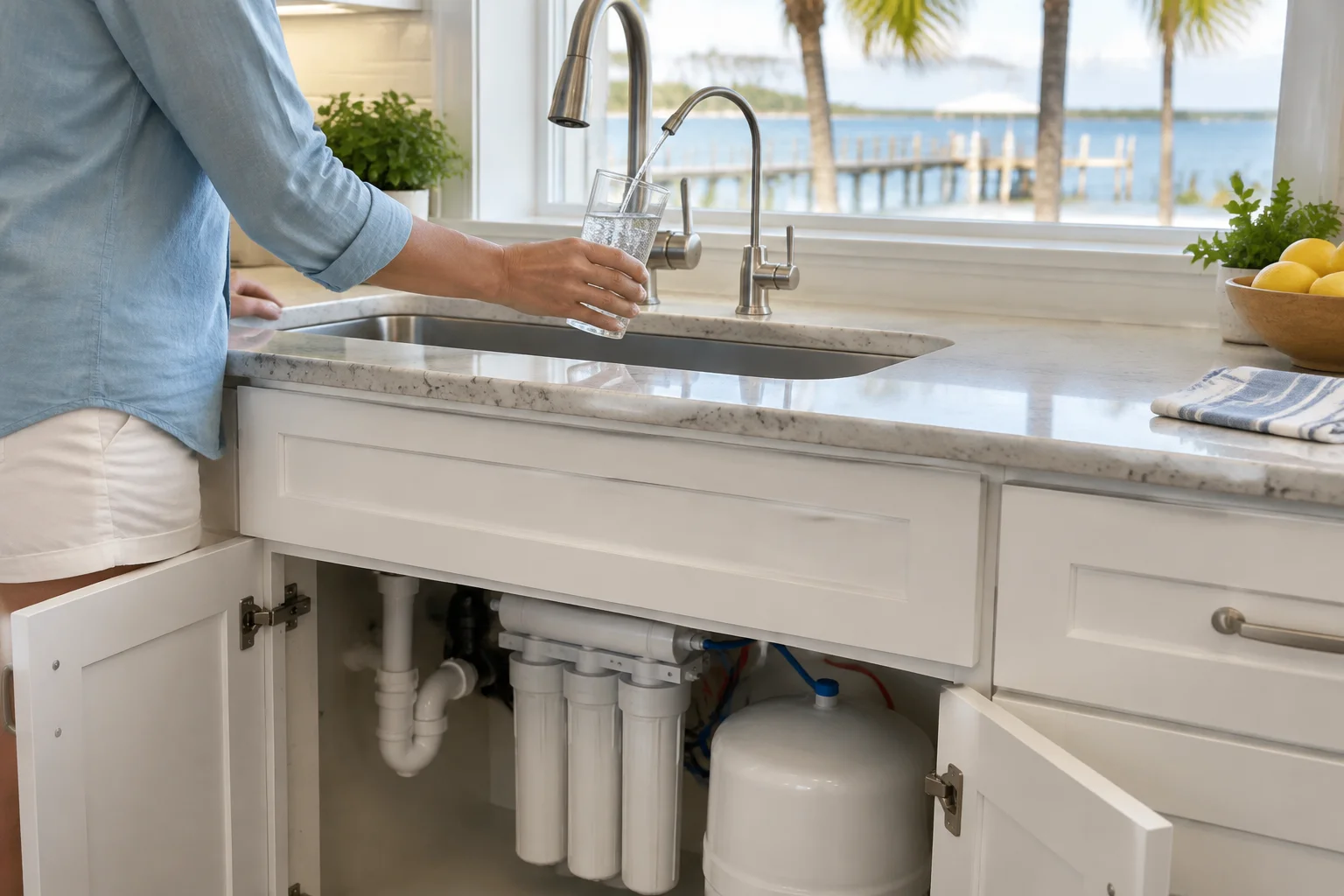
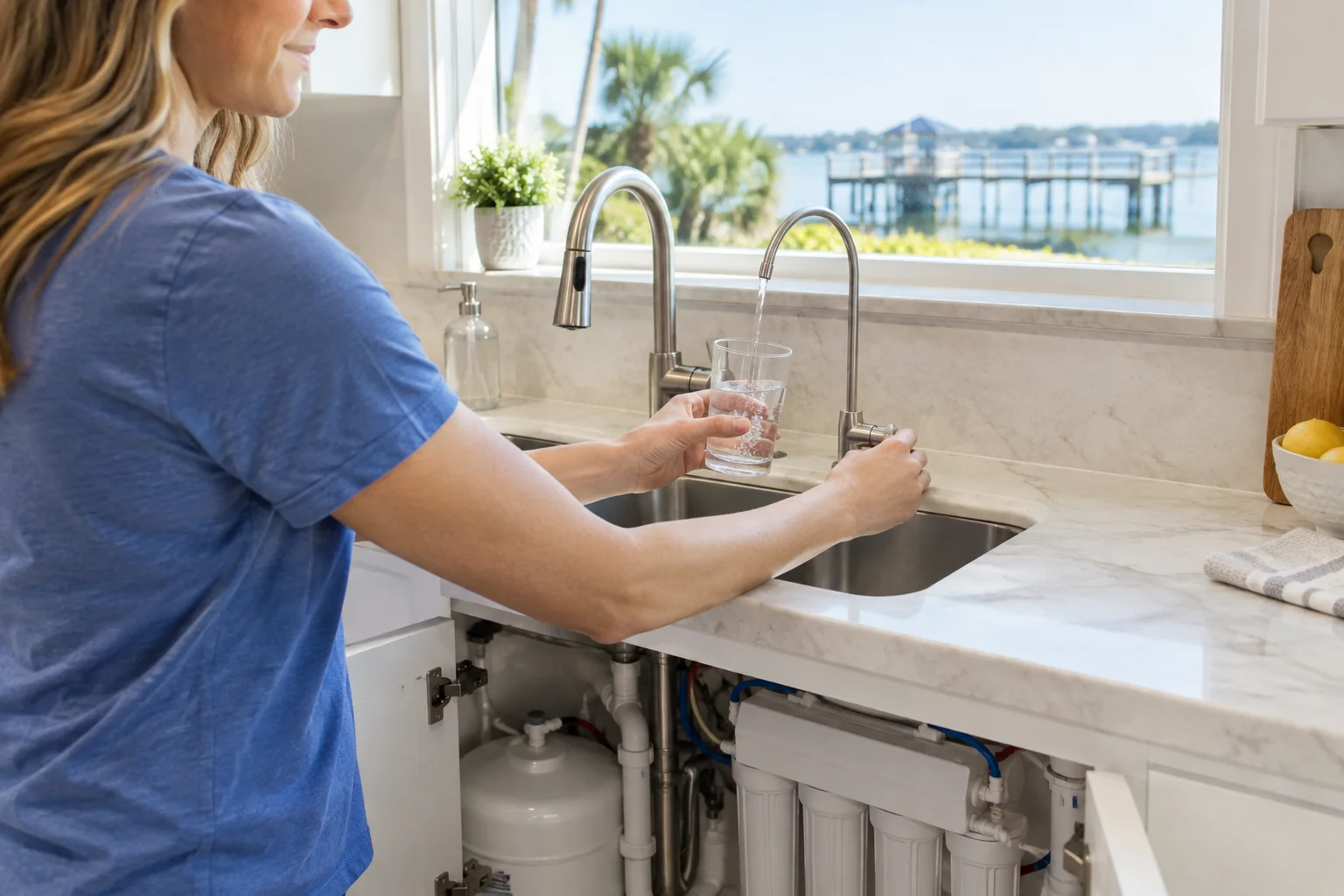
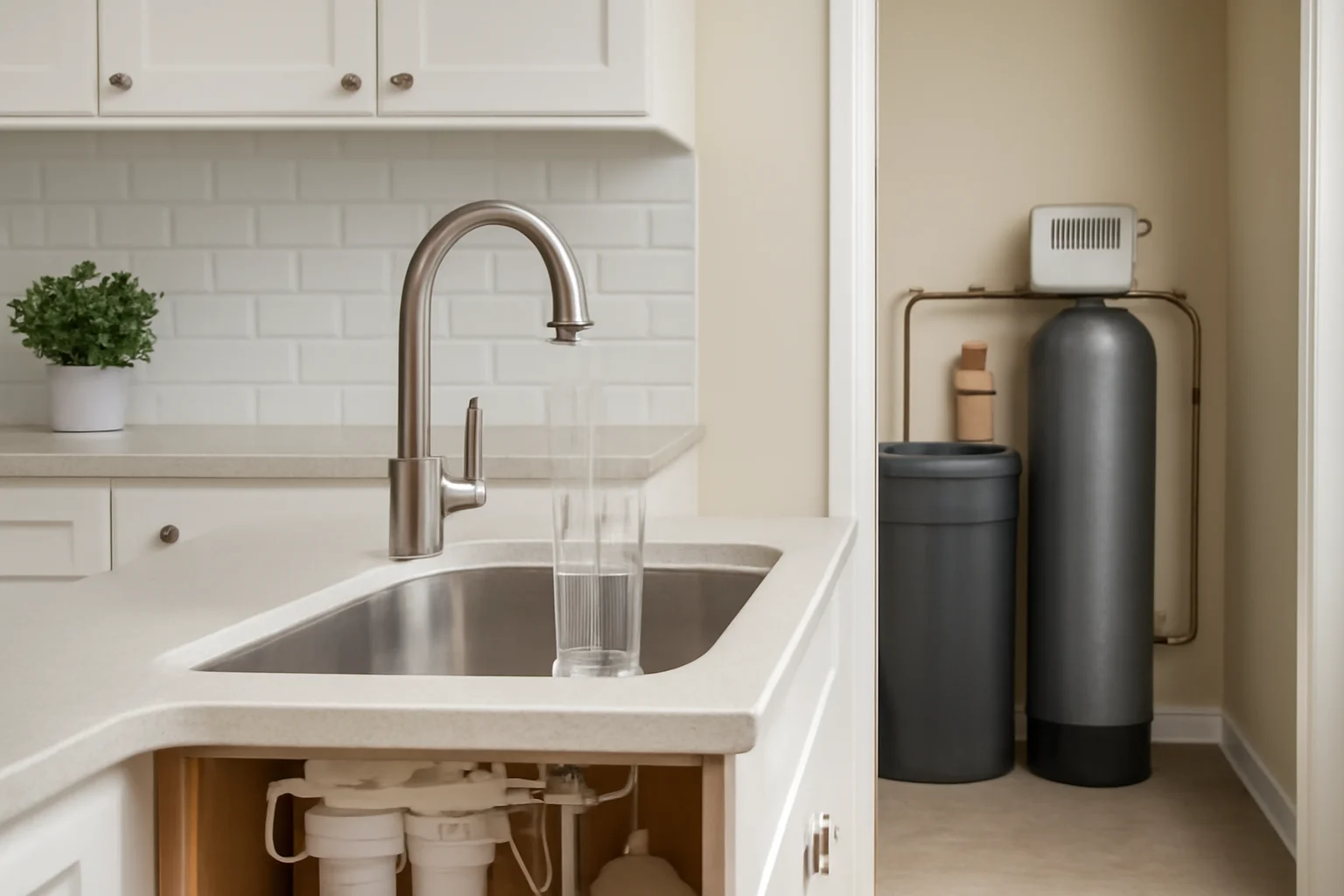
Some homeowners improve taste by adding targeted filtration. Depending on your water, systems like reverse osmosis or carbon-based filtration may help with specific taste and odor issues. If you are searching for home water purification near me, it is a good idea to ask what problem the system is designed to solve, not just what it removes.
Cloudy ice cubes
Cloudy ice cubes can happen when dissolved minerals or particulates are present. It is an easy observation during family kitchen moments, like when kids grab a glass after school. Cloudy ice can also be a sign that your filtration is not keeping up.
Poor tasting coffee and cooking water
Water is a key ingredient in coffee and many recipes. When water quality changes, coffee can taste flat or harsh, and cooking water can affect the flavor of soups, rice, and pasta. If you notice a shift, test the water and review your treatment setup.
Soap that does not lather or rinse well
When hardness is high, soap binds to minerals instead of cleaning effectively. That is why you may see soap that does not lather, plus residue in tubs and on shower walls. This is one of the earliest signs that hard water treatment is not performing.
Visible sediment, discoloration, and odor concerns
If you see sediment in a glass, notice discoloration, or detect unusual odor, your softener may not be the only system involved. Sediment and odor can be addressed with filtration. Whole home filtration can also protect your softener and plumbing from particles that create additional buildup.
Appliances wearing out faster
Mineral scale can shorten the life of water heaters, tankless components, and other equipment that heats water. Homeowners often notice that appliance performance drops sooner than expected, especially if you are also seeing scale around fixtures.
How water softening and filtration work together
Many Ocean City homeowners benefit from a layered approach. Water softening reduces hardness. Filtration can address sediment, taste, and odor. If you only soften but still have sediment concerns, you may still see cloudy ice cubes or unpleasant flavors.
Depending on your goals, you may consider:
• Water softening to reduce scale and improve comfort for bathing and laundry
• Whole home water filtration to help with sediment and protect plumbing and appliances
• AO Smith water filtration options, when recommended based on your water profile and the specific problem you are seeing
• Reverse osmosis for drinking water and cooking water when you want an extra level of purification
If you are thinking about a whole house water filter or reverse osmosis installation near me, it helps to start with the symptoms you are seeing and the water quality goals you want, like better water for drinking and cooking, cleaner fixtures, or reduced soap residue.
What to check at home before service
You do not need to be a technician to catch problems early. A few simple checks can help you describe the issue clearly when you schedule a water softener service visit.
Inspect the brine tank and salt type
Check the salt level. Look for signs of salt bridging and pay attention to whether the salt is dissolving as expected. If you use pellets, verify you are using the recommended type for your system.
Look for recent changes
Did a plumber or contractor work near the water lines? Did you have a power outage? Did you change your household schedule, add guests, or increase laundry during a season? These details matter when troubleshooting.
Document the pattern
Take photos of:
• Hard water spots on glass
• Scale buildup around faucets and showerheads
• Any discoloration or odor concerns
Note which areas look worse. If one shower shows more buildup than another, it may suggest a bypass or flow issue.
Preventive maintenance that keeps softening performance steady
Water treatment is not a “set it and forget it” system. The goal is consistent performance, especially in Ocean City homes where water quality and household use can shift.
Schedule regular softener service
Professional service often includes checking salt and brine draw, verifying control settings and valve operation, inspecting filters, and evaluating resin performance. When you book water softener service near me with a local team, you are also getting faster support and a technician who understands local conditions in Okaloosa County.
Consider whole home water filtration for sediment and taste
If you see sediment in household water or you are concerned about unpleasant taste, a whole house water filter can reduce the burden on your softener and improve everyday water. This is especially helpful when you are planning better water for drinking and cooking.
Use testing to confirm results
Water softening should reduce hardness effects. Filtration should improve clarity, taste, and odor. Testing helps verify whether the system is doing what you paid for and whether adjustments are needed.
When to call A Superior Mechanical
Call for help when you notice any of the following:
• Hard water spots on dishes and glass are increasing
• Soap does not lather or rinses poorly even when you use the same products
• Scale buildup around faucets and showerheads is returning faster than expected
• Dry skin or dull hair after bathing becomes a repeated issue
• Cloudy ice cubes, metallic or chlorinated taste, or unpleasant odor concerns show up
• You see visible sediment or discoloration in a glass of water
• Appliances seem to be wearing out faster due to mineral deposits
If you are trying to decide between water softening services and additional purification, you can also explore how targeted solutions like AO Smith water filtration, whole home filtration, or reverse osmosis installation can fit your home. For homeowners comparing options, it helps to start with the service page for your area: water softening services in Ocean City, FL.
If your main goal is cleaner water for drinking and cooking, you can also review the broader filtration approach on our water filtration and reverse osmosis landing page.
For more local context, including how service needs can vary across the region, visit our Ocean City service area and our Okaloosa County service area.
Related reading for Ocean City property owners
If you are comparing systems or trying to understand what matters most when protecting plumbing and improving water quality, these guides can help:
• What Ocean City Homeowners Should Know Before Choosing Water Softening Services
• Clean Water, Less Buildup: A Practical Guide to Water Purification in Ocean City, FL
If you manage a business property or mixed-use building, water quality and maintenance can overlap with other system costs. You may find this useful:
For residents who also manage HVAC in the same households, mineral scale control and clean water can affect how hard equipment runs. If you want broader home maintenance context, see:
• Why Commercial HVAC Service Matters in Ocean City Homes and Mixed-Use Properties
Protecting your family’s water, one symptom at a time
Think about your daily routine in Ocean City. The kitchen sink handles dishwashing and coffee. The bathroom handles bathing and hair care. Laundry handles detergents and rinse cycles. Around the home, appliances rely on hot water. When hard water treatment becomes part of protecting fixtures and appliances, it is not just about avoiding white scale on metal. It is about keeping the water experience consistent for everyone in the house.
When you catch water softening problems early, you can often avoid the “everything feels off” stage. You reduce scale buildup, improve how soap and shampoo perform, and support better water for drinking and cooking. If you are seeing cloudy ice cubes, metallic tasting water, or hard water spots on glass and dishes, treat those as early signals rather than normal inconveniences.
A Superior Mechanical can help you identify what is causing the issue and recommend the right next step, whether that is water softener service, added whole home water filtration, AO Smith water filtration options, or reverse osmosis for drinking water. The sooner you address the root cause, the easier it is to maintain clean water and lasting comfort throughout Okaloosa County.
Find Water Softening Services in Ocean City, FL
If you need Water Softening Services in Ocean City, FL, visit our local service page or contact A Superior Mechanical today.
For a broader look at whole-home water filtration, reverse osmosis, and water softener options, visit our water filtration, RO, and water softener page.
Map of Ocean City, FL
Frequently Asked Questions
Why does my water softener work sometimes and not others?
Intermittent performance often points to regeneration timing, a control valve issue, low salt or brine draw problems, or a bypass valve not fully set. A technician can check settings and confirm that all incoming water is passing through the system.
Can hard water symptoms mean I need filtration, not just a water softener?
Yes. A softener targets hardness minerals, but sediment, odor, and taste concerns can require additional filtration. If you have visible sediment, discoloration, cloudy ice cubes, or metallic or chlorinated taste, whole home water filtration or reverse osmosis may be the right supplement.
What are the earliest signs my softener is failing in an Ocean City home?
Early signs include soap that does not lather or rinse well, increasing hard water spots on glass and dishes, scale buildup around faucets and showerheads, and dry skin or dull hair after bathing. If you notice these rising together, it is time for a professional check.
How do I know whether reverse osmosis is worth it for drinking water?
If you are focused on better water for drinking and cooking, especially when you notice unpleasant taste, odor, or cloudy ice cubes, reverse osmosis can provide an extra level of purification. A local water treatment evaluation can help match the system to the specific issues in your home.
How often should I schedule water softener service?
Most homeowners benefit from periodic inspections and maintenance that match system type, usage, and water conditions. If you see performance changes or any of the warning signs listed in this guide, schedule service sooner rather than waiting for a full maintenance cycle.
Related Articles
- What Ocean City Homeowners Should Know Before Choosing Water Softening Services
- Commercial Plumbing in Ocean City, FL: Small Issues That Turn Costly for Local Families and Property Owners
- Why Commercial HVAC Service Matters in Ocean City Homes and Mixed-Use Properties
- Clean Water, Less Buildup: A Practical Guide to Water Purification in Ocean City, FL
Photo Gallery