Blue Mountain Beach homes feel the effects of Florida humidity the moment the air turns warm and salty. A whole home dehumidifier can help protect comfort, furnishings, and indoor air quality, but it also depends on the rest of your HVAC system working the way it should. When cooling, airflow, condensate drainage, or thermostat control are off, the dehumidifier may not perform as intended.
This guide explains what can cause problems with whole home dehumidifiers in Blue Mountain Beach, FL, and how homeowners can prevent issues with smarter HVAC maintenance. If you are dealing with persistent damp air, musty odors, or inconsistent comfort, the insights below will help you ask better questions during whole home dehumidifier service.
Why Blue Mountain Beach humidity makes dehumidifiers more sensitive
In coastal Walton County, moisture loads are high. Warm air holds more water vapor, and salty sea air can intensify how quickly homes feel humid. Even well-sealed homes can experience humidity spikes during rain events, high winds, and seasonal temperature swings.
Whole home dehumidifiers are designed to remove moisture, but they typically rely on correct airflow across cooling components, proper condensate drainage, and coordinated control with your thermostat and HVAC system. If any part of that chain is struggling, you can get symptoms that look like “AC problems” but are actually dehumidification and humidity control issues.
Cooling system issues that indirectly affect dehumidifier performance
Most whole home dehumidifiers interact with the HVAC system’s cooling and air movement. When the cooling side is not operating correctly, the dehumidifier may have trouble meeting humidity targets.
Refrigerant system problems and unstable cooling
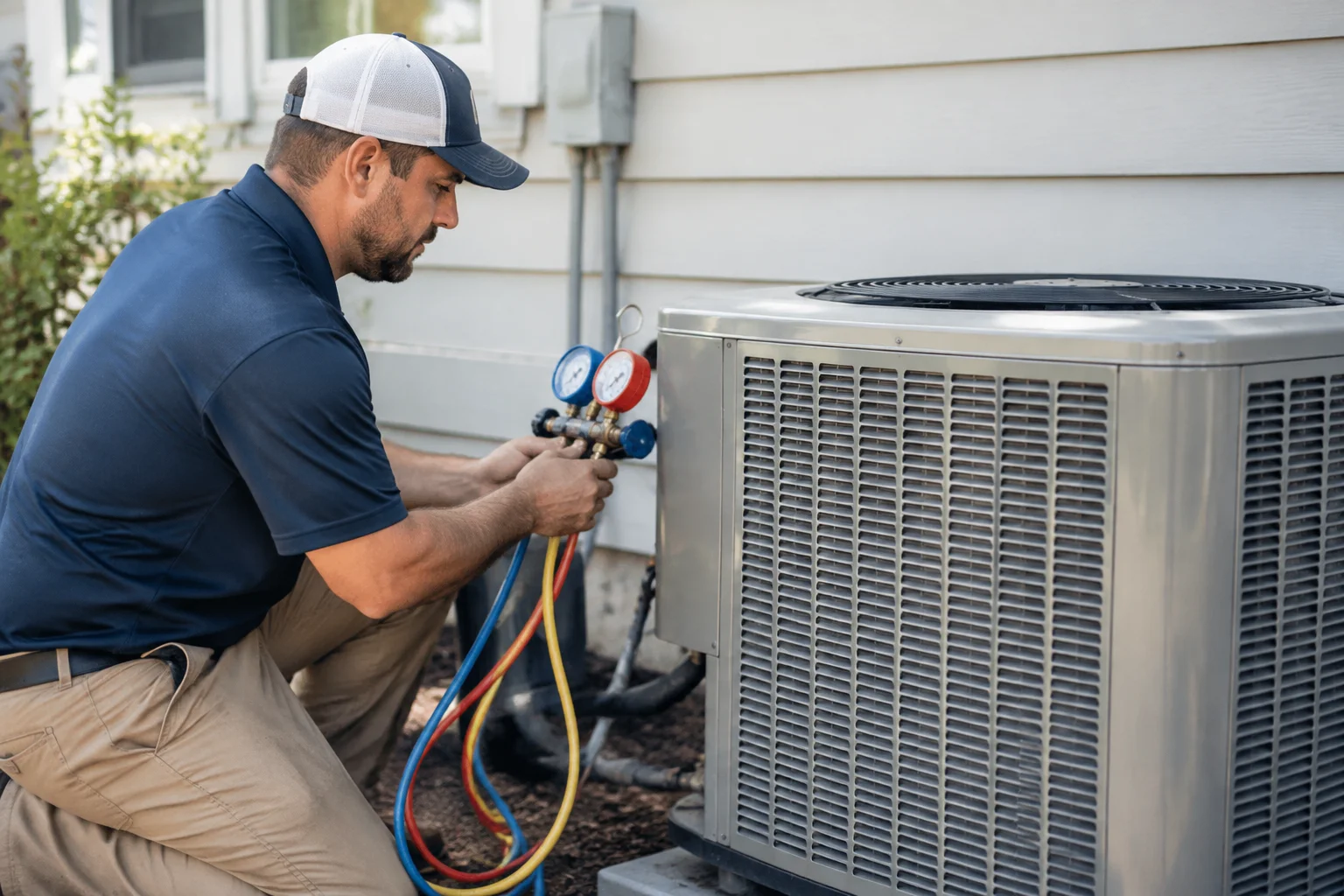
If your HVAC system is running with incorrect refrigerant conditions, cooling can be inconsistent. That inconsistency can affect the dehumidifier’s ability to cool air enough to condense moisture. Homeowners sometimes notice this as air that feels cool but not “dry,” or humidity that rebounds soon after the system cycles.
It is important to avoid guessing at refrigerant causes. A refrigerant diagnosis should be completed in person by a qualified technician who can verify system performance, airflow, and operating conditions. If you suspect refrigerant-related cooling problems, ask about a comprehensive HVAC inspection rather than focusing only on the dehumidifier.
Dirty coils or blocked heat exchange surfaces
Coastal air can contribute to buildup on outdoor units and indoor coil surfaces. When coils are dirty, heat transfer drops, and the system may struggle to maintain stable temperatures. That can reduce the dehumidifier’s effectiveness because moisture removal depends on cooling performance and airflow.
For homeowners searching for “AC repair near me” or “HVAC company near me,” a common mistake is treating symptoms without checking the full cooling pathway. In Blue Mountain Beach, a coil cleaning and airflow check are often part of smart AC tune ups and indoor air quality services.
Airflow problems that make humidity control unreliable
Dehumidifiers are airflow dependent. If air is not moving across the right components, the system cannot pull moisture out of the home effectively. Airflow problems can also cause comfort complaints that show up as temperature swings, uneven rooms, or “AC runs but humidity stays.”
Blocked return paths or closed dampers
Some homes have return air restrictions, closed vents, or balancing issues that reduce airflow. A whole home dehumidifier may run longer because it cannot process the air volume needed to remove moisture. Over time, that can increase energy use and wear on system components.
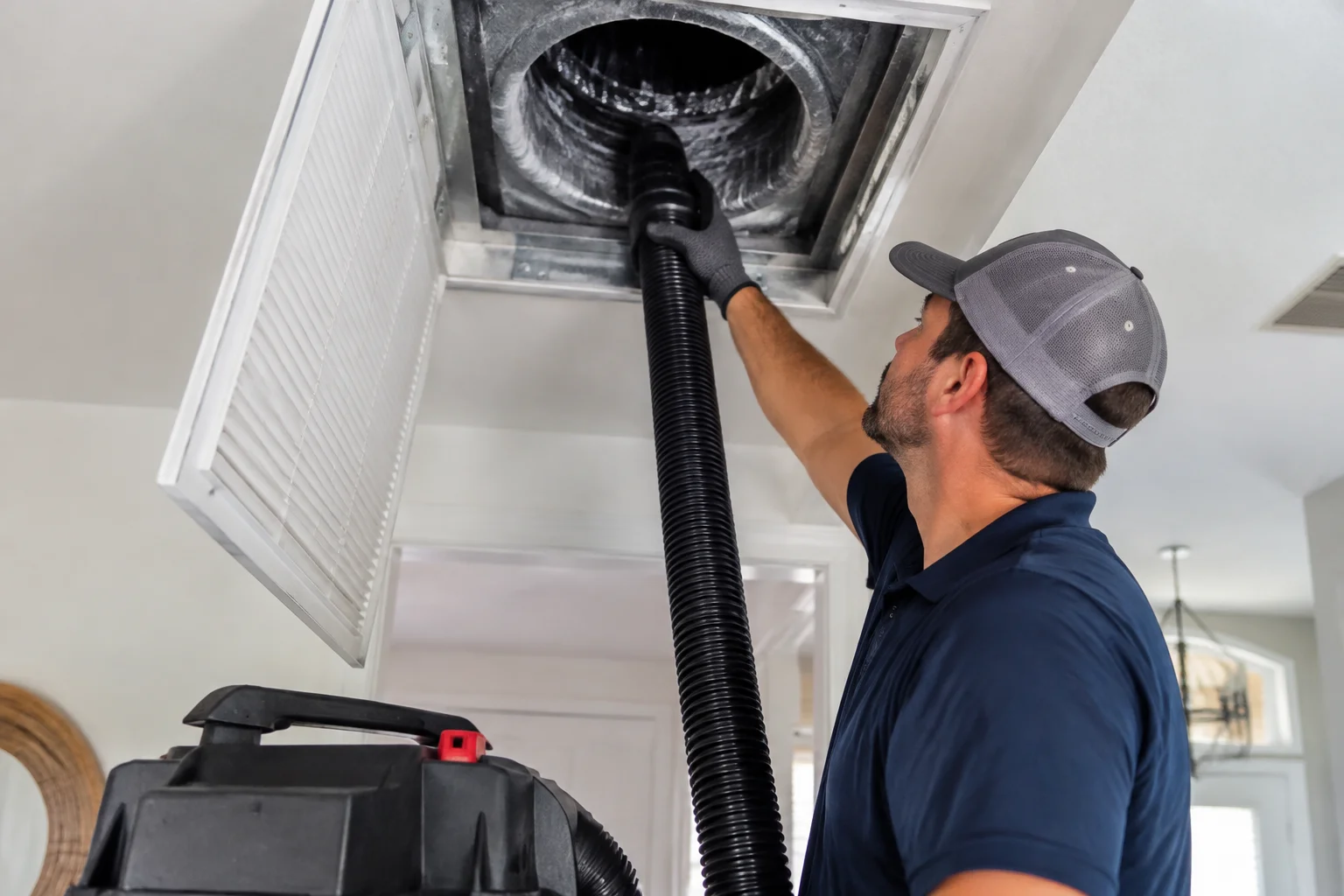
For ductwork-related concerns, homeowners often benefit from a duct inspection. If you want to understand how airflow and hidden duct issues affect humidity, see Blue Mountain Beach Homes and the Hidden Value of a Duct Inspection.
Leaky ducts and bypass airflow
Duct leaks can pull in humid air from attics, crawl spaces, or other unconditioned areas. That can raise indoor humidity and reduce the dehumidifier’s ability to maintain stable levels. Leaks can also create pressure imbalances that change how the HVAC system distributes air.
In a coastal climate with frequent humidity swings, even small duct issues can have an outsized impact on indoor air quality. If you are pursuing preventive HVAC maintenance, it is worth including ductwork checks in your overall plan.
Wrong fan speed or blower settings
If the blower is not moving air at the intended rate, the dehumidifier may not condense moisture efficiently. Blower settings are sometimes tied to thermostat programming, HVAC zoning behavior, or service adjustments made during prior repairs. A homeowner can’t reliably correct these settings without system-specific checks.
If you are searching for “HVAC maintenance near me” and want humidity control to work the way it should, ask whether the technician will verify airflow, static pressure, and blower operation during the visit.
Condensate drainage failures that create moisture where you do not want it
Whole home dehumidifiers remove water from the air, and that water must drain correctly. Condensate drainage issues are one of the most common causes of dehumidifier “failure” that is actually a drainage problem.
Clogged drain lines or algae buildup
In Florida’s humidity, drain lines can become prone to buildup. A slow drain might not trigger an immediate shutdown, but it can lead to overflow, water pooling, or recurring musty odors. If you notice water around the unit, damp drywall, or a “wet basement” smell, drainage should be investigated.
Because condensate management is tied to indoor humidity and comfort, drainage problems can also affect indoor air quality. It is best to have a technician inspect the drainage pathway as part of dehumidifier service.
Improper slope or poor termination
Even when a drain line exists, it may not be routed correctly for the unit’s needs. Temperature changes can also influence drainage behavior. In a coastal region where indoor and outdoor temperatures vary, drainage performance can change.
A Superior Mechanical can evaluate the system in person so you avoid trial-and-error changes. If the dehumidifier is part of a broader HVAC setup, the technician should also confirm that airflow and cooling operation are supporting proper condensate formation.
Thermostat and control settings that fight the dehumidifier
Whole home dehumidifiers are controlled through settings that coordinate with your HVAC system and thermostat. When those settings are incorrect or mismatched, the dehumidifier may cycle too often, run too little, or remain “stuck” in a mode that does not support moisture removal.
Humidity setpoints that are too high or too low
If the humidity setpoint is set too high, the dehumidifier may not run long enough to keep indoor conditions comfortable, especially during humid spells. If the setpoint is too low, the system may run excessively, increasing energy use and potentially leading to comfort issues like overly cool air or frequent cycling.
Homeowners should adjust settings based on actual indoor conditions, not just outdoor weather. A technician can help you determine a practical target range based on your comfort goals and system behavior.
Mode conflicts with cooling or heat pump operation
Blue Mountain Beach homes often use air conditioning and heat pump systems. If your thermostat is set to a mode that does not align with dehumidification needs, you may see uneven humidity control. For example, if cooling is limited to certain times or if staging behavior changes, the dehumidifier may not receive the conditions it needs to remove moisture.
If you are considering air conditioning service or you suspect thermostat coordination is a factor, ask about thermostat verification and control settings during the inspection. Some homeowners also choose HVAC financing for system upgrades or new humidity control components when repairs no longer bring performance back.
Sensor placement and calibration concerns
Dehumidification depends on sensors reading the air correctly. If sensors are located in areas that do not represent the home’s average conditions, you may get misleading humidity readings. Calibration drift can also contribute to inaccurate control.
Sensor issues should be addressed by a professional who can evaluate placement and system operation. This is also where indoor air quality services can help, because comfort and humidity work together.
Energy use and “short cycling” that can follow dehumidifier problems
When a whole home dehumidifier cannot remove moisture efficiently, it often runs longer or cycles more frequently. That can raise energy use and create wear patterns that lead to additional service needs.
Short cycling can be triggered by airflow restrictions, coil issues, control settings, or condensate drainage problems. Homeowners may interpret this as “the AC is struggling” even when the underlying cause is humidity control imbalance or system coordination.
If you are trying to reduce energy waste while improving comfort, the best approach is preventive HVAC maintenance that checks the full system, including ductwork, airflow, and cooling performance.
Salt air and coastal corrosion: a quiet factor in moisture control
Blue Mountain Beach’s coastal environment brings salt air that can be tough on HVAC components over time. Corrosion can affect outdoor units and airflow pathways, which can indirectly impact how well your cooling system supports dehumidification.
Corrosion may not always show up immediately. It can gradually reduce performance, which then shows up as humidity that stays elevated during periods when you expect it to improve.
This is another reason homeowners benefit from a local HVAC company that understands coastal wear patterns. A Superior Mechanical provides residential HVAC service in Walton County and can guide you on maintenance priorities based on local conditions.
Signs your whole home dehumidifier needs professional attention
Homeowners often wait too long because the symptoms feel like everyday Florida comfort. Here are practical signs that the problem may be with humidity control, airflow, drainage, or thermostat coordination rather than “just humidity.”
Humidity stays high even when the dehumidifier runs.
Musty odors or damp smells appear, especially after rain or when the system cycles.
Visible water near the unit, condensate line, or in nearby areas.
Temperature feels cool but air feels clammy, suggesting cooling and dehumidification are not coordinated.
Frequent cycling or the system runs longer than usual.
Uneven comfort across rooms, which can point to ductwork and airflow issues.
If you are searching for “AC repair near me” or “air conditioning inspection near me” because of humidity and comfort problems, ask the technician to evaluate whole home dehumidifier operation as part of the HVAC system performance check.
Preventive maintenance that keeps dehumidifiers working with your HVAC system
Whole home dehumidifiers work best when the HVAC system is tuned for airflow and cooling performance. Preventive maintenance is not just about cleaning. It is about verifying that the system can move air, cool properly, and drain moisture.
Schedule checks before peak humidity months
In the Blue Mountain Beach area, humidity pressure increases during warm stretches and rainy periods. Scheduling maintenance before those peaks can reduce the chance of emergency cooling concerns when you need reliable comfort the most.
When homeowners search for “HVAC maintenance near me,” they often want comfort and indoor air quality protection. The visit should include dehumidifier-related components and the HVAC system that supports them.
Include duct inspection and airflow verification
Even a perfectly working dehumidifier can struggle if ducts do not deliver airflow efficiently. A duct inspection near me search can lead you to services that locate leaks, restrictions, and bypass pathways. That matters for humidity control and overall indoor air quality services.
If you want more context on how duct performance affects moisture, read Blue Mountain Beach Homes and the Hidden Value of a Duct Inspection.
Verify condensate drainage and clean as needed
Condensate drainage should be checked regularly, especially in Florida’s humid environment. Preventive attention to the drain pathway can help avoid overflow, odors, and moisture accumulation.
Review thermostat settings and humidity targets
Thermostat installation near me searches are common when homeowners upgrade systems or want better control. If you already have a thermostat and dehumidifier, a professional can confirm that settings align with how your home actually behaves.
This can also be a good time to review whether your heat pump or AC is coordinating properly with humidity control logic.
When heat pump systems and dehumidifiers must be evaluated together
Many homeowners in Walton County use heat pumps for year-round comfort. Heat pumps handle both cooling and heating, so the HVAC system’s operating mode can influence humidity removal. If your heat pump is not maintaining cooling performance, the dehumidifier may end up compensating.
If you suspect heat pump repair near me is needed because humidity control is inconsistent, treat this as a whole-system issue. A technician should evaluate airflow, coil conditions, and control behavior. Avoid assumptions about the cause without an in-person assessment.
If your home is considering broader energy and comfort improvements, it may also be worth exploring options like Geothermal Energy, especially if you are planning long-term upgrades that affect indoor comfort strategy.
Why local HVAC service matters for whole home dehumidifiers in Blue Mountain Beach
Whole home dehumidifiers are not standalone appliances in most homes. They are part of an HVAC ecosystem that includes ductwork, thermostat logic, cooling performance, and condensate drainage. In Blue Mountain Beach, salt air, high humidity, and coastal construction realities can amplify the effects of small issues.
Choosing a local HVAC company near you matters because technicians can factor in how homes in Walton County are built, how duct systems are typically laid out, and what maintenance patterns are most effective in coastal climates. When you book service through A Superior Mechanical for whole home dehumidifiers, you get the benefit of an HVAC-first approach to humidity control and indoor air quality.
If you want to explore more about the broader service area, visit our Blue Mountain Beach HVAC service area and learn how dehumidifier support fits into overall comfort planning.
How long-term performance is affected by maintenance habits
Homeowners sometimes ask how to get more life and better results from whole home dehumidifiers. The answer is less about shortcuts and more about consistent system performance. When airflow, coils, drainage, and controls are kept in good shape, dehumidifiers can do their job without overworking the HVAC system.
To see how maintenance can improve results in similar coastal conditions, review Getting More Life and Better Results From Whole Home Dehumidifiers in Upper Grand Lagoon and What Laguna Beach Homeowners Should Know About Whole Home Dehumidifiers and Smarter Maintenance.
Property types and humidity control priorities in Walton County
Blue Mountain Beach includes primary residences, vacation homes, and rental properties. Humidity control needs can vary based on occupancy, ventilation habits, and how quickly the home is brought back to comfort after it sits.
If you manage rentals or multiple properties, you may also benefit from coordinated HVAC support through Property Management HVAC Services. Consistent maintenance helps reduce indoor air quality complaints and supports reliable cooling during peak demand.
When system replacement becomes part of the conversation
Most homeowners start with repairs and maintenance, but there are times when performance issues persist because the system is no longer able to meet comfort and humidity needs. Replacement decisions should be based on an in-person evaluation of HVAC performance, airflow, control behavior, and the overall humidity strategy.
If you are considering HVAC replacement near me because humidity control and cooling performance are repeatedly failing, focus the conversation on the full system. A technician should help you understand whether the issue is limited to the dehumidifier, or whether the HVAC system, ductwork, or thermostat coordination is part of the root cause.
Emergency cooling concerns and humidity that escalates quickly
In Florida, humidity and heat can climb fast. If your dehumidifier is not operating correctly, you might not just feel clammy. You can also see indoor air quality issues that make it harder to stay comfortable, especially for children, older adults, and anyone sensitive to damp air.
When HVAC comfort is critical, do not wait for “it to dry out.” A professional evaluation can help restore reliable cooling and humidity control so your home stays livable during demanding weather.
If you are dealing with whole home dehumidifier performance issues in Blue Mountain Beach, reach out to A Superior Mechanical for HVAC-focused humidity control support through whole home dehumidifiers and a full comfort evaluation.
Find Whole Home Dehumidifiers in Blue Mountain Beach, FL
If you need Whole Home Dehumidifiers in Blue Mountain Beach, FL, visit our local service page or contact A Superior Mechanical today.
Map of Blue Mountain Beach, FL
Frequently Asked Questions
Why does my home feel humid even when the dehumidifier runs?
Humidity can stay high when airflow is restricted, coils are dirty, condensate drainage is not functioning properly, or thermostat humidity control is not coordinated with your HVAC system. A technician can verify airflow, cooling performance, and control settings during an in-person inspection.
Can ductwork problems cause whole home dehumidifier issues?
Yes. Leaky ducts, blocked returns, or poor duct balancing can prevent the HVAC system from moving the air volume needed for effective moisture removal. That can lead to longer run times, uneven comfort, and higher indoor humidity. A duct inspection can help identify these issues.
What are common signs of a condensate drainage problem?
Look for musty odors, damp spots, water near the unit or condensate line, or recurring moisture after the dehumidifier cycles. Drain issues are especially important in Florida humidity and should be checked by a professional.
Should I adjust thermostat humidity settings on my own?
You can make small changes, but large adjustments can cause frequent cycling or discomfort if the HVAC system is not operating correctly. For best results, have a technician review your thermostat settings and dehumidifier operation in the context of your specific HVAC setup.
When is it time to consider HVAC replacement instead of more repairs?
Replacement is worth discussing when repeated evaluations show the system cannot reliably maintain indoor comfort and humidity control due to overall HVAC performance or persistent operational problems. An in-person assessment is necessary before deciding whether repair or replacement makes sense.
Related Articles
- Why Better HVAC Maintenance Matters for Whole Home Dehumidifiers in Sandestin
- Blue Mountain Beach Homes and the Hidden Value of a Duct Inspection
- Getting More Life and Better Results From Whole Home Dehumidifiers in Upper Grand Lagoon
- What Laguna Beach Homeowners Should Know About Whole Home Dehumidifiers and Smarter Maintenance
Photo Gallery