Shalimar, FL is beautiful, but it comes with a relentless mix of heat, humidity, and salt air. When moisture levels climb, your HVAC system has to work harder to cool, dehumidify, and keep the air comfortable. Whole home dehumidifiers help, but they are not “set it and forget it.” Smart habits and careful observation can help you catch early issues before they turn into musty odors, wet spots, or emergency cooling concerns during peak summer.
If you are looking for a whole home dehumidifier service in Shalimar, A Superior Mechanical can help with installation, repair, replacement, and preventive HVAC maintenance designed for local conditions across Okaloosa County. For broader service coverage, visit our Shalimar, FL service area.
Why Shalimar humidity stresses whole home dehumidifiers
Whole home dehumidifiers connect to your home’s HVAC airflow and indoor air quality systems. In a coastal area, moisture loads can be higher because warm air holds more water vapor. Salt air and ocean breezes can also contribute to corrosion risk on metal components over time.
When humidity control is working correctly, you should feel more even comfort and fewer “clammy” moments. When it is not, you may notice:
- Rooms feel damp even when the temperature seems right
- Condensation on windows, mirrors, or bathroom surfaces
- Musty smells that return after you clean
- Higher dust settling and a “stale” air feeling
These are not just comfort issues. Excess moisture can worsen indoor air quality by encouraging mold growth and increasing the load on your cooling system.
Use your thermostat like an early warning system
Many homeowners treat thermostats as temperature controls only. For whole home dehumidifiers, thermostat behavior can also reveal airflow and humidity control problems.
Watch for short cycles and “temperature-only” cooling
If your system frequently turns on and off quickly, it may be struggling to achieve stable airflow or refrigerant system performance. While you cannot confirm refrigerant issues from thermostat data alone, repeated cycling can be an early sign that the cooling process is not running as intended.
In addition, some homes end up with a pattern where the temperature drops but humidity stays high. That can point to a mismatch between dehumidification needs and the way the system is being controlled, or to airflow restrictions that prevent proper moisture removal.
Track how long the dehumidifier runs (and when it stops)
When humidity is controlled effectively, the dehumidifier should respond to moisture load changes. If it runs longer than usual during humid afternoons, or it stops too soon, you may have an underlying issue such as:
- Airflow problems through ducts or returns
- Condensate drainage concerns
- Sensor or control behavior that is not reading conditions correctly
- Filter or coil performance issues
Smart monitoring does not replace diagnostics, but it helps you describe the pattern clearly to a licensed HVAC contractor.
Know the “moisture clues” that often show up first
Whole home dehumidifiers remove water from the indoor air. When something is off, the earliest signs are often moisture-related, not temperature-related.
Condensate drainage issues you can spot
Many dehumidification systems collect water and route it through condensate drainage. When drainage is restricted or improperly routed, you can see early symptoms like:
- Water pooling near the unit or along the drain line path
- Unusual gurgling sounds near the HVAC equipment area
- Recurring dampness in closets, utility rooms, or near ductwork
- Odors that suggest moisture buildup
Do not try to “fix” drainage with improvised materials. A Superior Mechanical can inspect condensate drainage as part of HVAC repair and preventive HVAC maintenance, since airflow and moisture removal are closely connected.
Airflow changes that reduce dehumidification performance
Even if the dehumidifier is operating, poor airflow can reduce its ability to move air across coils and remove moisture effectively. Homeowners often notice airflow problems first through:
- Register vents that feel weaker in one area of the house
- Rooms that stay humid while others dry out faster
- More dust accumulation near vents
- Temperature differences that seem to “drift”
In Shalimar homes, ductwork performance matters because the system has to balance cooling and humidity control during hot, humid stretches. If you suspect ductwork is contributing to the problem, consider an air conditioning inspection near me or a focused duct inspection.
Look at your filters and airflow paths, not just the equipment
Whole home dehumidifiers depend on the HVAC system’s ability to move air. Filters and airflow paths are common culprits, especially in Florida where allergens and dust can accumulate.
Dirty filters can raise humidity and energy use
When filters clog, airflow drops. Reduced airflow can make the cooling and dehumidification process less efficient, which can lead to higher energy use and more runtime. You may also notice the system works harder but does not feel like it is removing moisture.
Replace filters on schedule and inspect them more often in peak humidity months. If you are unsure what filter type and maintenance schedule fit your home, ask an HVAC technician during an AC tune up near me or a humidity-focused service visit.
Check for blocked returns and supply registers
In many homes, furniture placement, curtains, or storage can slowly block airflow. That can create uneven humidity across rooms. Pay attention to:
- Returns behind dressers or bookcases
- Supply vents covered by rugs or heavy curtains
- Supply vents in bedrooms that are always closed
- Exhaust fans that run at the wrong times or not at all
These airflow changes can make it seem like the dehumidifier is failing when the real issue is air distribution.
Refrigerant system performance matters, even when the problem looks like humidity
Dehumidification is tied to the cooling process. Refrigerant systems move heat and enable moisture removal. When refrigerant performance is off, the system may cool unevenly, cycle unexpectedly, or struggle to pull moisture from the air.
It is important to say clearly: you should not attempt refrigerant diagnosis yourself. Refrigerant handling is specialized and requires in-person evaluation. However, you can still spot patterns that suggest refrigerant system performance needs attention, such as:
- Warm air feeling at vents when the system should be cooling
- Frequent cycling during humid afternoons
- Ice or unusual frost on components (do not chip it off)
- Persistent humidity problems despite normal thermostat settings
If you see these patterns, contacting an AC repair professional is the right move. For urgent issues during peak humidity, ask about emergency AC repair near me.
Salt air and coastal conditions: what homeowners should watch for
Shalimar’s proximity to the Gulf means salt air can accelerate corrosion on outdoor components. While indoor parts are also affected, outdoor coil and metal surfaces face higher exposure.
Corrosion and performance loss can show up as reduced efficiency, airflow issues, and longer runtimes. You may not see it immediately, but you can notice the results:
- Higher energy use during summer months
- Slower cooling and weaker dehumidification
- Unusual noises during operation
Preventive HVAC maintenance that includes inspection of key components helps catch early wear before it becomes a larger problem.
Preventive HVAC maintenance that supports whole home humidity control
Whole home dehumidifiers are part of a system. Preventive maintenance should focus on both the dehumidifier and the HVAC components that support airflow and cooling.
What a good maintenance visit typically includes
During an AC tune up near me or whole-home humidity service, technicians often check items that influence moisture control and indoor air quality, such as:
- Airflow performance through ducts and returns
- Coil condition where applicable
- Filter condition and airflow restrictions
- Thermostat operation and humidity control settings
- Condensate drainage function where the system collects moisture
- General system operation and control behavior
Ask your technician to connect the dots for your home. In a coastal climate, the goal is stable comfort and reliable humidity control, not just “it runs.”
Energy use is a clue, not a spreadsheet
Humidity control problems can increase energy use because the system may run longer to achieve comfort. If you notice a steady climb in bills during periods when weather should be similar, pair that observation with comfort symptoms like dampness, musty odors, or uneven air distribution.
Energy use alone is not diagnostic, but it helps prioritize what to inspect first.
Ductwork and indoor air quality: moisture and airflow go together
When humidity control is weak, you may also notice indoor air quality issues. Moisture can affect how air feels, how dust behaves, and how comfortable your home is for people with allergies or sensitivities.
Airflow problems can also contribute. If ducts leak or are improperly balanced, some rooms may get too little conditioned air. That can lead to humidity pockets that the dehumidifier struggles to manage.
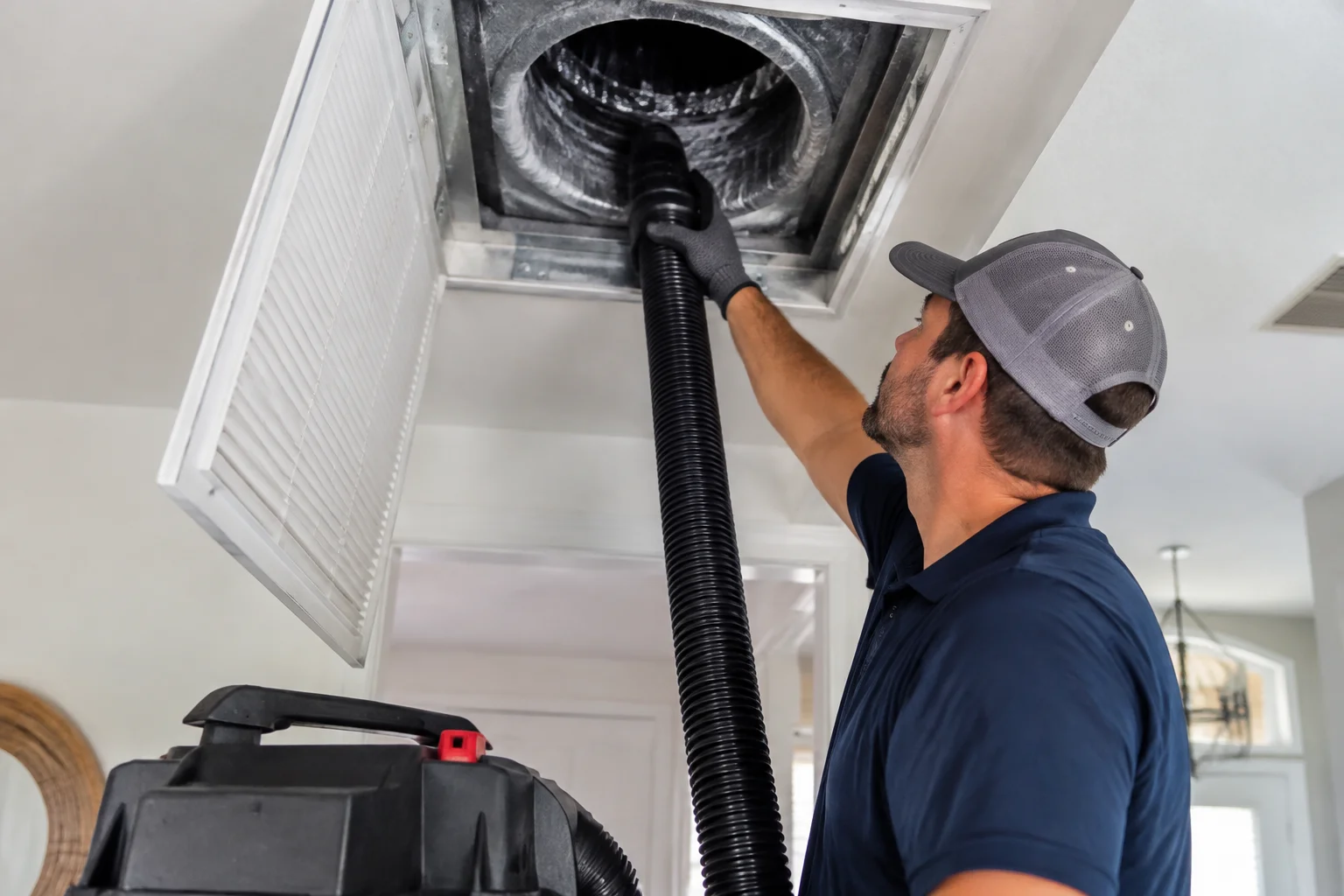
If you are researching duct cleaning near me or ductwork repairs, focus on the connection between airflow and humidity. A technician may recommend duct inspection before recommending duct cleaning, since the goal is to improve performance and comfort.
For homes with suspected airflow imbalance, you can also explore duct inspection as part of a humidity-focused plan.
Smart steps homeowners can take between service visits
You can do several practical things that help your whole home dehumidifier succeed. These habits do not replace professional HVAC repair, but they reduce the chance of problems going unnoticed.
1) Keep humidity targets realistic for Florida summers
Many homeowners set humidity targets too high and then wonder why the air feels damp. Others set targets extremely low and end up with constant operation. Work with your HVAC technician to choose thermostat and humidity control settings that match your home’s comfort goals and equipment capabilities.
2) Make one room a “humidity barometer”
Pick a room that often feels humid first, such as a bedroom with fewer vents or a room with lots of exterior exposure. Track what happens when the system runs. If that room never improves, you likely have an airflow distribution issue or a control problem that needs inspection.
3) Listen for changes in sound and timing
Whole home dehumidifiers and HVAC systems develop a normal operating rhythm. If you hear new rattling, rapid cycling, or frequent changes in blower speed, note it. Those observations help a licensed HVAC contractor find the right cause faster.
4) Keep condensate drainage areas clear
Do not store items near drainage lines or equipment access panels where technicians need to check the system. Moisture issues can hide until they become visible, and clearing access helps prevent that.
When to call for HVAC repair or inspection
Some issues are minor and can be handled with routine maintenance. Others deserve faster attention, especially during peak humidity when comfort can drop quickly.
Call for HVAC repair near me or schedule an air conditioning inspection near me if you notice:
- Humidity stays high despite normal thermostat settings
- Musty odors return or intensify
- Water pooling, damp drywall, or recurring wet spots
- Weak airflow or uneven comfort across rooms
- Frequent short cycling or unusual operation sounds
- Any ice or frost on system components
For urgent comfort needs, especially if you worry about emergency cooling concerns during a heat spike, ask about emergency AC repair near me and be ready to describe what you have observed.
How professional local HVAC service helps in Okaloosa County
Whole home dehumidifiers are only as effective as the HVAC system around them. Hiring a professional local team matters because Shalimar homes face a specific mix of heat, humidity, and coastal exposure. A technician who regularly works in the area knows what patterns to expect and how to evaluate the full system, including ductwork, airflow, condensate drainage, thermostat control behavior, and refrigerant system performance when relevant.
If you manage rentals or multiple properties, you may also want to consider property management HVAC services that help keep humidity control consistent across units.
And if your home is new or recently upgraded, you can ask about new construction air conditioning considerations that influence how well dehumidification performs from day one.
Related reading for Shalimar homeowners
If you want more practical guidance for humidity control and HVAC reliability, these posts can help you connect the dots between maintenance and comfort:
- Keeping Shalimar Properties Comfortable Without Surprise HVAC Problems
- Why Better HVAC Maintenance Matters for Whole Home Dehumidifiers in Sandestin
- Getting More Life and Better Results From Whole Home Dehumidifiers in Upper Grand Lagoon
- What Laguna Beach Homeowners Should Know About Whole Home Dehumidifiers and Smarter Maintenance
Smart troubleshooting checklist you can use today
Before you call, gather a few details. This makes service visits more efficient and helps your technician focus on the right inspection steps.
- What is your current thermostat temperature and humidity setting?
- Which rooms feel damp first?
- How long does the system run during a typical humid afternoon?
- Any musty odors, visible moisture, or signs of condensate drainage issues?
- Any recent changes like new furniture placement, renovations, or filter changes?
- Do you notice weak airflow at specific registers or returns?
- Any unusual sounds or cycling behavior?
Share these observations with A Superior Mechanical when you schedule whole home dehumidifier service in Shalimar. The more accurate your details, the faster the team can narrow down what is affecting humidity control and indoor air quality.
When humidity control is stable, your home feels better, your HVAC system is less stressed, and you reduce the chance of a mid-summer breakdown that leaves you scrambling. Smart monitoring helps you stay ahead of the issues that thrive in Florida’s heat and moisture.
Find Whole Home Dehumidifiers in Shalimar, FL
If you need Whole Home Dehumidifiers in Shalimar, FL, visit our local service page or contact A Superior Mechanical today.
Map of Shalimar, FL
Frequently Asked Questions
How can I tell if my whole home dehumidifier is failing in a Shalimar, FL home?
Common early signs include persistent humidity, musty odors, condensation on windows, dampness near the equipment area, or uneven comfort where some rooms stay clammy. If you also notice weak airflow or frequent short cycling, schedule an air conditioning inspection near me.
Why does my home feel less humid after AC runs, but the humidity comes back quickly?
That pattern can happen when airflow is restricted, ductwork is imbalanced, or moisture is being reintroduced faster than the system can remove it. It can also relate to control settings and how the dehumidifier integrates with the HVAC system. A technician can evaluate the full setup in person.
Can dirty filters or duct problems reduce whole home dehumidification performance?
Yes. Whole home dehumidifiers rely on proper airflow to move air across coils and remove moisture. Clogged filters, blocked returns, or ductwork issues can reduce airflow, leading to higher humidity and potentially higher energy use. Checking filters and airflow paths is a good first step before scheduling service.
What should I check around condensate drainage for a dehumidifier?
Watch for water pooling, damp spots near the equipment, recurring odors, or unusual gurgling sounds that suggest condensate drainage problems. Since drainage is connected to HVAC operation, have a professional inspect it rather than trying temporary fixes.
When is it appropriate to call for emergency AC repair near me?
Call for urgent help if your system cannot cool during a heat spike, if you see signs of severe moisture buildup, or if you notice unusual frost or other symptoms that could affect safe operation. During Florida humidity peaks, faster attention can help prevent additional indoor air quality issues.
Related Articles
- Keeping Shalimar Properties Comfortable Without Surprise HVAC Problems
- Why Better HVAC Maintenance Matters for Whole Home Dehumidifiers in Sandestin
- Getting More Life and Better Results From Whole Home Dehumidifiers in Upper Grand Lagoon
- What Laguna Beach Homeowners Should Know About Whole Home Dehumidifiers and Smarter Maintenance
Photo Gallery