Shalimar summers bring a familiar challenge: hot air, high humidity, and plenty of salt air from the coast. When your AC can’t keep up, comfort slips fast. The good news is that many air conditioning problems show up before they become a full breakdown. A practical air conditioning inspection in Shalimar, FL helps you catch small issues early, manage heat and humidity, and avoid emergency cooling concerns during the hottest stretches of the year.
Why Shalimar humidity makes AC inspections more important
In Shalimar and across Okaloosa County, Florida weather means your air conditioner is working against two forces at once: temperature and moisture. A typical cooling cycle removes humidity as the air passes over the evaporator coil. If airflow is restricted, condensate drainage is failing, or the system is struggling to transfer heat, your home can feel clammy even when the thermostat is set correctly.
Salt air and coastal conditions can also add stress over time. Corrosion and debris buildup can affect coil performance, filter loading, and ductwork efficiency. That is why homeowners searching for air conditioning inspection near me often want a thorough look at both comfort and system health, not just a quick thermostat check.
What “air conditioning inspection” should cover for real comfort
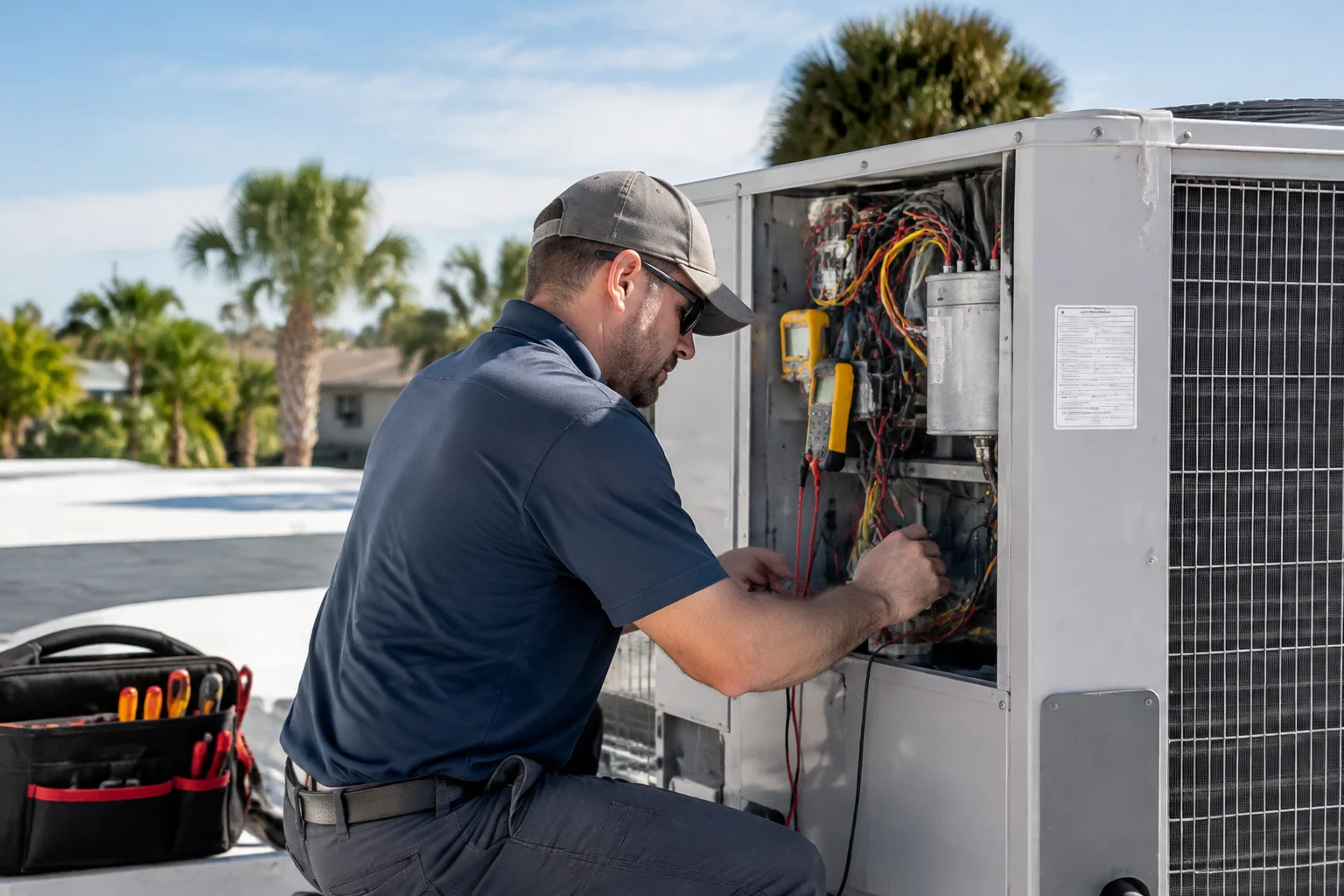
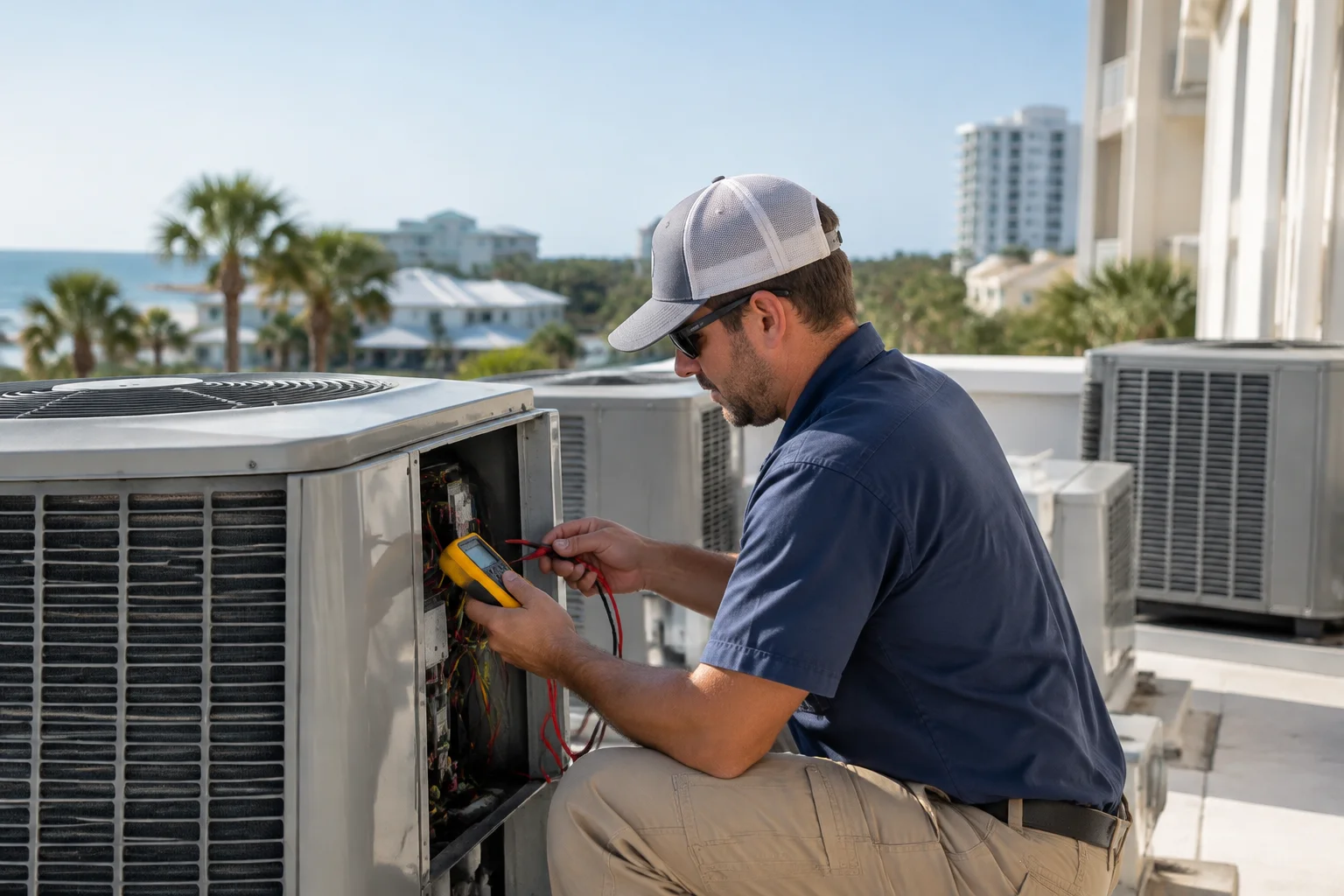
A solid inspection is a structured evaluation of how your AC cools and dehumidifies, how air moves through your ductwork, and how safely the system operates. While every home is different, a professional inspection commonly focuses on these areas.
1) Airflow and ductwork performance
Airflow is the foundation of cooling and dehumidification. If the blower fan is not moving enough air, the evaporator coil may not absorb heat efficiently. That can lead to warmer supply air, higher humidity, and increased energy use as the system runs longer to reach the thermostat setting.
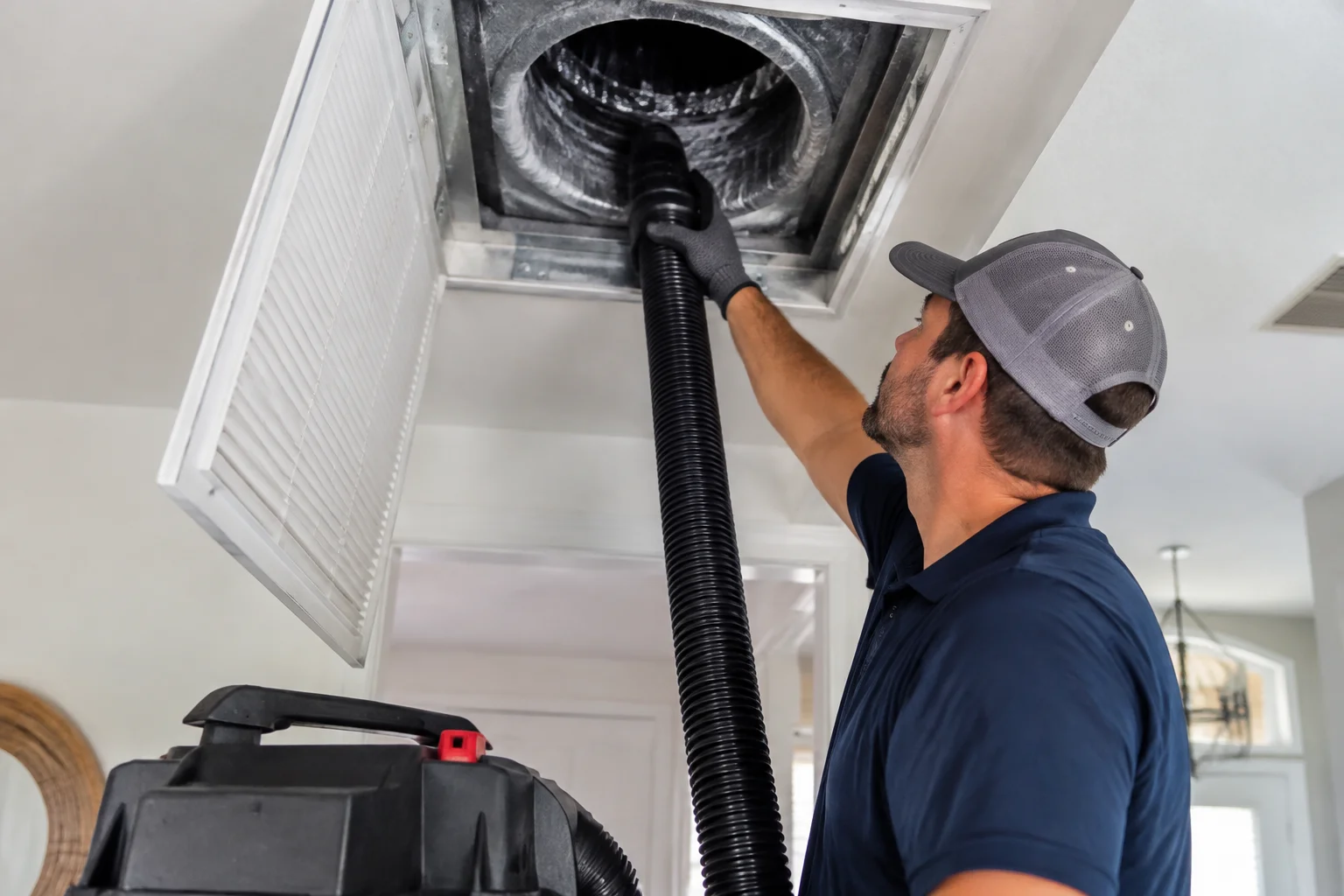
During an inspection, a technician will look for airflow restrictions and signs of duct issues. Common culprits include clogged filters, dirty blower components, blocked returns, poorly sealed duct joints, and ductwork that has shifted over time. In Florida homes, duct leakage can also pull in unconditioned air from attics or crawl spaces, making it harder for the AC to maintain comfort.
If you notice uneven cooling from room to room, persistent “hot spots,” or a home that feels humid despite running the system, airflow problems are often involved. For homeowners who also want to improve humidity control, pairing inspection findings with air filtration and dehumidifiers can be part of a practical plan.
2) Refrigerant system operation and cooling balance
Your refrigerant system is responsible for moving heat out of your home. If something is off, the indoor coil and outdoor unit may not exchange heat correctly. However, refrigerant issues require careful, in-person evaluation. A technician should not guess from symptoms alone.
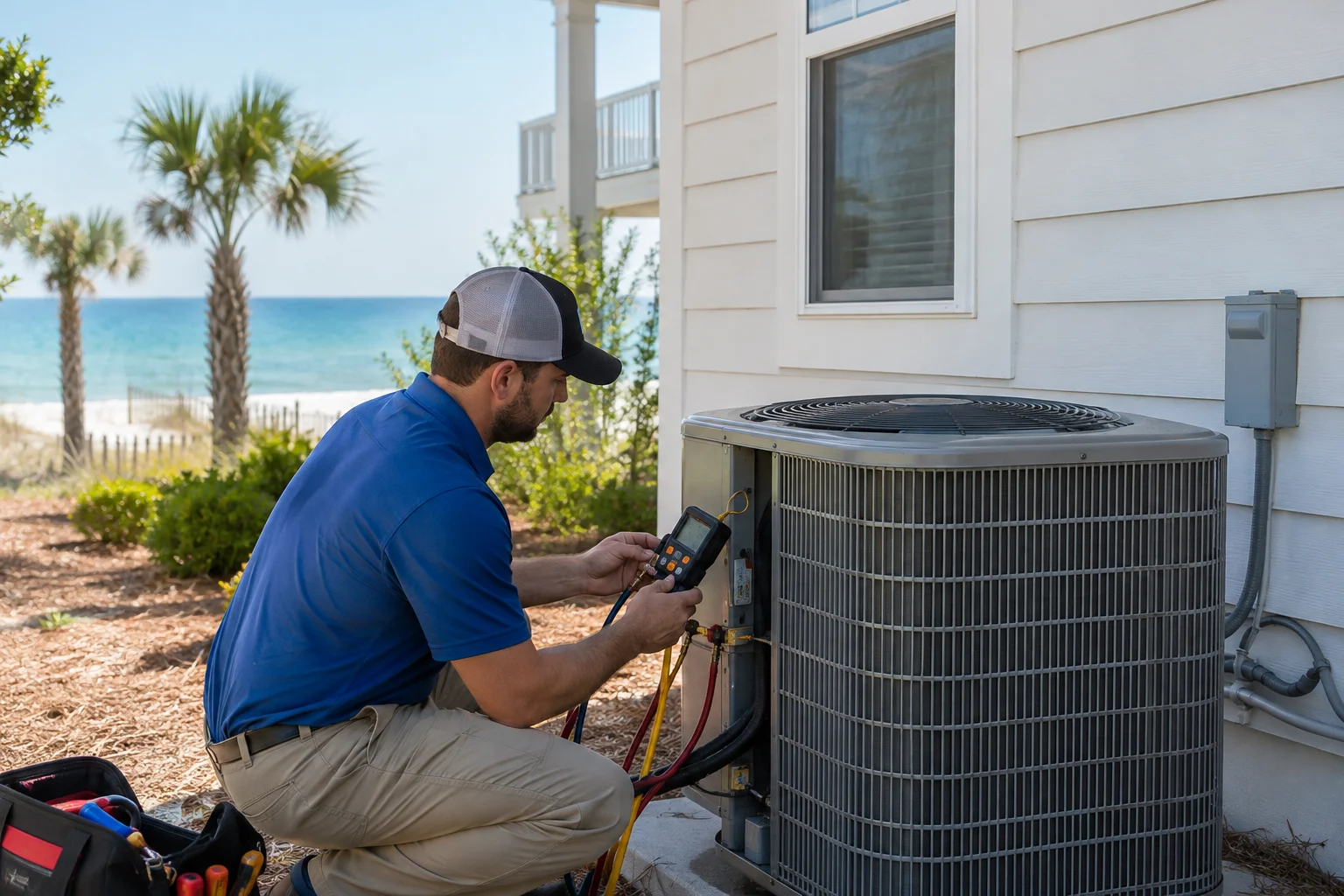
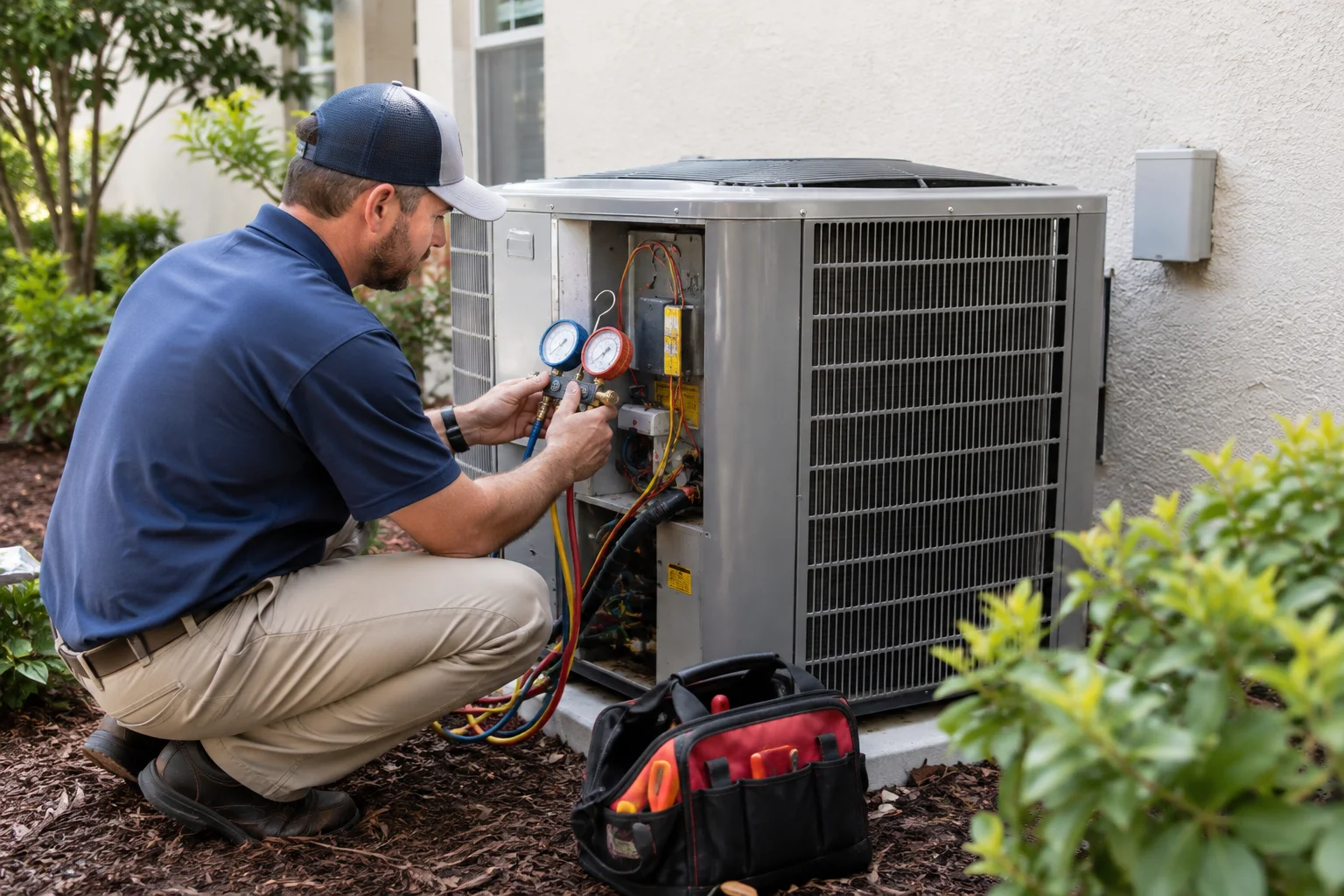
An inspection typically includes checking system performance indicators and looking for signs that the refrigerant system is not behaving as expected. If a homeowner is experiencing weak cooling, short cycling, or a system that runs constantly without reaching set temperatures, the refrigerant system may be one of the areas investigated. Any refrigerant diagnosis or adjustment should be handled by a licensed professional after proper testing.
3) Condensate drainage and moisture control
When your AC removes humidity, it creates condensate. That water needs a clear path to drain. If the condensate line is clogged, sloped incorrectly, or partially blocked, water can back up. That can lead to elevated indoor humidity, water damage risks, and musty odors.
During inspection, technicians check condensate drainage components for proper flow and look for signs of accumulation. This matters in Shalimar because indoor humidity can stay high when moisture removal is impaired. Homeowners often describe it as “the AC is running but it feels damp.” A drainage or coil-related issue is frequently part of that picture.
4) Thermostat settings, sensors, and control behavior
Your thermostat helps manage comfort, but it also influences how the system cycles. If the thermostat is inaccurate, poorly placed, or set up for the wrong mode, the AC may cycle too often or run too long. That can increase energy use and worsen humidity control.
An inspection may include verifying thermostat operation and how the system responds to calls for cooling. If you are considering upgrading controls, many homeowners ask about thermostat installation near me. A technician can help match the control to your system and comfort goals, especially if you are trying to improve humidity management or reduce frequent cycling.
5) Indoor air quality issues that affect comfort
Comfort is more than temperature. Poor indoor air quality can make air feel stale, increase allergy triggers, and affect how the home “feels” even when the thermostat is set. During an inspection, a technician may evaluate filtration and ventilation patterns as part of the comfort picture.
If you suspect indoor air quality problems, consider pairing your inspection with indoor air quality testing. This can help clarify what is happening in the home, especially if humidity is high or if odors and dust seem to linger.
Common AC inspection findings in Shalimar homes
Every property has its own history, but Shalimar and Okaloosa County homes often share certain patterns due to coastal climate, seasonal demand, and the way ductwork and comfort systems age.
Dirty or overloaded filters and restricted airflow
Filters collect dust, pollen, and debris. In humid coastal areas, that can become a bigger issue because airflow and moisture removal are tightly linked. When filters restrict airflow, the system struggles to cool and dehumidify.
Coil buildup and reduced heat transfer
Outdoor coils can collect debris, and indoor coils can develop buildup. When heat transfer drops, the AC may run longer, feel less effective, and increase energy use. Coil performance issues can also contribute to moisture problems if the system cannot maintain proper cooling conditions.
Condensate drainage problems
Clogs can form from algae, debris, or slow drainage. Even partial blockage can affect humidity control. Homeowners may notice water around the unit, damp areas, or persistent musty odors.
Duct leakage and poor distribution
Ductwork can leak at joints or become disconnected over time. That can reduce comfort and force the system to work harder. If you have rooms that never feel comfortable, ductwork and airflow are often part of the inspection conversation.
Short cycling or inconsistent cooling
Short cycling can happen when the system is not operating efficiently or when the control strategy does not match the system and home. It can also worsen humidity because the system may not run long enough to properly remove moisture.
How to spot HVAC problems early using everyday clues
You do not need to be a technician to catch problems early. These signals often point to airflow, humidity control, or refrigerant system performance concerns. Keep in mind that symptoms can overlap, so the safest approach is to have a professional inspect the system rather than self-diagnosing.
Clammy air even when temperatures look “right”
If your home feels humid, muggy, or sticky, the AC may not be removing moisture effectively. That can be caused by airflow restriction, coil performance issues, condensate drainage problems, or control settings that lead to short run times.
Long run times and rising energy use
When the system runs longer than usual to maintain set temperatures, it can indicate inefficiency. In Florida heat, that can quickly translate into higher energy use. An inspection can help identify what is driving the increased workload.
Warm supply air or uneven cooling
If some rooms cool well and others do not, airflow and ductwork are likely involved. Warm supply air can also indicate performance issues within the cooling system, which should be evaluated in person.
Strange noises, odors, or visible moisture
New rattling, hissing, or musty odors can signal airflow obstructions, drainage problems, or buildup on components. Visible moisture around indoor units or near condensate drainage lines is a strong reason to schedule an inspection soon.
Frequent thermostat cycling
If the system starts and stops repeatedly, it may not be reaching the cooling conditions needed for consistent comfort and humidity control. An inspection can verify thermostat behavior and system response.
Preventive HVAC maintenance that actually helps in Florida
Preventive maintenance is not about checking boxes. In Shalimar’s heat and humidity, it is about protecting airflow, moisture removal, and safe system operation before the system is pushed to its limit.
Change filters and keep returns clear
Start with basic steps homeowners can control. Replace filters on a schedule that matches your household needs. Keep return vents unobstructed by furniture, curtains, or storage. If you have pets or you notice heavy dust, filtration and airflow become even more important.
Watch condensate drainage
If your system has a condensate line, keep an eye out for slow draining or moisture issues. Do not attempt repairs on drainage components without professional guidance, but noticing problems early can prevent damage and comfort issues.
Schedule an inspection before the hottest weeks
Many homeowners wait until the first big heat wave. In Florida, that can compress your timeline and increase stress. Scheduling an air conditioning inspection ahead of peak summer demand can help you address issues before they turn into emergency cooling concerns.
If you want additional context on how local homes can avoid last-minute breakdowns, this related read is helpful: Keeping Shalimar Properties Comfortable Without Surprise HVAC Problems.
When an inspection should lead to AC repair or deeper service
Some inspection results are straightforward, like airflow restrictions or drainage concerns. Others may point to operational issues that require AC repair or further troubleshooting. A good technician will explain what they found and what it means for comfort and system performance.
Possible AC repair categories
Depending on the findings, you may be looking at repairs related to airflow components, drainage, coil condition, or system performance. If the technician identifies refrigerant system concerns, that should be handled through proper testing and procedures. Homeowners should avoid attempting refrigerant diagnosis or adjustments on their own.
Considering HVAC replacement for aging systems
Sometimes inspection findings show that the system is nearing the end of its service life or is no longer able to maintain comfort efficiently. When replacement is being considered, a professional evaluation matters because it affects sizing, ductwork compatibility, and humidity control strategy.
If you are exploring options like replacement or upgrades, you can also browse more local guidance on comfort and inspection patterns in nearby areas, such as Seagrove Beach Comfort Clues That Point to a Better Air Conditioning Inspection.
How ductwork and indoor air quality connect to humidity control
Many homeowners think the AC unit does all the work. The truth is that ductwork and indoor air quality can strongly influence how well your system manages heat and humidity.
Airflow affects both temperature and moisture removal
If airflow is weak, the evaporator coil may not operate as intended. That can reduce dehumidification and leave the home feeling damp. Improving airflow pathways and addressing duct leakage can help the system perform closer to its design goals.
Humidity control tools can complement inspections
In homes with persistent humidity issues, additional equipment may be considered. Some homeowners explore whole home solutions like whole home dehumidifiers when their AC alone cannot keep moisture within a comfortable range. Whether that is needed depends on the inspection findings, comfort goals, and the home’s airflow and duct conditions.
Indoor air quality services help reduce discomfort triggers
If your home feels uncomfortable due to dust, odors, or allergy triggers, filtration and indoor air quality services can be part of the plan. When humidity is high, indoor air quality can worsen, making it harder to feel comfortable even when the AC is running.
Why working with a local HVAC company matters in Okaloosa County
Florida’s climate is demanding, and coastal conditions add their own challenges. A local HVAC service that understands Shalimar homes and the way systems perform in humid summers can make inspections more effective because they focus on the issues that show up most often here.
When you search for HVAC service near me or HVAC maintenance near me, you are really looking for a contractor who can evaluate your system in context. That includes the realities of airflow in your home, condensate drainage behavior, ductwork distribution, and how your thermostat controls cooling cycles.
For homeowners comparing options, consider choosing a licensed HVAC contractor near me with experience in preventive HVAC maintenance, air conditioning service, and AC repair. If you are also managing comfort in a commercial space, look for commercial HVAC service near me capabilities, since airflow and humidity requirements can differ from residential systems.
Questions to ask during your air conditioning inspection
Good homeowners ask good questions. Here are prompts that help you get the most value from an inspection.
- What did you find that affects humidity, not just temperature?
- Is airflow strong and consistent through my ductwork and returns?
- Are condensate drainage components operating correctly?
- Do you see signs of coil buildup or airflow restrictions?
- Is my thermostat set up correctly for how my home cools?
- Based on your findings, would you recommend AC tune up near me style service now, or repairs first?
- If replacement is being considered, what factors in my home and ductwork should be evaluated?
If you want to compare how inspection processes can look in other Florida communities, this guide is a useful reference: What to Expect From Air Conditioning Inspection in Parker, FL.
Emergency cooling concerns: why early inspection reduces stress
Florida summers do not wait, and when an AC fails during peak heat, it can disrupt daily life quickly. Early inspection helps reduce the odds of sudden failures by addressing common comfort and performance issues before they escalate. That is especially important for vacation rentals and busy households where comfort and reliability matter.
If you are managing a property that sees frequent guest turnover, inspection timing and documentation can be particularly valuable. A Superior Mechanical’s approach to air conditioning inspection in Shalimar is designed to help homeowners and property managers stay ahead of heat and humidity issues across Okaloosa County. You can also explore service coverage on the local page: Shalimar HVAC services and the county overview: Okaloosa County HVAC services.
Planning for upgrades and budgeting without guessing
When inspection results point to repairs or system replacement, budget planning can feel overwhelming. If financing is part of the conversation, look for options like HVAC financing so you can make decisions based on comfort needs and system condition rather than urgency alone.
Get the right inspection for your home’s comfort goals
Managing heat and humidity in Shalimar is a system-wide job. A practical air conditioning inspection checks airflow, condensate drainage, thermostat control, refrigerant system performance indicators, and indoor air quality factors that influence how your home feels. It also helps you understand whether you need AC repair, preventive HVAC maintenance, or a longer-term plan like ductwork-focused improvements or HVAC replacement.
If you are looking for licensed HVAC contractor near me support, start with a thorough inspection through A Superior Mechanical. You can learn more and schedule through our Shalimar air conditioning inspection page.
Find Air Conditioning Inspection in Shalimar, FL
If you need Air Conditioning Inspection in Shalimar, FL, visit our local service page or contact A Superior Mechanical today.
Map of Shalimar, FL
Frequently Asked Questions
How often should a Shalimar homeowner schedule an air conditioning inspection?
Many homeowners schedule preventive HVAC maintenance before peak cooling season, then follow up based on system age, usage, and comfort concerns. If you notice humidity issues, uneven cooling, or rising energy use, an inspection sooner can help catch problems early.
Why does my AC run but my home still feels humid?
Humidity problems can come from restricted airflow, coil performance issues, condensate drainage problems, or thermostat control behavior that leads to short cycling. A professional inspection can review airflow, moisture removal, and system operation together so you are not guessing.
Can an inspection confirm refrigerant problems without testing?
A refrigerant diagnosis should not be guessed from symptoms alone. An inspection can identify performance indicators and signs that refrigerant system performance may be off, but any refrigerant diagnosis or adjustment requires proper in-person evaluation by a licensed professional.
What does condensate drainage have to do with AC comfort?
When your AC removes humidity, it creates condensate that must drain properly. If drainage is clogged or slow, humidity can stay high and water-related issues can develop. Checking condensate drainage is a key part of managing comfort in Florida’s humid climate.
Is ductwork inspection included in air conditioning inspection?
Many inspections include evaluating airflow pathways and signs of ductwork issues, since airflow affects both temperature and dehumidification. If your home has hot spots or uneven cooling, ductwork and airflow are often part of the inspection findings.
Related Articles
- Keeping Shalimar Properties Comfortable Without Surprise HVAC Problems
- Seagrove Beach Comfort Clues That Point to a Better Air Conditioning Inspection
- What to Expect From Air Conditioning Inspection in Parker, FL
- What Laguna Beach Homeowners Should Know About Air Conditioning Inspections and Catching Problems Early
Photo Gallery