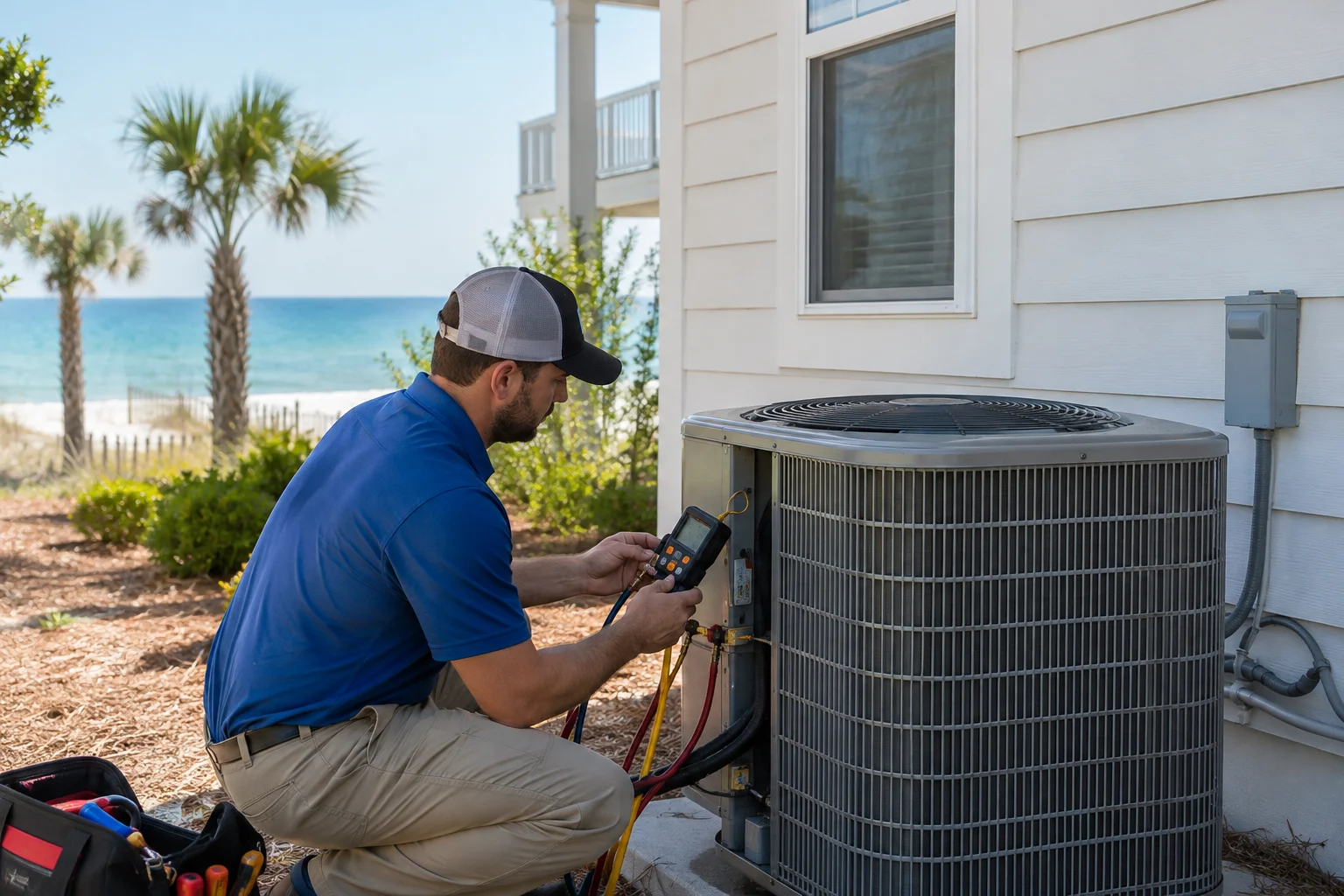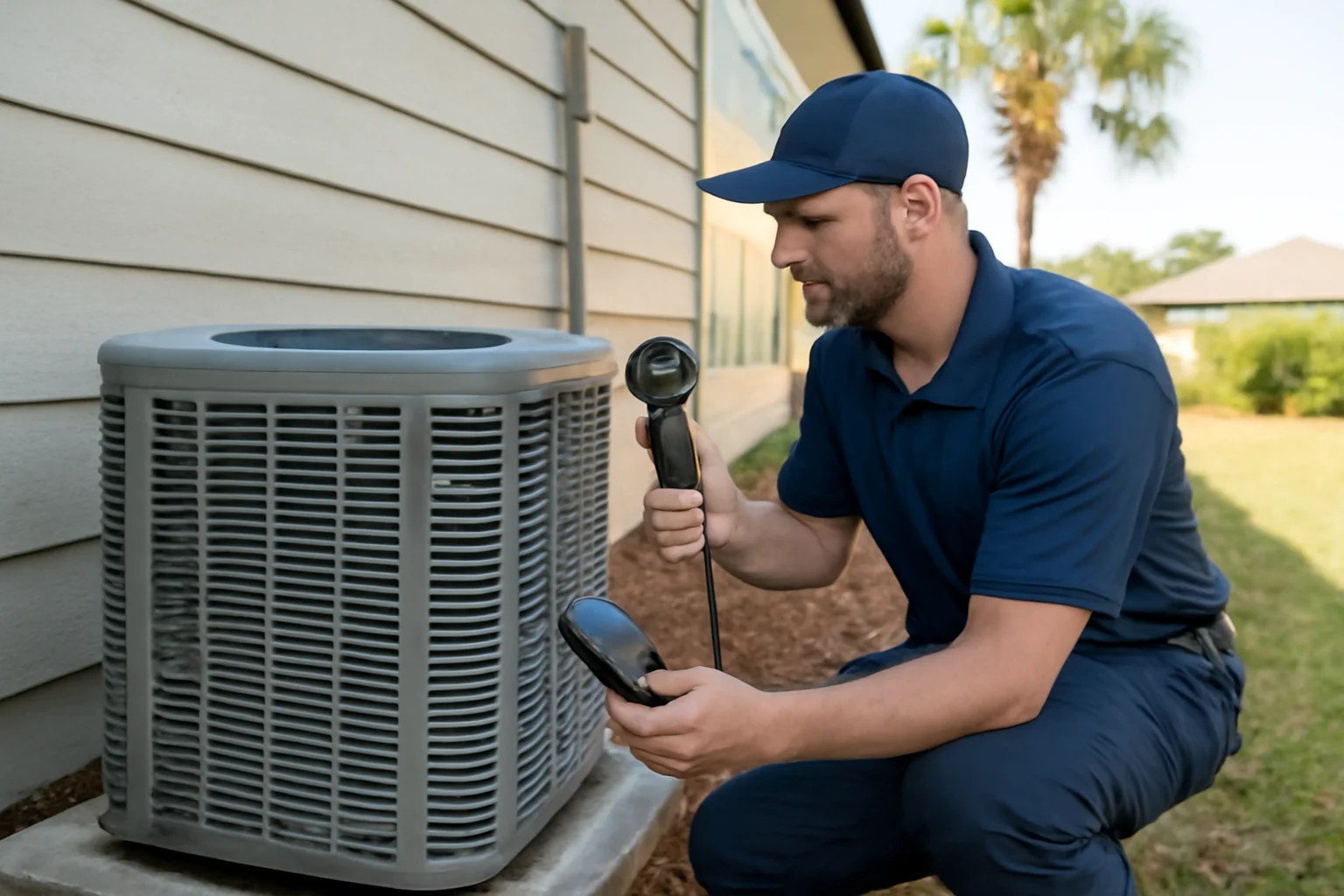
If your home in Grayton Beach feels “fine” but you still notice musty smells, lingering humidity, or allergy flare ups, the problem may be happening in the air you cannot easily see. Indoor air quality testing can help you move from guesswork to clear, HVAC focused information about what is affecting comfort and health.
Because Grayton Beach is shaped by coastal humidity and salt air, and because many homes rely on air conditioning, heat pumps, and ductwork to manage moisture, indoor air quality is tightly connected to your HVAC system. This guide walks through what homeowners often overlook and how to plan for testing that supports better humidity control, better airflow, and more reliable system performance.
Why indoor air quality testing matters more in Grayton Beach than in other parts of Florida
Grayton Beach homes deal with conditions that can challenge HVAC performance year round. Warm, humid air can infiltrate through gaps, and salty coastal air can contribute to corrosion and buildup over time. When your system runs, it also creates opportunities for moisture to collect if airflow is restricted or condensate drainage is not working as intended.
Indoor air quality testing is not only about “mold or no mold.” It is about understanding the indoor environment that your air conditioner, heat pump, and ductwork are creating. HVAC issues like poor airflow, leaky ductwork, or thermostat problems can indirectly affect indoor air quality by changing how effectively your system removes humidity and distributes conditioned air.
If you are searching for indoor air quality testing in Grayton Beach, it helps to know what professionals look for and why those details matter for comfort and energy use.
What homeowners often overlook before they test: the comfort clues
Many people wait until symptoms are obvious. But indoor air quality problems often show up as patterns you can notice at home. Here are common clues in coastal Walton County homes that homeowners often treat as “normal,” even when testing could reveal the cause.
1) Humidity that never feels “dry”
In Grayton Beach, air conditioning does more than cool. It dehumidifies. If humidity stays high, you may feel clammy even when temperatures seem reasonable. That can encourage biological growth and increase the likelihood of musty odors.
2) Musty smells after the system runs
Odors that appear after air conditioner cycles can point to moisture staying in areas where it should not. That might involve condensate drainage, damp duct sections, or hidden moisture sources. A good testing plan considers how HVAC operation interacts with moisture.
3) Uneven rooms and “hot spots”
Some rooms feel stuffy while others cool quickly. Uneven airflow can mean ductwork restrictions, supply or return imbalances, or system settings that do not match your home’s needs. When air movement is off, indoor air can become less evenly distributed, and humidity control can suffer.
4) Allergy symptoms that track with HVAC use
If symptoms worsen when the system runs, it could be related to filtration performance, dust accumulation, airflow patterns, or airborne contaminants. Testing can help clarify whether the issue is primarily humidity related, particulate related, or tied to airflow and system operation.
What indoor air quality testing typically looks at for HVAC related concerns
Professional testing usually focuses on measurements and observations that connect the indoor air environment to your HVAC system. Exact procedures vary by home, but the goal is consistent: identify what is driving comfort issues and indoor air quality risk.
Humidity and moisture conditions
Because Florida heat and humidity are persistent, moisture is a major driver of indoor air quality. Testing commonly includes evaluating indoor humidity levels and how they respond when the air conditioner or heat pump runs. If the home cannot maintain stable humidity, your system may not be removing moisture effectively, or moisture may be entering from outside.
Airflow and ventilation performance
Airflow is the bridge between HVAC operation and indoor air quality. If air distribution is weak, the home can develop “stagnant” areas where humidity and contaminants linger. Testing can also consider whether ventilation settings and air exchange are supporting healthy air without overloading the system.
Airborne particulate and dust load
Airborne contaminants can include dust, pollen, and other particles. In homes with ductwork, filtration and airflow strongly influence how much particulate stays in the breathing zone. Testing can help determine whether the issue is more about filtration and air distribution, or whether other sources are contributing.
Biological growth indicators when moisture is present
In humid climates, mold and mildew become more likely when moisture persists. Testing can help determine whether conditions support growth. Professionals may recommend further investigation if results suggest elevated risk.
System operation context: thermostats, refrigerant systems, and condensate drainage
Indoor air quality testing is often paired with an HVAC inspection because many indoor air issues trace back to system operation. For example:
- Thermostats: Incorrect settings, calibration issues, or thermostat location can lead to frequent cycling or poor humidity control.
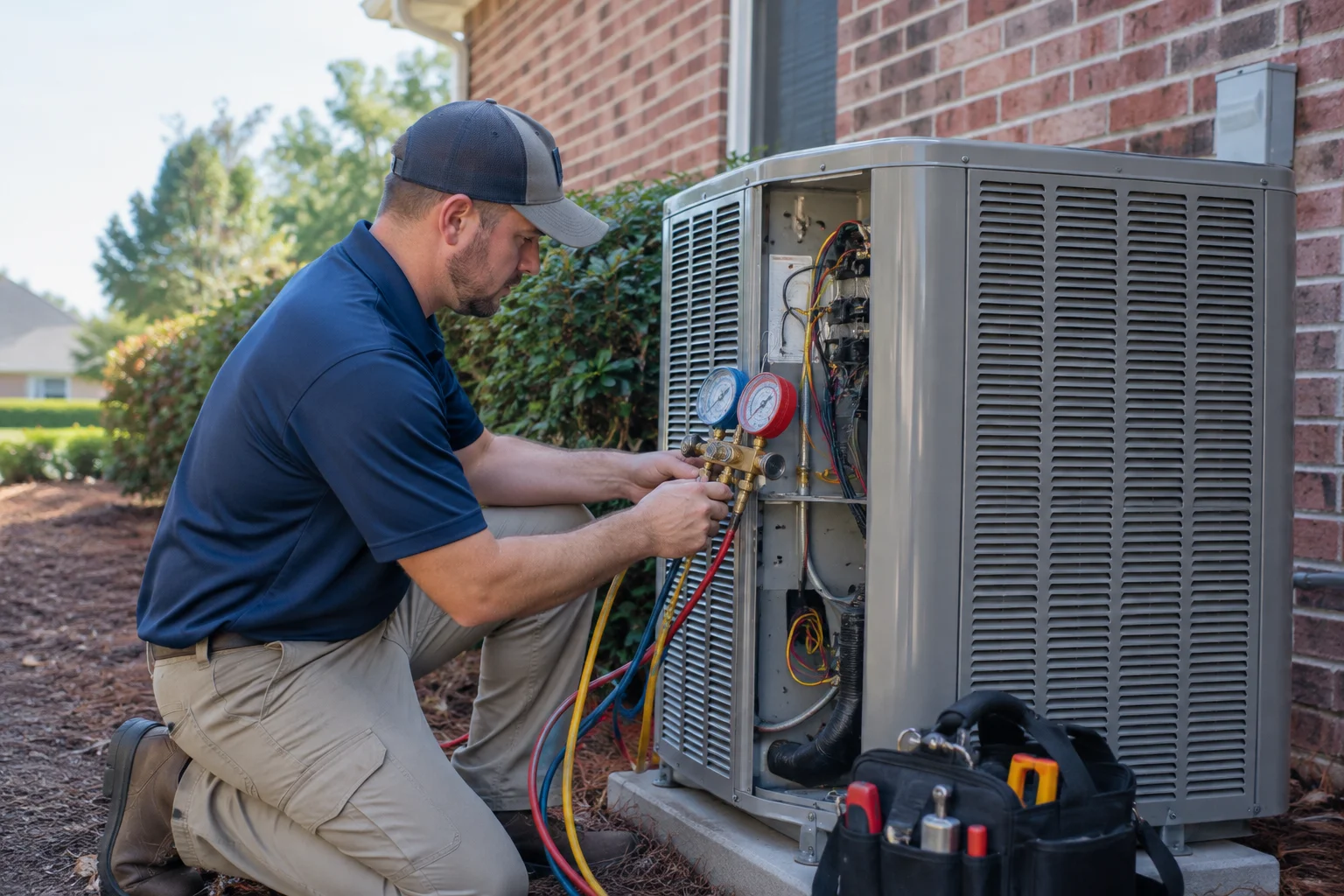
- Refrigerant systems: Refrigerant performance affects cooling capacity and how well the system can remove humidity. A professional evaluation is required before any refrigerant conclusions are made.
- Condensate drainage: If condensate drainage is not flowing correctly, moisture can collect. That can affect both comfort and indoor air quality.
These are HVAC factors, and they are also why “air testing only” sometimes misses the bigger picture. If you want a licensed HVAC contractor to connect the indoor results to what your system is doing, start with the service area for indoor air quality testing and ensure the process includes HVAC context.
How local housing and coastal conditions can skew results
In Grayton Beach and across Walton County, many homes are designed for coastal living, which can include features like tighter building envelopes for efficiency and air conditioning reliance. That can be a good thing, but it also means indoor air quality depends heavily on correct HVAC operation, filtration, and moisture management.
Coastal salt air can also contribute to corrosion and buildup on parts over time. If your system has struggled with performance, it may run longer, cool unevenly, or create more moisture risk if airflow or drainage is compromised. Testing helps you understand the indoor outcomes, but it is the HVAC inspection that helps connect those outcomes to causes.
If you are also dealing with ductwork concerns, consider reading about duct replacement or ductless mini split solutions when your layout or airflow challenges call for a system approach rather than temporary fixes.
Common HVAC causes of poor indoor air quality that testing alone may not reveal
Indoor air quality testing can provide valuable evidence, but some HVAC problems are best identified by combining measurements with an in-person system evaluation.
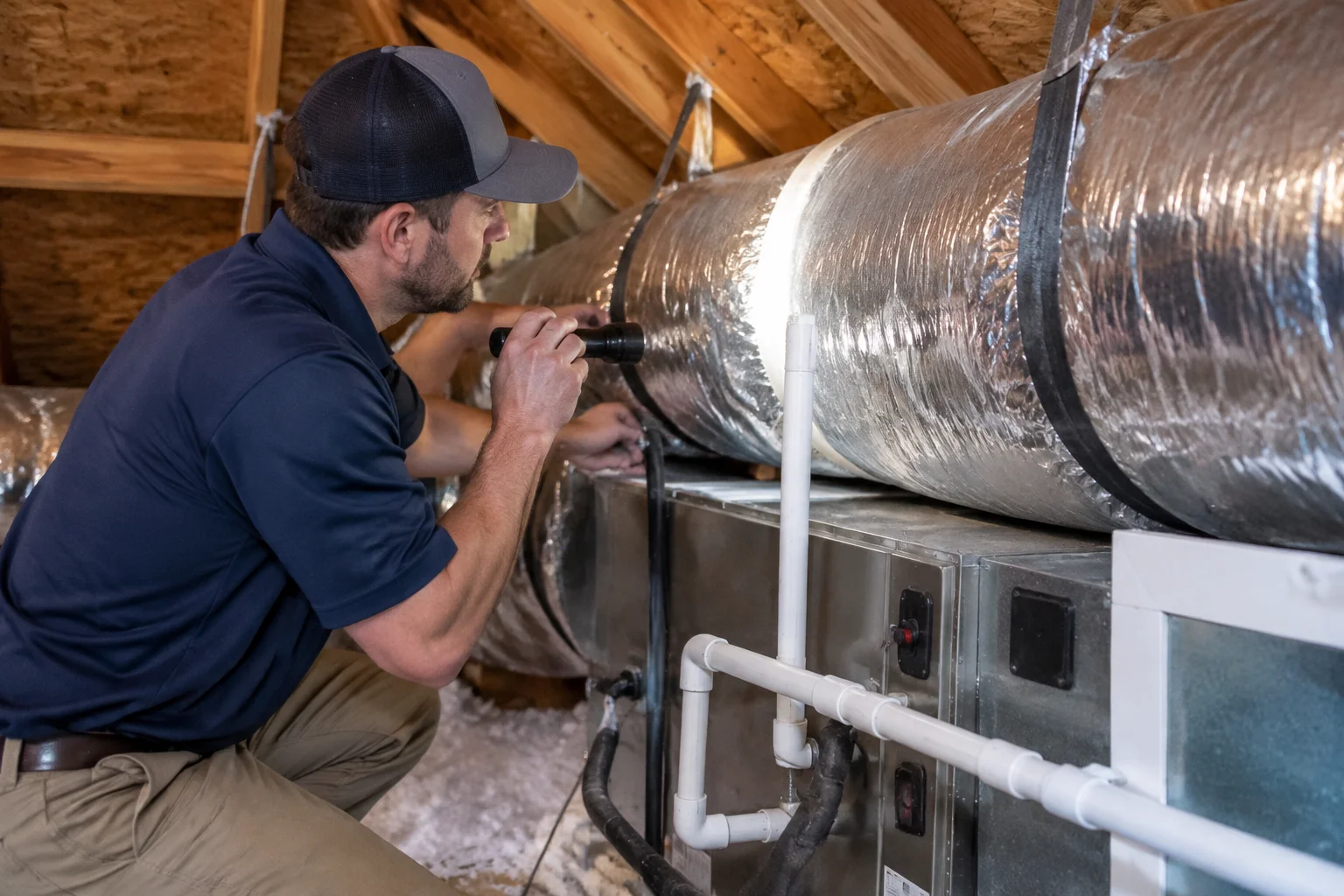
Restricted or poorly designed ductwork
Ductwork impacts both distribution and humidity control. If ducts leak, are disconnected, or have restrictions, the system may not deliver conditioned air where it is needed. That can increase humidity in certain rooms and create comfort complaints that feel unrelated to indoor air quality.
Filter and filtration mismatch
Filters are part of indoor air quality. But filter selection must match your system and airflow. A filter that is too restrictive can reduce airflow, which can reduce cooling performance and affect dehumidification. An HVAC professional can help you choose an approach that supports air quality without stressing the system.
Condensate drainage issues
When condensate drainage does not work properly, moisture can remain in places it should not. That can create musty odors and contribute to biological growth risk. Testing may show conditions consistent with moisture problems, but the drainage pathway needs inspection.
Thermostat location or control problems
If the thermostat is measuring temperature in an area that does not reflect the rest of the home, the system may run too little or too much. That can lead to humidity control problems and uneven comfort. A thermostat installation or adjustment may be part of the solution when it is truly needed.
Energy use and airflow imbalance
When airflow is off, systems often compensate by running longer. That can increase energy use and still fail to achieve consistent humidity control. Homeowners sometimes focus only on bills, but the indoor air quality impact is equally important.
What to do before testing: simple prep steps that improve accuracy
You do not have to become an HVAC technician, but a little preparation can help your testing process reflect real conditions.
- Run the system normally: Avoid extreme temperature changes right before testing. Your goal is to capture how the home behaves during typical operation.
- Document comfort clues: Note when humidity feels worst, when odors appear, and which rooms are most uncomfortable.
- Check for recent changes: New pets, renovations, water intrusion, or recent ductwork repairs can all influence indoor air quality.
- Make sure filters are installed correctly: Incorrectly seated filters can allow bypass. Do not remove filters unless your HVAC pro advises it.
If you are planning preventive HVAC maintenance as part of the process, it is reasonable to ask how the indoor air quality testing connects to HVAC performance checks. An Walton County HVAC service that treats indoor air quality as part of the system, not a separate issue, is usually the most effective approach.
How results should guide next steps, not lead to panic
Testing results can be reassuring when they show your home is within a healthy range. They can also guide targeted improvements when you find elevated humidity or conditions that support contaminants.
It is important that any next step is tied to an in-person HVAC evaluation. For example, a test result that suggests moisture issues should lead to investigation of condensate drainage, airflow, and system performance, not guesswork. Similarly, any concerns related to refrigerant systems require professional assessment before any refrigerant-related conclusions are made.
If your testing indicates ductwork problems, you may need duct repair, duct replacement, or airflow corrections. If your layout makes ductwork difficult, ductless mini split installation may be a better fit for some homes. Professionals can discuss options based on your home’s airflow needs and comfort goals.
Preventive maintenance that supports indoor air quality year round
In Grayton Beach, indoor air quality is not a one-time project. Preventive HVAC maintenance helps your system manage humidity and airflow consistently during Florida heat and coastal conditions.
Schedule maintenance before peak humidity weeks
When humidity spikes, the system has to work harder. Preventive maintenance can reduce the likelihood of mid-summer breakdowns and help your air conditioner or heat pump maintain stable performance.
Include airflow and drainage checks
Maintenance should not focus only on cooling. Ask about condensate drainage performance, airflow distribution, and how the system is controlling humidity. These items often tie directly to indoor air quality outcomes.
Verify thermostat performance and settings
Thermostats influence run time and humidity control. If you are considering thermostat installation near me or thermostat upgrades, pair it with system checks so you are not correcting the symptom while the cause remains.
Keep ductwork and filtration aligned with the system
When ductwork is leaking or poorly connected, air quality can suffer even if the system is otherwise working. If you suspect ductwork issues, a professional inspection can clarify whether duct cleaning near me, duct repair near me, or duct replacement is the right path.
When indoor air quality concerns become urgent in Grayton Beach
Some indoor air quality issues overlap with emergency cooling concerns. If your air conditioner stops cooling, short cycles repeatedly, or you suspect a refrigerant system problem, prioritize cooling safety and comfort.
During Florida heat, an HVAC failure can quickly turn into a health risk for anyone in the home. If you need air conditioning repair near me, treat loss of cooling, persistent water leaks, or strong burning or electrical odors as urgent. A licensed HVAC contractor can assess what is happening and help prevent additional damage.
Because indoor air quality and HVAC performance are linked, emergency cooling concerns can also affect humidity levels. That is another reason professional evaluation matters instead of waiting for symptoms to “pass.”
Choosing the right local HVAC partner for indoor air quality testing
Homeowners searching for HVAC help usually want two things: credible testing and HVAC follow-through. When you contact a company, ask whether the process includes HVAC context such as airflow evaluation, ductwork considerations, condensate drainage review, and thermostat and system operation checks.
For a local, HVAC focused approach, you can explore A Superior Mechanical’s indoor air quality testing service in Grayton Beach and also review the broader Grayton Beach service area for related comfort and HVAC support.
If you want additional reading that connects indoor air quality outcomes to HVAC performance, these guides may help you frame what to ask:
- Indoor Air Quality Testing That Helps Inlet Beach Homes Stay Comfortable Longer
- Why Seaside Homes Benefit From Indoor Air Quality Testing Before Comfort Issues Spread
- Why Better Indoor Air Quality Testing Matters for Upper Grand Lagoon Homes
- What Miramar Beach Homeowners Often Miss About Indoor Air Quality Testing
How indoor air quality testing fits with other HVAC services
Indoor air quality testing often leads to practical HVAC next steps. Depending on what is found, homeowners may need:
- HVAC maintenance near me: to support consistent humidity control and airflow.
- Air conditioning inspection near me: to confirm cooling capacity and dehumidification performance.
- Heat pump repair near me: when a heat pump is part of your comfort system and humidity control is inconsistent.
- Duct repair near me or duct replacement: when airflow distribution and leakage are affecting indoor air quality.
- Ductless mini split installation near me: when ductwork limitations or layout issues make whole home airflow difficult.
If you manage a larger property or commercial space in the area, the indoor air quality approach changes. You can also explore commercial HVAC services and commercial HVAC maintenance for building comfort and air quality planning.
A practical checklist you can take into your appointment
To make your testing appointment productive, bring a short checklist of what you want to understand. A licensed HVAC contractor can use this to tailor measurements and recommendations.
- What comfort issues are you noticing (humidity, odors, uneven rooms, allergy symptoms)?
- When do symptoms appear (morning, after the system runs, during storms, at night)?
- How old is the system, and have there been recent repairs or changes?
- Do you know if condensate drainage has ever been serviced?
- Are there any known ductwork issues, loose connections, or recent ductwork work?
- Is your thermostat set up for humidity control, and is it located where it accurately senses the home?
Indoor air quality testing should help you understand what is happening inside your home and how your HVAC system is contributing. With the right plan, you can protect comfort, reduce humidity stress on your home, and support dependable performance from your air conditioner or heat pump.
If you are ready to address indoor air quality in Grayton Beach, start with indoor air quality testing and pair it with HVAC inspection and preventive maintenance so the results translate into real-world improvements.
Find Indoor Air Quality Testing in Grayton Beach, FL
If you need Indoor Air Quality Testing in Grayton Beach, FL, visit our local service page or contact A Superior Mechanical today.
Map of Grayton Beach, FL
Frequently Asked Questions
How does indoor air quality testing relate to my air conditioner or heat pump?
Indoor air quality and HVAC performance are connected through humidity control, filtration, and airflow. Testing can measure indoor conditions while an HVAC evaluation checks how your system is running, including airflow distribution and condensate drainage.
Can humidity problems cause mold or musty odors in a Grayton Beach home?
High humidity can create conditions where mildew and mold are more likely, especially if moisture lingers due to airflow issues or condensate drainage problems. Testing helps confirm whether conditions are elevated and where HVAC-related causes may be contributing.
Should I test for indoor air quality before I schedule HVAC maintenance or AC repair?
Often, it works best to combine them. If you already know you need air conditioning repair near me or HVAC maintenance near me, ask the HVAC pro to coordinate the evaluation so the testing results match what the system is doing.
If a test shows something concerning, will I need duct cleaning or duct replacement?
Not always. The right next step depends on what the testing indicates and what the HVAC inspection finds. Some issues are primarily humidity or airflow related, while others may point to ductwork problems that require duct repair, duct replacement, or filtration changes.
Is indoor air quality testing an emergency service?
Testing is not usually an emergency, but cooling emergencies are. If your system fails during Florida heat or you notice urgent signs like strong burning smells or persistent water leaks, prioritize emergency cooling and system evaluation first.
Related Articles
- Indoor Air Quality Testing That Helps Inlet Beach Homes Stay Comfortable Longer
- Why Seaside Homes Benefit From Indoor Air Quality Testing Before Comfort Issues Spread
- Why Better Indoor Air Quality Testing Matters for Upper Grand Lagoon Homes
- What Miramar Beach Homeowners Often Miss About Indoor Air Quality Testing
Photo Gallery