Living near the Gulf in Inlet Beach, FL is a dream. But the water that comes into your home can be less dreamy. Homeowners often notice hard water after a few showers, a couple loads of laundry, or a kitchen sink full of dishes. Those everyday frustrations are more than annoyances. They are signs that local water chemistry is working against your plumbing, appliances, and even how your skin and hair feel.
This guide explains how local water conditions in Inlet Beach affect water softening performance, what hard water looks like in real life, and which solutions work best, including water softening services in Inlet Beach and complementary options like whole home water filtration and reverse osmosis.
Why Inlet Beach water can soften differently from other areas
Water softeners are designed to reduce hardness minerals, especially calcium and magnesium. In many coastal and inland communities, the biggest challenge is that hardness levels and mineral makeup can change seasonally and even from one neighborhood to another.
In Inlet Beach, homeowners may see differences depending on local water sources and how water moves through distribution lines. You might notice that soft water performance feels fine one season, then starts slipping the next. That is often not a “bad” water softener. It is a mismatch between your water’s current hardness load and the system’s settings, maintenance, or capacity.
When hardness is higher, the same softener has to work harder and regenerate more frequently. If regeneration schedules are not dialed in, you can get partial softening. Partial softening still leaves behind the minerals that cause hard water spots, scale buildup, and the “soap never fully rinses” feeling.
That is why local water treatment service matters. A professional water softener installation and service plan is based on your home’s actual water conditions, not a one-size-fits-all assumption.
Hard water spots on glass, dishes, and fixtures: the most common clues
Hard water issues are easy to spot in the kitchen and bathroom. If you are seeing these, your softener may not be keeping up or may need service.
- Hard water spots on glass: Etched looking marks on shower doors, bathroom mirrors, and drinking glasses that look like a film even after wiping.
- Scale buildup around faucets and showerheads: White or chalky buildup near aerators, handles, and the showerhead face.
- Dull, cloudy buildup on sink surfaces: Mineral haze that makes stainless steel and chrome look less shiny.
- Soap that does not lather or rinse well: You may use more soap, and it still feels like residue remains on skin and fabric.
In Inlet Beach homes, these issues can show up quickly because many families are using showers, sprinklers, and laundry throughout the week. If your home has a beach lifestyle, you are also washing off sunscreen, saltwater, and sand, which can make residue feel even more noticeable.
If you have ever watched a family member wipe a mirror and still see a cloudy streak, that is a classic hard water outcome. When softening is working properly, those spots reduce and fixtures look cleaner for longer.
What hard water does to bathing comfort and daily routines
Hard water is not just a cleaning problem. It can affect how water interacts with soap and how minerals interact with skin and hair.
- Dry skin or dull hair after bathing: Many homeowners describe tight, dry skin or hair that feels coated or less shiny.
- Hair that feels “rough” despite conditioner: Mineral residue can make hair feel heavier and dull.
- Soap scum that feels slippery but does not rinse clean: This can be frustrating in bathrooms where multiple people shower daily.
Think about a typical morning in Inlet Beach. Someone showers before work, someone else rinses off after the beach, and kids need a quick wash before school. If the water is not softened consistently, the minerals can build up on skin and hair. Over time, that can also make it harder to get truly clean laundry and towels without additional rinsing or specialty cleaners.
Beyond hardness: taste, odor, and chlorine-related concerns
Water softeners mainly address hardness minerals. But many homeowners also notice water quality issues that point to filtration needs.
You may see or taste:
- Metallic, chlorinated, or unpleasant taste in drinking water
- Cloudy ice cubes or ice that looks hazy
- Poor tasting coffee and cooking water, especially when you rely on tap water for brewing
- Visible sediment, discoloration, and odor concerns that show up in certain fixtures or at certain times
These are not always hardness problems. Sediment and odor concerns often relate to filtration, while taste and color can be affected by treatment processes and water chemistry.
That is where a layered approach works well. Many households benefit from combining water softening with whole home water filtration so that you reduce scale-forming minerals and also improve water clarity and taste throughout the home.
How softening affects appliances and plumbing life in Walton County
When hardness is left untreated, minerals settle and build up. That buildup can reduce efficiency, increase wear, and shorten the life of plumbing components and appliances.
Homeowners often see the “slow damage” pattern:
- Appliances wearing out faster due to scale buildup on heating elements and internal surfaces
- Water heater strain as scale reduces heat transfer, which can increase energy use
- Reduced flow at fixtures as mineral deposits accumulate in or near aerators and valves
In coastal areas like Inlet Beach, homes may rely on multiple water-using systems. If you have a tankless or traditional water heater, a dishwasher, laundry equipment, and outdoor fixtures, hard water can quietly shorten their useful life. When hard water treatment becomes part of protecting fixtures and appliances, you are not just improving comfort. You are reducing costly repairs.
Why your softener may not be performing as expected
If you already have a water softener, but you still see hard water spots, it does not automatically mean the unit is failing. It often means the system needs adjustment or service based on your current water conditions.
Common reasons softening results drop
- Regeneration settings are off: The unit may not regenerate often enough for your hardness load.
- Salt is running low or the brine system is not working correctly.
- Clogged or aging components: Filters, valves, or resin media can affect performance.
- Bypass or plumbing issues: A valve left in bypass mode can cause partial or no softening.
- Water chemistry changes seasonally or due to local supply shifts.
A professional water softener service visit typically includes checking system settings, verifying performance, and inspecting the equipment for wear. That is the fastest way to stop hard water headaches and protect your investment.
Choosing AO Smith water filtration and water softeners for Inlet Beach homes
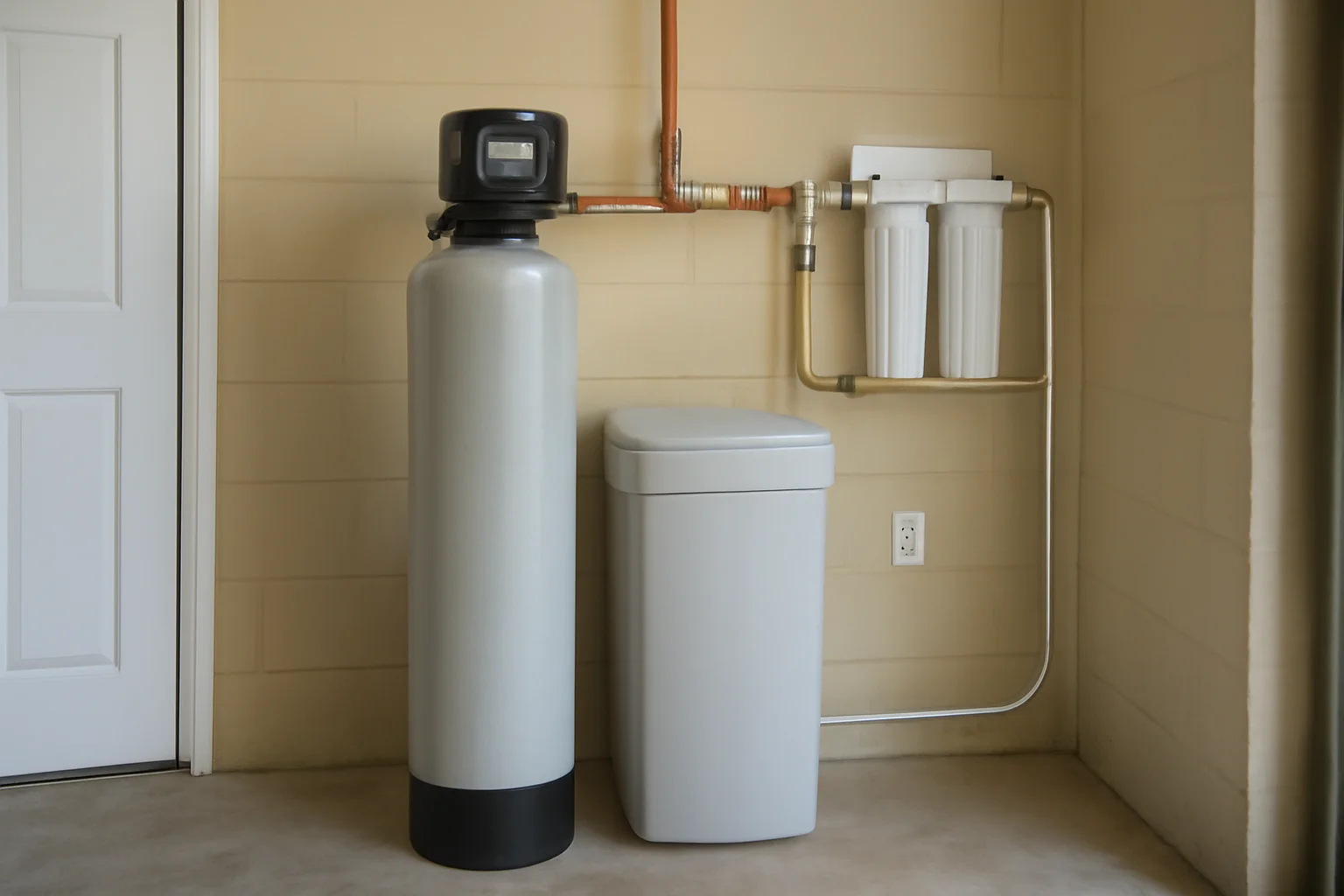
Many homeowners prefer AO Smith water softener solutions because of their focus on whole home performance and reliable operation. The right system size and configuration matters, especially in areas where water hardness can be higher or vary over time.
When you are comparing options, it helps to think in terms of outcomes you care about:
- Fewer hard water spots on glass and shower doors
- Less scale buildup on faucets and showerheads
- Better laundry feel, with soap that rinses more cleanly
- Improved appliance longevity by reducing mineral accumulation
For many households, the best results come from combining softening with filtration. That is where AO Smith water filtration and staged treatment can help address both mineral hardness and water quality concerns like taste and odor.
If you are searching for water filtration near me or water softener installation near me, ask how the system will be tailored to your home. A good plan includes correct sizing, proper installation, and a maintenance schedule that matches how you use water in your household.
Reverse osmosis for drinking and cooking water, plus whole home filtration
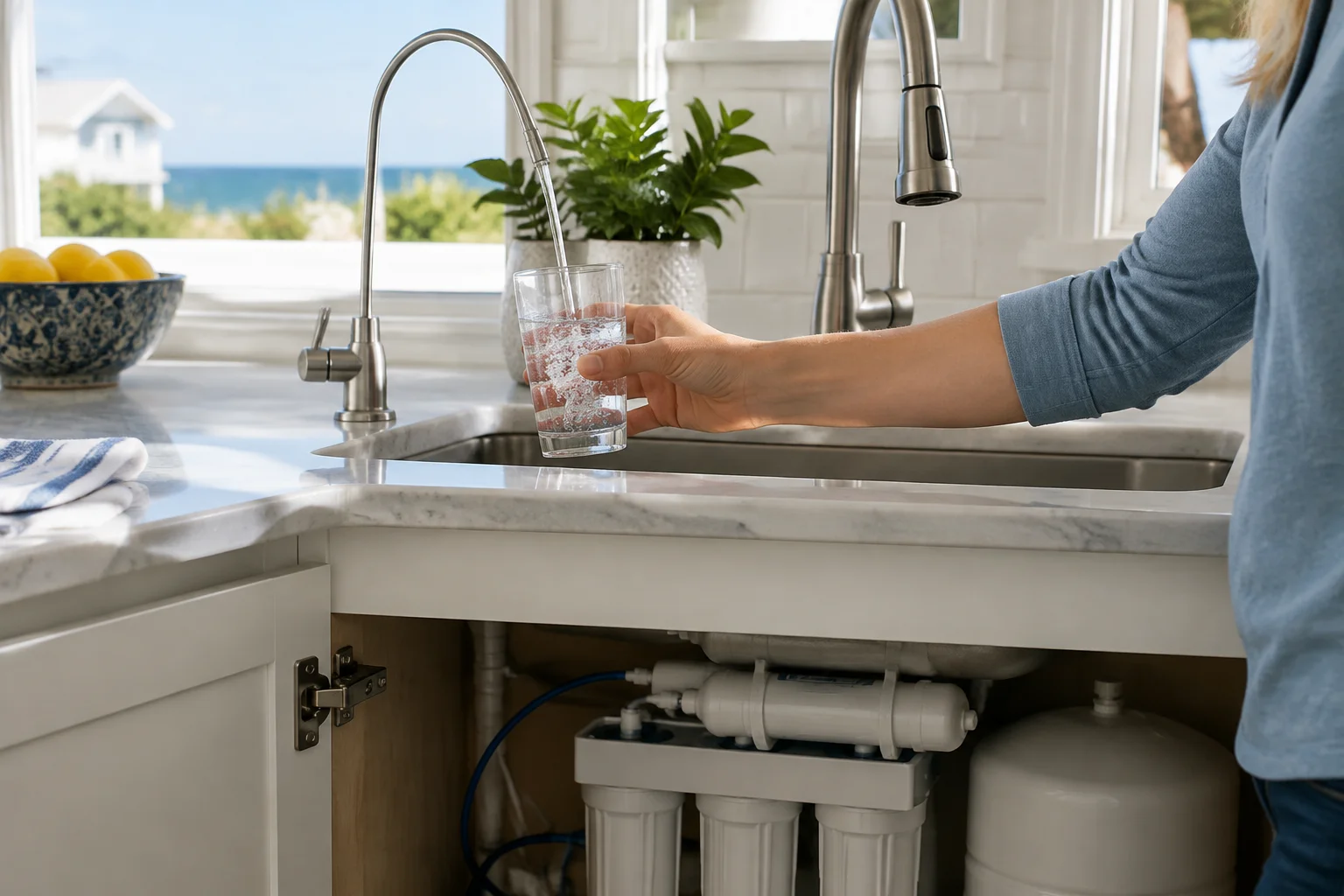
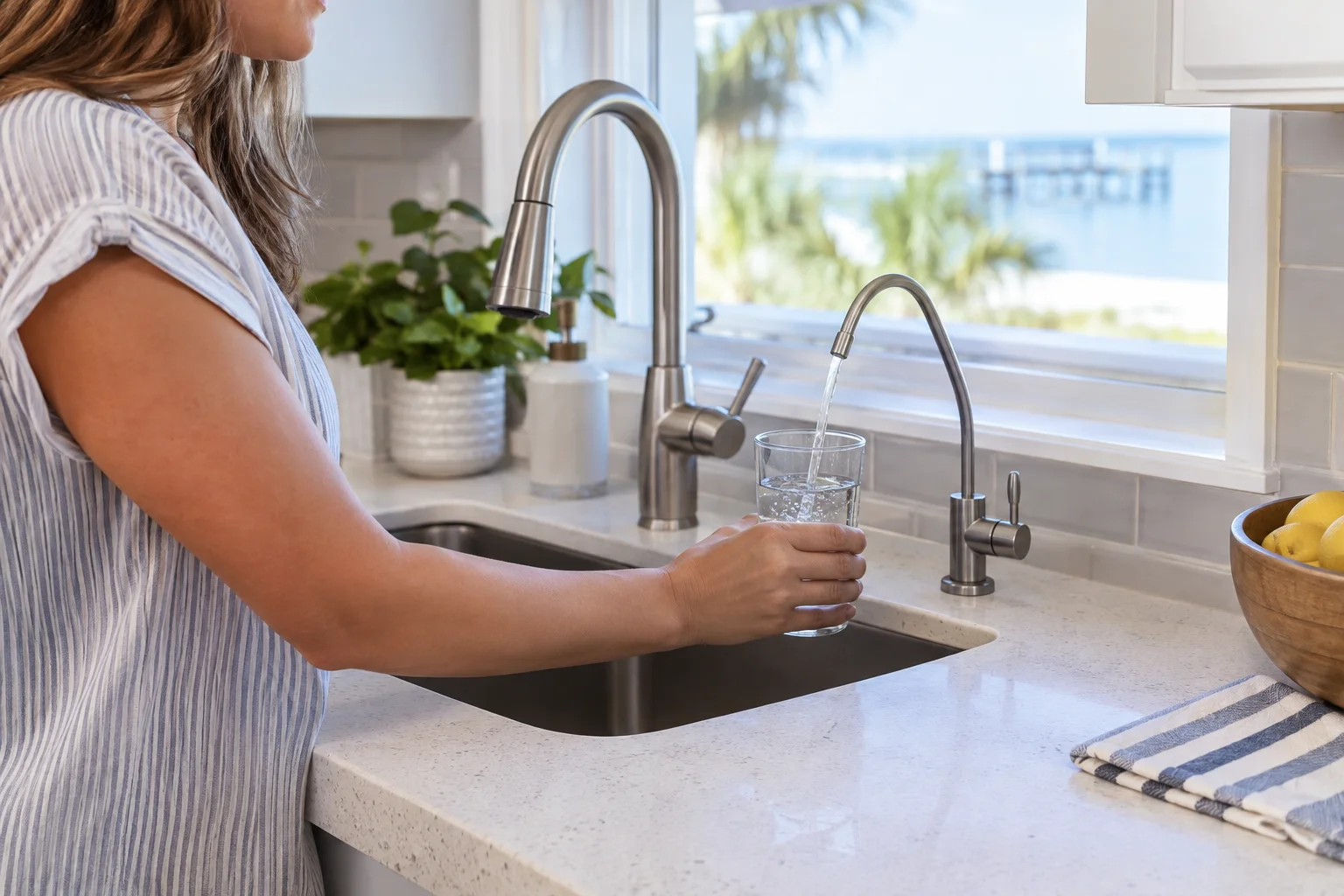
Many families in Inlet Beach want better drinking water without changing everything about their plumbing. That is where reverse osmosis and whole home water filtration can complement each other.
Reverse osmosis system near me: what it does well
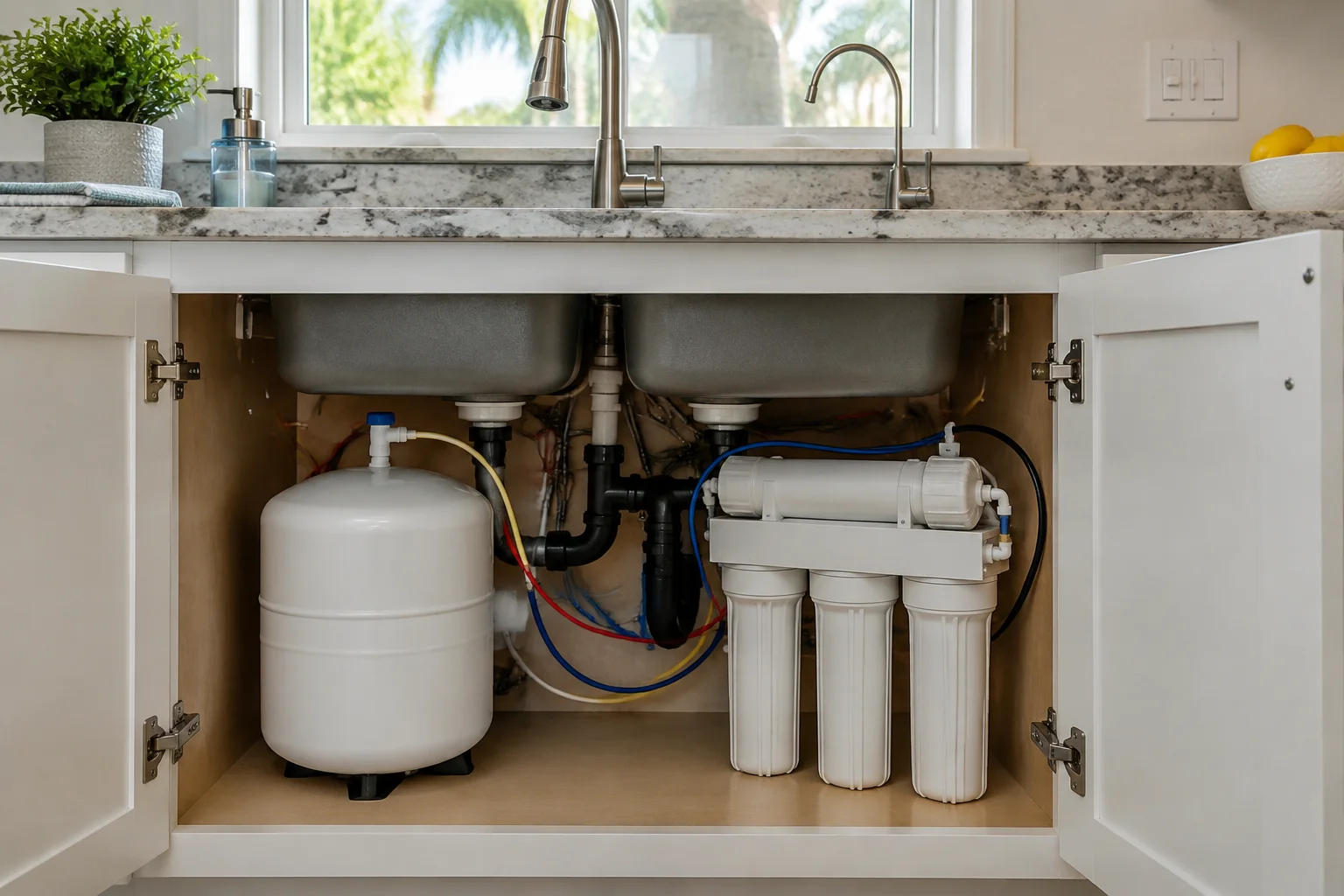
A reverse osmosis system is often used for drinking water and cooking water. It can help reduce contaminants that affect taste, odor, and clarity, which is why homeowners notice improvements in:
- Poor tasting coffee water and tea flavor
- Cloudy ice cubes
- Metallic or chlorinated taste at the kitchen tap
- Cooking water used for pasta, rice, and soups
If you have ever filled a glass and seen a haze in the ice, reverse osmosis can often be a satisfying upgrade.
Whole home water filtration for everyday comfort
Whole home water filtration supports the entire house. It can help with sediment and other water quality issues before water reaches fixtures, appliances, and your shower.
For homeowners searching for home water purification near me or drinking water filter near me, a combined approach can be the sweet spot: whole home filtration for comfort and appliance protection, plus reverse osmosis for the kitchen and drinking water.
Explore options through this water filtration and reverse osmosis landing page and then connect with a local team for equipment matched to your home.
Maintenance that prevents hard water headaches from coming back
Hard water problems rarely disappear forever without upkeep. Even high quality systems need routine attention. Maintenance is also how you keep softening consistent when your local water conditions shift.
Simple steps homeowners can handle
- Check salt levels so the system can regenerate properly.
- Watch for performance changes like new scale buildup on faucets or showerheads.
- Inspect visible signs such as cloudy glass, residue in sinks, or soap that suddenly feels harder to rinse.
What professionals typically do during service
- Verify softener settings and regeneration performance
- Inspect filters and components for wear or clogging
- Check equipment health and recommend adjustments based on your water
If you want to keep your system running efficiently, schedule service as part of your home maintenance routine. If you are dealing with ongoing mineral buildup, it is usually more cost effective to address the cause early than to wait until scale becomes harder to remove.
When it is time to call a water treatment pro in Inlet Beach
Hard water is not always obvious at first, especially if you are used to “scrubbing harder” to get clean results. Call a professional if you notice any of the following patterns:
- Hard water spots on glass and mirrors are increasing
- Scale buildup on faucets and showerheads is returning quickly after cleaning
- Dry skin or dull hair after bathing persists despite switching soaps or shampoos
- Metallic, chlorinated, or unpleasant taste shows up in drinking water
- Cloudy ice cubes appear, or coffee tastes worse than it used to
- You see visible sediment, discoloration, or odor concerns
- Your appliances seem to be wearing out faster than expected
These symptoms can point to insufficient softening, a filtration gap, or both. A local team can help you identify what is happening and recommend the right combination of water softening and water filtration so your home gets consistent results.
If you are looking for water softener service near me in Inlet Beach, start with the service page for water softening in Inlet Beach. You can also browse the broader service area information on the Inlet Beach page and Walton County service area to see how local support works.
Everyday upgrades you will actually notice with better water
When water softening and filtration are working together, the improvements show up in normal family moments, not just in test results.
- Kitchen scenes: Better tasting drinking water for family meals, improved cooking water, and coffee that tastes cleaner.
- Bath time: Soap lathers more easily and rinses more completely, with skin and hair that feel smoother after showers.
- Laundry days: Towels and clothing feel less stiff, and you may use less detergent because soap works as intended.
- Fixture maintenance: Less scale buildup around faucets and showerheads, fewer “scrub sessions,” and glass that stays clearer.
- Appliance care: Reduced scale helps appliances run more efficiently and last longer.
In a coastal community like Inlet Beach, where people are constantly using water for bathing, cleaning, and everyday life, improving water quality is one of the most noticeable home upgrades you can make.
Related reading for homeowners protecting their plumbing
If you are thinking about water treatment as part of protecting your home, these reads pair well with softening and filtration:
- How Water Softening Protects Rosemary Beach Plumbing from Costly Water Damage
- Keeping Plumbing Repairs Smaller in Inlet Beach Starts with Better Maintenance
- Keeping a Water Heater Replacement from Turning Into a Bigger Plumbing Bill in Inlet Beach
If you want to go one step further, you can also explore how water quality and comfort connect to indoor living through Indoor Air Quality Testing That Helps Inlet Beach Homes Stay Comfortable Longer.
Find Water Softening in Inlet Beach, FL
If you need Water Softening in Inlet Beach, FL, visit our local service page or contact A Superior Mechanical today.
For a broader look at whole-home water filtration, reverse osmosis, and water softener options, visit our water filtration, RO, and water softener page.
Map of Inlet Beach, FL
Frequently Asked Questions
How do I know if my water softener is actually working in Inlet Beach?
Look for reduced hard water spots on glass, less scale buildup on faucets and showerheads, and better soap rinsing. If you still see chalky residue or your skin feels dry after bathing, your softener may need service or reprogramming based on current water conditions.
Will a water softener fix metallic or chlorinated taste and cloudy ice?
Not usually. Water softeners target hardness minerals like calcium and magnesium. Taste, odor, and cloudy ice cubes often point to filtration needs. Many homes use whole home water filtration plus a reverse osmosis system for drinking water and cooking.
What is the difference between water softening and whole home water filtration?
Water softening reduces hardness to prevent scale buildup and improve how soap performs. Whole home water filtration focuses on improving water quality across the house, such as reducing sediment and helping with clarity and taste. Many homeowners benefit from both.
How often should I schedule water softener service?
It depends on your system and your household’s water use, but most homeowners benefit from periodic service checks. If you notice new scale, residue, or changes in soap lathering, schedule service sooner so settings and components can be verified.
Related Articles
- Keeping a Water Heater Replacement from Turning Into a Bigger Plumbing Bill in Inlet Beach
- Keeping Plumbing Repairs Smaller in Inlet Beach Starts with Better Maintenance
- How Water Softening Protects Rosemary Beach Plumbing from Costly Water Damage
- Indoor Air Quality Testing That Helps Inlet Beach Homes Stay Comfortable Longer
Photo Gallery