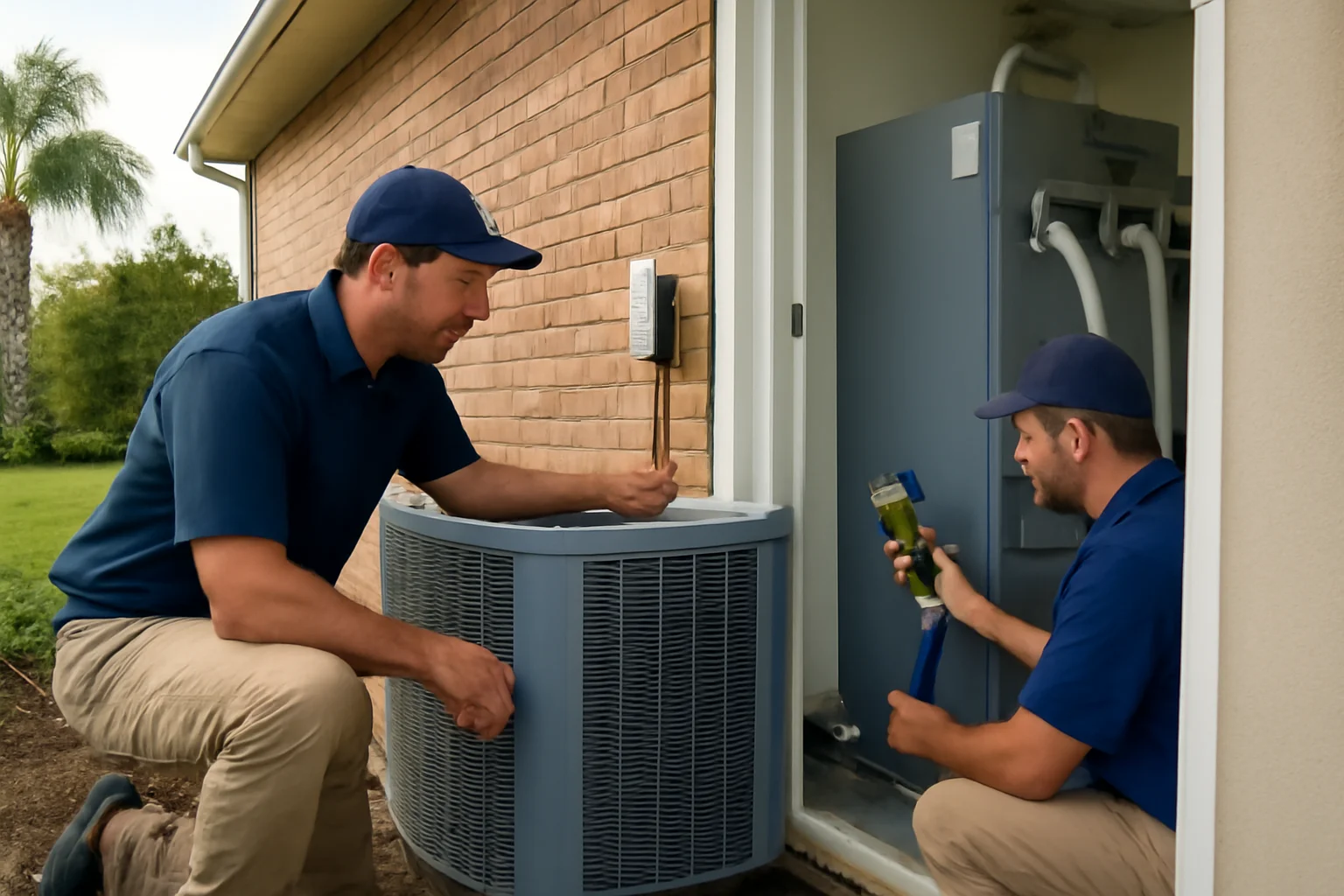
Lower Grand Lagoon, FL has a special kind of HVAC challenge. Summer brings intense heat, frequent humidity, and salt air that can stress mechanical systems. Many homeowners choose geothermal HVAC for efficient comfort, but geothermal systems still rely on the same core HVAC fundamentals: airflow, refrigerant system performance, condensate drainage, and smart thermostat operation. When those fundamentals drift out of balance, small issues can turn into mid-summer breakdowns and emergency cooling concerns.
This guide focuses on prevention. It is written for homeowners who want fewer HVAC emergencies, better indoor air quality, and a geothermal system that keeps delivering steady comfort through Bay County weather.
Why geothermal HVAC still needs HVAC maintenance in Lower Grand Lagoon
Geothermal energy uses the stable temperature of the ground to help heat and cool your home. In practice, your system still includes an indoor air handler, ductwork, refrigerant lines, a thermostat, and condensate drainage. The geothermal heat pump (and its airflow components) must move air correctly, manage moisture, and maintain proper refrigerant flow.
Florida conditions add pressure to that job. High humidity can increase condensate production and make drainage problems more noticeable. Salt air and coastal moisture can also contribute to corrosion on external components and the surrounding environment. That is why geothermal prevention is not just “set it and forget it.” It is about keeping the whole HVAC system operating as designed.
Common geothermal HVAC problems homeowners can prevent
When geothermal systems struggle, the symptoms often show up indoors first. Below are issues that frequently lead to air conditioning repair needs, heat pump repair needs, and urgent “emergency AC repair near me” calls during hot spells.
1) Weak airflow that makes cooling feel uneven
Geothermal systems depend on consistent airflow to transfer heat. If your air handler fan is not moving enough air, your home can feel warmer in some rooms, colder in others, or uncomfortable even when the thermostat says the system is running.
Airflow problems can come from dirty air filters, clogged return grilles, ductwork restrictions, or issues within the air handler. In humid Florida weather, weak airflow also makes it harder for the system to control moisture, which can degrade indoor air quality and increase the chance of musty odors.
Prevention starts with airflow discipline. Replace filters on schedule, keep supply and return vents unobstructed, and pay attention to changes in airflow from one season to another.
2) Humidity that creeps up because moisture removal is not keeping pace
During Lower Grand Lagoon summers, humidity management is a primary comfort requirement. Even if your geothermal system can cool the air temperature, it still has to remove moisture effectively. When the system is short-cycling, the fan settings are wrong, or condensate drainage is restricted, indoor humidity can rise.
Homeowners often notice foggy windows, sticky-feeling rooms, or condensation around vents. These are not just comfort issues. Persistent moisture can contribute to indoor air quality problems and can worsen allergies and asthma triggers.
Preventive steps include confirming thermostat settings, maintaining airflow, and keeping condensate drainage clear so the system can remove moisture as it cools.
3) Condensate drainage issues that lead to water problems and performance drag
Geothermal cooling typically produces condensate. That water must drain properly through the system’s condensate drainage components. If a drain line becomes partially blocked, a condensate pan overflows, or the drain trap is not functioning correctly, you can see warning signs such as:
- Water spots near the air handler
- Musty odors
- Reduced cooling performance
- Intermittent system stops or error conditions
In humid Bay County weather, condensate issues can worsen quickly. Homeowners can reduce risk by keeping the surrounding area clean, watching for early signs of water, and scheduling periodic inspections as part of HVAC maintenance near me planning.
4) Thermostat behavior that causes comfort swings and unnecessary run time
Thermostats control how the system responds to temperature and, in some cases, humidity. A misconfigured schedule, incorrect fan mode, or improper settings can lead to comfort swings and inefficient energy use. For geothermal systems, stable operation matters because the system is designed to move heat steadily.
Common homeowner mistakes include leaving the fan set to a constant mode when it is not needed, using aggressive temperature setpoints that force heavy cycling, or changing settings without considering humidity control. If you are considering thermostat installation near me, it is smart to choose a thermostat that matches your comfort goals and system capabilities, and to have it set up correctly by a local HVAC contractor.
5) Refrigerant system strain from airflow and maintenance neglect
Geothermal systems use refrigerant to move heat between the indoor and ground loops. Refrigerant systems rely on stable operating conditions, and they are sensitive to restrictions caused by poor airflow or other system imbalance. When airflow is weak or coils are dirty, the system can be forced to work harder to achieve comfort.
Homeowners should not attempt refrigerant diagnosis themselves. If you notice symptoms such as repeated performance drops, unusual noises, or frequent cycling, the right step is to schedule a professional geothermal HVAC service evaluation. A technician can check system performance safely and identify whether the issue is airflow, moisture management, or something within the refrigerant system.
Florida heat and humidity: how they change geothermal prevention priorities
Lower Grand Lagoon homes often face long stretches of warm weather, and humidity can be persistent. That means your geothermal system’s cooling performance and moisture control need extra attention during the hottest months.
Here is what prevention looks like in this climate:
- Coil cleanliness and airflow: Dirty coils and airflow restrictions can reduce heat transfer and moisture removal.
- Condensate drainage readiness: More humidity often means more condensate. Clear drainage helps prevent water issues and control problems.
- Consistent thermostat settings: Small thermostat changes can affect humidity comfort, not just temperature.
- Energy use awareness: When systems run inefficiently due to airflow or control problems, energy use climbs. That can also increase wear that leads to HVAC repair near me needs later.
Salt air and coastal conditions: protecting HVAC performance around Lower Grand Lagoon
Coastal Bay County conditions can be tough on HVAC components. Salt air and moisture can contribute to corrosion on metal parts, and coastal airflow can affect how external components age. While geothermal systems involve ground loops, the indoor air handler and any connected components still need protection and inspection.
Homeowners can help by keeping the area around air handlers and access panels clean and unobstructed. For mechanical protection, rely on professional inspections that include identifying early corrosion, checking airflow components, and verifying that condensate drainage is functioning properly.
Ductwork and airflow: the quiet drivers of geothermal comfort
Ductwork is often the difference between “system is running” and “home feels comfortable.” Even a well-designed geothermal heat pump can underperform if ducts are leaky, undersized, or poorly balanced.
Lower Grand Lagoon homes may have ductwork that has aged, shifted, or developed leaks over time. Leaks can waste conditioned air and reduce the system’s ability to manage humidity. Poor sealing can also pull in unconditioned air, which increases energy use and makes temperature control harder.
If you suspect airflow problems, it can help to review duct sealing and related improvements. Many homeowners benefit from targeted duct sealing and performance upgrades. Learn more about how local homes handle this with How Lower Grand Lagoon Homes Stay Comfortable with Better Duct Sealing and Aeroseal.
For more direct help, you can also explore services like Duct Sealing & Aeroseal Services and, when needed, Duct Replacement.
Indoor air quality: geothermal comfort includes moisture control
Indoor air quality is closely tied to HVAC maintenance and humidity management. In Lower Grand Lagoon, where humidity can stay high, moisture can support microbial growth if the system cannot remove water effectively. Geothermal systems that run with restricted airflow or drainage issues can create conditions that make indoor air quality worse.
Homeowners can improve indoor air quality by:
- Replacing filters on schedule and using a filter approach compatible with the system
- Keeping returns and registers clear so air can circulate properly
- Addressing musty odors or visible condensation promptly
- Scheduling periodic inspections focused on airflow, drainage, and comfort performance
If you want to confirm how your system is performing, consider Indoor Air Quality Testing as part of a comfort-focused plan.
Preventive maintenance steps that reduce emergency cooling concerns
Preventive HVAC maintenance is the best way to reduce the odds of a mid-summer breakdown. For geothermal systems, maintenance is not only about “keeping it running.” It is about keeping comfort consistent while protecting the system’s refrigerant performance, condensate drainage, and airflow.
Here are practical steps homeowners can take between professional visits:
Change filters and watch for airflow changes
Dirty filters can restrict airflow quickly during peak humidity. If you notice weak airflow, increased runtime, or rooms that never feel comfortable, check the filter first and ensure vents are not blocked.
Keep thermostat schedules realistic for humidity comfort
Set temperature targets thoughtfully. If your thermostat offers humidity-related settings, confirm they align with your comfort goals. If you are unsure, ask a technician to review your settings during an HVAC inspection.
Monitor condensate drainage behavior
During cooling season, pay attention to water around the air handler. Any signs of overflow, standing water, or recurring odors should be addressed promptly.
Schedule seasonal HVAC inspections focused on geothermal performance
Seasonal inspection helps catch small problems before they become HVAC repair near me emergencies. A local geothermal HVAC technician can inspect airflow paths, evaluate coil conditions, verify drainage performance, and check thermostat operation with your specific system layout.
If you are searching for residential HVAC service near me or HVAC maintenance near me, prioritize a company that understands geothermal systems and the local climate realities of Lower Grand Lagoon.
How to spot when you need professional geothermal HVAC service
Some issues can be addressed with simple homeowner actions, but geothermal HVAC problems should be evaluated in person when symptoms persist or escalate. Watch for these indicators:
- Comfort failures: Home does not cool consistently during hot afternoons
- Humidity problems: Persistent stickiness, condensation, or foggy windows
- Drainage signs: Water spots, unusual odors, or repeated shutdown behavior
- Airflow symptoms: Weak airflow, noisy air handler operation, or strong temperature swings
- System cycling: Frequent starts and stops that do not match your thermostat schedule
When these show up, homeowners often search for AC repair near me or heat pump repair near me. For geothermal systems, the best results come from a technician who can evaluate the whole HVAC picture, including airflow, condensate drainage, and control behavior. If you suspect a refrigerant-related performance issue, do not attempt refrigerant diagnosis yourself. A professional evaluation is the safe and accurate path.
Choosing geothermal services that fit Lower Grand Lagoon homes
Lower Grand Lagoon homes vary, especially between primary residences and rental properties. Some homes have older ductwork, different insulation levels, and different thermostat setups. Salt air exposure and humidity patterns can also change how systems age.
Working with a geothermal HVAC contractor that serves the area helps ensure your prevention plan matches local conditions. A Superior Mechanical provides geothermal HVAC services in Lower Grand Lagoon, FL, focused on efficient, reliable comfort for Bay County properties.
To explore geothermal options and service coverage, visit /service-areas/bay-county/lower-grand-lagoon/geothermal-energy-lglbc and the local overview at /service-areas/bay-county/lower-grand-lagoon. If you want to understand the broader service region, see /service-areas/bay-county.
Planning ahead for better comfort, fewer breakdowns, and smoother energy use
Geothermal systems can be a strong match for Florida when they are maintained well. The goal is not only to avoid emergencies, but to keep the system operating efficiently through the heat and humidity that Lower Grand Lagoon experiences year after year.
Homeowners can strengthen their prevention plan by pairing geothermal care with comfort upgrades that support airflow and humidity control. Duct sealing can reduce wasted airflow and help the system deliver consistent comfort. For related planning ideas, see Smart HVAC Planning for Rosemary Beach Homes: Comfort, Airflow, and Coastal Protection and Why Better HVAC Maintenance Matters for Whole Home Dehumidifiers in Sandestin.
If you are managing budgets while planning upgrades, the way you finance comfort improvements can influence how quickly you address airflow and control issues. This guide may help: A Local Homeowner’s Guide to HVAC Financing in Lower Grand Lagoon, FL: Comfort, Airflow, Humidity, and Prevention.
Start with an inspection that matches geothermal realities
If you are considering a seasonal tune-up or want to reduce the chance of emergency cooling concerns, begin with an inspection. You can also review Air Conditioning Inspection to understand how a professional evaluation supports safe, reliable performance.
FAQ: geothermal prevention and HVAC emergencies in Lower Grand Lagoon
Homeowners often have practical questions about what they can do between visits and what requires a professional. The answers below focus on geothermal HVAC prevention and comfort reliability in Lower Grand Lagoon.
Find Geothermal Energy in Lower Grand Lagoon, FL
If you need Geothermal Energy in Lower Grand Lagoon, FL, visit our local service page or contact A Superior Mechanical today.
Map of Lower Grand Lagoon, FL
Frequently Asked Questions
How can I tell if my geothermal system has an airflow problem?
If some rooms feel warmer or colder than others, vents blow weakly, or the system runs longer without improving comfort, airflow is likely restricted. Start with checking the filter and making sure returns and supplies are unobstructed, then schedule an inspection for a more complete evaluation.
Why does humidity seem worse on my geothermal system during Florida summer?
Humidity can rise when moisture removal is not keeping up. Common causes include restricted airflow, drainage issues, or thermostat and fan settings that do not support proper dehumidification. A technician can review system performance in person and help you adjust your comfort strategy.
What should I do if I notice water near the air handler?
Water near the air handler can indicate a condensate drainage problem. Stop relying on the system until it is evaluated. Contact a local HVAC contractor to inspect the condensate drainage components and confirm the system can remove moisture safely.
Can I diagnose refrigerant problems myself?
No. Geothermal refrigerant system performance should be evaluated by a trained professional on site. If you notice persistent comfort failures, unusual noises, or frequent cycling, schedule service rather than attempting DIY refrigerant diagnosis.
How often should I schedule preventive HVAC maintenance for geothermal?
Seasonal inspections are a smart baseline for Lower Grand Lagoon homes because heat and humidity can stress systems quickly. If you notice comfort or humidity changes, schedule service sooner. A local geothermal HVAC contractor can recommend a maintenance rhythm based on your system and usage.
Related Articles
- A Local Homeowner’s Guide to HVAC Financing in Lower Grand Lagoon, FL: Comfort, Airflow, Humidity, and Prevention
- How Lower Grand Lagoon Homes Stay Comfortable with Better Duct Sealing and Aeroseal
- Smart HVAC Planning for Rosemary Beach Homes: Comfort, Airflow, and Coastal Protection
- Why Better HVAC Maintenance Matters for Whole Home Dehumidifiers in Sandestin
Photo Gallery