Lower Grand Lagoon homeowners often notice the change in everyday moments first. The coffee tastes off. Ice looks cloudy. Soap feels like it does not rinse clean. Then the glassware shows hard water spots, and fixtures start to collect scale buildup around faucets and showerheads. When water softening services are not performing as they should, those problems can return fast.
In Bay County, FL, the local water conditions can be tough on plumbing and appliances. If your softener or filtration setup is struggling, the fix usually starts with understanding what is causing the problem. Below are the most common culprits and the practical steps that help protect drinking water, cooking water, bathing comfort, and the life of your water-using appliances.
Hard water problems show up in kitchen and bath first
If you have ever cleaned a sink and still seen a chalky film, you already know what hard water does. Calcium and magnesium minerals leave deposits that build up on surfaces and interfere with how water and cleaning products behave. In the kitchen, that can look like hard water spots on dishes and a dull residue on glass. In the bathroom, it can mean scale buildup around faucets and showerheads, plus a rough feel on skin after bathing.
Homeowners also report water that smells or tastes metallic or chlorinated. You might notice visible sediment, discoloration, and odor concerns in drinking water or at specific fixtures. Laundry can feel stiff, and appliances can wear out faster when scale forms inside water lines and equipment.
What can go wrong with water softening services
1) Salt issues that stop the softener from working
Salt is the engine of a typical ion exchange water softener. If there is not enough salt in the brine tank, the system cannot regenerate properly. This can lead to water that still feels hard. You may see soap that does not lather or rinse well, and you may notice dry skin from hard water and dull hair after bathing.
Salt problems also include the wrong type of salt, salt bridges in the brine tank, or salt that has become damp and clumped. In Lower Grand Lagoon homes, humid conditions can contribute to clumping if the tank is not maintained regularly.
When water softener service near me is needed, a technician can check salt levels, inspect the brine tank, verify the regeneration cycle, and confirm the system is actually drawing and using brine.
2) Incorrect settings or regeneration that does not match your household
Even a properly installed system can underperform if the settings do not match real water use. If the regeneration schedule or hardness settings are off, the softener might regenerate too rarely or too often. Too rarely can allow minerals to slip through, leading to hard water spots on glass and persistent scale buildup around faucets and showerheads. Too often wastes water and can create other performance issues.
Family routines matter here. A busy household with morning showers, laundry, and dishwashing uses more soft water than a vacation rental that sits empty for stretches. If your water use changes seasonally, your system needs attention. That is one reason homeowners searching for water softening services in Lower Grand Lagoon benefit from service that includes tuning and verification, not just simple salt refills.
3) Resin bed wear or exhausted media
Over time, the resin in a traditional softener can become less effective. If the resin bed is exhausted, it cannot capture hardness minerals as well. The result is softened water that gradually turns back into hard water. You might see renewed scale buildup around plumbing fixtures, soap scum in tubs, and a return of unpleasant tastes in water used for drinking and cooking.
Resin can also be affected by contaminants that should be filtered out first, such as iron or sediment. If your home has visible sediment or discoloration in the water, softening alone may not solve the whole issue.
4) Iron, sediment, or sulfur that softeners alone cannot handle
Softening targets hardness minerals. It does not automatically remove iron, sediment, or sulfur-related odor. If you have metallic, chlorinated, or unpleasant taste and odor concerns, a softener may not be enough. Sediment can foul components and cause spotty performance at certain faucets.
When you see visible sediment, discoloration, or odor issues, it is often a sign you need a layered approach: pre-filtration for sediment, water softening for hardness, and additional treatment for taste and odor. Whole home filtration can help protect the softener and improve everyday water quality.
5) Bypass valves, plumbing changes, or installation issues
Sometimes the system is working, but water is not flowing through it the way it should. A bypass valve might be partially open, a line could be misrouted, or a previous plumbing repair might have changed flow paths. In a home with multiple bathrooms, you might notice that one area has better water than another.
Vacation rental properties in Lower Grand Lagoon can also face quick-turn maintenance, where valves or settings get altered between stays. Professional water treatment service ensures the system is verified after maintenance and that the correct flow is restored.
6) Hard water spots return due to water pressure or temperature swings
Pressure and temperature changes can affect how water moves through filtration and softening equipment. While these factors do not create hardness, they can contribute to inconsistent performance or reveal problems that were previously masked. For example, you may see cloudy ice cubes from water that has sediment or insufficient treatment, even if softening is partially working.
Lower Grand Lagoon homes also experience seasonal humidity and storm events that can impact water supply conditions. After heavy weather, homeowners sometimes notice taste, odor, or sediment changes. That is a practical time to check clean water systems near me options, especially if you rely on consistent drinking water quality for your kitchen.
How problems affect coffee, ice, and cooking water
Kitchen scenes make water quality obvious. A morning pot brewed with poor tasting coffee water can taste bitter or flat, even if you use great beans. Hard water minerals can interfere with how coffee extracts, and scale buildup in kettles and coffee makers can form faster.
Cloudy ice cubes are another common clue. Ice can look hazy when water contains fine sediment, air bubbles, or minerals that are not being fully treated. If you fill an ice maker with unfiltered or insufficiently softened water, the maker can also accumulate deposits.
Cooking water matters too. Rinsing rice, washing produce, and boiling pasta all depend on consistent water chemistry. When water is too hard or tastes off, it can leave residue or affect flavor. Softened and filtered water helps protect cookware and reduces scale buildup inside appliances.
Bathing and laundry: why water softening shows up on skin and hair
Dry skin from hard water is a frequent complaint in Lower Grand Lagoon. Hard water can make soap and shampoo less effective, so residue can remain on skin and hair. Homeowners also describe dull hair after bathing, plus a feeling that towels do not feel as clean.
When soap does not lather or rinse well, you may end up using more product, scrubbing longer, and still feeling like the water quality is not right. With better softening performance, you can often feel the difference quickly: smoother rinses, cleaner-feeling skin, and less scum on shower doors.
Laundry benefits too. Stiffer fabrics and dull colors can be linked to mineral buildup. Over time, scale can also affect water heaters and washing machine components, which is one reason appliances wearing out faster can be part of the same water quality story.
Fixtures and appliances: scale buildup costs you over time
Scale buildup around faucets, showerheads, and plumbing connections is not just an aesthetic issue. Mineral deposits reduce flow and can clog aerators. They can also make fixtures harder to clean and increase the time you spend removing hard water spots on glass and metal surfaces.
Appliances are next. Water heaters, dishwashers, and other equipment can experience reduced efficiency when scale accumulates inside. That is why homeowners often notice that their appliances wear out faster after years of hard water exposure.
Even if your softener is running, buildup can still occur if the system is not regenerating correctly or if it is missing key filtration steps for sediment and iron.
Where reverse osmosis and whole home filtration fit in
Water softening is important, but many Lower Grand Lagoon homes need more than hardness reduction to get consistently clean water for drinking, ice, and cooking. That is where reverse osmosis and whole home water filtration can help.
Reverse osmosis for drinking water and ice
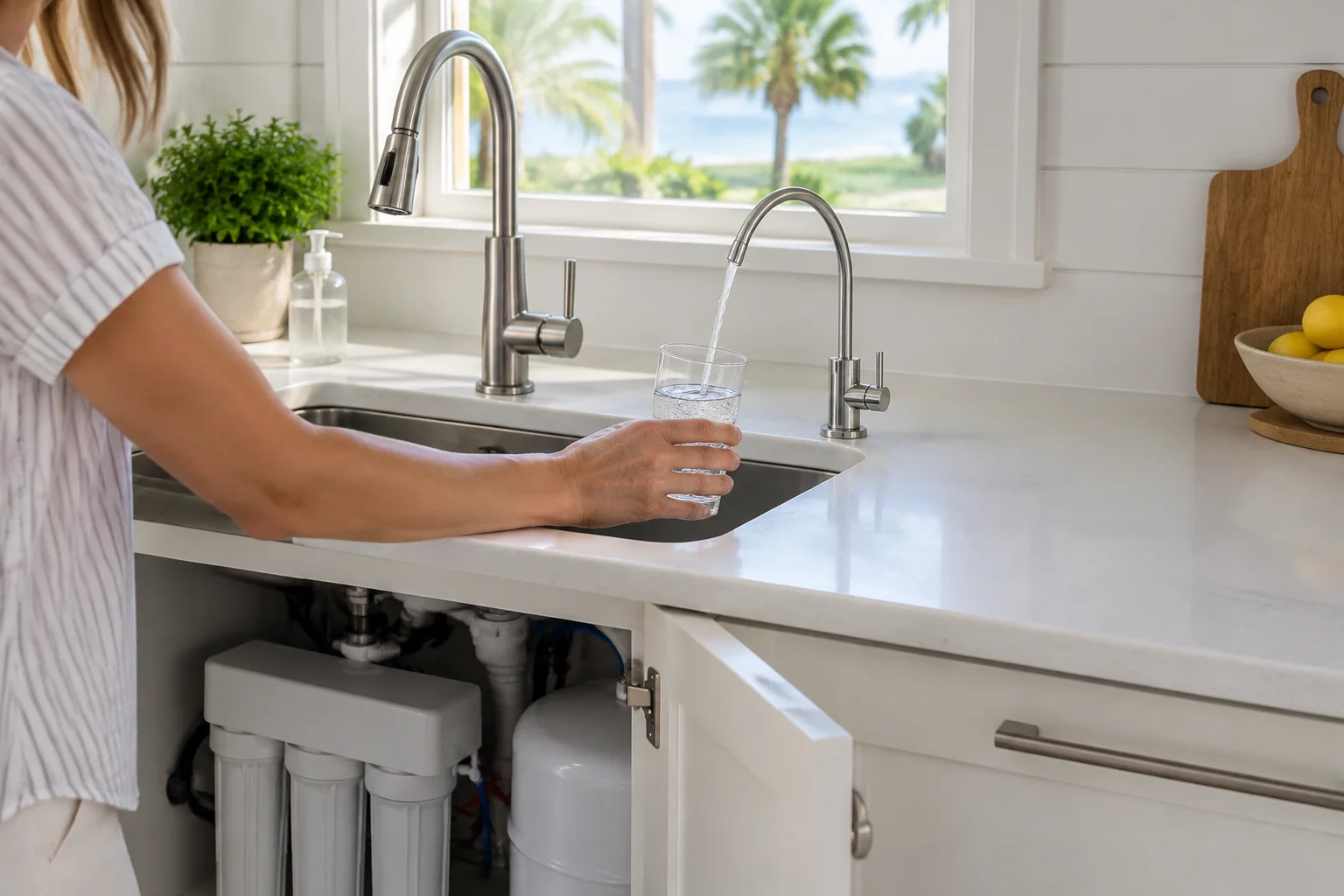
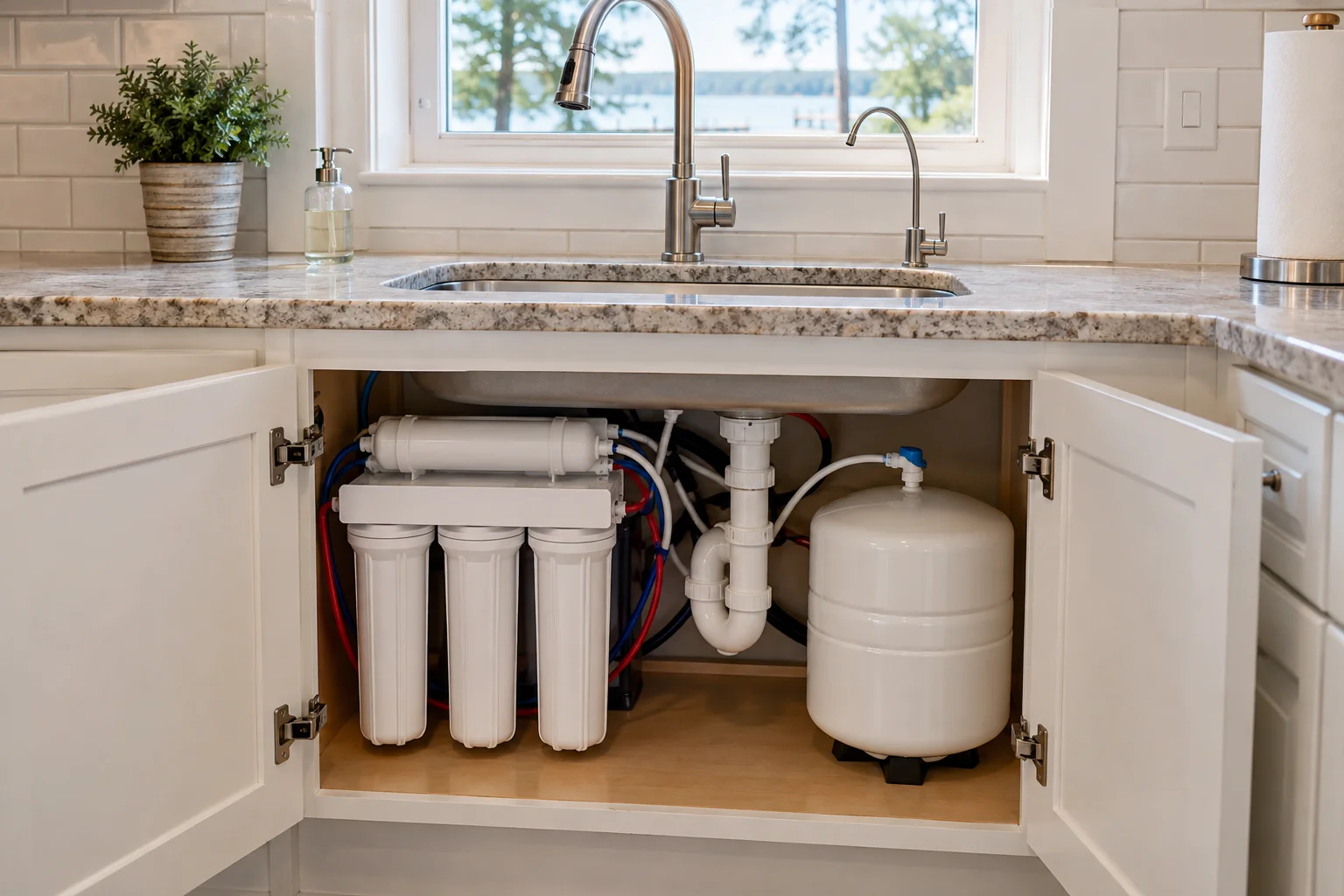
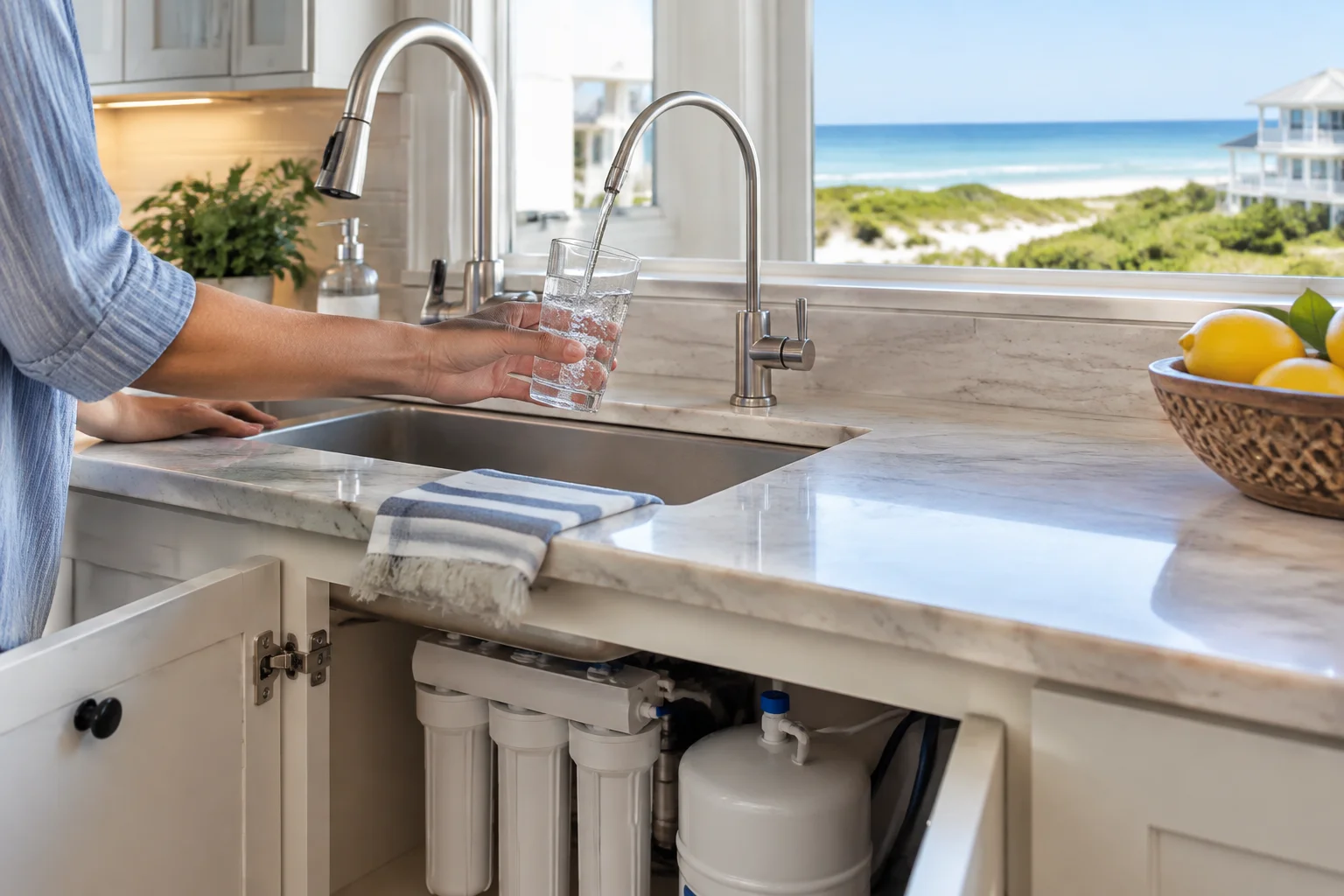
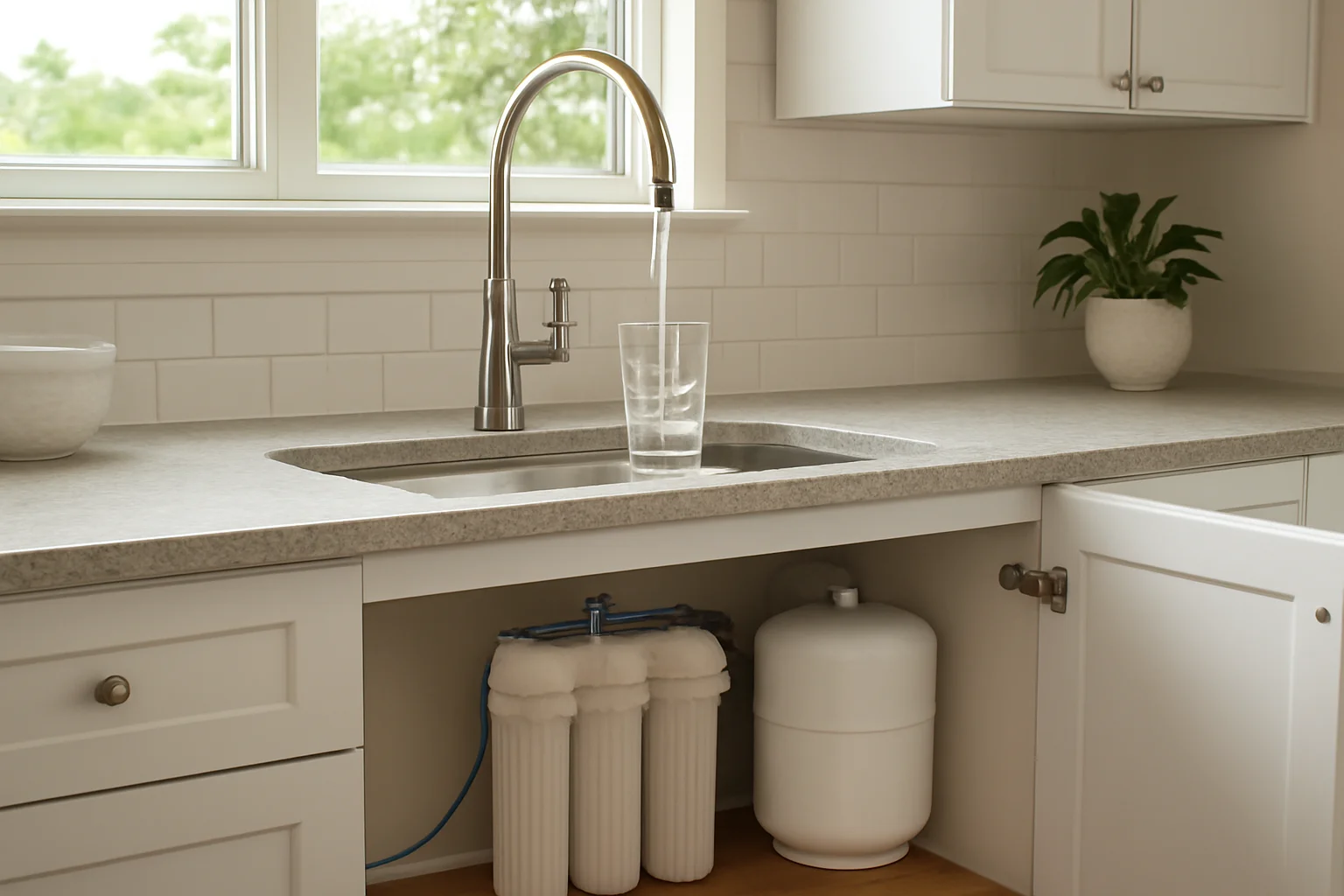
Reverse osmosis is often used to improve taste and reduce contaminants in drinking water. If you are dealing with metallic, chlorinated, or unpleasant taste, reverse osmosis can be part of a better drinking water plan. It also helps with cloudy ice cubes when the root cause is sediment or dissolved contaminants.
For homeowners searching for reverse osmosis system near me, it is smart to coordinate RO with your overall water treatment. For example, softening and filtration ahead of RO can protect the RO membrane and improve performance.
Whole home water filtration for cleaner showers, laundry, and appliances
Whole home filtration can reduce sediment and help protect both your softener and your plumbing. It can also improve the feel and taste of water across the house, which is useful for family kitchens where everyone uses the same supply for drinking, cooking, and bathing.
Whole home water filtration near me searches often come from homeowners who want clean water systems that work everywhere, not only at one tap. When sediment and fine particles are reduced, you usually see fewer spots, less odor, and better consistency in every room.
AO Smith water filtration and water softener options
Many Bay County homeowners choose AO Smith water filtration and AO Smith water softener solutions because they are designed for whole home performance and long-term reliability when maintained properly. AO Smith water filtration can complement softening by improving what you taste, smell, and see, while an AO Smith water softener targets hardness that causes scale buildup around faucets and showerheads.
If you are considering an AO Smith water softener, or you already have one and suspect it is not performing, professional testing can confirm hardness reduction and check whether additional filtration is needed.
Maintenance that prevents softening problems from coming back
Water treatment is not a set-it-and-forget-it purchase. The goal is to protect your home year-round, including during periods of heavy water use or after local supply changes.
Simple steps homeowners can do
Start with what you can monitor. Keep an eye on salt levels, refill before the tank runs low, and check that the brine tank is not bridging. If you notice new hard water spots on dishes or glass, do not assume it is “just cleaning.” Treat it as a water quality clue.
Also watch for changes in taste and odor. If water starts tasting metallic or chlorinated, or you see discoloration, sediment, or odor concerns, it may point to filtration or pre-treatment needs beyond softening.
What professional service includes
A reliable water softener service call typically includes checking hardness reduction, verifying system settings, inspecting components, and confirming that regeneration is happening correctly. For homes that need more than softening, service may include recommendations for whole house water filter solutions or reverse osmosis for drinking water.
Because Lower Grand Lagoon homes vary, service should be tailored to your household and your water. That is especially true for vacation rentals, where water use patterns can change dramatically between stays.
When to call a professional in Lower Grand Lagoon
It is time to schedule help if you notice any of the following:
- Hard water spots on glass, dishes, or fixtures start appearing again even after cleaning.
- Scale buildup around faucets and showerheads is increasing.
- Dry skin from hard water, dull hair after bathing, or soap that does not lather or rinse well returns.
- Water tastes metallic, chlorinated, or unpleasant, or you see visible sediment, discoloration, and odor concerns.
- Cloudy ice cubes show up, and coffee tastes off or feels inconsistent.
- Appliances seem to wear out faster or you notice reduced performance from water heaters and dishwashers.
If you are searching for water filtration near me or clean water systems near me, it helps to choose a company that can evaluate your whole setup, not just swap parts. Softening, filtration, and drinking water treatment often work best as a coordinated system.
Local water treatment matters in Bay County homes
Lower Grand Lagoon is part of Bay County, FL, and local water conditions can vary by neighborhood and supply conditions. Weather patterns, seasonal demand, and maintenance cycles can influence how water tastes, smells, and carries sediment. That is why homeowners benefit from local expertise and service that understands how water treatment systems perform in real homes.
If you want to protect coffee, ice, cooking water, and bathing comfort, it starts with making sure your water softening services are actually doing the job. You can explore options for water softening services in Lower Grand Lagoon and learn how whole home solutions may fit your property at the water filtration and reverse osmosis landing page. You can also browse the broader service area at /service-areas/bay-county/lower-grand-lagoon to see what else is available across the city.
For homeowners who want to understand the bigger picture, these reads can help connect water quality to plumbing and long-term home care: Cleaner Water, Better Plumbing: Why Filtration Matters in Lower Grand Lagoon Homes and Making Smarter Plumbing Maintenance Decisions in Lower Grand Lagoon Homes.
If you manage a rental property or want to reduce the chance of emergency repairs, you may also find value in Staying a Step Ahead of Plumbing Emergencies in Lower Grand Lagoon. For additional context on local service needs, see What Lower Grand Lagoon Homeowners Should Know About Waterline Services.
For service coverage across Bay County, you can also review /service-areas/bay-county to understand options near you.
Find Water Softening Services in Lower Grand Lagoon, FL
If you need Water Softening Services in Lower Grand Lagoon, FL, visit our local service page or contact A Superior Mechanical today.
For a broader look at whole-home water filtration, reverse osmosis, and water softener options, visit our water filtration, RO, and water softener page.
Map of Lower Grand Lagoon, FL
Frequently Asked Questions
Why does my water still feel hard even though I have a water softener?
Common causes include low or bridged salt in the brine tank, incorrect hardness or regeneration settings, an exhausted resin bed, or a bypass valve that is not fully closed. A water test and system inspection can confirm what is happening.
Can hard water affect coffee, ice, and cooking water?
Yes. Hard water can change how coffee extracts, contribute to poor tasting coffee water, and promote scale in kettles and coffee makers. It can also lead to cloudy ice cubes if sediment or minerals are not being properly treated.
Is water softening enough to fix metallic or unpleasant taste and odor?
Not always. Softening targets hardness minerals, but taste and odor issues can come from chlorine, sediment, or other contaminants. Many homeowners use whole home water filtration and, when appropriate, reverse osmosis for drinking water and ice.
How do I know if I need whole home filtration or reverse osmosis in addition to softening?
If you see visible sediment, discoloration, odor concerns, or cloudy ice cubes, or if you want better drinking water quality at every tap, additional filtration may be needed. Reverse osmosis is often used to improve drinking water and cooking water taste and clarity.
Related Articles
Photo Gallery