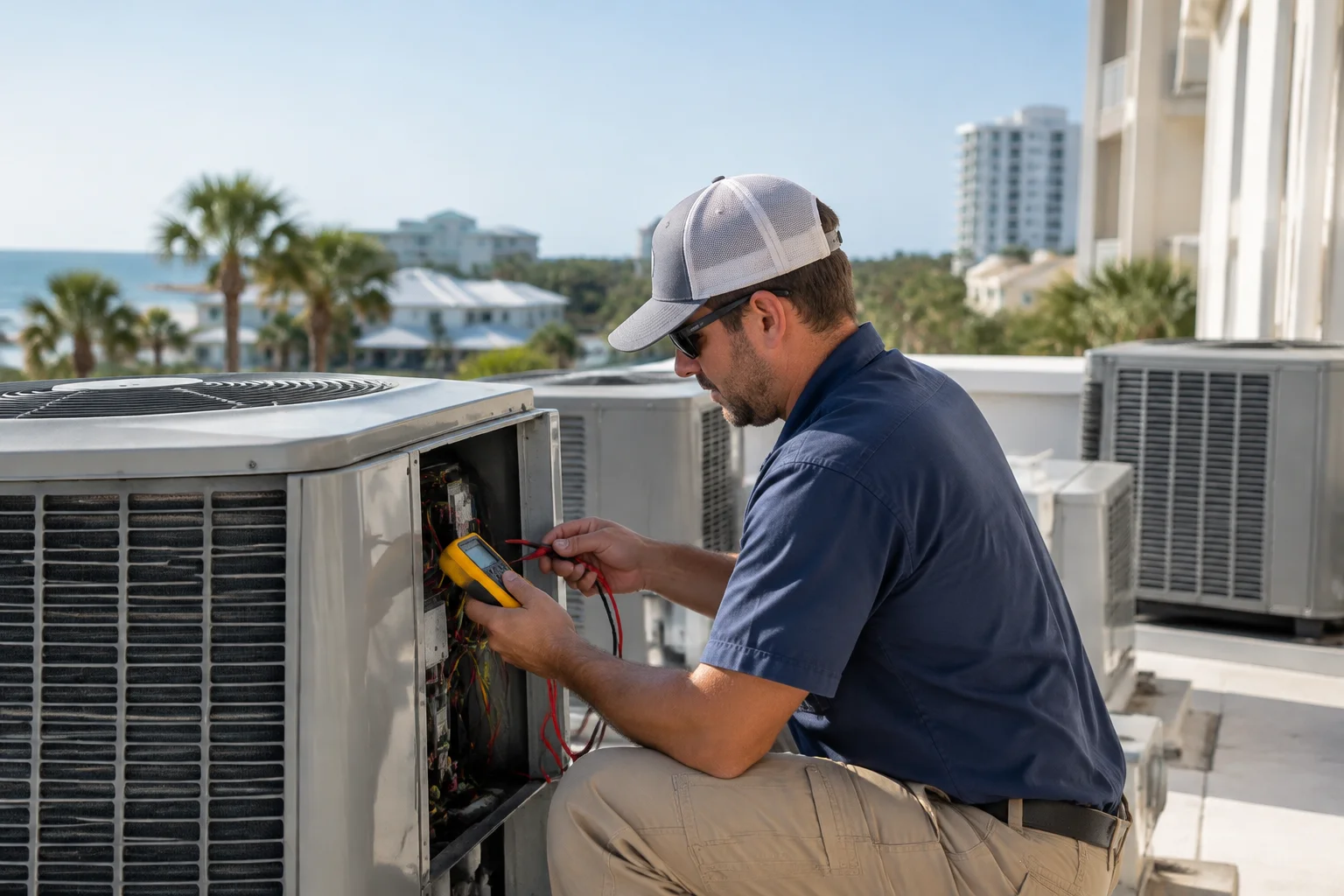
Ocean City, FL has a way of testing HVAC systems. Warm Gulf air, high humidity, and salt in the atmosphere can push ductless mini-splits to work harder than homeowners expect. When something small goes wrong, it can quickly turn into an emergency cooling concern, especially during peak summer heat.
This guide focuses on ductless mini-splits and how to avoid the kind of breakdown that sends you searching for AC repair near me or mini split repair near me at the worst possible time. You will also see why professional HVAC maintenance near me matters in Ocean City, and how a few consistent steps can improve airflow, indoor air quality, and system reliability.
Why ductless mini-splits face “emergency” pressure in Ocean City
Ductless mini-splits are popular in Ocean City homes and rentals because they can deliver targeted comfort room by room without traditional ductwork. But they still depend on a refrigerant system, proper airflow, clean filters, and reliable condensate drainage. When any of those pieces fall out of alignment, the system can struggle to cool, run longer, or shut down to protect itself.
Ocean City’s climate adds extra stress:
- Humidity and heat can increase load on the indoor unit and strain cooling performance.
- Salt air can be hard on outdoor components and can accelerate corrosion on exposed parts.
- Frequent on-off cycling from inaccurate thermostat habits can increase wear and contribute to uneven comfort.
- Airflow restrictions due to furniture placement, curtains, or dirty filters can cause poor cooling and higher energy use.
Most “emergency” calls happen when airflow is restricted, condensate drainage is blocked, or the system is already operating inefficiently and then hits its limit during a hot, humid afternoon.
The early warning signs homeowners often miss
You do not always get a dramatic failure. Many ductless mini-split issues show up as small changes that are easy to ignore until the system stops cooling or starts acting erratically.
Cooling feels weaker than usual
If your indoor unit runs but the room does not cool the way it used to, the cause is often related to airflow, filter condition, or heat exchange performance. In a humid climate, reduced cooling can also lead to higher indoor humidity and a clammy feel.
Unusual noises during operation
Bubbling, hissing, grinding, or repeated clicking can indicate airflow problems, condensate drainage issues, or other malfunctions within the refrigerant system components. Some sounds are normal during start-up, but persistent or worsening noises are not.
Water around the indoor unit or a musty smell
Ductless systems use condensate drainage to remove moisture collected during cooling. If drainage is partially blocked, water can overflow, drip, or contribute to odor. A musty smell can also affect indoor air quality services near me searches when homeowners notice stale air.
The system trips, shuts down, or won’t restart normally
Many mini-splits have protection controls that prevent operation when conditions are outside safe limits. Short cycling, repeated shutdowns, or failure to restart after a power interruption often means something needs inspection, not just a thermostat adjustment.
Higher energy use without better comfort
When airflow is restricted or heat transfer is inefficient, the system can run longer to achieve the same temperature. Homeowners may notice rising utility bills along with weaker comfort.
Maintenance habits that prevent ductless mini-split emergencies
Some tasks are simple homeowner maintenance, while others require a licensed HVAC technician. The goal is to keep the system clean, draining correctly, and delivering airflow consistently.
Keep filters clean and airflow unobstructed
Start with the basics: check the return air filter and clean it according to the manufacturer’s guidance. In Ocean City, dust plus humid air can make filters load up faster. If you use the unit daily in summer, plan for more frequent checks.
Also make sure the indoor unit has clear airflow space. Avoid blocking vents with curtains, shelves, or stacked storage. Restricted airflow is one of the most common paths to emergency-level performance issues because it can cause the system to overwork.
Watch condensate drainage and keep the drain path clear
During cooling, mini-splits collect moisture and remove it through condensate drainage. If the drainage line or drain pan area becomes restricted, water can back up.
Practical steps:
- Check for signs of dripping near the indoor unit.
- Look for changes in how quickly the unit seems to dehumidify a room.
- Keep the area around the indoor unit clear so access is not blocked.
If you suspect a drainage problem, it is best to have a professional inspect it. Condensate issues can also contribute to indoor air quality concerns.
Use the thermostat for comfort, not constant extremes
Thermostat settings matter. Setting the temperature too low can force the system to run continuously. In high humidity, that can create a cycle of heavy cooling demand, longer run times, and more moisture handling.
Instead of frequent drastic changes, choose a realistic setpoint and allow the system to stabilize. If you have multiple indoor heads, consider how each room is being used. Occupied rooms may need steadier settings than guest rooms or storage areas.
If your home uses a more advanced controller or zoning setup, review how it is configured. A technician can also help verify that heating control systems are operating as intended, especially if you use the mini-splits for heating during cooler months.
Protect outdoor units from salt air and debris
Outdoor units sit in the environment. Ocean City’s salt air and coastal storms can bring in debris and accelerate corrosion. While homeowners should not attempt repairs on refrigerant systems, you can still reduce stress by keeping the area around the outdoor unit clear of leaves, weeds, and clutter.
Do not block airflow around the outdoor unit. Airflow matters for heat exchange. When the outdoor coil cannot reject heat effectively, the whole system performance drops.
Leave refrigerant system concerns to professionals
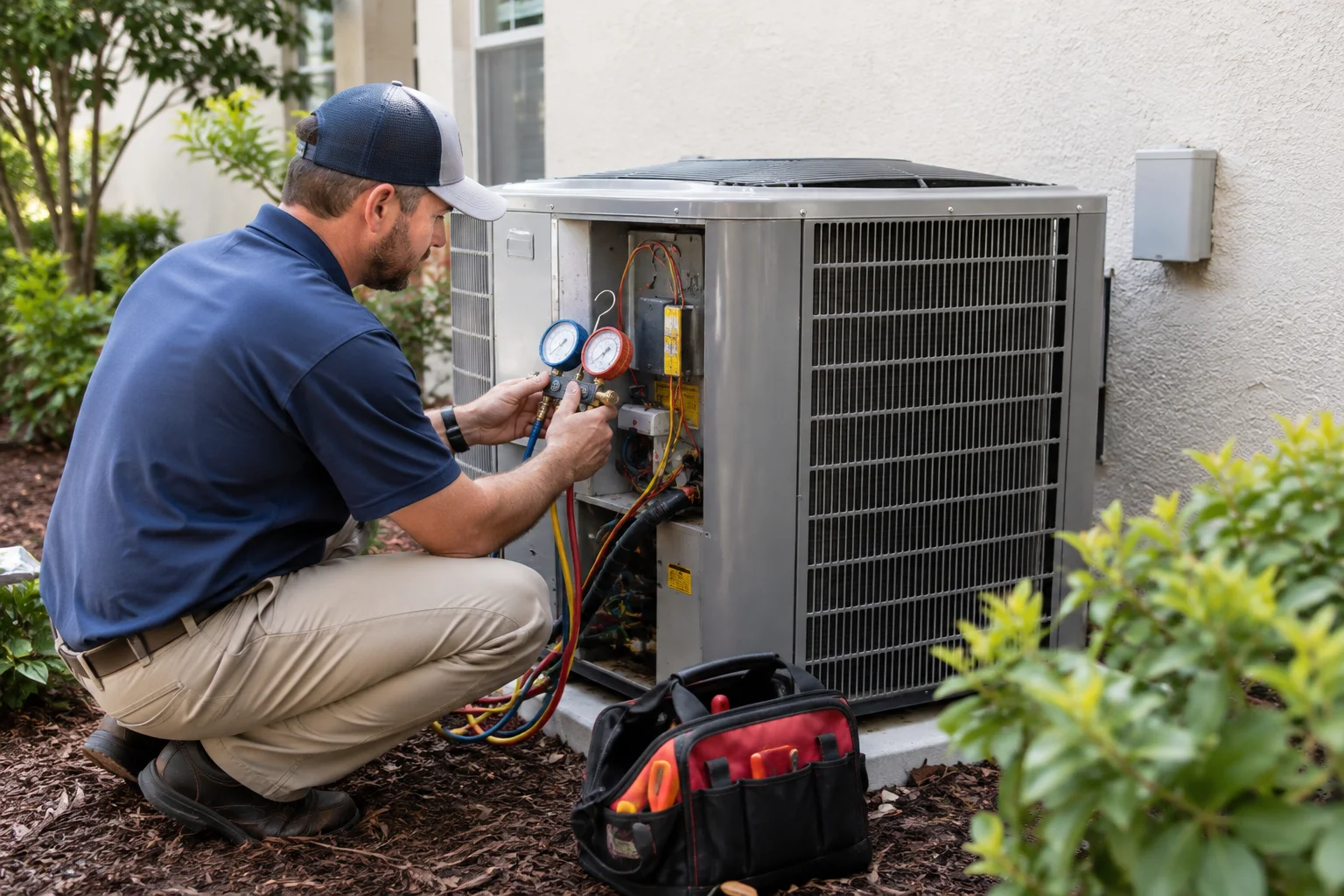
Ductless mini-splits rely on a refrigerant system to move heat. If the system is low on refrigerant, has a leak, or has a component issue, it can lead to poor cooling, unusual operation, and protective shutdowns.
Homeowners should not try to diagnose refrigerant levels or attempt DIY repairs. A licensed HVAC contractor can evaluate symptoms safely and determine next steps during an in-person inspection.
How airflow and indoor air quality connect to emergency repairs
Airflow is not just about comfort. It is also tied to indoor air quality. When filters are dirty or airflow paths are restricted, the system may circulate air less effectively. That can increase dust in the living space and worsen the feel of humidity.
In Ocean City, many homes also face seasonal comfort challenges from moisture. If the mini-split is not dehumidifying properly, you may notice:
- Condensation on nearby surfaces
- Persistent musty odors
- Rooms feeling clammy even when temperatures seem “close”
These issues can become more likely if ductwork is leaking (in homes that combine mini-splits with ducted systems) or if the home has poor air distribution. If you are also dealing with duct-related concerns, consider a duct inspection to understand whether airflow problems are coming from the mini-split heads, the ductwork, or the home’s overall layout.
For more on improving air quality in local homes, homeowners often find this helpful: Keeping Ocean City Homes Comfortable Starts With the Air Inside.
Common Ocean City mini-split problems and what they lead to
Understanding typical failure paths can help you prioritize preventive maintenance instead of reacting during a heat spike.
Dirty coils and restricted heat exchange
Over time, dust and coastal exposure can reduce heat transfer in both indoor and outdoor components. When heat exchange is inefficient, the system may run longer, struggle to cool, or shut down when protection thresholds are reached.
Condensate drainage issues
During humid summers, condensate drainage becomes critical. Partial blockages can lead to overflow, water damage risk, and odor problems. If drainage is not addressed, it can also contribute to indoor comfort complaints that keep the system running longer.
Sensor and control behavior
Mini-splits use sensors and control logic to manage operation. When conditions change, controls may limit performance or stop operation. Homeowners sometimes respond by repeatedly turning the unit on and off, which can worsen wear.
Instead, treat repeated shutdowns or restart failures as a reason for professional evaluation.
Installation and airflow setup problems
Some issues are tied to how the system is installed and how airflow is directed in the space. If a mini-split is installed in a way that limits airflow or if the placement does not match the room’s usage, you can see persistent comfort problems. This is especially common in mixed-use spaces, rentals, and properties that have undergone renovations.
If you suspect installation-related performance issues, discuss them with a technician. You can also explore ductless mini-split options on the service page: ductless mini-splits in Ocean City, FL.
Preventive HVAC maintenance that is worth scheduling in advance
Waiting until the system is struggling often turns a normal service visit into an urgent situation. Preventive maintenance helps catch issues before they become emergency cooling concerns.
What a professional maintenance visit typically focuses on
During an HVAC maintenance appointment, a licensed technician can inspect key components, evaluate airflow, and check condensate drainage performance. They can also review thermostat operation and system behavior under real conditions.
Maintenance is especially important for Ocean City homes because coastal weather can accelerate wear and reduce efficiency. A technician can also guide you on how to manage energy use while maintaining comfort.
Why timing matters around Florida heat and humidity
Ocean City summers can ramp up quickly. Scheduling maintenance before the hottest part of the season helps ensure the system is ready when you need it most. If you are looking for air conditioner service near me or HVAC maintenance near me for a mini-split, choosing a plan early can reduce the odds of a mid-summer breakdown.
For homeowners who want to stay proactive, it can also help to review related maintenance guidance like Air Conditioning Maintenance.
When you should call A Superior Mechanical for ductless mini-split help
DIY steps are fine for basic filter care and keeping airflow clear, but some situations need an in-person professional evaluation. Call a local HVAC company when you notice:
- Repeated cooling issues that do not improve after you clean filters and confirm airflow is not blocked
- Water pooling, overflow, or ongoing moisture around the indoor unit
- Persistent musty odors that return even after basic cleaning
- Frequent shutdowns, error codes, or failure to restart normally
- Unusual noises or vibrations that continue through multiple cycles
- Major comfort complaints across multiple rooms or heads
These symptoms can point to airflow problems, condensate drainage concerns, or refrigerant system issues. Only an on-site licensed HVAC contractor can assess what is happening and recommend the correct next step.
If you are searching for a trustworthy licensed HVAC contractor near me in Ocean City, it helps to choose a company that regularly services ductless systems in the local climate. You can also explore broader service coverage on the city page: /service-areas/okaloosa-county/ocean-city and the county level at /service-areas/okaloosa-county.
Small prevention steps that reduce emergency cooling risk
Here are practical homeowner actions that help keep ductless mini-splits running reliably through coastal weather.
Do a quick weekly check during peak season
Spend a minute checking that air is moving strongly from the indoor unit. Make sure the return area is not blocked and that the unit is not showing visible moisture issues.
Keep a simple log of comfort changes
If cooling seems weaker, note when it happens and whether it coincides with heavy humidity, long runtime, or certain rooms being occupied. This can help a technician understand the pattern during a service visit.
Address indoor humidity early
When humidity stays high, residents often increase thermostat cooling demand, which can raise energy use. If the system is not dehumidifying properly, it can become an emergency cooling concern later. Address the issue early through professional inspection.
For rentals and multi-head systems, be extra consistent
Ocean City has many rentals and properties with multiple indoor heads. When occupants change, usage patterns change. That can increase the chance of filter neglect, blocked airflow, and thermostat misconfiguration. Property managers may also want a consistent service rhythm.
If you manage properties, consider Property Management HVAC Services so preventive care does not get missed between turnovers.
How ductwork and whole-home airflow can affect mini-split performance
Even with ductless mini-splits, many Ocean City homes still include ducted systems or ductwork related to ventilation. Whole-home airflow affects how well rooms hold temperature and how moisture moves through the living space.
If you are dealing with persistent comfort issues in ducted areas, duct sealing can help. Homeowners often ask about this after they notice uneven cooling or hot spots. Learn more here: Why Duct Sealing Pays Off for Ocean City Homes.
Sometimes the mini-split is not the only factor. If duct leakage or poor airflow distribution is contributing, duct inspection and duct repair can improve overall comfort and reduce the workload on the cooling system.
Planning for system replacement without waiting for a breakdown
Most homeowners do not want to think about system replacement until something fails. Still, preventive maintenance and regular inspections help you understand the condition of your mini-split over time, especially in a demanding coastal environment.
If replacement becomes part of the conversation, focus on making informed choices based on an on-site assessment. A technician can evaluate system performance, refrigerant system behavior, airflow, and comfort needs. Homeowners considering budget planning may also want to review financing options ahead of time using A Homeowner’s Guide to Better HVAC Financing in Ocean City, FL.
Planning reduces the chance that an emergency repair turns into an emergency replacement decision.
Keeping your ductless mini-split reliable is a comfort and energy decision
In Ocean City, ductless mini-splits are often the difference between a comfortable home and a stressful summer. When filters are clean, airflow is clear, and condensate drainage works properly, the system can cool more effectively and manage humidity with less strain. That helps reduce the odds of emergency breakdowns and supports steadier energy use.
If you want to improve reliability, schedule preventive HVAC maintenance and address warning signs early. For ductless mini-split services in Ocean City, you can start with ductless mini-splits for Ocean City, FL and explore related local options on the Ocean City service page.
Find Ductless Mini-Splits in Ocean City, FL
If you need Ductless Mini-Splits in Ocean City, FL, visit our local service page or contact A Superior Mechanical today.
Map of Ocean City, FL
Frequently Asked Questions
How can I tell if my ductless mini-split issue is airflow or condensate drainage?
If the indoor unit blows weak air even after you clean the filter, airflow or heat exchange may be involved. If you notice water around the indoor unit, dripping, overflow, or recurring musty odors, condensate drainage is a strong suspect. Either way, a professional inspection is the safest next step.
What should I do immediately if my mini-split stops cooling during a hot Ocean City day?
Check the thermostat settings and confirm the unit is calling for cooling. Make sure nothing is blocking the indoor airflow path and that the filter is not clogged. If the unit keeps shutting down, will not restart normally, or comfort does not return, contact a licensed HVAC contractor for an on-site evaluation.
Can dirty filters alone cause emergency-level problems?
Dirty filters can reduce airflow, reduce cooling effectiveness, and increase runtime. In humid Florida conditions, that can quickly lead to comfort complaints and system strain. While filter cleaning is a good homeowner step, persistent symptoms still require professional assessment.
Do ductless mini-splits need ductwork maintenance too?
Ductless mini-splits do not use traditional ductwork for the conditioned air they deliver. However, many homes also have ducted systems or ventilation pathways that affect whole-home airflow and humidity. If you have uneven comfort or suspect duct issues, an inspection can help.
Should I try to troubleshoot refrigerant problems myself?
No. Refrigerant system concerns need an in-person professional evaluation. DIY attempts can be unsafe and can delay the real fix. If cooling performance is poor, the unit is behaving unusually, or it repeatedly shuts down, schedule service.
Related Articles
Photo Gallery