Ocean City, FL is beautiful, but the weather is hard on HVAC systems. Long stretches of heat, high humidity, and coastal salt air can turn a routine comfort issue into an emergency cooling problem for managed homes and rentals. When that happens, property managers and homeowners often face late night calls, tenant complaints, and rushed decisions that could have been avoided with a clear maintenance plan.
This guide focuses on practical steps property managers can take with property management HVAC services in Ocean City, FL to help prevent emergency AC repair situations. It also covers what homeowners should watch for in their units, including airflow, thermostat behavior, condensate drainage, and indoor air quality.
Why Ocean City HVAC emergencies happen more often than you’d expect
In coastal Okaloosa County, HVAC equipment works overtime. Air conditioners and heat pumps must keep up with Florida heat while also managing moisture. Salt air and airborne debris can affect components over time, especially in outdoor units and in ductwork that collects dust and pollen.
Many emergency calls start small, then escalate. A clogged drain line or slow airflow can lead to higher humidity inside the home. That moisture can contribute to comfort problems, odor, and system strain. If the thermostat is misreading temperatures or the system is short cycling, the system may not remove humidity effectively. Over time, that can increase wear on refrigerant systems and electrical controls, even if the unit still seems to cool at first.
Property management HVAC service works best when it’s planned around these local realities, not just around breakdowns.
Build an HVAC maintenance rhythm that matches Florida humidity and heat
Preventive HVAC maintenance is the most reliable way to avoid emergency cooling concerns. For managed properties in Ocean City, the goal is to catch problems before they cause a no-cool situation during peak demand.
Plan seasonal checkups, not just one visit
Florida’s cooling season can feel year-round. A structured schedule typically includes:
Pre-summer inspections to confirm the system can handle heavy cooling loads.
Mid-summer performance checks to verify airflow and humidity control while conditions are at their toughest.
Post-summer or fall service to address wear before the next cycle begins.
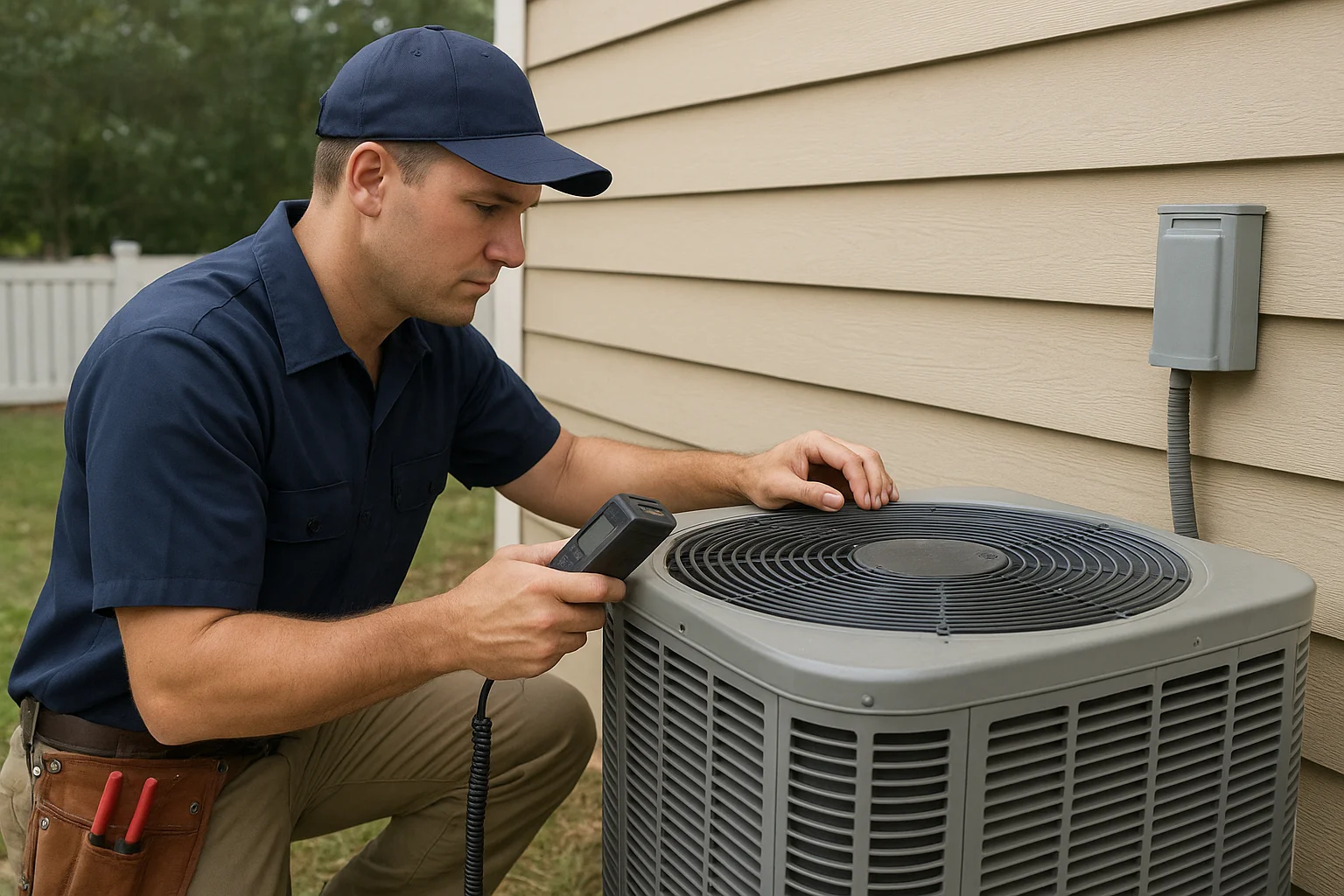
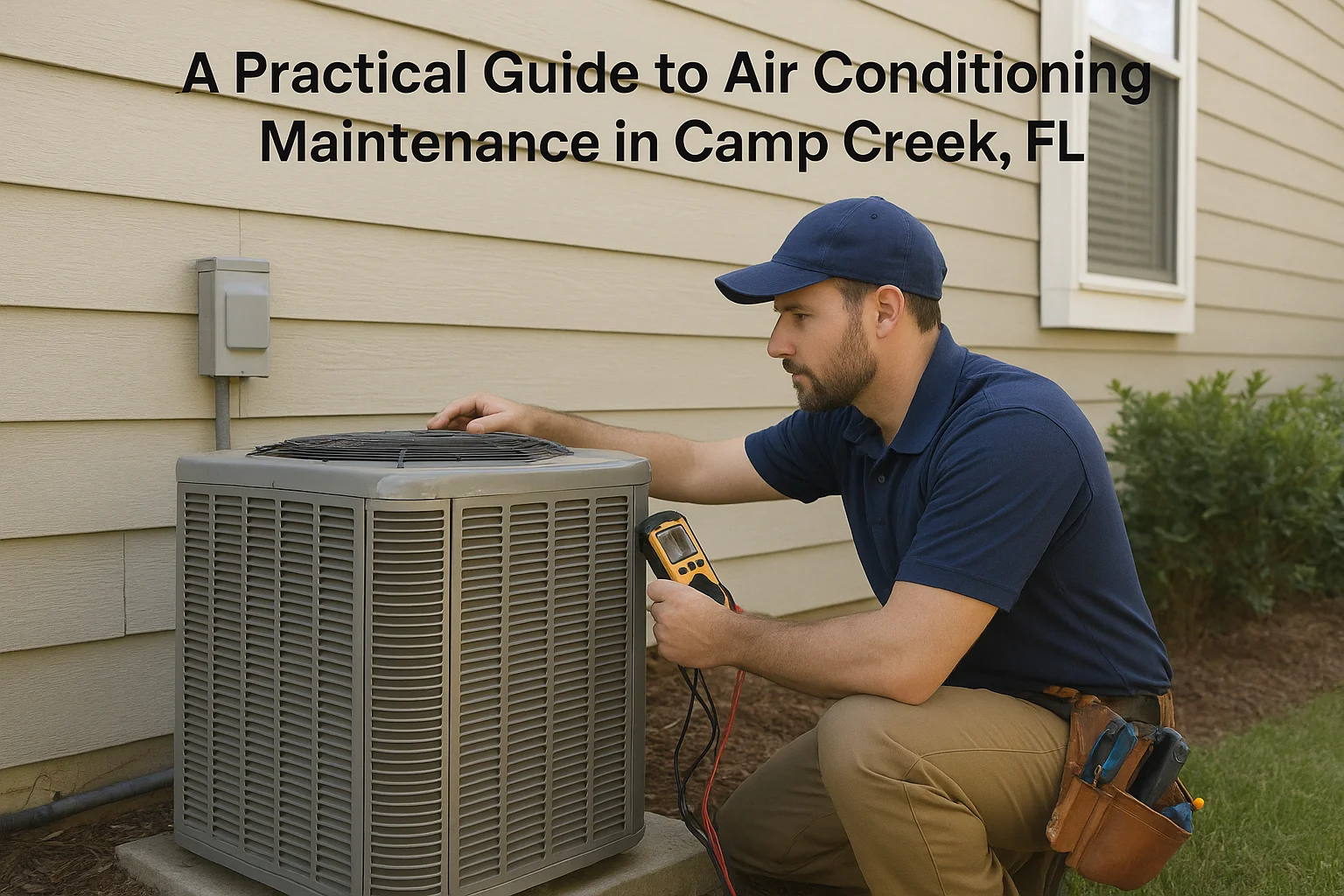
During these visits, a licensed HVAC contractor near me approach matters because your system needs more than a quick temperature check. A proper tune-up focuses on airflow, refrigerant system operation, condensate drainage, thermostat function, and ductwork condition.
Use maintenance records to reduce tenant confusion and repeated calls
Managed properties often have multiple tenants over time. When maintenance history is organized, it’s easier to spot recurring issues such as persistent airflow imbalance, recurring condensate drainage problems, or thermostat settings that don’t match the home’s actual cooling needs. That reduces repeat troubleshooting and helps prevent emergency AC repair near me scenarios during busy periods.
If you manage multiple units, consider how you’ll document service visits and share updates. That communication can be as important as the inspection itself for reducing call volume and frustration.
Watch airflow and ductwork because “cool air” must actually move
Many HVAC problems that lead to emergencies are airflow problems. Even when an air conditioner runs, weak airflow can cause the system to struggle, build up moisture, and wear out faster. In humid coastal climates, this can become a comfort and indoor air quality issue quickly.
Common airflow and ductwork issues in rentals
Dirty or clogged filters that restrict airflow and increase system strain.
Leaky or poorly sealed ductwork that sends conditioned air into crawl spaces, attics, or wall cavities instead of living areas.
Blocked returns or supply vents due to furniture placement, paint overspray, or construction debris.
Incorrect airflow balance that leaves some rooms warm while others overcool.
For property managers, duct inspections are a smart investment. If you suspect airflow issues, you can explore Air Conditioning Inspection to identify comfort problems that often lead to emergency calls.
How ductwork affects humidity and indoor air quality
Airflow influences how well the system removes moisture. When airflow is restricted, the evaporator coil may not operate as intended. That can reduce dehumidification and lead to higher indoor humidity, which can worsen musty odors and aggravate sensitivities for residents. In a property setting, that means more complaints and more urgent service requests.
Indoor air quality is also tied to system cleanliness and ventilation. Filters, duct condition, and airflow all affect how much dust and airborne particulates circulate through the home.
Condensate drainage problems are a frequent trigger for “sudden” failures
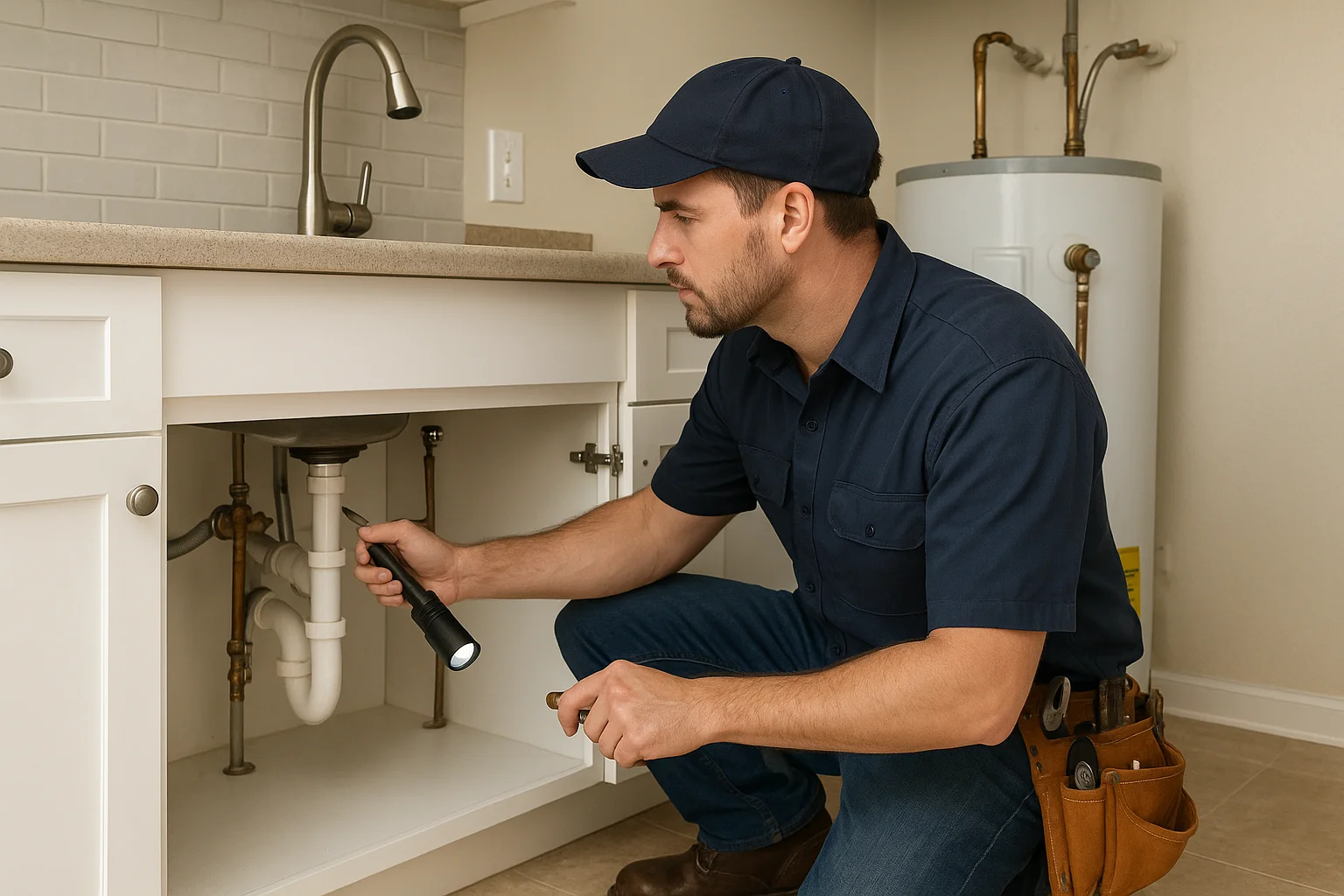
When air conditioners remove humidity, they produce condensate. If condensate drainage is slow or blocked, water can back up and cause shutdowns, leaks, or moisture related issues. In the humid Florida environment, drainage problems can become urgent quickly.
Look for early warnings
Water pooling near indoor equipment or in the closet where the air handler is located.
Gurgling sounds from the drain line during operation.
Musty odors that appear after the system runs.
Frequent shutdowns or inconsistent cooling cycles.
If you manage properties, it helps to train staff or tenants on what normal operation looks like and how to report drainage concerns early. The fastest way to avoid emergency cooling calls is to address condensate drainage before it reaches a point where the system cannot safely keep running.
Thermostats and controls: small setup issues can cause big comfort complaints
Thermostats are part of the cooling equation. In managed properties, thermostats may be adjusted by tenants, replaced incorrectly, or left on settings that don’t support humidity control. A thermostat that is inaccurate or configured improperly can lead to short cycling, higher energy use, and uneven comfort.
Tenant friendly thermostat practices
Simple habits can prevent many callouts:
Keep the thermostat in the intended mode for cooling season.
Avoid frequent rapid changes to setpoints that can cause the system to cycle repeatedly.
Confirm schedules are set correctly for the property’s occupancy patterns.
Property managers should also ensure thermostats are compatible with the system and installed properly. When residents report that the home is not cooling evenly, it is often a thermostat plus airflow issue, not just a single component fault.
Salt air and outdoor unit maintenance reduce corrosion and performance loss
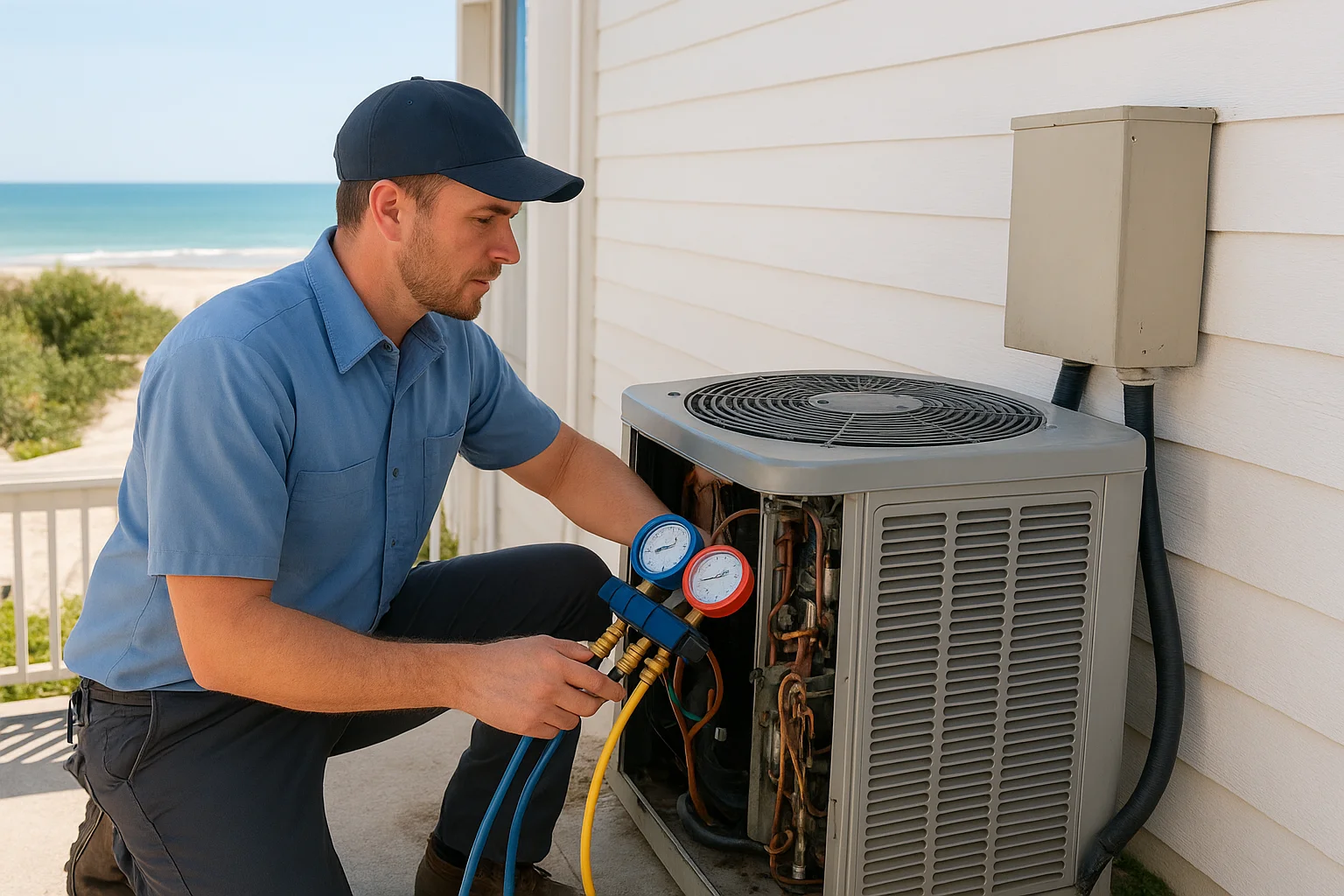
Coastal exposure means outdoor units can accumulate salt residue, corrosion, and debris. Over time, this affects airflow through the condenser and can strain refrigerant systems. When the outdoor unit is not performing well, the indoor unit cannot remove heat effectively, and the result is often longer run times, higher humidity, and increased energy use.
What managed properties should do for outdoor units
Keep the area around the outdoor unit clear so air can move through the coil.
Remove debris safely without damaging fins or airflow surfaces.
Inspect for corrosion or damage during scheduled maintenance.
Verify refrigerant system operation is within expected performance conditions during service visits, based on what the technician observes in person.
Because salt air is a local factor, Ocean City property management HVAC services should include a coastal-aware inspection approach. That helps reduce the chance of a mid-summer breakdown that leaves residents without reliable cooling.
Refrigerant and system performance: why “it’s probably low” is not enough
Homeowners sometimes assume an HVAC issue is refrigerant related, especially if cooling feels weak. Refrigerant systems are safety and performance critical. However, refrigerant diagnosis requires in-person evaluation and proper tools. A technician should assess system operation, airflow, temperature measurements, and system pressures to determine what is actually happening.
In rental settings, it’s also important to avoid guesswork. Low cooling capacity can be caused by restricted airflow, thermostat issues, dirty coils, condensate drainage problems, or refrigerant performance issues. Each has different causes and different remedies.
When a property has repeated comfort complaints, professional HVAC service near me can help connect the dots between airflow, humidity control, and refrigerant system operation instead of treating symptoms.
Energy use and comfort complaints are often early warning signs
Emergency HVAC calls are usually preceded by patterns. If energy use jumps or cooling takes longer than it used to, that’s a sign the system is working harder. In humid climates, poor humidity control can also show up as wet-feeling indoor air, lingering odors, or rooms that never feel comfortable.
Track these indicators for managed properties
Long run times without reaching comfortable temperatures.
Hot spots in certain rooms, especially near returns or vents.
Persistent humidity even when the unit seems to run.
Frequent cycling that suggests the system is not operating efficiently.
Instead of waiting for a complete failure, use these indicators to schedule a service visit. This is one of the most practical ways to reduce emergency AC repair calls during peak Ocean City weather.
How to decide between repair and HVAC replacement without guesswork
Some managed properties will eventually need HVAC replacement. But replacement is not always the best path, and it should not be based on age alone. Decisions should be based on system condition, performance, airflow, ductwork, indoor air quality needs, and refrigerant system operation.
A good licensed HVAC contractor near me will evaluate the full setup, not just the outdoor unit. That includes ductwork condition, thermostat compatibility, condensate drainage, and how the home’s layout affects airflow.
If you’re planning upgrades across multiple units, you can also explore A Homeowner’s Guide to Better HVAC Financing in Ocean City, FL to help you plan responsibly.
Ductless mini split and heat pump options for specific property layouts
Not every home has the same ductwork setup. Some rentals and mixed-use properties have room additions, older layouts, or areas that are difficult to cool consistently. In those cases, ductless mini split installation near me or heat pump solutions may improve comfort and reduce hot spots. The right system depends on the home’s needs and how the existing HVAC is operating.
If you’re considering ductless or heat pump upgrades, it’s smart to start with an inspection and a comfort review. You can browse Heat Pump Services to understand how these systems are evaluated for local conditions.
For managed properties that also include commercial spaces or shared systems, Commercial HVAC Services can be relevant when different building areas require different comfort equipment.
Prevent emergency calls with the right documentation and tenant communication
Even with the best maintenance plan, issues can still develop. The difference is whether you catch them early. For property management HVAC services, communication and documentation often determine how quickly problems get addressed.
Create a simple reporting process
Ask tenants to report temperature problems, unusual noises, or visible moisture quickly.
Provide guidance on thermostat settings so residents are not unknowingly preventing proper cooling.
Track repeat issues by unit, room, and season.
Use service history to spot patterns
If multiple tenants report similar comfort issues, the problem may be ductwork related, airflow related, or tied to condensate drainage. If the same unit repeatedly shows high indoor humidity, it may need an indoor air quality focused inspection as part of preventive HVAC maintenance.
You can also review how HVAC planning supports broader property goals in Why Commercial HVAC Service Matters in Ocean City Homes and Mixed-Use Properties.
When emergency cooling concerns still happen, what to do before the technician arrives
Despite prevention efforts, emergency HVAC calls can occur. When cooling stops or the system behaves erratically, the priority is resident safety, comfort, and minimizing further damage. While a homeowner or property staff member should not attempt refrigerant or electrical repairs, there are a few steps that can help stabilize the situation.
Check the thermostat settings to confirm the system is set to cool and the fan setting is appropriate.
Replace a clearly dirty filter if one is visibly clogged, since that can restore basic airflow and help the system operate more safely.
Look for visible water near indoor equipment. If you see active leaks, treat it as urgent.
Do not bypass safety controls or attempt to restart repeatedly.
If the system is completely down during Florida heat, emergency AC repair near me may be necessary. A professional HVAC company near me can diagnose what is actually happening based on system behavior, airflow conditions, condensate drainage, and refrigerant system performance. That is the difference between a quick fix and a true resolution.
Why choosing local property management HVAC services matters in Okaloosa County
Local HVAC service matters because Ocean City homes are built and maintained with local conditions in mind. Coastal exposure, humidity levels, and the way properties are laid out all influence system performance. A contractor that regularly services Ocean City and Okaloosa County understands the common patterns behind breakdowns and can tailor preventive HVAC maintenance to what your properties actually experience.
If you want to explore broader coverage areas, visit /service-areas/okaloosa-county and the Ocean City service page. For property owners comparing service models, these pages can help you see how HVAC service supports managed homes across the region.
For property management teams, the best time to plan is before the hottest weeks arrive. When maintenance, airflow checks, indoor air quality considerations, and condensate drainage inspections are handled consistently, emergency cooling concerns become less frequent and easier to manage when they do pop up.
If you manage rentals or mixed-use properties and want a maintenance plan built around Florida heat and humidity, start with property management HVAC services in Ocean City, FL from A Superior Mechanical.
You can also compare service approaches in nearby areas by reading A Homeowner’s Guide to Property Management HVAC Services in Santa Rosa Beach and A Practical Look at Property Management HVAC Services for Local Property Owners in Sandestin, FL.
Find Property Management HVAC Services in Ocean City, FL
If you need Property Management HVAC Services in Ocean City, FL, visit our local service page or contact A Superior Mechanical today.
Map of Ocean City, FL
Frequently Asked Questions
What is the most common reason property HVAC systems end up needing emergency AC repair in Ocean City?
Many emergencies are preceded by airflow restrictions, indoor coil issues, or condensate drainage problems. In a humid climate, drainage and moisture control issues can escalate quickly when the system is under strain.
How often should managed properties schedule HVAC maintenance in Florida?
Most properties benefit from seasonal checkups timed for Florida cooling demand, plus additional performance checks during peak humidity and heat. The exact schedule can depend on system age, usage patterns, and past service history.
Can a dirty filter or blocked vent cause the system to stop cooling completely?
Yes. Restricted airflow can reduce cooling performance and increase system strain. In some cases, it can also contribute to shutdowns or erratic operation. Replacing a clearly clogged filter can help, but persistent issues require professional inspection.
If cooling is weak, is it always a refrigerant problem?
No. Weak cooling can be caused by airflow problems, ductwork leaks, thermostat or control issues, dirty coils, or refrigerant system performance issues. Refrigerant diagnosis needs an in-person evaluation.
What should tenants report right away to prevent a bigger HVAC emergency?
Report temperature problems, unusual noises, repeated short cycling, visible water near indoor equipment, or musty odors. Early reporting gives property managers a better chance to schedule service before the system fails during peak heat.
Related Articles
- Why Commercial HVAC Service Matters in Ocean City Homes and Mixed-Use Properties
- A Homeowner’s Guide to Better HVAC Financing in Ocean City, FL
- A Homeowner’s Guide to Property Management HVAC Services in Santa Rosa Beach
- A Practical Look at Property Management HVAC Services for Local Property Owners in Sandestin, FL
Photo Gallery