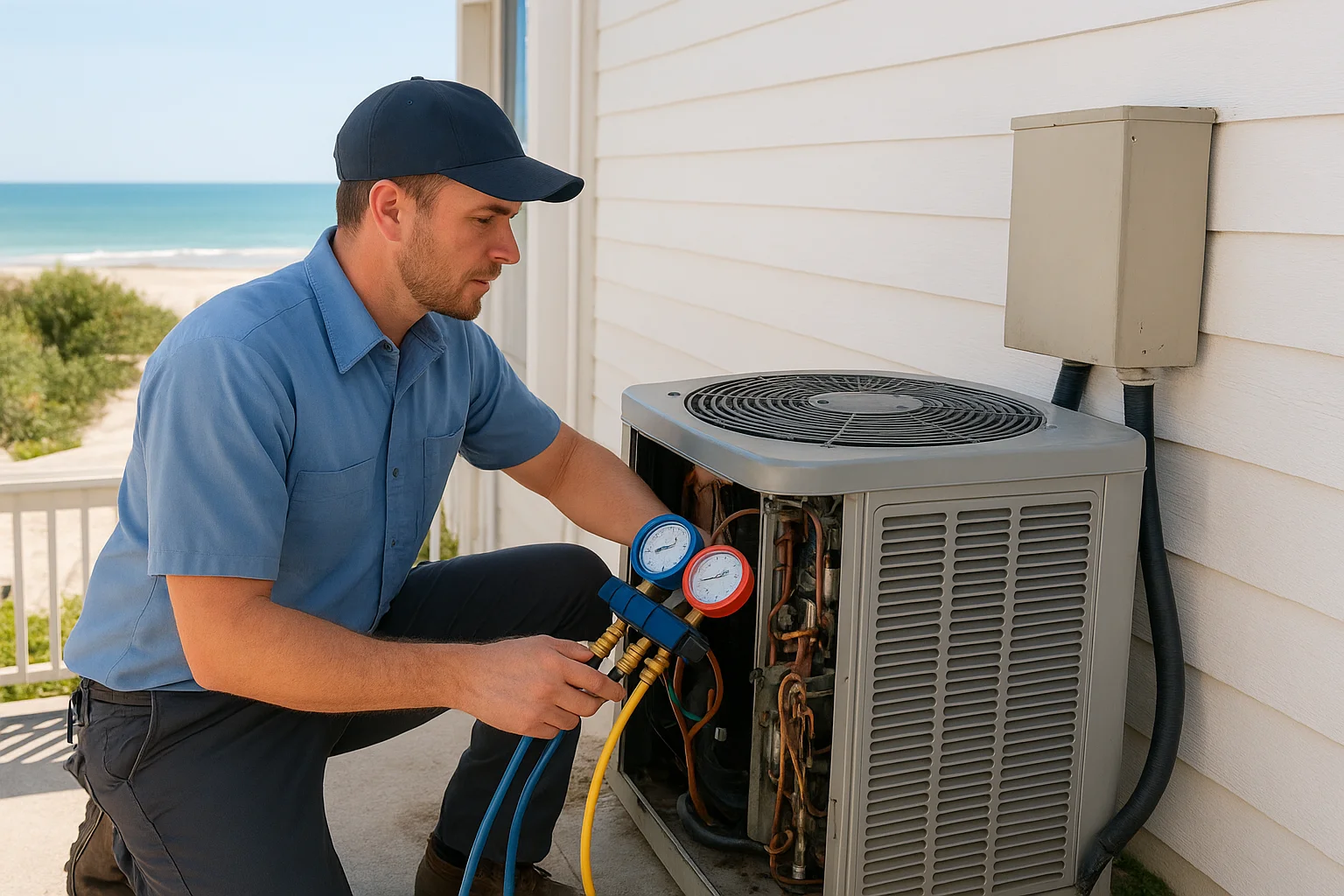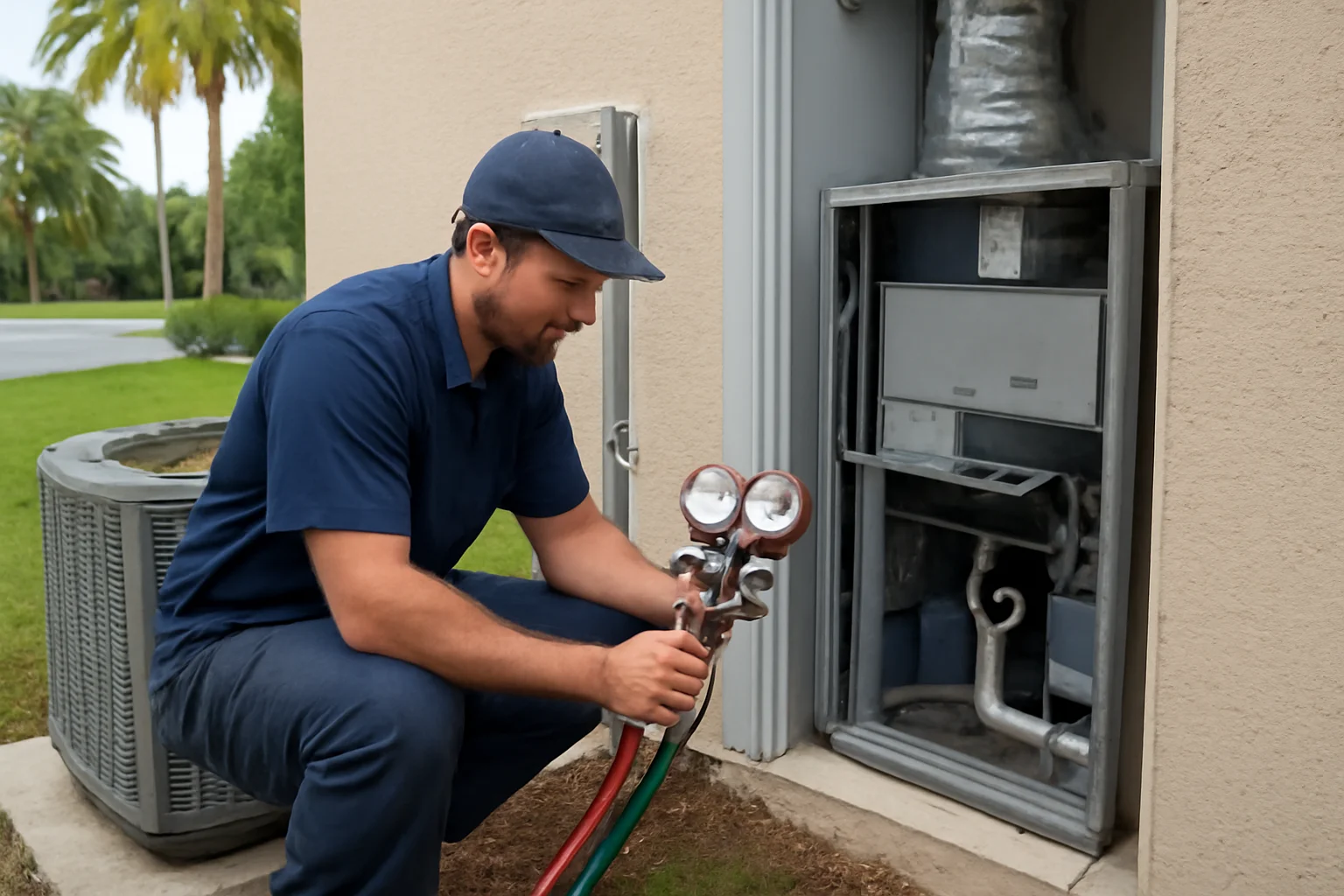
Commercial HVAC is the backbone of comfort for many Rosemary Beach properties. Whether you manage a small office, a retail space, a restaurant, or a mixed-use building, your system works through Florida heat, high humidity, and the added challenge of salt air. When something goes wrong, the impact is immediate: uncomfortable indoor temperatures, higher energy use, and potential disruption to guests or tenants.
This guide focuses on better commercial HVAC repair choices for homeowners and property managers in Rosemary Beach, FL. You will learn how to spot early problems, understand common causes behind AC and heat pump breakdowns, and build preventive habits that reduce the chance of expensive repairs year round.
Why Rosemary Beach conditions make commercial HVAC repairs more expensive
Rosemary Beach sits along the Gulf Coast, where warm air, moisture, and salt exposure can accelerate wear on HVAC components. Even when equipment is installed correctly, the environment can push systems harder than they would in a drier climate.
Here are the local factors that often contribute to repair needs:
- Heat and humidity load: In summer, air conditioning systems run longer to remove moisture. That extra runtime can strain refrigerant systems, motors, and condensate drainage components.
- Salt air corrosion: Coastal air can affect metal parts, outdoor coils, fasteners, and electrical connections. Corrosion can reduce airflow performance and contribute to component failures.
- Airflow and ductwork stress: If return paths are blocked, filters are neglected, or ductwork is poorly sealed, the system may struggle to move air. That can lead to temperature imbalances and higher energy use.
- Condensate drainage challenges: When humidity is high, condensate drainage must work reliably. Clogs or improper drainage can lead to overflow, water damage, and system shutdowns.
- Thermostat and control issues: Commercial thermostats and building controls help maintain comfort. If sensors drift or schedules are wrong, the system can short cycle or run inefficiently.
Because these issues develop under real operating conditions, the best way to avoid costly commercial air conditioning repair is to address small symptoms early with professional support and a maintenance plan that fits the property.
Repair prevention starts with noticing comfort and airflow changes early
Homeowners often wait until the space is unbearable before contacting an HVAC contractor. In commercial settings, that delay can turn a manageable repair into a larger one. Instead, treat comfort changes as maintenance signals.
Watch for these early indicators that point to an airflow, refrigerant system, humidity control, or control problem:
- Hot spots or uneven cooling: Certain rooms feel warmer even when the thermostat is set correctly. This can be tied to ductwork airflow restrictions, blocked returns, or failing fans.
- Humidity feels “stuck” indoors: The air feels damp, sticky, or muggy. That can suggest issues with cooling performance, airflow balance, or condensate drainage.
- Weaker airflow from vents: You notice less air movement at supply registers or more noise from grilles and ducts. Filters, blower components, and duct leakage can contribute.
- Short cycling: The system starts and stops more frequently than normal. Short cycling can wear components and raise energy use.
- Strange smells or dust buildup: Persistent odors or excessive dust can indicate airflow problems, dirty coils, or deteriorating indoor air quality.
- Thermostat behavior that seems “off”: Frequent schedule adjustments, inconsistent temperature readings, or unresponsive controls can point to sensor or wiring issues that should be evaluated in person.
If you are searching for “air conditioning repair near me” or “commercial HVAC service near me” because something feels off, it helps to document what you observe. Note dates, which zones are affected, and what changed before the issue started. That information can make the on-site diagnosis more efficient.
Common commercial HVAC repair causes in Walton County
Many repair calls in the area trace back to predictable causes. Understanding them helps you ask better questions and support the maintenance steps that prevent recurrence.
Dirty coils and airflow restrictions
Outdoor coils can collect coastal grime and debris. Indoor coils and blower assemblies can accumulate dust. When heat transfer drops, the system may run longer to reach setpoints, which increases wear on refrigerant systems and fans.
Airflow restrictions also include clogged filters and issues with ductwork sealing or return air paths. If your property has multiple tenants or frequent renovations, ductwork airflow can change over time.
Refrigerant system performance problems
Commercial AC and heat pumps rely on refrigerant systems to move heat. When refrigerant performance is compromised, cooling and heating efficiency can drop, and the system may work harder than necessary. It is important to have a qualified technician evaluate the situation on site before assuming what is wrong.
Because refrigerant systems involve safety and regulatory considerations, any suspected refrigerant issue should be inspected by a professional rather than handled through guesswork.
Condensate drainage failures
In humid Rosemary Beach summers, condensate drainage has to keep up. If drain lines clog, drain pans overflow, or slopes are incorrect, water can damage ceilings, floors, and equipment. Some systems may also shut down to protect components.
Regular inspection of condensate drainage during HVAC maintenance near me searches can prevent small blockages from becoming larger repair events.
Thermostat and control mismatches
Thermostats and building controls coordinate comfort and energy use. Incorrect settings, sensor calibration drift, or control sequence problems can cause overheating, undercooling, or inefficient operation. For multi-zone buildings, even one misbehaving control can create widespread comfort complaints.
A professional can verify control behavior and confirm that schedules and setpoints align with how the building is used.
Wear on fans, belts, and motors
Commercial equipment runs more hours than most residential systems. Over time, motors and fans can wear, bearings can loosen, and vibration can increase. These issues often show up as noise, airflow changes, or temperature instability.
How to choose HVAC maintenance that reduces repair risk
Preventive HVAC maintenance is one of the most reliable ways to avoid costly commercial HVAC repair. The key is choosing a plan that fits your property type and operating schedule.
For Rosemary Beach commercial properties, a strong maintenance approach typically includes:
- Seasonal inspections: Focus on cooling readiness before the hottest months and verify heating performance for shoulder seasons and winter cold snaps.
- Airflow checks: Inspect filters, blower operation, and ductwork airflow pathways. If comfort complaints are zone-specific, airflow balancing may be part of the conversation.
- Coil cleaning and condition assessment: Evaluate indoor and outdoor coils for performance impacts from dirt, salt exposure, and debris.
- Condensate drainage inspection: Confirm drain lines and pans are clear and draining properly, especially during humid periods.
- Thermostat and control verification: Review how the system responds to calls for cooling or heating and ensure sensors and schedules match building use.
- Refrigerant system evaluation: A technician should check system performance indicators and confirm operation is within expected ranges based on the equipment and conditions.
- Indoor air quality considerations: Address dust, moisture control, and filtration so your space stays healthier and more comfortable.
If you are comparing options, ask what is included in each visit and how the technician documents findings. You want a maintenance plan that tracks issues over time, not one that only replaces parts after performance drops.
For additional planning ideas relevant to local conditions, read Smart HVAC Planning for Rosemary Beach Homes: Comfort, Airflow, and Coastal Protection.
Ductwork and indoor air quality: where “small” issues become big comfort problems
Commercial properties often have ductwork that was installed to meet a specific design. Over the years, renovations, tenant changes, and routine maintenance can affect that design. When air distribution changes, comfort complaints follow.
In addition, indoor air quality can worsen when systems do not control moisture effectively. High humidity can encourage airborne particle buildup and make indoor air feel heavier.
Common ductwork and indoor air quality repair triggers include:
- Blocked or poorly positioned returns: Air cannot circulate properly, which increases pressure differences across zones.
- Leaky ducts: Conditioned air escapes before it reaches the intended spaces.
- Dirty supply or return grilles: Dust and debris reduce airflow and can worsen indoor air quality.
- Excess moisture: When condensate drainage does not work correctly, moisture problems can spread.
If you are dealing with comfort and air quality concerns, it can help to pair commercial HVAC service with Indoor Air Quality Services. For properties that need specialized attention due to occupancy patterns, Property Management HVAC Services may also be relevant.
Thermostats, schedules, and energy use: a practical way to prevent repeat repairs
Commercial HVAC repairs often repeat when the system is forced to compensate for avoidable issues. Some can be prevented through better thermostat and scheduling habits.
Consider these practical steps:
- Use schedules that match actual occupancy: Overcooling or overheating unoccupied hours increases energy use and can stress the system.
- Verify setpoints align with comfort needs: If multiple tenants complain, the issue may not be “too low” or “too high.” It could be airflow balance or control sequence behavior.
- Check for inconsistent temperatures: Large swings can indicate airflow issues, control problems, or refrigerant system performance concerns.
- Review filter change routines: Neglected filters can reduce airflow and increase coil stress. Filters also affect indoor air quality.
For homeowners who want to understand how wear impacts comfort over time, this related read is helpful: How HVAC Wear and Tear Changes the Air Inside Rosemary Beach Homes.
When duct inspection, AC tune up, or air conditioning inspection near me makes sense
Not every problem is obvious from the thermostat. Some issues start in ductwork or airflow pathways. When comfort complaints persist, a targeted duct inspection can help pinpoint where air is being lost or restricted.
If you are searching for “duct inspection near me,” “air conditioning inspection near me,” or “AC tune up near me,” consider asking your HVAC contractor about:
- Whether returns and supply pathways match the building layout
- How filters and airflow affect coil performance
- Whether condensate drainage and moisture control are functioning properly
- How the system responds during cooling calls and whether cycling is normal
For property owners focused on commercial operations, it is especially important to choose a team that regularly services commercial HVAC systems, not just residential units.
Emergency cooling concerns: what to do before “emergency AC repair near me”
Florida heat can become an emergency quickly, especially when a business depends on consistent temperatures. If you notice rapid performance loss, rising indoor temperatures, or system shutdowns, treat it as urgent.
Before you search for “emergency AC repair near me,” you can take a few safe steps:
- Check thermostat settings and mode: Confirm the system is set to cool and that schedules are correct.
- Look for obvious airflow disruptions: Supply vents blocked by furniture, debris, or closed dampers can worsen the issue.
- Verify power and system status: If the system appears to have tripped or stopped, note what the thermostat or control panel indicates.
- Do not attempt refrigerant or electrical troubleshooting: Refrigerant diagnosis and electrical diagnosis require professional evaluation.
Emergency repairs are also affected by how quickly the system can be assessed. When you contact a commercial air conditioning contractor near me, provide the symptoms, when they started, which areas are affected, and any recent changes such as maintenance, tenant moves, or renovations.
Repair vs. system replacement: decisions should be based on an on-site evaluation
Homeowners sometimes assume that frequent repairs mean the system should be replaced right away. Other times, a well-timed repair restores performance for years. The correct choice depends on the equipment condition, the nature of the problem, and how the system performs in your specific building.
It is reasonable to discuss system replacement when:
- The system struggles to maintain comfort despite repairs and maintenance
- Repair needs become frequent or related to multiple components
- Indoor air quality and humidity control remain problematic
- Energy use rises noticeably due to reduced efficiency
However, it is not appropriate to recommend equipment replacement without an in-person professional evaluation. A technician can review system history, inspect components, and confirm what is driving performance issues.
Why local commercial HVAC service matters in Rosemary Beach
Coastal HVAC performance is not just about parts. It is about how the equipment behaves in local conditions and how quickly the contractor can access, inspect, and resolve the problem.
Working with a team that serves the Rosemary Beach area can help ensure the repairs address the realities of salt air corrosion, humidity load, airflow demands, and condensate drainage needs.
If you need commercial HVAC repair in Rosemary Beach, you can review service options here: commercial HVAC repair in Rosemary Beach. For broader area coverage, visit the Rosemary Beach service page or Walton County service area.
Questions to ask before approving commercial HVAC repair
Good communication can prevent misunderstandings and reduce the chance of paying for the wrong fix. When you speak with a technician, consider asking:
- What is the most likely cause based on what you observe on site?
- Which symptoms point to airflow, humidity, condensate drainage, refrigerant system performance, or control behavior?
- What maintenance items should be updated to prevent the issue from returning?
- How will you verify the system is performing correctly after the repair?
- Are there any ductwork or indoor air quality factors that may be contributing to the problem?
If you manage multiple properties or tenants, ask how the team documents findings so you can track trends across seasons. That documentation can also be useful when planning budgets for HVAC maintenance near me searches and seasonal service.
Additional reading for homeowners managing commercial comfort
Commercial HVAC repairs can be easier to manage when you understand how small issues grow. These two reads are relevant to property owners in the region:
- Why Commercial HVAC Repair Matters to Home Comfort in Miramar Beach
- Commercial HVAC Repair in Fort Walton Beach: What Property Owners Should Pay Attention To Before Small Problems Grow
Practical checklist: fewer breakdowns through consistent care
Use this checklist to guide homeowner and property manager habits through the year:
- Schedule preventive HVAC maintenance before peak summer and verify heating readiness for cooler months.
- Track comfort complaints by zone and share that pattern with your technician.
- Keep returns and vents clear and ensure ductwork airflow is not blocked.
- Monitor humidity and pay attention to musty smells or damp areas that could indicate condensate drainage issues.
- Review thermostat schedules so the system is not overworking when spaces are empty.
- Ask about indoor air quality if dust, odors, or stale air are recurring.
- Address early symptoms rather than waiting for a full shutdown.
For many Rosemary Beach properties, these steps help reduce emergency cooling concerns and lower the odds that an airflow or moisture problem becomes a major commercial HVAC repair event.
If your building needs new equipment or you are planning upgrades alongside repair work, you can also explore Air Conditioning Systems and Air Conditioning Installation. For heat pump focused needs, a licensed technician can evaluate whether your system requires repair or a renovation plan based on on-site conditions, including humidity control and airflow performance.
Need heat pump service or heat pump repair near me support? The same maintenance principles apply: protect airflow, keep condensate drainage clear, verify control behavior, and ensure refrigerant systems are operating as intended after an in-person assessment.
Find Commercial HVAC Repair in Rosemary Beach, FL
If you need Commercial HVAC Repair in Rosemary Beach, FL, visit our local service page or contact A Superior Mechanical today.
Map of Rosemary Beach, FL
Frequently Asked Questions
What are the most common commercial HVAC issues homeowners notice in Rosemary Beach?
Many homeowners report uneven cooling, humidity that feels stuck indoors, weaker airflow from vents, and condensate drainage problems during peak summer. Salt air exposure can also accelerate wear on outdoor components, leading to more frequent performance complaints.
How often should a property get commercial HVAC maintenance in Walton County?
Most commercial properties benefit from seasonal inspections plus periodic checks based on how many hours the system runs. A local HVAC contractor can tailor a schedule to your building type, occupancy patterns, and comfort requirements.
Can I diagnose a refrigerant problem myself to avoid repair costs?
No. Refrigerant diagnosis requires professional evaluation. If you suspect a refrigerant system issue, have a technician inspect the equipment on site rather than attempting DIY checks.
What should I do right away if my air conditioner stops cooling?
Confirm thermostat settings and mode, check for obvious airflow blockages, and note any system messages. Then contact a qualified commercial air conditioning contractor for an on-site assessment. Avoid electrical or refrigerant troubleshooting.
How do ductwork and indoor air quality affect commercial repair needs?
Leaky ducts, clogged filters, and blocked returns can reduce airflow, forcing the system to run longer. That can increase energy use and worsen humidity control, which may contribute to condensate drainage issues and indoor air quality problems.
Related Articles
- Smart HVAC Planning for Rosemary Beach Homes: Comfort, Airflow, and Coastal Protection
- How HVAC Wear and Tear Changes the Air Inside Rosemary Beach Homes
- Why Commercial HVAC Repair Matters to Home Comfort in Miramar Beach
- Commercial HVAC Repair in Fort Walton Beach: What Property Owners Should Pay Attention To Before Small Problems Grow
Photo Gallery