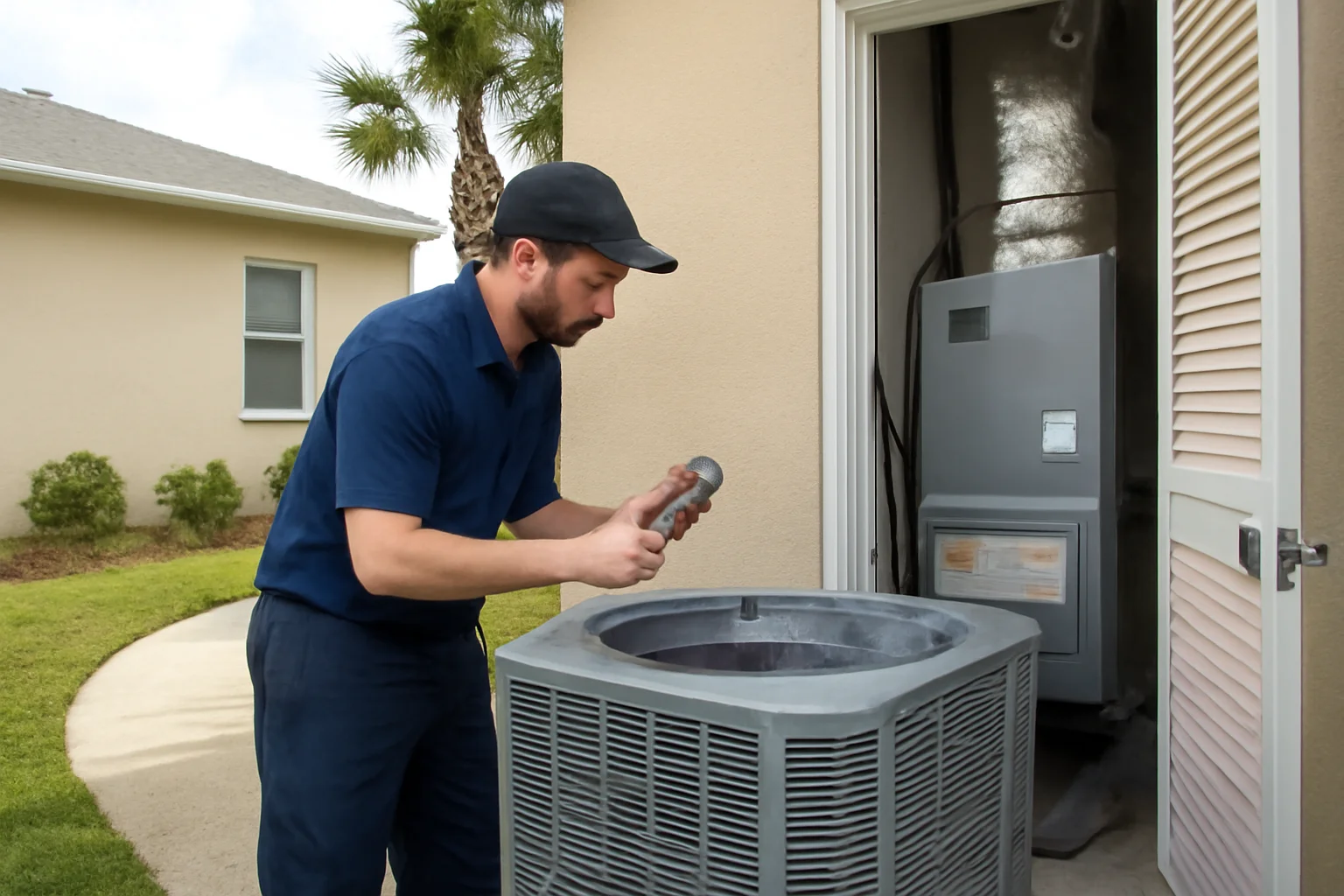
Fort Walton Beach homeowners feel the difference between “running” and “working well” on hot, humid days. A smart air conditioning inspection goes beyond a quick check. It looks at cooling performance, airflow, humidity control, refrigerant system health, and condensate drainage, especially in homes with different ages and construction styles.
If you are searching for air conditioning inspection in Fort Walton Beach, FL or trying to understand what an HVAC contractor should actually evaluate, this guide will help you know what to ask for and what problems to watch. It also connects the dots between local climate factors like Florida heat, coastal salt air, and the way ductwork and thermostats influence comfort.
Why Fort Walton Beach AC inspections need a humidity-first mindset
In Fort Walton Beach, the challenge is not only temperature. It is humidity. When indoor humidity stays too high, you can feel sticky discomfort even if the thermostat reads a lower temperature. Higher humidity also increases the risk of musty odors, dust buildup, and indoor air quality problems.
During an air conditioning inspection, a licensed HVAC technician should pay close attention to:
- Airflow across the indoor coil so the system can remove moisture efficiently
- Condensate drainage so water is removed safely and does not back up
- Refrigerant system performance to support proper cooling and dehumidification
- Thermostat operation so the system cycles and modulates in a way that matches indoor conditions
For older homes and newer builds alike, humidity control depends on airflow and coil conditions as much as it depends on the outdoor unit.
Older homes vs. newer homes: the inspection priorities shift
Florida homes in Okaloosa County can vary widely. Some have older duct layouts, different insulation levels, and older thermostat controls. Others have newer systems but may still have airflow or ductwork limitations. A good inspection treats the home like a system, not just a piece of equipment.
Older homes: airflow leaks and ductwork friction often show up first
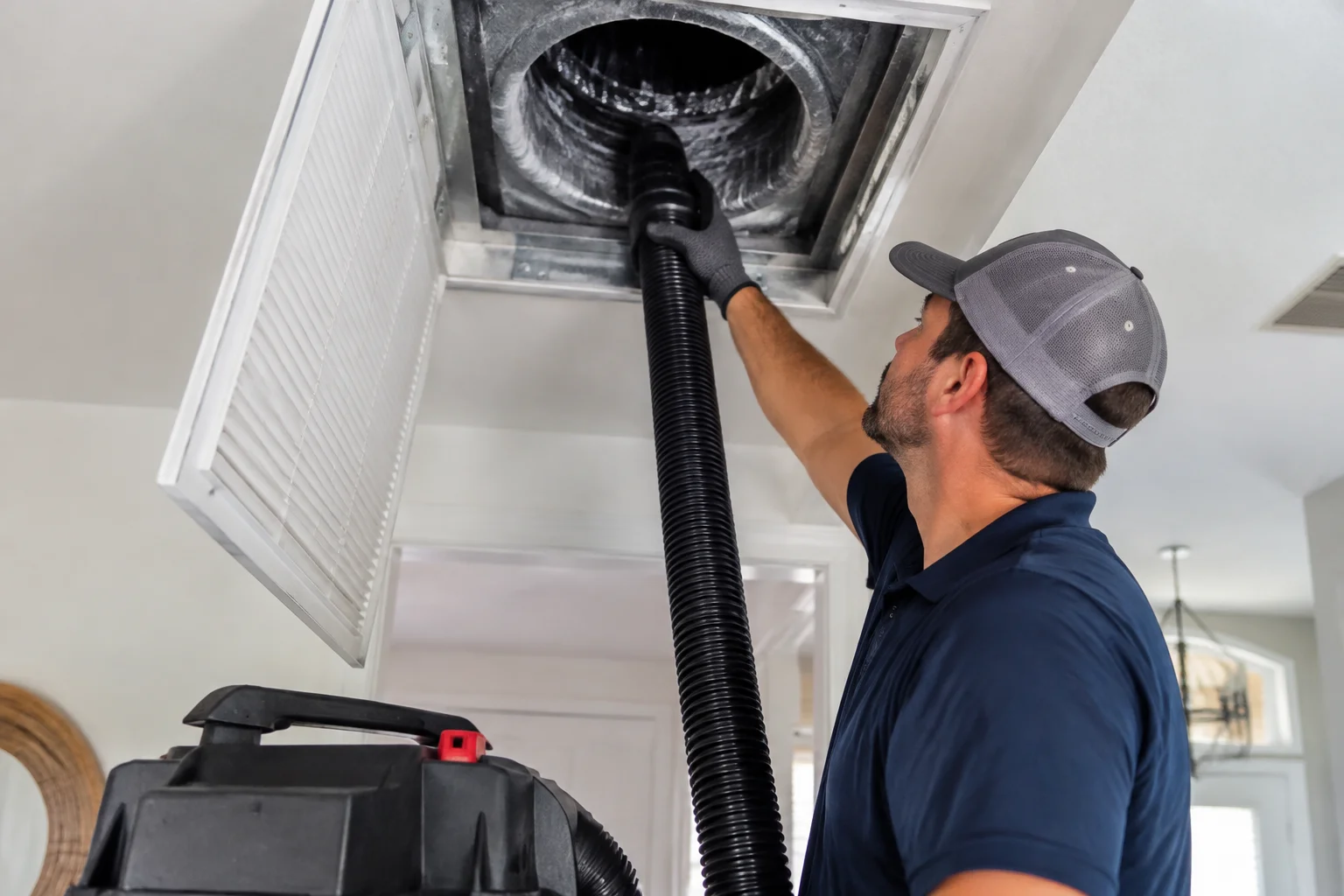
In older Fort Walton Beach homes, an AC system may struggle even if the outdoor unit runs. Common inspection findings can include leaky return ducts, restricted supply registers, or ductwork that does not balance well. If air cannot move properly, the indoor coil can become less effective at removing moisture.
That is why it is smart to ask about duct condition and airflow pathways. If you suspect uneven rooms, weak airflow, or repeated humidity complaints, consider pairing your inspection with duct-focused service such as ductwork services or duct sealing and Aeroseal services.
Newer homes: the system may be efficient, but comfort can still fail
Newer construction often includes better insulation and tighter envelopes. That can help, but it can also make airflow and thermostat settings more noticeable. If ducts are sized differently, if zoning is misconfigured, or if the thermostat does not match how the system is supposed to operate, you can still see symptoms like short cycling, uneven cooling, or humidity that does not drop.
If your home uses a multi-zone setup, an inspection should reflect that complexity. For example, homes with VRF multi-zone HVAC systems need careful evaluation of airflow, operation mode, and how indoor units deliver conditioned air.
Cooling comfort inspection checklist: what the technician should look for
A “smart” AC inspection connects symptoms to the components that create them. Here are the key areas homeowners should understand and ask about.
1) Outdoor unit condition in salt air and coastal exposure
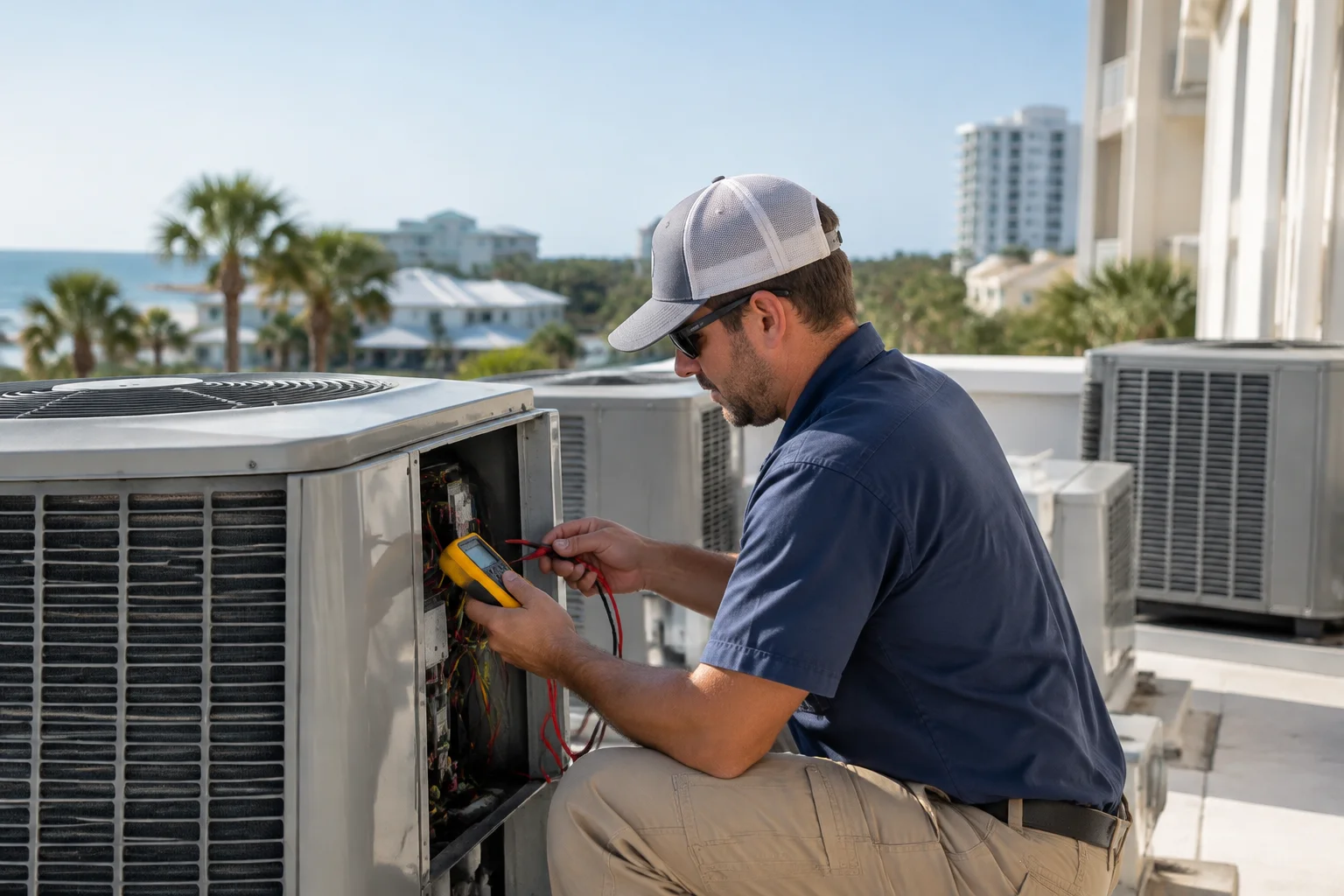
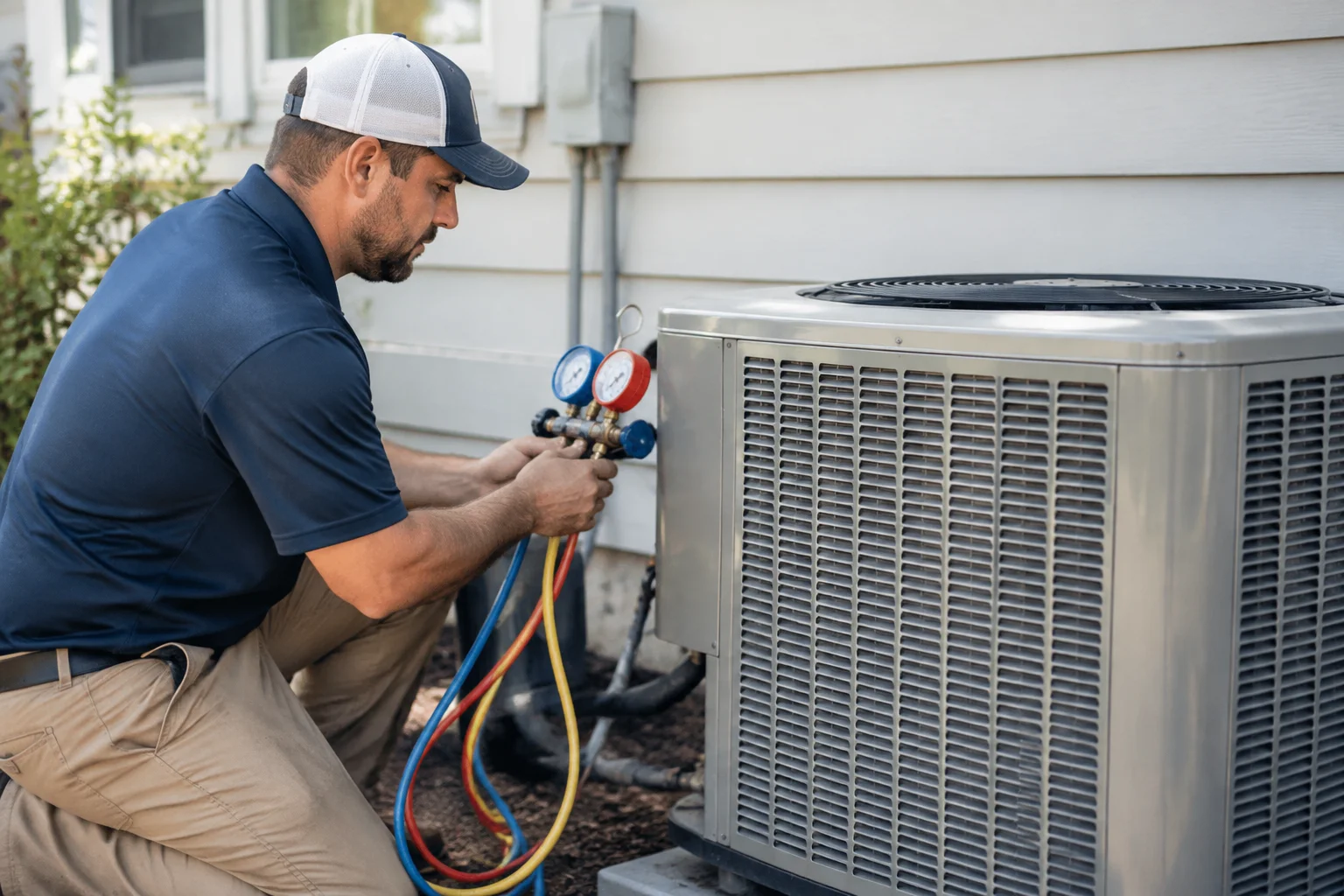
Fort Walton Beach is a coastal environment. Salt air can accelerate corrosion on outdoor components over time. During an inspection, a technician should visually check for corrosion, debris buildup, and signs of damage that can restrict airflow across the outdoor coil.
Restricted outdoor airflow can raise system stress, affect cooling performance, and contribute to poor efficiency. Even when the system turns on, it may not move heat the way it should.
2) Airflow measurement across indoor equipment
Airflow is one of the most important links between cooling and humidity. Low airflow can cause the indoor coil to not absorb heat and moisture effectively. High airflow can also create comfort issues if it prevents proper coil contact time.
A professional inspection should include evaluation of:
- Supply and return airflow balance
- Filter condition and filter fit
- Blower operation and duct restrictions
- Register airflow obstructions
If you have ever felt cold air blowing but still felt clammy indoors, that can point to a mismatch between cooling output and humidity removal.
3) Condensate drainage and moisture control
When an AC removes humidity, it produces condensate. In a healthy system, that water drains away safely. In less healthy systems, condensate drainage issues can lead to water overflow, wet surfaces, odor problems, and damage risks.
An inspection should check the condensate drain line, the drain pan area, and how the system handles moisture during operation. If you notice water around the indoor unit, recurring musty smells, or damp drywall near vents, those are strong reasons to schedule an inspection.
4) Refrigerant system performance and safe operating conditions
Cooling depends on the refrigerant system doing its job. However, homeowners should avoid trying to self-diagnose refrigerant levels. Refrigerant work requires proper equipment and safe procedures.
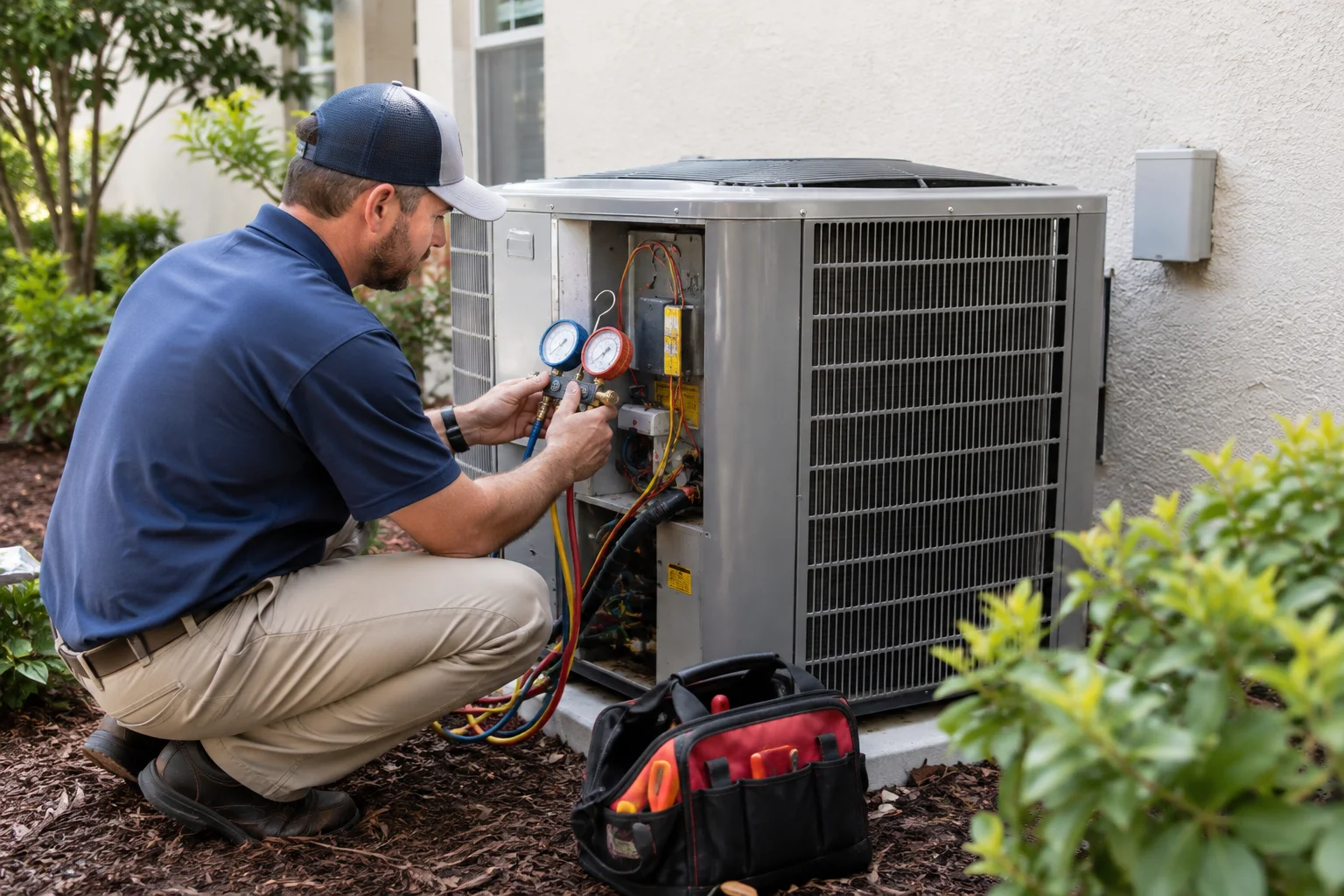
During an inspection, a licensed technician may review operating conditions and system performance indicators to understand whether the refrigerant system is likely operating within expected parameters. They should also consider airflow and coil conditions because refrigerant symptoms can overlap with airflow problems.
If your unit is struggling to cool, the correct next step is an in-person evaluation. A smart inspection should not jump straight to refrigerant “fixes” without verifying airflow, filters, coil cleanliness, and condensate drainage.
5) Thermostat behavior and control settings
Thermostats can influence comfort as much as the AC equipment itself. In Fort Walton Beach, where humidity and temperature swings can be frequent, thermostat settings and sensor placement matter.
A technician should check:
- Whether the thermostat accurately reads indoor temperature
- Whether the system is running in the correct mode for dehumidification needs
- How the system cycles, especially if it short cycles
- Whether the thermostat is compatible with the system configuration
If your AC runs constantly but humidity stays high, the issue may not be “low cooling.” It can be airflow restriction, thermostat control behavior, or duct imbalance.
Common AC inspection findings in Fort Walton Beach homes
Homeowners often describe symptoms before they describe equipment. Here are real-world patterns that show up during inspections in Okaloosa County.
Weak airflow from vents
Possible causes include clogged filters, blower issues, duct restrictions, or poor return air pathways. Weak airflow can reduce cooling and increase humidity because the indoor coil cannot work efficiently.
If multiple rooms feel weak while others feel fine, ductwork and register distribution may be involved. For homes where airflow problems are persistent, duct-focused solutions such as duct replacement may be part of the repair conversation after an inspection confirms the condition and layout.
Humidity that does not drop even when temperatures feel right
This symptom often points to airflow and coil performance. If air passes too quickly or too slowly, the system cannot remove moisture effectively. Condensate drainage problems can also worsen the situation by limiting moisture handling.
Humidity issues are especially noticeable during Florida’s humid stretches when indoor air quality can suffer. If you are looking into indoor air quality services near me, it is worth connecting IAQ goals to airflow, filtration, and humidity control rather than treating air quality as a separate problem.
Short cycling or “runs then stops quickly” behavior
Short cycling can be caused by thermostat settings, airflow restrictions, dirty coils, or system control issues. It can also increase wear on components over time and lead to inconsistent comfort.
Because symptoms overlap, the safest and most accurate path is an inspection that verifies airflow, drainage, and system operation in person.
Unusual odors or signs of moisture
Musty smells, damp areas, or visible moisture can indicate drainage problems or indoor coil moisture issues. In coastal environments, homeowners may also notice odor changes after storms or high humidity periods.
These are good reasons to schedule HVAC maintenance near me or an AC inspection promptly, especially before the peak summer weeks.
How prevention reduces emergency cooling concerns
When the AC fails in mid-summer, the problem is not only comfort. It can affect sleep, work, and safety for vulnerable household members. In Fort Walton Beach, emergency cooling concerns often spike during the hottest and most humid stretches.
Preventive HVAC maintenance helps lower risk by catching issues that can grow into major failures. During a professional inspection, technicians can identify early warning signs such as:
- Airflow limitations that will worsen as filters load and coils collect debris
- Condensate drainage issues that can lead to water damage
- Outdoor unit problems that can worsen as corrosion and debris build
- Control and thermostat behavior that leads to inefficient cycling
For homeowners searching for emergency AC repair near me, prevention is the best way to avoid needing emergency service. If you do need emergency cooling, a technician can still evaluate the system, but the goal is to have the system ready before the stress hits.
Energy use and comfort: why inspections matter for efficiency
In Florida heat, an AC system can run for long hours. When airflow is restricted or humidity control is off, the system may use more energy to chase comfort. That can show up as higher electric bills and inconsistent indoor temperatures.
Energy use is also affected by duct performance, insulation, and thermostat settings. That is why an inspection should consider more than equipment. It should consider how conditioned air moves through the home.
If you are comparing HVAC replacement near me or HVAC replacement options, an inspection can clarify whether the current system is being limited by airflow, ductwork, or control factors that might be addressed before replacement is considered.
What to do if you suspect a bigger issue: repairs vs. replacement
Homeowners often wonder whether they should repair or replace. The right answer depends on the full system condition and the cause of the comfort problem.
A professional inspection should help determine whether issues are likely repairable or whether system replacement is more appropriate. It should also consider whether the home’s ductwork and airflow conditions support the equipment you have now.
If you are hearing about HVAC repair near me options after a poor inspection, it helps to compare what is being evaluated. Repairs are most effective when the root cause is verified in person, not guessed.
For additional context on how small problems grow, homeowners may find it helpful to read Commercial HVAC Repair in Fort Walton Beach: What Property Owners Should Pay Attention To Before Small Problems Grow. While that article focuses on commercial systems, the principle of early detection applies to residential comfort too.
Questions to ask during an AC inspection in Fort Walton Beach
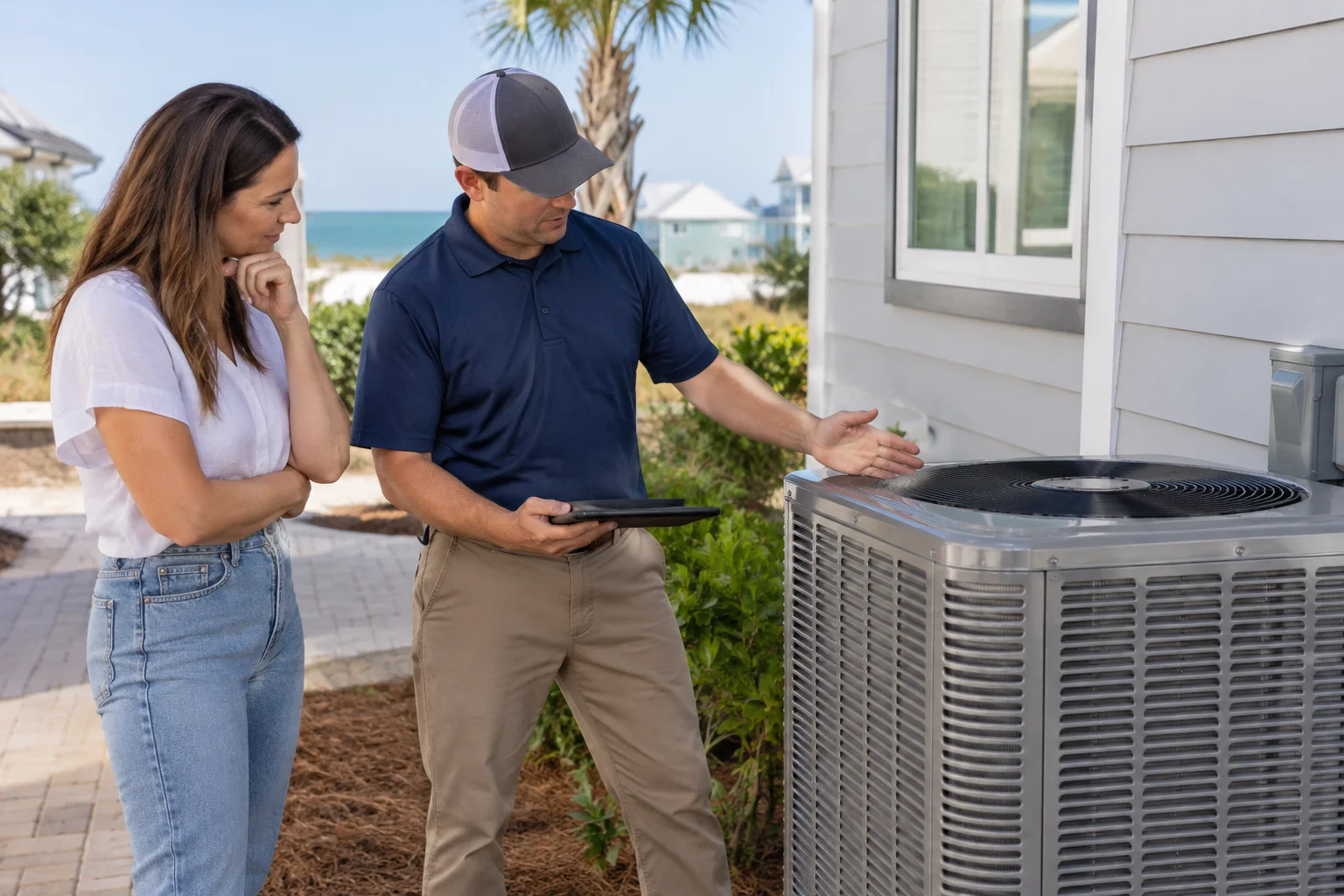
Bring your questions to the appointment so you can get a clear explanation of what the technician finds. These prompts work well for older and newer homes:
- “How is the system’s airflow right now, and does it match what the home needs?”
- “Is the condensate drainage working properly, and what did you check to confirm it?”
- “What did you find that could affect humidity control in our home?”
- “Are the ducts likely restricting airflow or causing uneven cooling?”
- “How does the thermostat control the system, and does it support dehumidification?”
- “What preventive steps would you recommend for Florida heat and salt-air exposure?”
If the technician avoids these topics or only performs a quick visual check, it may not be the thorough residential HVAC service near me you want.
Choosing A Superior Mechanical for air conditioning inspection in Okaloosa County
Fort Walton Beach homes face a mix of Florida heat, high humidity, and coastal salt air that can stress AC systems in unique ways. A Superior Mechanical focuses on careful evaluation of cooling performance, airflow, humidity control, and moisture management during inspections.
Whether you are planning routine AC tune up near me work, need air conditioning repair near me, or want to understand whether ductwork is limiting comfort, professional inspection matters. It helps ensure your system is not just running, but cooling effectively and safely.
For homeowners who want to understand how home maintenance habits can reduce breakdown risk, you may also like Fort Walton Beach Homeowners and the HVAC Problems That Can’t Wait.
When to schedule an inspection right away
Some issues can wait for regular service. Others should be handled promptly because they affect comfort, moisture, and system wear. Consider scheduling an air conditioning inspection if you notice:
- Humidity stays high despite the thermostat set to cool
- Airflow feels weak or uneven across rooms
- Water pooling, dampness, or recurring musty odors
- Short cycling or frequent on-off behavior
- Cooling performance that has steadily declined over weeks
- Any concerns after storms or extended high-humidity periods
If you are also trying to compare options for HVAC services across the city and Okaloosa County, start with the inspection. It creates a clear baseline for repair, maintenance, or planning for system replacement if needed.
Smart prevention plan for Fort Walton Beach homeowners
After the inspection, ask for a prevention plan that fits your home. A practical plan usually includes:
- Filter maintenance that matches your household needs and indoor air quality goals
- Scheduling routine HVAC maintenance before peak summer stress
- Monitoring humidity and comfort, not just temperature
- Addressing ductwork issues that limit airflow and dehumidification
- Keeping outdoor units clear of debris and watching for corrosion or airflow restrictions
If you are planning duct improvements, it can be helpful to review How Fort Walton Beach Weather and Daily Wear Shape Commercial HVAC Repairs Over Time to see how consistent maintenance reduces wear. The same logic applies to residential systems.
Find Air Conditioning Inspection in Fort Walton Beach, FL
If you need Air Conditioning Inspection in Fort Walton Beach, FL, visit our local service page or contact A Superior Mechanical today.
Map of Fort Walton Beach, FL
Frequently Asked Questions
What does an AC inspection in Fort Walton Beach usually include?
A thorough inspection typically covers cooling performance, indoor airflow, thermostat operation, condensate drainage, and an evaluation of the refrigerant system indicators through safe, appropriate checks. It should also include a visual assessment of the outdoor unit and airflow pathways in a coastal environment.
Why is humidity control such a big deal in Fort Walton Beach?
Florida humidity can make a home feel uncomfortable even when the temperature is set correctly. Proper airflow and coil performance help the system remove moisture, and working condensate drainage prevents moisture-related problems. If airflow or ductwork is off, humidity often stays high.
Can poor ductwork cause my AC to cool but not dehumidify?
Yes. If supply and return airflow are unbalanced or ducts are restricted, the indoor coil may not remove moisture effectively. Uneven rooms, weak airflow, and persistent clamminess are common clues that ductwork or airflow pathways need attention.
Should I try to adjust the thermostat or refrigerant myself?
No. Thermostat settings can affect cycling and comfort, but refrigerant work requires professional tools and safe procedures. An in-person HVAC inspection is the right way to determine the cause before making any changes.
What signs mean I should schedule an inspection soon rather than waiting?
Schedule promptly if you notice high humidity despite cooling, weak or uneven airflow, musty odors, water around indoor equipment, short cycling, or a steady decline in cooling performance. These issues can affect comfort, indoor air quality, and system wear.
Related Articles
- What Fort Walton Beach Homes Can Learn From Commercial HVAC Maintenance
- Commercial HVAC Repair in Fort Walton Beach: What Property Owners Should Pay Attention To Before Small Problems Grow
- Fort Walton Beach Homeowners and the HVAC Problems That Can’t Wait
- How Fort Walton Beach Weather and Daily Wear Shape Commercial HVAC Repairs Over Time
Photo Gallery