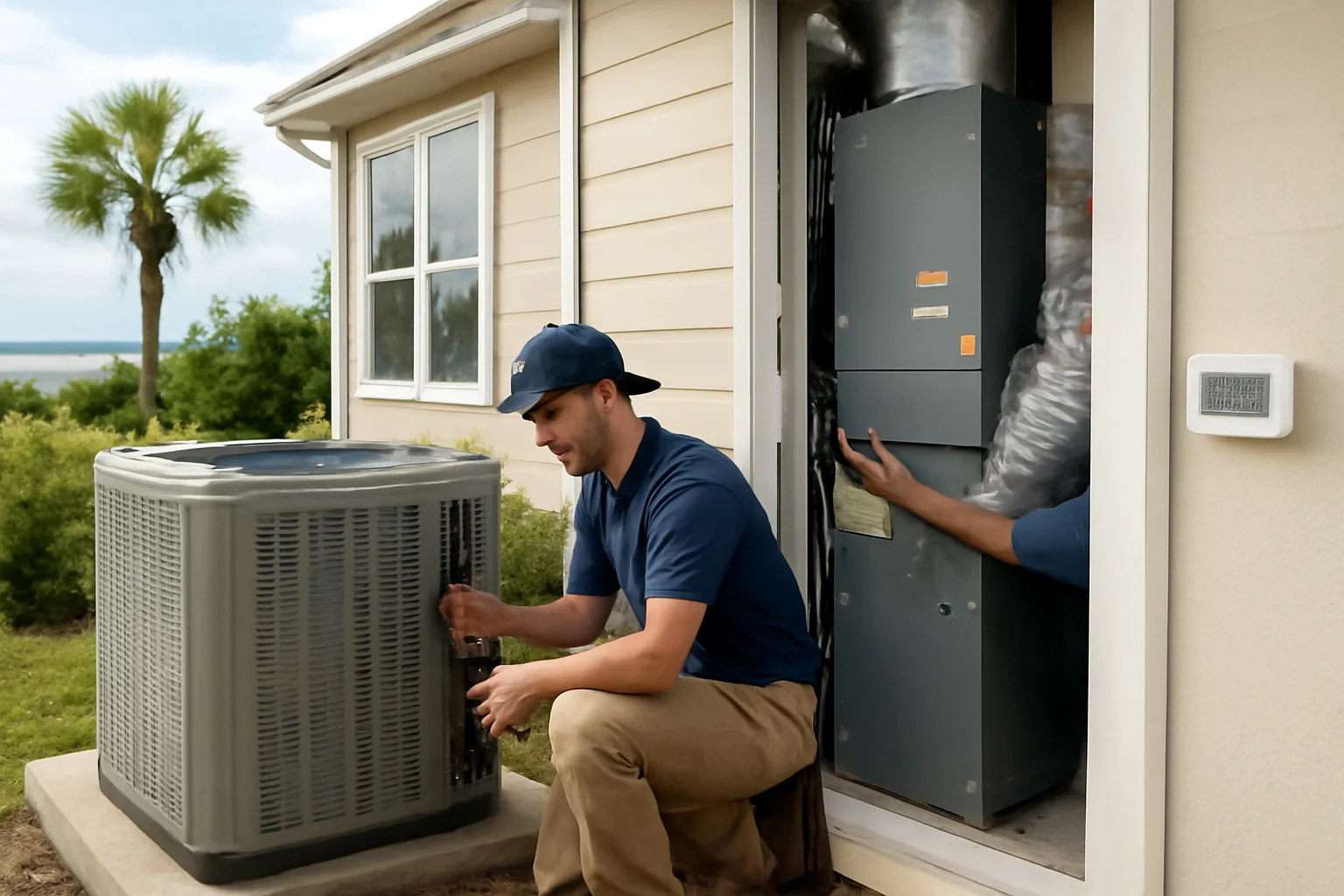
Seaside, Florida is beautiful, but it is also tough on HVAC systems. Salt air, high humidity, and long stretches of warm weather can strain heating and cooling components, especially in older homes with aging ductwork and older thermostats. Newer construction is not automatically immune either, because improper airflow balance, mismatched equipment, or poorly configured controls can still drive up wear and lead to emergency cooling concerns.
If you want smarter heating control without surprises, the best approach is a mix of smart thermostat settings, zoning and control optimization, careful attention to airflow, and preventive HVAC maintenance. Below are practical tips that work for both older and newer homes in Seaside and Walton County, along with guidance on what to watch for and when to bring in a professional licensed HVAC contractor near me.
Why heating control systems take a beating in Seaside, FL
Heating control systems are more than a thermostat screen. They coordinate how your HVAC equipment runs, how quickly it responds to temperature changes, and how consistently it maintains indoor comfort. In Seaside, several local factors make control performance and system health especially important.
Humidity and Florida heat change how systems cycle
Even when you are mostly thinking about cooling, humidity affects indoor temperature feel and system cycling. When the thermostat and control strategy do not account for real indoor conditions, systems can run longer than needed or short cycle. Short cycling is stressful for refrigerant systems because compressors and related components do not get time to stabilize between starts.
Salt air can affect airflow paths and system cleanliness
Salt air does not “break” HVAC overnight, but it can contribute to corrosion over time. It also makes clean airflow paths more important. When return pathways are restricted or ductwork leaks allow unconditioned air to mix with conditioned air, heating and cooling performance can drift. That puts extra demand on the system and can increase the chance of refrigerant system strain.
Older homes may have uneven comfort and outdated controls
Many older Seaside homes have legacy thermostat wiring, inconsistent ductwork sizing, or rooms that were never fully balanced. Heating control systems that were installed years ago may not coordinate well with how your current equipment operates. Newer homes can have their own issues, like zoning that is not tuned or automation that is configured too aggressively.
Smart thermostat settings that help prevent repair headaches
Smart thermostats can improve comfort and energy use when they are set up correctly for your home. The goal is to reduce unnecessary cycling and maintain stable indoor conditions, not to chase every small temperature change.
Use schedules that match how your home actually lives
For vacation rentals and second homes, schedules often get changed frequently. That can lead to abrupt temperature swings. Instead of setting very large temperature jumps and expecting instant comfort, use gradual transitions. Sudden changes force heating or cooling to work at higher demand, which can increase wear on motors and compressors and raise the odds of system faults.
Adjust “smart recovery” or learning features with local conditions in mind
Many thermostats include recovery or learning features. In Florida’s humidity, the difference between “setpoint” and “felt comfort” can be bigger than you expect. If the system starts early and runs longer than necessary, it can lead to higher energy use and more run time. A Superior Mechanical can help you evaluate how your thermostat’s behavior matches your heating control needs and airflow realities.
Don’t ignore humidity comfort targets
Thermostats that focus only on temperature can leave humidity unmanaged. In humid climates, high indoor moisture can increase the load on cooling and can also make heating feel less responsive, causing repeated thermostat adjustments. If you are noticing persistent dampness or musty smells, prioritize indoor air quality and moisture management. Consider pairing heating control with whole home dehumidifiers when appropriate, especially in homes where humidity keeps returning after short cooling cycles.
If you are exploring options, you can read more about how moisture and comfort connect at Whole Home Dehumidifiers.
Zoning and control strategies for older and newer Seaside layouts
Zoning can be a game changer for comfort, but only when it is designed for your ductwork and tuned for your equipment. Improper zoning control is a common pathway to costly HVAC repairs because it can create frequent changes in airflow and system demand.
Older homes: prioritize airflow balance before expecting better control
In older Seaside homes, rooms often have different duct runs, older dampers, or leaky returns. If zoning is installed without addressing airflow distribution, some zones can become starved of air while others receive more than they should. Starved airflow can reduce heat transfer efficiency and increase the likelihood of condensate drainage problems. It can also make temperature sensors “lie” because they are measuring a space that is not receiving consistent conditioned airflow.
Newer homes: confirm the system and dampers work as a coordinated system
In newer construction, zoning is sometimes added during remodels or through automation upgrades. When dampers, thermostats, and equipment controls are not coordinated, you can end up with delayed responses, uneven temperatures, or repeated cycling. A professional HVAC contractor near me can verify that the zoning behavior matches how your air handler and HVAC equipment are meant to operate.
Watch for symptoms of airflow problems
Whether your system is older or newer, airflow issues show up in patterns. Look for rooms that never reach temperature, cold spots near vents, or areas that feel overly warm. If you also notice unusual noise during cycling or air that feels weak, it may be a ductwork or duct repair issue rather than a thermostat problem.
Airflow, ductwork, and condensate drainage: control system health depends on them
Heating control systems can only perform well when the HVAC system is delivering airflow correctly. In Seaside’s humidity, condensate drainage is particularly important for cooling comfort and overall equipment longevity.
Ductwork leaks and blockages can force the system to “work harder”
When ductwork leaks allow humid outdoor air or hot attic air to enter the system, your conditioned air can lose effectiveness. That means the heating and cooling equipment may run longer to maintain setpoints. Over time, this increases wear and can contribute to refrigerant system stress. If you are searching for duct cleaning near me or duct repair near me, treat it as part of a broader comfort and control strategy, not a standalone fix.
For homeowners who want to improve comfort and system performance together, it can help to explore Heating Services and Air Conditioning Systems for inspection and repair options.
Condensate drainage issues can show up as comfort problems first
When condensate drainage is slow or restricted, moisture can back up and affect indoor air quality. You might notice water around equipment, musty odors, or a decline in cooling performance. Even though condensate drainage is most visible during humid months, the heating control strategy can still be affected because the overall system performance changes. If you suspect a drainage issue, do not try to guess remotely. An in-person evaluation is the safest route.
Air filters and returns matter for both comfort and control accuracy
Dirty filters can reduce airflow and cause temperature instability. When airflow drops, your system may cycle more often, and the thermostat can trigger more frequent adjustments. That is how a small maintenance miss can become a larger HVAC repair concern.
Indoor air quality and heating control: reduce callbacks and protect comfort
Indoor air quality is closely tied to heating control performance in humid coastal climates. When air quality declines, homeowners often turn up the thermostat, change schedules, or request more frequent air conditioning service near me. That can unintentionally increase system cycling.
Consider IAQ testing if comfort issues keep returning
If you are repeatedly dealing with uneven temperatures, odors, or allergy-like symptoms, indoor air quality testing can help identify root causes rather than masking them. A Superior Mechanical can guide you toward appropriate steps based on your home’s conditions.
You can also read Why Seaside Homes Benefit From Indoor Air Quality Testing Before Comfort Issues Spread for a deeper look at how moisture, airflow, and filtration connect.
Humidity management supports better control outcomes
When humidity is controlled, your thermostat can maintain comfort with fewer adjustments. That reduces the chance of unnecessary calls for heat or cooling and helps protect refrigerant system components by keeping cycles more stable.
Energy use and “smart” behavior: what to monitor
Smart heating control can reduce energy waste, but only if the system is behaving efficiently. In Seaside, where humidity and heat can drive higher seasonal demand, it is worth watching for control behaviors that indicate inefficiency.
Look for frequent short cycles
Short cycling is a common sign that airflow, thermostat settings, or control logic is not matching the system’s real capacity. If your equipment starts and stops repeatedly over a short period, it can increase wear and raise the chance of faults.
Notice if the system runs longer than expected
If you regularly see long run times to reach setpoints, airflow restrictions or ductwork issues may be contributing. It can also point to equipment performance problems that require an HVAC repair near me evaluation. Do not assume it is only a thermostat setting.
Track comfort complaints by room, not just by thermostat
For zoned homes, comfort complaints often cluster in specific areas. That pattern can help identify whether the issue is control related, duct related, or tied to airflow. When homeowners can describe which rooms are affected, it helps technicians focus on the right inspections.
Preventive HVAC maintenance that supports heating control systems
Smart thermostats and zoning can only do their job when the HVAC equipment is maintained. Preventive HVAC maintenance is one of the most practical ways to avoid costly HVAC repairs in Seaside.
Schedule seasonal checkups that include control and airflow review
A good maintenance visit for heating control systems should include more than replacing filters. It should cover airflow and ductwork concerns, thermostat operation, and basic system health checks. This is especially important if you have a heat pump, multi-stage equipment, or zoning dampers that can get out of alignment over time.
If you are dealing with heating control as part of overall comfort, it can be helpful to review How Better HVAC Maintenance Supports Heating Control Systems in Alys Beach to see how maintenance routines support better control outcomes in nearby coastal conditions.
Don’t overlook refrigerant system symptoms
Refrigerant systems are designed to operate within specific parameters. You should not attempt to diagnose refrigerant issues yourself. However, homeowners can watch for symptoms like persistent performance loss, unexpected cycling patterns, or temperature inconsistencies that do not match thermostat settings. These are reasons to schedule an air conditioning inspection near me or heating system evaluation as appropriate.
Make sure condensate drainage is clear before peak humidity
In Seaside, humidity can rise quickly. Preventive maintenance should include checks related to condensate drainage and moisture management so your system does not struggle during the most demanding weeks.
Common heating control problems in Seaside homes
Here are realistic issues homeowners often encounter when trying to manage heating and cooling with older and newer controls.
Thermostat settings that do not match system behavior
A thermostat may be set for a comfort schedule that does not align with how the HVAC system actually delivers airflow. The result is repeated adjustments and higher energy use. A professional can help you tune settings for your specific home.
Zoning that causes uneven temperatures and repeated cycling
When zones open and close too frequently or when dampers do not operate smoothly, the system can cycle more than necessary. Over time, this can contribute to component wear.
Sensor placement and “false readings”
Thermostats and remote sensors can be affected by direct sun, drafts, or placement near heat sources. When a sensor reports a temperature that does not reflect the actual living space, the heating control system can make the wrong call.
Airflow restrictions that appear as control issues
Some homeowners assume the thermostat is the problem because the symptom is temperature inconsistency. But weak airflow can be caused by dirty filters, duct restrictions, or ductwork leaks. That is why airflow checks belong in any heating control troubleshooting plan.
How to avoid emergency AC repair situations during Florida’s hottest stretches
Emergency cooling concerns are not rare in the Gulf Coast area. Heating control systems can help prevent some failures by keeping operation stable, but they cannot replace good planning and maintenance.
Use your thermostat to reduce stress, not to mask failure
If the system struggles to maintain temperature even when settings are reasonable, treat it as a signal. Adjusting setpoints repeatedly can increase cycling without fixing the underlying issue.
Prepare for power and comfort disruptions
Seaside homeowners often rely on HVAC for comfort during heat and humidity spikes. If you are looking for practical preparedness steps, read Keeping Seaside Homes Ready for HVAC Emergencies.
Know when to stop troubleshooting and call for HVAC repair
Call a professional when you notice persistent temperature swings, water around equipment, repeated error codes, or a sudden drop in airflow. These can indicate issues beyond thermostat configuration. If you are searching for air conditioning repair near me or HVAC repair near me because comfort has become unreliable, schedule an evaluation promptly.
Older vs. newer homes: smart upgrades that actually help
Upgrades can reduce repair risk, but only when they fit the home. The best plan depends on your current equipment, ductwork, and comfort goals.
Older homes: verify wiring, zoning compatibility, and duct performance
Older thermostat wiring or control compatibility issues can cause erratic operation. Pair that with uneven ductwork and you can get frequent cycling and comfort complaints. A licensed HVAC contractor near me can assess control wiring and confirm the system can respond as expected.
Newer homes: prioritize commissioning and control tuning
Even with modern equipment, control strategies can be misconfigured. If you recently had a heat pump service or installation, or you are considering a new AC installation near me, ask whether the system was properly commissioned for your specific airflow and zoning layout. Proper tuning helps prevent early wear caused by inefficient operation.
If you are exploring heat pump installation or ductless systems
Homes that need efficient comfort solutions may consider heat pump installation near me or ductless mini split installation near me. These systems still depend on correct airflow pathways, proper control logic, and indoor comfort goals. A professional evaluation ensures the control setup matches the system design.
Choosing A Superior Mechanical for heating control systems in Seaside
Heating control systems are where comfort meets system health. In Seaside, smart thermostats, zoning controls, automation, and airflow all interact with refrigerant systems, condensate drainage, and indoor air quality. When one part is out of sync, the rest can compensate, leading to extra wear and higher repair risk.
A Superior Mechanical provides heating control systems in Seaside, FL for homeowners, vacation rentals, and commercial properties. If you want help tuning your thermostat strategy, improving zoning performance, addressing ductwork concerns, or planning preventive HVAC maintenance, start with our local service area information at /service-areas/walton-county/seaside/heating-control-systems-ssfl and learn more about our coverage across the region at /service-areas/walton-county/seaside and /service-areas/walton-county.
If you are comparing options for comfort and reliability, we can also help connect your heating control goals to the right equipment and service path, including Indoor Air Quality Services when moisture and air quality are part of the issue.
FAQ: heating control and HVAC repair prevention for Seaside homes
Homeowners in Seaside often ask similar questions about how smart controls relate to system repairs. Use the FAQs below as a quick guide, then schedule an in-person evaluation if you notice symptoms that are affecting comfort or reliability.
Find Heating Control Systems in Seaside, FL
If you need Heating Control Systems in Seaside, FL, visit our local service page or contact A Superior Mechanical today.
Map of Seaside, FL
Frequently Asked Questions
Can a smart thermostat prevent HVAC repairs in a Seaside home?
A smart thermostat can reduce unnecessary cycling when it is configured correctly for your home’s airflow, zoning, and comfort needs. It cannot replace preventive HVAC maintenance or fix underlying ductwork, airflow, or equipment issues. If comfort problems persist, schedule a professional HVAC evaluation.
Why does my home feel uneven even when the thermostat setpoint is correct?
Uneven comfort is often tied to airflow and ductwork, sensor placement, or zoning that is not tuned. In humid climates like Seaside, humidity and air distribution can also affect how rooms feel. A technician can inspect airflow pathways and control operation so the heating control system matches real conditions.
What HVAC symptoms suggest a problem beyond thermostat settings?
Look for persistent temperature swings, weak airflow, repeated short cycling, water near equipment, musty odors, or system error codes. These can point to airflow restrictions, condensate drainage issues, or refrigerant system problems that require an in-person assessment.
How often should Seaside homeowners schedule preventive HVAC maintenance for heating control systems?
Most homeowners benefit from seasonal preventive HVAC maintenance, plus filter and airflow checks as needed. If you have zoning, a heat pump, or frequent humidity issues, it is especially important to keep equipment and controls operating as designed.
Related Articles
Photo Gallery