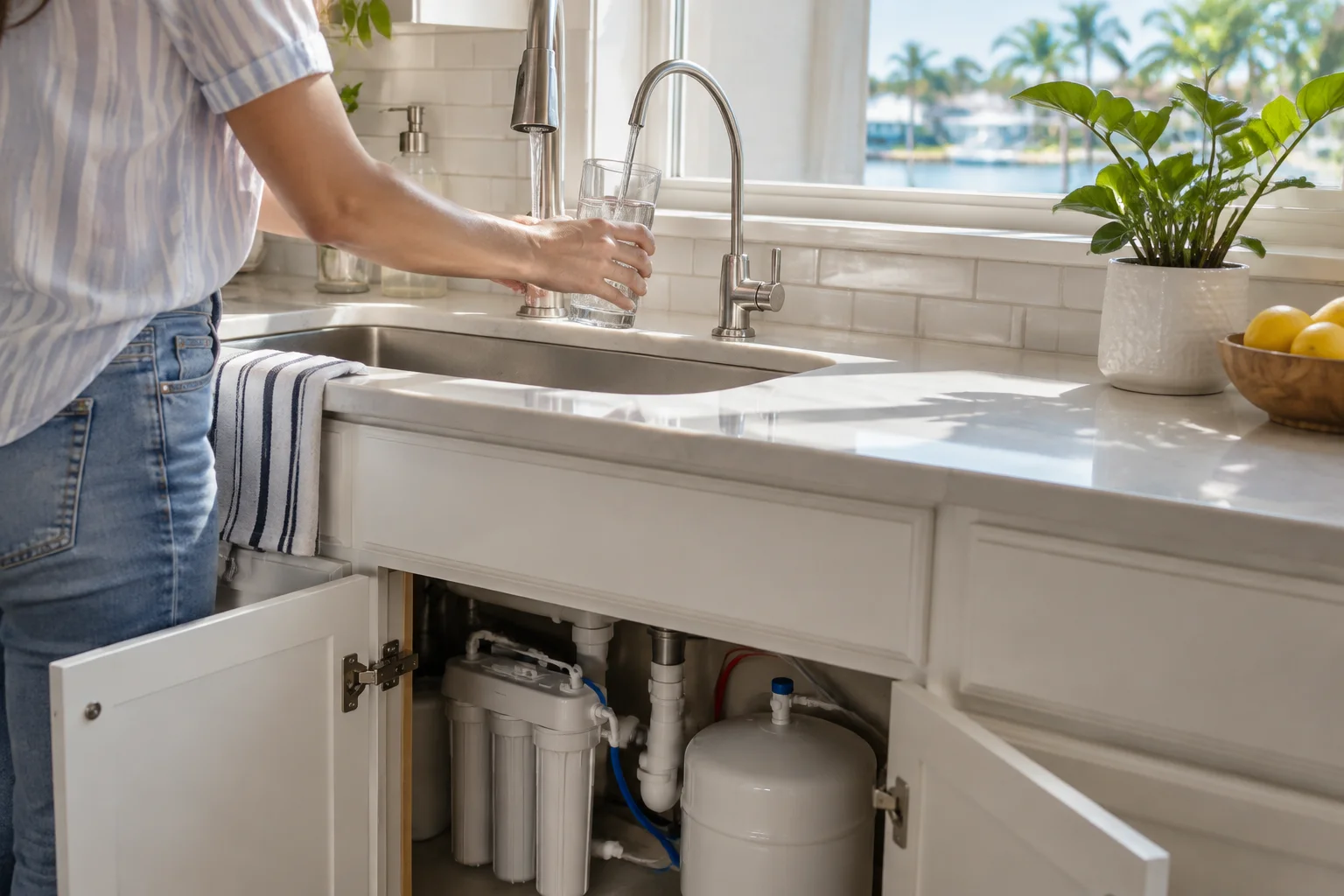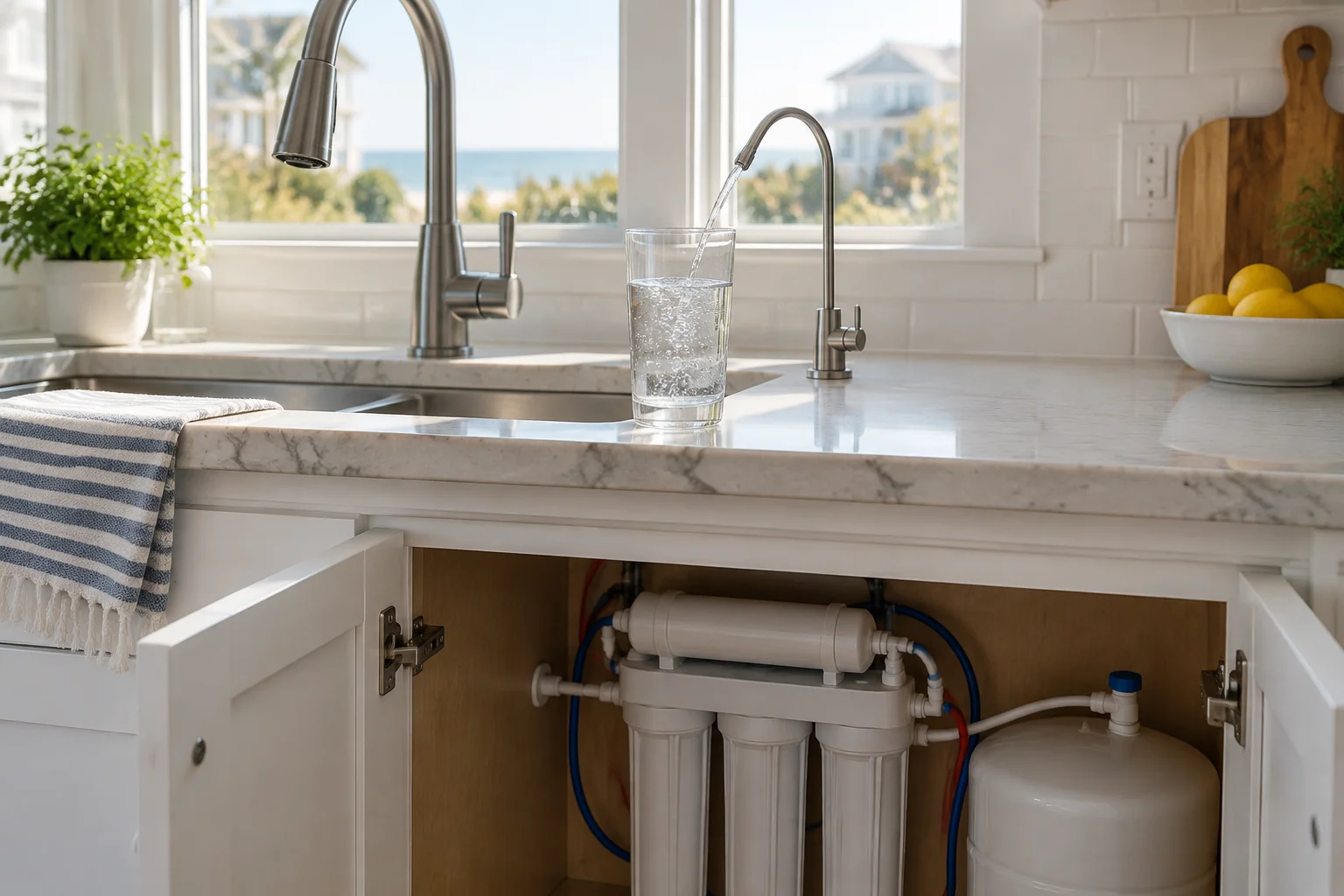
Lower Grand Lagoon homes rely on water for everything from morning coffee and cooking water to showering, laundry, and clean dishes. When hard water is part of the mix, it can leave scale on fixtures and make water feel harsher on skin and hair. Many homeowners also add reverse osmosis (RO) to improve drinking and cooking water. But even an RO drinking water system can start underperforming when filters clog, membranes age, or the system needs service.
This guide walks through the most common water quality warning signs connected to reverse osmosis systems, why they happen in Lower Grand Lagoon, and what you can do right away. It also covers when to call a professional for reverse osmosis installation near you or RO repair so your clean water systems stay dependable.
Why Lower Grand Lagoon water can be tough on RO and everyday plumbing
Hard water is the usual culprit behind the “you can see it” problems around Lower Grand Lagoon. Mineral content, mainly calcium and magnesium, tends to show up as scale buildup around faucets, showerheads, and plumbing. Over time, that scale can affect how water moves through fixtures and how well appliances perform. It can also make it harder for any filtration system to keep up, especially if the goal is better tasting drinking water and consistent RO drinking water system performance.
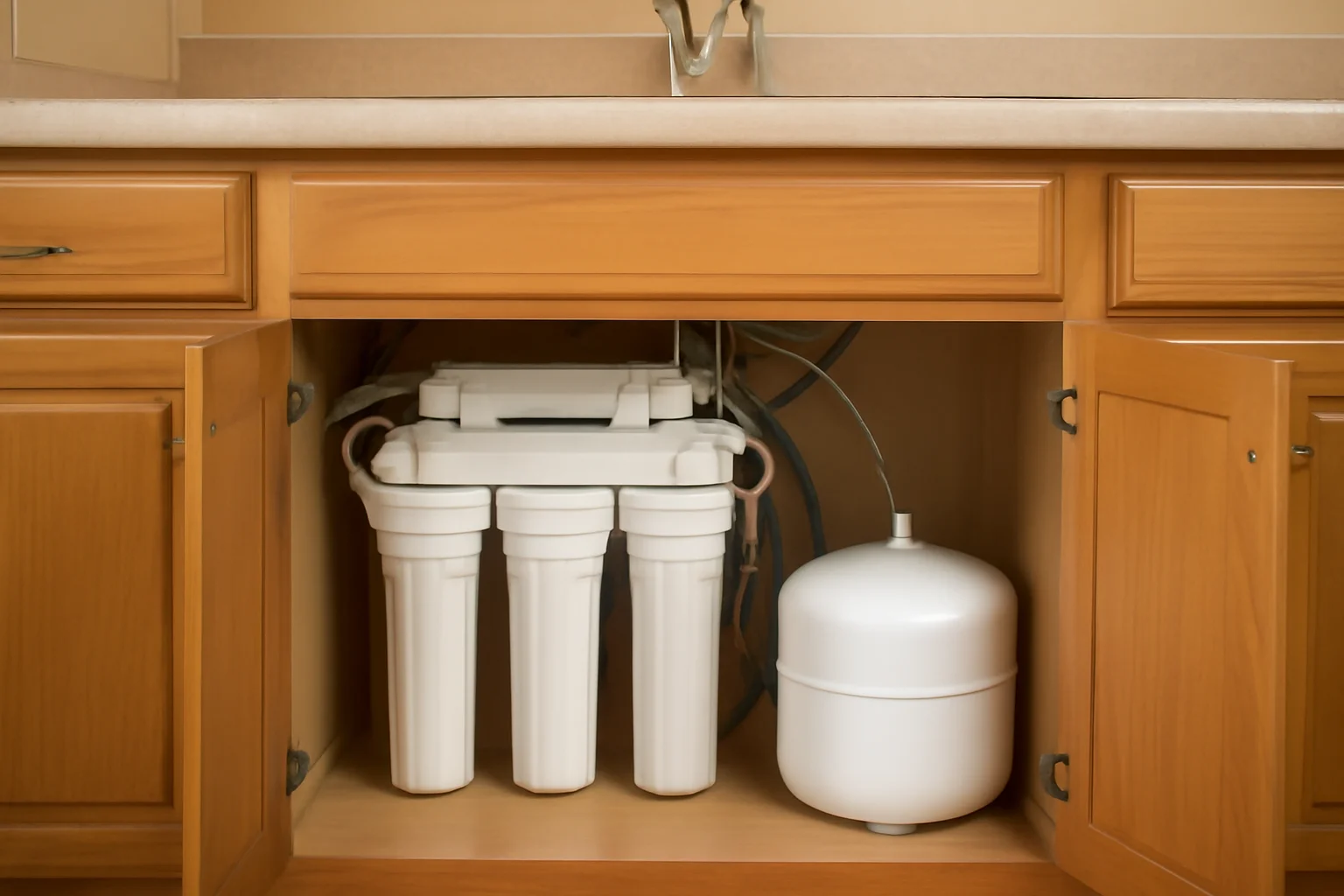
In homes that use reverse osmosis, the RO system is designed to remove many dissolved contaminants for drinking and cooking. But RO relies on a sequence of components working together. If pre-filters are clogged from sediment or minerals, the RO membrane may not get the water it needs. That can lead to taste issues, cloudy ice cubes, and visible sediment or discoloration concerns at the tap.
Warning sign #1: Metallic, chlorinated, or unpleasant taste from the RO tap
One of the first things homeowners notice is a change in flavor. If you are used to better tasting drinking water and then suddenly notice a metallic, chlorinated, or unpleasant taste, it often points to a filtration problem. Common causes include:
- Carbon filter depletion: The carbon stage helps address chlorine taste and odor. When that media is used up, chlorine taste in water can come through.
- RO membrane aging: As membranes age, rejection rates drop, and water quality can drift.
- Low pressure or flow issues: RO systems need adequate water pressure and correct operation to perform as designed.
In kitchen scenes across Lower Grand Lagoon, the taste shift shows up fast. Coffee water may taste “off,” and filtered water for coffee and cooking may no longer produce the flavor you expect. If you are seeing poor tasting coffee water even though you have RO, treat it as a warning sign, not a normal variation.
Warning sign #2: Cloudy ice cubes or hazy drinking water
Cloudy ice cubes can be confusing, especially if your RO water looks fine in the glass. But haze is a real clue. Cloudy ice cubes can be caused by dissolved gases and mineral changes, but they can also show up when the system is not filtering consistently or when there is contamination in the storage tank or plumbing line.
Hard water spots on glass and dishes can also become more noticeable when water is not being properly conditioned. If you notice haze plus scale buildup, it suggests the system may be struggling to remove minerals or that pre-filtration is not keeping up.
Warning sign #3: Visible sediment, discoloration, or odor concerns
RO systems are not “set it and forget it” forever. When a filter housing cracks, a seal fails, or a membrane is exhausted, you may see:
- Visible sediment: Small particles or grit in the glass.
- Discoloration: Off-white, yellow, or brown tint in the drinking water line.
- Odor concerns: A musty or “stale” smell that returns after the system has been sitting.
For homeowners, this can show up during a family kitchen moment like filling a pot for pasta or pouring water for a child’s cup. If you are concerned about sediment, discoloration, or odor, stop using the RO tap for drinking and cooking until it is inspected. Water treatment near me searches often start after these kinds of changes appear.
Warning sign #4: Dry skin or dull hair after bathing
RO is primarily focused on drinking and cooking water. Bathing water quality depends on the water entering your home. When hard water is present, mineral deposits can leave residue on skin and hair. That residue can make skin feel dry and hair look dull after bathing.
Even if your RO drinking water tastes great, you may still see the effects of hard water on the rest of the home. If you notice dry skin or dull hair and you also have scale buildup around showerheads and fixtures, it may be time to consider water softening or whole home water filtration as a complementary approach.
Warning sign #5: Soap that does not lather or rinse well
Another classic hard water sign is soap performance. If bar soap or body wash does not lather well and rinses slowly, minerals are interfering with the cleaning process. This is especially common when scale buildup around fixtures has been forming for months.
In Lower Grand Lagoon homes, that can mean laundry that feels stiff, residue that clings to towels, and a shower that never feels fully “clean.” While RO can help with drinking water, it will not replace whole home water softener benefits for bathing and laundry.
Warning sign #6: Hard water spots on glass, dishes, and fixtures keep coming back
Hard water spots on glass and dishes are more than a cosmetic issue. They are proof that minerals are leaving deposits as water evaporates. If you regularly wipe away spots but they return quickly, it suggests hard water levels remain high.
Look closely at faucets, showerheads, and plumbing connections. Scale buildup can narrow flow paths and make appliances work harder. When hard water treatment becomes part of protecting fixtures and appliances, maintenance costs typically drop because equipment is not fighting mineral buildup.
Warning sign #7: Appliances wear out faster or water pressure seems off
When scale forms in water lines and appliance components, appliances tend to wear out faster. Homeowners often notice:
- Shorter lifespans for water heaters or parts exposed to mineral-rich water
- Reduced performance in dishwashers and coffee makers
- Changes in flow, especially at showerheads
Reverse osmosis systems can also be affected by clogged pre-filters, which may create operational stress. If your RO system is struggling, you might notice slower flow at the RO tap or inconsistent output. That is a strong reason to schedule RO filter replacement and system checks.
Warning sign #8: Poor tasting coffee and cooking water despite RO
For many Lower Grand Lagoon families, the RO tap is the go-to source for filtered water for coffee and cooking. When RO performance drops, the change is often noticeable in the kitchen first. Poor tasting coffee water can come from:
- Carbon filter exhaustion, bringing back chlorine taste in water
- Membrane aging, allowing more contaminants to pass
- Biofilm or contamination in lines if the system sits unused
If your cooking water tastes “flat” or unpleasant, do not just switch brands of coffee or try different recipes. Start by checking RO system status and filter life, then consider a professional inspection for reverse osmosis installation near me style service. Better water for drinking and cooking is often the difference between “good enough” and truly great results at home.
Simple habits that help keep RO water cleaner
There are a few practical habits homeowners can use to protect RO drinking water system performance between service visits.
1) Track filter replacement schedules
RO systems are designed around routine filter replacement. Pre-filters protect the membrane. Carbon filters help with taste and odor. Membranes need replacement after a certain service life. If you wait too long, the system can still produce water, but quality often declines.
2) Run the RO tap briefly after long periods of non-use
If the system has sat unused for days, draw a small amount of RO water before filling a glass for drinking or making coffee. This can help reduce stale water from the storage tank or line.
3) Keep the area under the sink dry and inspect for leaks
Moisture under the cabinet is a red flag for seals, fittings, or drainage issues. Even small leaks can cause scale and contamination risks.
4) Use the right water source for the RO system
RO systems depend on stable incoming water quality and pressure. If your home has ongoing plumbing issues or water pressure swings, RO performance can suffer. Whole home water filtration near me is sometimes recommended when incoming water sediment is consistently high.
5) Pay attention to how your water looks and tastes
Cloudy ice cubes, metallic taste, or visible sediment are not “wait and see” problems. They are actionable indicators that your system needs attention.
How AO Smith water filtration fits into cleaner water planning
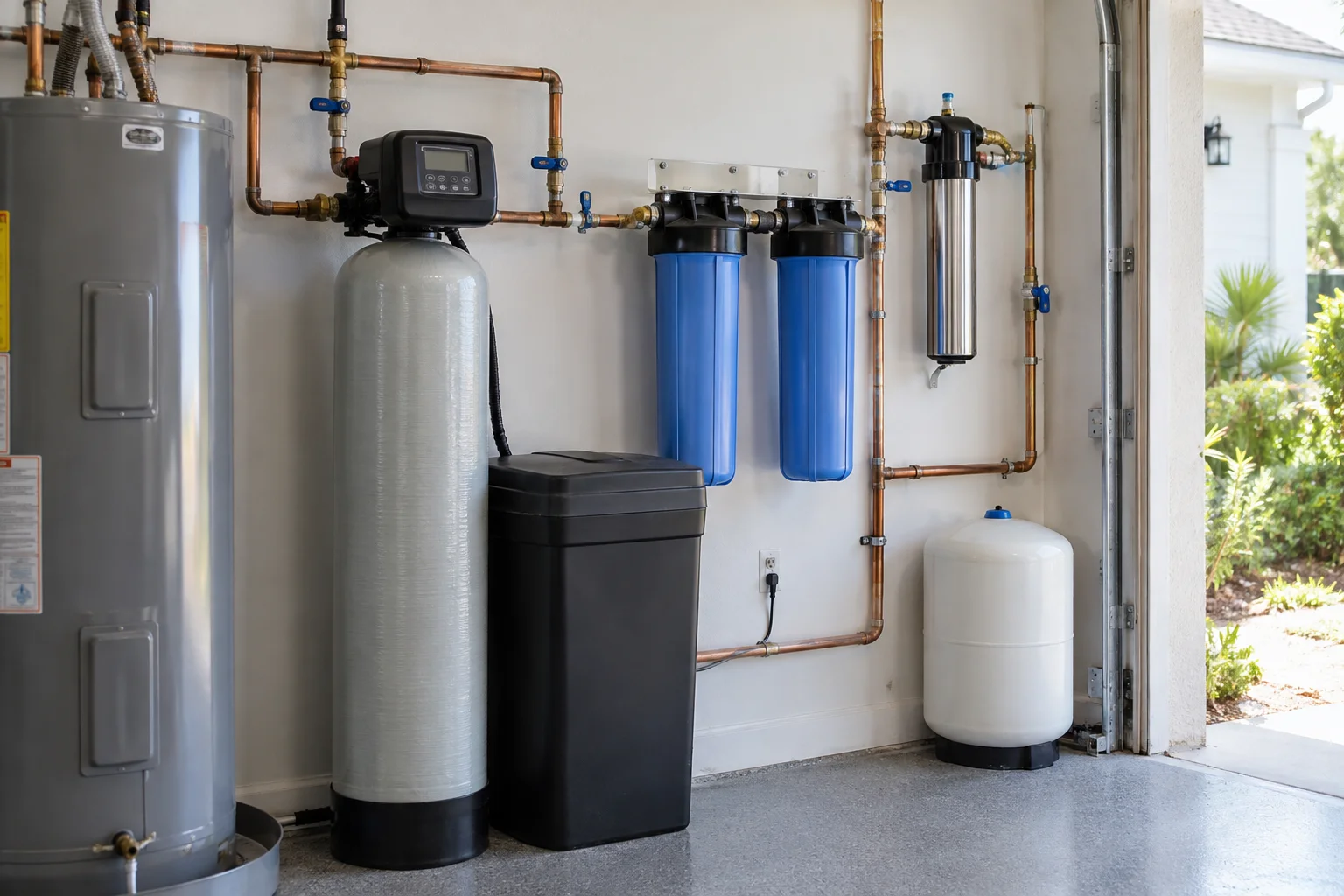
Many homeowners in Lower Grand Lagoon choose AO Smith water filtration solutions because they are built for whole-home water quality goals and reliable RO performance when maintained properly. With the right setup, you can cover multiple parts of the water experience:
- RO drinking water system: Focused on better tasting drinking water for the kitchen and hydration needs.
- Water softening: Reduces hard water effects like scale buildup around faucets and showerheads, and supports better bathing and laundry results.
- Whole house water filter: Helps protect plumbing and appliances by reducing sediment and improving water consistency.
When homeowners combine reverse osmosis installation with water softening or whole home water filtration, the entire household benefits. That is especially helpful in a climate where water use stays steady through the year and outdoor activities can increase household laundry and shower frequency.
RO vs. water softening: why one solution may not solve everything
It is common for homeowners to assume RO fixes all water quality issues. RO improves drinking and cooking water, but it does not prevent scale buildup throughout your plumbing. If you are dealing with hard water spots on glass and dishes, scale around fixtures, and skin or hair dryness after bathing, you likely need a broader strategy.
In Lower Grand Lagoon, a practical approach is to use RO for kitchen water and consider an AO Smith water softener or whole home water filtration to protect the rest of the home. This can help maintain cleaner fixtures, improve soap lather and rinse, and reduce mineral stress on appliances.
When to call A Superior Mechanical for RO service
Some issues are clearly “maintenance” and others are “inspect now.” Call a professional when you notice any of the following:
- Metallic, chlorinated, or unpleasant taste returns
- Cloudy ice cubes or hazy water becomes consistent
- Visible sediment, discoloration, or odor concerns appear
- You see leaks, unusual noises, or repeated low flow at the RO tap
- You have been skipping filter replacements or are unsure of the system’s service history
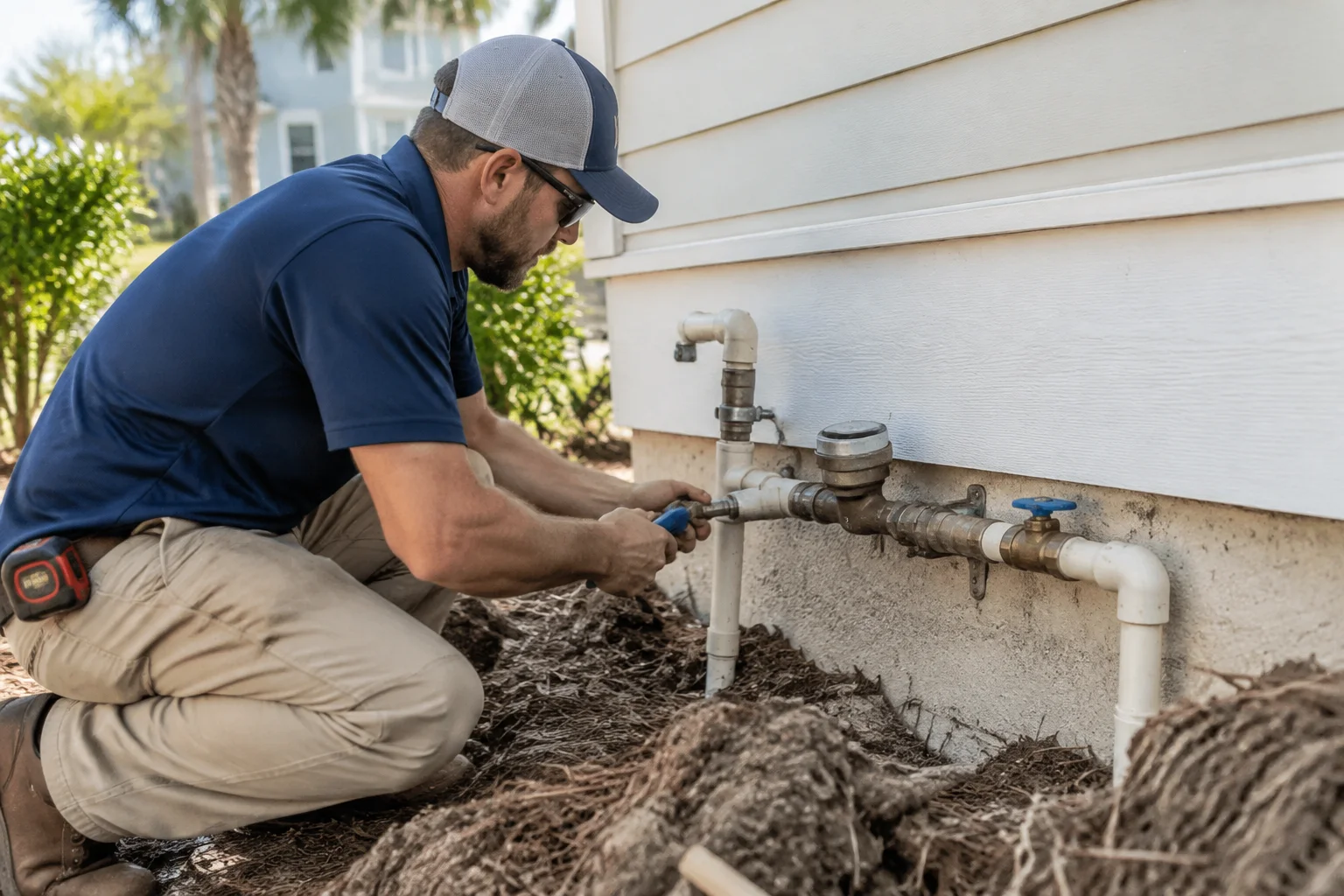
A Superior Mechanical provides professional reverse osmosis system installation, repair, and maintenance in Lower Grand Lagoon, FL. If you are searching for reverse osmosis systems in Lower Grand Lagoon, this is the service that helps keep your RO drinking water system performing like it should. You can also explore water filtration and RO water softeners to see how whole home water filter planning can work alongside RO.
If you want local context on the area, you can also review our Lower Grand Lagoon service area page. For broader Bay County coverage, visit Bay County service areas.
Helpful reading for homeowners planning upgrades or maintenance
If you are comparing systems, troubleshooting taste changes, or trying to build a cleaner water routine, these guides can help:
- A Homeowner’s Guide to Better Reverse Osmosis Systems in Lower Grand Lagoon, FL
- Cleaner Water, Better Plumbing: Why Filtration Matters in Lower Grand Lagoon Homes
- Making Smarter Plumbing Maintenance Decisions in Lower Grand Lagoon Homes
- Staying a Step Ahead of Plumbing Emergencies in Lower Grand Lagoon
What “good” RO water should feel like in daily life
When your RO system and water treatment plan are working, everyday routines get easier to trust. Kitchen water tastes clean, and filtered water for coffee and cooking delivers consistent flavor. Ice cubes freeze clear instead of cloudy. Glassware and dishes still show spots sometimes, but they are less frequent because hard water is being managed. Showers feel more comfortable, laundry rinses better, and skin and hair do not feel stripped after bathing.
Those improvements are not just about taste. Cleaner water systems near me and dependable RO service help protect the home you live in, from the fixtures you touch every day to the appliances that keep running through Lower Grand Lagoon’s humid seasons.
Find Reverse Osmosis Systems in Lower Grand Lagoon, FL
If you need Reverse Osmosis Systems in Lower Grand Lagoon, FL, visit our local service page or contact A Superior Mechanical today.
For a broader look at whole-home water filtration, reverse osmosis, and water softener options, visit our water filtration, RO, and water softener page.
Map of Lower Grand Lagoon, FL
Frequently Asked Questions
Why does my reverse osmosis water taste chlorinated even though I have an RO system?
Chlorine taste in water usually points to a carbon stage that is depleted or not functioning correctly. It can also happen when pre-filters are clogged and the RO system is not operating within the expected flow and pressure range. A technician can check filter life, pressure, and membrane performance.
Are cloudy ice cubes always a sign my RO system is failing?
Cloudy ice cubes can be caused by normal dissolved gases, but consistent haze paired with other issues like sediment, odor, or a change in taste is a warning sign. If the haze shows up every time, have the RO system inspected for filter and storage tank performance.
Should I use RO water for bathing and laundry?
Most RO drinking water systems treat only a dedicated line for drinking and cooking. Bathing and laundry typically need whole home water softening or whole house water filtration to address hard water effects like scale buildup and dry skin or dull hair.
How often do RO filters need to be replaced in Lower Grand Lagoon homes?
Replacement intervals depend on incoming water quality, household usage, and the specific RO components installed. If you are seeing changes in taste, cloudy ice cubes, or visible sediment, it may be time sooner than expected. A Superior Mechanical can evaluate your system and recommend the right schedule.
Related Articles
- A Homeowner’s Guide to Better Reverse Osmosis Systems in Lower Grand Lagoon, FL
- Cleaner Water, Better Plumbing: Why Filtration Matters in Lower Grand Lagoon Homes
- Staying a Step Ahead of Plumbing Emergencies in Lower Grand Lagoon
- Making Smarter Plumbing Maintenance Decisions in Lower Grand Lagoon Homes
Photo Gallery