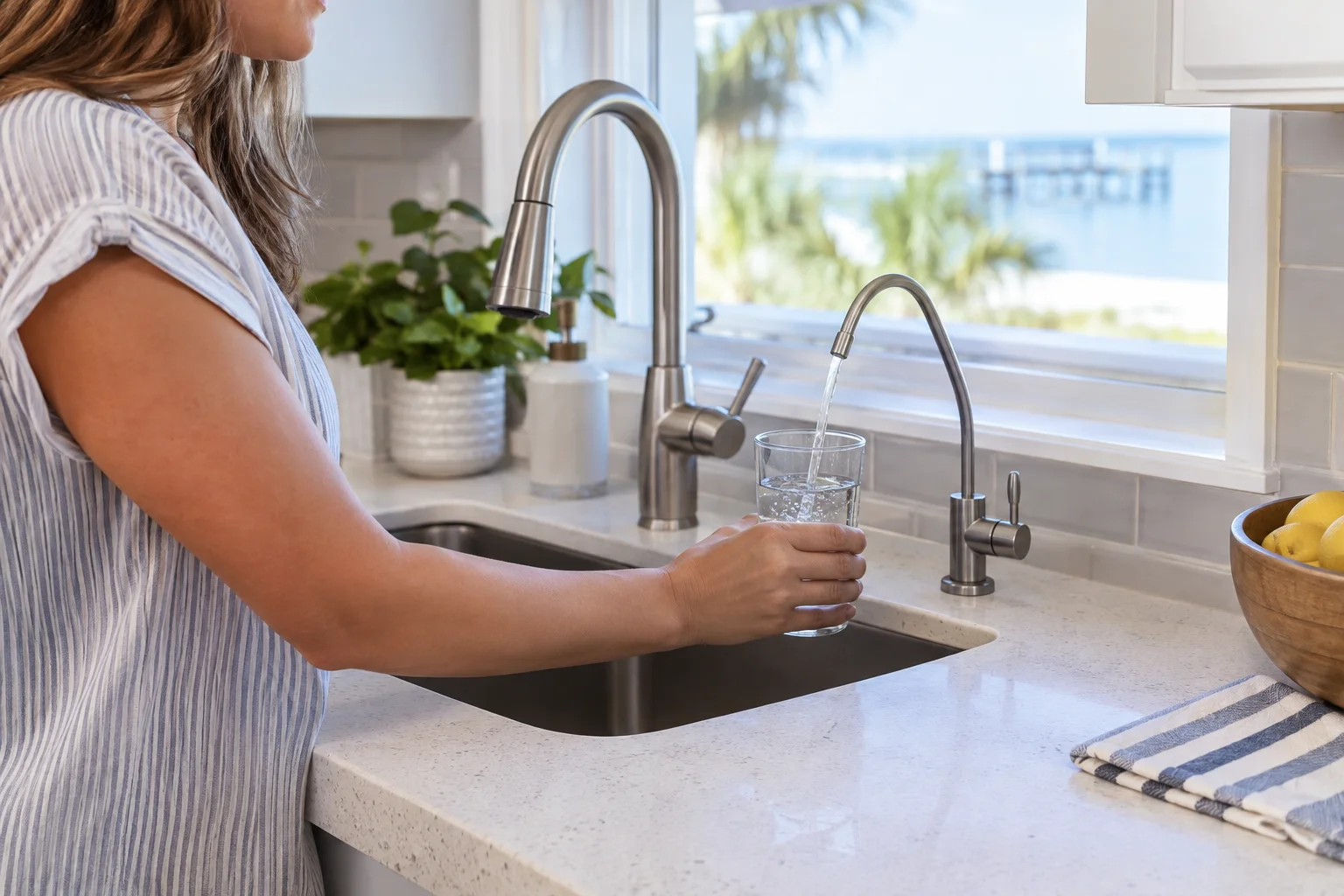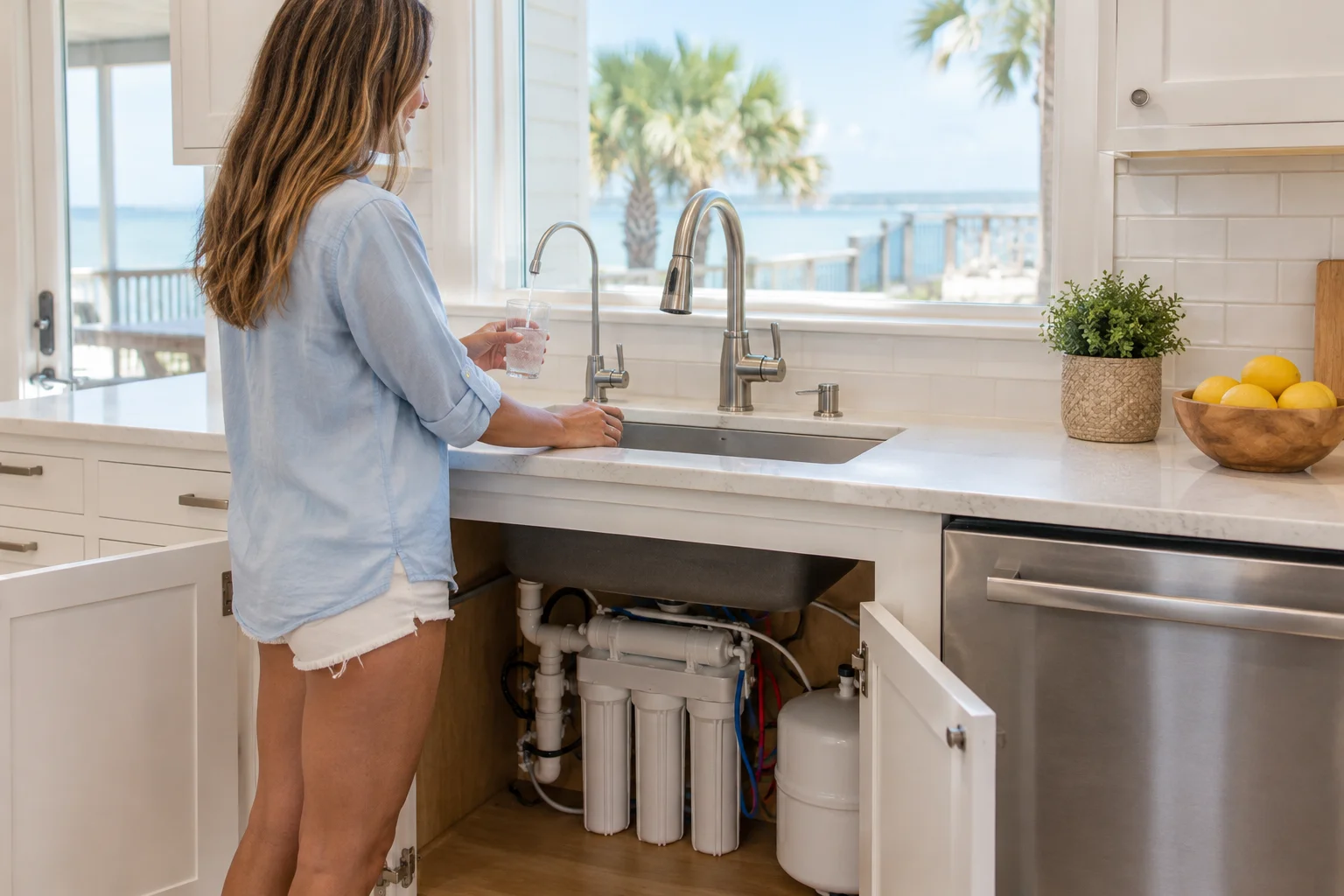
Reverse osmosis (RO) systems are a popular way to get better drinking water, cleaner cooking water, and peace of mind for families across Bluewater Bay, FL. When an RO system is working as it should, you typically notice improvements right away: better tasting water, less residue on fixtures, and cleaner results from coffee, ice, and cooking.
But RO systems can also drift out of balance. Filters clog, membranes age, storage tanks lose performance, and water quality can change. When that happens, the symptoms can look small at first. Over time, they can contribute to scale buildup on faucets and showerheads, dull hair, dry skin from hard water, and faster wear on appliances that depend on clean water.
If you are searching for water treatment near me or water filtration near me, these are the water quality warning signs local homeowners in Bluewater Bay often overlook, especially when their reverse osmosis system is connected to the rest of the home’s water use.
Why RO performance affects more than just drinking water
In Bluewater Bay, many homes deal with water that can be high in minerals. Even if you are only drinking RO-treated water, the rest of the household water still touches fixtures, shower surfaces, and appliances. If your RO setup includes prefiltration, a whole home water filtration step, or interacts with a water softening strategy, then RO problems can show up in places you would not immediately connect to your under-sink system.
RO systems are designed to reduce dissolved solids and improve taste and clarity. They use a membrane and staged filtration. When any stage underperforms, you may see changes in taste, odor, and clarity, plus side effects like sediment concerns and increased scaling risk.
For homeowners comparing options, AO Smith water filtration and whole home water filter solutions are often part of a layered approach. Many local families choose reverse osmosis installation plus additional filtration or softening so the kitchen water is excellent and the rest of the plumbing stays cleaner.
1) Metallic, chlorinated, or unpleasant taste coming from your RO tap
One of the most noticeable warning signs is a change in taste. Metallic, chlorinated, or just plain unpleasant taste can be tied to several RO system issues, such as:
- Carbon filter stages that have reached the end of their useful life
- High chlorine or chloramine in the incoming water exceeding what the system is prepared to handle
- Membrane performance decline that allows more dissolved solids to pass through
- Sanitation needs for the RO system components
When your drinking water tastes off, it usually affects more than thirst. It shows up in filtered water for coffee and cooking. People often notice that coffee tastes flatter, tea tastes different, and cooking water no longer behaves the way it used to.
Because you are in Bluewater Bay, you may also notice taste changes after local water system adjustments. If the taste issue persists, it is a strong indicator that your RO system needs service rather than “waiting it out.”
2) Cloudy ice cubes and cloudy water at the kitchen sink
Cloudy ice cubes are a common clue that minerals, dissolved solids, or air distribution issues are making it into the ice tray. If you are using RO water for drinking and ice, cloudy ice can point to:
- Membrane decline or reduced rejection performance
- Storage tank or system components that need inspection
- Filter media that is no longer removing fine sediment effectively
Homeowners sometimes assume cloudy ice is harmless. In reality, it can correlate with visible sediment, discoloration, and odor concerns. If your ice looks hazy consistently, it is worth having reverse osmosis installation near me and service technicians check the system.
3) Soap does not lather or rinse well, especially after bathing
Soap that does not lather or rinse well is a classic hard water symptom. In Bluewater Bay, mineral content can leave residue behind on skin and hair, which is why many families notice dry skin from hard water and dull hair after bathing.
Even if you have RO for drinking, the shower and laundry water may still be hard. If your RO system is part of a broader water treatment plan, a change in overall water quality can also indicate a need to review prefiltration and water softening strategy.
When soap does not lather, you may also notice:
- Skin feels tight after showers
- Hair feels coated or looks dull
- Bath towels do not feel as clean
- Shampoo and body wash seem to require more product
That is a quality-of-life issue, not just an irritation. Many homeowners pair reverse osmosis with an AO Smith water softener or other water softening options to protect skin, hair, and bathroom surfaces.
4) Hard water spots on glass, dishes, and fixtures that keep returning
Hard water spots on glass, dishes, and fixtures are one of the most visible signs that mineral scale is building. You might see spots on:
- Shower doors and bathroom mirrors
- Kitchen faucets and sink fixtures
- Glasses after running through the dishwasher
- Dishware that looks “streaky” even when it is clean
Scale buildup around faucets, showerheads, and plumbing can form when minerals deposit as water heats and evaporates. Over time, scale can reduce flow, clog aerators, and make cleaning harder.
RO systems can improve water quality for drinking and cooking, but they do not automatically prevent scale throughout the home unless you also address the mineral content that causes scaling. If you are seeing spots persistently, it is time to evaluate whether your whole house water filter or water softener service is keeping up.
5) Scale buildup around faucets and showerheads that is getting worse
If you are regularly scrubbing scale from fixtures, the buildup pattern matters. Light spotting that you can remove with routine cleaning is one thing. Scale that returns quickly, thickens, or starts forming rough deposits is another.
Look closely at:
- Faucet aerators, where flow can slow
- Showerheads, where spray can become uneven
- Under-sink plumbing connections, where sediment can accumulate
- Water lines that feed appliances
These symptoms can be linked to hard water and mineral scaling. If your RO system is connected to a larger filtration setup, a decline in performance can also mean more sediment or dissolved minerals are slipping through than before.
If you want a deeper local guide, you can also review Staying Ahead of Plumbing Problems in Bluewater Bay Homes for maintenance habits that help prevent small issues from becoming expensive repairs.
6) Visible sediment, discoloration, and odor concerns
Visible sediment or discoloration in the kitchen sink can be alarming. Even if it is occasional, it is a warning sign that your filtration stages may not be capturing particles the way they should.
Common causes include:
- Clogged prefilters that no longer protect the RO membrane
- RO membrane decline that allows more material to pass
- Storage tank issues
- System components that need sanitizing after maintenance or prolonged downtime
Odor concerns can also develop when water sits in a tank or when carbon filtration is no longer effective. If your water smells musty, “pool-like,” or just off, do not ignore it. It can affect drinking water, cooking water, and how you feel about using the water for ice and beverages.
7) Appliances wearing out faster or not performing as well
When water quality is inconsistent, appliances can take the hit. People often focus on the dishwasher or coffee maker first, but the bigger story is the lifetime of heating elements and internal components.
Homeowners often notice:
- Water heaters running less efficiently due to scale
- Soap scum and residue in washing machines
- Espresso machines or kettles requiring more frequent descaling
- Faster clogging in small internal lines
- Worn seals or reduced flow
In Bluewater Bay, humidity and seasonal weather changes can affect how quickly deposits show up and how often people clean. If your RO system is not keeping water as clean as it used to, appliances may wear out sooner than expected.
For practical habits tied to RO systems, see Smart Plumbing Habits for Reverse Osmosis Systems in 30A Homes. Even though it targets a nearby area, the maintenance logic applies to homeowners managing RO performance.
8) Poor tasting coffee and cooking water, even when you “filter”
A family kitchen scene tells you a lot. Someone pours a cup, and the coffee tastes different. Pasta takes longer to cook. Rice tastes “off.” These are the everyday moments that make water quality problems obvious.
RO systems are often installed specifically to improve filtered water for coffee and cooking. If you are getting metallic tasting water, a lingering chlorine note, or a dull flavor, the issue can be connected to:
- Carbon replacement intervals that were missed
- Membrane aging or damage
- Low pressure or flow issues that reduce performance
- Incorrect system settings after filter changes
Sometimes the problem is not obvious until you compare “before and after” taste. If the water has changed and the kitchen results did too, that is a strong reason to schedule service.
How Bluewater Bay conditions can make water treatment feel “inconsistent”
Bluewater Bay is part of Okaloosa County, Florida, where many homes rely on municipal water that can vary in mineral content and taste characteristics over time. Seasonal shifts, local infrastructure work, and changes in water chemistry can create noticeable differences in smell, clarity, and how water behaves in fixtures.
RO systems are designed to handle a range of conditions, but they still require ongoing maintenance. When filters clog and membranes age, your system becomes less able to deliver stable quality. That is why homeowners often see a pattern like this: water seems fine for months, then taste changes, then scale and residue become more noticeable.
If you are looking for whole home water filtration near me or water treatment near me, it helps to work with a local team that understands how Bluewater Bay homes use water across kitchens, bathrooms, and laundry. You can also read more about home purification strategies in Cleaner Water, Fewer Plumbing Surprises: A Bluewater Bay Guide to Home Purification.
What homeowners often overlook with RO systems
Even attentive homeowners can miss the “quiet” issues that lead to bigger problems later. Here are the most common oversights:
- Waiting too long to replace filters. Prefilters protect the membrane. When they clog, performance drops and sediment can become more noticeable.
- Ignoring slow changes. A slightly metallic taste or slightly cloudier ice can be the first sign of membrane decline.
- Assuming RO prevents scale everywhere. RO improves water quality for its output line. Hard water scale in showers, glass, and fixtures usually requires hard water treatment and proper whole home filtration or softening.
- Skipping sanitizing and system checks. If the system sits unused or was serviced, components may need inspection and cleaning.
- Not checking water pressure. Low pressure can reduce flow and affect RO rejection performance.
If you have questions about reverse osmosis installation near me or want to compare service options, your best next step is a professional water quality assessment tied to your system and household habits.
Solutions that protect fixtures and appliances, not just taste
The right fix depends on what symptom you are seeing and how your system is configured. Common solutions include:
Replace worn RO filters and check carbon performance
If taste or odor changes are the main issue, carbon filtration may be the culprit. A technician can verify whether prefilters and carbon stages are doing their job and replace them before they start allowing more off-taste into the water.
Inspect the RO membrane and system pressure
When cloudy ice, sediment concerns, or metallic tasting water show up, the membrane may be aging. System pressure and flow rate also matter. A service visit can confirm whether the RO system is producing the quality you expect.
Add or refresh water softening to reduce scale buildup on fixtures
If you are seeing scale buildup around faucets, showerheads, and plumbing, water softening is often part of the solution. Many homeowners choose an AO Smith water softener approach or other proven softening methods to reduce mineral deposits.
Use whole home water filtration to support every faucet and appliance
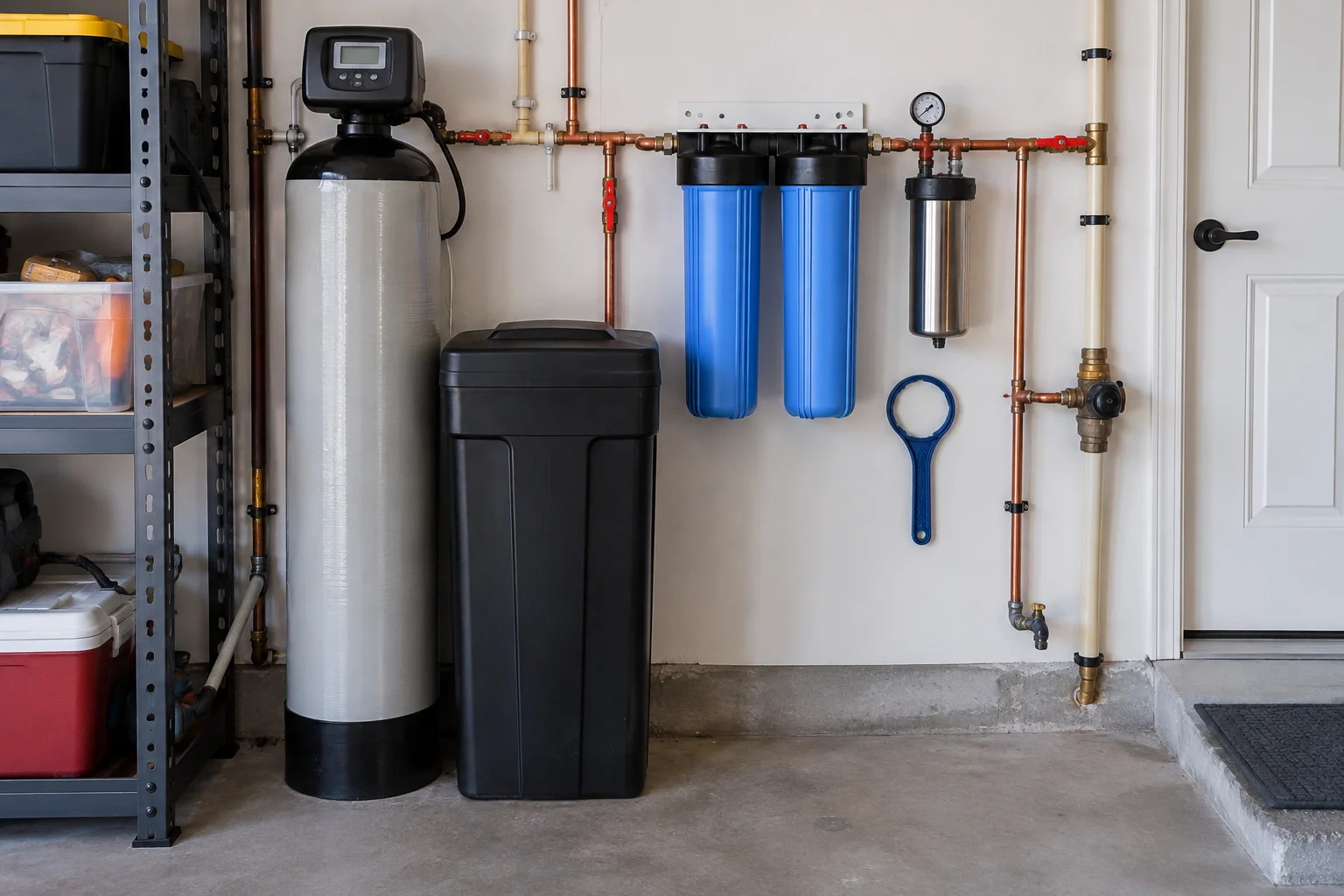
For families who want consistent results across bathing, laundry, and kitchen use, whole home water filtration can reduce sediment and improve water performance throughout the home. If you are searching for whole home water filter solutions, it helps to discuss whether you need a layered setup that includes RO for drinking plus whole home filtration for fixtures.
You can explore related options at /water-filtration-ro-water-softeners and learn more about local service coverage on /service-areas/okaloosa-county/bluewater-bay and /service-areas/okaloosa-county.
Maintenance habits that keep RO water tasting clean
Home maintenance can help, but it should support professional service rather than replace it. Simple habits include:
- Follow the recommended filter replacement schedule based on your water use
- Track changes in taste, odor, and ice clarity so you can describe the timeline
- Run the RO tap after periods of non-use, if your system guidance recommends it
- Check for leaks under the sink and around tubing connections
- Keep the area around the system clear for inspection and service
These steps make it easier for technicians to diagnose issues quickly during service visits.
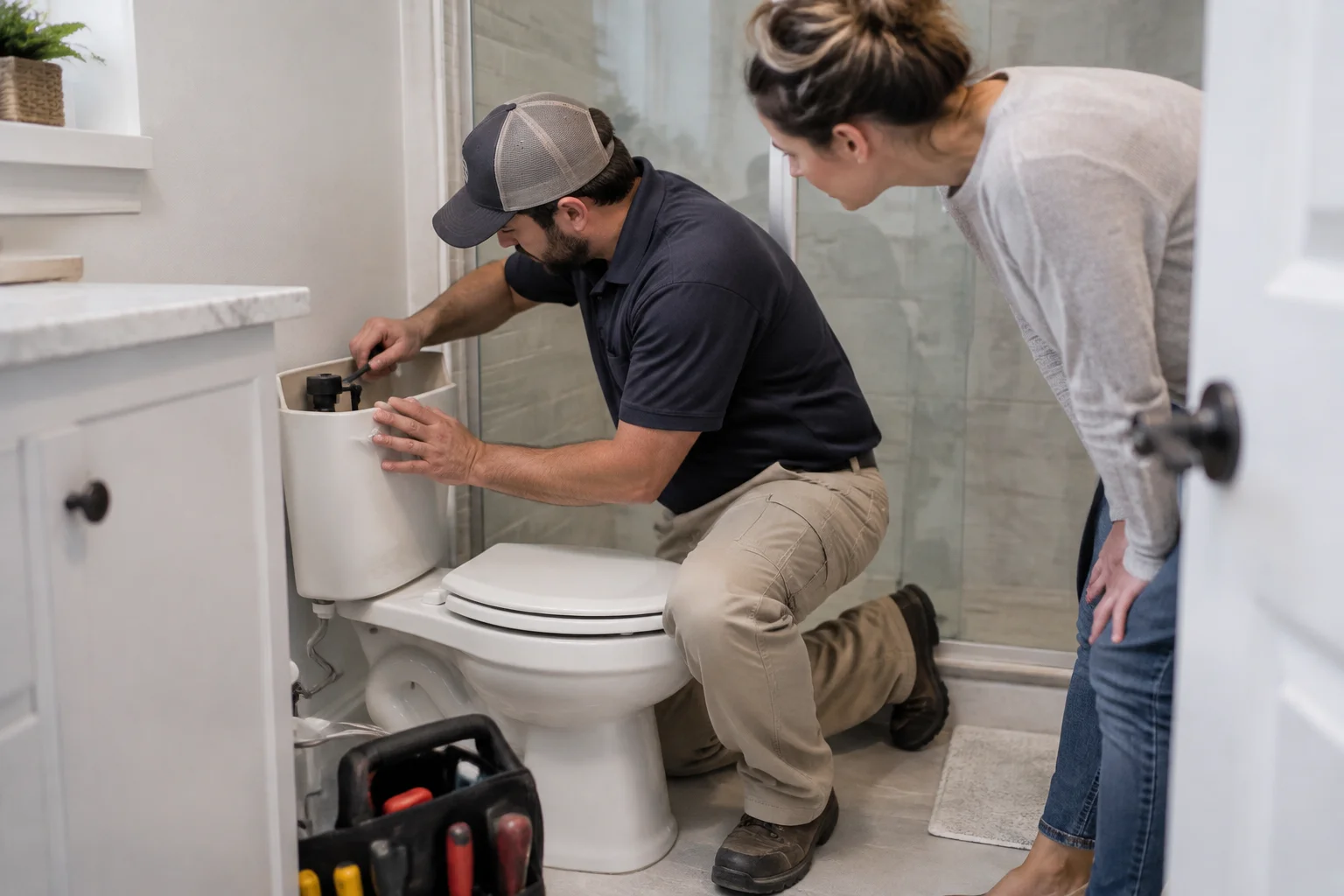
When to call a professional for reverse osmosis system service
It is time to schedule service if you notice any of the following:
- Metallic, chlorinated, or unpleasant taste changes that persist
- Cloudy ice cubes or cloudy water from the RO tap
- Visible sediment, discoloration, or odor concerns
- RO water quality drops while other household water also seems harder
- Appliances require more frequent descaling than they used to
- Scale buildup on faucets and showerheads accelerates
For Bluewater Bay homeowners who want dependable reverse osmosis installation, repair, and maintenance, A Superior Mechanical serves the area with RO solutions that help protect fixtures and appliances. You can review the local service page here: /service-areas/okaloosa-county/bluewater-bay/reverse-osmosis-systems-bwbfl.
RO is a system, not a single part. When filters, membranes, and whole home water treatment work together, you get better tasting drinking water, cleaner cooking water, and fewer mineral surprises across your home.
Find Reverse Osmosis Systems in Bluewater Bay, FL
If you need Reverse Osmosis Systems in Bluewater Bay, FL, visit our local service page or contact A Superior Mechanical today.
For a broader look at whole-home water filtration, reverse osmosis, and water softener options, visit our water filtration, RO, and water softener page.
Map of Bluewater Bay, FL
Frequently Asked Questions
How do I know if my reverse osmosis system needs a filter change or membrane replacement?
Look for consistent changes like metallic tasting water, cloudy ice cubes, off odors, or visible sediment. If taste and clarity decline and the issue does not clear up, it is usually time for filter replacement and an inspection to determine whether the membrane is also aging.
Can a reverse osmosis system stop hard water spots on glass and showerheads?
RO only treats the water it produces for its output line. Hard water spots on glass, dishes, and fixtures usually require hard water treatment for the rest of the home, such as whole home water filtration and water softening. Many Bluewater Bay homes use a layered approach.
Why does my RO water taste chlorinated or metallic even though I have a carbon filter?
If the carbon stage is exhausted or the prefilters are clogged, chlorine and off-taste can slip through. Membrane performance can also decline over time. A service visit can confirm which stage is failing and restore better tasting drinking water.
Is cloudy ice a sign of a problem with the RO system?
Often, yes. Cloudy ice can be linked to mineral or sediment carryover, reduced RO rejection performance, or system component issues. If it happens consistently, have the system checked rather than assuming it is normal.
What is the best way to protect appliances and plumbing from scale buildup?
Address the mineral causes of scale with appropriate whole home water filtration and water softening, and keep your RO system properly maintained for drinking and cooking water. This reduces scale buildup on faucets, showerheads, and internal appliance components.
Related Articles
Photo Gallery