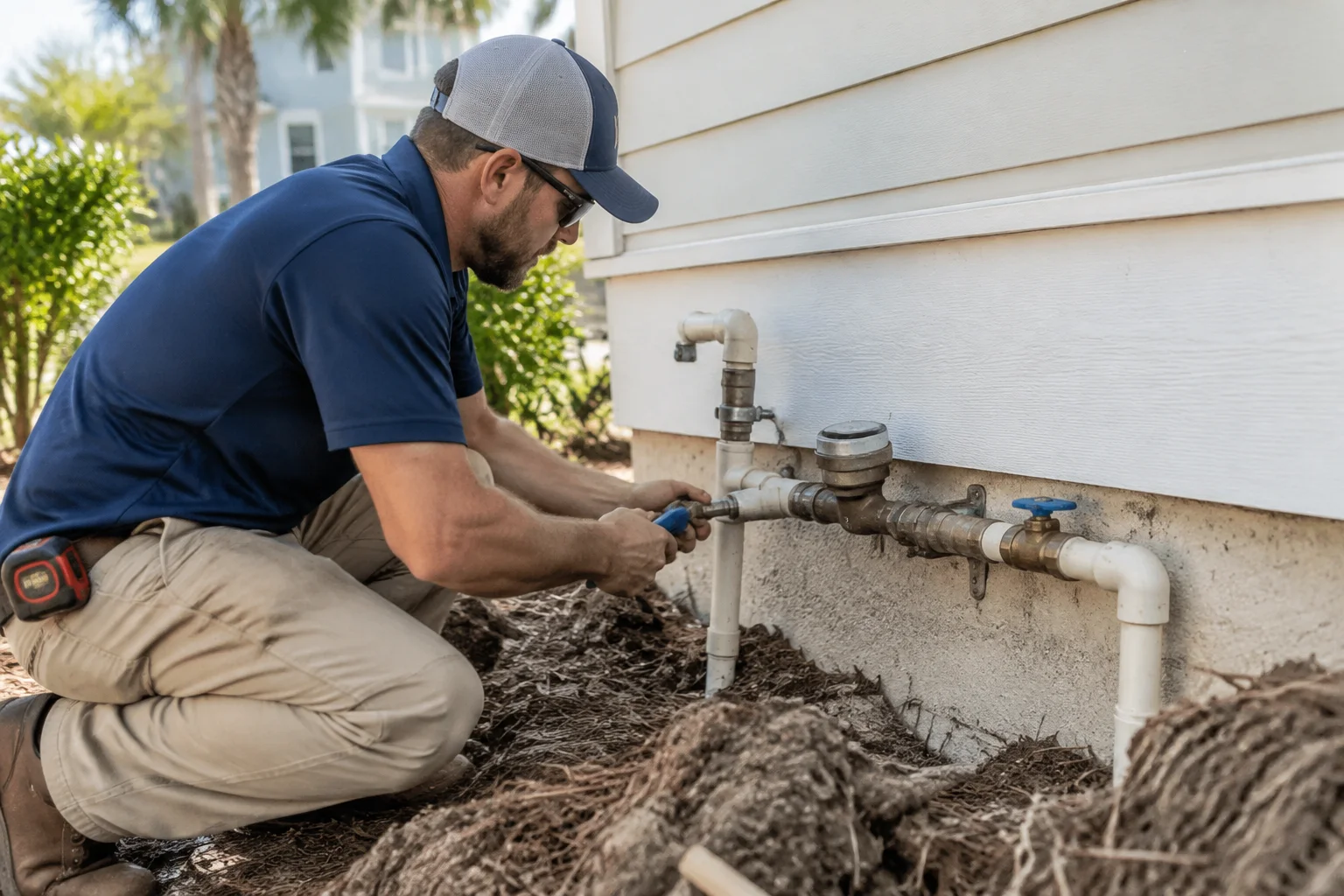
Living near the Gulf in Seaside, FL means your home deals with coastal humidity, salt air, and water conditions that can change how your plumbing and fixtures behave. If you have a reverse osmosis (RO) system, it is designed to deliver cleaner drinking and cooking water. But like any filtration setup, it can drift out of balance when filters age, storage tanks fill with sediment, or components fail.
This guide walks through water quality warning signs connected to reverse osmosis systems, plus the small habits that help keep water cleaner. You will also find practical notes about how better water affects everyday life, from kitchen coffee to shower comfort and laundry.
Why RO water can change over time in Seaside homes
Reverse osmosis systems work by pushing water through a semipermeable membrane and then polishing it with additional filtration. The goal is better water for drinking and cooking, with less chlorine taste in water, fewer particles, and a cleaner feed for your daily routines.
In Seaside, water treatment needs can be influenced by local sources, seasonal shifts, and the way plumbing inside your home interacts with water. When the incoming water quality changes or the RO system is not maintained, you may notice symptoms at the tap, in ice, or around fixtures.
If you are searching for water filtration near me or clean water systems near me, it helps to know that RO problems often show up as a pattern, not a single random issue. The same red flags that affect drinking water can also connect to hard water treatment concerns like scale buildup on faucets and showerheads.
Warning signs your RO system may be struggling
Use these signs as a quick checklist. If you notice more than one at the same time, it is usually a maintenance or component issue, not just “bad luck.”
1) Cloudy ice cubes or hazy drinking water
Cloudy ice cubes are one of the clearest clues that something is off. RO systems can produce clear water when the membrane and filters are working properly. If you see haze, cloudiness, or a milky look in ice, it can point to:
- Filter media nearing end of life
- Air or pressure changes after system cycling
- Membrane performance issues
- Storage tank sediment or sanitation concerns
For homeowners, this often shows up first during family kitchen moments, like filling a pitcher for guests or grabbing a glass for the kids after a beach day.
2) Metallic, chlorinated, or unpleasant taste
If your RO drinking water begins tasting metallic or more “chlorinated,” it can mean the system is not removing taste and odor compounds the way it used to. Some systems include carbon filtration stages that help with chlorine taste and odor. When carbon is spent, the taste can return.
This is especially noticeable when you make poor tasting coffee water or cook with water that no longer tastes clean. Many Seaside households use RO for drinking water and cooking water, then rely on other treatment for the rest of the home. When the RO part slips, the taste difference becomes obvious.
3) Visible sediment, discoloration, or odor concerns
You should not see visible particles at the RO tap. If you notice visible sediment, discoloration, or a musty or sulfur-like odor, pay attention. Sediment can come from:
- Filter housing bypass or media breakdown
- Membrane degradation
- Storage tank issues
- Infrequent use in vacation rentals
Coastal homes and vacation rentals in Walton County often sit for stretches. When water sits in lines or tanks, odor concerns can appear. If you manage a rental, keeping the RO system on a consistent maintenance schedule is part of protecting guest experience.
4) Scale buildup on faucets, showerheads, and plumbing
Scale buildup on faucets and showerheads is a classic hard water sign. While RO systems focus on dissolved contaminants, they do not always replace the need for water softening or other whole-home strategies.
If you are seeing more scale than usual, you may be dealing with:
- Hard water affecting fixtures and appliances
- RO not being the right tool for the entire home
- Water treatment gaps between drinking water and whole-house water
Homeowners commonly notice it as white crusting around faucet aerators, rough texture on shower glass, and buildup that grows faster in coastal humidity. Scale can also affect how soap cleans and can lead to appliances wearing out faster.
5) Soap that does not lather or rinse well
If soap feels “slippery” but does not lather, or you struggle to rinse shampoo and body wash clean, hard water and water chemistry changes may be involved. This can happen even when your RO drinking water tastes fine, because hard water affects the rest of the home water.
It is common to notice this during bathing routines. If the water feels harsher, you may also see related symptoms.
6) Dry skin or dull hair after bathing
Many families notice that water quality affects how skin and hair feel. When water is not treated well, mineral buildup and soap residue can leave skin feeling dry or hair looking dull.
If you have recently changed filters, added a new RO system, or started using the RO tap more often, compare the timing. For some households, RO helps drinking water, but whole home treatment is still needed for bathing.
7) Appliances wearing out faster
Scale buildup is not just cosmetic. It can reduce efficiency and shorten the life of appliances. Homeowners often see this as:
- Water heater performance issues
- Dishwasher spotting or film
- Less effective laundry cleaning
If you are noticing more problems with kettles, coffee makers, or laundry machines, it can be a sign that hard water treatment is not keeping up.
8) Spots on glass, dishes, and fixtures
Hard water spots show up on glass, dishes, and fixtures, even after cleaning. You might see:
- Spotting on drinking glasses and shower doors
- Film on plates and cookware
- Rough spots around plumbing connections
In a Seaside home, this can show up quickly after entertaining. The water you use for cooking water and washing can influence how quickly spots return.
Simple habits that help keep RO water cleaner
RO maintenance is not only about filter changes. A few habits can reduce stress on the system and improve consistency.
Use it regularly, or flush appropriately
If your RO system is in a vacation rental or a home where the RO tap is used less often, water can sit in the tank and lines. Stagnant water can lead to taste and odor problems. A technician can advise on a flush routine for your specific system and usage patterns.
Replace filters on schedule, not on guesswork
Many RO issues come from delayed filter changes. A system may still produce water, but performance can degrade, leading to:
- cloudy ice cubes
- chlorine taste in water
- reduced flow
- sediment concerns
For homeowners, the practical rule is to follow the service intervals recommended for your unit and local conditions. If your household uses more water, you may need service sooner.
Keep an eye on flow rate and pressure
If the RO system seems to run longer than usual or produces less water, it can indicate clogged pre-filters or membrane strain. Do not ignore slow recovery times, especially if taste or clarity also changes.
Sanitize and maintain the system as recommended
RO systems are designed to handle water quality changes, but they still require proper sanitation and maintenance. If you notice odor concerns or discoloration, do not just keep using it. Ask for testing and service to confirm what is happening.
Match the treatment to the job: RO for drinking, whole home for scale
One of the biggest homeowner mistakes is assuming RO will solve every water problem. RO can be an excellent RO drinking water system for safe, great tasting water. But for scale buildup on faucets, dish spotting, and dry-feeling skin, you often need additional strategies such as water softening or whole home water filtration.
If you want better water for drinking and cooking plus clearer results in showers and laundry, consider options like whole home water filtration or a combination approach. Many Seaside homeowners choose a coordinated plan rather than relying on a single point-of-use system.
RO vs. water softening and whole home filtration in Seaside
It helps to think of your home water in layers.
RO systems for drinking and cooking
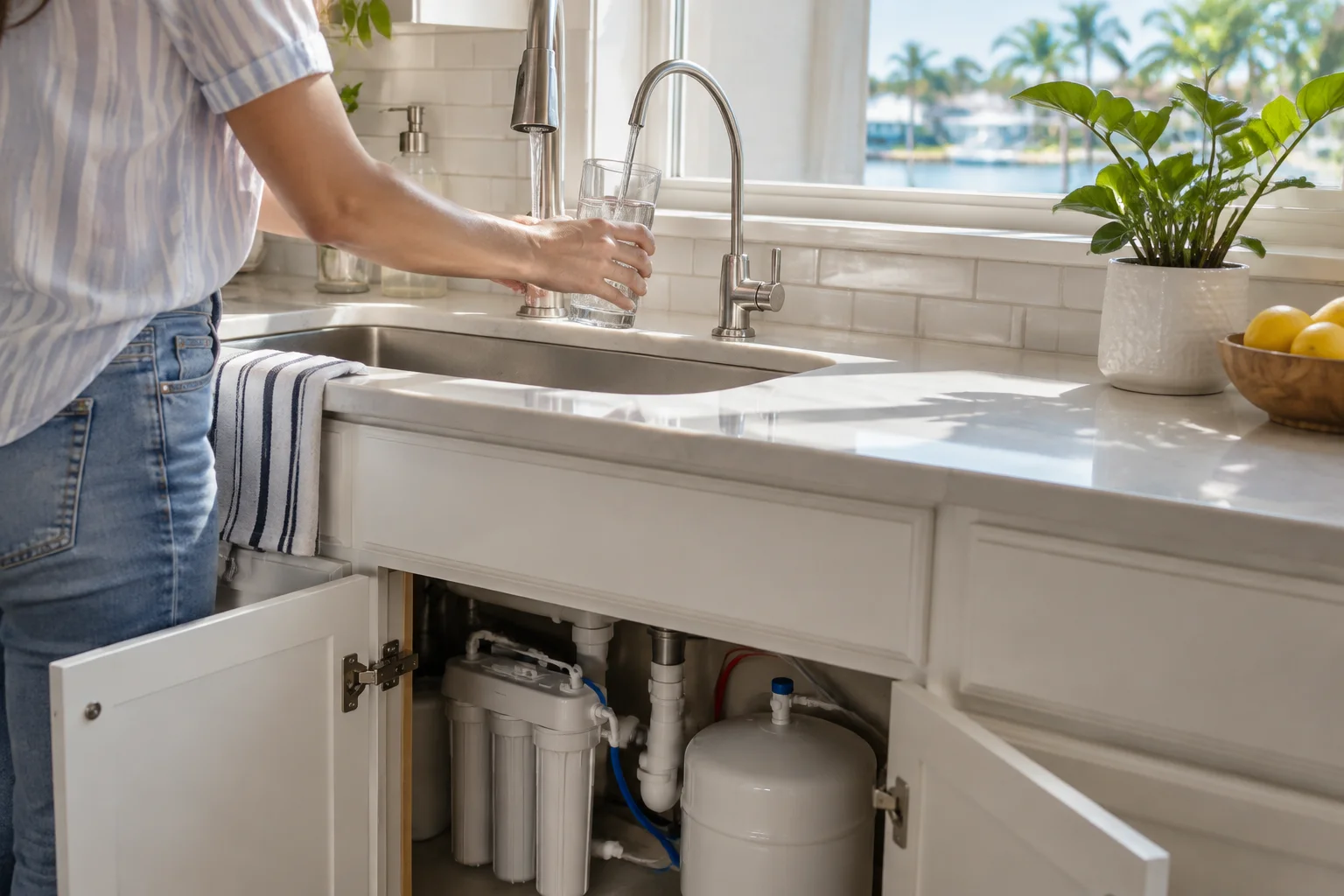
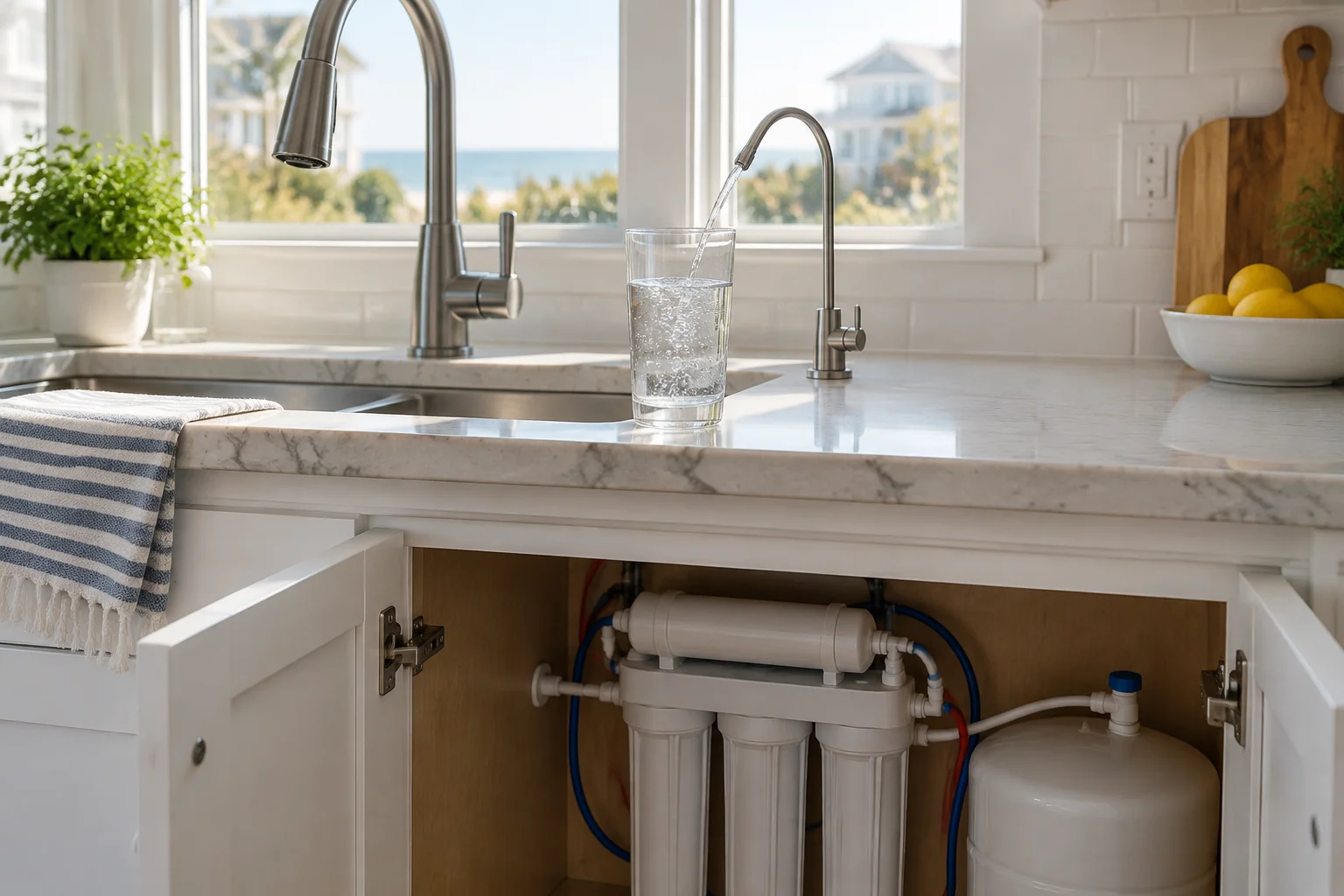
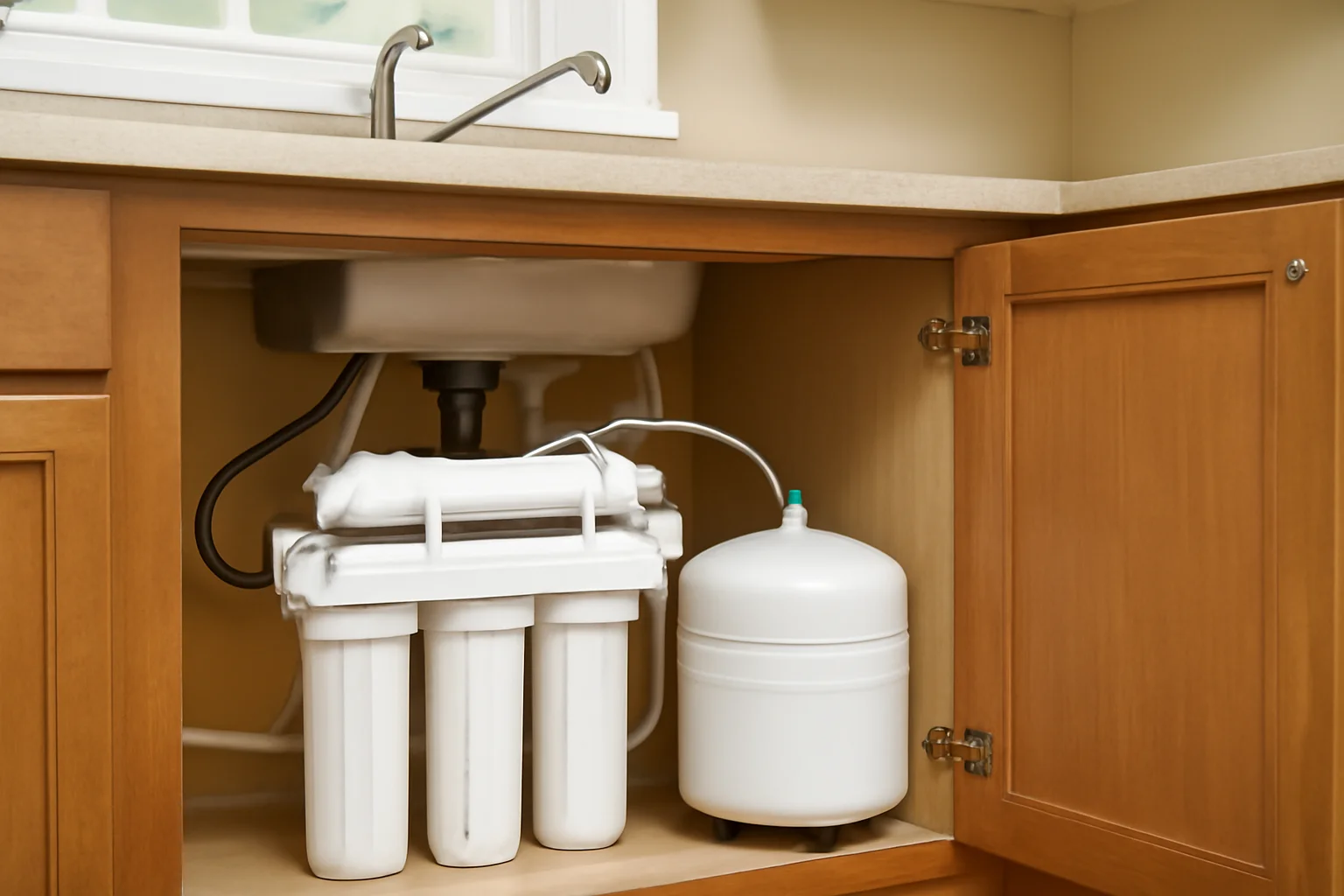
An RO unit is commonly installed under the kitchen sink or as a dedicated drinking water system. It is ideal for people who care about what goes into their glass and what goes into the pot.
When RO is working, you should expect cleaner-tasting water and fewer particles that affect clarity. If you are searching for reverse osmosis installation near me, it is also worth discussing maintenance access and filter change options so you do not end up with a system you cannot service easily.
Water softeners for scale and fixture protection
Water softening helps reduce minerals that cause scale. When hard water treatment is working, you typically see fewer spots on glass and dishes, less buildup around faucets, and improved soap performance.
Many homeowners in Walton County notice that hard water affects how quickly showerheads clog and how often they need to descale appliances.
Whole home water filtration for consistent results
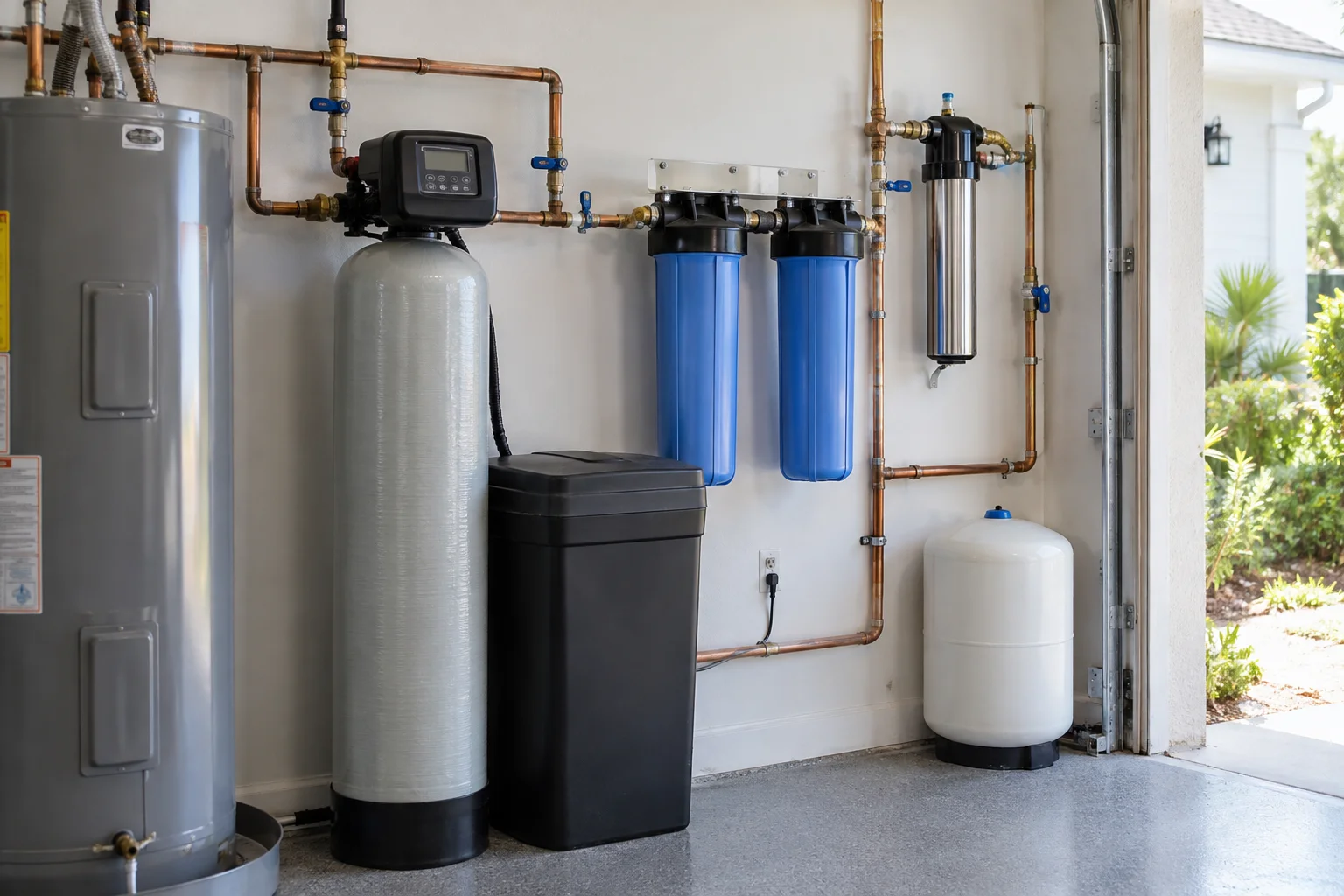
If you want whole home water filtration near me because you want cleaner water throughout the house, whole home systems can reduce sediment and improve water quality for bathing, laundry, and plumbing protection.
This is also where AO Smith water filtration may come into the conversation. AO Smith systems are designed for dependable performance, and pairing the right whole home filtration with RO at the tap can give you both everyday comfort and great drinking water.
How better water changes daily life in Seaside
It is easy to think about water treatment as a “taste” issue. In real Seaside households, water quality affects routines.
Kitchen scenes: coffee, cooking water, and guest-ready ice
Picture a busy morning where someone fills ice trays for the day. If you are dealing with cloudy ice cubes or off flavors, it changes the whole vibe. Clean RO water helps keep drinking water tasting fresh, and cooking water can improve how flavors come through.
Many homeowners also notice that when the water tastes clean, it is easier to use it consistently, including for tea, pasta, and family meals.
Bathing and grooming: fewer dry-skin moments
When water chemistry is balanced, bathing often feels better. Families may notice smoother rinsing and less residue. That can mean fewer “why does my skin feel dry?” moments after a shower.
Whole home treatment can be a key piece here, especially if you see soap that does not lather or rinse well.
Laundry and dishes: less film, fewer rewashes
Hard water spots on dishes and glass can be frustrating. Better water can reduce the appearance of spots and film, helping laundry look cleaner and keeping glassware presentable for guests.
When you are entertaining after beach outings, this matters. It is the difference between a quick rinse and a second round of scrubbing.
Appliance protection: fewer interruptions
Scale can build up inside appliances over time. When hard water treatment is not addressed, appliances can wear out faster. Better treatment helps protect:
- coffee makers and kettles
- dishwashers
- water heaters
For busy Seaside families, fewer maintenance issues means fewer disruptions.
When to call a professional for RO water treatment service
You can handle some basics, but you should contact a trusted water treatment provider when you see performance and quality changes that keep repeating. Call for service if you notice:
- persistent cloudy ice cubes
- metallic or chlorinated taste in water
- visible sediment or discoloration
- odor concerns that do not resolve after a routine flush
- scale buildup on faucets that is increasing
- shortened lifespan of appliances or frequent descaling
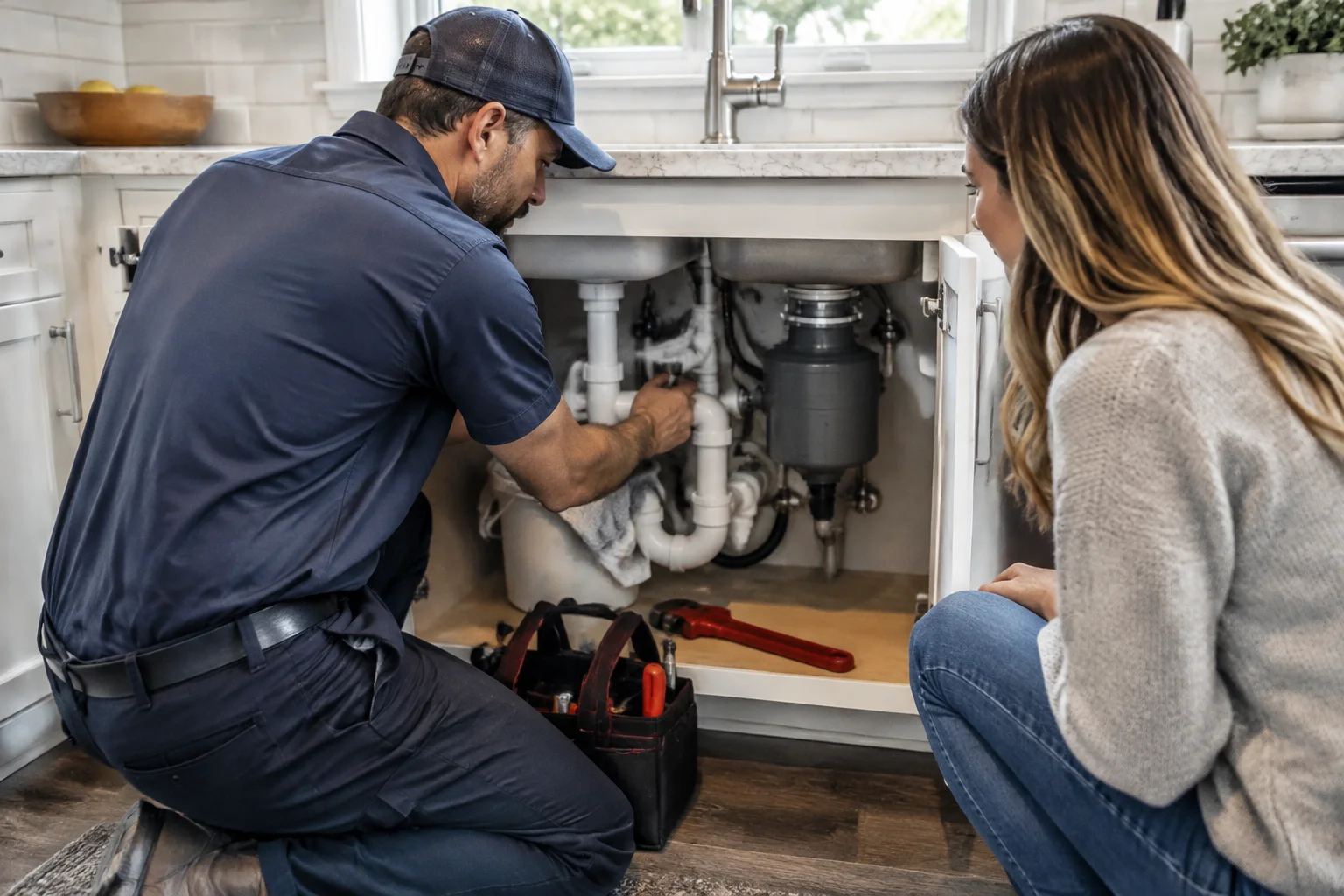
Also reach out if you suspect your RO system was installed long ago and filter changes have been delayed. A professional can help confirm whether the issue is the RO membrane, pre-filters, storage tank, or a larger whole home water quality problem.
For homeowners looking for reliable reverse osmosis systems in Seaside, FL, A Superior Mechanical supports local households with AO Smith water filtration options and service for RO performance. Visit /service-areas/walton-county/seaside/reverse-osmosis-systems-ssfl to learn how we help with RO system installation, repair, and maintenance. If you are comparing options for your entire home water setup, start with /water-filtration-ro-water-softeners.
If you want to understand the broader context for local service, you can also explore /service-areas/walton-county/seaside and see how we support Seaside and surrounding Walton County communities.
Related reading for Seaside homeowners
If you are building a better water routine, these guides can help you connect the dots between drinking water, plumbing habits, and day-to-day results:
- Practical Plumbing Advice for Seaside Homeowners Living Near the Coast
- Smart Plumbing Habits for Reverse Osmosis Systems in 30A Homes
- Cleaner Drinking Water and Healthier Plumbing: A Rosemary Beach Homeowner’s Guide to Reverse Osmosis Systems
- Cleaner Water, Clearer Living in Seaside: How Better Treatment Helps With Spots, Scale, Taste, and Odor
Frequently asked questions about RO warning signs
Homeowners often ask whether the symptoms they see are “just cosmetic” or whether they point to a real filtration problem. The short answer is that taste, clarity, and sediment issues can be tied to RO performance, and they are worth addressing early to protect drinking water quality and reduce frustration with fixtures and appliances.
Below are a few common questions that can help you decide what to check first.
Find Reverse Osmosis Systems in Seaside, FL
If you need Reverse Osmosis Systems in Seaside, FL, visit our local service page or contact A Superior Mechanical today.
For a broader look at whole-home water filtration, reverse osmosis, and water softener options, visit our water filtration, RO, and water softener page.
Map of Seaside, FL
Frequently Asked Questions
Why would my RO water taste metallic or more chlorinated?
Metallic or stronger chlorine taste in water often points to spent carbon filtration, reduced membrane performance, or a maintenance interval that is overdue. A technician can check the RO stages and confirm which component is causing the change.
What causes cloudy ice cubes from an RO drinking water system?
Cloudy ice cubes can be caused by changes in filtration performance, air or pressure cycling, or sediment issues. If the cloudiness persists, it usually means the system needs inspection and service rather than just a one-time fix.
Does reverse osmosis remove hard water scale on faucets and showerheads?
RO systems are mainly designed for drinking and cooking water. Hard water scale buildup on faucets, showerheads, and plumbing is usually addressed with water softening and whole home water filtration strategies. Many Seaside homeowners use RO for the tap and softening or whole home filtration for the rest of the house.
How often should I service an AO Smith reverse osmosis system?
Filter and membrane service intervals depend on household usage and local water conditions. A Superior Mechanical can recommend a schedule based on your system and symptoms, and help you keep your RO water tasting and looking clean.
Related Articles
- Practical Plumbing Advice for Seaside Homeowners Living Near the Coast
- Smart Plumbing Habits for Reverse Osmosis Systems in 30A Homes
- Cleaner Drinking Water and Healthier Plumbing: A Rosemary Beach Homeowner’s Guide to Reverse Osmosis Systems
- Cleaner Water, Clearer Living in Seaside: How Better Treatment Helps With Spots, Scale, Taste, and Odor
Photo Gallery