Upper Grand Lagoon homes can look great on the outside, even when the water inside is quietly working against you. When water is hard, it leaves behind minerals that build up on fixtures, cloud ice cubes, and make soap feel like it is not doing its job. Add in concerns like unpleasant taste, odor, or chlorine-related flavor, and homeowners often start wondering if the problem is the water supply, the plumbing, or both.
This guide connects common water quality warning signs to water softening and related filtration options, so you can spot issues early and choose the right clean water systems for your household in Upper Grand Lagoon, FL.
Why hard water issues often look like “multiple problems”
Hard water is primarily driven by dissolved minerals, especially calcium and magnesium. Those minerals can show up as hard water spots on glass, scale buildup around faucets, and a rough film on showerheads and plumbing fixtures. Over time, scale can also contribute to reduced water flow and faster wear on water-using appliances.
In Upper Grand Lagoon and throughout Bay County, local water conditions can vary by season and source, but the pattern is familiar for homeowners: the water that feels fine at first eventually makes itself obvious in the bathroom, kitchen, laundry room, and around the water heater.
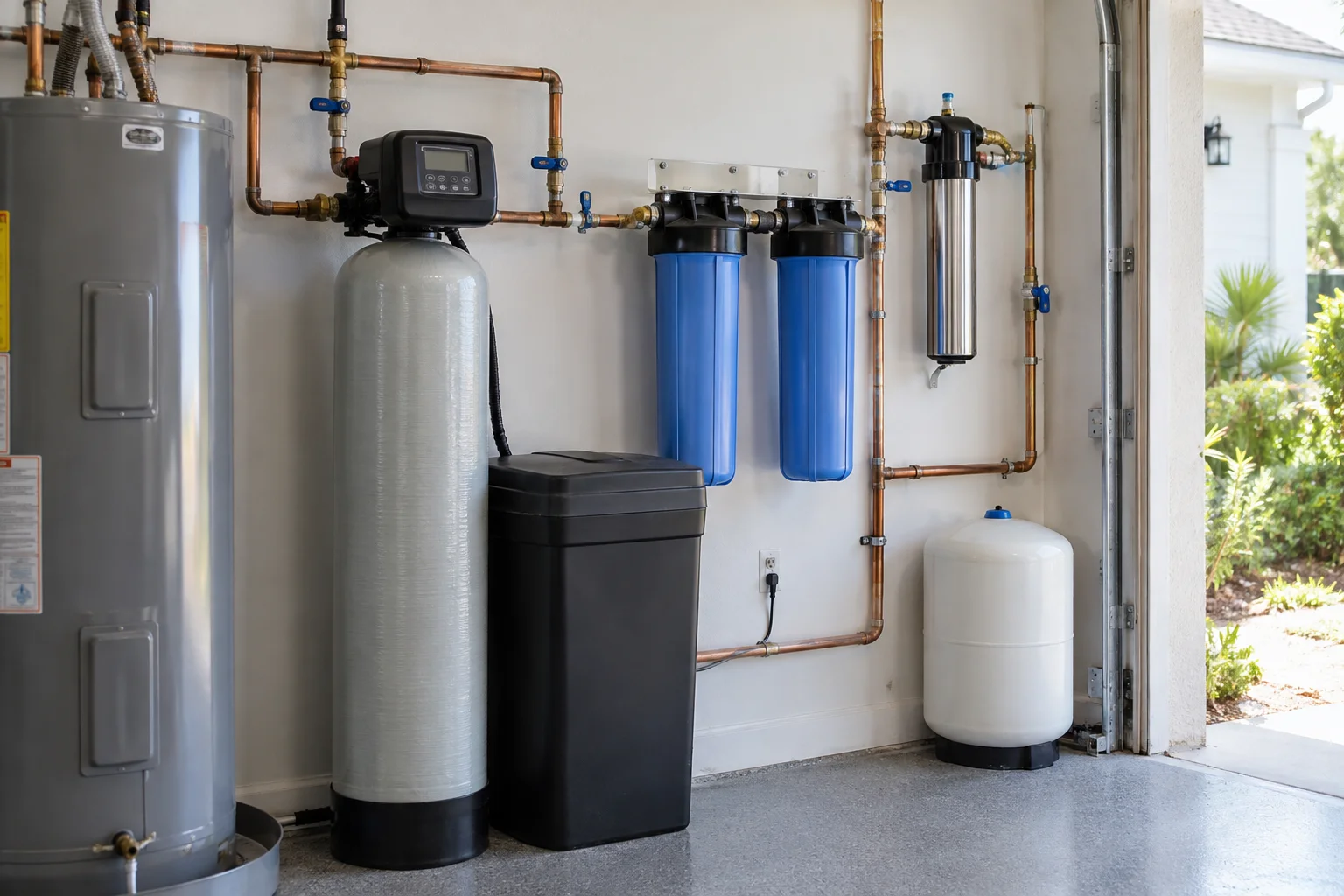
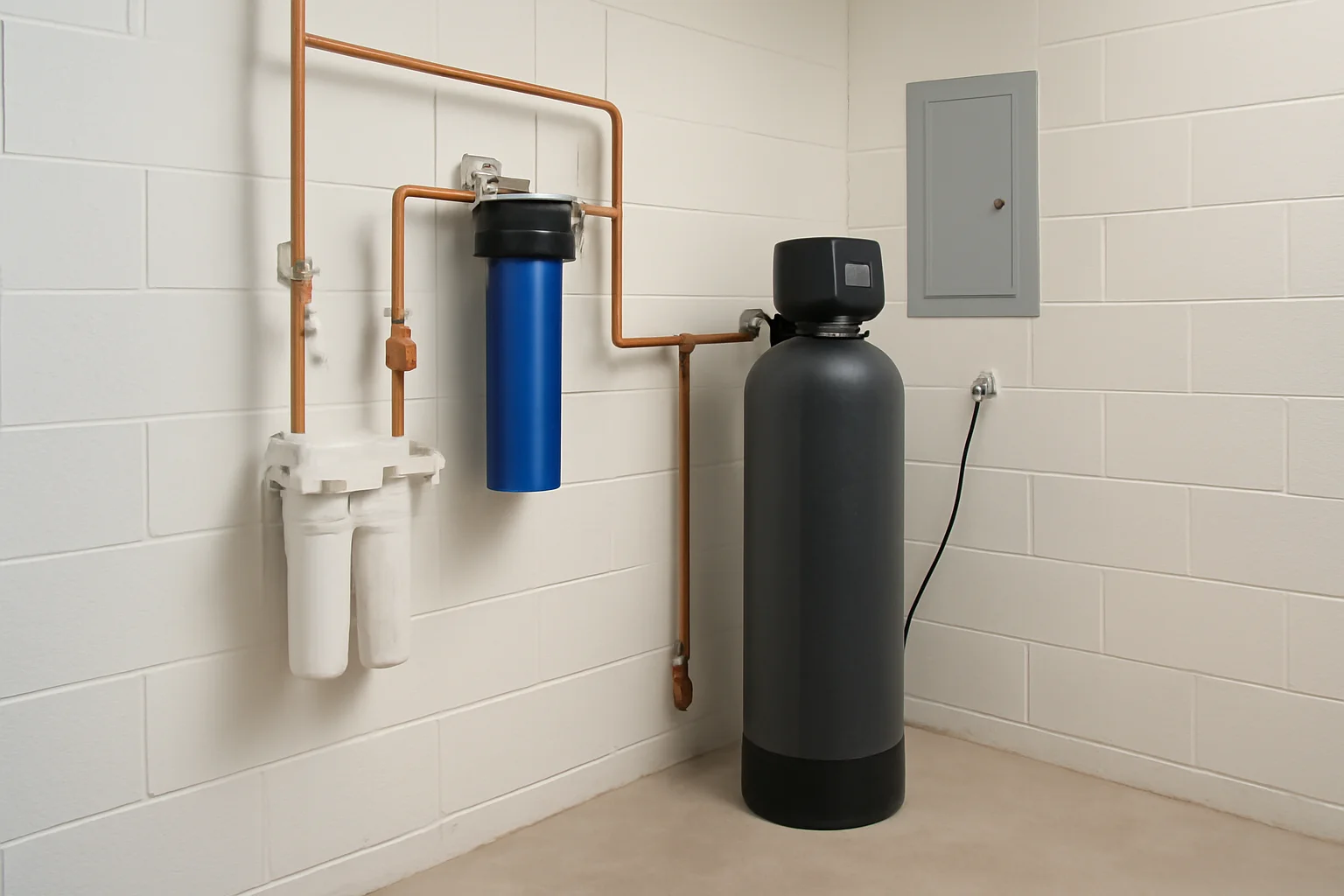
Water softening is designed to address the mineral side of the equation. Whole home water filtration and drinking water filtration options, including AO Smith water filtration and reverse osmosis, can help with additional concerns like odor, sediment, and taste.
Warning sign 1: Scale buildup around faucets, showerheads, and plumbing
If you notice a chalky ring around handles, water spots that do not wipe away, or a crust that returns quickly after cleaning, you are likely dealing with hardness-related mineral buildup. This often shows up as:
- Scale buildup around faucets and sink drains
- Thick deposits on showerheads that reduce spray quality
- Mineral film inside plumbing access areas and at joints
Scale is not just cosmetic. When mineral deposits build up inside pipes and appliances, they can restrict flow and make equipment work harder. That extra strain can shorten appliance life, including water heaters and other water-using systems.
Warning sign 2: Soap that does not lather or rinse well
Hard water can interfere with how soap performs. Homeowners often describe it as “soap just sits there” or “nothing rinses clean.” You might see:
- Soap that does not lather as expected
- Bathtub or sink surfaces that feel slick but not clean
- Residue that makes laundry look dull
In everyday life, this can show up in family bathroom routines. A parent scrubbing a kids' tub after school might work harder and still feel like the surface never looks fully clean. Softening helps water work with your soap, not against it.
If you are searching for water treatment near me because you are tired of fighting residue, water softening is frequently the first step. If odor or visible sediment is also present, pairing softening with whole home water filtration can address more than one issue at the tap.
Warning sign 3: Dry skin or dull hair after bathing
One of the most common “quality of life” indicators is how skin and hair feel after showering. Many homeowners report dry skin from hard water and hair that looks dull or feels rough even when they use good products.
Hard water minerals can leave a film on skin and hair. That film can make moisturizers feel less effective and can contribute to a “stuck” feeling after rinsing. When you soften your water, you often see improvements in how bathing feels and how hair behaves, especially for families with sensitive skin.
If you are considering water softener installation near me, this is a good time to ask about a full water treatment plan rather than only guessing. A professional can help confirm hardness levels and recommend whether additional filtration is needed for chlorine taste in water or other contaminants.
Warning sign 4: Metallic, chlorinated, or unpleasant taste
Taste is one of the first things people notice when drinking water is not right. If you detect a metallic taste, a strong chlorine taste in water, or an overall unpleasant flavor, it may be related to:
- Chlorine or chloramine effects
- Suspended sediment from water handling or plumbing
- Mineral interactions that can make water taste “off”
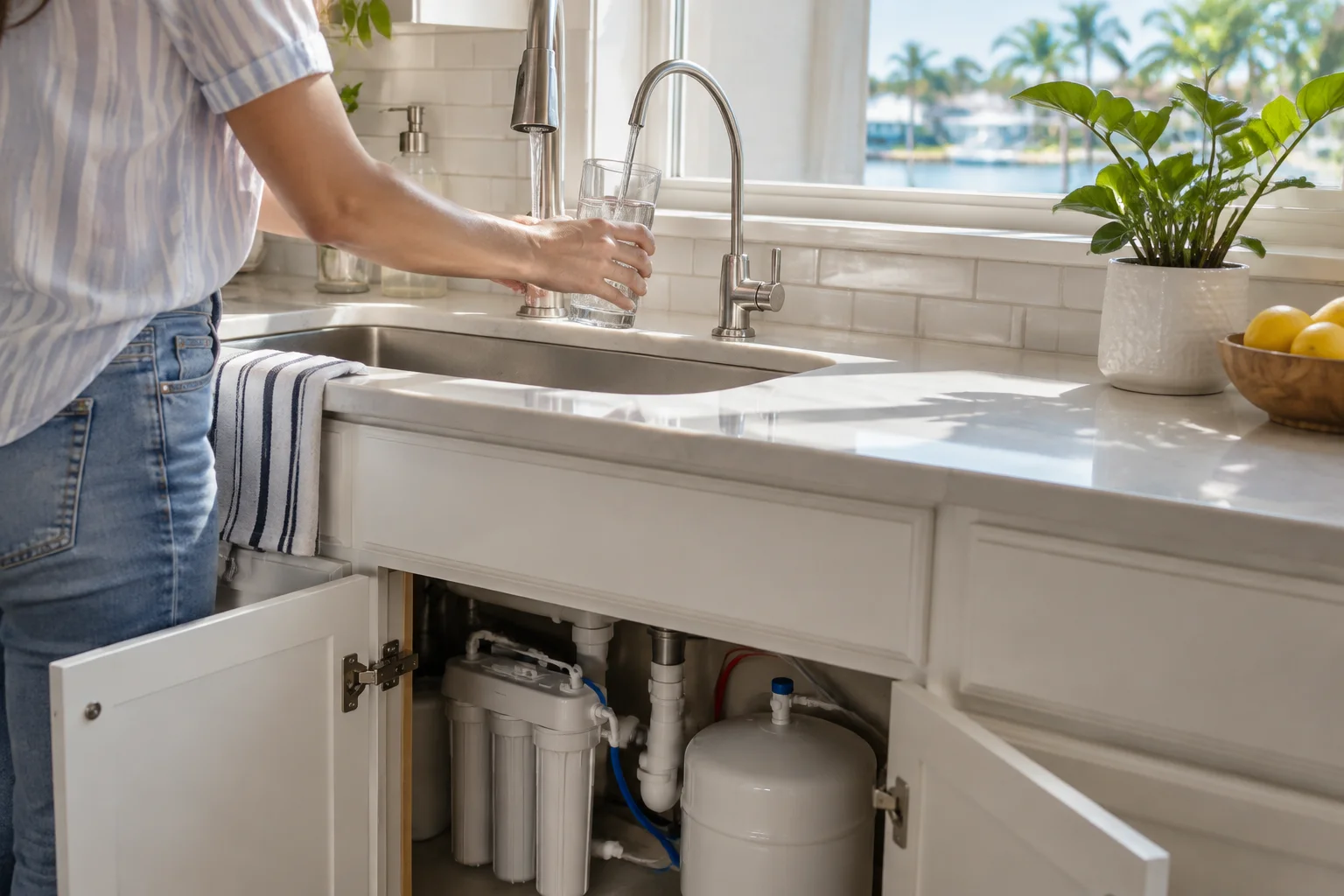
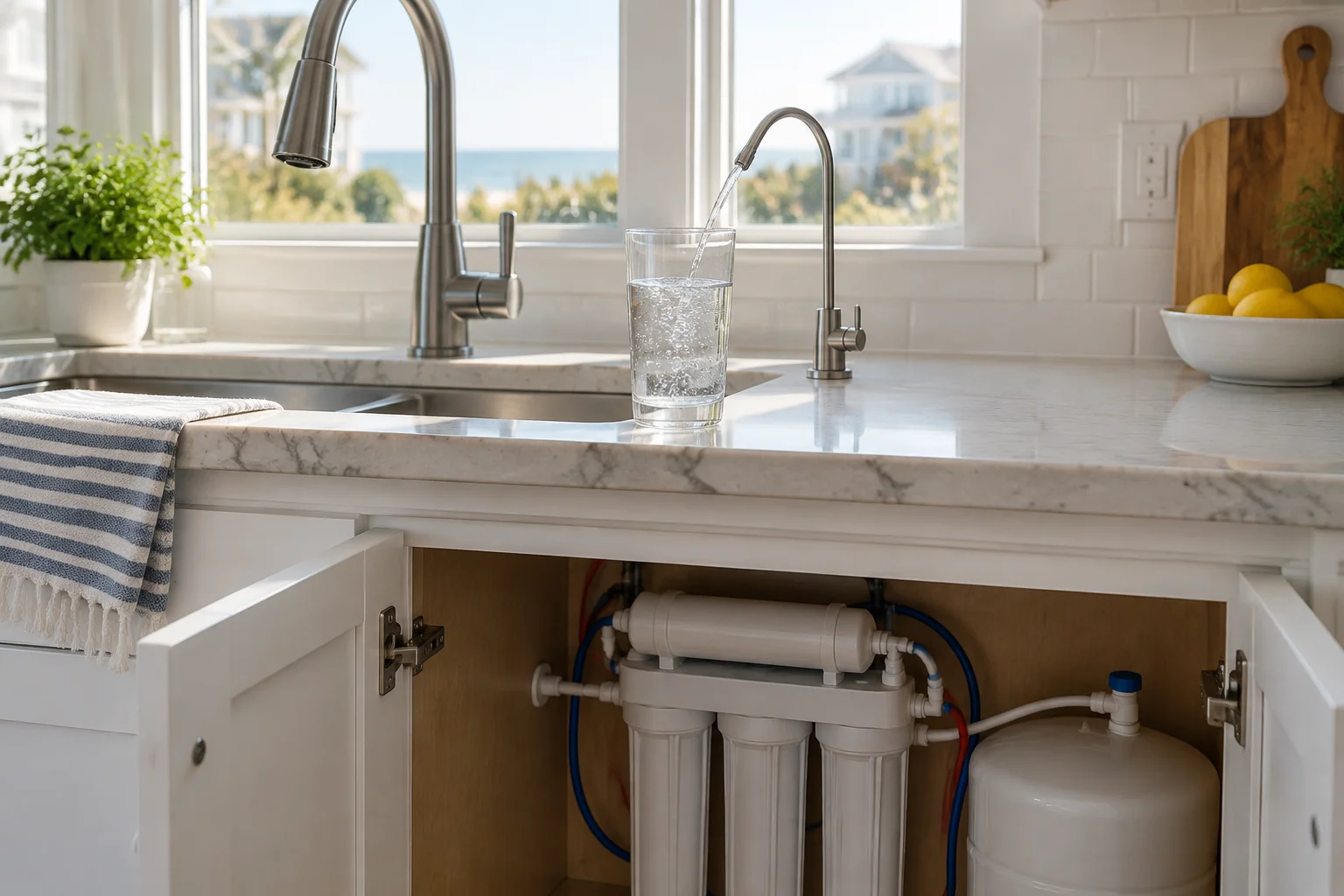
Water softening targets mineral hardness, but it does not automatically replace the role of dedicated drinking water filtration. For homeowners focused on better drinking water, technologies like reverse osmosis can be a strong option for the kitchen and drinking water tap, while whole home water filtration can help protect plumbing and improve overall water clarity and feel.
Think about the kitchen scenes that matter. Kids filling water bottles, parents making a quick morning coffee, or cooking pasta and vegetables. When the water tastes clean, everyday routines get easier, and you can trust the water you pour and cook with. If you are looking for home water purification near me, this is often where reverse osmosis installation near me becomes part of the conversation.
Warning sign 5: Cloudy ice cubes and visible sediment
Cloudy ice cubes can be a clue that your water contains air, suspended particles, or sediment that is not settling properly. Visible discoloration can also show up as:
- Cloudy ice cubes
- Light discoloration in a glass after filling
- Visible sediment in the sink or near fixtures
- Odor that seems stronger after water sits
Hard water and sediment can appear together. In some cases, minerals contribute to haze and scale, while filtration issues allow particles to reach your fixtures and appliances. That is why homeowners often need more than one layer of protection.
Whole home water filtration may reduce sediment and improve clarity, while water softening handles hardness minerals. If you want a focused approach for drinking water, reverse osmosis can further refine water quality at the point you use it most.
Warning sign 6: Poor tasting coffee and cooking water
Many people only connect water quality to coffee and cooking after they switch brands of beans or try a new recipe and still feel like the flavor is not right. Hard water can affect taste and performance in a few ways:
- Mineral content can change how coffee extraction tastes
- Scale can build up in kettles and coffee makers
- Odor or sediment can show up in the final cup
If you notice poor tasting coffee water or water that does not taste clean for cooking, consider a system that supports both everyday use and drinking water. Pairing water softening with an appropriate filtration strategy can help you get water that tastes better and supports better drinking water.
Warning sign 7: Appliances wearing out faster
When minerals build up, appliances pay the price. Homeowners often see earlier-than-expected issues such as:
- Reduced efficiency in water heaters
- Clogging or scale in kettles, humidifiers, and coffee makers
- Shorter service intervals for equipment that depends on clean flow
In a household, that can mean more frequent repairs and replacement costs. It also means more disruption when a family is counting on hot showers, laundry cycles, and reliable hot water for cooking and cleaning.
When hard water treatment becomes part of protecting fixtures and appliances, it is not only about aesthetics. It is about keeping the systems you rely on working the way they were designed to work.
How water softening reduces scale and improves water feel
Water softening is a targeted approach to hardness minerals. Most whole home softeners replace hardness ions so they do not form the same scale deposits. The result is often noticeable quickly:
- Less stubborn buildup on glass
- Cleaner-looking fixtures
- Soap that lathers and rinses better
- Bathing that feels less dry
If you are seeing hard water spots on glass and persistent residue on dishes, softening can help reduce the mineral-driven film that makes cleaning harder.
For homeowners in Upper Grand Lagoon who want to reduce household friction, this can be a big deal. Imagine running the dishwasher and not finding a haze on plates, or scrubbing less to get bathroom surfaces to shine.
When softening is not enough: sediment, odor, and chlorine concerns
Some water quality issues are related to hardness, but others point to filtration needs. If you are dealing with:
- Visible sediment or discoloration
- Cloudy ice cubes
- Metallic or unpleasant taste
- Chlorine taste in water that lingers
you may need additional treatment beyond water softening. That is where whole home water filtration and drinking water filtration come in.
Many homeowners choose a layered approach: softening to reduce hardness scale, then filtration to improve clarity, odor, and taste. If you are exploring options like AO Smith water filtration, ask about the specific contaminants the system is designed to address and where it will be installed.
For kitchen and drinking water concerns, homeowners often ask about reverse osmosis because it can deliver very refined water for drinking and cooking. It is also a common solution for people who are sensitive to taste and want consistent results at the tap.
Choosing the right system for Upper Grand Lagoon homes
Upper Grand Lagoon homes may include a mix of older plumbing, newer fixtures, and different household water usage patterns. A system that works for one home may not be ideal for another.
A Superior Mechanical focuses on matching the solution to the symptoms you are seeing. That typically starts with understanding what you are noticing and confirming water conditions so you do not pay for equipment you do not need.
To learn more about the service option that addresses hardness directly, review the water softening service page here: /service-areas/bay-county/upper-grand-lagoon/water-softening-uglfl.
If you want to compare broader clean water strategies, the main water filtration landing page is a helpful starting point: /water-filtration-ro-water-softeners.
For local context on the area A Superior Mechanical serves, visit /service-areas/bay-county/upper-grand-lagoon.
Maintenance habits that help before and after treatment
Even the best clean water systems need basic care. Homeowners can reduce problems and protect performance with a few practical habits:
- Watch for return of scale after cleaning. If it comes back quickly, it may be time to service or adjust your system.
- Pay attention to laundry results. Dull towels and residue can be a cue that water softening is not performing.
- Check fixtures after storms or periods of unusual water activity. If you notice new discoloration, filtration may need attention.
- Keep an eye on appliance performance. If your water heater or coffee maker starts scaling faster, address water quality before the damage spreads.
These habits are especially useful for families managing busy schedules. When you catch issues early, you can prevent a minor water quality change from turning into a bigger repair later.
DIY tests versus professional water testing
Home test strips can provide a starting point for hardness and general levels. However, they often do not explain the full picture, especially when multiple concerns overlap, like sediment plus chlorine taste.
Professional water analysis and system evaluation help homeowners in Upper Grand Lagoon understand what is driving the symptoms. That matters because:
- Hardness minerals and sediment require different solutions.
- Chlorine taste in water may call for dedicated filtration.
- System sizing affects performance and how quickly you see results.
If you are searching for water treatment near me, look for a provider that can explain the link between your water symptoms and the right equipment. That is the fastest path to better drinking water without guesswork.
When to call A Superior Mechanical for water softening and filtration
Call a professional if you notice several warning signs at once, especially when they start affecting multiple areas of your home. Consider scheduling service if you have:
- Hard water spots on glass that keep returning
- Scale buildup around faucets and showerheads
- Dry skin from hard water or dull hair after bathing
- Metallic tasting water, chlorine taste in water, or unpleasant odor
- Cloudy ice cubes or visible sediment
- Appliances wearing out faster than expected
Upper Grand Lagoon homeowners deserve clean water systems that match real life: drinking water for the kitchen, shower water for the family, and laundry water for the everyday load. A Superior Mechanical can help you choose between water softening, whole home water filtration, and options like reverse osmosis based on what you are experiencing.
If you are also comparing broader service options in the county, you can explore /service-areas/bay-county for additional context on local coverage.
Related reading for Upper Grand Lagoon homeowners
If you are weighing your next steps, these guides can help you connect water quality to home comfort and maintenance:
- Why Water Softening Matters for Upper Grand Lagoon Homes
- How Water Softening Protects Rosemary Beach Plumbing from Costly Water Damage
- Choosing the Right Time for Plumbing Fixture Replacement in Upper Grand Lagoon
How better water changes daily routines
When water treatment is working properly, the improvements show up in small moments: clearer dishes, better-feeling showers, and water that tastes clean enough to drink without hesitation. A softened, properly filtered home can also mean fewer cleaning sessions and less worry about scale creeping back onto fixtures.
For Upper Grand Lagoon families, that is the goal of clean water systems. The right combination of water softening and filtration helps you protect plumbing, support appliances, and enjoy better drinking water from morning coffee to bedtime baths.
For homeowners searching for water filtration near me or considering water softener installation near me, the best next move is to match your symptoms to the right equipment. Start with the service page for water softening here: /service-areas/bay-county/upper-grand-lagoon/water-softening-uglfl.
Find Water Softening in Upper Grand Lagoon, FL
If you need Water Softening in Upper Grand Lagoon, FL, visit our local service page or contact A Superior Mechanical today.
For a broader look at whole-home water filtration, reverse osmosis, and water softener options, visit our water filtration, RO, and water softener page.
Map of Upper Grand Lagoon, FL
Frequently Asked Questions
Can water softening fix chlorine taste or unpleasant odor?
Water softening primarily targets hard water minerals that cause scale and soap problems. If you notice chlorine taste in water or unpleasant odor, you may also need whole home water filtration or a drinking water filter such as reverse osmosis for the kitchen tap.
Why do I have cloudy ice cubes even when my water looks clear in the sink?
Cloudy ice cubes can happen when dissolved gases, fine particles, or sediment are present. A whole home water filtration system can help reduce suspended particles, and testing can confirm whether softening or additional filtration is needed.
Will a water softener help with hard water spots on glass and dishes?
Yes. Softened water reduces mineral buildup that creates hard water spots on glass and haze on dishes. Many homeowners also notice improved lathering and rinsing because soap performs better with softened water.
Do I need reverse osmosis if I already have water softening?
Not always, but it is common when the main concerns are drinking water taste, odor, and fine sediment. Many Upper Grand Lagoon homeowners use softening for whole-home scale control and reverse osmosis for cleaner drinking and cooking water.
How do I know whether I need whole home water filtration or just a drinking water system?
If you are seeing issues across multiple rooms, like scale on fixtures, lingering odor, or sediment at more than one tap, whole home water filtration is often the better fit. If your main concern is taste and clarity at the kitchen tap, a drinking water approach like reverse osmosis may be enough. A professional water assessment can clarify the best route.
Related Articles
Photo Gallery