Fort Walton Beach weather can feel humid year round, and many homes in Okaloosa County rely on water systems that have to work hard. When hard water is not properly treated, it shows up everywhere: on glass, in laundry, on showerheads, and even in how your skin feels after a bath. The tricky part is that these problems rarely announce themselves all at once. They build over time, often tied to how a water softening system is set up, maintained, or paired with additional filtration.
This guide connects common water quality warning signs to water softening systems and water filtration choices, so you can address the issue early. If you are searching for water filtration RO water softeners or looking for water softening systems for FWB, the timing of repairs and upgrades matters more than most homeowners realize.
Why Fort Walton Beach homes feel hard water changes first
Hard water is usually defined by dissolved minerals, most commonly calcium and magnesium. In Fort Walton Beach, those minerals can leave deposits as water moves through plumbing, water heaters, fixtures, and appliances. Over time, scale buildup on faucets and showerheads becomes more obvious, and the same mineral layer can reduce heat transfer in a water heater or clog small passages inside plumbing components.
Water softening systems are designed to reduce those mineral effects. But softeners need the right settings, the right resin condition, and the right maintenance schedule. When that timing slips, homeowners start noticing symptoms that feel like “mystery water problems,” even when the system is technically still running.
For many families, the first clue shows up in daily scenes: the coffee tastes off, the kids’ bath water leaves skin feeling dry, and the kitchen glassware looks dull even after washing. Those are not just annoyances. They are practical signals that your home water treatment may not be keeping up.
Water quality warning signs that often point to softener or filtration issues
Below are common signs homeowners notice in Fort Walton Beach. Each one can connect to water softening performance, salt and regeneration timing, or the need for whole home water filtration and additional treatment like reverse osmosis.
1) Hard water spots on glass, dishes, and fixtures
If you wipe a glass and still see cloudy streaks, or if dishes come out with a film that will not fully rinse, that is classic hard water behavior. Scale buildup on faucets is another tell. In the shower, scale can cling around showerheads and along the edges of handles, and it can build faster when softening is inconsistent.
When a softener is not fully conditioning water, minerals remain in the water stream. They then deposit as the water dries. This is one of the most visible signs that homeowners can connect to water softener service near me searches, because it shows up in the places you touch and clean daily.
2) Scale buildup around faucets, showerheads, and plumbing
Some scale looks like white specks. Over time it becomes thicker, rougher, and harder to remove. You might also notice reduced water flow from a showerhead or a faucet aerator that needs more frequent cleaning. Inside plumbing, scale can contribute to reduced efficiency and more wear on components.
When hard water treatment becomes part of protecting fixtures and appliances, it is not only about appearance. Scale buildup can interfere with how water heaters and other equipment perform, which can shorten appliance life.
3) Dry skin or dull hair after bathing
Many homeowners describe skin that feels tight or itchy after showers, and hair that looks dull or feels rough. Hard water can make it harder for soap and shampoo to work well. It can also leave residues that do not rinse away easily.
If your family used to feel comfortable after bathing and now notices changes, check whether your water softener is properly set. Also consider whether your system needs a whole house water filter to address other water quality factors that affect comfort.
4) Soap that does not lather or rinse well
Low lather and a “slippery but not clean” feel can point to mineral interference. With hard water, soap can react with minerals, making it less effective. That can leave laundry looking dingy and can make bathroom cleaning harder because residue builds quickly.
Homeowners often notice this during laundry day. Towels may feel stiff. Dark clothing may lose color faster. If you recently changed detergent brands but the problem stayed, it may be your water treatment timing, not your product.
5) Metallic, chlorinated, or unpleasant taste
Hardness is one part of the story. Taste and odor concerns can involve chlorine or other treatment byproducts. If you notice a metallic or chlorinated taste in drinking water, cooking water, or even your ice, that can mean your water softening system is not designed to remove those taste and odor factors.
This is where whole home water filtration near me searches often lead homeowners to systems that complement softeners. A softener focuses on hardness minerals. Filtration focuses on additional impurities, sediment, and taste and odor issues.
6) Cloudy ice cubes and water that looks off
Cloudy ice cubes can be a signal that the water contains sediment or dissolved materials that do not look clear when frozen. Visible sediment, discoloration, and odor concerns are especially important to take seriously because they can affect both drinking water and appliance performance.
Cloudy ice often shows up before people notice anything else. It is also a common reason families ask about home water purification near me options, including reverse osmosis for drinking and cooking.
7) Poor tasting coffee and cooking water
If coffee tastes flat or off, and cooking water changes how soups, rice, or pasta turn out, water quality is likely affecting flavor and mineral balance. Hard water can also impact how certain foods cook and how quickly kettles scale up.
For better water for drinking and cooking, many homeowners use reverse osmosis for the kitchen tap while maintaining whole home water softening for comfort and protection. Timing matters because if you soften but do not filter taste, you may still notice issues at the tap.
8) Appliances wearing out faster
Coffee makers, water kettles, humidifiers, and some laundry-related equipment can accumulate scale quickly in hard water conditions. If you are descaling appliances more often or replacing them sooner than expected, that is a practical sign your water softening performance is not keeping up.
Scale buildup on internal heating surfaces can reduce efficiency and increase wear. Addressing the root cause early can help you stretch appliance life and reduce repeat maintenance.
9) Visible sediment, discoloration, and odor concerns
Softening systems are not always the right tool for sediment or discoloration. If you see particles or notice odor changes, you may need additional filtration. Whole home water filtration or a targeted approach like sediment reduction before softening can help protect the system and improve overall water clarity.
Why timing matters: the softener can be “on” but still not working right
Homeowners sometimes assume that if the softener is running, the water is being treated. In reality, softeners have cycles and settings. Regeneration timing, salt levels, and resin performance matter. If your system regenerates too early or too late, water can pass through without adequate mineral exchange. If salt is bridging or the brine tank is not drawing correctly, the softener may not regenerate effectively. If the resin is exhausted or the system needs service, hardness can slip through.
Fort Walton Beach humidity and seasonal water usage patterns can influence demand. Families may use more water during summer months for showers, laundry, and outdoor cleaning. If your softener is not sized correctly or not adjusted to actual usage, hardness can show up more frequently.
That is why timing matters with water filtration and softening. Addressing small issues early helps prevent scale buildup around faucets and showerheads from becoming permanent or requiring more aggressive cleaning.
How water softening fits with filtration, including reverse osmosis
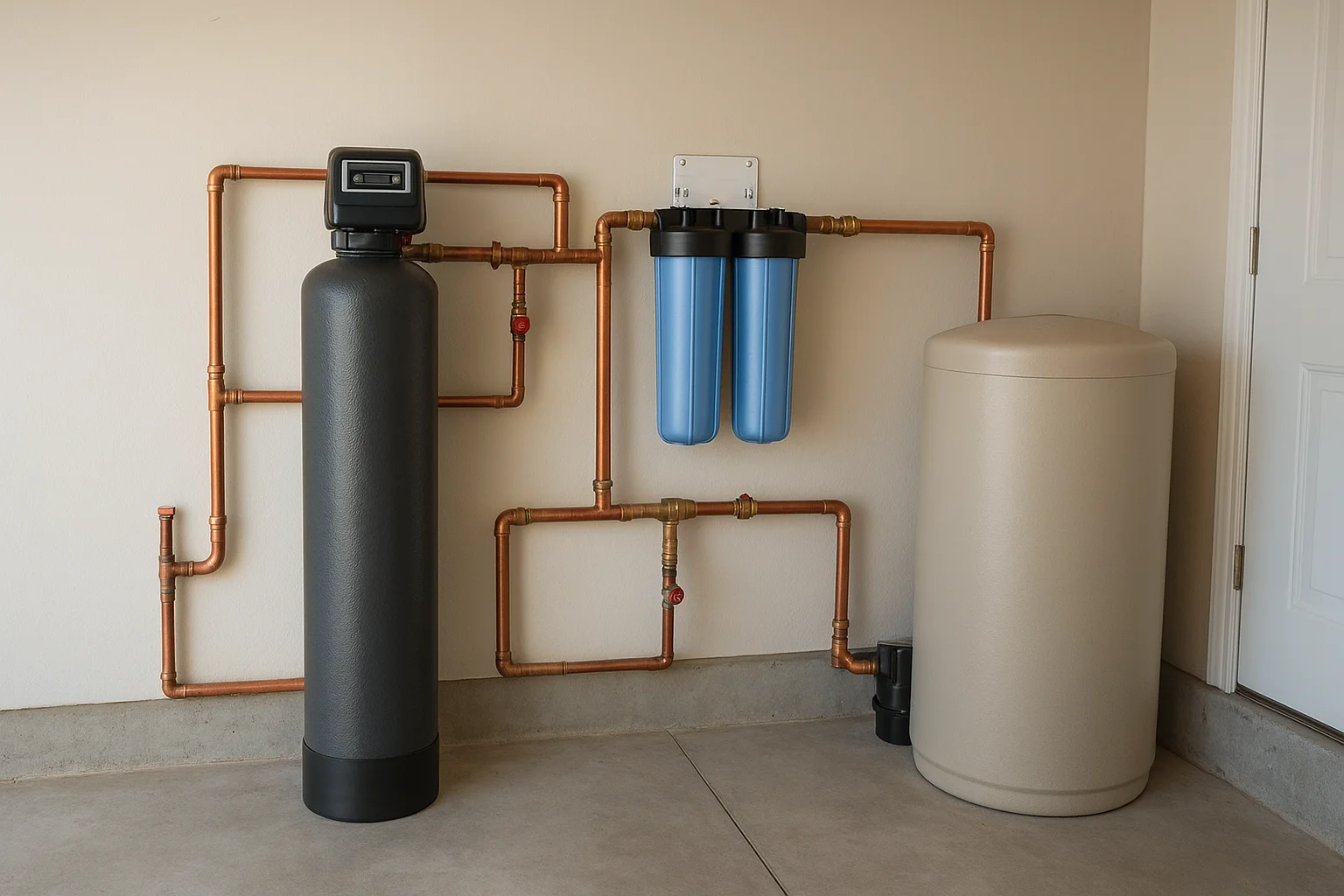
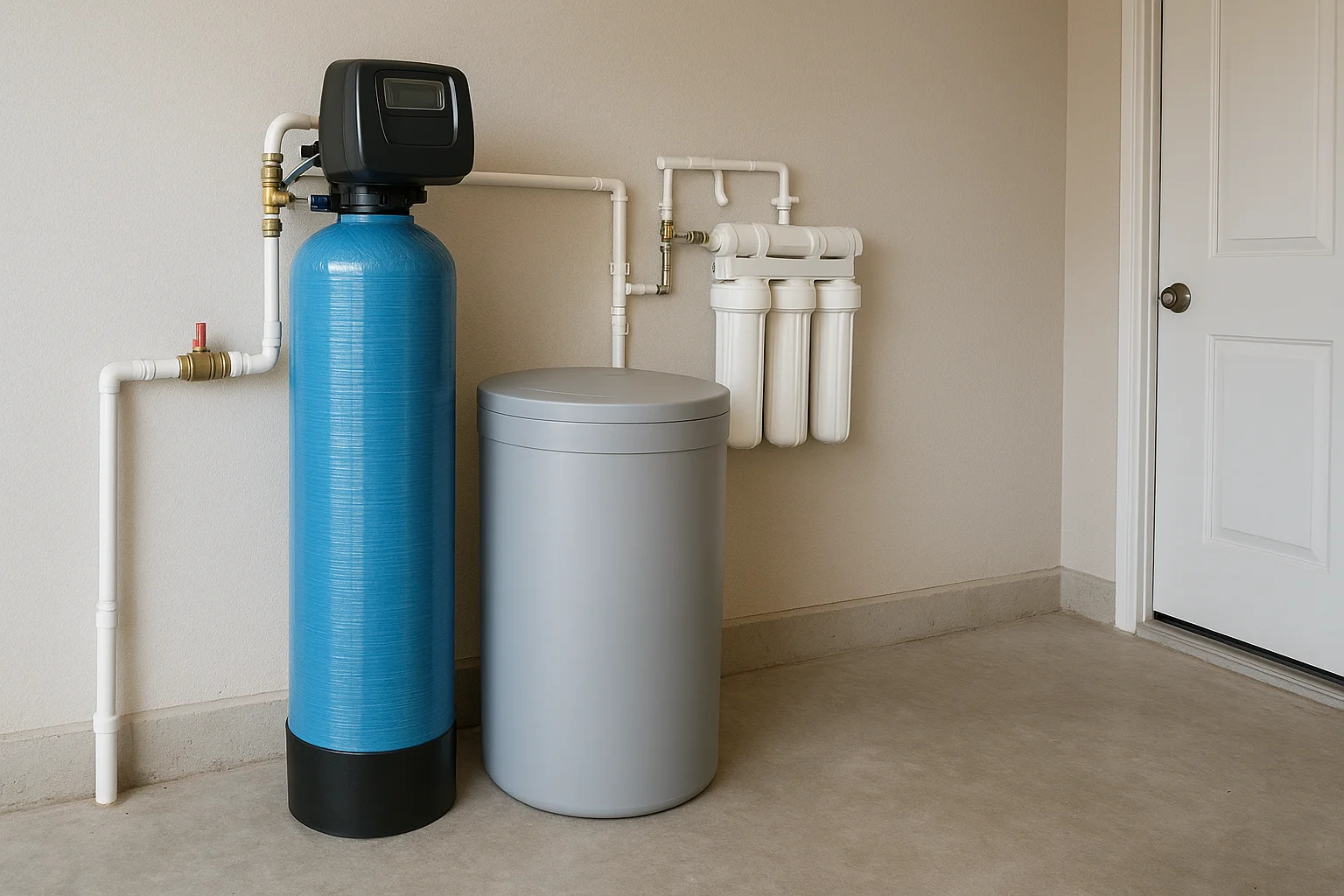
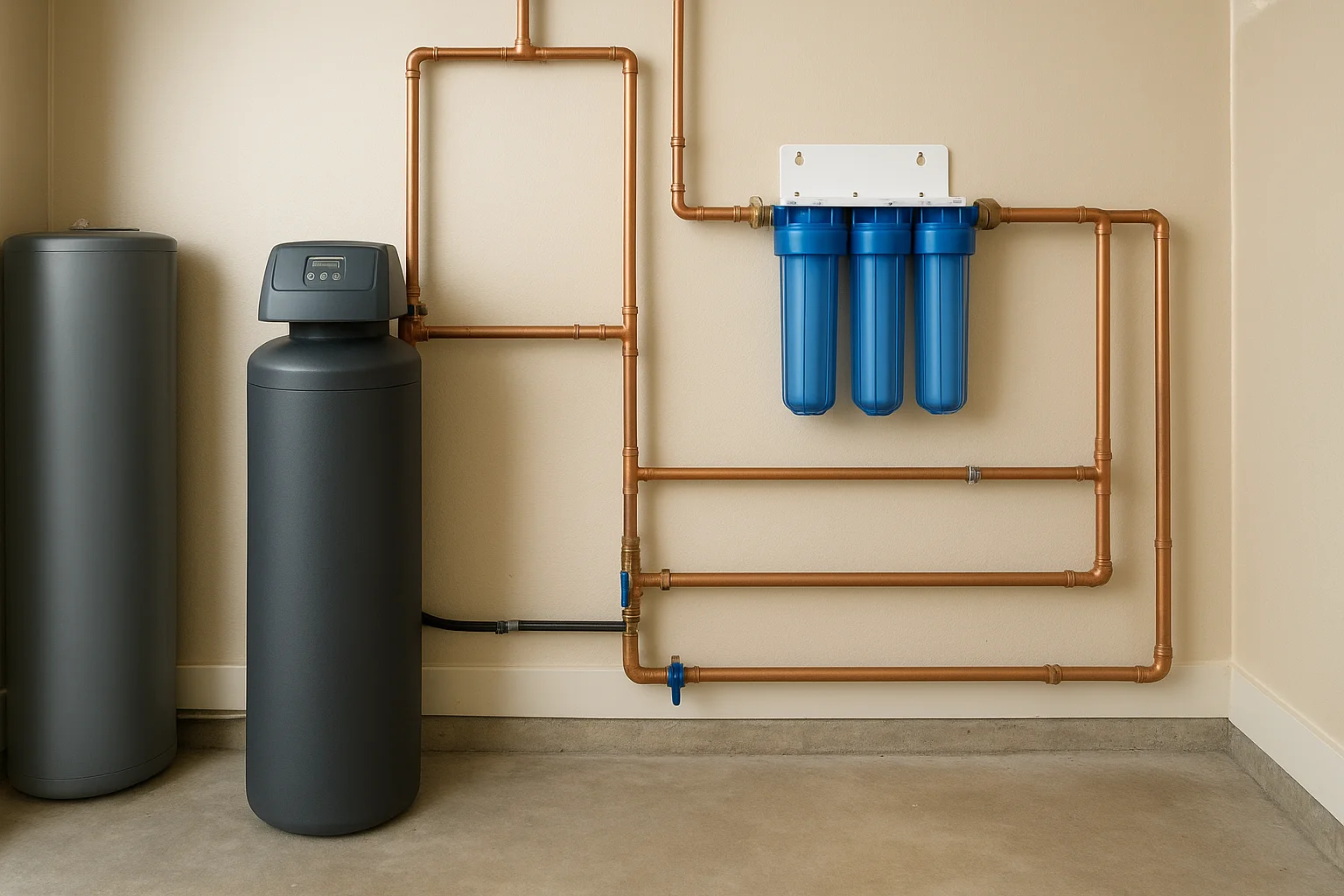
Many homes benefit from a layered approach. Hard water treatment reduces scale and improves soap performance. Whole home water filtration can help with sediment, taste, and odor. Reverse osmosis (RO) can provide a high-purity option for drinking and cooking.
Water softening systems: protecting plumbing and daily comfort
Water softeners are built to reduce hardness minerals. When they are properly installed and maintained, you typically see fewer hard water spots on glass, better rinsing in the laundry room, and less scale buildup on faucets and showerheads. Skin and hair often feel different too, especially for households that shower frequently.
If you are considering an AO Smith water softener or an Evolve system, the key is matching the system to your household size and water conditions. A correctly sized softener can reduce the chance of hardness slip during peak usage.
Whole home water filtration: improving clarity and taste beyond hardness
Whole home water filtration near me is a common next step when homeowners still notice chlorinated taste in water, cloudy ice cubes, or visible sediment. Filtration can help protect fixtures and appliances while also improving the everyday experience of washing and bathing.
For families, this can show up as cleaner-feeling bath water, better rinsing, and fewer “mystery” residue issues that soap alone cannot explain.
Reverse osmosis for drinking and cooking water
Even with softening and whole home filtration, many homeowners choose RO for the kitchen. RO systems can deliver better water for drinking and cooking by reducing a wider range of dissolved contaminants. If your concern is metallic tasting water, chlorine taste in water, or off flavor in coffee and cooking water, RO is often an effective complement.
When you are searching for water filtration RO water softeners, it helps to think of it as a system design problem. The best results usually come from treating hardness for the whole home and using targeted filtration where taste and drinking quality matter most.
AO Smith and Evolve systems: what homeowners should look for
A Superior Mechanical helps Fort Walton Beach homeowners choose and install water softening systems that fit their needs, including Evolve and A. O. Smith options. The goal is not just to install equipment, but to make sure it performs correctly for your home’s water use patterns.
When evaluating water softener service, ask how the installer will account for household size, water usage, and the way your home is plumbed. Timing is part of the performance story. Settings and maintenance routines determine whether you get consistent conditioning, especially during busy weeks when laundry and bathing demand spikes.
Maintenance and prevention steps that reduce water quality surprises
You do not have to guess your way through water treatment. Still, there are a few practical steps homeowners can take between professional visits.
Watch salt levels and the brine tank setup
If you use a salt-based softener, keep an eye on salt supply. Low salt can cause incomplete regeneration. Some brine tanks can develop salt bridges that prevent proper dissolving. When this happens, hardness can slip through and you may see hard water spots return.
Pay attention to cleaning frequency changes
If you suddenly have to descale your showerheads more often or spend extra time polishing faucets, treat it as a warning sign. Changes in your cleaning routine are often the earliest household clue that your softener or filtration is not keeping pace.
Check for soap and laundry changes after holidays or travel
Water use patterns can shift when the household is away. When you return, you may notice different rinsing behavior. If the softener timing or regeneration schedule does not match your new demand, you can see temporary hardness issues that stabilize once the system catches up.
Use the right approach for taste and cloudy ice
If the main issue is chlorine taste in water, metallic tasting water, or cloudy ice cubes, do not assume the softener is the only solution. Whole home water filtration and RO for drinking water are often the better match for those concerns.
When to call a professional for water softener service or filtration help
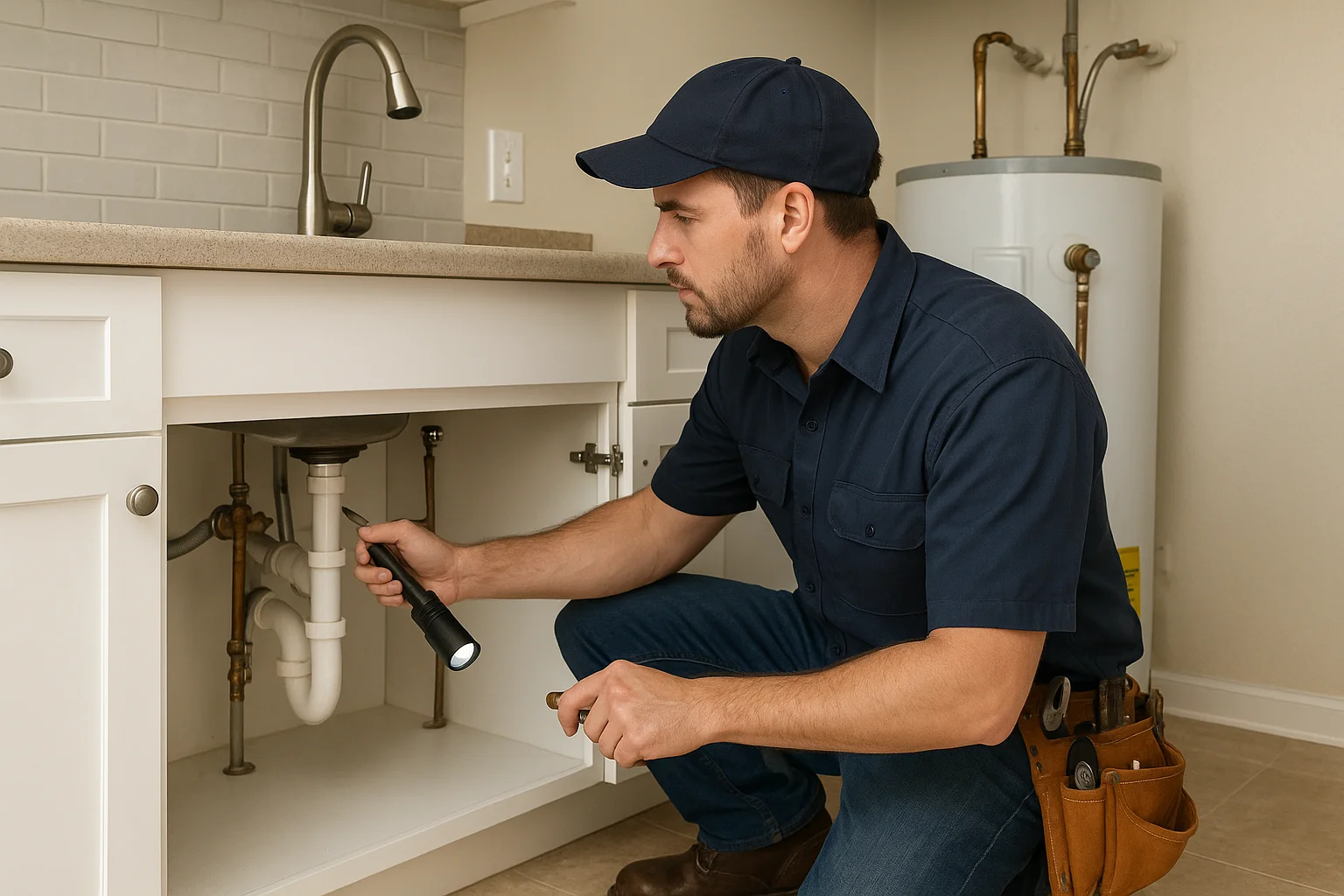
Call a professional when you notice repeated or worsening indicators, especially if multiple signs appear together. Examples include hard water spots on glass plus dry skin after bathing, or scale buildup around faucets plus cloudy ice cubes.
It is also smart to schedule service if you recently moved into a Fort Walton Beach home and do not know the softener history. New homes can come with older equipment, incorrect settings, or systems that were never tuned for your household’s water use.
If you are looking for water treatment near me options, start with a local team that understands Okaloosa County water conditions and can recommend the right blend of softening and filtration. You can also review the service area information on our Fort Walton Beach service coverage and Okaloosa County service options.
For homeowners focused on the softener itself, the most direct path is to connect with water softening systems for FWB. For broader water quality questions, you can also explore water filtration RO water softeners to compare softening with drinking water filtration strategies.
Other plumbing and water system issues that can mimic hard water symptoms
Sometimes water quality concerns overlap with other home issues. For example, a water line problem can contribute to discoloration or odor changes. If you are seeing sediment or discoloration that is not typical for your home, it may be a separate issue from hardness.
Homeowners often also ask how water quality intersects with maintenance decisions. If you are planning repairs, it can help to read A Fort Walton Beach Homeowner’s Guide to Water Line Replacement Before Small Problems Spread and Planning Sewer Repair Around Fort Walton Beach Homes and Hard Water. These topics are not the same as softener installation, but they connect to how water problems show up in real homes.
If your concern is primarily about household water performance, you may also find helpful context in Plumbing warning signs Fort Walton Beach homeowners should not ignore.
Everyday life improvements you can expect after fixing the timing
When water softening and filtration are working together, the benefits show up in the routines your family actually cares about.
- Kitchen moments: better drinking water and cooking water that makes coffee taste right and meals come out more consistent.
- Bath time: skin feels less tight, hair looks healthier, and soap rinses away with less residue.
- Laundry day: towels and clothes rinse cleaner and look brighter because soap can do its job.
- Fixture care: fewer hard water spots on glass and less scale buildup on faucets and showerheads, so cleaning takes less time.
- Appliance protection: reduced scale stress can help appliances run more efficiently and wear out more slowly.
Fort Walton Beach homes experience different water use patterns across the year, and humidity can make mineral residue more noticeable. That is why a properly maintained softener and the right filtration setup can make a visible difference, not just an abstract promise.
If you are ready to address the root cause behind cloudy ice cubes, chlorinated taste, dry skin, or scale buildup on faucets, start by matching your system to your household and your water quality goals. A Superior Mechanical can help you evaluate whether you need water softener service, whole home water filtration near me options, reverse osmosis for drinking and cooking, or a combination that fits your home.
Find Water Softening Systems in Fort Walton Beach, FL
If you need Water Softening Systems in Fort Walton Beach, FL, visit our local service page or contact A Superior Mechanical today.
For a broader look at whole-home water filtration, reverse osmosis, and water softener options, visit our water filtration, RO, and water softener page.
Map of Fort Walton Beach, FL
Frequently Asked Questions
Why does my water still leave spots even though I have a water softener?
When hard water spots on glass and fixtures return, it often means the softener is not regenerating correctly, the settings do not match your household use, or the unit needs service. A technician can check salt and brine function, regeneration timing, and overall performance. If taste or cloudy ice cubes are also present, you may need whole home water filtration or RO in addition to softening.
Can a water softener fix chlorine taste in water or metallic tasting water?
Typically, no. Water softeners focus on hardness minerals that cause scale buildup. Chlorine taste in water, metallic or unpleasant taste, and cloudy ice cubes usually point to filtration needs. Many homeowners pair softening with whole home water filtration and use reverse osmosis at the kitchen tap for better drinking water and cooking water.
How do I know whether I need reverse osmosis or whole home water filtration?
If the main issue is drinking and cooking flavor, cloudy ice cubes, or concerns about what you swallow, reverse osmosis is often the targeted choice. If you want improved clarity and better overall water quality throughout the home, whole house water filter systems can help. A local water treatment evaluation can recommend the right blend for your Fort Walton Beach home.
What maintenance prevents hard water from slipping through a softener?
Keep salt levels appropriate, confirm the brine tank is working properly, and schedule professional service to check resin condition and regeneration performance. Monitoring changes like scale buildup on faucets, reduced soap lather, and soap residue on dishes can help you catch timing issues early.
Related Articles
Photo Gallery