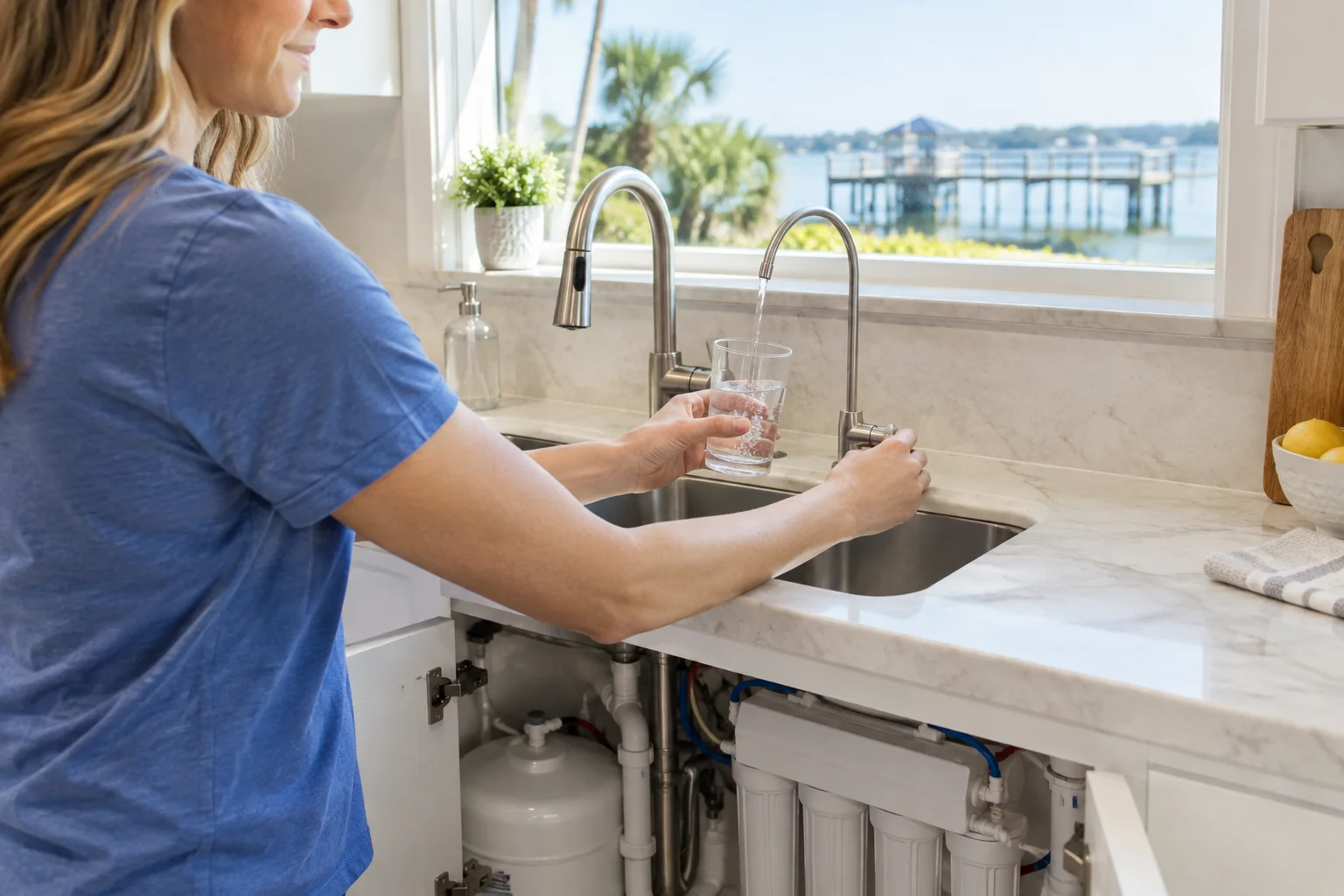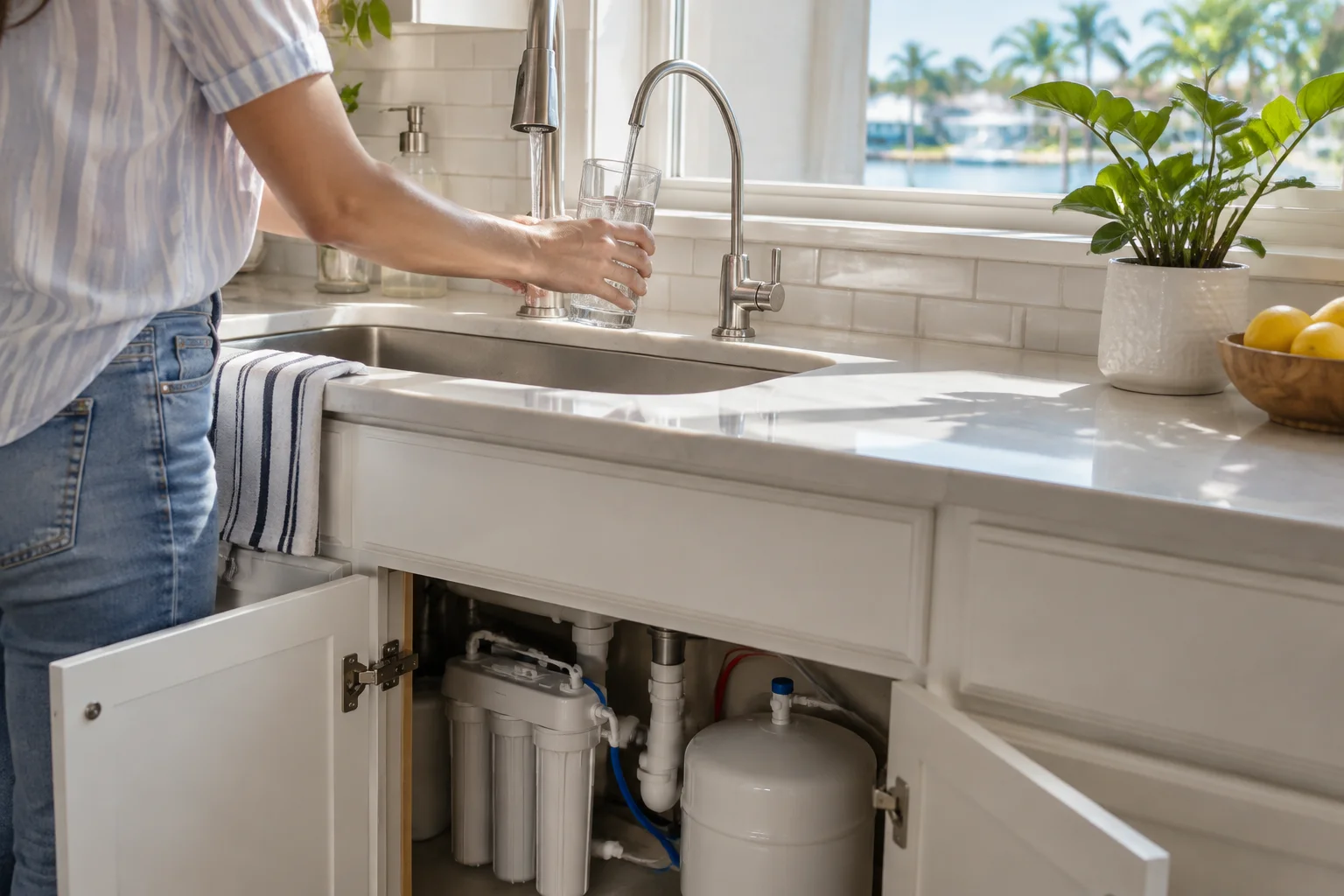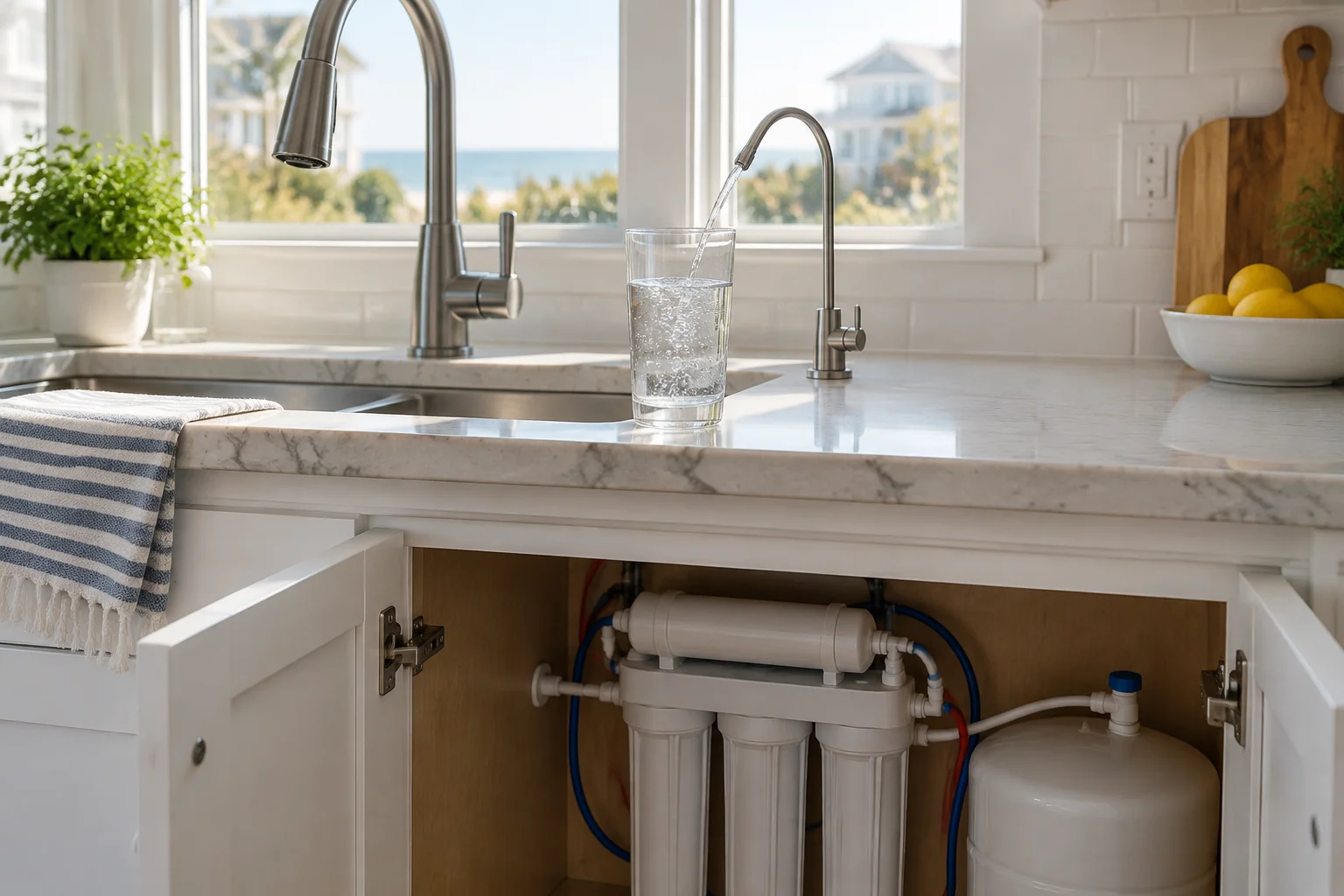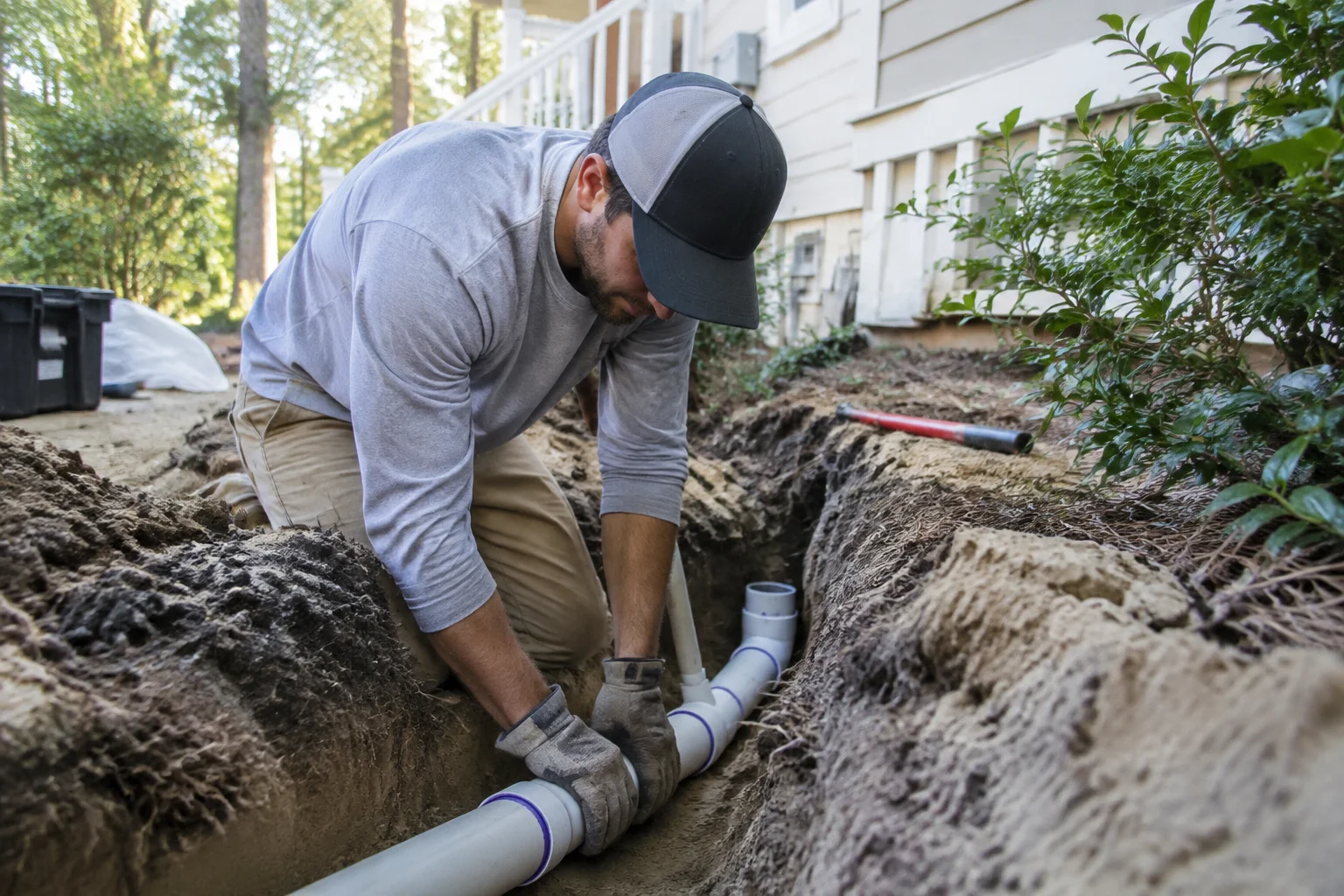
In Santa Rosa Beach, Florida, everyday life depends on water you can trust. You want clear ice cubes, coffee that tastes right, and fixtures that do not get crusty. When your home uses a reverse osmosis (RO) system, water quality should stay consistent, protecting sinks, showers, appliances, and your skin. When something changes, the warning signs often show up in the kitchen first and then spread throughout the home.
This guide walks you through the most common water quality warning signs connected to reverse osmosis systems, what they usually mean, and how homeowners can improve taste, clarity, and daily confidence. If you are searching for reverse osmosis systems in Santa Rosa Beach, this is a practical place to start.
Why Santa Rosa Beach water can stress an RO system
Homes across Walton County often deal with a mix of water quality challenges that can become more noticeable during seasonal weather swings. Depending on your neighborhood and local supply blending, you may see issues like sediment, mineral content, and changes in taste or odor. These factors matter because an RO drinking water system relies on pretreatment and correct maintenance schedules.
When water quality shifts, your RO system may still run, but the output can drift. That is when you may notice:
- Cloudy ice cubes or hazy drinking water
- Metallic, chlorinated, or unpleasant taste
- Visible sediment, discoloration, or odor concerns
- Appliances wearing out faster than expected
At the same time, if your home also experiences hard water, minerals can create scale buildup on faucets, showerheads, and plumbing. Even with RO for drinking, hard water can still impact the rest of your household water unless you have appropriate water softening or a whole home water filter strategy.
Water quality warning signs homeowners notice first
1) Metallic or chlorinated taste in drinking water
If your RO water tastes metallic, sharply chlorinated, or just off, it is often tied to filtration and carbon performance. Many RO systems include carbon filtration to reduce taste and odor before water reaches the membrane. When filters are overdue or the system is not performing as designed, the final water can pick up flavors you do not want.
Kitchen scenes tell the story quickly. Someone makes a glass of water and says it tastes “metallic.” Coffee brewed with filtered water for coffee and cooking suddenly tastes flat or harsh. Cooking water no longer tastes clean enough to matter, and that can change the way rice, pasta, and sauces turn out.
When you see taste changes, do not assume it is just “water day.” It can be a sign your RO system needs service, filter changes, or a check of the membrane and pressure settings.
2) Cloudy ice cubes and hazy water clarity
Clear water is part of daily confidence. If your ice cubes look cloudy or your glass holds a haze, it can indicate suspended particles, carbon issues, or air and mineral interactions. Some homeowners also notice that the problem is worse at certain times of day, which can align with system cycling, pressure changes, or filter saturation.
Cloudy ice is a strong clue that something is happening upstream of your RO output. It is also a cue to check for sediment in household water and confirm the system is producing consistent permeate quality.
3) Visible sediment, discoloration, or odor concerns
Sometimes the issue is obvious: you see specks in the glass, notice discoloration, or smell an odor that should not be there. Sediment in household water can come from supply changes, a compromised prefilter, or inadequate pretreatment. With RO, the membrane typically reduces many contaminants, but if pretreatment fails, sediment can still make it through or accelerate wear.
If you are concerned about odor, discoloration, or visible particles, it is worth scheduling service rather than waiting. This is especially important for homes with children, older adults, or anyone who relies on RO drinking water as their primary intake.
4) Soap does not lather or rinse well
RO drinking water can be great for drinking and cooking, but it does not automatically solve hard water for bathing and laundry. If you notice soap does not lather, rinsing feels harder, and towels or clothes feel less fresh, the underlying issue may be hard water minerals building up on surfaces and in plumbing lines.
Homeowners often describe it as “water that feels slick but never fully clean.” That experience is common when hard water is present, and it can also contribute to dry skin from hard water and dull hair after bathing.
5) Scale buildup around faucets, showerheads, and plumbing
Scale buildup on faucets and showerheads is one of the most visible hard water indicators. In Santa Rosa Beach, where many homes have established plumbing and fixtures, you may see mineral crust forming around handles, aerators, and shower jets. Over time, scale buildup on faucets and showerheads can reduce water flow and make cleaning more frequent.
It can also show up on glassware. Hard water spots on glass and dishes are a familiar frustration. If you run the dishwasher and still see streaks, mineral film, or spots, that can be a sign your home needs better overall water treatment, not just a drinking water solution.
6) Dry skin or dull hair after bathing
When homeowners talk about how water affects the body, dry skin from hard water is a common theme. Minerals can leave residue, and that can contribute to a tight, dry feeling after showers. Dull hair after bathing can also be more noticeable when soap and shampoo do not rinse well.
If you are already using an RO system for drinking, this sign suggests you may need water softening or whole home water filtration to improve the water used for bathing and laundry.
7) Appliances wearing out faster
Appliances that use water, including coffee makers, kettles, and some dishwashing setups, can suffer when mineral scale is present. Even if you use RO drinking water for some tasks, your appliances may still draw from the main water supply.
When scale builds inside heating elements, it can reduce efficiency and shorten lifespan. If you notice frequent maintenance, mineral buildup, or replacements happening sooner than expected, it is a cue to look at whole home water filtration near me and water softener service near me options.
How reverse osmosis problems connect to fixtures and appliances
RO systems are designed to produce cleaner drinking water, but the system is part of a larger water picture. Here is how RO-connected issues can show up beyond the kitchen sink:
- RO output quality affects glassware and cookware. Poor taste and hazy clarity can change coffee, cooking water, and even the way ice melts in drinks.
- Overlooked pretreatment affects system life. A failing sediment or carbon stage can increase stress on the RO membrane, leading to lower output quality and more frequent service needs.
- Main water hardness affects fixtures and appliances. Even with RO drinking water, hard water can still create scale buildup on faucets, showerheads, and plumbing unless you address it with water softening or whole house filtration.
This is why the best results usually come from pairing RO with a plan for hardness and whole home filtration. If you want a more complete approach, explore water filtration and RO water softeners to see how different systems work together.
Common causes behind RO warning signs
Filters overdue or carbon media exhausted
When taste and odor shift, carbon filtration is often the first suspect. Sediment stages can also become saturated, allowing more particles to reach the membrane.
Homeowners sometimes stretch filter timelines, especially if the system still seems to run. RO systems can still produce water while quality slowly declines. That is how metallic taste and cloudy ice can develop gradually.
Membrane wear or improper pressure
The RO membrane is the heart of the system. As it ages, it can reduce rejection performance and affect clarity and taste. If pressure is too low or too high, performance can change too. A technician can evaluate system readings and verify that the unit is operating within manufacturer specifications.
Clogged lines or air issues
Sometimes the system is fine, but the plumbing connection and storage tank performance can create odd symptoms like inconsistent clarity. Air in lines, a tank that needs attention, or flow restrictions can contribute to cloudy water and changes in output.
Water hardness and scale outside the RO line
Hard water is a separate problem from RO. It affects fixtures, showerheads, and plumbing regardless of whether you have RO for drinking. If you see hard water spots on glass, scale buildup on faucets, and dry skin from hard water, you likely need water softening or whole home water filtration in addition to RO.
What you can do at home before scheduling service
You can take a few simple steps to gather useful information for your technician and reduce frustration while you wait.
Track the change over a few days
Note when the taste or clarity changed. Is it constant or only in the morning? Are ice cubes consistently cloudy or only sometimes? This helps pinpoint whether the issue is related to the RO storage tank, filter stages, or flow patterns.
Check how quickly scale returns
If you have been cleaning scale buildup on faucets and showerheads, watch how fast it comes back. Rapid return can indicate hard water is not being treated effectively.
Compare RO water to whole home water
Try a simple comparison. Fill one glass with RO drinking water and another from a regular tap. Taste, odor, and clarity differences can help confirm whether the RO output is the main issue or whether the whole home water is contributing.
Do not ignore safety if you see sediment or discoloration
If you notice visible sediment, discoloration, or an unusual odor that feels concerning, avoid drinking the water until it is checked. That is especially important for households with sensitive individuals.
Better water for everyday life in Santa Rosa Beach
When your RO system and water treatment plan are working together, the home feels different. It is subtle at first, then obvious.
Cleaner drinking water for the family kitchen
Think about the routine: refilling bottles, making tea, brewing coffee, and using filtered water for coffee and cooking. When taste and clarity improve, people drink more water and cooking becomes more consistent. Ice stays clear, and drinks look the way they should.
Cooking water that behaves the way you expect
Water chemistry affects cooking. Better water for drinking and cooking can mean fewer mineral flavors in soups and sauces and more reliable results when boiling pasta or reheating leftovers.
Bathing and laundry that feel softer
If you are also addressing hardness, bathing becomes more comfortable. Dry skin from hard water can improve when you reduce mineral residue. Dull hair after bathing can become less noticeable. Laundry can rinse cleaner, and soap does not lather as poorly.
Fixtures and appliances that keep their shine
When scale is controlled, you spend less time scrubbing. Hard water spots on glass and dishes reduce. Appliances also run cleaner because mineral buildup is less aggressive. That helps protect investment and keeps daily routines smoother.
Choosing the right water treatment approach
Many homeowners in Santa Rosa Beach start with RO because they want better drinking water. That is a smart goal. The next step is making sure the rest of your household water is handled correctly too.
RO drinking water system plus water softening for the rest of the home
A common setup is RO for drinking and cooking paired with water softening for bathing, laundry, and fixture protection. This combination helps reduce scale buildup on faucets and showerheads while still delivering high-quality RO drinking water.
Whole house water filter for broader protection
For some homes, whole home water filtration near me is the best fit, particularly when sediment or other contaminants are part of the problem. Whole house filtration can help protect plumbing and improve water consistency across taps.
AO Smith water filtration and RO system options
Homeowners often look for brands they can trust, and AO Smith water filtration is a popular choice for many households. Whether you are considering AO Smith water filtration for a whole home approach or pairing it with reverse osmosis, the goal is the same: stable performance, better taste and clarity, and reduced risk to fixtures and appliances.
If you are exploring installation or upgrades, you can review how local service supports performance on the Santa Rosa Beach reverse osmosis systems page. For broader options and comparisons, start with water filtration and RO water softeners. If you want to understand the local service area coverage, browse the Santa Rosa Beach area page and Walton County service coverage.
Why maintenance matters more in coastal Florida
Santa Rosa Beach is shaped by a coastal climate that can influence how homes experience water use patterns and maintenance needs. When seasons change, household routines shift too. More guests, more laundry, and more showers can increase demand on filtration and pretreatment stages.
RO systems are not “set it and forget it.” Filters, carbon, and membranes have service intervals, and running with reduced performance can lead to the warning signs homeowners notice, from metallic taste to cloudy ice cubes. Regular checkups help keep your system producing the quality you expect.
When to call a professional for RO water quality issues
Some problems are easy to handle, but water quality warning signs deserve real attention. Call a professional if you notice:
- Persistent metallic, chlorinated, or unpleasant taste that does not improve after a short period
- Cloudy ice cubes or hazy drinking water that keeps returning
- Visible sediment, discoloration, or odor concerns
- Changes in flow or reduced RO output
- Hard water symptoms worsening, including scale buildup on faucets and showerheads, soap that does not lather, or dry skin from hard water
A Superior Mechanical can evaluate your reverse osmosis system performance, confirm whether pretreatment is doing its job, and recommend the right next step. If your priority is drinking water filter near me quality, a technician can also help you confirm whether RO is the right solution or whether whole home filtration and water softener service near me are needed to protect fixtures and appliances.
Related reading for Santa Rosa Beach homeowners
If you want more context on performance and timing, these guides can help you plan smarter:
- Why Better Reverse Osmosis Systems Matter in Santa Rosa Beach Homes
- Why Reverse Osmosis Systems in Santa Rosa Beach Deserve Earlier Attention
- Smart Plumbing Habits for Reverse Osmosis Systems in 30A Homes
- Cleaner Drinking Water and Healthier Plumbing: A Rosemary Beach Homeowner’s Guide to Reverse Osmosis Systems
Find Reverse Osmosis Systems in Santa Rosa Beach, FL
If you need Reverse Osmosis Systems in Santa Rosa Beach, FL, visit our local service page or contact A Superior Mechanical today.
For a broader look at whole-home water filtration, reverse osmosis, and water softener options, visit our water filtration, RO, and water softener page.
Map of Santa Rosa Beach, FL
Frequently Asked Questions
Can a reverse osmosis system make ice cubes cloudy?
Yes. Cloudy ice cubes can point to RO output issues such as exhausted carbon, sediment breakthrough, or problems with system flow and storage. If the cloudiness persists, have the RO system inspected and serviced.
If my RO water tastes metallic, does that mean the whole home needs water softening?
Not necessarily. Metallic or chlorinated taste is often tied to the RO’s carbon and filtration stages. However, if you also see scale buildup on faucets and showerheads or dry skin after bathing, you may need water softening or whole home water filtration to address hardness throughout the house.
How often should reverse osmosis filters be changed in Santa Rosa Beach?
Service intervals vary by usage and water conditions. A technician can confirm your schedule based on your system model, filter stages, and performance readings. If you notice taste, clarity, or odor changes, it may be time sooner than expected.
Will RO alone prevent hard water spots on glass and dishes?
Usually not. RO improves drinking water quality, but hard water minerals can still affect the rest of your water supply used for showers, laundry, and dishwater. To reduce hard water spots on glass and dishes, many homeowners pair RO with water softening and whole home filtration.
Related Articles
- Why Better Reverse Osmosis Systems Matter in Santa Rosa Beach Homes
- Why Reverse Osmosis Systems in Santa Rosa Beach Deserve Earlier Attention
- Smart Plumbing Habits for Reverse Osmosis Systems in 30A Homes
- Cleaner Drinking Water and Healthier Plumbing: A Rosemary Beach Homeowner’s Guide to Reverse Osmosis Systems
Photo Gallery