Camp Creek homes rely on dependable water for everything from morning coffee to laundry day. When the water quality starts drifting, it rarely feels like an emergency at first. A little scale on the showerhead. Soap that does not rinse clean. Ice cubes that look cloudy. Then appliances begin to wear faster and fixtures lose their shine.
Many homeowners assume these issues are minor, or they blame “old plumbing.” In reality, water quality problems are often tied to hard water, softened water that is not performing correctly, or additional treatment needs like whole home water filtration or reverse osmosis for drinking and cooking. If you are searching for water treatment in Camp Creek or water filtration near me, these are the warning signs local families often overlook.
Why Camp Creek water can be harder on your home than you think
In Walton County, water hardness can vary by season and source, but many homes still experience mineral-rich water that leaves residue. Hard water contains dissolved minerals, most commonly calcium and magnesium. When that water heats, the minerals can precipitate and form scale, especially in areas with flow restrictions and heat exposure.
Even homes that already have water softening can run into trouble when the system is not set correctly, the brine tank is low, the media is exhausted, or the unit is bypassed or partially blocked. The result is not always “no soft water.” It can be inconsistent softening that shows up in daily clues long before a breakdown.
Local climate also matters. Camp Creek’s warm, humid stretches and steady use of showers, laundry, and hot water can accelerate scale buildup around faucets, showerheads, and plumbing. When the household routine is heavy, the water treatment performance has to keep up.
Hard water spots on glass, dishes, and fixtures that just keep coming back
One of the clearest warning signs is visual residue. Hard water spots on dishes and glassware often appear as cloudy film or dull streaks that do not wipe away easily. You might notice:
- Glasses that look hazy even after washing
- Faucets and shower doors with persistent mineral rings
- Scale buildup around faucets that grows in rings near aerators
If your home has water softening, these symptoms can point to a softener that is not regenerating properly, is undersized for household demand, or needs service. If you do not have softening yet, this is a strong reason to start with hard water treatment and consider a whole house water filter or staged filtration.
Soap that does not lather or rinse well
Many homeowners describe this as “soap just feels like it is not working.” With hard water, minerals can bind with soap, reducing lather and leaving a film. That film can cling to skin and fabric, making it feel like you used more product than usual.
In the bathroom, you may notice that shampoo and body wash rinse off poorly, leaving hair that feels coated or dull. In the laundry room, clothes may look a little faded or feel stiff sooner than expected. When a whole home water purification system is missing or the softener performance is declining, this “soap behavior” becomes a consistent pattern.
This is also a common point where homeowners begin searching for clean water systems near me, because the issue feels like it is everywhere, not just in one sink.
Dry skin or dull hair after bathing
Hard water can leave mineral residue on skin and hair. If you have ever noticed dry skin from hard water, tightness after showers, or hair that looks less vibrant, you are not imagining it. The minerals can make it harder to fully rinse away cleansing products, which can contribute to that “coated” feeling.
Camp Creek families often notice this first during routine changes: a new baby with sensitive skin, a teenager who showers more frequently, or a switch in shampoo that suddenly does not seem to work the same. If the water softening system is not operating at peak performance, the water can stay “hard enough” to keep affecting skin and hair.
For homeowners focused on water filtration near me, it helps to remember that softening and filtration work together. Softening targets hardness minerals. Filtration can help address sediment, fine particles, and other water quality variables that influence how water feels.
Metallic, chlorinated, or unpleasant taste, plus cloudy ice cubes
Taste and appearance clues often get overlooked because people adjust their habits. “We just use bottled water for drinking.” “We run the tap longer.” “We buy coffee beans that hide the flavor.”
But if you are noticing metallic, chlorinated, or unpleasant taste in drinking water, it may indicate that additional treatment is needed beyond softening. Cloudy ice cubes are a frequent sign that the water contains suspended particles, air, or minerals that are not being fully managed.
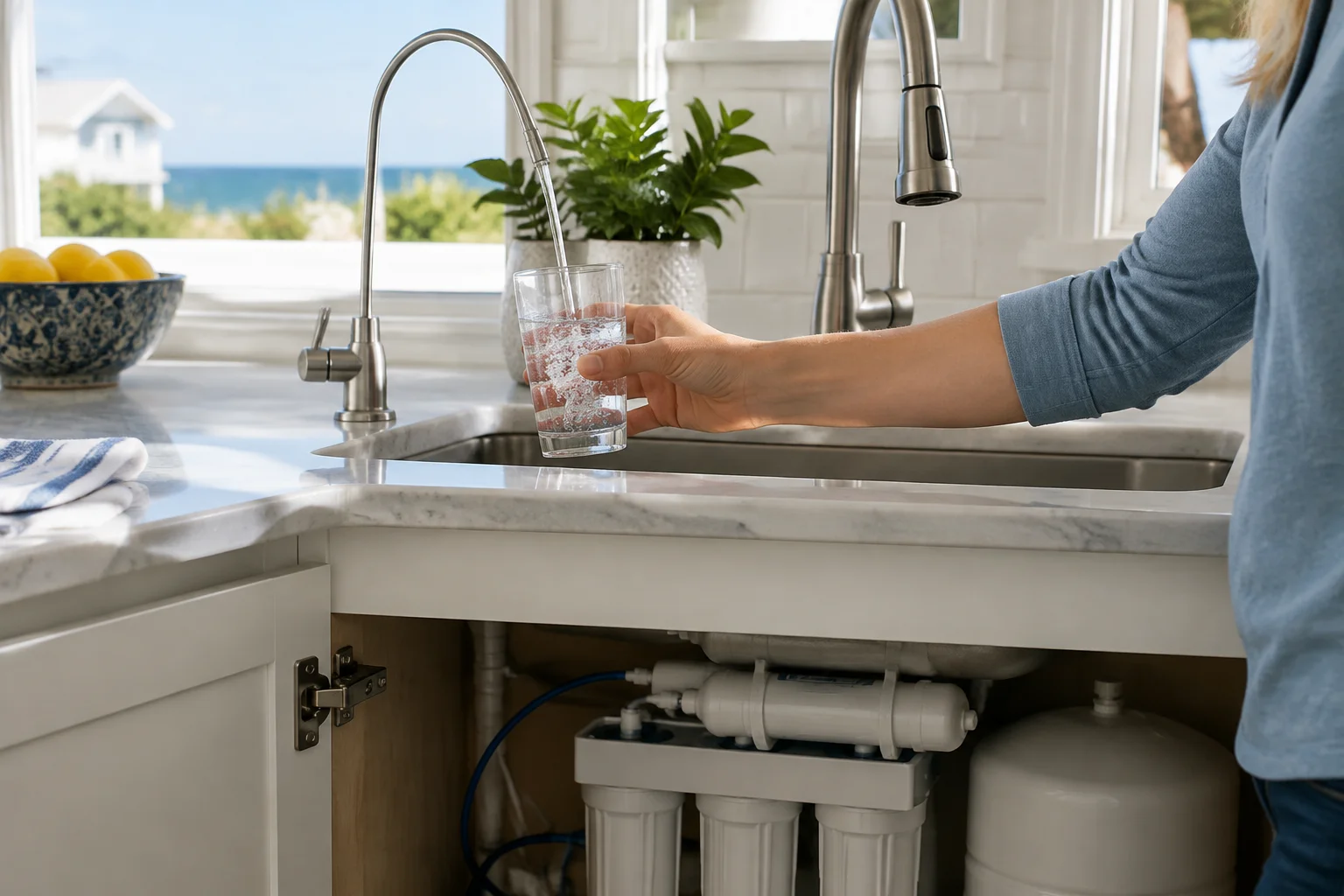
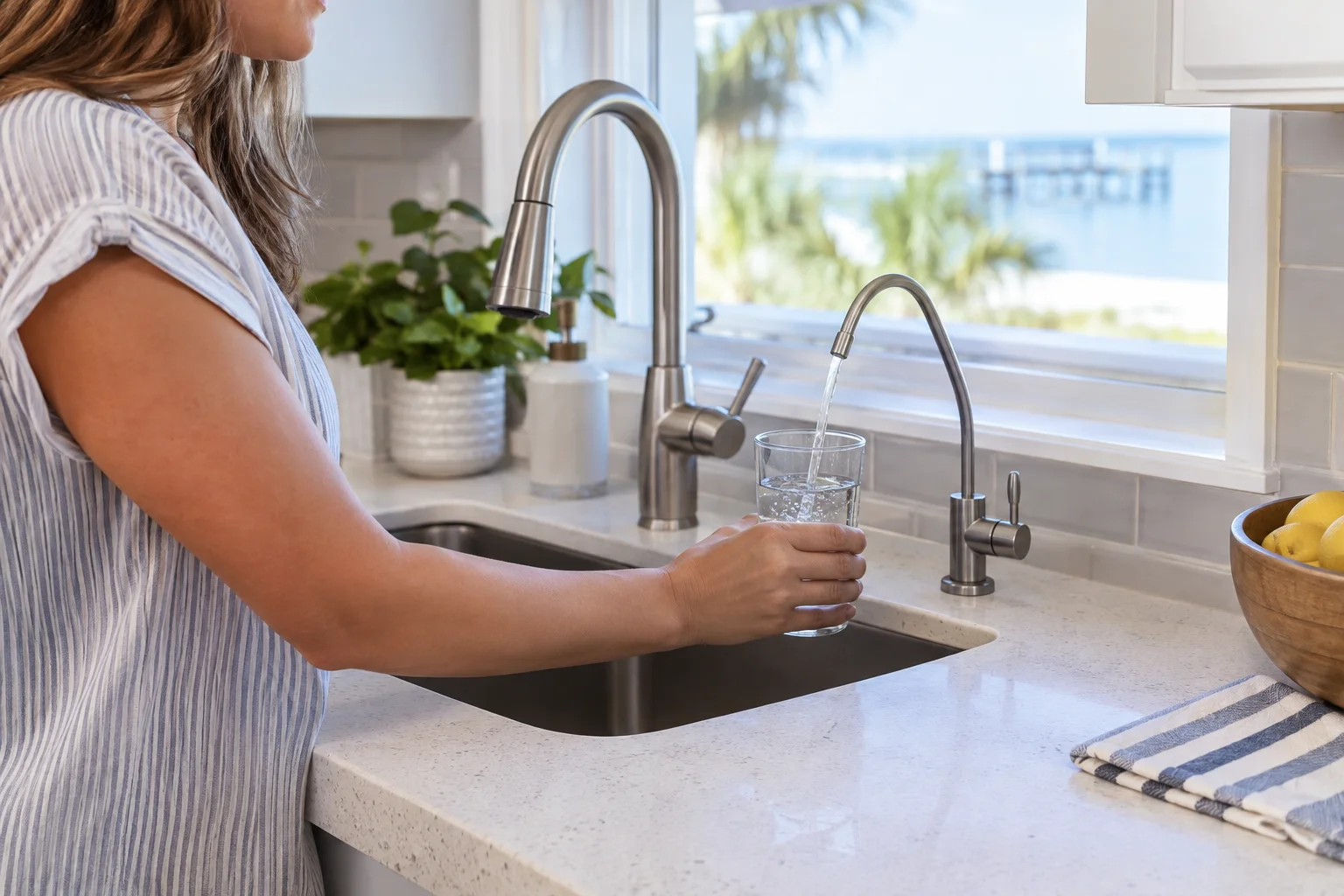
For better water for drinking and cooking, many homeowners consider reverse osmosis for drinking water and cooking water, especially if they want a cleaner taste for:
- Drinking water and ice
- Brewing coffee and making tea
- Cooking water for pasta, rice, and soups
Reverse osmosis system near me is a common search when residents want to upgrade the kitchen experience. Even if you have a softener, reverse osmosis can improve taste and clarity by reducing dissolved solids for the drinking water line.
Poor tasting coffee and cooking water that changes flavor
Camp Creek’s everyday kitchen scenes tell the story. The morning pot of coffee that tastes flat. The chili that seems “off” compared to last season. The bread dough that does not rise the same way. Water quality can influence flavor extraction, especially with minerals that interact with coffee and tea.
Homeowners often describe poor tasting coffee water and chalky or metallic notes in cooking water. If your water softening is not working correctly, scale-forming minerals can also build up on kettle elements, affecting performance. When hard water treatment becomes part of protecting fixtures and appliances, the benefits show up in the kitchen first.
Appliances wearing out faster, especially those that use hot water
Scale buildup is not just cosmetic. It can reduce heat transfer in water-heating appliances and water-using devices. Over time, that means:
- Water heater efficiency drops
- Dishwashers and washing machines may rely on more cycles
- Water flow can slow when mineral deposits build up in lines and fixtures
When appliances wear out faster, homeowners often blame usage or age. But many times, the root cause is hard water scale buildup around faucets and internal components. If you are planning upgrades, it is worth pairing water softening with practical plumbing and appliance care. You can also read A Practical Guide to Water Heater Replacement in Camp Creek, FL and the Plumbing Problems That Shorten System Life for more on how mineral buildup shortens system life.
Visible sediment, discoloration, and odor concerns
Not all water quality problems are “hardness only.” Some issues come from sediment, changes in water sources, or other contaminants that can show up as:
- Visible sediment in a glass
- Discoloration that appears intermittently
- Odor concerns that make water feel unpleasant
If you see sediment or notice odor, do not assume softening alone will fix it. Softening targets hardness minerals. Whole home water filtration, sometimes paired with carbon filtration, can help address particles and taste or odor issues. For homeowners searching for home water purification near me, a system designed for the specific water concerns in your household is usually more effective than adding random filters.
When water softening is present but still not “soft enough”
If your home already has a softener, the goal is consistent performance. Warning signs that your softening is not keeping up include:
- Scale buildup on faucets and showerheads that seems to return quickly
- Soap that still does not rinse well
- Dry skin from hard water after showers
- Appliances showing mineral residue sooner than expected
Common causes can include low salt, incorrect settings, a clogged injector, a brine tank issue, or a unit that is undersized for current household water use. Camp Creek households may use more water during certain seasons due to guest stays, more laundry loads, or increased outdoor water habits.
These are the moments when water softener service becomes more than maintenance. It is about restoring the water quality your home depends on. If you are looking at water softener installation near me, make sure the system is sized for your household and designed for your water conditions, not just for a generic “average” home.
How whole home water filtration and AO Smith systems can complement softening
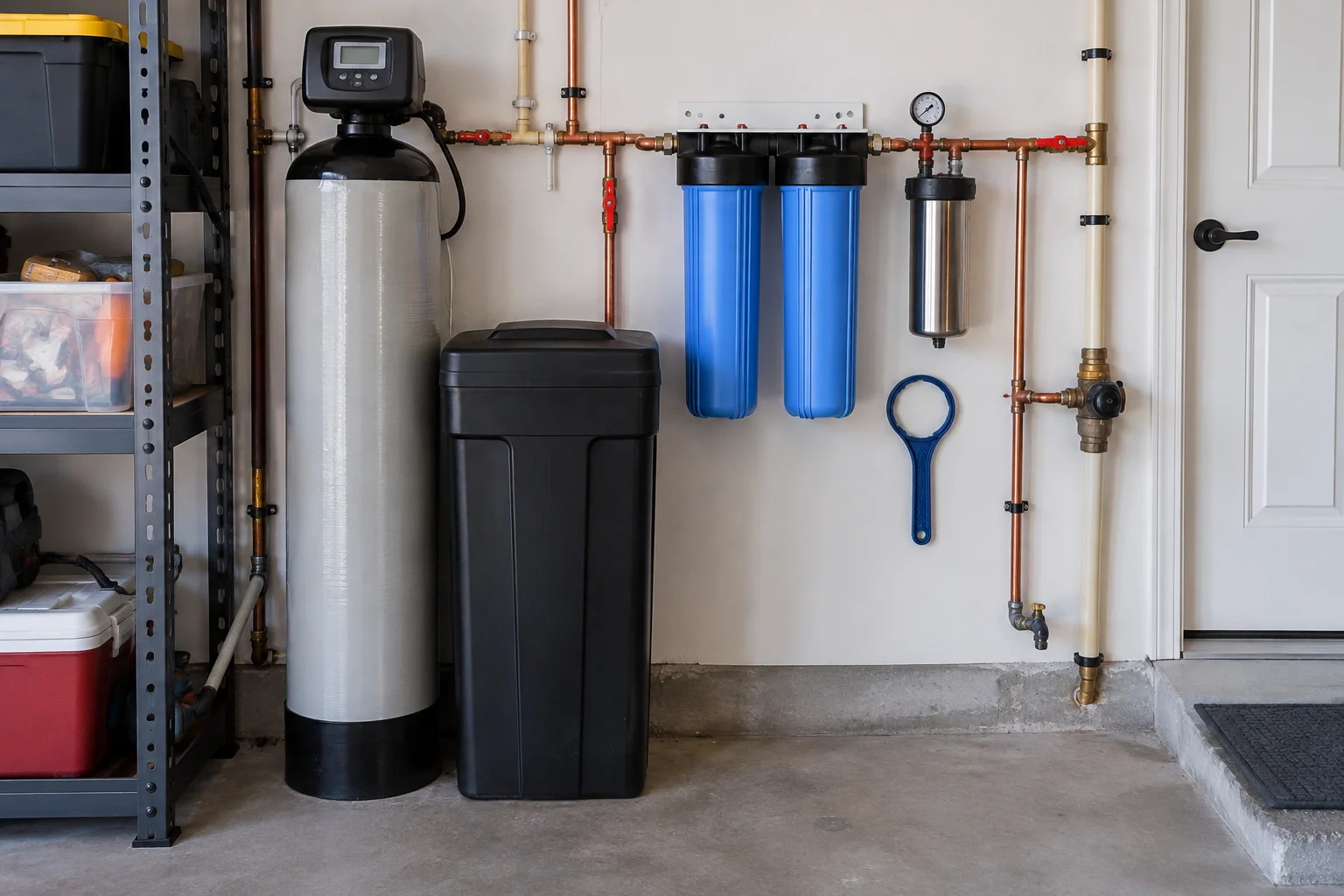
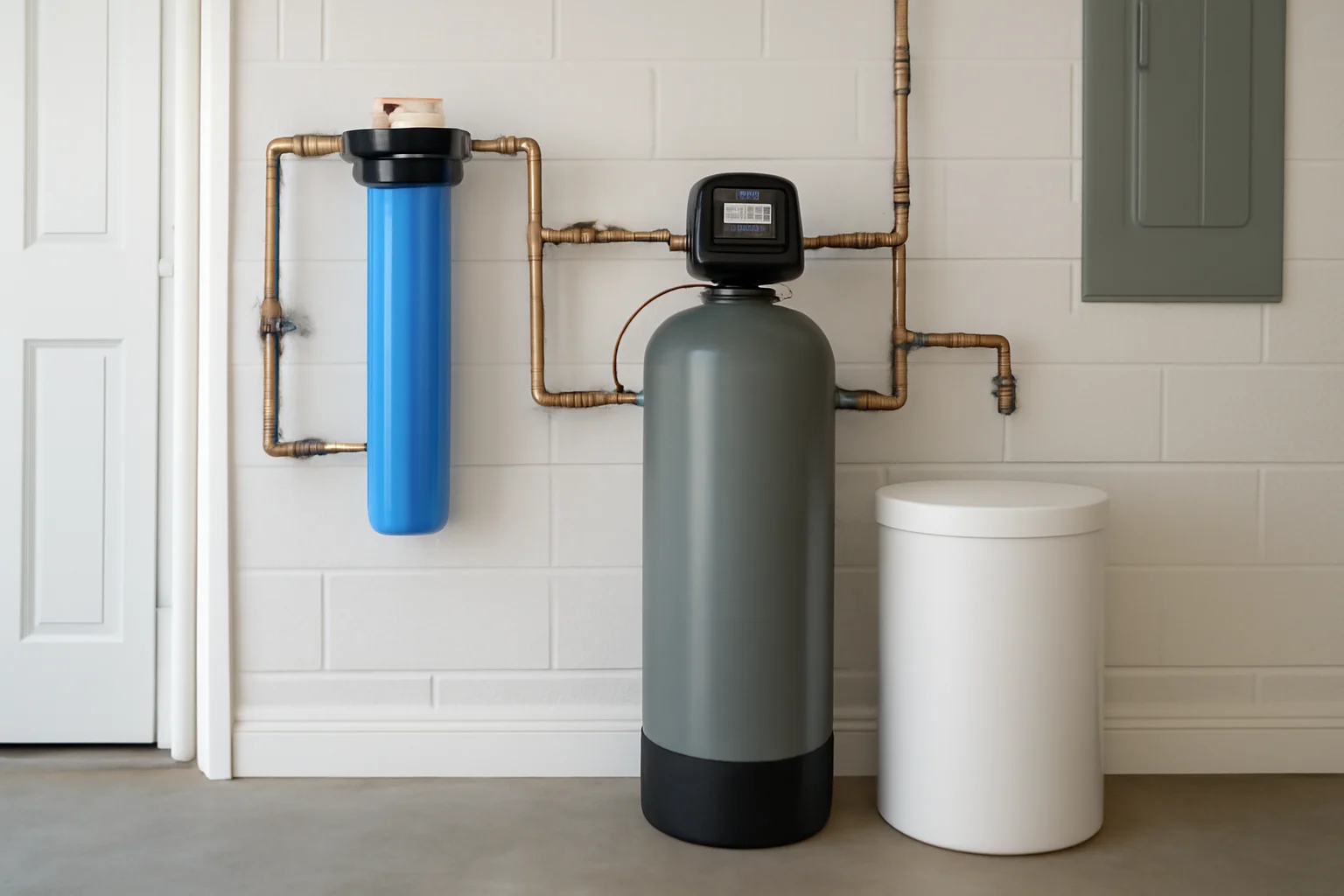
Water softening and whole home water filtration can be partners. Softening helps reduce hardness minerals that cause scale buildup around faucets and inside appliances. Whole home filtration can help with sediment and other water quality variables that affect taste, odor, and how water feels.
Many homeowners also consider AO Smith water filtration options because they are designed for whole home applications and can be integrated into a clean water system. Depending on your results, your ideal setup might include:
- Water softening for hardness control
- Whole house water filter for sediment and improved water consistency
- Reverse osmosis for drinking and cooking water quality
This kind of layered approach often matches how families use water. You want softened water for bathing, laundry, and fixtures. You want cleaner drinking water for the kitchen. And you want protection for appliances and plumbing across the entire home.
Reverse osmosis for drinking and cooking water: clearer taste, cleaner results
Reverse osmosis system near me is a frequent search because homeowners want better water for drinking and cooking. RO systems focus on dissolved solids and can reduce the mineral taste that sometimes lingers in softened water.
For Camp Creek kitchens, RO can make a noticeable difference in everyday tasks:
- Ice cubes that look clearer
- Better flavor extraction in coffee and tea
- Cooking water that does not leave a mineral aftertaste
If you are comparing options, it helps to start with the right question: what do you want to improve first? Many homeowners choose RO for the drinking water line and rely on softening and whole home filtration for bathing and laundry. If you want to explore a complete approach, you can review the water filtration and reverse osmosis overview at /water-filtration-ro-water-softeners.
Maintenance and prevention that actually helps
Even the best clean water systems need care. Homeowners can reduce problems by watching a few practical items:
Salt and brine tank checks
If your softener uses salt, confirm salt levels and keep the system operating within manufacturer guidance. Low salt can lead to inconsistent softening.
Monitor water feel and residue
Do not wait for a major failure. If you notice scale buildup on faucets returning faster than usual or soap not rinsing well, treat it as a signal.
Inspect showerheads and faucet aerators
Mineral deposits often concentrate where flow is restricted. Cleaning these parts can temporarily improve performance, but it does not replace fixing the root water treatment issue.
Test results and system performance
Water quality can change. A professional test helps confirm whether the hardness reduction is working and whether you need additional filtration steps.
If you want to understand how water quality ties into overall home plumbing health, How Better Plumbing Management Protects Camp Creek Homes is a helpful read for homeowners thinking beyond the softener box.
How to choose water treatment service for Camp Creek homes
Water treatment is not one-size-fits-all. Homes differ in water use, plumbing layout, and what problems show up first. A good local service visit typically includes a conversation about symptoms, a review of your current equipment, and testing to identify hardness and other water quality factors.
For homeowners near Camp Creek, working with a local provider matters because the solutions should match local conditions in Walton County. That is why A Superior Mechanical focuses on professional water softening services in Camp Creek, FL for cleaner, softer water and better plumbing performance throughout Walton County.
If you are ready to address hard water spots on glass and dishes, scale buildup around faucets, dry skin from hard water, or unpleasant taste and odor, start with the service page here: /service-areas/walton-county/camp-creek/water-softening-ccfl.
To explore service coverage and the broader area, you can also visit /service-areas/walton-county/camp-creek or /service-areas/walton-county.
Common homeowner mix-ups that delay the fix
Several patterns show up repeatedly in Camp Creek homes. They are understandable, but they can waste time and money.
“We just need to clean the fixtures more often.”
Cleaning helps, but it does not stop scale from forming. If the residue keeps returning, the water treatment plan needs adjustment.
“Softening should fix taste and odor.”
Softening is for hardness. If you are dealing with chlorine taste in water, metallic notes, or odor concerns, you may need additional filtration such as carbon filtration or reverse osmosis for drinking water.
“Our system is new, so it must be working.”
Installation details and setup matter. If settings are wrong or the unit is not properly configured, you can still see scale buildup on faucets and dull hair after bathing. If you are troubleshooting an installation or planning a new system, this guide can help: What Camp Creek Homeowners Often Miss During Plumbing Installation.
What better water looks like in real life
When water treatment is dialed in, daily life improves in ways that are easy to notice. The bathroom feels different. Soap rinses clean. Hair looks healthier. Laundry comes out softer. Glassware looks clearer. Kitchen water tastes better, and coffee and cooking water perform like they should.
Homeowners often describe it as a “clean water” feeling, not just a technical change. It is also a protection strategy. When you reduce scale buildup around faucets and inside appliances, you help plumbing perform longer and you lower the likelihood of premature wear.
Camp Creek families who invest in the right combination of water softening, whole home water filtration, and reverse osmosis for drinking water tend to spend less time fighting residue and more time enjoying the routines that rely on clean, dependable water.
Find Water Softening in Camp Creek, FL
If you need Water Softening in Camp Creek, FL, visit our local service page or contact A Superior Mechanical today.
For a broader look at whole-home water filtration, reverse osmosis, and water softener options, visit our water filtration, RO, and water softener page.
Map of Camp Creek, FL
Frequently Asked Questions
If I already have a water softener, why am I still seeing hard water spots on dishes?
Persistent hard water spots on dishes and glassware often means the softener is not consistently reducing hardness. Common causes include low salt, incorrect settings, a regeneration issue, or the unit being undersized for your household. A water test and system inspection can confirm what is happening.
Can water softening remove bad taste and chlorine taste in water?
Water softening focuses on hardness minerals, not taste and odor. If you notice chlorine taste in water or metallic or unpleasant taste, you may need whole home water filtration and possibly reverse osmosis for drinking and cooking water. The right setup depends on your test results.
What does cloudy ice mean in a Camp Creek home?
Cloudy ice cubes can indicate suspended particles or dissolved minerals that are not being fully managed. If you also see sediment or unpleasant taste, consider checking your filtration and whether reverse osmosis for drinking water would help.
Will hard water treatment help appliances last longer?
Yes. When hard water treatment reduces scale buildup, appliances that use hot water can run more efficiently and experience less mineral stress. Many homeowners notice fewer performance issues and less buildup on internal components over time.
What is a good first step for water filtration near me in Camp Creek?
Start with a professional water assessment. Discuss the symptoms you see, such as scale buildup around faucets, dry skin from hard water, poor tasting coffee water, or odor concerns. Testing helps determine whether you need water softening, whole home water filtration, reverse osmosis, or a combination.
Related Articles
- How Better Water Softening Changes Daily Life in Camp Creek Homes
- A Practical Guide to Water Heater Replacement in Camp Creek, FL and the Plumbing Problems That Shorten System Life
- How Better Plumbing Management Protects Camp Creek Homes
- What Camp Creek Homeowners Often Miss During Plumbing Installation
Photo Gallery