Living on 30A means enjoying salt air, sandy beaches, and a lot of time at home. It also means you are likely dealing with water that can be tough on plumbing and everyday routines. Homeowners often notice it first in the bathroom and kitchen: hard water spots on glass, scale buildup around faucets, and soap that does not lather or rinse well. Over time, those small frustrations can lead to bigger maintenance problems for fixtures and appliances.
This guide explains how local water conditions in 30A, FL affect water softening performance, what to look for in your own home, and how pairing water softening with filtration or reverse osmosis can support cleaner water for drinking, cooking, and bathing.
What “hard water” looks like in 30A homes
Hard water is usually caused by dissolved minerals, most commonly calcium and magnesium. In a coastal area like 30A, water chemistry can vary by neighborhood and even by season, but the results in homes are often consistent. If you have ever scrubbed shower doors or chased cloudy buildup on fixtures, it is likely the minerals are building up as water evaporates.
Common signs include:
- Hard water spots on glass after showers or wiping a mirror
- Scale buildup on faucets and around handles, spouts, and showerheads
- Scale buildup around faucets that looks chalky or whitish, even after cleaning
- Dry skin or dull hair after bathing, especially when you shower with the water left on longer than usual
- Soap that does not lather or rinse well, which can leave a film that feels “slick” or sticky
- Visible sediment, discoloration, and odor concerns that show up in certain fixtures or during hotter months
- Metallic, chlorinated, or unpleasant taste that makes drinking water less appealing
- Cloudy ice cubes that look milky instead of clear
- Poor tasting coffee and cooking water that can affect the flavor of tea, soups, and sauces
- Appliances wearing out faster when scale forms in water lines, heating elements, and internal components
When these issues show up together, it is often not just a “soap problem.” It is a water chemistry problem that impacts cleaning, bathing, laundry, and the equipment that heats and moves water throughout your home.
How local water conditions affect water softening performance
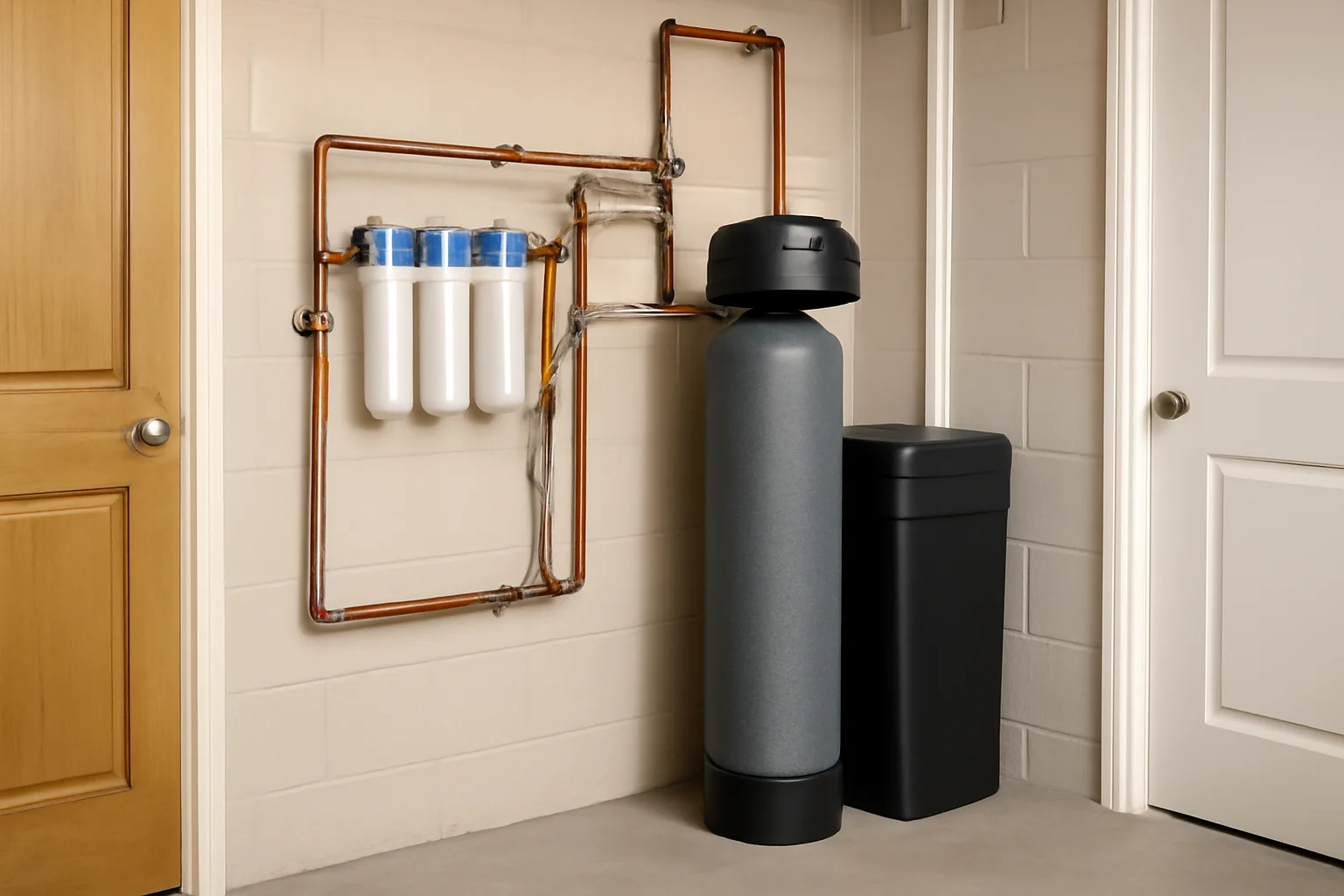
A water softener works by replacing hardness minerals with sodium or potassium ions using an ion exchange process. That sounds straightforward, but local water conditions in Walton County can influence how quickly scale forms and how well a system performs between service visits.
Mineral levels and scale speed
When calcium and magnesium levels are higher, scale buildup on faucets and showerheads can appear sooner. You may notice that cleaning “works” for a day or two, then the film returns. If scale forms quickly, your softener may need:
- Proper sizing for your household size and water usage
- Correct settings based on your specific hardness and water consumption
- Regular maintenance so the resin bed stays effective
For homeowners searching for water treatment near me, the most important detail is not just installing a softener. It is matching the system to your actual water chemistry so you get consistent results in the bathroom, laundry room, and kitchen.
Variations in water composition across neighborhoods
30A homes can be close together while still experiencing different water characteristics. Factors like local water sources, distribution lines, and seasonal changes can affect mineral content and the presence of sediment. That can show up as:
- More visible sediment at certain times
- Discoloration in specific faucets
- More frequent cleaning needed for scale buildup around faucets
When water chemistry shifts, a softener that is slightly undersized or incorrectly programmed may not keep up. Whole home water filtration can also help when sediment and taste issues are part of the picture.
Sand, sediment, and particulate issues
If you see sediment or discoloration, a softener alone may not address it. Softening targets hardness minerals, but sediment can still travel through plumbing and appliances. That is where whole home water filtration becomes important, especially for homeowners who want clean water systems near me that protect both comfort and equipment.
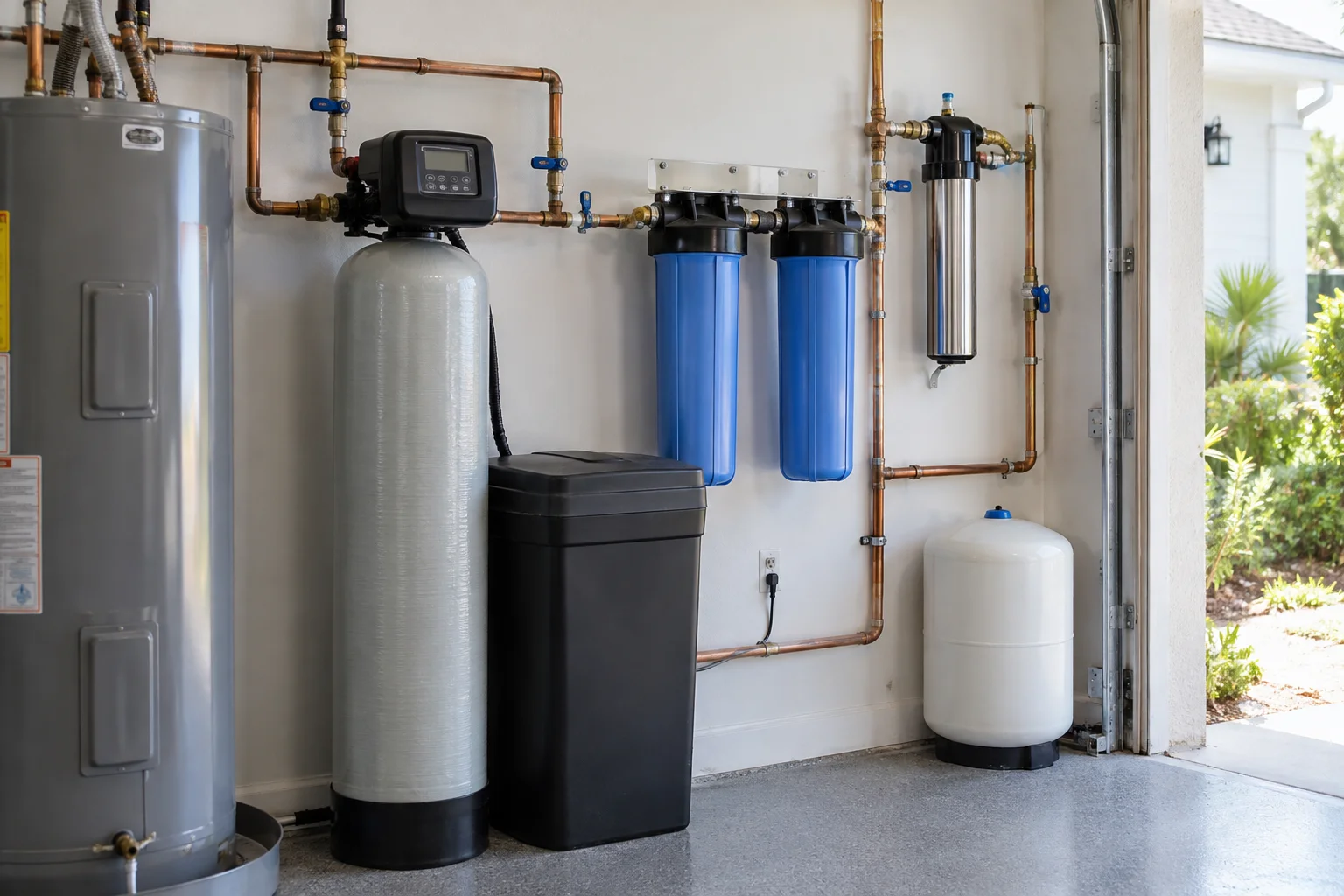
Many households benefit from a layered approach: filtration to reduce sediment and improve water clarity, followed by softening for hardness control, and then targeted treatment for drinking water.
What better water changes at home: kitchen, laundry, and baths
Hard water is not only a cosmetic issue. It changes how soap performs, how water heats, and how appliances run. In a 30A household, those impacts show up during everyday routines, from quick morning showers to family dinners.
Kitchen scenes: drinking water and cooking water that tastes right
Think about the everyday moments: everyone grabbing a glass after a day at the beach, the host making coffee before guests arrive, or a family simmering a pot of pasta sauce. When you have metallic, chlorinated, or unpleasant taste, it can be hard to enjoy plain water. It can also affect the flavor of cooking water.
Some homeowners notice:
- Cloudy ice cubes that look milky
- Poor tasting coffee and cooking water
- Water that does not taste as clean as it should
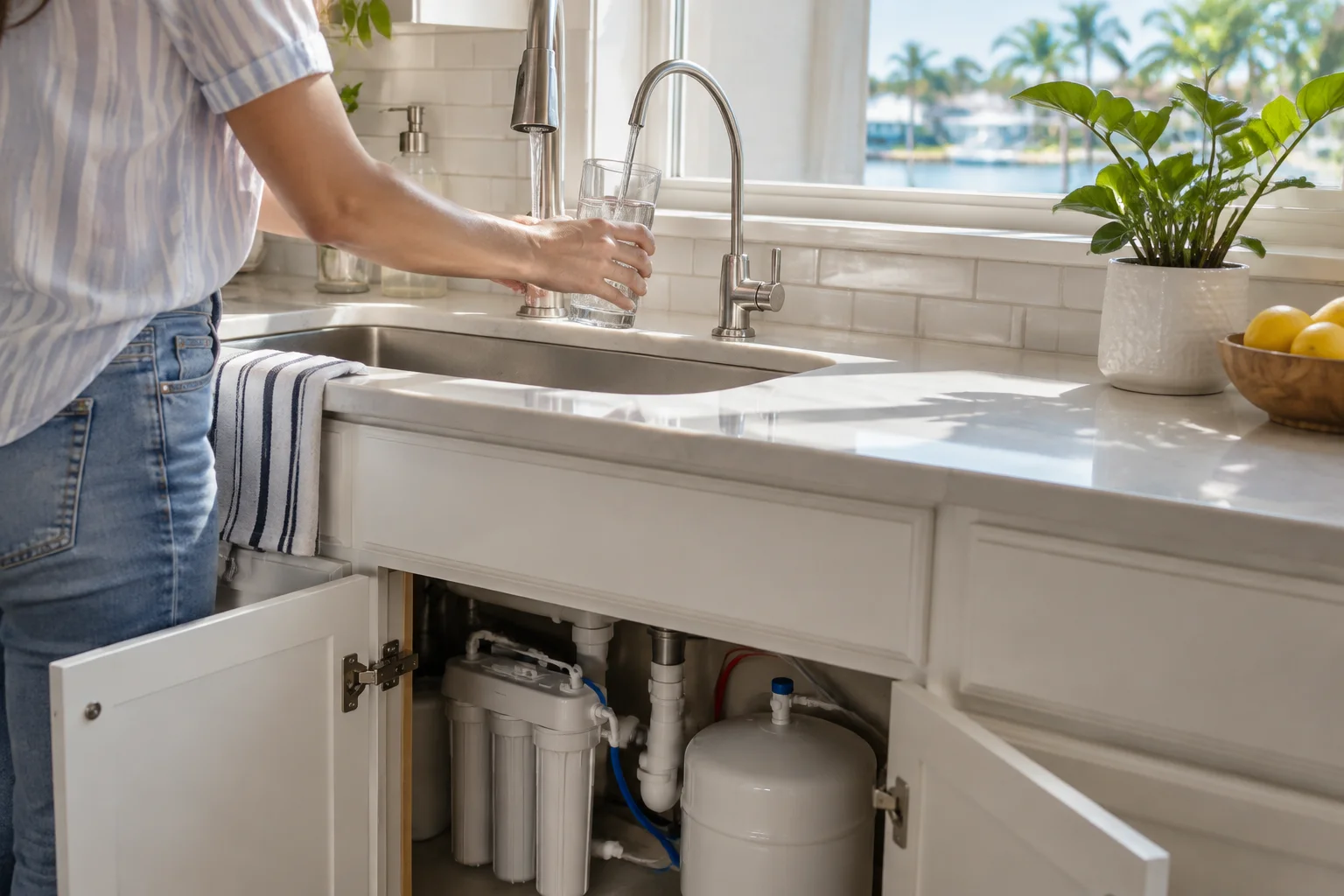
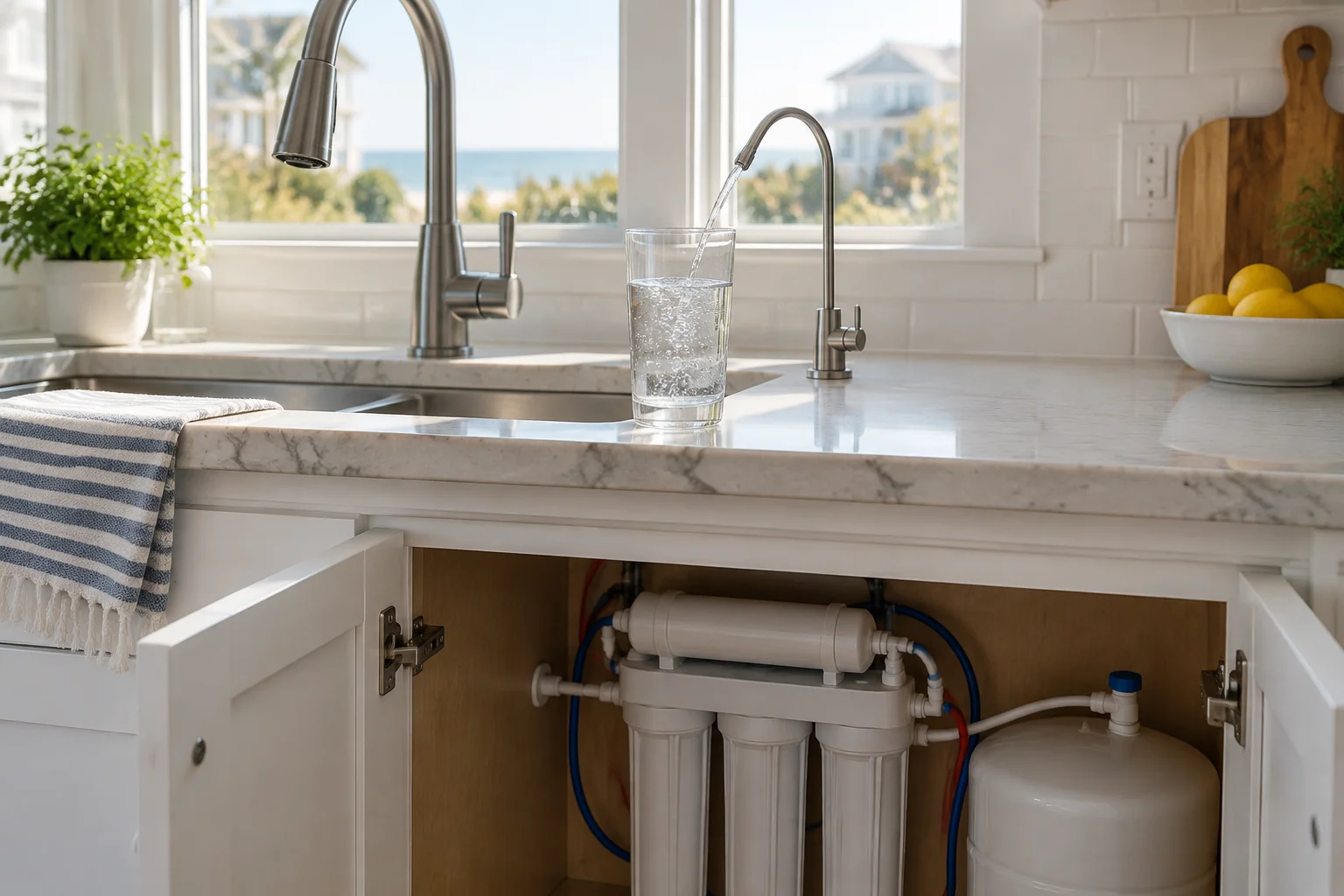
That is where reverse osmosis systems can help for drinking and cooking. Reverse osmosis reduces a wide range of dissolved contaminants and can improve taste and clarity. Many families choose RO for the kitchen tap while using whole home filtration and softening to protect the rest of the house.
If you are weighing options like water filtration near me, it helps to start with your goals: better drinking water, less scale on fixtures, and longer appliance life. The right plan often combines treatment steps instead of relying on one device for everything.
Bathing: dry skin from hard water and softer hair
Hard water can leave minerals behind on skin and hair. That can lead to dry skin from hard water and dull hair after bathing. Homeowners sometimes describe hair that feels coated or harder to manage, and skin that feels tight after showers.
When a properly sized and maintained water softener reduces hardness, bathing tends to feel different quickly:
- Soap and shampoo lather more easily
- Rinsing is more complete
- Skin can feel less dry
- Hair can look and feel cleaner
For vacation rentals on 30A, consistent comfort matters. Guests notice when water feels “off,” especially if they compare it to what they are used to at home.
Laundry and cleaning: soap that does not lather
In the laundry room, hard water can make it harder to get clothes truly clean. If you have dealt with soap that does not lather, you may also see:
- Clothes that feel stiff
- Residue that makes whites less bright
- More effort needed to remove stains
- Cleaning products that seem to “work less” than expected
Softened water can improve how detergents and soaps perform, which can reduce the temptation to use extra product. It also reduces mineral scale that can build up inside washers and water heaters.
Protecting fixtures and appliances from scale buildup
Scale is not just ugly. Over time, mineral deposits narrow flow paths, reduce heat transfer, and increase wear on equipment. That is why homeowners often report that appliances seem to age faster when hard water goes untreated.
Common problem areas include:
- Scale buildup around faucets and showerheads
- Water heater components exposed to constant heating cycles
- Dishwashers and coffee makers where mineral deposits accumulate
- Plumbing that develops buildup that can reduce performance
Water softening is designed to address the mineral side of the equation. But if your home also has sediment or taste issues, whole home water filtration can support the full clean water system approach, helping reduce visible sediment, odor concerns, and cloudy ice cubes.
Choosing the right system for 30A: softening, filtration, and RO
Homeowners searching for water filtration near me often ask whether they need a water softener, a filter, or reverse osmosis. The most helpful way to decide is to match equipment to the problems you are seeing.
Water softening: for hardness and scale control
If your biggest issues are hard water spots on glass, scale buildup on faucets, stiff laundry, and dry skin from hard water, a properly sized water softening system is usually the foundation. Look for professional programming and ongoing service, because softener performance depends on settings and maintenance.
Many homeowners also ask about brand options. AO Smith water softener systems are commonly considered for reliable whole home softening, especially when you want a dependable solution for day to day comfort and fixture protection.
If you want to explore softening options, you can review the service page here: water softening for 30A homes.
Whole home water filtration: for sediment, clarity, and cleaner “system-wide” water
If you notice visible sediment, discoloration, or odor concerns, whole home water filtration can help keep water cleaner before it reaches faucets, showerheads, appliances, and water heaters. This is especially relevant when you want clean water systems near me that do more than treat one tap.
Whole home filtration is also a strong match for households that want to improve water quality while supporting better water for laundry, bathing, and everyday cleaning.
To learn more about filtration and how softening fits into a broader plan, visit: water filtration, reverse osmosis, and water softeners.
Reverse osmosis: for drinking water and cooking water quality
When taste, odor, and clarity are priorities, reverse osmosis systems are often the next step. They can help reduce the unpleasant flavors that lead to metallic or chlorinated taste and can improve how water performs for drinking and cooking.
In 30A kitchens, this often translates into better drinking water, better ice, and better tasting coffee. If you have experienced cloudy ice cubes or poor tasting coffee, RO can be a practical solution for the kitchen tap while softening and whole home filtration handle the rest of the house.
How the 30A climate and lifestyle affect water treatment needs
30A is a coastal environment, and that lifestyle changes water use patterns. Many homes are occupied full time, while others are vacation rentals that sit for stretches and then ramp up water use quickly. That matters because water treatment systems perform best when they are correctly maintained and tuned to actual usage.
- Seasonal occupancy: If your home sits unused, you may notice changes when water is used again. Treatment systems should be checked so they resume performance quickly.
- High water contact points: Showers, outdoor rinsing, and frequent handwashing can make scale and soap issues feel more intense.
- Salt air and coastal conditions: While salt air does not automatically mean your water is salty, it can increase the importance of protecting fixtures from mineral buildup and corrosion-related wear.
Because of these factors, local water treatment service matters. A Superior Mechanical works in the 30A area and understands the practical realities of Walton County homes. If you want to see the service footprint, you can explore: water treatment in 30A and water treatment across Walton County.
Maintenance habits that help your softener and filtration last longer
Even the best system needs care. The goal is to keep performance steady and prevent buildup that can reduce flow or efficiency.
Watch for performance changes
If you start seeing scale buildup around faucets return sooner than expected, it could mean your softener needs adjustment or service. Other triggers include:
- Soap that suddenly feels harder to rinse
- New hard water spots on glass despite recent cleaning
- Dry skin or dull hair returning after months of improvement
- Water taste changes that suggest filtration performance has slipped
Keep an eye on filters and system components
Whole home filtration depends on filter life. When filters are overdue, sediment and odors can reappear. For reverse osmosis, membrane and filter replacement schedules help maintain clean water quality for drinking and cooking.
Use smart plumbing routines for RO systems
If you have an RO system, small habits can improve results, especially in homes with variable occupancy. Helpful routines include flushing procedures after long absences and avoiding unnecessary water waste.
You can also read: Smart Plumbing Habits for Reverse Osmosis Systems in 30A Homes.
Signs you should schedule a water treatment professional visit
Homeowners can handle many chores, but water treatment performance is hard to “guess” accurately. Scheduling a professional visit is a smart move when you notice patterns that match water chemistry or equipment performance issues.
Contact a water softening and filtration specialist if:
- You see persistent hard water spots on glass and scale buildup on faucets that keep returning
- Your home feels like it has dry skin from hard water again, even after cleaning routines
- Ice is often cloudy or drinking water has metallic, chlorinated, or unpleasant taste
- Appliances seem to wear out faster or water heaters require more frequent attention
- You have visible sediment, discoloration, and odor concerns that do not improve
In many cases, the right solution is not just “more salt” or a quick fix. It is verifying hardness levels, checking system settings, evaluating filter status, and confirming whether whole home water filtration and reverse osmosis are needed for the kitchen and drinking water.
Planning upgrades during fixture or plumbing projects
If you are updating bathrooms or kitchens, it is a great time to think about the water behind the fixtures. New showerheads and faucets can still show scale if hardness is not controlled. That can be frustrating after spending money on upgrades.
For 30A homeowners, it helps to coordinate water treatment with fixture choices. These reads can support your planning:
- What 30A Homeowners Should Know Before Replacing Plumbing Fixtures
- Plumbing Installation That Helps 30A Homes Stay Ahead of Water Damage
- How Water Softening Protects Rosemary Beach Plumbing from Costly Water Damage
Where to start: a practical checklist for 30A water treatment
If you are trying to decide what to install or service, use this simple checklist. It keeps the conversation focused on your actual home conditions and the water problems you can see and taste.
- Look at fixtures: Are you dealing with scale buildup on faucets, showerheads, and glass?
- Check bathing comfort: Do you notice dry skin or dull hair after showers?
- Evaluate drinking water: Is there metallic or chlorinated taste, cloudy ice cubes, or poor tasting coffee?
- Inspect laundry performance: Does soap not lather or rinse well?
- Watch for sediment and odor: Do you see visible sediment, discoloration, or odor concerns?
Once you know which issues are most important, you can build a plan that fits 30A living. Many homes benefit from water softening for hardness and scale control, whole home water filtration for sediment and system protection, and reverse osmosis for better drinking and cooking water. A Superior Mechanical can help you choose the right approach for your home in Walton County.
If you are ready to focus specifically on softening, start here: water softening service in 30A.
Find Water Softening in 30A, FL
If you need Water Softening in 30A, FL, visit our local service page or contact A Superior Mechanical today.
For a broader look at whole-home water filtration, reverse osmosis, and water softener options, visit our water filtration, RO, and water softener page.
Map of 30A, FL
Frequently Asked Questions
Does water softening work the same way in all 30A neighborhoods?
No. Hardness levels and the presence of sediment or taste issues can vary across Walton County. A system also needs correct sizing and programming for your household and water usage. That is why local water treatment service matters for consistent results.
Can a water softener fix cloudy ice cubes and bad tasting water?
A softener helps with hardness and scale, but cloudy ice cubes and unpleasant taste often point to filtration needs for drinking water. Many homeowners use whole home water filtration for system-wide clarity and a reverse osmosis system for the kitchen tap and drinking water.
What are the most common signs my home needs hard water treatment?
Look for hard water spots on glass, scale buildup on faucets and showerheads, soap that does not lather or rinse well, dry skin or dull hair after bathing, metallic or chlorinated taste, and visible sediment or odor concerns.
How do I know whether I need reverse osmosis or whole home water filtration?
If the main issues are taste, odor, and drinking water quality, reverse osmosis is often a strong choice for the kitchen. If sediment, discoloration, or odor concerns show up across multiple faucets, whole home water filtration can help first. Many homes use both for a complete clean water system.
Related Articles
Photo Gallery