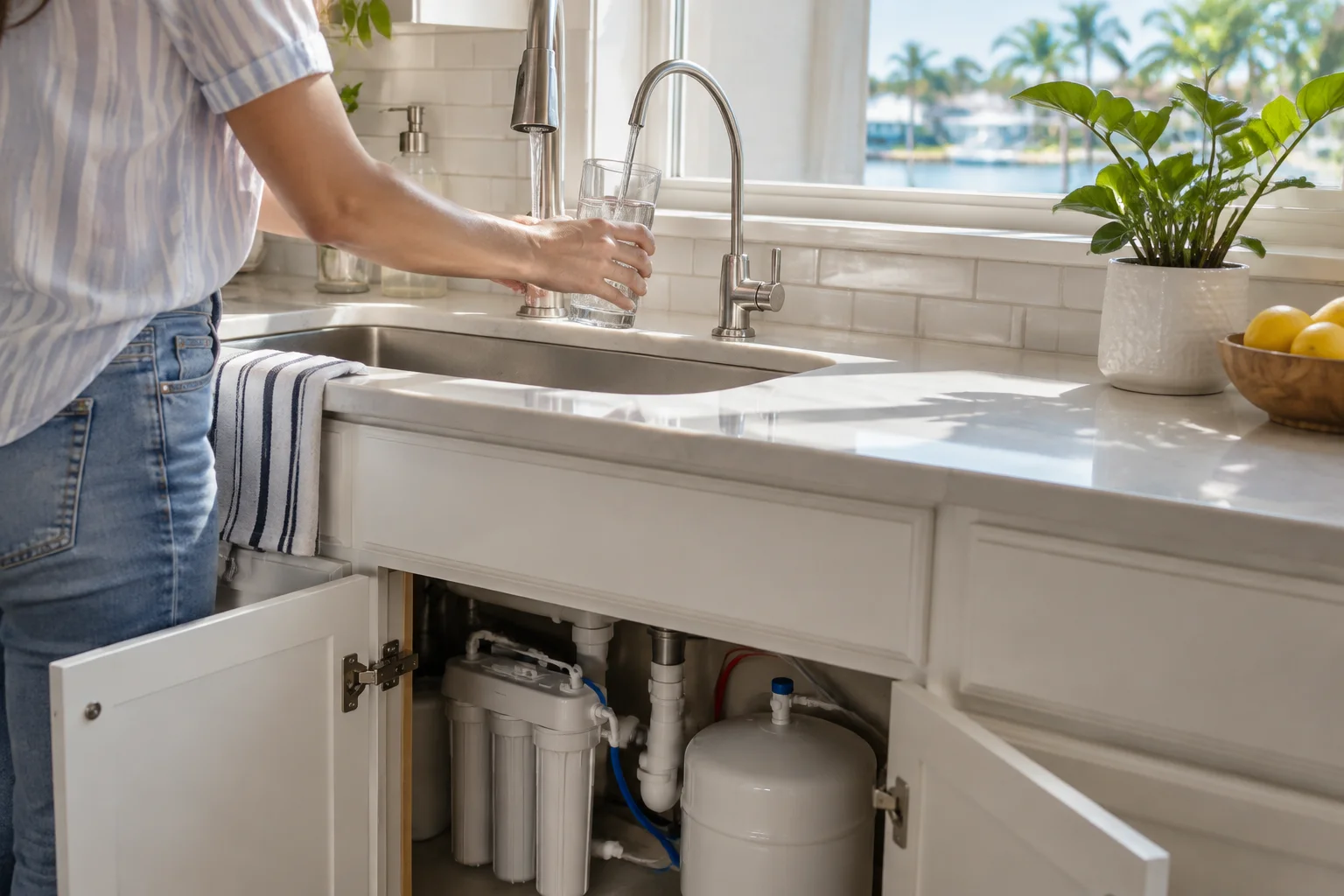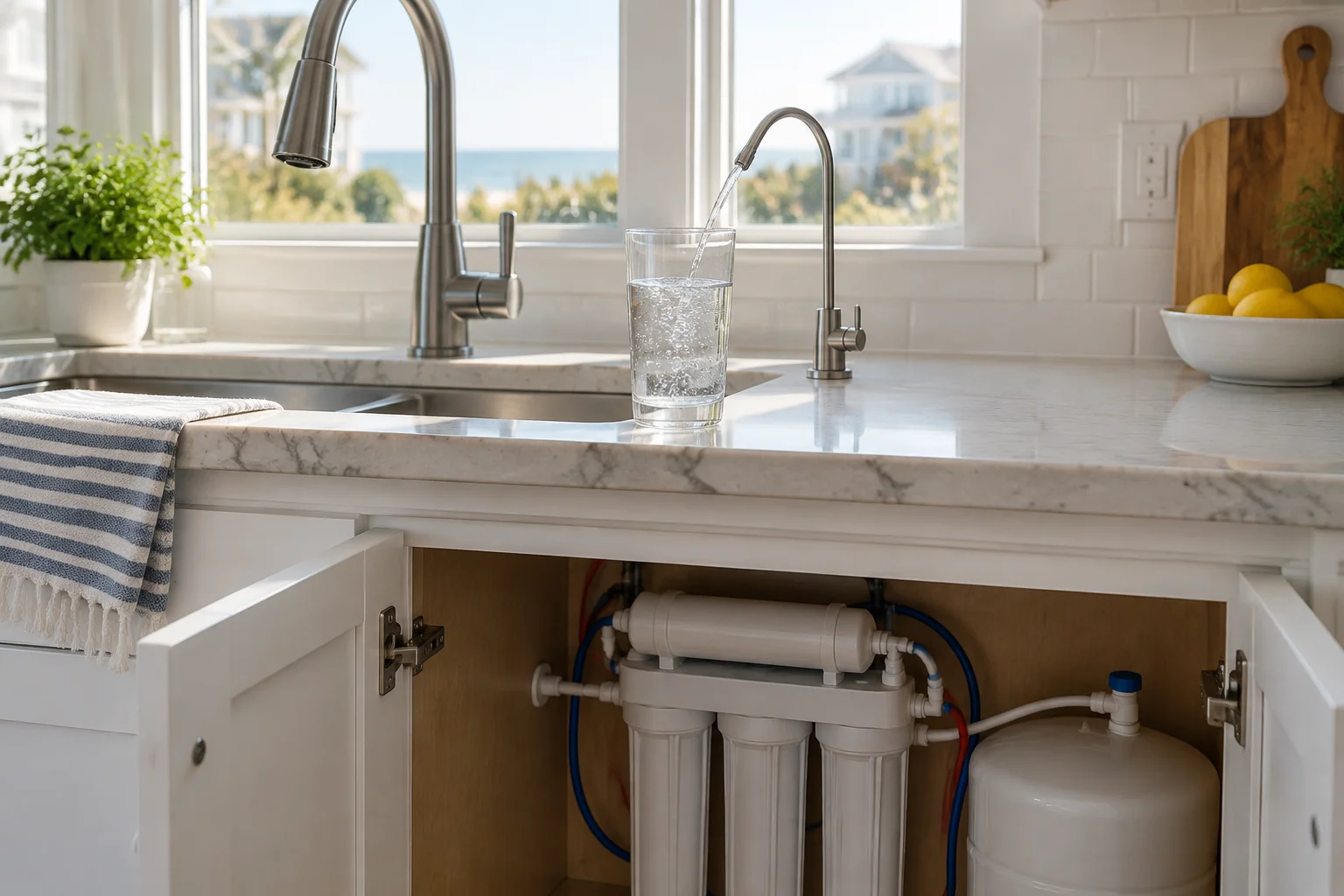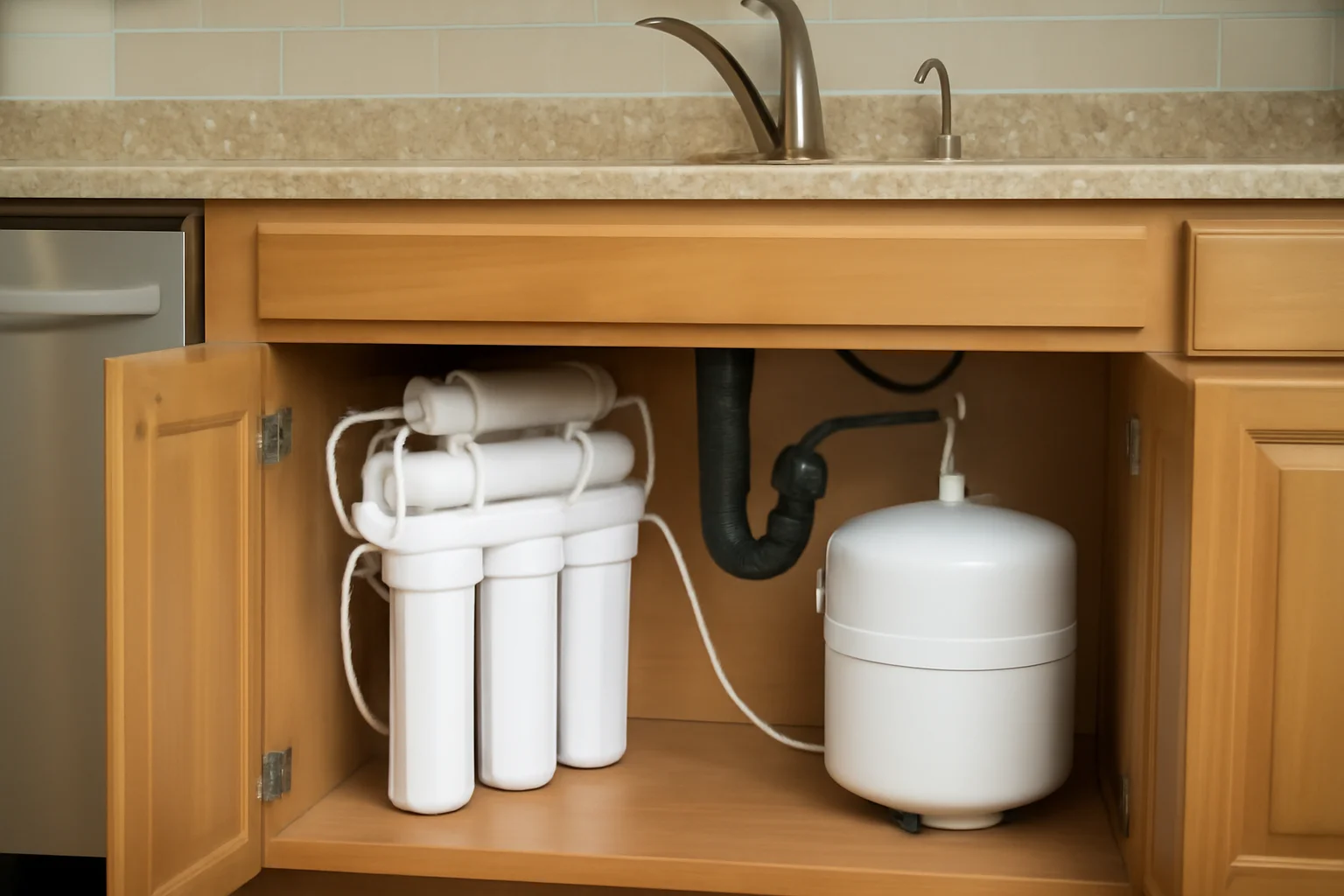
Reverse osmosis (RO) is one of the best ways to dial in better drinking water for drinking and cooking. In Seaside, FL, though, the same coastal conditions that make the Gulf breeze so pleasant can also stress RO systems. Homeowners may notice visible sediment, cloudy ice cubes, a metallic or chlorinated taste in water, or odors that show up in the kitchen and around faucets.
These issues do not always mean your reverse osmosis installation was a mistake. More often, they are signs that sediment, chlorine, or water chemistry is pushing your system beyond what it can handle without the right filtration, maintenance, and sometimes pre-treatment.
How Seaside water conditions can stress reverse osmosis systems
Seaside sits in Walton County, and many nearby homes experience water that can vary by season and by source. Even when your water looks clear at the tap, it can still carry compounds that affect RO performance. When RO systems run into too much of the wrong material, they may produce water that tastes off, looks cloudy, or leaves scale behind.
Common local problems that show up in day-to-day life include:
- Hard water spots on glass, dishes, and fixtures
- Scale buildup around faucets, showerheads, and plumbing
- Dry skin or dull hair after bathing
- Appliances wearing out faster because mineral buildup reduces efficiency
RO helps with many contaminants, but it is not a magic shield against everything in the incoming water. If sediment and chlorine are not managed upstream, they can shorten membrane life and create odor or taste issues.
Problem 1: Sediment that clogs filters and the RO membrane
Sediment is one of the most common causes of RO problems in homes. It can come from natural deposits, old plumbing, or changes in municipal water flow. When sediment gets into the system, it can:
- Overwork the pre-filters
- Reduce water flow rate
- Increase pressure on the membrane
- Lead to visible discoloration or particles in drinking water
You might first notice it where the system connects to daily routines. For example, kitchen ice can look cloudy, coffee can taste flatter than usual, and cooking water may leave residue in pots. Some homeowners also report that their RO drinking water system starts producing less water than it used to, or it takes longer to refill the storage tank.
How to reduce sediment before it reaches RO
The best approach is usually pre-treatment. A properly designed setup often includes a sediment filter stage sized for your local water and usage. Homeowners can reduce sediment concerns by:
- Replacing pre-filters on schedule, not “when it seems bad.”
- Checking filter housings for cracks or bypass leaks.
- Using a sediment-rated filter that matches the incoming water conditions.
- Scheduling service if flow drops or if you see particles in the output.
If you are searching for “reverse osmosis installation near me” or “water filtration near me,” ask whether the plan includes pre-treatment for your specific sediment load and chlorine level. That is often the difference between a system that runs smoothly and one that needs frequent membrane replacements.
Problem 2: Chlorine and chloramine concerns that create odor and taste
Many utility systems use chlorine to keep water safe. RO can reduce chlorine-related taste and odor, but it depends on the system design and how quickly filters are replaced. If chlorine is high or the filters are overdue, the RO output may still have a chlorine taste in water or a noticeable smell.
Homeowners often describe the problem in familiar kitchen moments. A glass of drinking water may taste “pool-like.” Coffee brewed with RO water might have a lingering chemical note. Cooking water can also taste different, which matters when you are making tea, soups, or sauces for family meals.
Chlorine can also affect system longevity. Carbon stages and membrane performance are both impacted when chlorine is not fully addressed upstream.
What helps reduce odor and chlorine taste in RO systems
To keep an RO drinking water system tasting clean, focus on the carbon and filter stages that handle chlorine. Practical steps include:
- Verifying the system includes the right carbon filter for taste and odor reduction.
- Replacing carbon cartridges on the correct interval based on usage.
- Requesting a check of total system pressure and flow, since poor flow can reduce treatment effectiveness.
- Addressing any bypass or installation issues that allow untreated water to mix in.
Some homeowners also notice that soap does not lather or rinse well even after switching to RO for drinking. That is a separate issue from taste, but it is common in Seaside when hard water is present. Fixing taste and fixing scale often require different treatment steps.
Problem 3: Hard water scale that shows up on fixtures and inside the system
Hard water is not just an aesthetic issue. When minerals build up, you can see it on glassware and shower doors. You may also feel it in bathing, with dry skin from hard water or hair that feels dull after rinsing.
Scale buildup also affects RO performance. If the incoming water has a high mineral content, those minerals can contribute to membrane scaling and reduce output over time. You might notice:
- Faster filter clogging
- Reduced production and slower recovery
- Cloudiness or inconsistent taste
- More frequent maintenance needs
Even if RO is installed for drinking water, hard water minerals still impact the rest of the home. That is why many Seaside homeowners pair RO with water softening or choose whole home water filtration where it makes sense.
How water softeners and whole home water filtration can help
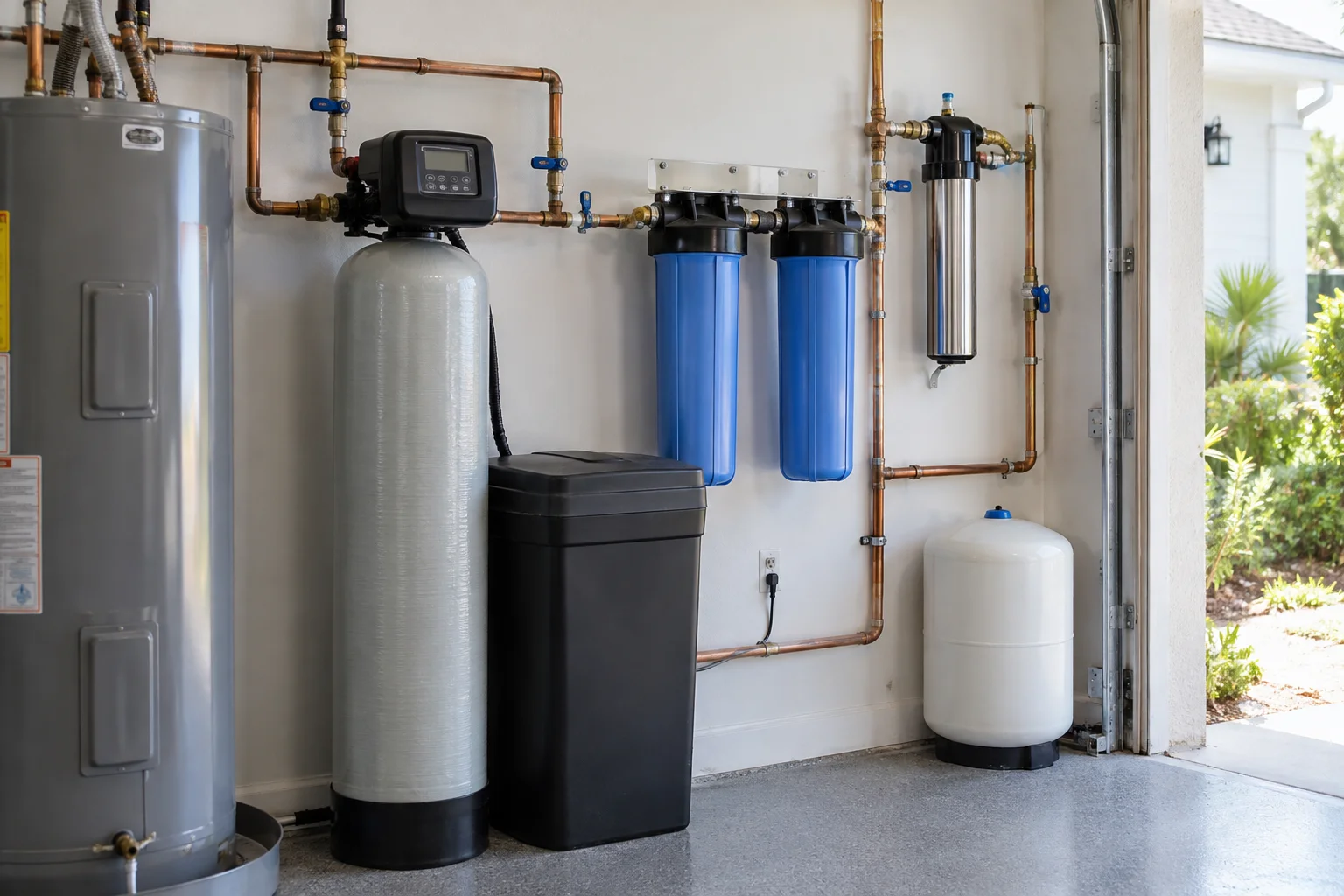
For many homes, the best plan is a layered approach:
- Water softening to reduce scale on fixtures, showerheads, and plumbing.
- Whole home water filtration to protect appliances and reduce sediment and particulates throughout the house.
- Reverse osmosis at the kitchen tap for concentrated drinking water quality.
That combination helps with the things you can see and feel: scale that stops accumulating as quickly, water that behaves better in laundry, and bathing that leaves skin feeling less tight. It can also support RO longevity by reducing the mineral load that reaches the system.
If you are weighing options like AO Smith water filtration, a local water treatment professional can help match the right equipment to your water profile and household needs.
Problem 4: Filter changes that happen too late or not at all
Reverse osmosis systems are designed around filter and membrane schedules. When filters are not replaced on time, several things can happen:
- Water flow rate drops
- Taste and odor issues return
- Membranes can foul faster
- Storage tanks can collect air or contaminants if the system is not operating correctly
It is easy to overlook maintenance when the system is out of sight under the sink. But homeowners notice the impact quickly at the sink. One week you are making smoothies, the next week ice cubes are cloudy, and the coffee tastes off. Those changes often align with filter performance slipping.
Maintenance habits that protect your RO system
Good maintenance is not only about replacing parts. It is also about paying attention to how the system behaves:
- Track production times and any sudden slowdowns.
- Inspect the faucet output for changes in clarity.
- Listen for unusual sounds from the system, especially after the tank refills.
- Replace cartridges at the interval recommended for your household and water conditions.
If you want to keep your system running well in a coastal home, it also helps to pair RO with a bigger plan for clean water systems near me. That might include whole home filtration or water softener service, depending on what you see at fixtures and how your family’s water feels during bathing and laundry.
Problem 5: Installation and plumbing issues that affect performance
Even high-quality equipment can underperform if it is installed incorrectly or if plumbing connections are not sealed well. Common installation-related problems include:
- Leaking fittings that allow water to bypass filtration
- Wrong line sizing that affects flow and pressure
- Improper tank setup that impacts storage and dispensing
- Air in the system that can contribute to cloudiness
When these issues occur, homeowners sometimes blame the water itself. But in many cases, the system is not treating consistently because water is not moving through each stage as designed.
If you are considering reverse osmosis installation near me, it is worth asking about the full setup, including pre-filters, carbon stages, and how the system is tuned for local conditions in Seaside and Walton County.
What homeowners see and taste when RO systems are struggling
Reverse osmosis problems often show up in everyday scenes. Think about a typical Seaside morning: kids filling cups, someone making coffee, and a quick rinse in the shower before heading out. When water quality shifts, the clues are usually practical.
- Cloudy ice cubes that look milky or opaque
- Metallic, chlorinated, or unpleasant taste when filling a glass
- Poor tasting coffee and cooking water that makes flavors dull
- Visible sediment, discoloration, and odor concerns at the RO faucet
- Soap that does not lather or rinse well in the rest of the home due to hard water
- Hard water spots on glass, dishes, and fixtures that return quickly
- Scale buildup around faucets and showerheads that keeps coming back
- Dry skin or dull hair after bathing
- Appliances wearing out faster from mineral buildup
Each symptom points to a different part of the system or water treatment plan. That is why a professional assessment matters. A technician can determine whether the issue is sediment, chlorine, scale, or filter timing, and then recommend the right fix.
How to reduce sediment, odor, and chlorine concerns without guesswork
The most reliable path for Seaside homeowners is to address the problem in layers. RO is usually the final step for drinking water, but it performs best when the upstream stages are doing their job.
Step 1: Protect RO with the right pre-treatment
Ask about sediment filtration and whether the system includes properly sized pre-filters. This helps reduce clogging and keeps water moving at the right speed through the RO membrane.
Step 2: Keep carbon stages fresh for taste and odor
If you notice chlorine taste in water or an odor that shows up in drinking water, carbon replacement is often the first lever. Do not wait until the problem becomes obvious. Replace on schedule and check performance if taste changes.
Step 3: Manage hard water so scale does not take over
For scale buildup around faucets, showerheads, and plumbing, pairing RO with water softening or adding whole home water filtration can make a big difference. It also improves laundry results and bathing comfort, which is why many homeowners notice better water all over the house, not just at the kitchen sink.
Step 4: Use reliable equipment and service
Many Seaside families choose AO Smith water filtration and reverse osmosis setups because they are built for consistent filtration when maintained properly. Service matters because filter and membrane performance depends on local water conditions, household usage, and timely replacements.
If you are looking for clean water systems near me or reverse osmosis installation near me, you can explore A Superior Mechanical’s local RO service here: /service-areas/walton-county/seaside/reverse-osmosis-systems-ssfl.
For a broader look at options for your home, start with this water filtration landing page: /water-filtration-ro-water-softeners. If you want to understand the local service area, visit /service-areas/walton-county/seaside and /service-areas/walton-county.
How better water changes everyday life in a Seaside home
RO is not just about taste, although that is usually the first reason people notice. Better water affects routines across the day.
Kitchen and family drinking water: When you have clean output, family members actually drink more water. Ice cubes stay clear, and water used for smoothies, tea, and drinking tastes consistent.
Cooking water: Coffee tastes richer and less “off.” Cooking water behaves more predictably, which matters for pasta, rice, and soups. You may also notice less residue on cookware.
Bathing: When you combine RO for drinking with appropriate hard water treatment, you can reduce the dry, tight feeling some people get after showering. Hair can feel less dull and easier to manage.
Laundry: Better water helps soap and detergents work as intended. That can mean cleaner loads and less effort scrubbing out residues.
Fixtures and appliances: Managing scale helps faucets and showerheads stay cleaner longer. It can also support appliance lifespan by reducing mineral buildup in areas that heat and circulate water.
These benefits are why many Seaside homeowners seek home water purification near me and consider whole home water filtration, not just a single under-sink system.
Related reading for Seaside homeowners
If you want to connect RO performance to broader home water habits and local coastal realities, these reads can help:
- Practical Plumbing Advice for Seaside Homeowners Living Near the Coast
- Smart Plumbing Habits for Reverse Osmosis Systems in 30A Homes
- Cleaner Water, Clearer Living in Seaside: How Better Treatment Helps With Spots, Scale, Taste, and Odor
- Cleaner Drinking Water and Healthier Plumbing: A Rosemary Beach Homeowner’s Guide to Reverse Osmosis Systems
When to call a professional about your RO system
Some RO issues are normal, but persistent changes should be checked. Call a professional water treatment service in Seaside when you notice:
- Cloudy ice cubes or visible particles at the RO faucet
- Metallic, chlorinated, or unpleasant taste that does not improve after replacing a filter on schedule
- Odor concerns that return quickly
- Reduced flow rate or slower tank refills
- Hard water spots and scale buildup accelerating around fixtures, showerheads, and plumbing
- Dry skin or dull hair after bathing that suggests hard water is not being managed
- Appliances wearing out faster or needing repairs sooner than expected
A Superior Mechanical can help you evaluate the system, confirm whether sediment, chlorine, or scale is the driver, and recommend adjustments. That might include filter and membrane service, tuning the pre-treatment stages, or adding complementary solutions like water softening and whole home water filtration.
Find Reverse Osmosis Systems in Seaside, FL
If you need Reverse Osmosis Systems in Seaside, FL, visit our local service page or contact A Superior Mechanical today.
For a broader look at whole-home water filtration, reverse osmosis, and water softener options, visit our water filtration, RO, and water softener page.
Map of Seaside, FL
Frequently Asked Questions
Why does my reverse osmosis water taste chlorinated even though the system is working?
Chlorine taste often means the carbon stage is overdue, the carbon media is not the right fit for your water, or there is a flow or bypass issue. A technician can check the system stages and confirm whether pre-treatment is protecting the RO membrane.
What causes cloudy ice cubes from an RO system in a Seaside home?
Cloudy ice can be caused by air in the lines, changes in mineral content, or filter performance slipping. If you also see odor or particles, it may point to sediment or carbon stage issues. Service is the safest way to identify the exact cause.
Should I soften my water if I already have reverse osmosis for drinking?
Often, yes. RO mainly targets drinking water quality at the kitchen tap. If you have hard water spots, scale buildup on fixtures, or dry skin from hard water, water softening and/or whole home water filtration can improve the rest of your plumbing, bathing, and laundry.
How often should RO filters be replaced in Walton County, FL?
Replacement timing depends on your household water use and local water conditions. Instead of relying only on a generic schedule, have your system checked and filters replaced based on performance indicators like flow rate, taste, odor, and sediment buildup.
Related Articles
- Practical Plumbing Advice for Seaside Homeowners Living Near the Coast
- Smart Plumbing Habits for Reverse Osmosis Systems in 30A Homes
- Cleaner Drinking Water and Healthier Plumbing: A Rosemary Beach Homeowner’s Guide to Reverse Osmosis Systems
- Cleaner Water, Clearer Living in Seaside: How Better Treatment Helps With Spots, Scale, Taste, and Odor
Photo Gallery