Rosemary Beach homes and vacation rentals are built for comfort, but the water coming from local supplies can be tough on everyday life. You might notice hard water spots on glass after guests leave the beach house, scale buildup around faucets and showerheads, or cloudy ice cubes that do not look right in the cooler. When water softening is working properly, those issues usually fade. When it is not, the problems show up everywhere, from coffee and cooking water to how your skin and hair feel after a shower.
This guide breaks down what can cause problems with water softening in Rosemary Beach, FL, and what helps protect fixtures and appliances. It also covers how whole home water filtration, AO Smith water filtration, and reverse osmosis for drinking can make a noticeable difference for families, renters, and businesses.
How hard water shows up in Rosemary Beach homes
Hard water is not just an inconvenience. It is a mineral mix, most often calcium and magnesium, that leaves residues as water heats or evaporates. In the real world, that can look like:
Hard water spots on glass, especially on shower doors, drinking glasses, and cabinet fronts.
Scale buildup on faucets, showerheads, and along plumbing runs.
Dry skin or dull hair after bathing, sometimes paired with soap that does not lather or rinse well.
Metallic, chlorinated, or unpleasant taste in drinking water, which can also affect coffee and cooking water.
Cloudy ice cubes and odd odor, which can happen when minerals, sediment, or taste and odor compounds are present.
Visible sediment, discoloration, and odor concerns that make water feel less clean or less refreshing.
Appliances wearing out faster, including water heaters, dishwashers, and ice makers, because scale insulates surfaces and reduces efficiency.
In coastal areas like Walton County, water conditions can change with seasonal demand and local source characteristics. That is why local water treatment service matters. A system designed for one set of conditions may not perform the same way year-round without the right setup, monitoring, and maintenance.
What can cause problems with water softening
When homeowners say, “Our water softener is not working,” the cause is often not a mystery. It is usually one of a handful of issues that can be fixed with the right service and system adjustments.
1) The softener is undersized for your household or rental usage
Rosemary Beach vacation rentals can have heavy, irregular water use. A softener sized for a quiet week may struggle during a busy holiday. If the system runs out of capacity, hard water can slip through, and you will still see hard water spots on glass and scale buildup around fixtures.
Undersizing can also show up in laundry and bathing. You may notice soap that does not lather well, residue that feels slick on skin, or hair that looks dull after showers.
2) Incorrect settings or regeneration schedule
A softener needs the right regeneration timing and parameters based on your water hardness and your daily water use. If settings are off, the unit may regenerate too early, too late, or not use brine effectively. The result can be soft water that feels inconsistent room to room or day to day.
When hard water treatment becomes part of protecting fixtures and appliances, consistency matters. A system that regenerates at the wrong time can lead to scale buildup on faucets, showerheads, and inside water heaters.
3) Low or bridged salt in the brine tank
It sounds simple, but salt problems are one of the most common reasons softeners underperform. Salt can bridge, meaning it forms a crust that blocks water from dissolving it. Salt can also run low, especially when water use spikes.
When brine is not being made correctly, the resin bed does not regenerate as it should. You may see metallic tasting water, lingering odor concerns, or the return of scale on fixtures.
4) Resin bed issues or exhausted media
Over time, the resin bed can become less effective due to age, channeling, or contamination. If the resin is exhausted, the system may not remove enough hardness minerals, even if the settings look correct.
You might notice that appliances wearing out faster, water heater performance drops, or dishwashers and coffee makers build up scale sooner than expected.
5) Iron, manganese, or sediment interfering with softening
Softening focuses on hardness minerals, but other water issues can complicate performance. If your water has iron, manganese, or visible sediment, it can foul the system and reduce how well the resin bed works. That can also contribute to discoloration, odor concerns, and cloudy ice cubes.
This is where whole home water filtration often plays an important role. Many homeowners benefit from combining softening with a filtration stage that handles sediment and taste and odor compounds before water reaches fixtures and appliances.
6) Bypass valves left open, plumbing crossovers, or incorrect installation
A bypass valve can accidentally be left open after service, maintenance, or an equipment change. Or a system may have been installed in a way that allows untreated water to mix back into the supply.
Symptoms can be confusing because some taps may seem better than others. The safest way to confirm performance is to test water at relevant points and verify the system configuration.
How water softening problems affect coffee, ice, cooking, and bathing
In a coastal beach community, daily routines tend to center around the kitchen and bathroom. When water softening is not working well, the impact is easy to see.
Coffee and cooking water: taste, scaling, and consistency
Hard water can affect both flavor and equipment. If you are making coffee at home, you may notice a harsher taste or inconsistent results from one brew to the next. Scale also builds up on internal components of coffee makers and kettles.
For homeowners searching for better drinking water and better water for drinking and cooking, it helps to think beyond softening alone. Softening addresses hardness minerals, but taste and odor can still come from other compounds. Whole home water filtration can reduce sediment and improve overall water clarity, while reverse osmosis can provide a dedicated source for drinking water and coffee.
If you have metallic tasting water or chlorinated notes, consider pairing water softening with filtration designed for clean water systems near me and for whole house water filter needs.
Cloudy ice cubes and “off” water in the freezer
Cloudy ice cubes are often a clue that minerals, sediment, or taste and odor compounds are entering your ice maker. Even if the water feels “fine,” the ice can tell a different story.
When softening is incomplete, scale and mineral buildup can also reduce ice maker efficiency over time. Protecting that appliance means addressing the hardness problem and making sure water quality is stable.
Bathing: soap lather, rinse quality, and skin comfort
Many families notice the bathing difference right away. If soap does not lather or rinse well, it can leave residue on skin and hair. You may feel dry or notice dull hair after bathing, even if you use good products.
That is why water softening is often part of a broader “comfort water” approach. Whole home water filtration near me can help reduce sediment and help water feel cleaner, while properly tuned water softening reduces mineral residue that interferes with soap performance.
Laundry and dishwashing: spotting, film, and appliance wear
Hard water can leave film on laundry and increase spotting on dishes. Over time, scale buildup on faucets and inside appliances can shorten service life. Water heaters can lose efficiency because scale insulates the heating elements, and dishwashers and ice makers can accumulate residue faster.
When appliances wear out faster, homeowners often blame age. In reality, water quality can be a major factor. A system that is properly sized, correctly set, and maintained helps protect your investment.
What helps protect fixtures and appliances in Rosemary Beach
Protecting fixtures and appliances is not only about buying a water softener. It is about matching the right treatment to the issues you are seeing in your home.
Start with water testing that reflects your real symptoms
Before changing anything, a good service visit focuses on what the household is experiencing. That typically includes hardness levels, iron or manganese presence, sediment, and other indicators that can influence performance.
Testing also helps confirm whether the softener is removing enough hardness. If hard water spots on glass are still appearing, the system may not be delivering softened water consistently.
Choose the right system size and setup for local conditions
Rosemary Beach homes vary widely, from compact beach cottages to larger primary residences and multi-bath vacation rentals. Water softener installation near me should be based on household size, peak usage patterns, and the specific water quality in your area.
For many homeowners, a properly designed system reduces scale buildup on faucets and showerheads, improves soap performance, and helps appliances run efficiently.
Combine softening with whole home water filtration
Whole home water filtration can address sediment and improve water clarity and taste and odor. That matters for clean water systems near me, cloudy ice cubes, and any visible discoloration or odor concerns.
For families who want consistently better water for drinking and cooking, combining treatment stages can be the difference between “mostly better” and truly noticeable improvement.
If you are comparing options, AO Smith water filtration products are a common choice for homeowners looking for reliable whole home filtration and dependable system components.
Add reverse osmosis for drinking water and coffee
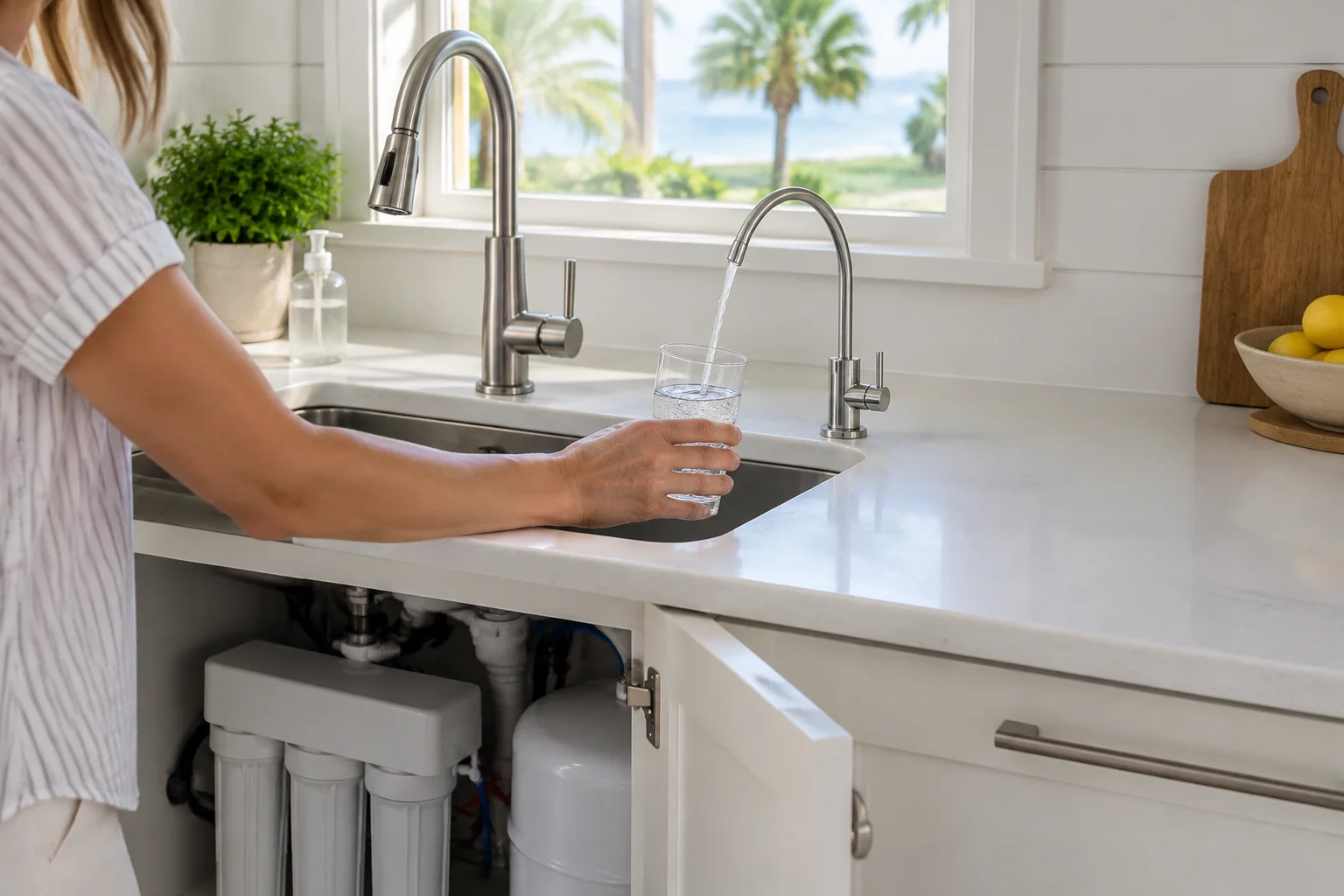
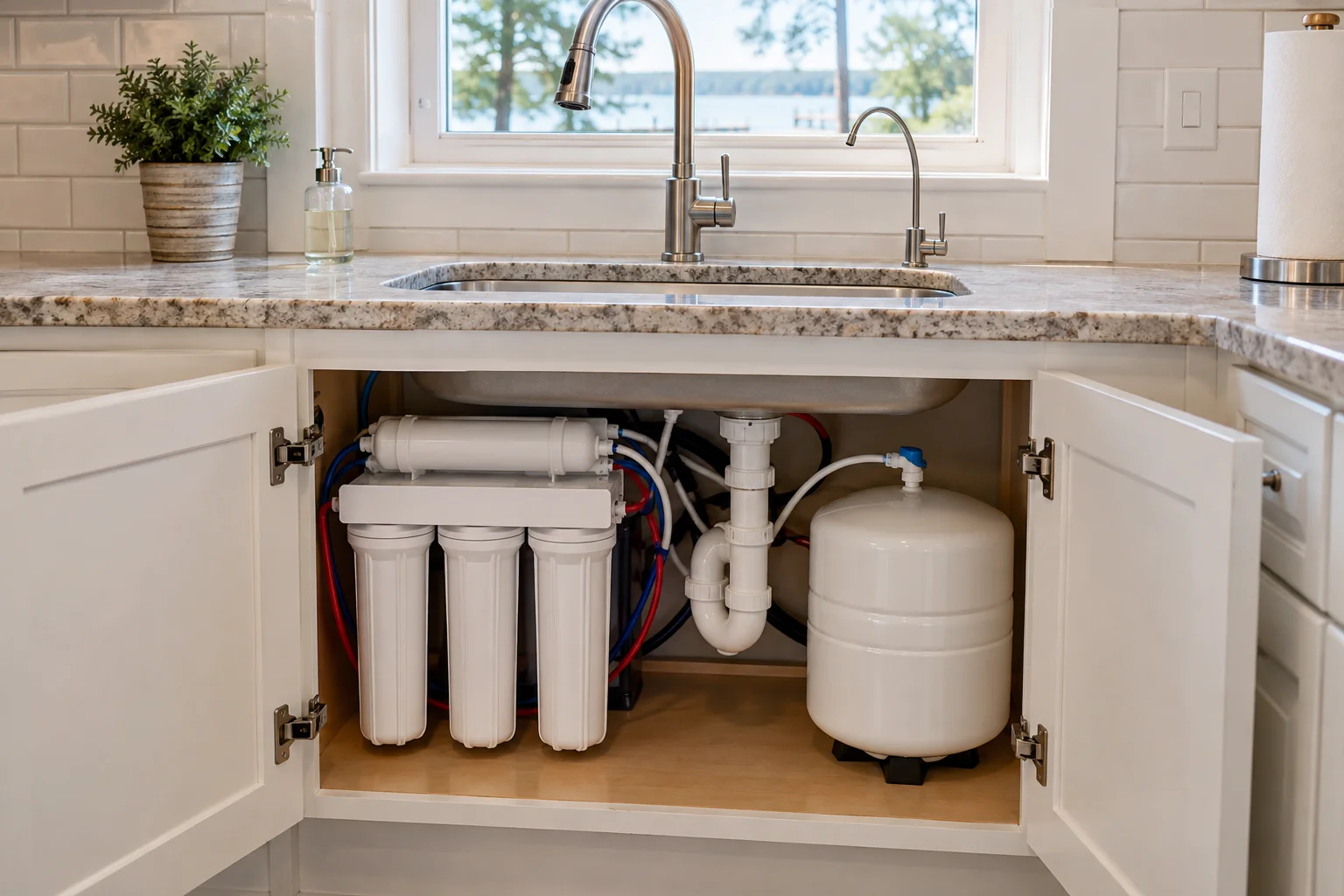
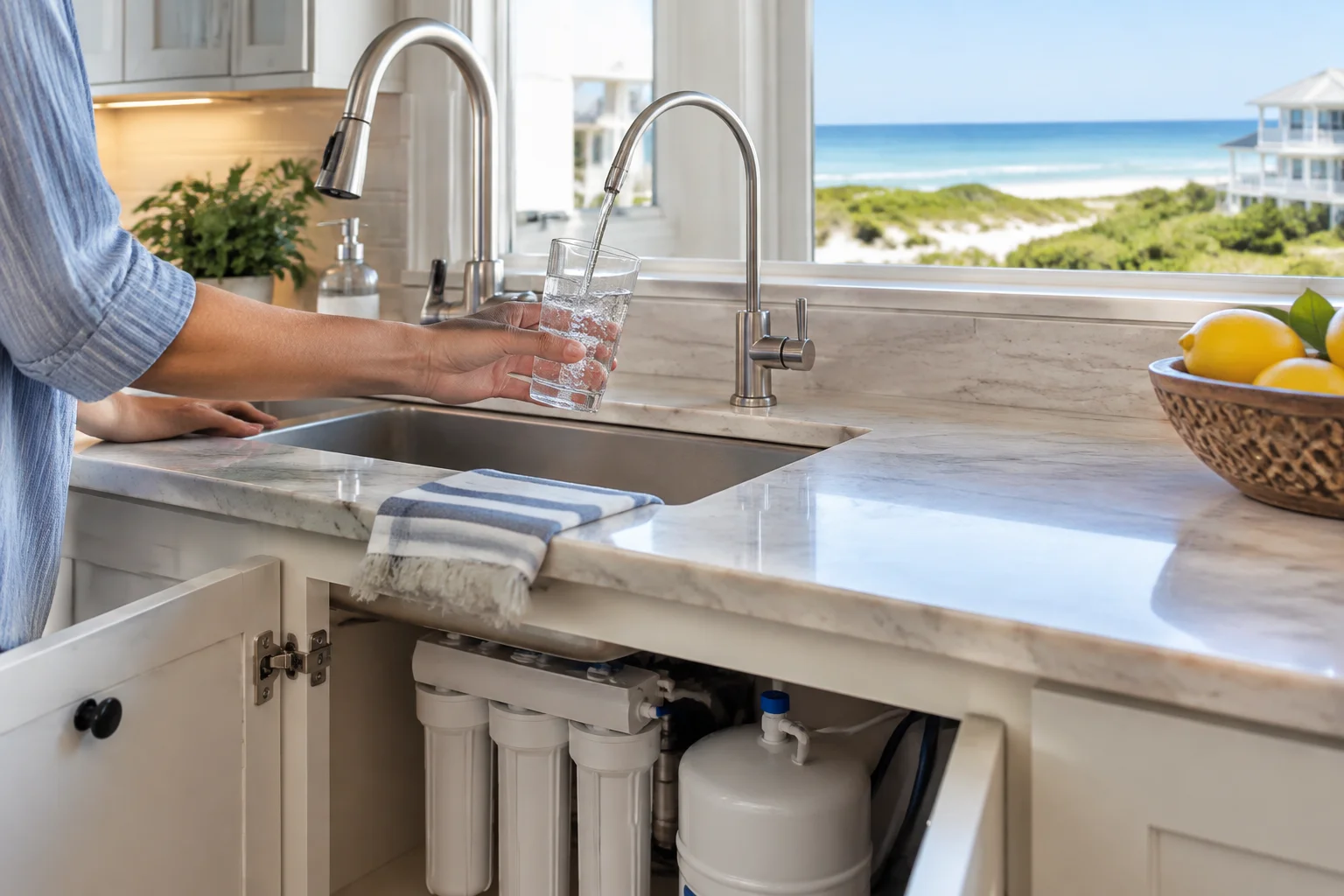
Softened water can still taste “off” if certain compounds are present. Reverse osmosis is often used as a point-of-use or dedicated drinking water solution to support better drinking water and better water for drinking and cooking.
Many homeowners who complain about metallic tasting water, chlorinated taste, or unpleasant odor choose reverse osmosis installation near me because it provides a focused approach for what goes into glasses, ice, and coffee.
If you want a practical path forward, connect the dots: whole home water filtration improves water quality throughout the house, while reverse osmosis can improve water at the tap used for drinking.
Use AO Smith solutions to match the job
AO Smith water softeners and AO Smith water filtration equipment are designed to support whole home clean water systems. The key is selecting the right combination and making sure the system is tuned to your water and your usage.
Whether you need an AO Smith water softener, AO Smith water filtration, or a combined approach, professional water softener service near me can keep it performing as intended.
Maintenance steps that prevent softening problems from coming back
Homeowners can do a few things that reduce the chance of system failure, but the best results come from a service plan that includes inspection and performance checks.
Watch for patterns, not one-off issues
If you see hard water spots on glass after every shower, or scale buildup on faucets keeps returning, do not wait for it to “maybe get better.” Those signs usually point to incomplete softening or an underlying filtration issue.
Keep an eye on salt levels and salt bridging
Salt should be high enough to support your household or rental’s water use. Also, check for crusting and bridging. If the salt is clumped or hard, it may not dissolve correctly.
Do not ignore soap performance
When soap does not lather or rinse well, that can indicate water hardness is still present. It can also indicate other water quality issues. Either way, it is a useful clue that the water treatment plan may need adjustment.
Inspect for odor and discoloration changes
Visible sediment, discoloration, and odor concerns can be linked to filtration, sediment control, or changes in municipal supply conditions. If cloudy ice cubes show up, it can be a sign that taste and odor or sediment filtration needs attention.
Plan service before scale becomes plumbing damage
Scale buildup can start small and grow quietly. It can reduce water heater efficiency, contribute to restricted flow, and shorten appliance life. If you want deeper prevention guidance, this article walks through practical steps homeowners can take: Protecting Rosemary Beach Homes from Waterline Trouble: Practical Plumbing Maintenance That Saves Money.
When to call a professional water treatment team in Rosemary Beach
Calling early saves money. A professional can diagnose whether the issue is sizing, settings, media performance, filtration needs, or something else entirely.
Reach out if you notice:
Hard water spots on glass and fixtures continue despite having a softener.
Scale buildup on faucets and showerheads keeps returning.
Dry skin or dull hair after bathing persists.
Metallic, chlorinated, or unpleasant taste remains in drinking water.
Cloudy ice cubes or odor concerns show up in the freezer.
Appliances seem to wear out faster than expected.
Visible sediment or discoloration appears at taps.
These symptoms can overlap, which is why a single “fix” does not always work. For homeowners who want to understand the local patterns and why softening can get tricky, this read is helpful: Why Water Softening in Rosemary Beach Gets Tricky: Spots, Scale, Taste, and Odor.
Protect your home’s water quality with the right system, not guesswork
Rosemary Beach water needs a treatment approach that fits the way you live. If your household depends on great coffee, reliable ice, comfortable bathing, and clean laundry, the water system has to keep up. That is especially true for vacation rentals where water use patterns can swing quickly.
If you are looking for professional water softening in Rosemary Beach, FL, A Superior Mechanical supports homeowners across Walton County with system design, installation, maintenance, and water treatment solutions tailored to local conditions. You can review the water softening service page here: /service-areas/walton-county/rosemary-beach/water-softening-rmbfl.
For homeowners also exploring whole home filtration and clean water systems, start here: /water-filtration-ro-water-softeners. And if you want to see the broader service area coverage, visit /service-areas/walton-county/rosemary-beach and /service-areas/walton-county.
How better water changes everyday life
When water softening and filtration are working together, it shows up in small, satisfying ways. Glasses look clearer, showers feel better, and soap rinses clean. Coffee tastes more consistent, ice clears up, and cooking water performs the way you expect. Most importantly, appliances and plumbing systems do not have to fight scale buildup every day.
That is the goal: protect fixtures and appliances while helping your family enjoy the water you count on, whether it is a quick morning brew, a cool drink after the beach, or a relaxing bath .
Related water treatment and protection resources
If you are thinking about long-term protection, these reads connect water softening to real-world maintenance and costs:
- How Water Softening Protects Rosemary Beach Plumbing from Costly Water Damage
- Why emergency plumbing in Rosemary Beach deserves attention before a small problem becomes a big one
Find Water Softening in Rosemary Beach, FL
If you need Water Softening in Rosemary Beach, FL, visit our local service page or contact A Superior Mechanical today.
For a broader look at whole-home water filtration, reverse osmosis, and water softener options, visit our water filtration, RO, and water softener page.
Map of Rosemary Beach, FL
Frequently Asked Questions
Why do I still see hard water spots on glass even though I have a water softener?
Common causes include an undersized softener for your household or rental usage, incorrect regeneration settings, low or bridged salt, or sediment and other contaminants interfering with softening. A technician can test your water and check system performance so you can stop the spotting and scale buildup.
Can water softening improve cloudy ice cubes and unpleasant taste in drinking water?
Softening helps with hardness minerals that contribute to scale, but cloudy ice and taste and odor issues can also come from sediment, chlorine byproducts, or other water quality factors. Many homeowners solve this by pairing water softening with whole home water filtration and using reverse osmosis for drinking water and coffee.
Do I need reverse osmosis if I already have a softener?
Not always, but many households do. A softener targets hardness, while reverse osmosis installation near me is often used to improve drinking water taste and odor and reduce contaminants at the tap. Testing helps determine whether RO is worth adding for better drinking water for drinking and cooking.
How often should a water softener be serviced in Rosemary Beach, FL?
Service frequency depends on system type, water quality, and usage patterns. Many homeowners benefit from routine checks that include salt and brine performance, resin effectiveness, and filtration condition. If you are noticing scale buildup on faucets, dry skin after bathing, or odor concerns, schedule service sooner rather than waiting.
Related Articles
- How Water Softening Protects Rosemary Beach Plumbing from Costly Water Damage
- Why Water Softening in Rosemary Beach Gets Tricky: Spots, Scale, Taste, and Odor
- Why emergency plumbing in Rosemary Beach deserves attention before a small problem becomes a big one
- Protecting Rosemary Beach Homes from Waterline Trouble: Practical Plumbing Maintenance That Saves Money
Photo Gallery