In Seaside, FL, better water is not just a comfort upgrade. It is part of protecting faucets, showerheads, water heaters, and everyday routines like laundry, cooking, and bathing. When your water softening service is not performing the way it should, the results show up fast: glassware looks spotty, soap feels slippery instead of clean, and appliances wear out sooner. The frustrating part is that “having a water softener” does not guarantee better water. Several overlooked issues can cause problems with water softening services and lead to harder, dirtier water in kitchens and baths.
If you are searching for water treatment near me or water filtration near me, this guide will help you pinpoint the causes that commonly derail softening and other clean water systems in Seaside and Walton County.
Hard water symptoms that point to softening trouble, not just “normal Florida water”
Seaside homes can see noticeable hard water effects, especially when scale builds up and water treatment is not keeping up. Before you assume the issue is unavoidable, look for the patterns below. They often show that softening is incomplete, bypassed, or failing to regenerate properly.
Hard water spots on glass, dishes, and fixtures
When softening is not working, you may see white spots on drinking glasses, a film on plates, and dull streaks on chrome and brushed metal. These are classic hard water spots on dishes and fixtures, and they tend to worsen over time as scale accumulates inside plumbing and appliances.
Scale buildup around faucets and showerheads
Check around aerators, faucet spouts, and showerheads. If you can scrape off chalky deposits, that is a strong indicator that calcium and magnesium are not being controlled. Scale buildup on faucets and scale buildup around faucets can also reduce water flow and make cleaning feel like an ongoing chore.
Dry skin or dull hair after bathing
Soft water can feel different. When water is not properly softened, bathing can leave skin feeling tight or dry, and hair may look dull. It is not just perception. Hard water can affect how soap and shampoo rinse, leaving residue that makes hair feel coated.
Soap that does not lather or rinse well
If your soap does not lather, or it rinses poorly, that is a common clue. Many homeowners describe it as “soap never feels clean” even after scrubbing. This is one of the most useful signs to investigate when your water softener seems to be running but results do not match.
Metallic, chlorinated, or unpleasant taste and odor
While water softeners focus on scale-causing minerals, taste and odor concerns often involve additional filtration. If you notice a metallic note, stronger chlorine-like taste, or an odor that shows up in drinking water, it can mean you need more targeted treatment such as whole home water filtration or reverse osmosis for the kitchen.
Cloudy ice cubes
Cloudy ice cubes are not always about the freezer. They can be a sign of mineral content, sediment, or treatment imbalance. If ice looks cloudy even when you use filtered water for drinks, it is worth checking both the softener performance and any drinking water filtration you rely on.
Poor tasting coffee and cooking water
When minerals and possible sediment are not controlled, coffee extraction changes and flavors dull. Cooking water can also taste “off,” especially for soups, rice, and pasta. If you notice poor tasting coffee water or a difference in how food turns out, do not ignore it. Kitchen water problems often start with inadequate mineral control or missing filtration stages.
Appliances wearing out faster
Dishwashers, water heaters, and clothes washers can suffer when scale builds inside. Homeowners often notice mineral buildup, reduced efficiency, and premature wear. Over time, appliances can cost more to run and repair, even if the water softener appears to be operating.
Common causes of water softening service problems in Seaside homes
Below are the most frequent reasons water softening systems underperform. Some are simple maintenance issues. Others require a technician to measure water chemistry and verify settings.
Incorrect softener settings for your household and water conditions
One of the most overlooked causes is a setting that does not match your actual water usage and incoming water hardness. If the unit is programmed for the wrong grain capacity, the softener may not regenerate often enough. The result is “mostly soft” water that still leaves scale behind.
In Seaside and Walton County, water chemistry can vary. If your household size changes, you add high-demand appliances, or you notice new scale patterns, the system may need recalibration. Even small setting drift can show up as hard water spots on glass and dull buildup around showerheads.
A regeneration cycle that is skipped, incomplete, or mistimed
Water softeners rely on regeneration to recharge the resin. If regeneration is delayed, interrupted, or not fully completing, minerals pass through unsoftened. You might still see the salt tank refilling or hear the system run, but the cycle could be finishing early or not drawing brine correctly.
Sometimes the issue is a clogged injector, a brine line obstruction, or a drain problem. These problems often lead to poor softening performance, and homeowners may only notice them when spotting and scale return.
Salt issues and brine tank maintenance gaps
Salt that is wrong for the system, salt bridging, or low salt levels can all reduce softener effectiveness. If the brine solution is not forming properly, the resin never fully recharges.
Coastal homes can also have utility closets exposed to humidity. That can contribute to bridging and uneven salt dissolution. If you have ever looked into the tank and seen crusty clumps, you have a clue.
Bypass valves or plumbing changes that divert water around the softener
It is easy to miss a bypass state. If a valve is partially closed, or if maintenance work was done on a water line and the softener was not returned to service correctly, your home can receive hard water even while the system sits “on.”
This shows up as scale buildup around faucets and persistent soap residue, even when the equipment seems active. If you recently had plumbing work, a new fridge with an ice maker, or a water line upgrade, check whether the softener was affected.
Clogged sediment filters or upstream contaminants
Many Seaside homes use a combination of filtration and softening. If sediment or particulates are present, a clogged pre-filter can reduce flow and interfere with proper operation. Visible sediment, discoloration, and odor concerns can also point to a filtration stage that needs attention.
When filtration is not doing its job, you can see cloudy ice cubes and taste changes in drinking water. Even a properly softened system cannot fix sediment problems by itself.
Resin bed aging or channeling
Over time, the resin bed can age or develop channeling. When that happens, water may pass through paths that do not fully soften it. The result is inconsistent performance that looks like “the softener is working sometimes,” but your fixtures still scale.
This is also where water softening services need a professional evaluation. A technician can assess performance and determine whether the resin needs service or replacement.
Water softener sized for the wrong demand
Some systems are installed based on guesswork rather than measured usage. If your household has high laundry volume, frequent showers, a large hot water demand, or an irrigation system that draws from the same supply, the softener may be undersized.
Undersizing typically shows up as scale buildup on faucets and a slow drift toward harder water, especially after the softener has been running for a while between regenerations.
When scale control is not enough: taste, odor, and clean drinking water needs
Water softening is excellent for protecting plumbing from scale. But it is not designed to remove every issue homeowners notice in kitchen and bath water. Taste, odor, and sediment concerns often require additional treatment.
Whole home water filtration for everyday protection
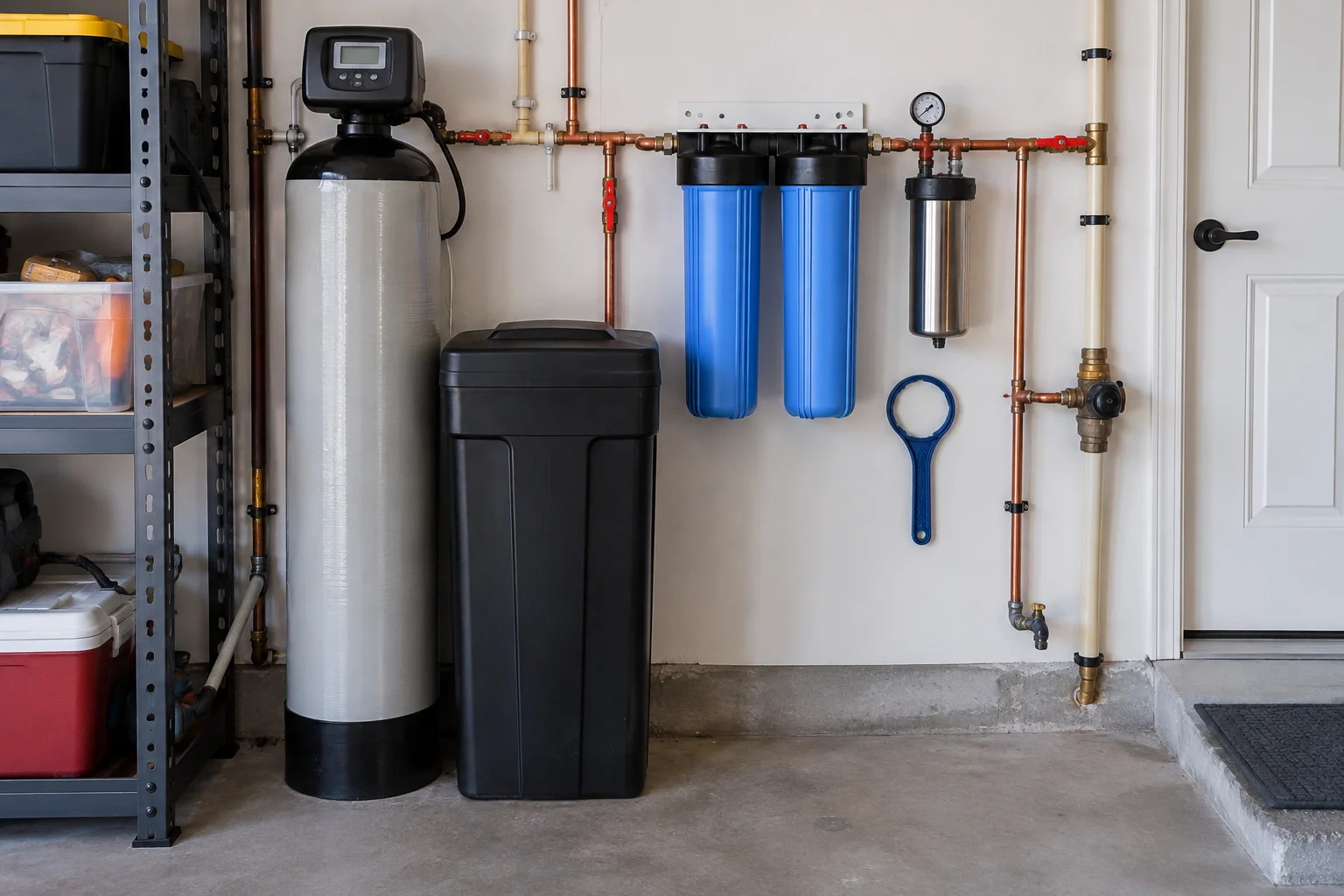
Whole home water filtration can help reduce contaminants before they reach your taps and appliances. Many homeowners use it to support cleaner water systems near me searches because it can improve water quality throughout the house, not only at the kitchen sink.
If you are seeing visible sediment, discoloration, or odor concerns, whole home filtration may be the missing layer that makes softening perform better for the whole household.
AO Smith water filtration to complement softening
Some Seaside homeowners choose AO Smith water filtration components as part of a multi-stage approach. The goal is to address more than scale. Depending on your water test results, a system may combine filtration stages for taste, odor, and particulates alongside water softening.
If you are considering an AO Smith water softener or AO Smith water filtration, the best results come from matching equipment to your measured water quality, not just a general recommendation.
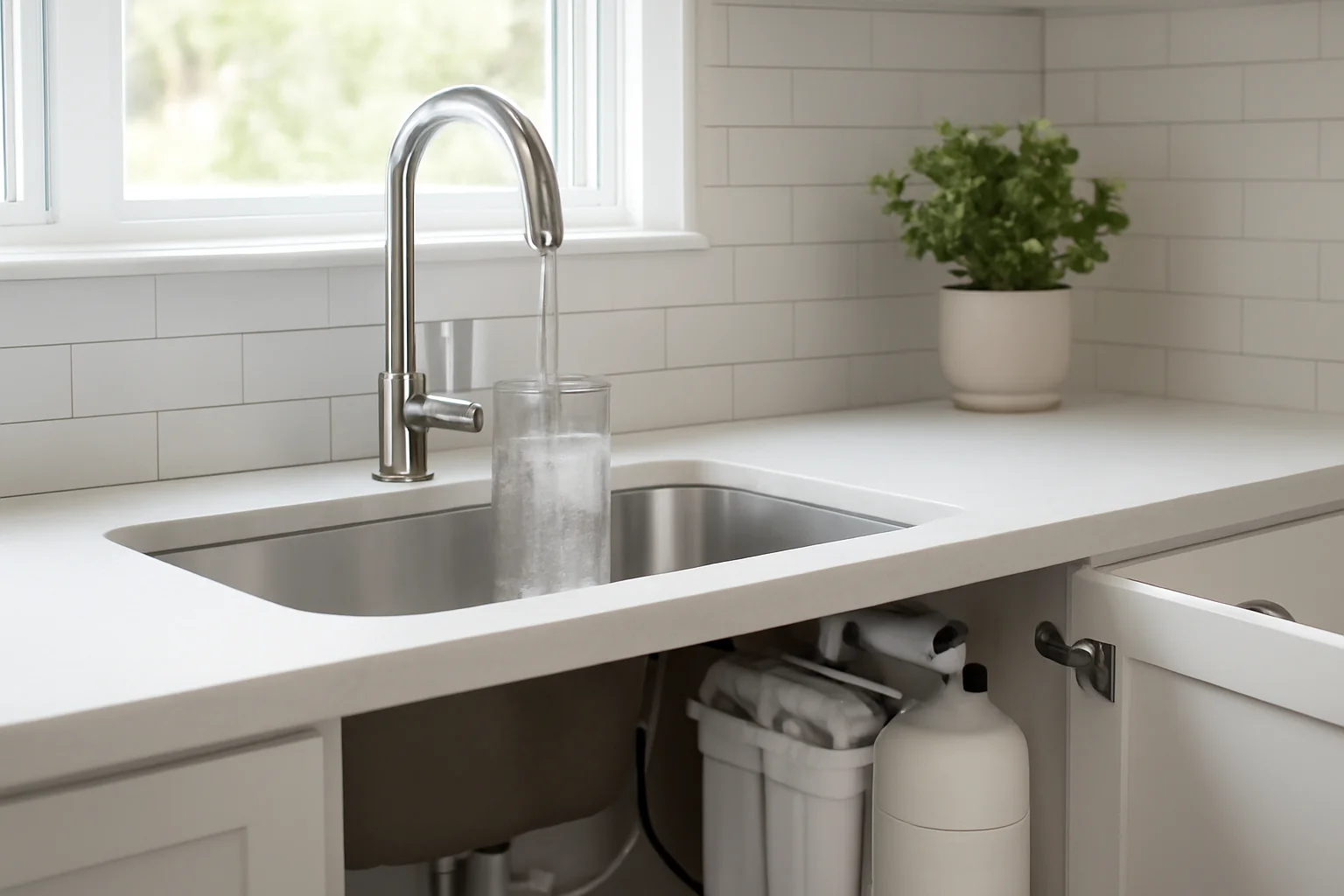
Reverse osmosis for drinking water and cooking water
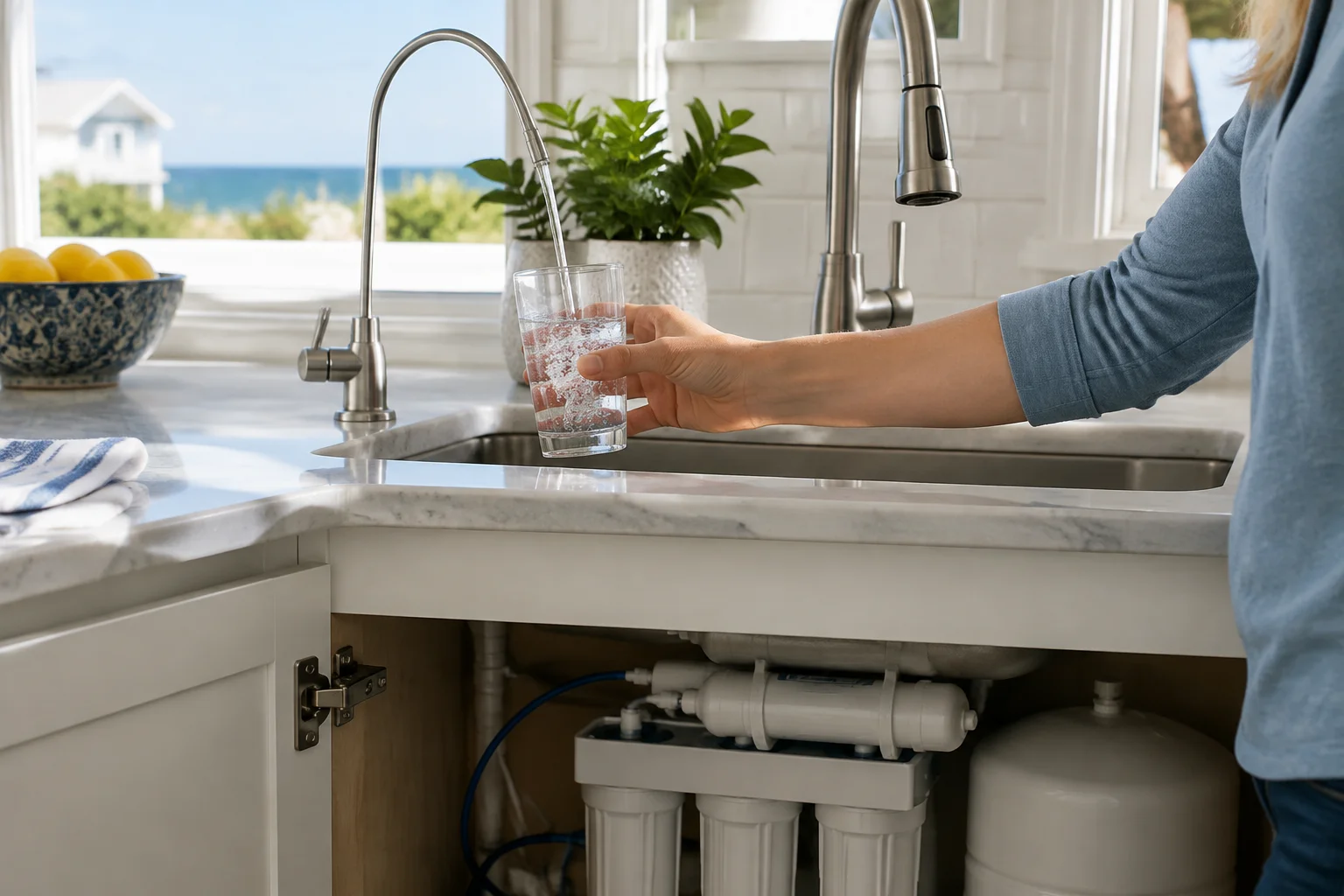
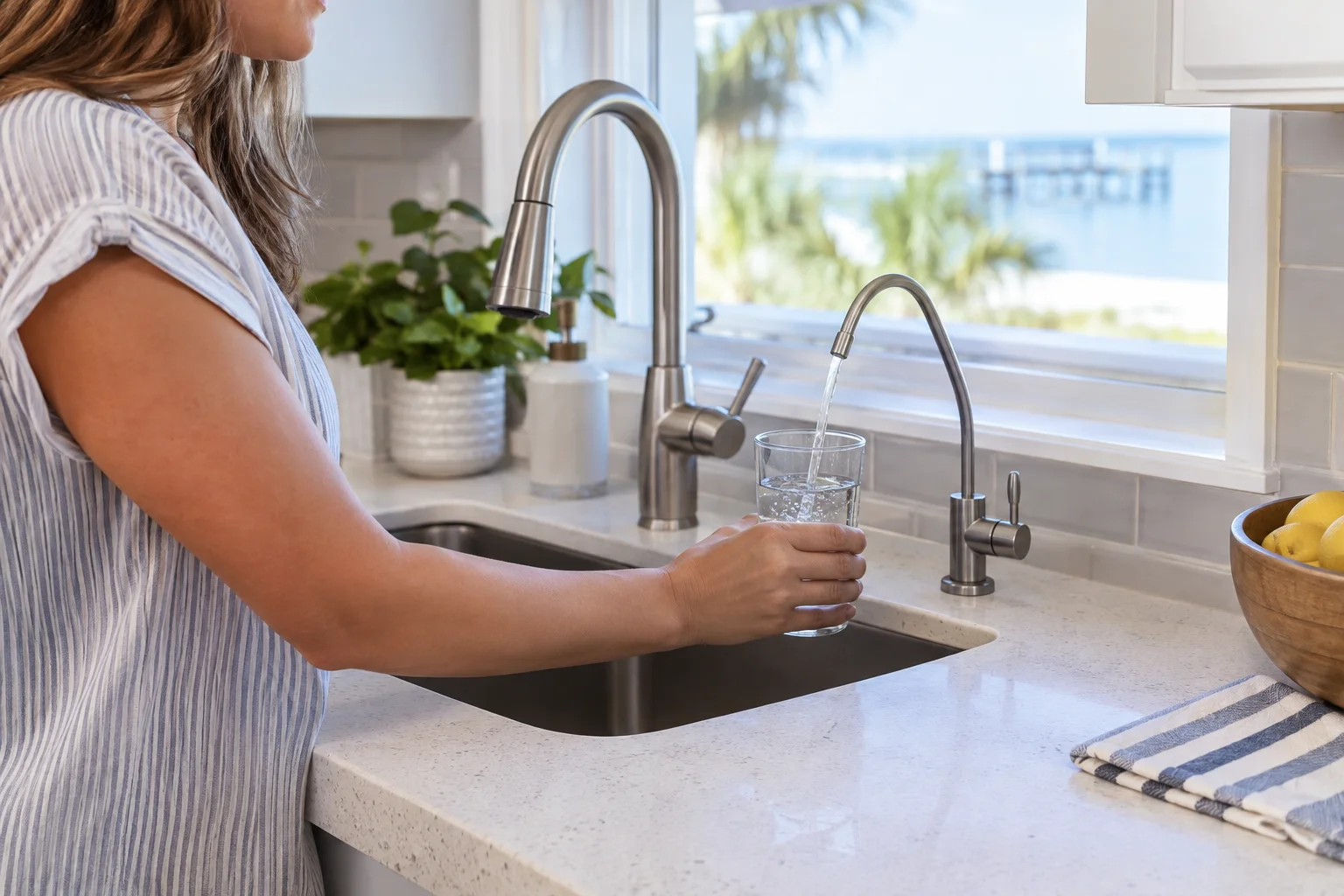
For many families, reverse osmosis is the upgrade that makes drinking water truly taste clean. It can be especially helpful when you notice metallic, chlorinated, or unpleasant taste, or when you want better drinking water for drinking, ice, coffee, and cooking.
If you are searching for reverse osmosis system near me, it is worth thinking about how RO connects with your broader system. Softened water can reduce scale in appliances, while reverse osmosis focuses on the water you drink. Together, they support both fixture protection and better kitchen flavor.
You can explore options here: /water-filtration-ro-water-softeners.
How Seaside conditions and home details affect water treatment performance
Seaside is a coastal area with unique home realities. Even when the incoming water is treated at a municipal level, your home plumbing and local conditions can influence what you experience at the tap.
Coastal humidity and utility closet maintenance
Salt tanks and mechanical rooms can sit in humid spaces. Humidity can lead to salt bridging and uneven brine formation. When the softener cannot consistently regenerate, scale buildup around faucets and showerheads can return.
Older plumbing and fixture materials
Older homes may have plumbing runs that trap mineral deposits. Even with a softener, buildup can remain until the system stabilizes and the internal scale is addressed. If you just moved into a home, your “new normal” might be leftover scale plus inconsistent softening.
Family routines that increase hot water demand
Think about a typical Seaside week: showers in the morning, laundry loads after beach days, kids rinsing off sand, and cooking that relies on consistent water taste. When a softener is not aligned with that demand, it may run out of capacity faster than expected.
That can show up as soap that does not lather, dry skin after bathing, and poor tasting coffee water. It is not just about comfort. It is about whether your system can keep up with daily life.
Practical checks homeowners can do before calling for service
These quick checks can help you describe the problem more clearly when you schedule water softener service.
Look for salt level and salt type
Check the salt level and whether you are using the correct type for your unit. Crusty clumps can signal bridging. If you see a hard crust, the brine may not be forming correctly.
Observe whether softener cycles complete
Listen for the regeneration cycle and note timing. If the system appears to run but performance does not improve, there may be a brine draw or drain issue.
Inspect for bypass positioning
If your system has a bypass valve, confirm it is set to allow water through the softener. If you recently had plumbing work, double-check that the valve was returned to service.
Compare water in different locations
If you have whole home filtration or RO at the kitchen, compare taste and appearance at the kitchen sink versus bathroom taps. If the kitchen tastes better but the rest of the home still scales, the issue may be softening settings or bypass on the main line.
Watch for ice changes
Cloudy ice cubes can point to treatment issues. If the ice looks cloudy while bottled water ice does not, focus on your home filtration and softening performance.
Why maintenance and water testing matter for better kitchen and bath water
Water softening services are not “set it and forget it” forever. Performance can drift due to household changes, salt supply issues, and mechanical wear. Regular service and water testing help confirm that your system is still matching the water hardness and contaminants your home receives.
When water testing shows the softener and filtration are out of balance, you can often restore better water without replacing the entire system. That is where professional diagnosis matters.
What to ask for from A Superior Mechanical in Seaside
If you are ready to get reliable water treatment, look for a service approach that measures performance and addresses multiple layers when needed. A Superior Mechanical provides water softening services in Seaside, FL, helping homes enjoy softer water, less scale buildup, and cleaner kitchen and bath water.
You can review the local water softening service area page here: /service-areas/walton-county/seaside/water-softening-services-ssfl. For broader coverage, see /service-areas/walton-county/seaside and /service-areas/walton-county.
If you want more context on how coastal plumbing habits and water treatment connect, these reads may help:
- Practical Plumbing Advice for Seaside Homeowners Living Near the Coast
- Cleaner Water, Clearer Living in Seaside: How Better Treatment Helps With Spots, Scale, Taste, and Odor
- Keeping Seaside Homes Running Smoothly with Better Waterline Care
When it is time to call a professional water treatment company
Schedule professional help when you notice ongoing scale despite a softener, persistent taste and odor issues, or signs that your system is not regenerating correctly. It is also smart to call if you recently moved into a home with existing equipment and you want to confirm it is set up properly for your household.
Homeowners often wait too long because the problem feels “small,” like a few spots on glass. Over time, scale buildup around faucets, clogged showerheads, and faster appliance wear can turn a daily annoyance into a maintenance and replacement expense.
Getting the right diagnosis early also helps you choose the best mix of water softening and filtration, whether that means an AO Smith water softener, AO Smith water filtration, whole home water filtration, or adding reverse osmosis for drinking water and cooking water.
How better water changes everyday life in Seaside
Once your water treatment is working, the difference shows up in real household moments. Glasses come out clear instead of spotty. Dishes feel easier to clean. Soap lathers and rinses without leaving residue. Laundry looks fresher and feels softer. Bath time becomes more comfortable, with less dryness and hair that looks healthier.
In the kitchen, better water makes a noticeable difference for coffee and cooking. Ice cubes stay clearer. Drinking water tastes cleaner. And because scale is reduced, appliances and fixtures often stay efficient longer.
For Seaside homeowners, that is what water softening services and clean water systems are really about: protecting your investment while making daily routines simpler and more enjoyable. If you want to explore water softening services in Seaside, start with the local page at /service-areas/walton-county/seaside/water-softening-services-ssfl and the broader filtration options at /water-filtration-ro-water-softeners.
Find Water Softening Services in Seaside, FL
If you need Water Softening Services in Seaside, FL, visit our local service page or contact A Superior Mechanical today.
For a broader look at whole-home water filtration, reverse osmosis, and water softener options, visit our water filtration, RO, and water softener page.
Map of Seaside, FL
Frequently Asked Questions
My water softener runs, but I still have hard water spots on glass. What causes that?
Common causes include incorrect settings, incomplete regeneration, salt bridging, a clogged injector or brine line, or a bypass valve that is diverting water around the softener. A technician can test water performance and check the system’s regeneration and flow path.
Will a water softener fix bad taste and odor in drinking water?
Usually not by itself. Water softeners are built to reduce scale-forming minerals. If you notice metallic, chlorinated, or unpleasant taste, whole home water filtration or drinking water filtration, such as reverse osmosis, may be needed for cleaner kitchen water.
What is the difference between water softening, whole home water filtration, and reverse osmosis?
Water softening targets calcium and magnesium to reduce scale. Whole home water filtration improves water quality throughout the house by reducing contaminants. Reverse osmosis focuses on producing cleaner drinking and cooking water, often improving taste and odor and helping with cloudy ice cubes.
How often should I service an AO Smith water softener or water filtration system?
Service frequency depends on your water conditions and usage. Many homeowners benefit from periodic inspections and performance checks so settings, filters, and regeneration remain accurate. A Superior Mechanical can recommend a schedule based on your setup and test results.
Can hard water shorten the life of appliances in Seaside homes?
Yes. Scale buildup can reduce efficiency and increase wear in water heaters, dishwashers, and clothes washers. When hard water treatment becomes part of protecting fixtures and appliances, homeowners often see fewer scale-related repairs and longer equipment life.
Related Articles
- Practical Plumbing Advice for Seaside Homeowners Living Near the Coast
- Cleaner Water, Clearer Living in Seaside: How Better Treatment Helps With Spots, Scale, Taste, and Odor
- Keeping Seaside Homes Running Smoothly with Better Waterline Care
- Reading the Warning Clues in Seaside Homes Before a Panel Upgrade Becomes Urgent
Photo Gallery