Bluewater Bay homes rely on clean, comfortable water for everything from morning showers to cooking and laundry. When the water softener is working well, you notice fewer hard water spots on glass, better soap performance, and less scale buildup around faucets and showerheads. When it is not, everyday problems show up quickly: scale buildup around fixtures, poor tasting or metallic tasting water, cloudy ice cubes, and appliances that seem to wear out faster.
This article breaks down what can cause problems with water softening services in Bluewater Bay, FL, and the simple habits that help keep water cleaner. If you are searching for water softening services in Bluewater Bay, these details can help you spot what is going on in your home and prepare for a service appointment.
What hard water does to a Bluewater Bay home
Bluewater Bay is in Okaloosa County, Florida, where many homes experience water hardness that leads to mineral buildup. When the water is hard, calcium and magnesium form scale. That scale shows up in the places you notice most: on shower doors, around faucet bases, and inside plumbing lines. Over time, it can also reduce the efficiency of water heaters and other appliances that use water.
Even if you already have a water softener, issues can still occur when the system is underperforming or interrupted by routine household habits. Common signs homeowners see include:
- Hard water spots on glass, dishes, and fixtures that do not wipe away easily
- Scale buildup around faucets, showerheads, and plumbing connections
- Dry skin or dull hair after bathing
- Soap that does not lather or rinse well
- Metallic, chlorinated, or unpleasant taste, including concerns with chlorine taste in water
- Cloudy ice cubes
- Poor tasting coffee and cooking water
- Visible sediment, discoloration, and odor concerns
- Appliances wearing out faster than expected
These are not just “annoyances.” They often point to a softening performance problem, a filtration gap, or a system that needs adjustment, maintenance, or a better match for your home’s water conditions.
Simple habits that can disrupt water softening performance
Running the system low on salt more often than you think
A salt-based softener depends on consistent salt levels. When the brine tank runs low, the system may still operate, but it can fail to regenerate properly. Homeowners sometimes notice the change after weekends away, during busy months, or when a refill is delayed.
Habit that helps: check salt level regularly and keep the brine tank supplied with the right type of salt your system requires. If you are unsure what your system uses, ask your technician during a water softener service visit.
Using the wrong salt type or mixing products
Some households switch products based on availability or price. The softener may not respond the same way if the salt type is not compatible. That can lead to incomplete regeneration and mineral leakage into the home.
Habit that helps: stick with the salt recommended for your unit. If you recently changed brands, mention it to your service provider.
Skipping maintenance because the system looks “fine”
Water softeners and water filtration systems are mechanical equipment. Over time, resin beds, valves, and internal components can accumulate scale or experience wear. A system can still run, but performance may drift.
Habit that helps: schedule routine maintenance and keep the brine tank and surrounding area clean and accessible. If you see salt bridging, crusting, or unusual odors, address it quickly.
Letting water use patterns change without updating the system
Families grow, rentals turn over, and schedules change. If your household water usage rises or shifts, the softener’s settings may no longer match your demand. That can contribute to scale buildup around faucets and reduced comfort during bathing.
Habit that helps: after major changes, ask your water treatment professional to confirm the system’s settings and performance. This matters for both homeowners and anyone managing rentals.
Ignoring backup water needs during outages or unusual events
Power interruptions, extended absences, or unusual water pressure events can affect regeneration cycles. Sometimes the system resumes later, but the timing may not align with your household’s needs.
Habit that helps: if you notice a sudden return of hard water spots on dishes or dry skin after bathing, treat it like a clue. A technician can verify whether the softener is regenerating correctly.
Why installation and system sizing matter in Bluewater Bay
Even with good habits, poor installation or an undersized system can cause recurring problems. In the real world, water hardness can vary by household. If the system is not sized for your flow rate, hardness level, and peak usage, it may not soften water consistently.
Here is what that looks like:
- Soft water works for a while, then minerals “break through” later in the day
- Scale buildup around showerheads returns faster than expected
- Soap performance changes, especially with laundry or bathing
- Glassware shows hard water spots after normal use
If you are considering water softener installation near me, ask about sizing based on your actual water conditions and household usage. A properly matched system reduces the chance that you will chase the problem with salt refills alone.
Common mechanical and performance causes behind softener problems
Clogged or failing components
Softener valves, filters, and internal parts can wear out. Sediment or debris can also contribute to reduced performance. When that happens, you might see visible sediment, discoloration, and odor concerns, or you may notice the system does not regenerate as it should.
Resin bed issues from scale or contamination
The resin is the core of a salt-based softener. If the resin is exhausted or contaminated, the system cannot exchange minerals effectively. This can show up as scale buildup around faucets, dull hair, and persistent hard water spots on dishes.
Incorrect settings or regeneration schedules
Many softeners use settings that control regeneration frequency and capacity. If those settings drift, are misconfigured, or are not updated after changes in water use, performance becomes inconsistent.
That is when homeowners often start noticing that their water feels different on some days but not others.
Bypass valves left open or accidentally adjusted
Some systems include bypass valves for service. If a valve is left open, softened water can be diluted with harder water. The result is a “partial fix” where some spots appear but scale still forms on fixtures.
When you see ongoing scale buildup around faucets and showerheads, this is one of the reasons technicians check the system’s flow path.
Why filtration and taste concerns can be separate from softening
Homeowners often assume that a water softener fixes everything. It helps with hardness and scale, but it does not automatically address every water quality issue. In Bluewater Bay, you may also want to address chlorine taste in water, metallic tasting water, sediment, and odor concerns.
This is where pairing softening with the right filtration can make a noticeable difference in daily life, especially in the kitchen and for drinking water.
Cloudy ice cubes and unpleasant taste
Cloudy ice cubes often point to air, filtration limitations, or water quality issues that affect clarity. If you also notice poor tasting coffee and cooking water, the cause may be a combination of hardness scale, chlorine taste, and fine particulates.
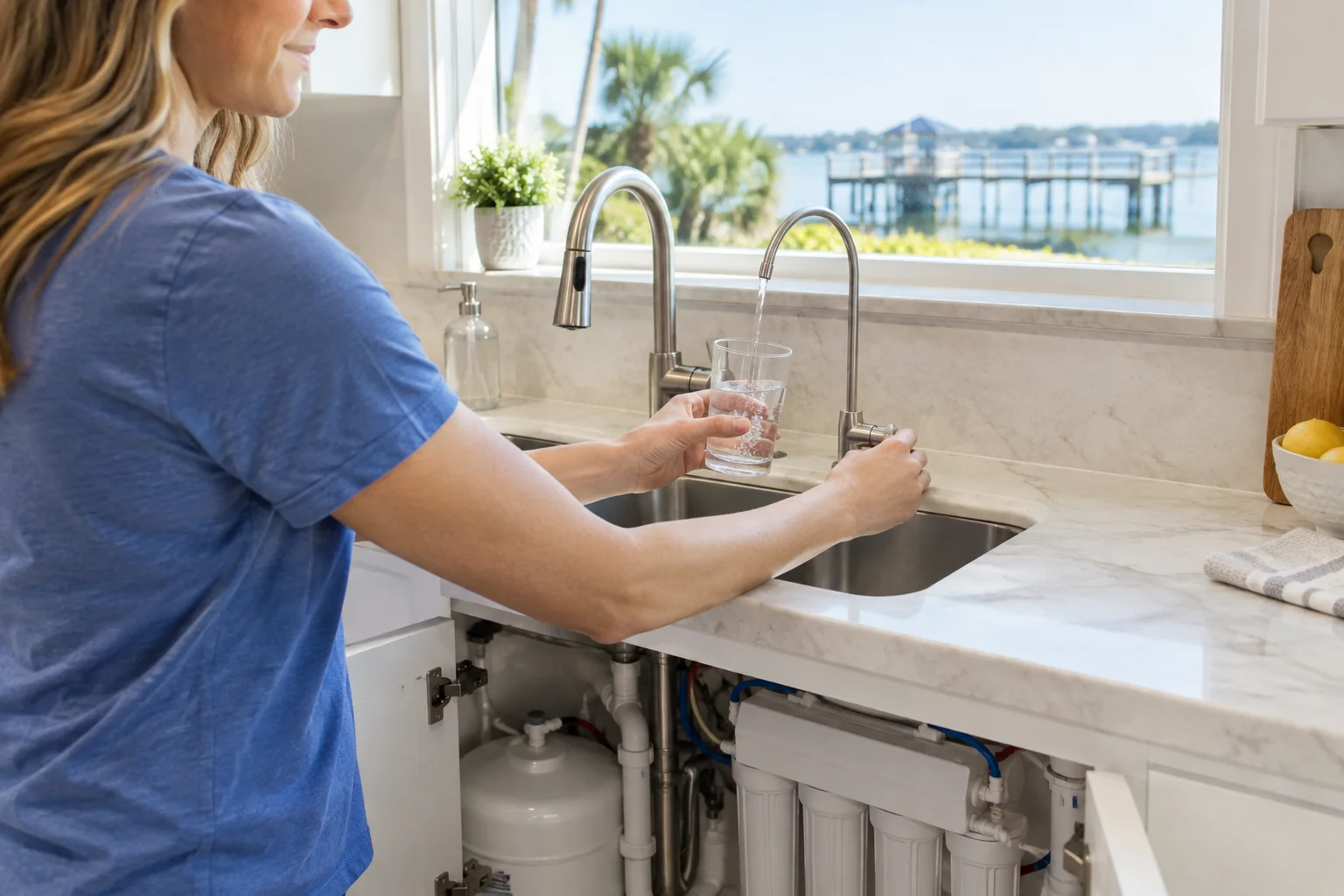
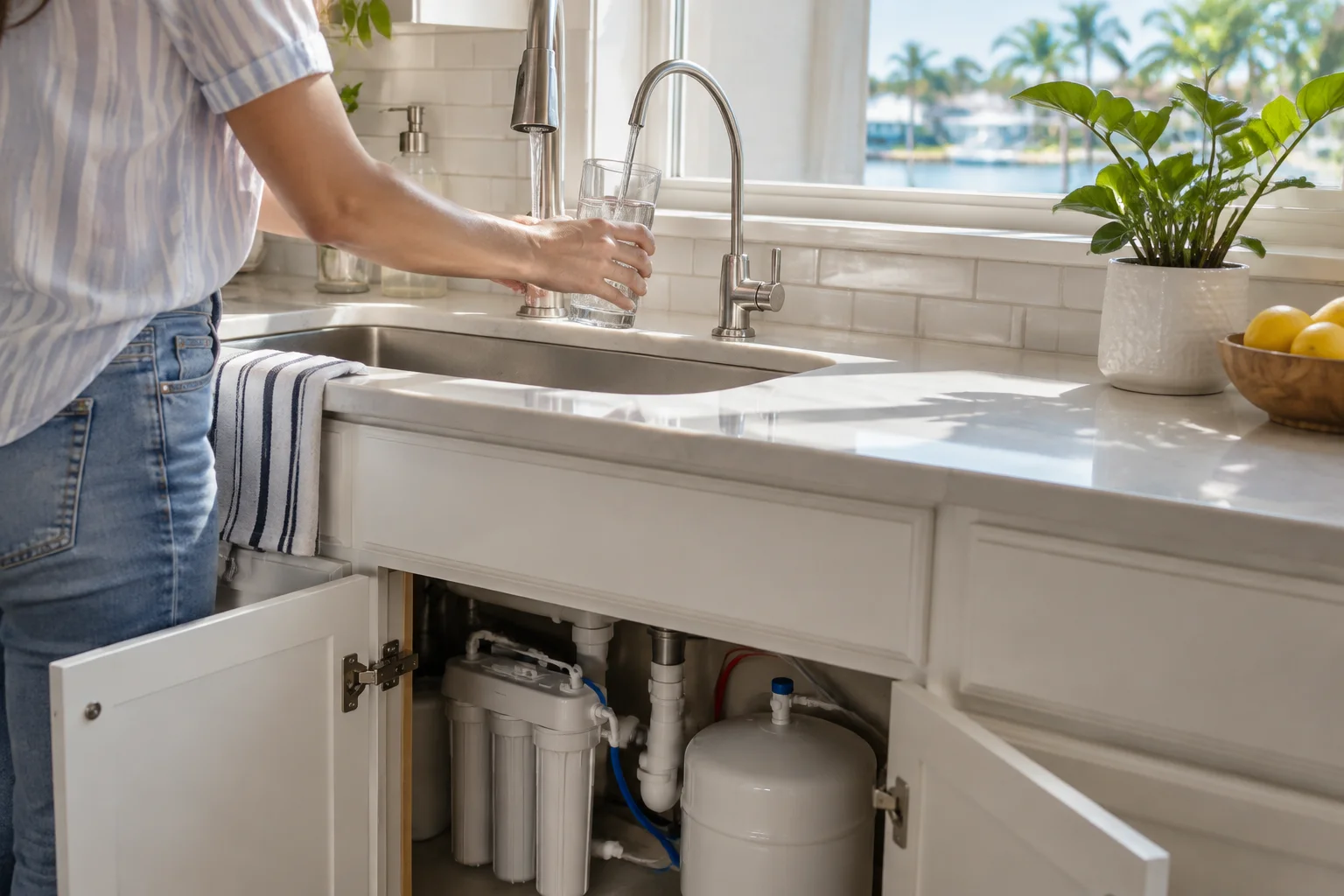
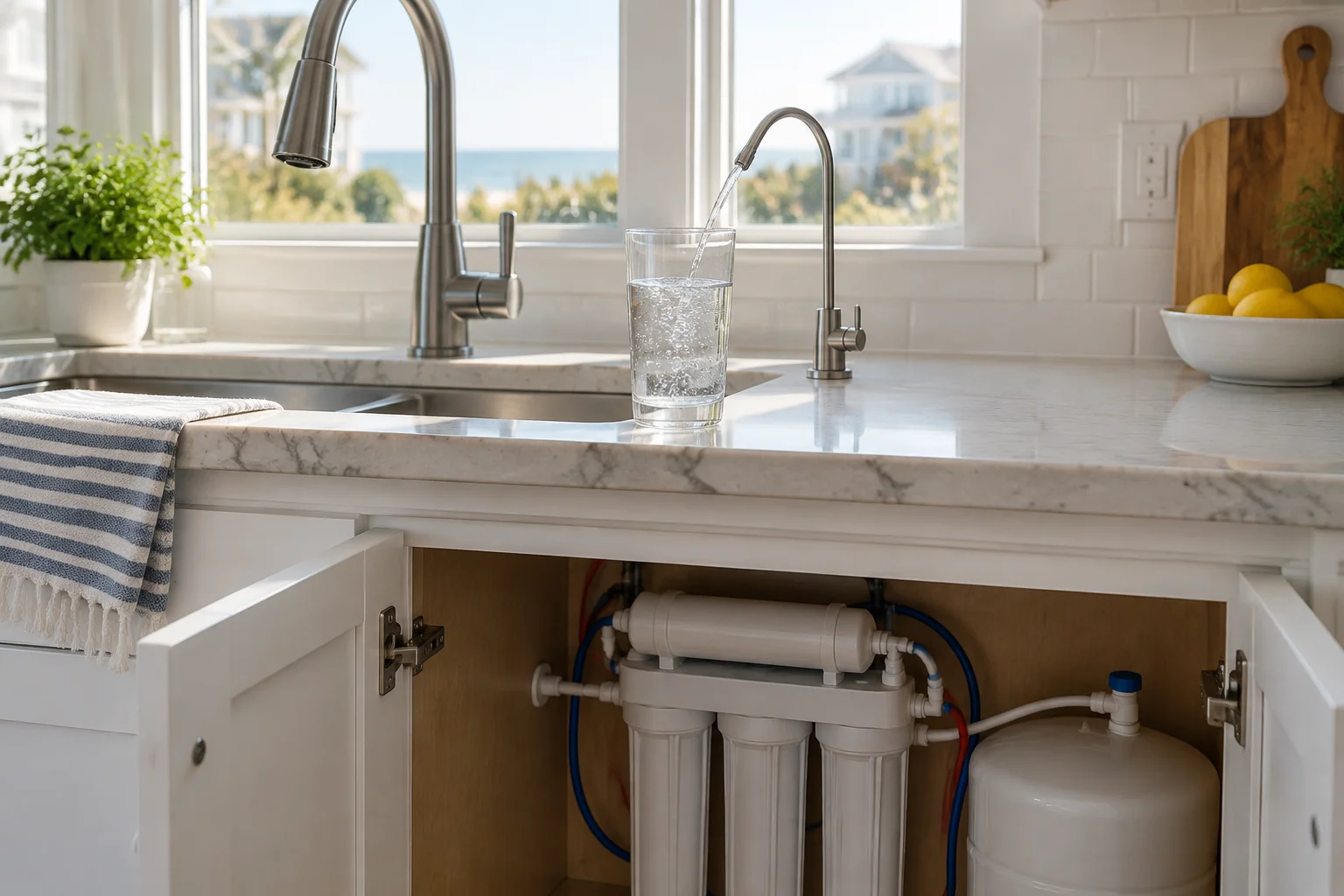
A whole house approach can reduce these issues more consistently than point-of-use filters alone. Many homeowners also choose whole home water filtration or reverse osmosis for drinking water.
Protecting appliances and fixtures beyond softening
Scale buildup can shorten the life of water heaters, dishwashers, and other appliances that use hot water. When hard water is reduced and water is filtered, appliances often run more efficiently and require less frequent maintenance.
If you have a dishwasher that leaves spots, a coffee maker that needs more descaling, or a water heater that seems to run harder, it is worth reviewing your water treatment setup as a system, not as separate parts.
Where AO Smith water filtration fits into cleaner water goals
Some homeowners want more than hardness control. They want water that tastes better, feels better for bathing, and supports cleaner cooking and drinking. AO Smith water filtration solutions are often considered when households want a dependable, whole home water filter strategy alongside softening.
If you are comparing systems, ask how the equipment handles both scale and other water quality concerns. For example, softening can help with scale buildup around faucets and showerheads, while filtration can help with chlorine taste in water, sediment, and odor concerns that impact drinking water and cooking water.
If you are also exploring reverse osmosis, ask how it will integrate with your overall clean water system. Reverse osmosis is commonly used for drinking water and can be paired with whole home filtration for better results across the house.
Whole home water filtration vs. reverse osmosis for Bluewater Bay kitchens
Picture a typical Bluewater Bay weekday: someone grabs a glass for iced tea, another person pulls water for pasta, and the coffee pot starts brewing before work. Hard water scale and water quality issues can show up fast in these moments.
Whole home water filtration supports better water across showers, laundry, and every tap. Reverse osmosis systems focus on the drinking water side, which can be ideal for improving taste and clarity for drinking and cooking.
If you are searching for water filtration near me or thinking about reverse osmosis installation, consider your priorities:
- If you mainly want fewer hard water spots and less scale, water softening is central.
- If you want better drinking water, cooking water, and fewer taste and odor complaints, reverse osmosis can help.
- If you want whole house consistency, whole home water filtration near me can reduce issues across multiple rooms.
Many families benefit from combining approaches so the bathroom feels better, the kitchen tastes better, and appliances stay cleaner longer.
How Bluewater Bay climate and local conditions affect water treatment
Bluewater Bay weather includes hot, humid stretches and seasonal changes that influence household water use. During warm months, more showers, more laundry, and more outdoor water use can increase demand on your softener. If your settings or capacity do not match that seasonal usage, minerals can slip through and you may see scale buildup around showerheads and faucets.
Local water conditions can also affect how quickly a system needs attention. When homeowners in Okaloosa County notice visible sediment, discoloration, or persistent odor concerns, it is a signal that filtration and softening should be evaluated together.
If you want to understand how service coverage works across the area, you can review our Bluewater Bay service area and connect your specific needs to the right water treatment options. For broader coverage details, visit Okaloosa County.
What to watch for in daily life: signs your system needs attention
Use these observations as a practical checklist. They often point to softener performance issues, filtration gaps, or maintenance needs.
Bathing and personal care
- Dry skin or dull hair after bathing
- Soap that does not lather or rinse well
- Shower doors that keep spotting up, even after cleaning
Kitchen and drinking water
- Cloudy ice cubes
- Metallic, chlorinated, or unpleasant taste
- Poor tasting coffee and cooking water
- Visible sediment or discoloration in drinking water or after running the tap
Laundry and dishes
- Dishware with hard water spots and film
- Laundry that feels less clean or looks dull
- Glasses that never seem to fully clear
Fixtures and appliances
- Scale buildup around faucets, showerheads, and plumbing connections
- Appliances wearing out faster than expected
- More frequent descaling needed for coffee makers or kettles
Maintenance habits that keep water cleaner between service visits
You cannot replace professional service, but you can reduce the chances of softener problems starting in the first place. These habits are simple and realistic for busy households.
Do quick weekly checks
Look at the brine tank salt level and confirm it is not running low. If your system uses a specific type of salt, keep the right product on hand so you do not improvise during a shortage.
Pay attention to pattern changes
Hard water spots on glass and dishes are easier to address when you notice patterns. For example, if the problem returns after a vacation, after a power outage, or after a period of heavy water use, note the timing for your technician.
Use cleaning routines that match your water
Even with a properly functioning system, mineral deposits can still form, especially in humid environments. Regular cleaning helps you avoid buildup that becomes harder to remove. If you are constantly scrubbing scale buildup around faucets and showerheads, that is a sign the water treatment setup needs a review.
When you add a dishwasher or water-using appliance, reevaluate
Upgrades can change your water demand. If you add a new appliance or increase usage, ask whether your softener settings still match your household.
When to call A Superior Mechanical for water softening service
If you are seeing persistent hard water spots on glass, scale buildup around faucets, dry skin or dull hair after bathing, or cloudy ice cubes, it is time to get the system checked. The goal is not just to “turn the softener on.” The goal is to confirm it is softening correctly, regenerating properly, and working alongside any filtration system you need for taste, odor, sediment, and better drinking water.
Homeowners searching for water softener service near me often benefit from a service visit that includes system inspection, performance checks, and recommendations that fit Bluewater Bay homes. If you are also focused on whole home water purification, you may want to review related guidance like Choosing Water Softening Services That Actually Fit Bluewater Bay Homes and Cleaner Water, Fewer Plumbing Surprises: A Bluewater Bay Guide to Home Purification.
For homeowners who want to connect water treatment to broader home protection, Staying Ahead of Plumbing Problems in Bluewater Bay Homes can help explain how mineral buildup affects pipes and fixtures over time.
If you manage a rental property or commercial space, water treatment decisions can impact long-term maintenance costs. You can also explore Why Commercial Plumbing Matters for Bluewater Bay Homes and Properties for a bigger picture on protecting plumbing investments.
For the most effective results, consider your water treatment as a connected system: softening for hardness and scale control, plus filtration for taste, odor, and clearer drinking water. That is how Bluewater Bay families keep water cleaner for bathing, cooking, laundry, and everyday comfort.
If you have questions about options like AO Smith water filtration, reverse osmosis, or whole home water filtration, reaching out to A Superior Mechanical is a practical next step. You can start with whole home water filtration and build from there based on your household’s needs.
Find Water Softening Services in Bluewater Bay, FL
If you need Water Softening Services in Bluewater Bay, FL, visit our local service page or contact A Superior Mechanical today.
For a broader look at whole-home water filtration, reverse osmosis, and water softener options, visit our water filtration, RO, and water softener page.
Map of Bluewater Bay, FL
Frequently Asked Questions
Why do I still see hard water spots on glass even though I have a water softener?
Hard water spots can mean the softener is not regenerating correctly, the salt level is too low, settings are off, or a bypass valve may be open. It can also happen when taste and sediment issues are not addressed by filtration. A service technician can check performance and confirm whether you need adjustments or additional filtration.
Can cloudy ice cubes or poor tasting coffee come from my water softener?
Water softeners mainly target hardness and scale. Cloudy ice cubes and poor tasting coffee often relate to filtration gaps, chlorine taste in water, or fine sediment. Many Bluewater Bay homeowners use whole home water filtration and, for drinking water, reverse osmosis to improve clarity and taste.
How do I know if my water softener is undersized for my Bluewater Bay home?
If soft water seems to work for part of the day and then minerals return, or if you notice scale buildup around faucets and showerheads that keeps coming back quickly, sizing may be an issue. A professional can evaluate your household water use and local water hardness to recommend water softener service, repair, or system upgrades.
What simple habits help prevent water softening problems?
Keep the brine tank supplied with the correct salt type, check salt levels regularly, and schedule maintenance so valves and components stay in good shape. Also pay attention to changes in water use after vacations, power outages, or household growth, since those can affect regeneration needs.
Related Articles
Photo Gallery