Living in WaterColor means enjoying coastal breezes, beach days, and a lot of time in your home. But the water that fills your showers, runs your washing machine, and powers the dishwasher can quietly affect comfort, cleanliness, and how long your plumbing and appliances last. For many WaterColor homeowners, local water conditions create hard water problems, and hard water treatment is not just about taste. It is about protecting fixtures, reducing scale buildup, and supporting better water for everyday life.
When you invest in water softening in WaterColor, you are building a cleaner foundation for bathing, laundry, cooking, and appliance performance. Below is how local conditions influence water softening results, what signs to watch for, and how whole home water filtration and reverse osmosis can fit into a complete clean water system.
WaterColor, FL water conditions and why they change how softeners work
Water softeners are designed to address hardness minerals, most commonly calcium and magnesium. In coastal areas like WaterColor, those minerals can still be present in the water supply, and the exact mix can vary through the year. Even when the water looks clear, hardness minerals can accumulate on surfaces after water evaporates or dries.
That is why homeowners in WaterColor often notice consistent water-related issues across kitchens, bathrooms, and laundry rooms. Hard water spots on glass shower doors, cloudy film on dishes, scale buildup around faucets, and mineral crust around showerheads are common visual clues. Those same minerals can also contribute to sediment in household water and reduced performance in water-using appliances.
Hard water does not only create cosmetic problems. Over time, it can build up inside plumbing lines and appliance components. That buildup can reduce water flow, increase energy use, and shorten the service life of equipment such as water heaters, dishwashers, and washing machines.
What hard water shows up as around your home
If you are trying to connect the dots between your daily routines and your water quality, these are the most frequent signs WaterColor homeowners report.
Scale buildup around faucets and showerheads
Look for chalky white rings at faucet aerators, rough deposits on showerhead nozzles, and mineral film around handles. This is often the same mineral layer that forms when hard water dries and leaves behind hardness minerals.
Hard water spots on glass, dishes, and fixtures
Glassware can come out with a dull, spotty look even after you run the dishwasher. Bathroom mirrors may develop haze that does not wipe away easily. For many families, this is one of the first signs that hard water treatment is needed.
Dry skin or dull hair after bathing
Hard water can interfere with how soap and shampoo lather and rinse. If you notice dry skin from hard water, tightness after showers, or dull hair that feels coated, your water may be contributing to the problem.
Soap that does not lather or rinse well
When soap does not lather well, it often means minerals are reacting with the soap. The result can be residue that clings to skin and fabrics. You may also see laundry that feels stiff or looks less bright.
Metallic, chlorinated, or unpleasant taste and odor concerns
Some households also notice metallic, chlorinated, or unpleasant taste. While hardness is a major issue for softening, other water quality factors like chlorine taste or odor can benefit from additional filtration.
Cloudy ice cubes and sediment or discoloration
Cloudy ice cubes can be a sign of dissolved solids or air and mineral content. Visible sediment, discoloration, and odor concerns can also point to the need for clean water systems that go beyond basic softening.
Poor tasting coffee and cooking water
In a WaterColor kitchen, you might not think about water until it affects your morning coffee or the way pasta and rice turn out. Poor tasting coffee water is a common complaint when mineral content and taste issues are not addressed. Even small differences in water chemistry can change flavor.
Appliances wearing out faster
When scale buildup forms inside appliances, it can reduce efficiency and increase wear. Over time, water heaters may run less efficiently, and dishwashers and washing machines can experience more mineral-related buildup. That is one reason homeowners searching for hard water treatment often want a plan that protects appliances, not just fixtures.
How water softening protects fixtures, plumbing, and appliances
Water softening works by reducing hardness minerals so they do not precipitate out as scale. In practical terms, softening helps you get water that behaves more like what soap and detergents were designed for.
When hardness is controlled:
Soap lathers and rinses more easily, which can improve bathing comfort and laundry results.
Mineral scale buildup around faucets and showerheads is reduced, helping fixtures stay cleaner longer.
Dishes and glassware are less likely to come out with hazy spots.
Appliance components can experience less mineral accumulation, supporting longer service life.
For WaterColor homes, this is especially helpful because many properties include multiple bathrooms and frequent water use during beach seasons. A properly sized and maintained system can help keep your home running smoothly even when water usage spikes.
Where whole home water filtration and reverse osmosis fit in
Water softening is focused on hardness. But “better water” is not always only about scale. Many homeowners want clean drinking water systems that address taste, odor, and sediment concerns too.
Whole home water filtration for cleaner water throughout the house
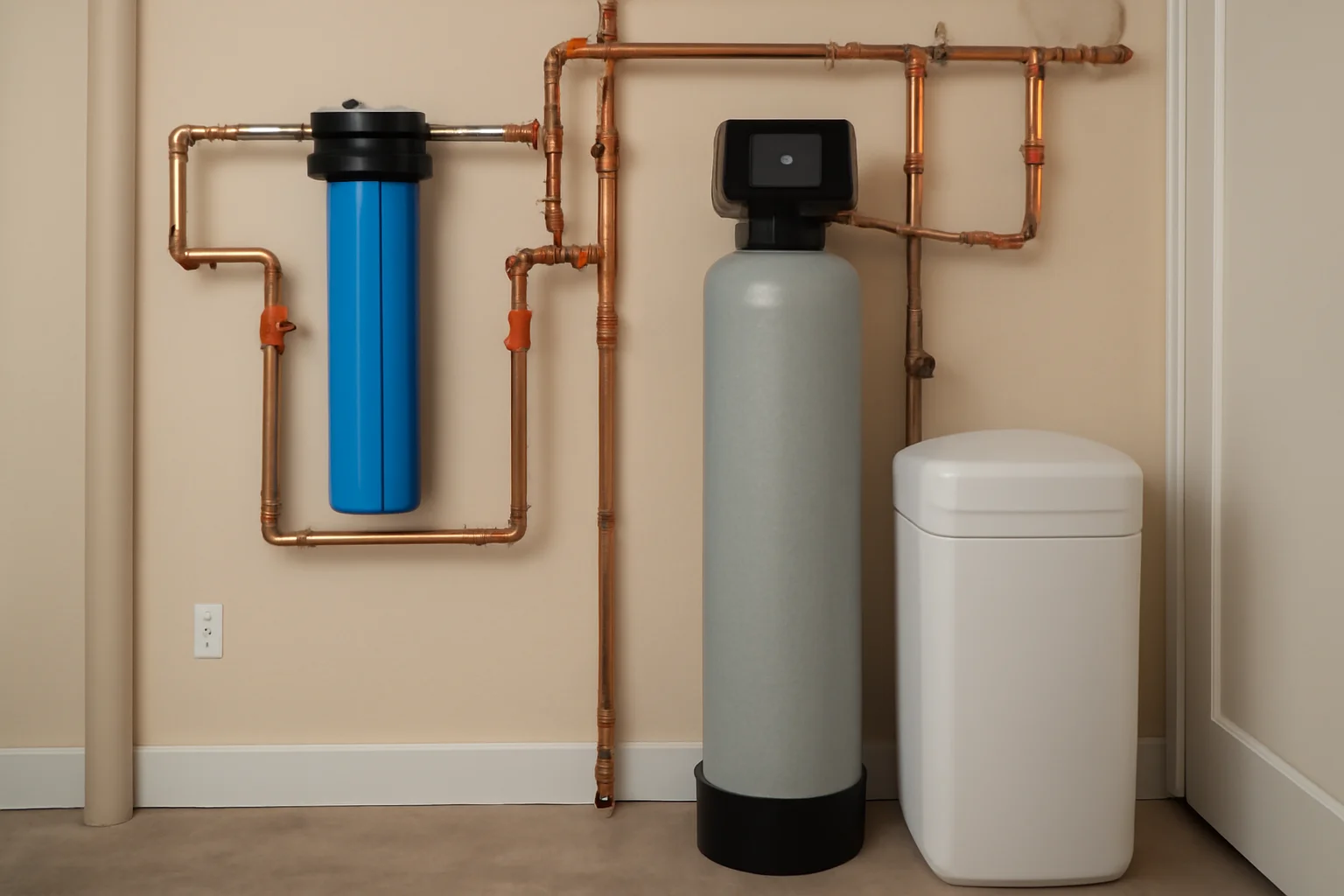
Whole home water filtration can help reduce sediment in household water and improve the quality of water used across showers, laundry, and faucets. If you are looking for water filtration near me for a whole home approach, it is worth discussing a system that complements your softener instead of replacing it.
Reverse osmosis for drinking and cooking water
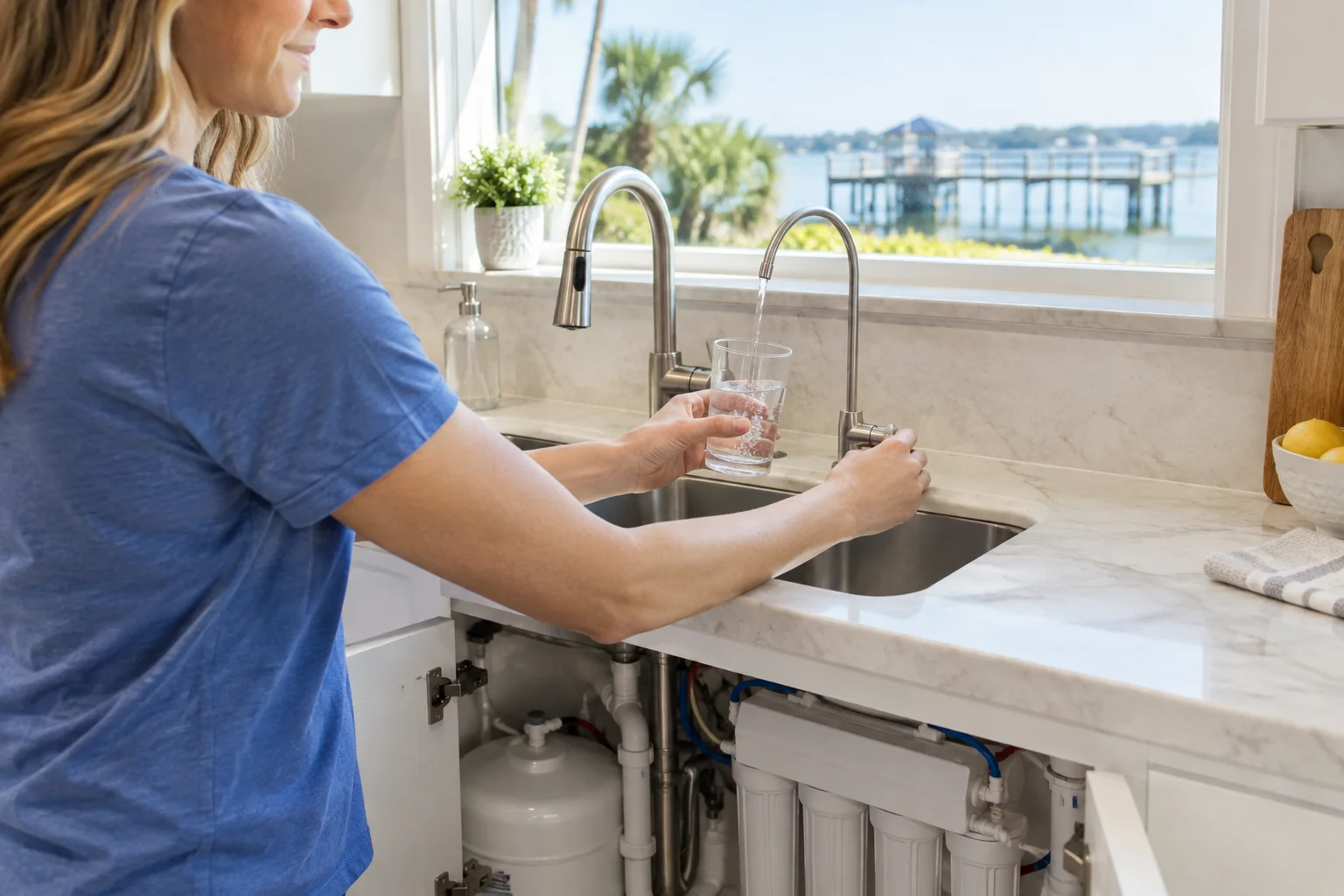
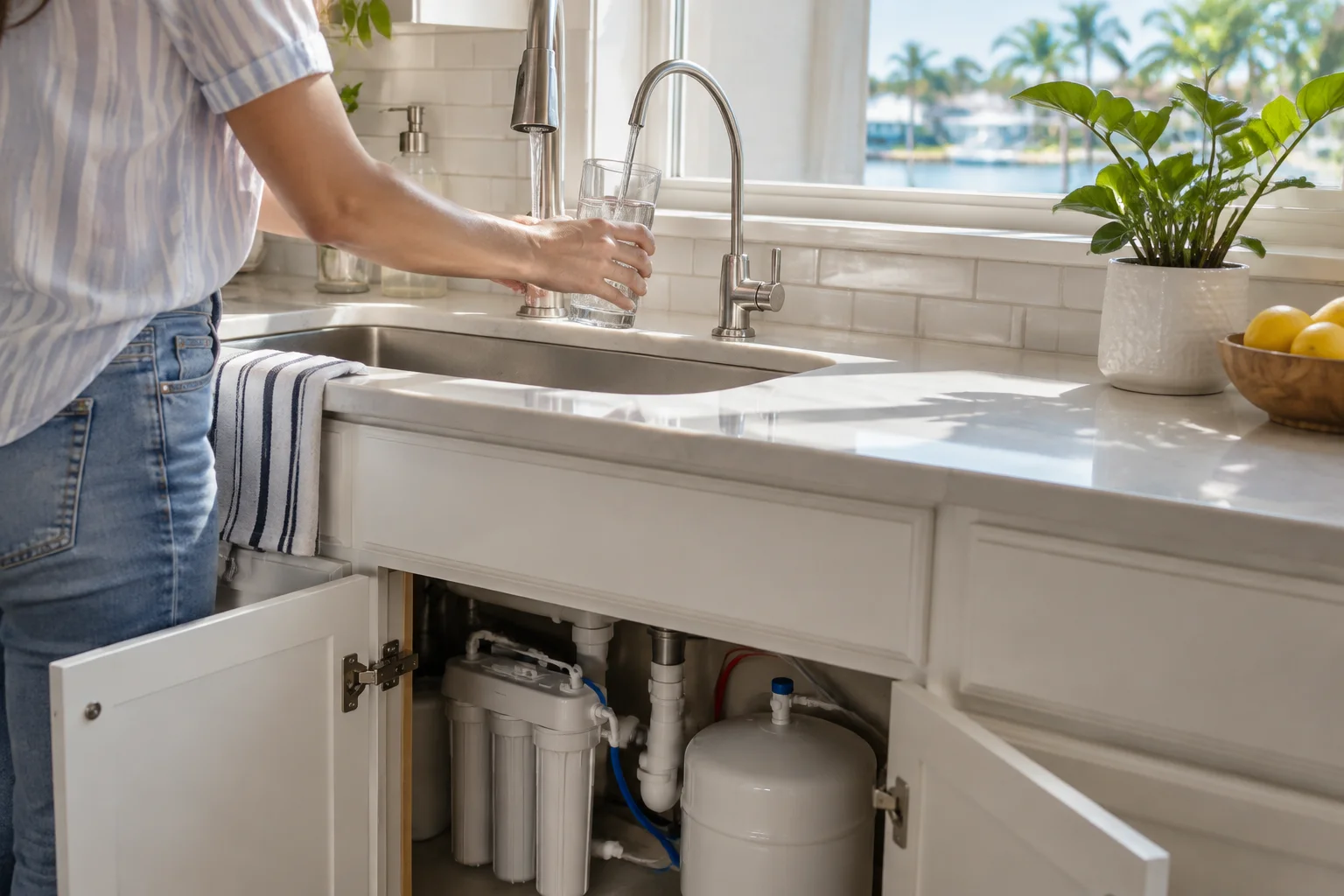
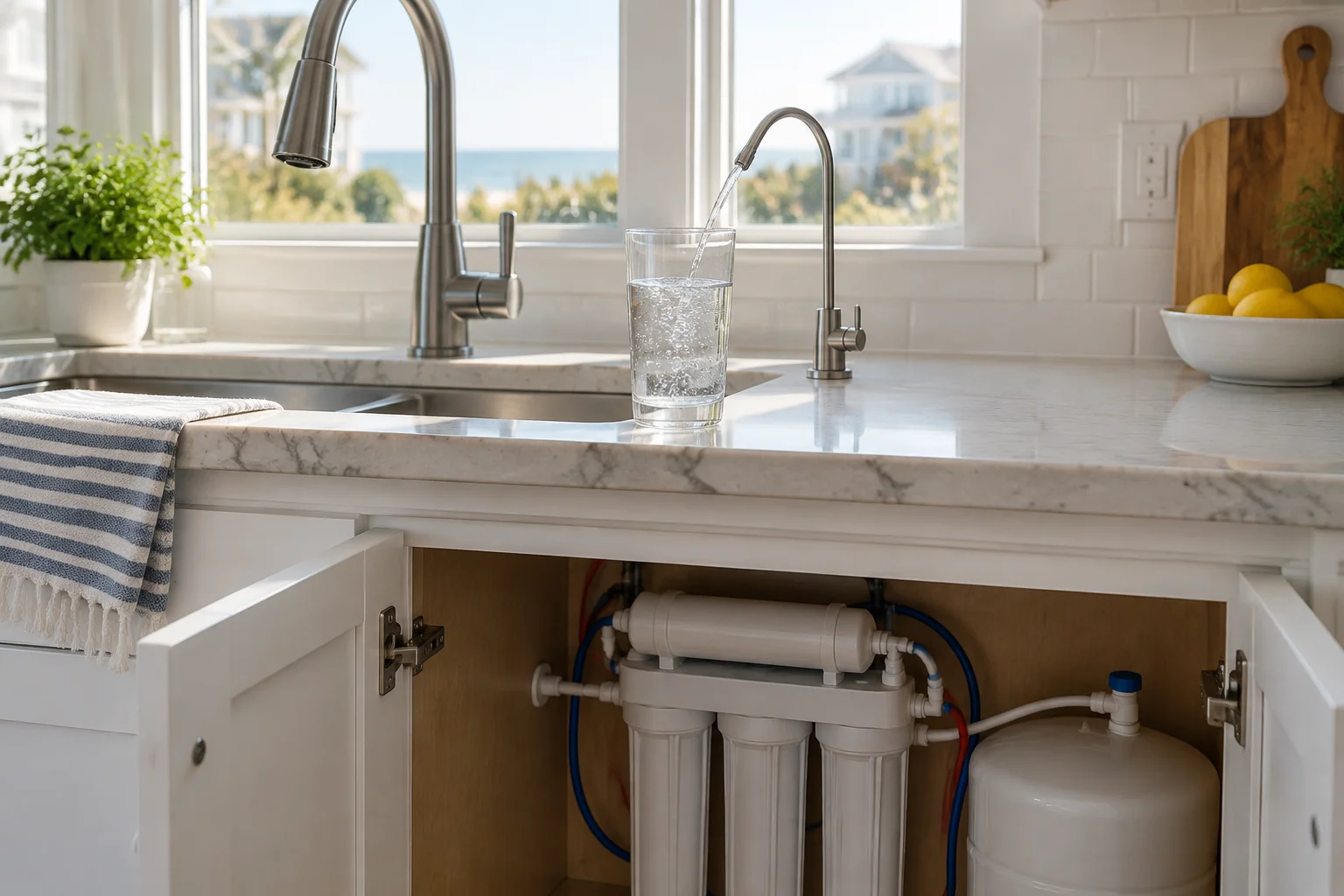
Reverse osmosis is often used for drinking water filter needs, especially when homeowners want better water for drinking and cooking. RO can help reduce dissolved solids and improve taste. Many families in WaterColor set up reverse osmosis installation for kitchen use, then rely on softened water for the rest of the home.
That combination is common because it matches the job to the system. Softened water helps protect fixtures and appliances. RO helps deliver cleaner, better-tasting water at the tap you use for coffee, cooking, and drinking.
If you are exploring reverse osmosis system near me or planning a home water purification near me search, ask about how RO integrates with your existing water softener and filtration setup.
AO Smith water filtration and building a dependable clean water system
Some WaterColor homeowners choose AO Smith water filtration equipment because of its focus on practical, residential water treatment. The right setup depends on your water test results, household size, and goals like appliance protection, better drinking water, or odor and taste improvements.
A Superior Mechanical can help you evaluate options that may include:
Water softening to reduce hardness and scale buildup around faucets, showerheads, and plumbing.
Whole home water filtration to reduce sediment and improve overall water clarity and feel.
Reverse osmosis for drinking and cooking water where taste and dissolved solids matter most.
For homeowners who want clean water systems near me, the key is choosing components that work together and are maintained on schedule. A filtration system that is not serviced can lose effectiveness over time, just like any home appliance.
WaterColor climate and seasonal water habits that affect results
WaterColor is shaped by Florida’s humid coastal climate. Warm temperatures and humidity can increase the visibility of mineral film and make scale easier to spot on glass and fixtures. During busy seasons, more laundry, more showers, and more dishwashing can intensify the effects of hard water if treatment is not adequate.
Seasonal water usage also affects how softeners regenerate. If your household patterns change, a system that is not properly programmed or sized may not keep up. That can lead to recurring scale buildup around faucets and reduced comfort in baths.
That is why local water treatment service matters. A one-size-fits-all approach rarely performs the same in every home. The goal is stable performance across the year, not just a temporary improvement.
Maintenance tips that keep softening and filtration working well
A water softener is not set-and-forget. Regular maintenance helps protect the investment and keeps water quality consistent.
Check salt levels and keep the brine tank maintained
If the salt level runs low, the softener may not regenerate effectively. That can show up as renewed hard water spots on glass and dishes and more scale buildup around faucets.
Keep an eye on water taste and odor changes
Metallic, chlorinated, or unpleasant taste can indicate filtration needs beyond softening. If your drinking water filter performance changes, consider a system check rather than assuming it is “normal.”
Watch for cloudy ice cubes and sediment
Cloudy ice cubes can be tied to dissolved solids or air and mineral content. Visible sediment or discoloration can signal that filters need service or replacement.
Schedule service based on system type and usage
Filters, RO membranes, and softener components all require periodic inspection. A professional schedule helps keep your clean water systems consistent and helps avoid appliance wear caused by mineral buildup.
If you are also dealing with other home water concerns, it can help to coordinate your water treatment plan with broader plumbing maintenance. For example, homeowners sometimes benefit from pairing water treatment improvements with inspections that catch issues early. You can read more about that approach in How WaterColor Homeowners Can Stay Ahead of Hidden Plumbing Problems With Camera Inspections.
How to decide whether you need water softener service or additional filtration
Homeowners searching for water softener service near me are often trying to answer a simple question: is my water problem just hardness, or is it also taste, odor, and sediment?
Use these guidelines:
If you see scale buildup around faucets, showerheads, and plumbing, and you notice soap that does not lather or rinse well, water softening is likely a priority.
If you have metallic, chlorinated, or unpleasant taste, or you want better drinking water, consider whole home water filtration and, in many cases, reverse osmosis for drinking and cooking.
If you see visible sediment, discoloration, or odor concerns, you likely need a filtration approach that addresses sediment in household water, not just hardness.
If appliances are wearing out faster, controlling hardness and minimizing scale buildup is often part of the solution.
A water test and system evaluation can clarify what is happening in your home. That is especially useful if you are noticing multiple symptoms at once, such as dry skin from hard water plus poor tasting coffee water and cloudy ice cubes.
Everyday WaterColor life looks better with softened and cleaner water
Picture a typical family day in WaterColor. Coffee is brewing in the kitchen, kids are rinsing off after a beach day, and laundry is running while the house stays busy. When your water is treated well, you feel the difference in small but meaningful ways.
In the kitchen, better water for drinking and cooking can mean coffee that tastes cleaner and food that comes out more consistent. In the bathroom, bathing may feel more comfortable when soap rinses better and skin does not feel tight or dry. In the laundry room, fabrics can look brighter because residue is reduced. And when you clean, you spend less time fighting hard water spots on glass and fixtures.
Softened water also helps protect the equipment that keeps your home running. That matters when you are trying to stretch the life of water heaters and keep appliances performing through Florida humidity and seasonal demand.
Choosing a local water treatment provider in Walton County
Water treatment is not only about buying equipment. It is about matching the system to your household and maintaining it so it keeps working. For WaterColor residents, working with a local team can make the process smoother because they understand how homeowners use water and what symptoms show up most often.
If you are ready to improve water quality in WaterColor, start with the water softening service page: water softening in WaterColor. You can also explore the broader approach to clean water at water filtration and reverse osmosis and water softeners. For homeowners who want a wider view of services across the area, the Walton County page is available at /service-areas/walton-county, and the WaterColor service area overview is at /service-areas/walton-county/watercolor.
When hard water treatment becomes part of protecting fixtures and appliances, your home typically feels cleaner right away and stays easier to maintain over the long term.
If you are also concerned about the condition of the rest of your home’s water and drainage systems, consider reading Practical Sewer Care for WaterColor Homes That Helps Avoid Bigger Plumbing Repairs to keep the bigger picture in view. And if your water heater is older, use Water Heater Replacement in WaterColor: What Homeowners Should Watch For as a guide while you plan long-term water protection.
Find Water Softening in WaterColor, FL
If you need Water Softening in WaterColor, FL, visit our local service page or contact A Superior Mechanical today.
For a broader look at whole-home water filtration, reverse osmosis, and water softener options, visit our water filtration, RO, and water softener page.
Map of WaterColor, FL
Frequently Asked Questions
Will a water softener stop hard water spots on glass and dishes in WaterColor?
It usually helps a lot. Water softening reduces the hardness minerals that leave scale and hazy residue on glass, dishes, and fixtures. If you still notice spots after softening, taste, odor, and sediment issues may be handled with whole home filtration or reverse osmosis for drinking water.
Do I need reverse osmosis if I already have a water softener?
Often, yes for drinking and cooking. A softener targets hardness and scale. Reverse osmosis installation near the kitchen tap is commonly used to improve taste and reduce dissolved solids. Many WaterColor homeowners use softening for the home and RO for better drinking water.
How can I tell whether my problem is hardness or sediment in household water?
Hardness often shows up as scale buildup around faucets and showerheads, dry skin from hard water, and soap that does not lather well. Sediment or discoloration concerns can look like visible particles, cloudy ice cubes, or changes in odor and clarity. A water test helps confirm what treatment is needed.
How often should water softeners and filtration systems be serviced?
It depends on the system type and household usage, but regular professional checks are important. Filters and RO components typically need periodic replacement, and softeners need maintenance to keep regeneration working correctly. If you notice renewed scale buildup or taste changes, schedule service sooner.
What benefits should I expect for appliances and plumbing?
When hardness is reduced, scale buildup inside plumbing and appliances is minimized. That can help appliances wear out slower and support better performance from water heaters, dishwashers, and washing machines.
Related Articles
- How WaterColor Homeowners Can Stay Ahead of Hidden Plumbing Problems With Camera Inspections
- Practical Sewer Care for WaterColor Homes That Helps Avoid Bigger Plumbing Repairs
- How Water Softening Protects Rosemary Beach Plumbing from Costly Water Damage
- Water Heater Replacement in WaterColor: What Homeowners Should Watch For
Photo Gallery