A heat pump in Pretty Bayou does more than cool the house during summer. It manages comfort through long periods of heat, heavy humidity, sudden storms, and the occasional cold morning. A smart service plan looks beyond the thermostat setting to consider airflow, moisture removal, duct condition, equipment cleanliness, and the effects of salt air.
A Superior Mechanical provides heat pump services in Pretty Bayou for homes, rentals, and commercial properties. Careful diagnosis helps homeowners address the source of a comfort problem instead of repeatedly treating the symptom.
Why Pretty Bayou heat pumps need a local service strategy
Pretty Bayou’s coastal climate places sustained demand on HVAC equipment. Cooling season begins early, remains intense for months, and often stretches well into fall. Even when outdoor temperatures are not extreme, high humidity can make indoor spaces feel warm and sticky. The system may run frequently simply to remove moisture.
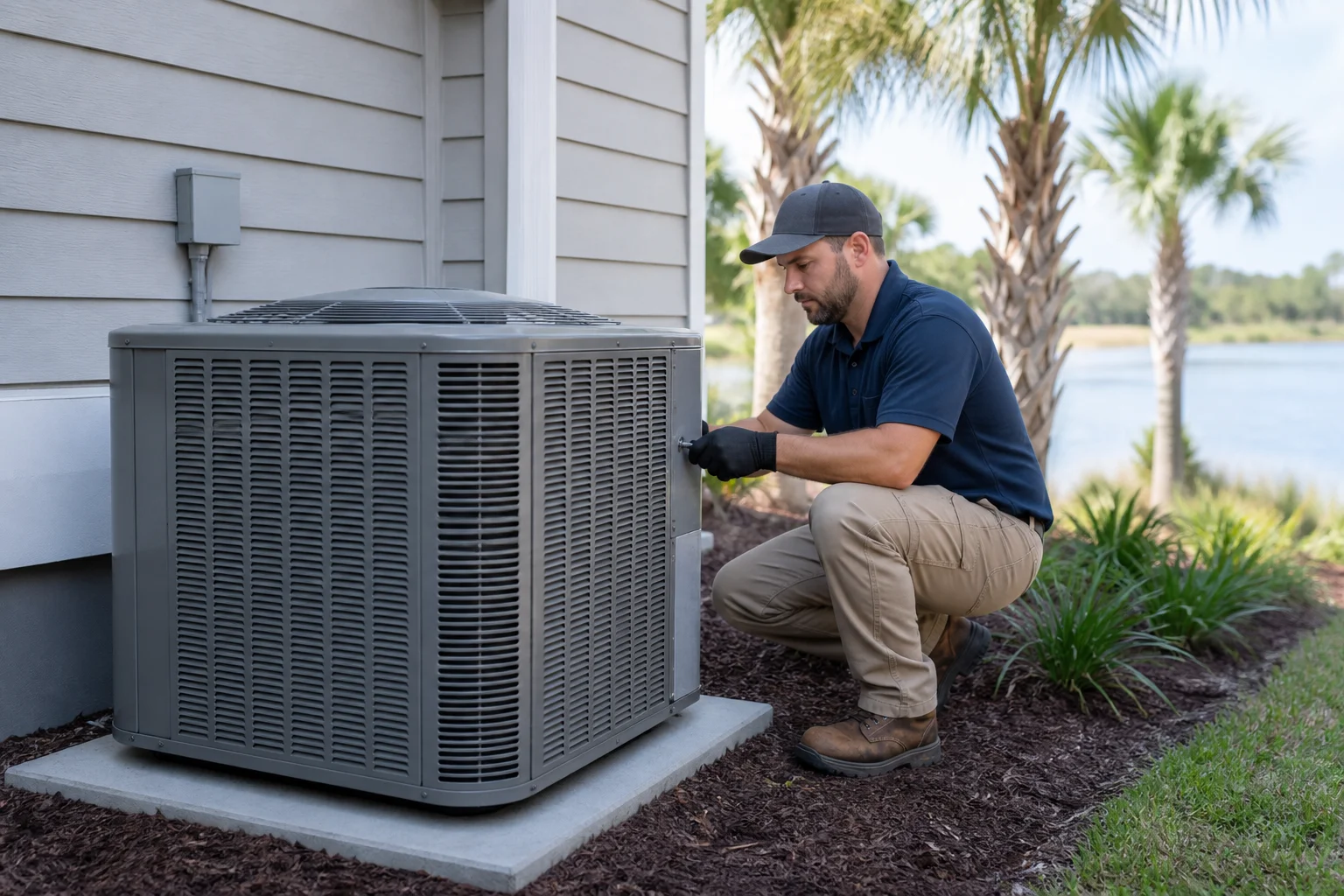
Salt carried through coastal air can also settle on outdoor units. Over time, corrosion can affect condenser coils, cabinets, fasteners, fan components, and electrical connections inside the equipment. Grass clippings, leaves, pollen, and storm debris can further restrict airflow around the outdoor coil. Regular inspection and gentle cleaning help the unit release heat efficiently.
Local housing adds another layer. Older Pretty Bayou homes may have aging ductwork, limited returns, leaky attic connections, or equipment that was sized for a different floor plan. Newer homes are often tighter, which can improve efficiency but may create indoor air quality concerns if ventilation and moisture control are overlooked. Remodels and additions can disrupt airflow when new rooms are connected to ductwork that was never designed for the extra load.
Homeowners can learn more about A Superior Mechanical’s broader work in Pretty Bayou and throughout Bay County.
How the heat pump, air handler, and ductwork work together
A heat pump transfers heat rather than producing it through combustion. During cooling, the indoor coil absorbs heat from the air and the outdoor unit releases it. During heating, the refrigerant cycle reverses so the system can move heat indoors. This makes heat pumps well suited to the relatively mild winters along the Florida Panhandle.
The outdoor unit contains the compressor, fan, and coil. Indoors, the air handler houses the blower and indoor coil, often called the evaporator coil during cooling operation. Refrigerant lines connect the two sections. The thermostat sends operating commands, while the ductwork carries conditioned air to the vents and returns indoor air to the system.
Every part affects the others. A clean outdoor condenser cannot overcome severely restricted return airflow. A new thermostat cannot correct a refrigerant leak. A powerful blower cannot deliver balanced comfort through crushed, disconnected, or undersized ducts. Effective heat pump repair starts by evaluating the complete system.
Furnaces are less common than heat pumps in this area, but some properties have dual fuel systems, electric furnaces, or backup heat strips. Heating repair should account for the exact equipment configuration rather than assuming every system operates the same way.
Comfort changes that deserve attention
Heat pump problems often appear as small changes before the system stops working. Catching them early may prevent compressor damage, water problems, or an uncomfortable breakdown during peak seasonal demand.
Long run times with weak cooling
A heat pump may run longer on a very hot afternoon, but the air from the vents should still feel cool and the indoor temperature should gradually move toward the setting. Weak cooling can result from a dirty filter, blocked outdoor coil, low refrigerant charge, blower problem, dirty evaporator coil, or duct leakage.
Homeowners searching for AC not cooling repair near me should note whether the problem affects the entire home or only certain rooms. Whole house problems often point toward the equipment, thermostat, or main airflow path. Room specific problems are more likely to involve duct design, closed dampers, damaged branches, or insufficient returns.
Uneven rooms and low airflow
A bedroom that stays warmer than the hallway may not need a larger heat pump. The issue could be a crushed attic duct, loose connection, obstructed vent, closed balancing damper, or poor return path. Closing multiple supply vents to force air elsewhere can increase duct pressure and make overall performance worse.
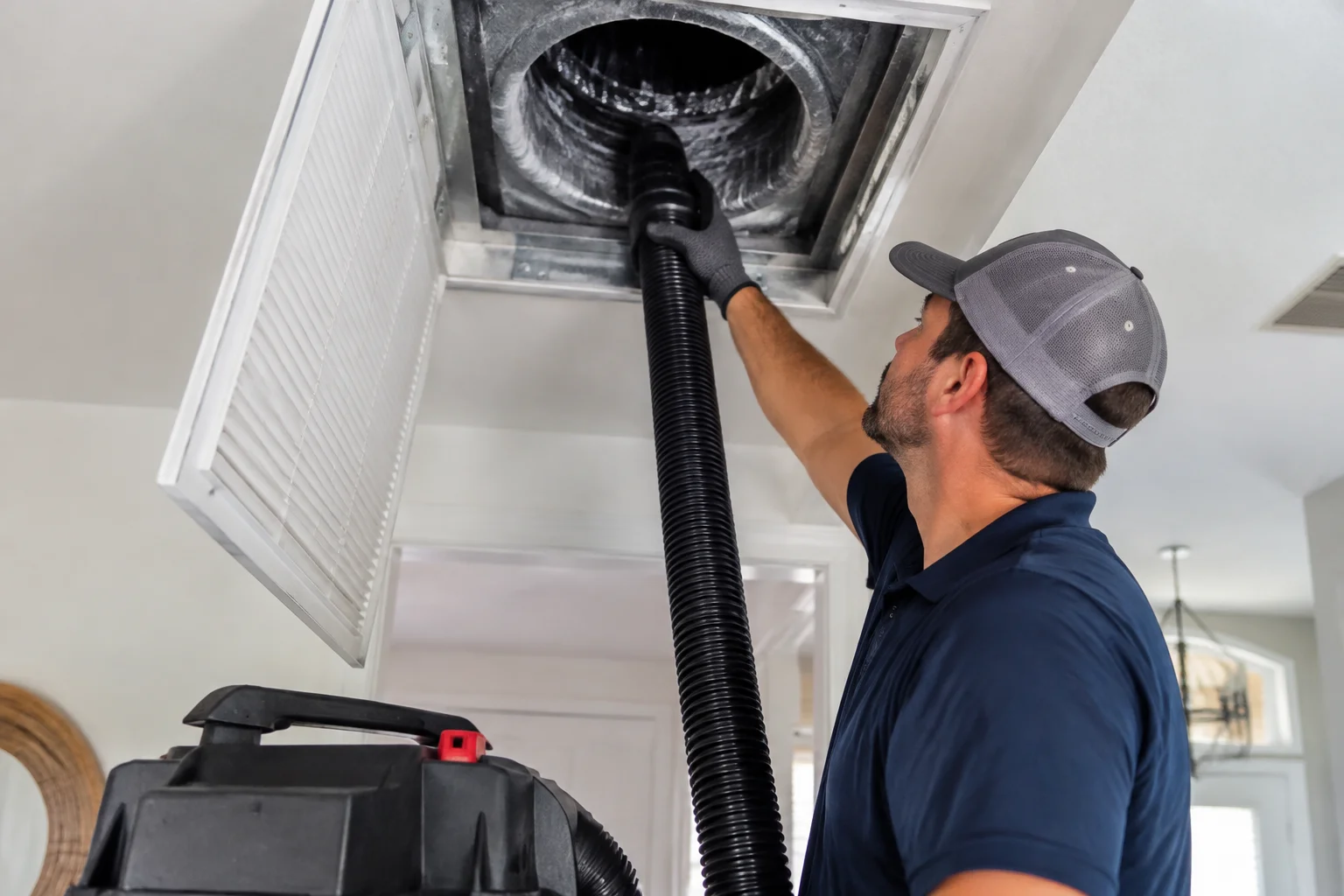
A professional duct inspection in Pretty Bayou can identify damaged insulation, air leaks, disconnected sections, and layout concerns. If leakage is the main issue, targeted duct sealing may improve comfort and reduce the amount of conditioned air lost to the attic or other unconditioned spaces.
Short cycling, unusual sounds, and rising bills
Short cycling means the system starts and stops more often than expected. Possible causes include thermostat placement, a clogged filter, frozen coil, drainage safety switch, control problem, or incorrectly sized equipment. Buzzing, grinding, rattling, or hissing noises also deserve investigation. Hissing near refrigerant lines may indicate a leak, while grinding can signal a motor or bearing problem.
An unexplained increase in energy use can come from dirty coils, low refrigerant, duct leakage, failing components, or a heat pump relying too heavily on backup electric heat. Comparing bills from similar weather periods is more useful than comparing a mild spring month with the middle of summer.
Humidity control depends on runtime and airflow
Cooling and dehumidification happen together at the indoor coil. Warm household air passes over the cold coil, moisture condenses, and water flows into the drain pan and through the drain line. If the system cools the house too quickly, has excessive airflow, or frequently starts and stops, it may not run long enough to remove adequate moisture.
Clogged drain lines are another concern in Florida’s humid climate. Algae and debris can block drainage, allowing water to back up around the air handler. A float switch may shut the system down to prevent overflow. If water is visible around the unit, turn the system off and arrange service rather than repeatedly resetting it.
Moist indoor air can contribute to musty odors, condensation on vents, damp closets, and reduced indoor air quality. Before adding a dehumidifier or whole home air purifier, an HVAC contractor should check equipment sizing, blower settings, duct leakage, filter condition, and thermostat controls. Air purifier installation can help with airborne particles, but it does not correct an active moisture source or dirty evaporator coil.
Water near HVAC equipment is not always a plumbing leak. Condensate drainage and refrigerant line insulation should be checked as part of the diagnosis. Homeowners working through other moisture concerns may also find the guidance in Staying Ahead of Water Leaks in Pretty Bayou Homes useful for separating plumbing symptoms from HVAC condensation.
Repair, replacement, or a different comfort approach
A repair is often reasonable when the heat pump is otherwise reliable, correctly sized, and in serviceable condition. Capacitors, contactors, fan motors, drain components, thermostats, and some control parts can usually be replaced without changing the entire system. Refrigerant leaks require more careful evaluation because simply adding refrigerant does not repair the leak.
Replacement may deserve consideration when a system has a failed compressor, extensive coil corrosion, repeated refrigerant loss, major airflow mismatch, or a history of expensive breakdowns. Age matters, but it should not be the only factor. Repair cost, parts availability, efficiency, comfort performance, and the condition of the ductwork all influence the decision.
Someone searching for heat pump replacement near me should expect more than a quick equipment quote. Proper planning includes a load calculation, duct review, electrical requirement check, drainage plan, thermostat selection, and discussion of humidity performance. If replacement is appropriate, A Superior Mechanical also provides air conditioning replacement in Pretty Bayou.
Ductless mini splits can be practical for additions, converted garages, workshops, or rooms that cannot be served effectively by existing ducts. They still need correct sizing, drainage, filter cleaning, and outdoor unit care. A ductless mini split repair near me search may point to issues such as a clogged indoor filter, blocked drain, sensor fault, or refrigerant problem.
Thermostats should support the equipment, not fight it
A thermostat affects scheduling, staging, blower operation, and the use of backup heat. Incorrect settings can lead to unnecessary auxiliary heat, poor humidity control, or frequent cycling. Thermostats should be installed away from direct sunlight, supply vents, kitchens, and exterior doors where temperature readings may be misleading.
Homeowners searching for smart thermostat installation near me should confirm that the control is compatible with the heat pump and any auxiliary heat. Some systems need specific wiring or manufacturer controls to operate variable speed or communicating features correctly. A Superior Mechanical’s heating control system services can help match controls to the equipment.
Extreme temperature setbacks are not always efficient with a heat pump. Raising the heating setting several degrees at once may activate electric backup heat. Gradual changes and a schedule suited to the home’s routine often provide better results.
Maintenance that supports efficiency and prevention
Preventive care is especially valuable before the hottest weather arrives. Seasonal demand can make appointment schedules tighter, and a neglected system is more likely to fail while operating under its greatest load. Homeowners searching for preventive HVAC maintenance near me should look for service that includes measurements and inspection, not only a quick filter change.
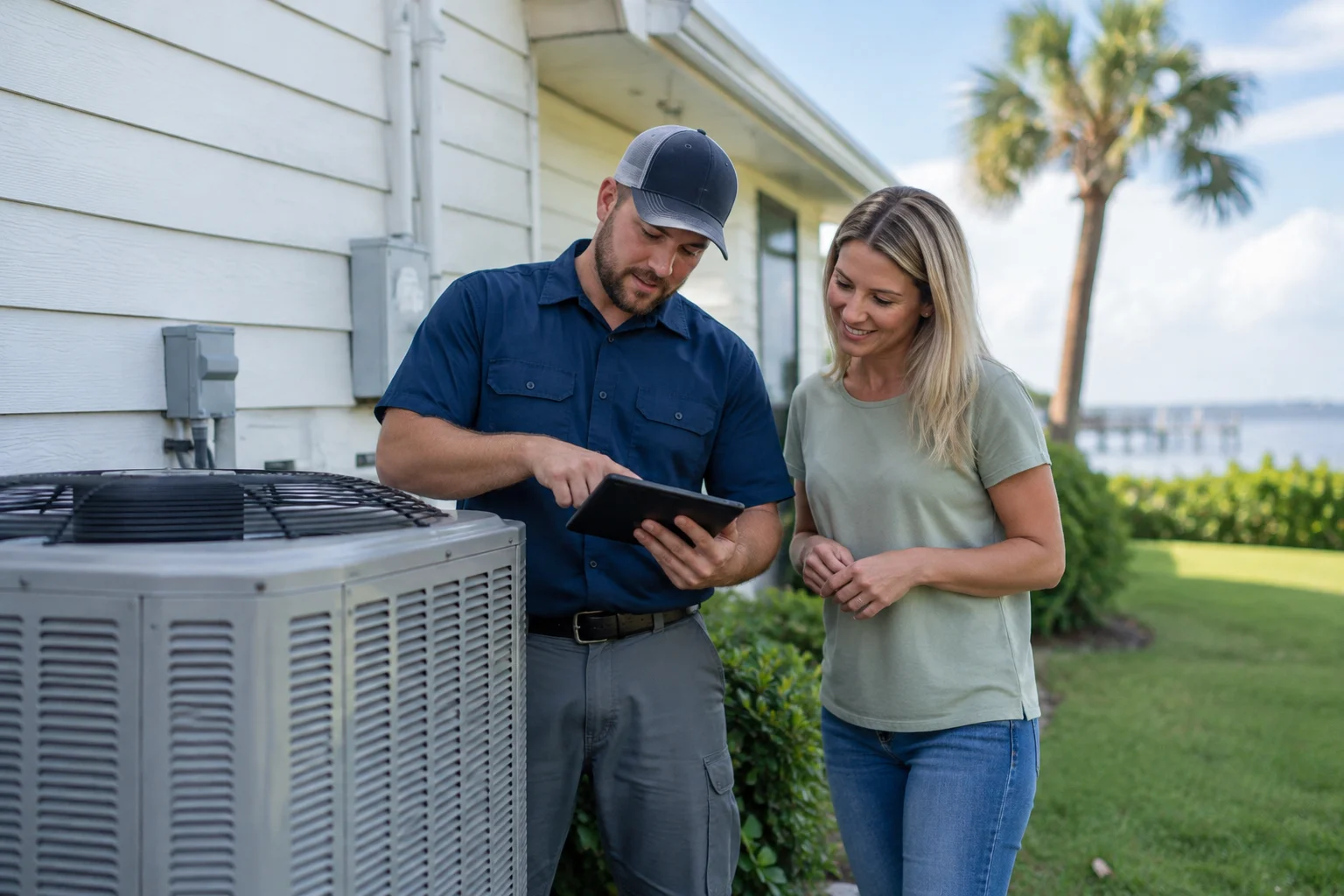
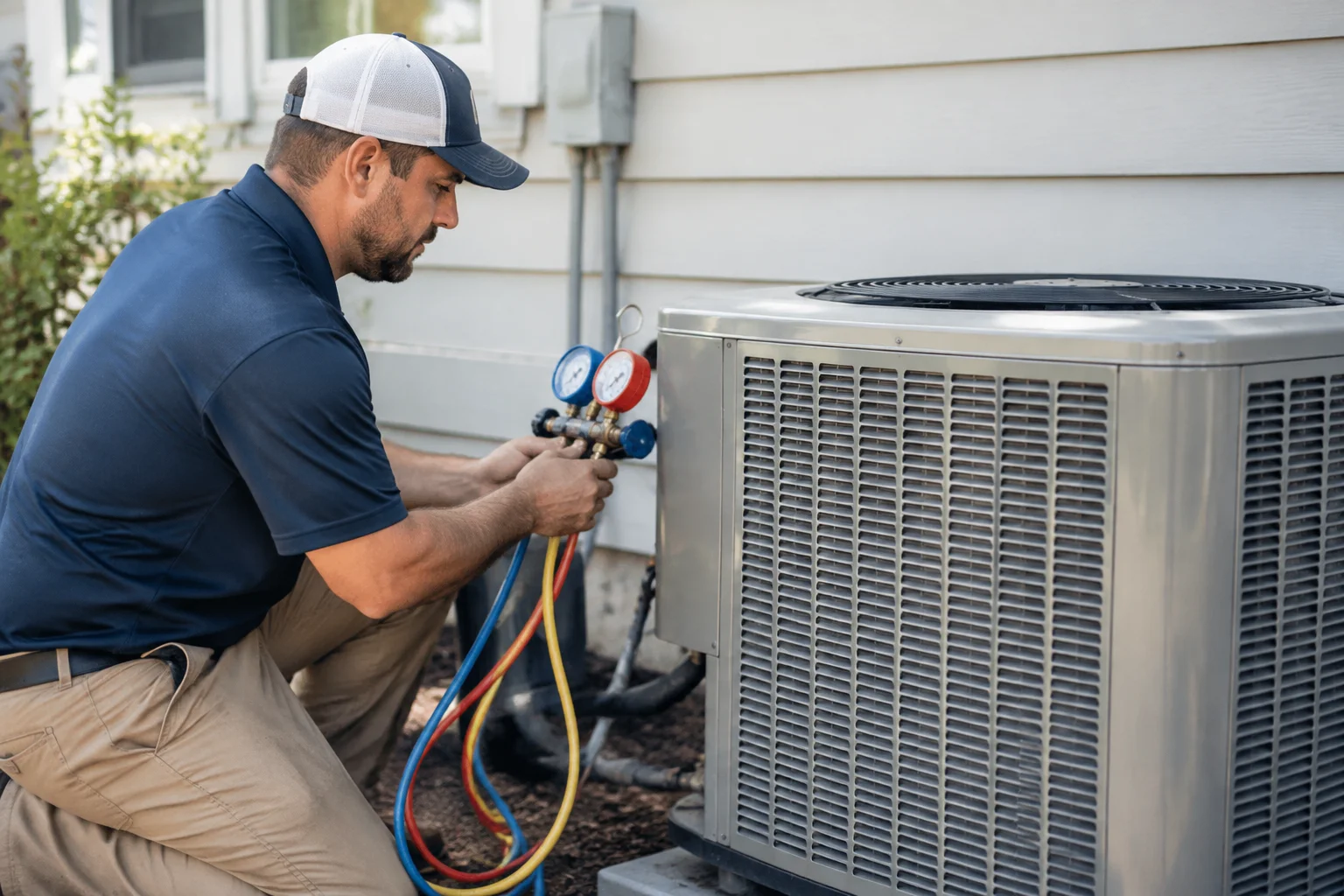
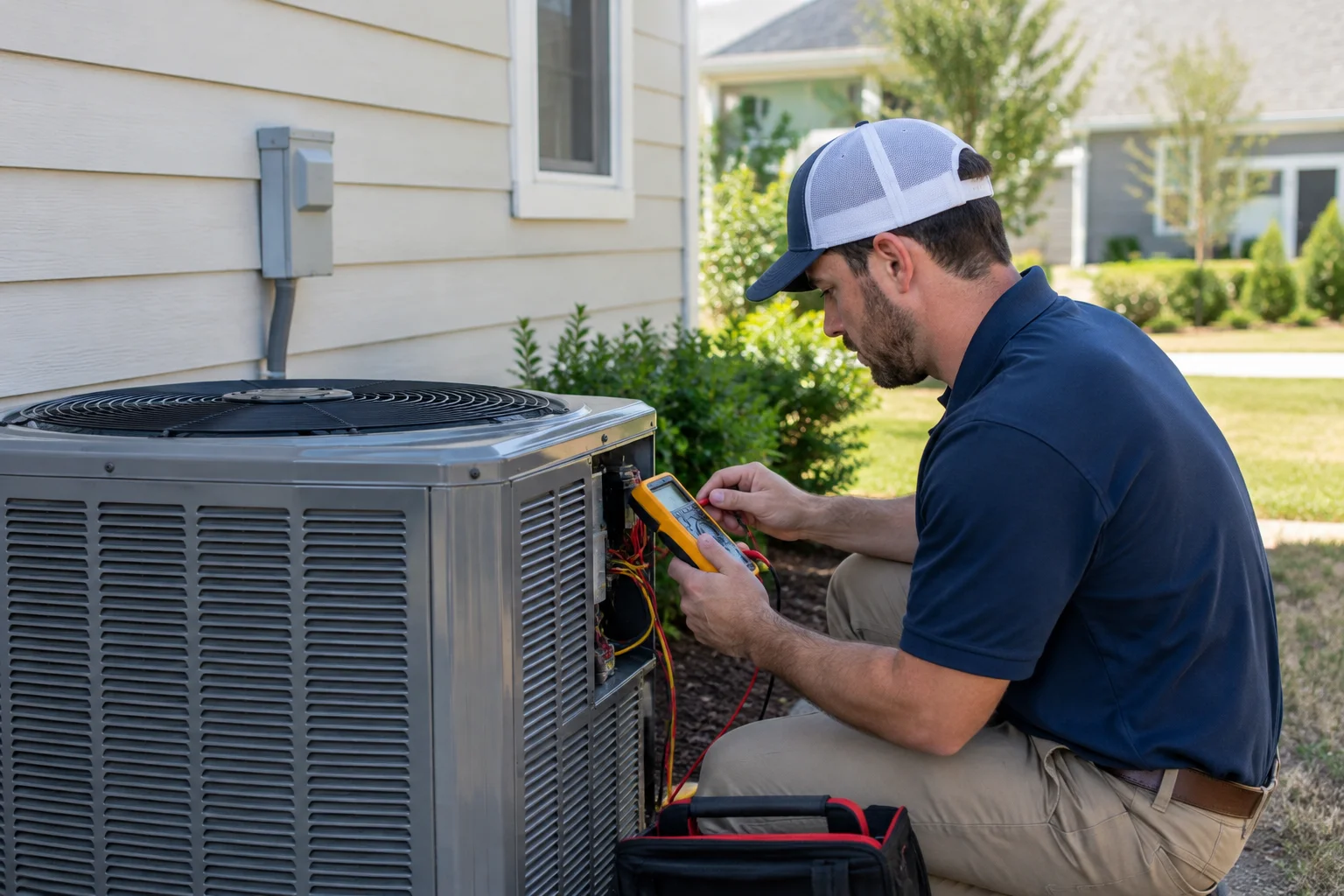
A thorough heat pump visit may include checking refrigerant temperatures and pressures, testing electrical components, inspecting the compressor and fan motors, cleaning accessible coils, clearing the drain line, verifying thermostat operation, measuring airflow, and evaluating temperature change across the indoor coil. The technician should also look for corrosion, oil residue that may suggest a refrigerant leak, loose panels, damaged insulation, and storm related debris.
Homeowners can help between visits by replacing or cleaning filters at the recommended interval. Filter frequency depends on the home, filter type, pets, remodeling dust, occupancy, and indoor air quality needs. A filter that is too restrictive can be just as problematic as a dirty one if the duct system and blower cannot handle it.
Keep plants, storage, and yard debris away from the outdoor unit. Do not cover the unit tightly or use harsh chemicals on the coil. After a coastal storm, look for standing water, shifted equipment, bent panels, and debris around the condenser. If the unit appears damaged or makes a new sound, leave it off until it can be inspected.
Remodeling work can send fine dust into filters, coils, and return ducts. It can also create new comfort loads. Before finishing an addition, have an HVAC professional confirm whether the existing system and ductwork can support the space. The same prevention mindset used for keeping small plumbing problems small applies to HVAC concerns: early attention is usually less disruptive than waiting for a complete failure.
Situations that call for prompt professional service
Turn the system off and request prompt HVAC service if there is a burning odor, smoke, repeated breaker trip, loud grinding, heavy ice on the indoor or outdoor coil, or water spreading from the air handler. A small amount of outdoor coil frost can occur during heating, and the heat pump should periodically enter a defrost cycle. A unit that remains encased in ice needs service.
Loss of cooling becomes more urgent when young children, older adults, pets, or people with health conditions are in the home. During severe weather, do not approach equipment surrounded by standing water or attempt to open HVAC panels. Emergency HVAC concerns should be handled with personal safety first.
Choosing an HVAC company near me is easier when the contractor understands Pretty Bayou’s salt exposure, humidity, storm patterns, housing stock, and seasonal workload. Local service also matters when diagnosing whether a problem comes from the heat pump, air handler, thermostat, ducts, or the way those components interact.
Build a heat pump plan around the home
The best service plan is specific to the property. An older home with attic duct leakage needs different priorities than a tight new house with humidity concerns. A waterfront rental may need closer outdoor unit inspections, while an addition may be better served by a mini split. Equipment condition, family comfort, indoor air quality, energy efficiency, and budget should all guide the next step.
A Superior Mechanical can inspect the full HVAC system, explain the findings, and recommend practical repair, maintenance, or replacement options for Pretty Bayou properties. That whole system approach helps protect reliable cooling, steady airflow, moisture control, and efficient heating throughout the year.
Find Heat Pump Services in Pretty Bayou, FL
If you need Heat Pump Services in Pretty Bayou, FL, visit our local service page or contact A Superior Mechanical today.
Map of Pretty Bayou, FL
Frequently Asked Questions
How often should a heat pump be serviced in Pretty Bayou?
Most heat pumps should receive professional maintenance at least once a year. Because Pretty Bayou systems handle long cooling seasons, humidity, salt air, and frequent use, spring service plus a fall heating check may be helpful for heavily used homes, rentals, and commercial properties.
Why is my heat pump cooling the house but not removing humidity?
Possible causes include oversized equipment, excessive blower speed, short cycling, duct leakage, a dirty indoor coil, drainage trouble, or thermostat settings. A technician can measure airflow and system performance before recommending a dehumidifier or other indoor air quality equipment.
Should I repair or replace an older heat pump?
Repair may make sense when the system is reliable, properly sized, and has an isolated component failure. Replacement may be more practical with compressor failure, repeated refrigerant leaks, severe coastal corrosion, poor efficiency, or recurring repair costs. The ductwork and comfort needs should also be evaluated.
Related Articles
Photo Gallery