Installing an electric vehicle charger is not simply a matter of mounting equipment on a garage wall. The charger becomes one of the largest continuous electrical loads in many homes, so the panel, breaker, wiring, grounding, and connection method all need careful planning.
That planning is especially important in Sandestin, where coastal humidity, storms, salt air, vacation property use, renovations, and growing household power demand can affect electrical systems. A professional evaluation helps homeowners choose a charging setup that is safe today and practical for the next vehicle or home improvement.
Start with the way you actually drive
Not every electric vehicle owner needs the fastest charger available. Before selecting equipment, consider the vehicle's battery capacity, daily mileage, parking schedule, and onboard charging limit. A charger capable of delivering more power than the vehicle can accept will not make that vehicle charge faster.
Level 1 charging uses a standard 120 volt circuit and may be sufficient for a plug in hybrid or a driver with a short daily commute. Most full electric vehicle owners prefer Level 2 charging, which uses a 240 volt dedicated circuit and can restore substantially more driving range overnight.
A common residential setup delivers 32 or 40 amps. Larger 48 amp units are also available, but they place greater demand on the service and typically require hardwired installation. Someone searching for electric car charger installation near me should ask for help sizing the entire circuit, not just selecting a charger with the highest advertised output.
A Superior Mechanical provides professional EV charger installation in Sandestin for homes, rentals, and businesses. The installation plan can account for the present vehicle while leaving sensible options for future charging needs.
The electrical panel determines what is practical
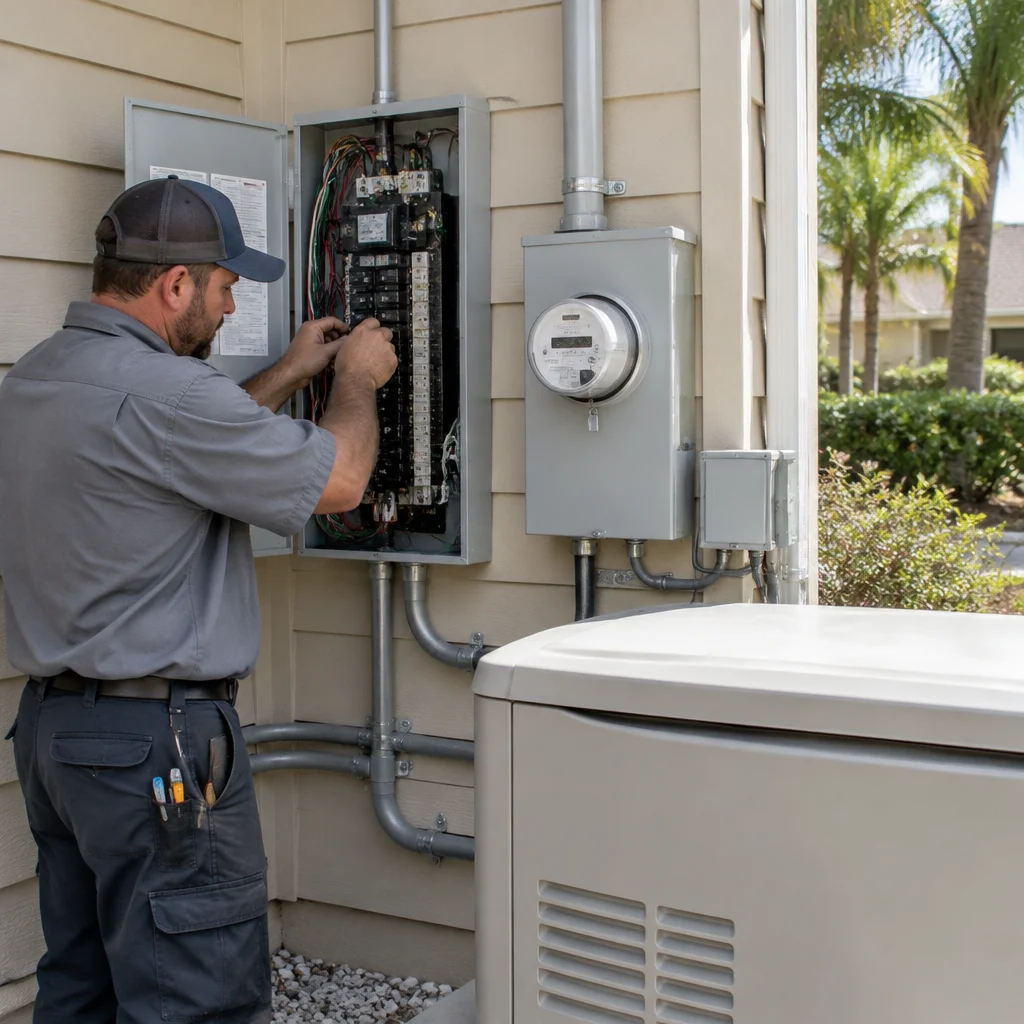
The service rating printed on a panel does not automatically confirm that enough capacity remains for an EV charger. An electrician needs to evaluate the home's calculated electrical load, panel condition, available breaker spaces, service conductors, grounding system, and major appliances.
Air conditioning, electric water heating, ranges, dryers, pool equipment, spas, lighting, and kitchen circuits all contribute to demand. Newer Sandestin homes may have 200 amp service but little remaining capacity after a pool, outdoor kitchen, second air conditioner, or home addition is installed. Older properties may have smaller services, obsolete equipment, crowded panels, or past modifications that were never documented.
Load calculations matter more than empty spaces
An empty breaker position does not prove that a panel can safely support a charger. EV charging is generally treated as a continuous load, which affects circuit sizing. For example, a charger set to 40 amps commonly requires a 50 amp circuit. A 48 amp charger commonly requires a 60 amp circuit, subject to the equipment instructions and applicable electrical code.
A licensed electrician performs a load calculation using the home's connected equipment and recognized demand factors. If capacity is limited, possible solutions may include reducing the charger output, installing approved energy management equipment, adding a properly designed subpanel, or upgrading the electrical service.
Homeowners searching for electrical panel replacement near me should not assume replacement is always required. A sound panel with adequate capacity may only need the correct breaker and circuit. Conversely, corrosion, overheating, damaged bus connections, an obsolete panel design, or a service that is too small may justify a broader upgrade.
Breaker condition cannot be overlooked
A breaker must match the conductor size, charger rating, panel model, and installation method. Breakers should never be selected solely because they physically fit a panel. Using an unapproved breaker can create a poor connection to the bus and increase heat.
Frequent tripping is also not something to solve by installing a larger breaker. It may indicate an overloaded circuit, loose termination, damaged charger, incorrect configuration, or failing breaker. Breaker panel repair and electrical troubleshooting should identify the cause before equipment is reset or replaced.
Dedicated wiring protects the charger and the home
A Level 2 charger generally needs a dedicated circuit. It should not share conductors with lighting, ceiling fans, receptacles, appliances, or workshop equipment. Dedicated wiring allows the breaker and conductors to be sized for the charger and reduces the possibility that unrelated loads will interrupt charging.
The route from the panel to the parking location affects project cost and complexity. A charger on the opposite side of the garage wall may require a short run. A detached garage, exterior parking space, finished ceiling, concrete wall, or distant panel may call for conduit, trenching, wall access, or other approved routing methods.
Wire size depends on circuit rating, conductor material, terminal temperature ratings, installation conditions, and distance. Long runs may need larger conductors to manage voltage drop. Connections must also be tightened to the manufacturer's specified torque. Loose terminations can overheat under hours of steady charging even if the charger initially appears to operate normally.
In an older or remodeled home, an electrician may uncover unsafe splices, aluminum branch wiring, missing grounding, damaged insulation, or circuits altered during an addition. An electrical code inspection near me search may therefore lead to more than charger planning. Correcting defects before adding a major load helps prevent nuisance trips, equipment damage, and fire risk.
If aging wiring affects several areas of the property, whole home rewiring in Sandestin may be worth discussing. This is more common when an older house has undergone repeated remodels without a coordinated electrical plan.
Hardwired charger or 240 volt outlet?
Some Level 2 chargers plug into a 240 volt receptacle, while others connect directly to the circuit. Both approaches can be appropriate when installed according to code and the equipment listing, but they have different advantages.
Hardwired installations
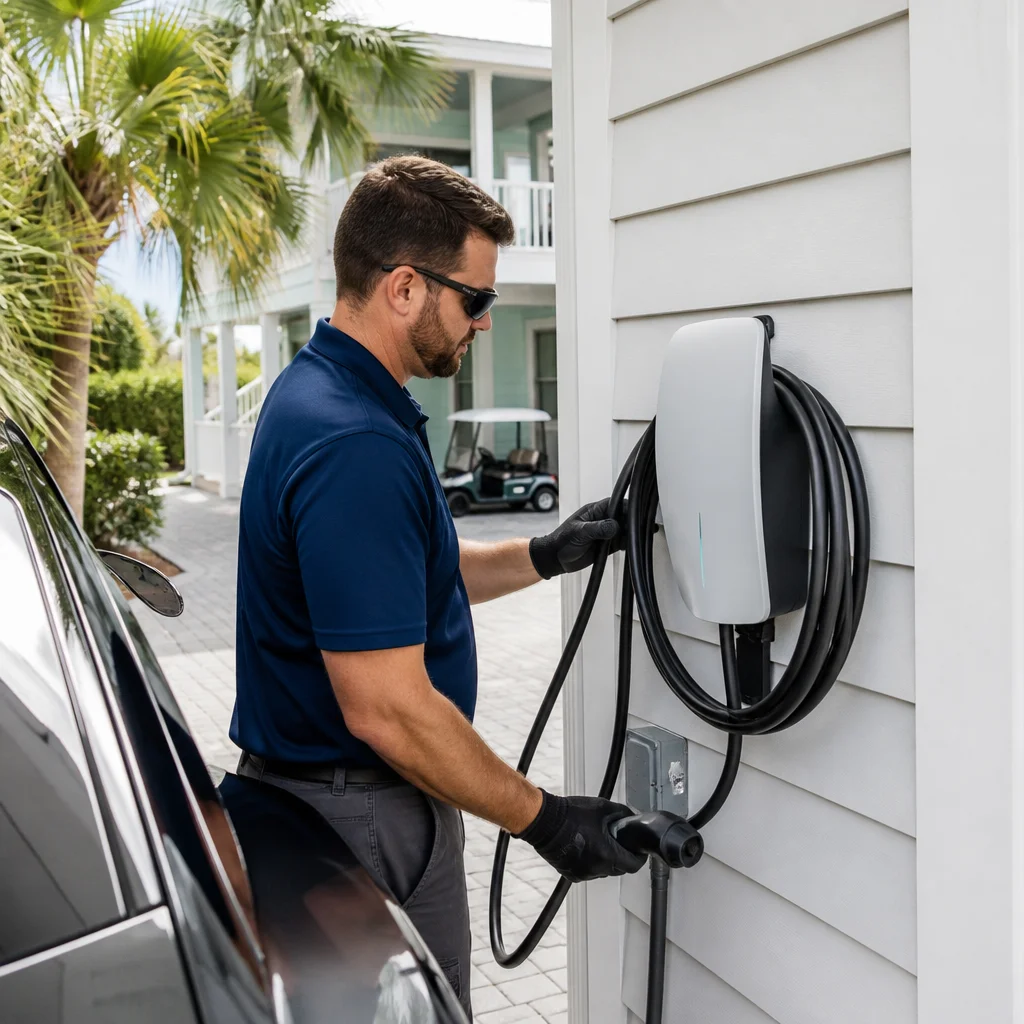
A hardwired connection removes the plug and receptacle as potential heat points. It is often preferred for higher output equipment, outdoor locations, and chargers that will remain in place. It can also reduce the chance that a receptacle intended for charging will be reused for incompatible equipment.
Plug connected installations
A receptacle can make charger replacement or removal easier, which may appeal to rental property owners. However, the receptacle must be listed and suitable for repeated continuous loading. Low quality devices, loose contacts, incorrect boxes, or poor terminations can overheat.
A common 240 volt charging receptacle is the NEMA 14 50. It should not be confused with a general convenience outlet. Required GFCI protection must be provided based on the adopted code, installation location, and equipment arrangement. The protection built into an EV charger does not automatically replace circuit protection required by code.
Discoloration, a hot plug, buzzing, a burning odor, or a receptacle that no longer grips the plug securely calls for immediate attention. An outlet repair may reveal heat damaged conductors that extend beyond the visible device. Stop charging and arrange professional electrical troubleshooting near me rather than continuing to use a questionable connection.
Coastal weather changes the installation strategy
Sandestin's warm, humid climate and proximity to salt air are hard on exposed electrical equipment. Outdoor chargers, disconnects, boxes, fittings, and conduit must be rated for their environment. Weather resistant does not mean that any charger can be mounted where rain, irrigation spray, or floodwater can reach it.
Placement should account for cord length, vehicle position, pedestrian paths, physical impact, drainage, and direct sun. The charging connector should have a secure storage point that keeps it off the ground. In garages near the coast, regular checks for corrosion around panel covers, receptacles, and metal fittings are worthwhile.
Storms bring another concern: voltage surges. A properly selected whole home surge protective device can reduce the risk to EV charging equipment, smart controls, appliances, lighting controls, and electronics. Surge protection does not stop every possible event, and it is not a substitute for grounding, but it provides an important layer of defense.
Homes with standby generators need coordinated planning as well. A large EV charger may need to be excluded from generator operation or managed so it does not overload the generator. Homeowners with backup power can also review why whole home backup systems can falter in Sandestin homes before deciding how charging should interact with emergency power.
Smart charging can avoid an unnecessary upgrade
Some homes do not have enough spare capacity to operate a charger at full output whenever it is plugged in. Approved load management equipment can monitor household demand and reduce or pause EV charging when other major loads are operating.
This can be useful in a home with an electric range, dryer, pool heater, hot tub, or multiple air conditioning systems. It may allow practical charging without an immediate service upgrade, but the controls and current settings must be compatible with the charger and electrical design.
Network connected chargers may also support scheduling, energy monitoring, access control, and utility rate planning. These features are valuable for vacation rentals and multiuser properties, but reliable charging should not depend on a fragile wireless connection. For broader control of lighting, switches, energy monitoring, and connected devices, homeowners can explore smart home integration.
Permits, inspections, and property rules
EV charger work may require an electrical permit and inspection by the authority with jurisdiction. Requirements can depend on the address, scope, utility service changes, and adopted code. A professional installer should identify the applicable process rather than treating every Walton County property the same.
Condominiums, managed communities, and rental properties may also have association or property management requirements. Approval may be needed for exterior conduit, assigned parking, shared electrical rooms, wall penetrations, or changes to common property. Businesses and multifamily properties can involve accessibility, metering, network access, bollards, and shared load considerations.
Homeowners can review A Superior Mechanical's broader electrical service in Sandestin and Walton County service coverage when a charger project overlaps with a remodel, addition, panel correction, or property inspection.
Coordinate the charger with other electrical projects
A planned renovation is often the best time to install conduit or increase panel capacity. If a kitchen, bathroom, garage, or addition is already open, electrical improvements can be coordinated before drywall and finishes are completed.
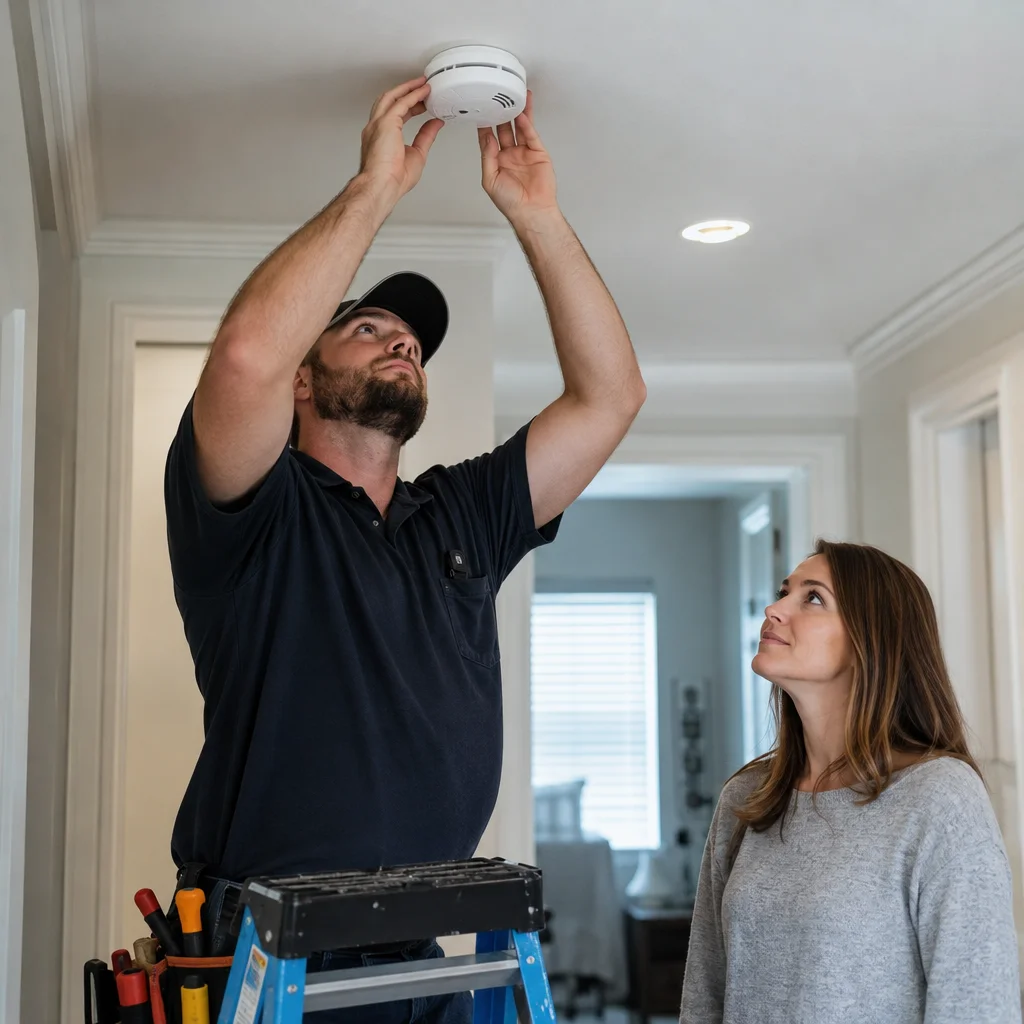
The same inspection may identify overloaded lighting circuits, worn switches, ungrounded outlets, damaged ceiling fan boxes, missing GFCI protection, or smoke detectors that need updated placement and power. Homeowners comparing a residential electrician near me should look for someone who can evaluate these related conditions without losing focus on the charger circuit.
Pool and spa equipment can consume substantial capacity and needs careful separation from vehicle charging. Properties adding water features can review professional pool, spa, and hot tub wiring. Remodels involving fixtures, dimmers, recessed lights, or ceiling fans may also benefit from coordinated indoor lighting installation.
Warning conditions that need prompt electrical service
Stop using the charger if the plug, receptacle, breaker, panel, or wiring becomes unusually hot. Other warning conditions include repeated breaker trips, buzzing, arcing, flickering lights during charging, melted plastic, corrosion, water intrusion, a burning smell, or visible smoke.
If smoke, fire, exposed energized wiring, or severe storm damage is present, keep people away and contact emergency services as appropriate. Do not touch wet electrical equipment or attempt to remove a hot plug. A search for an emergency electrician near me is appropriate after immediate life safety concerns are addressed.
Less urgent issues still deserve timely electrical repair. A breaker that trips once may have responded to a fault. Repeatedly resetting it without diagnosis can worsen damage. Likewise, flickering lights may point to a loose service or neutral connection rather than a harmless charger startup effect.
Simple maintenance helps prevent charging failures
Homeowners should inspect the cord, connector, enclosure, and receptacle periodically. Look for cracks, looseness, discoloration, corrosion, insect activity, and water exposure. Keep the connector stored properly, avoid driving over the cable, and do not use extension cords or adapters unless the vehicle and charger manufacturers explicitly approve them.
After major storms, check the charging area for water, impact damage, and displaced covers before use. Outdoor equipment should remain securely mounted and closed. If surge protection has a status indicator, confirm that protection remains active according to the manufacturer's instructions.
Professional maintenance can include checking panel condition, testing protective devices, reviewing fault history, inspecting terminations, and confirming that charger settings still match the circuit rating. This is especially useful after purchasing a different vehicle, adding a second charger, installing a generator, remodeling the home, or adding major electrical loads.
For a properly sized and code compliant system, schedule an evaluation with A Superior Mechanical through the contact page. A local electrician can inspect the service, explain realistic charging options, and build a plan suited to Sandestin's coastal conditions and the home's actual power demand.
Find EV Charger Installation in Sandestin, FL
If you need EV Charger Installation in Sandestin, FL, visit our local service page or contact A Superior Mechanical today.
Map of Sandestin, FL
Frequently Asked Questions
Does every Sandestin home need a panel upgrade for a Level 2 EV charger?
No. The decision depends on the home's calculated electrical load, service size, panel condition, available breaker space, and charger output. A lower charging rate or approved load management system may provide a practical alternative when capacity is limited.
Is it better to hardwire an EV charger or use a 240 volt outlet?
Hardwired chargers remove the plug and receptacle as potential heat points and are often preferred outdoors or at higher outputs. A properly installed receptacle can offer flexibility, but it must be listed for the load, correctly protected, and inspected for heat or looseness over time.
Can an EV charger operate while a standby generator is running?
It depends on the generator capacity and transfer system design. EV charging may need to be blocked, reduced, or managed during generator operation so it does not overload the backup system. An electrician should review both systems together.
Related Articles
- What Sandestin Homes Should Know About Plumbing Emergencies and the Wear That Shortens System Life
- Why Sewer Camera Inspections Matter for Sandestin Homes and the Plumbing Problems That Wear Systems Down
- What Sandestin Homeowners Should Know About Cleaner Water at Home
- Why Whole Home Backup Systems Falter in Sandestin Homes, and How to Keep Them Ready
Photo Gallery