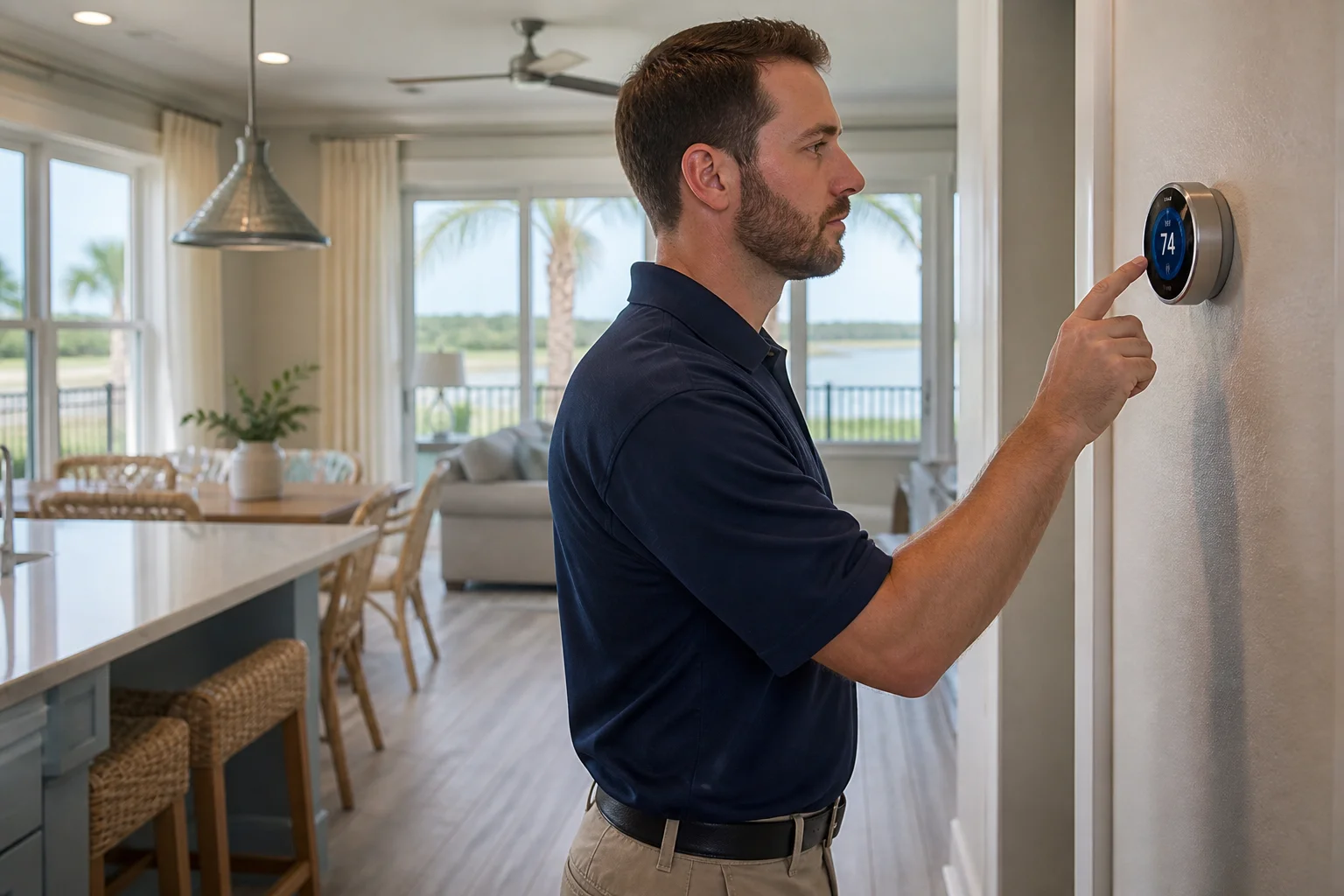
A smart thermostat can make daily comfort easier in Latitude Margaritaville Watersound, but the device is only one part of the HVAC system. Good results depend on thermostat placement, equipment compatibility, ductwork, airflow, humidity control, and proper setup for the coastal Florida climate.
Before choosing a model based on its screen or mobile app, homeowners should consider how the thermostat will communicate with the heat pump, air handler, furnace, mini split, or zoned system. A thoughtful plan can reduce energy waste, prevent unnecessary service calls, and help the system manage long cooling seasons more effectively.
Why coastal weather changes thermostat planning
Latitude Margaritaville Watersound homes deal with heat, high humidity, salt air, heavy rain, and sudden weather changes. Air conditioning systems often run for much of the year, while heating demand may arrive in short stretches during winter. A smart thermostat needs settings that fit those conditions rather than a generic schedule copied from another climate.
Humidity is especially important. Cooling a home too quickly may satisfy the temperature setting before the evaporator coil has removed enough moisture. The indoor temperature can look correct while rooms still feel damp or sticky. Depending on the equipment, a compatible thermostat may support longer cooling cycles, variable fan operation, dehumidification controls, or humidity based adjustments.
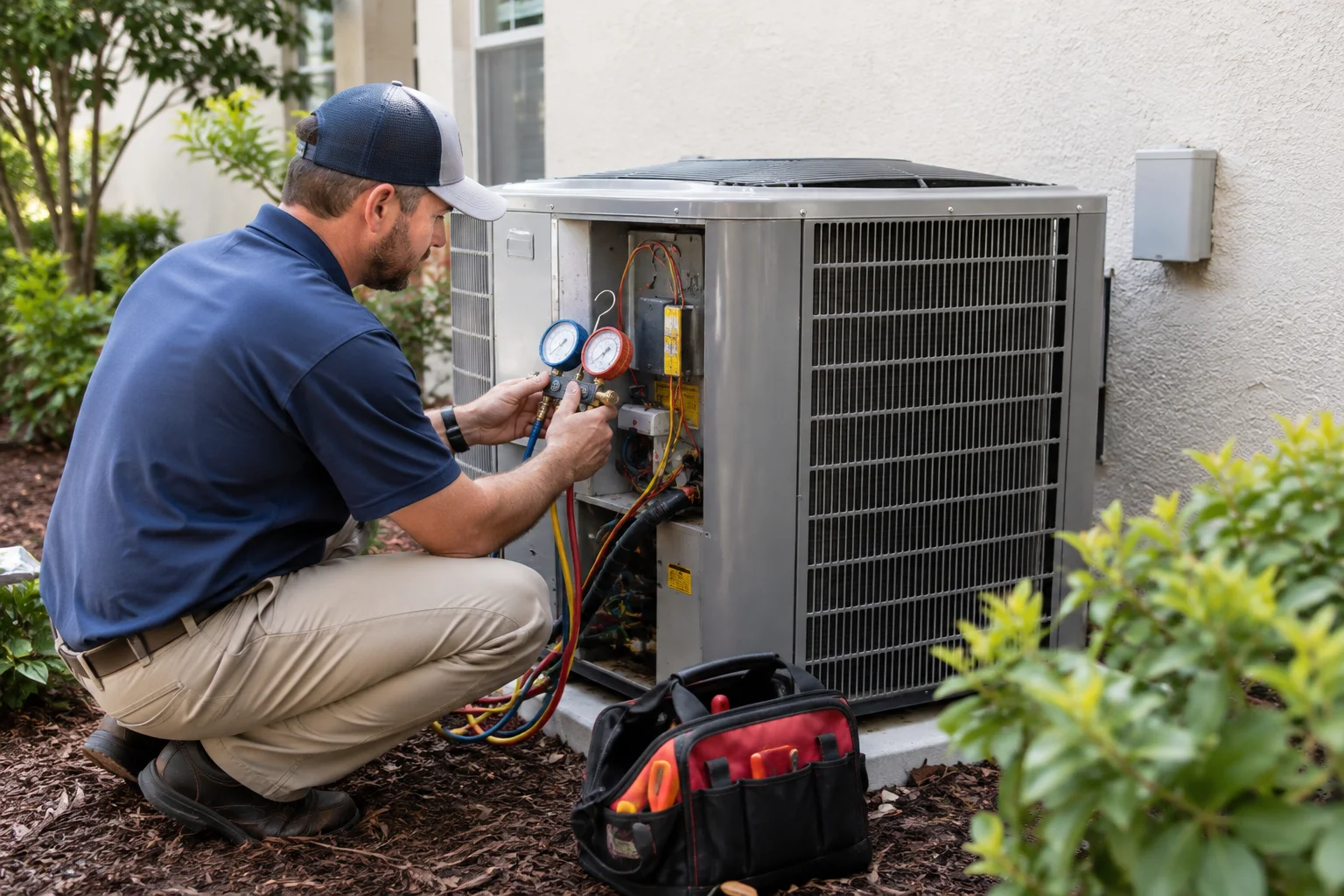
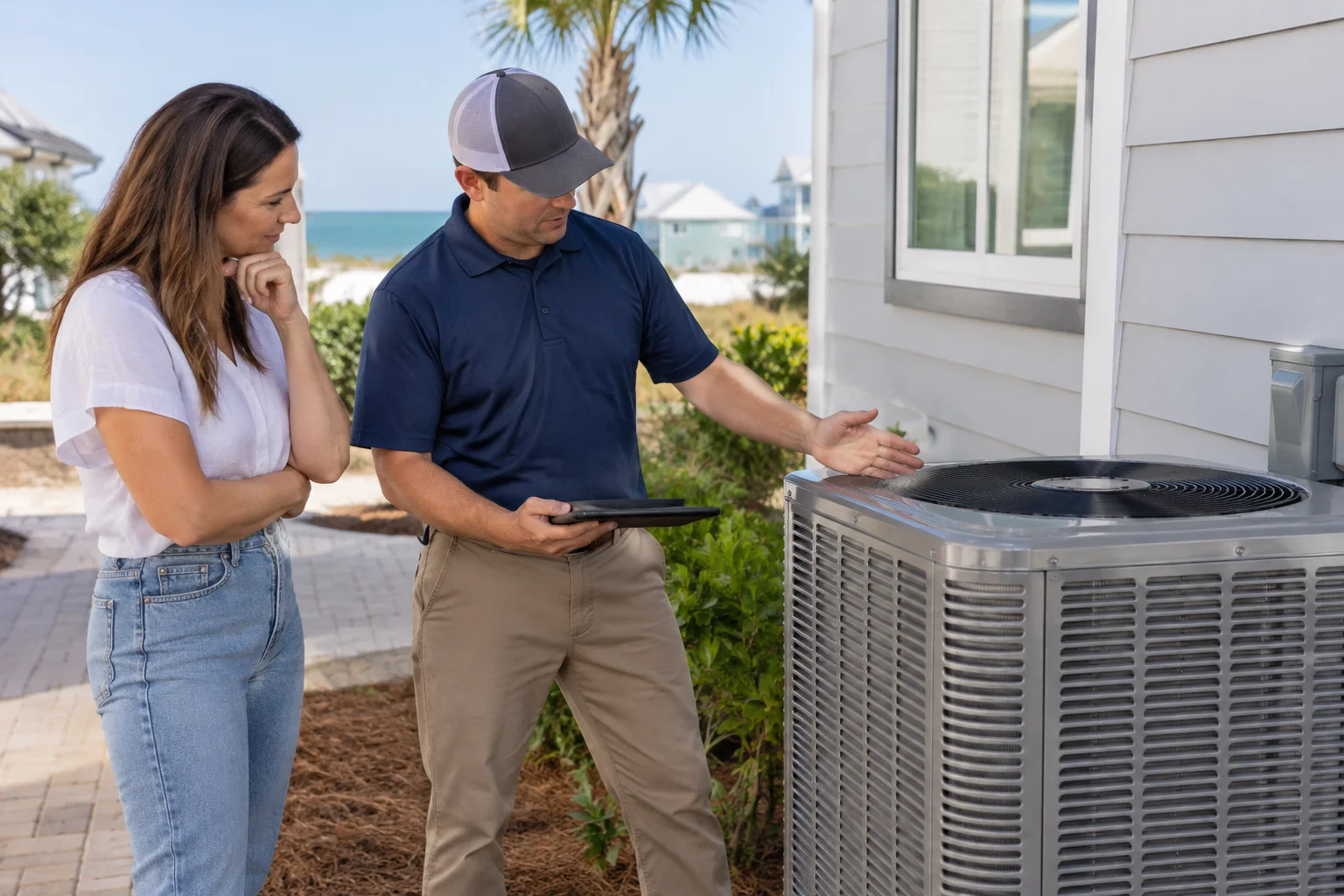
Salt air also affects outdoor units and condensers. Corrosion, dirty coils, weak electrical connections, and restricted airflow can reduce performance even when the thermostat appears to be working normally. A smart control can report unusual run times, but it cannot clean a condenser or repair damaged components.
Start with HVAC compatibility, not app features
Thermostats are not universally compatible. A basic single stage heat pump has different control requirements from a multistage heat pump, variable speed air handler, dual fuel system, electric furnace, or communicating HVAC system. Some manufacturers use proprietary controls that should not be replaced with a standard retail thermostat without reviewing the equipment specifications.
Heat pumps also require correct settings for auxiliary heat, emergency heat, reversing valve operation, and compressor protection. An incorrect configuration can cause expensive backup heat to run too often or can prevent the system from switching modes correctly. Furnaces require proper staging and fan control. Ductless mini splits may use dedicated wall controllers or manufacturer approved interfaces rather than conventional thermostat wiring.
Homes with several comfort zones may benefit from smart zoning or VRF multi zone systems, but adding separate thermostats without proper dampers and controls can create pressure and airflow problems. A professional equipment review helps match the controls to the actual system.
Thermostat location has a major effect on comfort
A thermostat measures the conditions around it, not every room in the home. Placement near a sunny window, exterior door, kitchen, supply vent, television, lamp, or other heat source can produce misleading readings. A hallway with little air circulation can also respond differently from occupied rooms.
Newer homes in Latitude Margaritaville Watersound may already have practical thermostat locations, but furniture changes and interior remodels can alter airflow. In older homes, additions may leave the thermostat controlling spaces that have different insulation, sun exposure, or duct capacity. Remote room sensors can help average temperatures or prioritize an occupied bedroom, but they do not correct poor duct design.
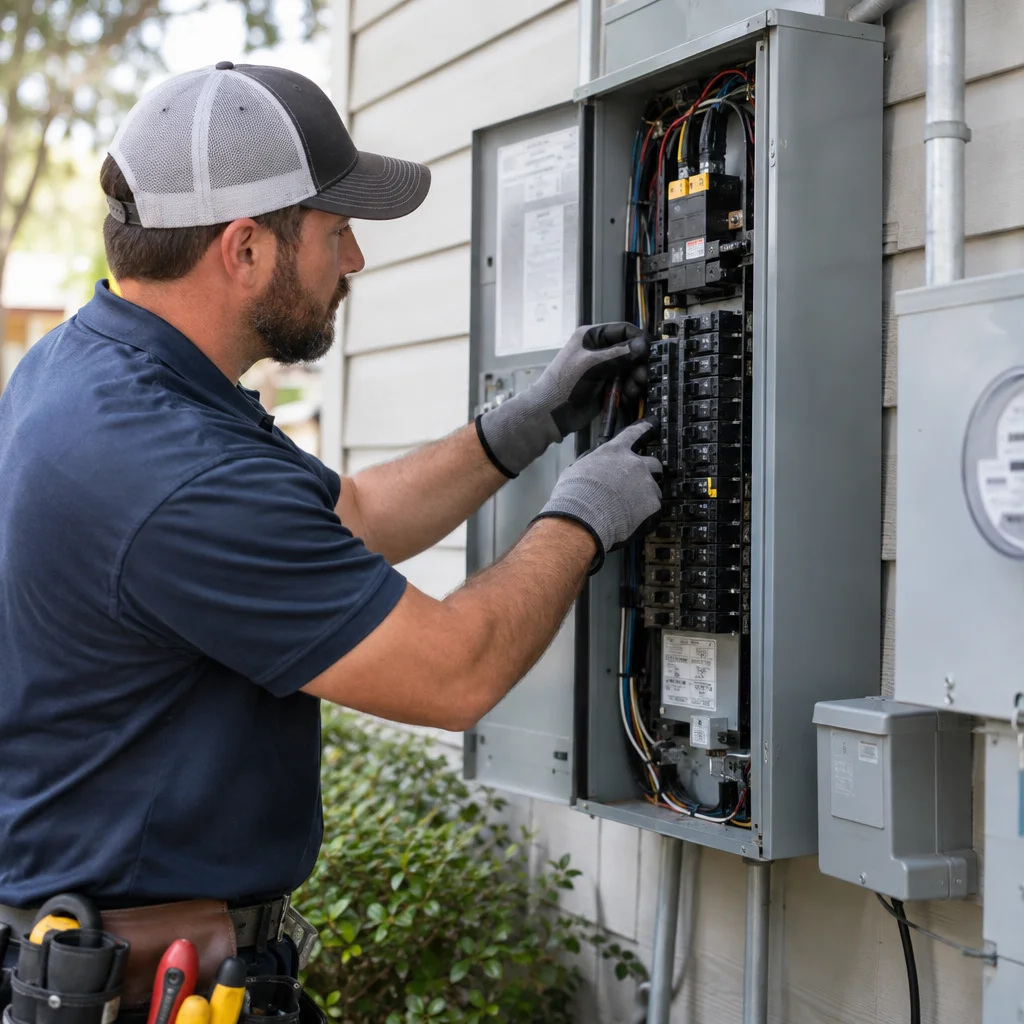
During smart thermostat installation in Latitude Margaritaville Watersound, the technician should check the location, wiring, control voltage, equipment type, and available terminals before configuring the system.
Airflow problems can look like thermostat problems
If one room stays warm while another becomes too cold, changing the thermostat schedule may not solve the underlying issue. Common causes include a dirty filter, closed vent, blocked return, disconnected duct, crushed flex duct, dirty evaporator coil, weak blower motor, or improperly balanced supply system.
Leaky ductwork can pull hot, humid attic air into the return side or lose conditioned air before it reaches the rooms. That increases run time and can make thermostat data appear inconsistent. A professional duct inspection can identify damaged connections, insulation problems, and airflow restrictions. When leakage is confirmed, targeted duct sealing can improve comfort and energy efficiency.
Homeowners searching for duct leakage repair near me should ask whether the contractor measures airflow and static pressure instead of sealing only the most visible joints. Smart thermostat reports are useful clues, but HVAC testing is needed to find the reason for long cycles or uneven temperatures.
Humidity control requires more than lowering the temperature
In Bay County, setting the thermostat colder is not always the best answer to indoor humidity. Oversized cooling equipment may cycle off too quickly, while fan settings can return moisture from the wet evaporator coil to the home. Air leaks, duct leaks, clogged drain lines, and high outdoor air infiltration can add to the problem.
Many smart thermostats display indoor humidity and can alert homeowners when levels rise. Some can coordinate with compatible variable speed equipment or a whole home dehumidifier. The correct fan setting also matters. Running the fan continuously during humid weather may increase moisture in some systems, so automatic fan operation is often preferable unless the equipment was designed for continuous circulation.
Persistent humidity can affect indoor air quality, encourage musty odors, and make dust or biological growth harder to control. Filters should fit properly and have a rating the blower can handle. Homeowners considering a whole home air purifier near me or media air cleaner installation near me should first confirm that the ductwork and air handler can support the added resistance.
Useful smart settings for local homes
Use modest temperature adjustments
Large setbacks can force a heat pump or air conditioner to work hard during recovery, especially on hot afternoons. A smaller adjustment often provides savings without creating long, uncomfortable recovery periods. Heat pump owners should use setback strategies that limit unnecessary auxiliary heat during winter warmup.
Set realistic schedules
Build schedules around actual routines, including sleep, time away, and preferred evening temperatures. Occupancy detection can help, but pets, guests, and irregular routines may confuse automated settings. Review automatic changes during the first few weeks rather than assuming every efficiency feature is appropriate.
Protect equipment with alerts
Enable notifications for unusual indoor temperatures, high humidity, filter reminders, and extended system run time. These alerts can reveal a failing system, but they are not a diagnosis. A temperature alert during a storm or summer heat wave deserves prompt attention, particularly if vulnerable residents or pets are inside.
Avoid constant manual changes
Frequent adjustments can produce uneven cycles and make it difficult to evaluate performance. Choose a comfortable setting, allow the system time to respond, and look for a pattern. If the home cannot maintain temperature, the problem may involve refrigerant charge, airflow, a dirty coil, failing components, or equipment capacity.
How maintenance supports smart thermostat performance
A smart thermostat works best with a maintained HVAC system. Seasonal service should include checking filters, blower operation, evaporator and condenser coils, refrigerant performance, electrical connections, heat pump operation, drain lines, and thermostat calibration. Outdoor units should have clear airflow and be inspected for corrosion associated with coastal salt air.
Drain line maintenance is particularly important in humid Florida weather. Algae or debris can block condensate drainage and trigger a float switch that shuts the air conditioner off. The thermostat may remain powered and appear normal even though the air handler cannot run. Water near the air handler, ceiling staining, or repeated drain backups should be addressed promptly.
Homeowners searching for seasonal HVAC maintenance near me can ask whether thermostat settings and sensor readings are reviewed during the visit. Spring service prepares the cooling system for peak demand, while a fall check confirms heat pump, furnace, or electric heat operation before colder nights arrive.
Do not mistake equipment trouble for a control issue
A blank screen may be caused by dead batteries, loss of control power, a tripped breaker, an open air handler panel switch, or a condensate safety switch. Short cycling can result from poor airflow, an oversized system, control problems, or a refrigerant issue. Warm air from vents can point to incorrect mode settings, outdoor unit failure, a frozen evaporator coil, or heat pump trouble.
Refrigerant leaks require professional diagnosis and repair. Adding refrigerant without finding the leak is not a lasting solution. Ice on refrigerant lines or the indoor coil should not be chipped away. Turn off cooling and arrange service, since continued operation can damage the compressor.
If a homeowner searches for refrigerant leak repair near me or heat pump repair near me after receiving a thermostat alert, the contractor should inspect the entire system rather than replacing the thermostat automatically. The same principle applies to central air repair near me searches. Controls, airflow, coils, ductwork, and mechanical components need to be evaluated together.
Smart controls for remodels, additions, and changing floor plans
Remodels can shift heating and cooling loads. Enclosed patios, converted rooms, larger windows, new interior walls, and additions may not receive enough conditioned air from the original system. Moving a thermostat or adding remote sensors may improve temperature awareness, but it cannot create missing equipment capacity or duct airflow.
Before expanding controls, an HVAC contractor should assess load, duct sizing, return air paths, and insulation. A ductless mini split may be practical for a room that cannot be served effectively by existing ductwork. Larger additions may require a separate system or redesigned zoning.
Commercial properties and community facilities have different occupancy and ventilation needs from homes. Managers planning controls for shared buildings can review options for commercial HVAC installation rather than relying on residential thermostat strategies.
Efficiency gains come from the complete system
Smart schedules, remote access, and energy reports can reduce waste, especially when they prevent cooling an empty home at an unnecessarily low setting. The biggest benefits occur when the air conditioner or heat pump is correctly sized, the ductwork is sealed, airflow is balanced, and the building envelope limits outdoor humidity.
Energy reports should be compared with weather and household activity. Longer run time during a severe heat wave may be normal. A sudden increase under similar conditions deserves investigation. Dirty filters, failing capacitors, low refrigerant, duct leakage, and clogged coils can all reduce efficiency without generating an obvious thermostat error.
Homeowners should also be cautious with utility demand programs or automatic temperature adjustments. These features may save money, but the comfort impact depends on the rate plan, equipment, and household needs. Settings can usually be customized so energy goals do not override safe indoor conditions.
Storm preparation and emergency HVAC concerns
Coastal storms can interrupt power, internet service, and cellular access. Most smart thermostats continue basic temperature control without internet, but remote commands and alerts may stop. Homeowners should know how to operate the thermostat manually and keep model information available.
After a power outage, verify the thermostat mode and schedule, then listen for normal equipment startup. Rapid power cycling can be hard on compressors, so built in time delays should be allowed to complete. Do not run an outdoor unit that is flooded, physically damaged, or packed with storm debris. Arrange an inspection first.
Burning odors, smoke, sparking, repeated breaker trips, severe refrigerant line icing, water near electrical components, or complete cooling loss during dangerous heat can require urgent help. Homeowners searching for emergency HVAC repair near me should describe the equipment, thermostat message, recent weather, and any unusual sounds or odors. That information helps the service team prepare without encouraging unsafe troubleshooting.
Choosing local thermostat and HVAC service
Local experience matters because Bay County contractors see the effects of long cooling seasons, salt exposure, storm conditions, and persistent humidity. They can also account for the equipment and construction practices found in newer Latitude Margaritaville Watersound homes, along with the needs of older homes and remodeled properties throughout the surrounding area.
A qualified contractor should identify the existing equipment, confirm thermostat compatibility, inspect wiring, test heating and cooling modes, verify staging, and explain the app and manual controls. The technician should also check whether poor comfort comes from the thermostat or from airflow, refrigerant, drainage, ductwork, or equipment condition.
Residents looking for thermostat installation near me can contact A Superior Mechanical for HVAC focused setup and optimization. Learn more about service throughout Latitude Margaritaville Watersound and the broader Bay County service area.
A practical prevention plan
Check the filter regularly, keep vents and returns open, remove vegetation and debris around the condenser, and watch for water near the air handler. Review smart thermostat alerts instead of dismissing repeated warnings. Once each season, confirm that schedules still match household routines and that humidity readings seem consistent with indoor comfort.
Professional maintenance should verify thermostat calibration, system staging, airflow, coil condition, condensate drainage, refrigerant performance, and heat operation. Keep records of repairs and equipment model numbers so future service is faster. Broader home maintenance also helps prevent disruptions, and homeowners building a seasonal checklist may find this guide to keeping water flowing without an emergency call useful for planning other household systems.
A smart thermostat is most valuable when it provides dependable control rather than another source of confusing alerts. Correct installation, sensible settings, healthy airflow, and routine HVAC care allow the technology to support the comfort and humidity demands of a coastal Florida home.
Find Smart Thermostats in Latitude Margaritaville Watersound, FL
If you need Smart Thermostats in Latitude Margaritaville Watersound, FL, visit our local service page or contact A Superior Mechanical today.
Map of Latitude Margaritaville Watersound, FL
Frequently Asked Questions
Can any smart thermostat control a heat pump in Latitude Margaritaville Watersound?
No. The thermostat must support the heat pump type, reversing valve, staging, auxiliary heat, and any variable speed or communicating controls. A compatibility check helps prevent excessive backup heat use and incorrect system operation.
Will a smart thermostat lower indoor humidity?
It may help if it supports humidity sensing and works with compatible HVAC equipment, but it cannot correct oversized equipment, duct leaks, poor airflow, dirty coils, or drainage problems. Persistent humidity should be evaluated by an HVAC professional.
Why does my smart thermostat say the AC is running when the house is not cooling?
Possible causes include a dirty filter, clogged drain line, tripped condensate switch, frozen evaporator coil, outdoor unit failure, refrigerant leak, duct problem, or incorrect thermostat configuration. Shut the system down if you see ice, water, smoke, or electrical damage and request professional service.
Related Articles
- Keeping Clean Water Flowing in Latitude Margaritaville Watersound Homes Without the Emergency Call
- Sewer Repair in Latitude Margaritaville Watersound: What Local Homeowners Should Know
- Hard Water Spots, Strange Taste, and Other Water Clues in Latitude Margaritaville Watersound Homes
- Why cleaner water matters more in Latitude Margaritaville Watersound homes
Photo Gallery