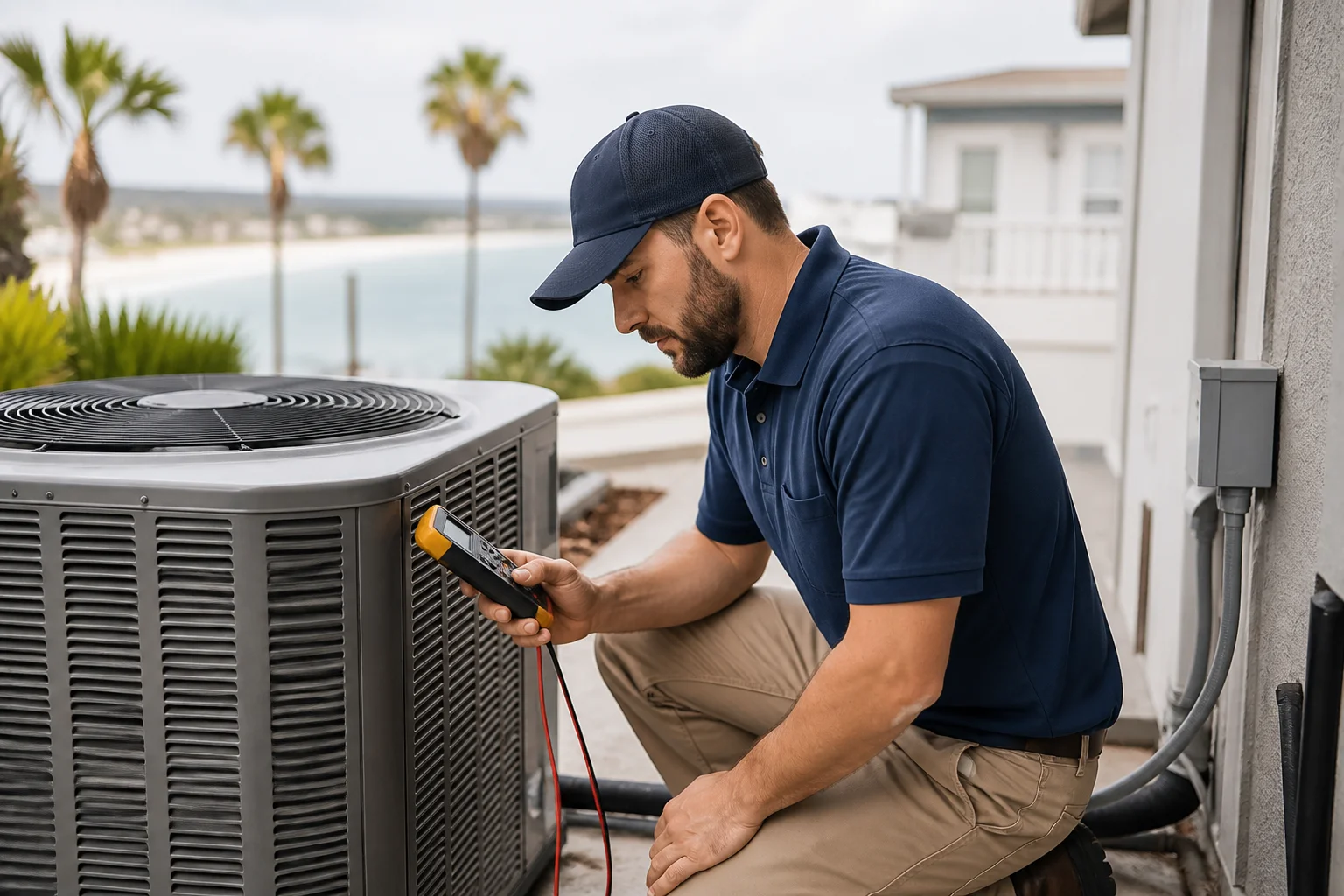
Reliable comfort starts before the next breakdown
Commercial HVAC systems in Laguna Beach work through long cooling seasons, heavy humidity, salt air, sudden storms, and sharp increases in seasonal demand. Waiting until an air conditioner stops cooling can leave a business facing uncomfortable customers, disrupted employees, damaged inventory, or an emergency repair during the busiest part of the year.
A planned approach to commercial HVAC maintenance in Laguna Beach helps identify developing problems early. It also gives property owners and managers a clearer picture of comfort, airflow, humidity control, equipment condition, and future replacement needs.
Why coastal weather changes the maintenance schedule
Laguna Beach has a demanding coastal climate. Outdoor units and condensers are exposed to moisture, wind driven debris, airborne salt, intense sunlight, and storm conditions. Salt residue can speed up corrosion on coil surfaces, cabinets, electrical connections, fasteners, and fan components. Even equipment located a short distance inland can collect coastal residue over time.
Humidity creates a different set of concerns inside the building. An air conditioner must remove both heat and moisture. Dirty evaporator coils, poor airflow, clogged filters, incorrect thermostat settings, short equipment cycles, and blocked drain lines can reduce moisture removal. The building may reach the thermostat setting while still feeling damp or stuffy.
Storms can also interrupt power, push debris against outdoor equipment, and expose weak drain or control components. After severe weather, a system may continue running while making unusual sounds, drawing excessive power, or cooling unevenly. Local service matters because technicians familiar with Laguna Beach HVAC conditions know to look beyond basic temperature readings and account for corrosion, drainage, humidity, and storm exposure.
Build maintenance around comfort, airflow, humidity, and prevention
Comfort should be measured throughout the property
A thermostat reading does not tell the entire comfort story. Commercial properties often have sunny rooms, interior offices, kitchens, storage spaces, high ceilings, frequently opened doors, or additions served by older ductwork. Each area can place a different demand on the HVAC system.
During maintenance, supply temperatures and thermostat operation should be checked alongside how the building is actually used. A thermostat near a warm entrance, copier, kitchen, or direct sunlight may cause long cycles. A poorly located sensor can create a cold room in one area and a warm room elsewhere. Thermostat installation or sensor relocation may improve control without requiring larger equipment.
Persistent comfort differences can also point to undersized returns, closed dampers, duct leaks, failing blower components, or zoning problems. Businesses searching for an HVAC service near me should describe which rooms are affected, what time the problem occurs, and whether it changes with occupancy. Those details help separate a capacity issue from an airflow or control problem.
Airflow is essential for cooling and equipment protection
Airflow problems are frequently mistaken for refrigerant trouble. A dirty filter, restricted return, blocked vent, dirty evaporator coil, damaged duct, or weak air handler blower can reduce the volume of air crossing the coil. This may produce warm rooms, long run times, high energy use, noise at vents, or ice on refrigerant lines.
Commercial maintenance should include filter inspection, blower evaluation, accessible coil checks, vent review, and temperature measurements. Filters must fit correctly and have an appropriate efficiency rating for the equipment. A filter that is too restrictive can cause as many problems as a heavily loaded filter, especially in an older air handler that was not designed for high resistance.
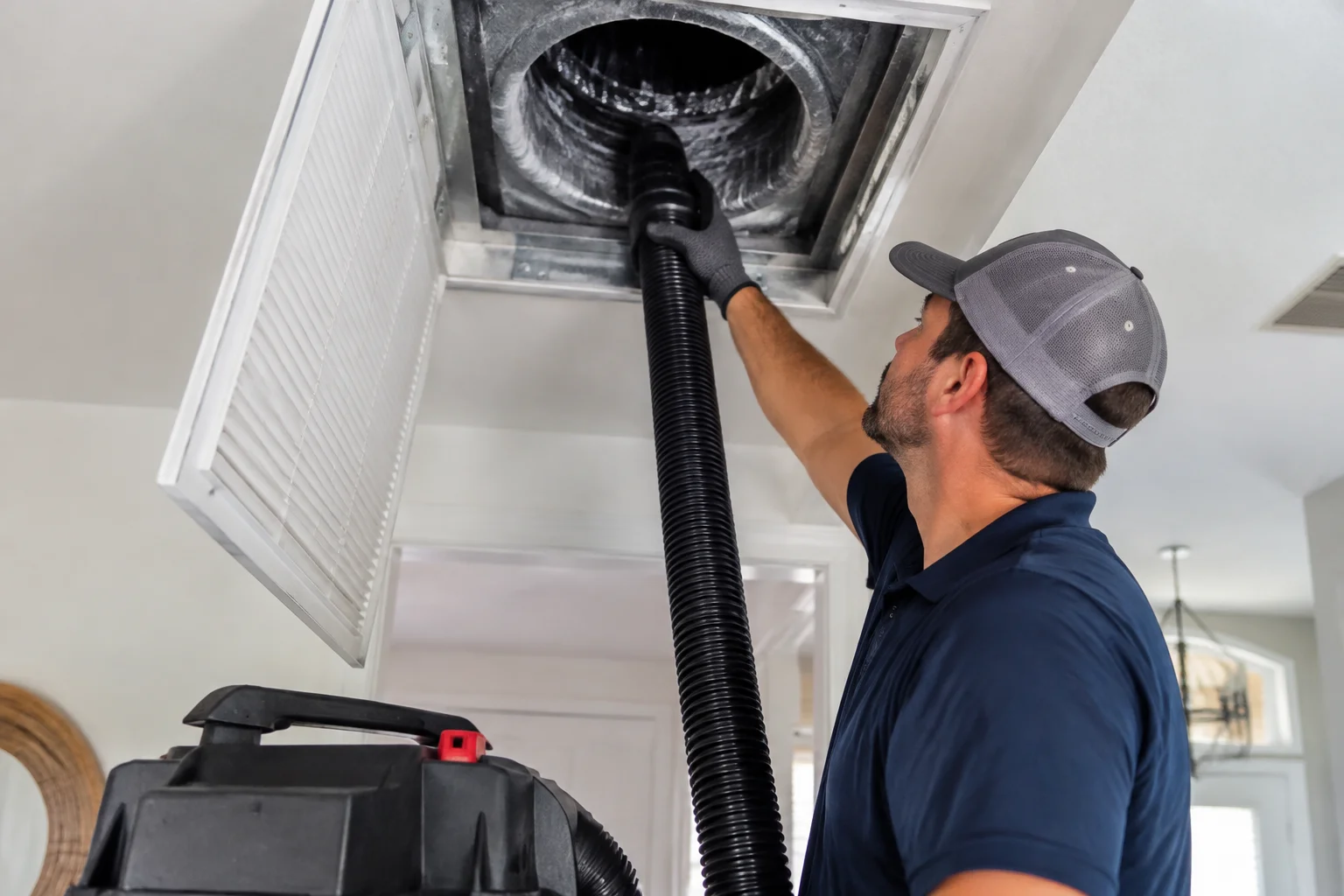
Ductwork deserves attention when airflow varies from room to room. Leaks can send conditioned air into ceiling cavities, attics, utility spaces, or wall chases. Crushed flex duct, disconnected sections, poor return placement, and changes made during remodels can further disturb air distribution. Property managers searching for airflow balancing near me may benefit from testing, damper adjustments, duct repairs, or duct sealing and Aeroseal services, depending on the duct system and leakage pattern.
Humidity control protects more than comfort
Excess indoor humidity can contribute to musty odors, window condensation, damp surfaces, swollen materials, and microbial growth where moisture persists. It may also make occupants lower the thermostat to feel comfortable, increasing energy use without correcting the underlying issue.
Common HVAC causes include oversized equipment that shuts off too quickly, dirty coils, improper fan settings, clogged drain lines, duct leakage, outside air entering through building gaps, and systems that are not operating as designed. Mini splits can also struggle with humidity when they are oversized for a small office or addition.
A technician can compare indoor humidity, cycle length, airflow, drainage, and equipment capacity. In some buildings, the solution is maintenance or a control adjustment. Others may need duct repairs, ventilation changes, a dedicated dehumidification strategy, or updated equipment. Indoor air quality upgrades such as improved filtration or air purification should be selected only after airflow and moisture sources are understood.
Prevention should focus on failure points
Useful preventive maintenance is more than rinsing an outdoor coil. It should address the parts most likely to create downtime, water damage, comfort complaints, or high operating costs. The exact checklist depends on the equipment, building, occupancy, and manufacturer requirements.
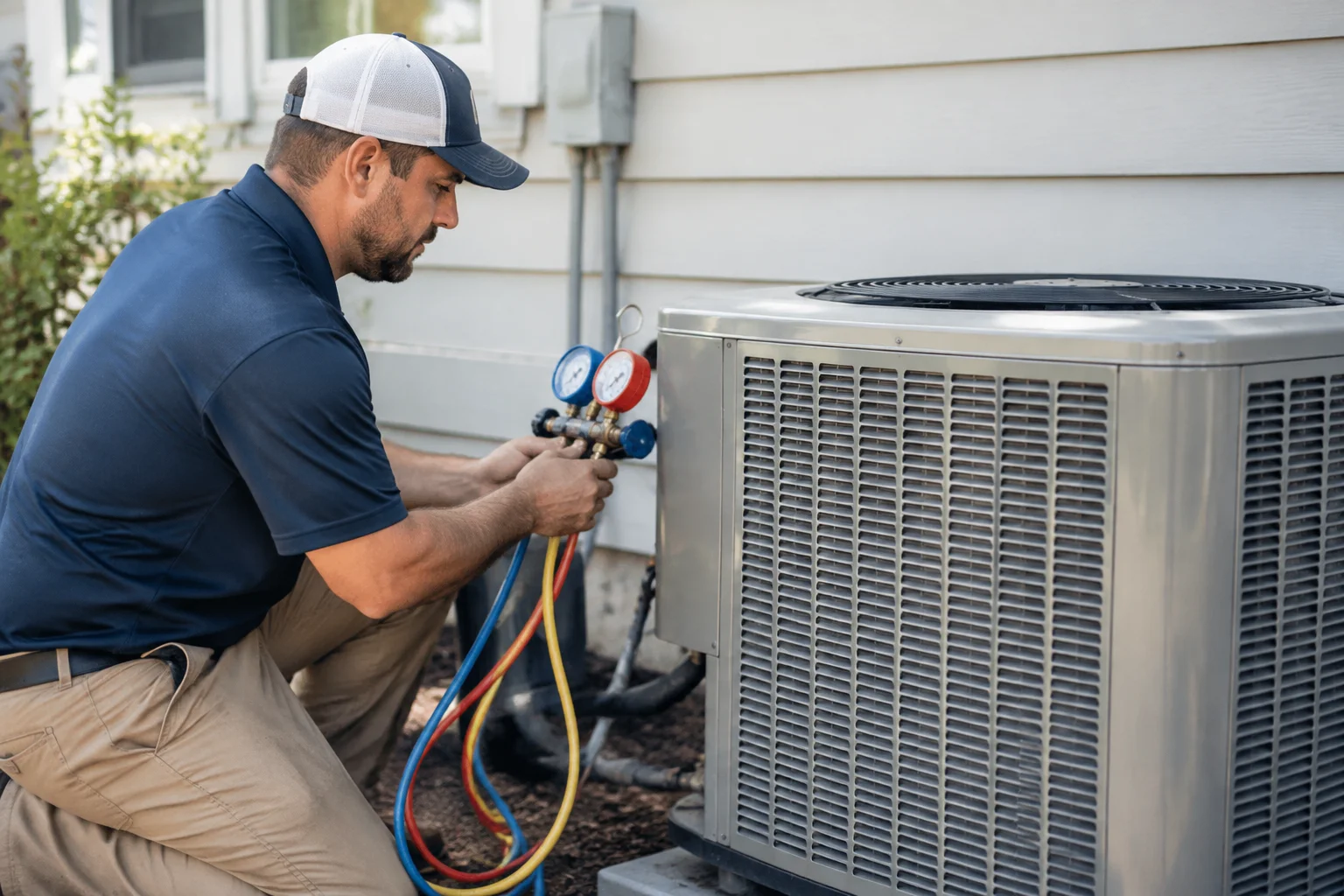
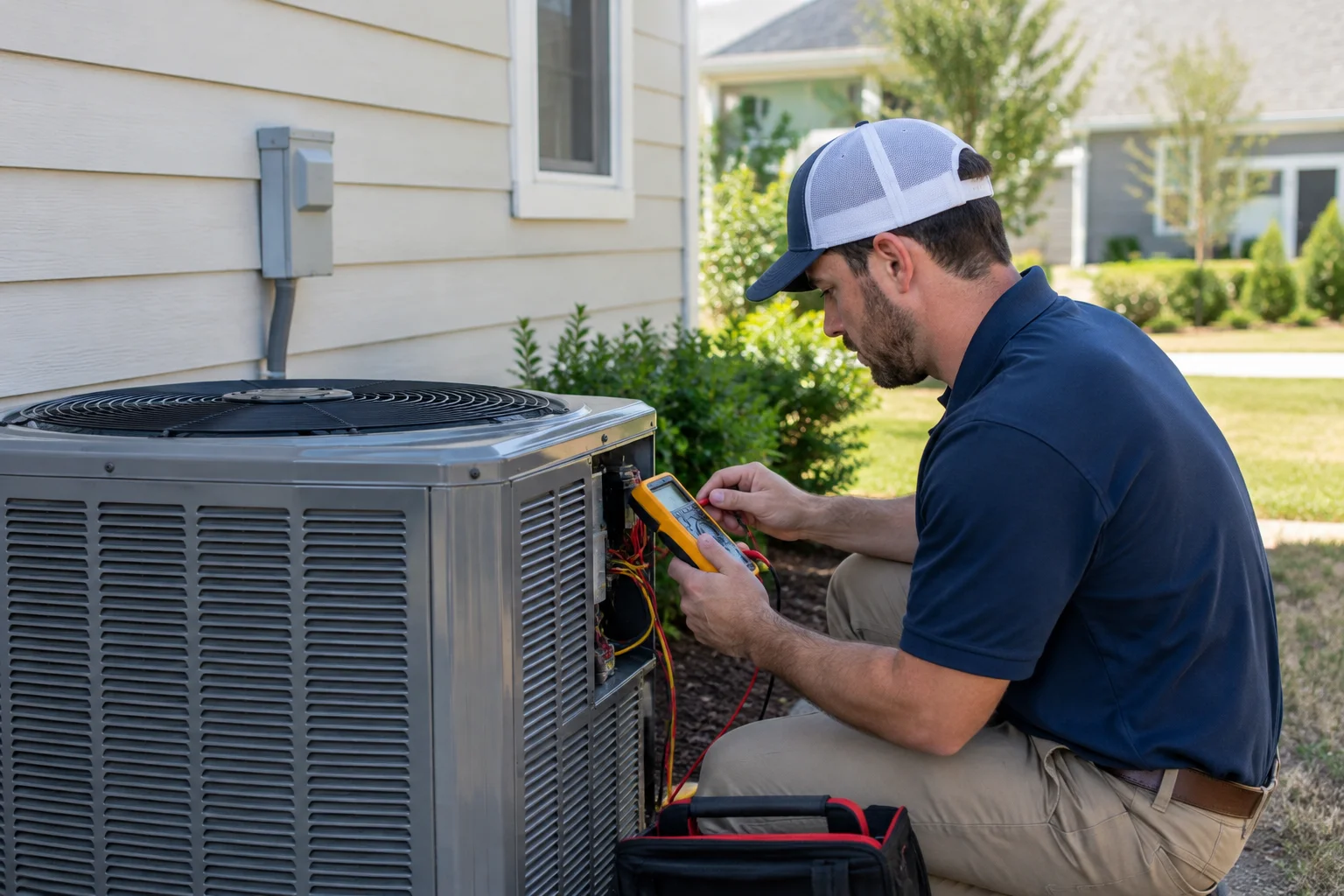
Typical maintenance includes inspecting filters, air handlers, condensers, evaporator coils, blower assemblies, thermostat controls, electrical connections, refrigerant performance, safety controls, condensate pans, and drain lines. Heat pumps should be checked in both cooling and heating modes when conditions allow. Furnaces require inspection of combustion related components, venting, safeties, and heat exchangers by a qualified HVAC professional.
Maintenance records are valuable because a single measurement is less useful than a trend. Rising electrical readings, repeated drain blockages, declining temperature performance, or recurring refrigerant loss may reveal a developing failure. Refrigerant does not get used up during normal operation. If the charge is low, the system should be evaluated for refrigerant leaks rather than repeatedly topped off.
Equipment conditions that deserve prompt attention
Some changes should not wait for the next scheduled visit. Call for professional service if the system repeatedly trips a breaker, gives off a burning odor, produces smoke, leaks water near ceilings or electrical equipment, forms heavy ice, makes grinding sounds, or cannot maintain a safe indoor temperature.
Other warning signs are less dramatic but still important:
- Rooms that become warmer or more humid each week
- Weak airflow from several vents
- Drain lines that overflow or require frequent clearing
- Condensers with visible corrosion, bent coil fins, or unusual fan noise
- Air handlers that vibrate, leak, or run continuously
- Thermostats that lose settings or display inaccurate temperatures
- Unexpected increases in electricity use
- Repeated low refrigerant readings or oily residue near a coil
A search for air handler repair near me may start with weak airflow, but the cause could be a blower motor, control board, dirty coil, failed capacitor, damaged ductwork, or incorrect static pressure. Likewise, someone looking for refrigerant leak repair near me may actually have a restricted filter or airflow problem that is causing the evaporator coil to freeze. Proper diagnosis prevents unnecessary parts replacement.
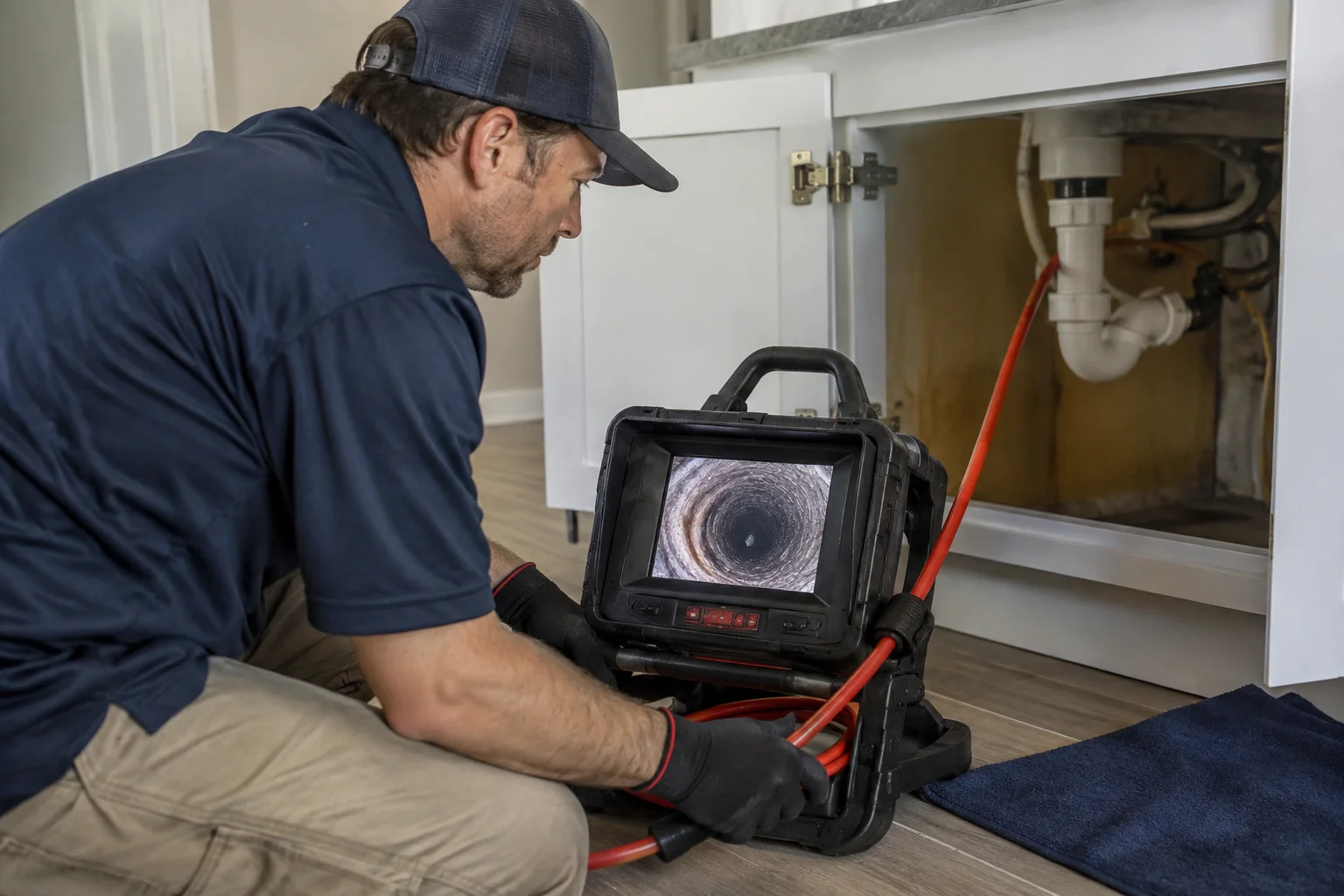
Water around an indoor unit also requires careful diagnosis. A clogged condensate drain is common in humid climates, but cracked pans, frozen coils, poor drain slope, failed pumps, and uninsulated piping can produce similar symptoms. Businesses seeking AC drain line cleaning near me should have the source of the water confirmed, particularly when the air handler is above a ceiling or occupied area.
Match the plan to the building and its use
A beachfront retail space, restaurant, professional office, rental property, and light commercial building do not place the same demands on an HVAC system. Occupancy, operating hours, doors, cooking equipment, electronics, indoor air quality goals, and ventilation all affect maintenance needs.
Older Laguna Beach properties may have limited return air, patched ductwork, outdated thermostats, or equipment added at different times. Newer buildings can still have problems if ducts were poorly installed, controls were not commissioned, or construction dust reached the coils. Remodels and additions often change heat loads without corresponding changes to ducts, returns, or system capacity.
Local homes face many of the same coastal issues, especially those with attic ductwork, heat pumps, furnaces, mini splits, and outdoor units exposed to salt air. Homeowners can find additional residential guidance in this Laguna Beach air conditioning maintenance guide. Lessons from commercial maintenance practices for Fort Walton Beach homes also show why recordkeeping, filter schedules, and early correction of small faults can benefit residential systems.
Use inspections to plan repairs and replacement
Maintenance should help owners prioritize work rather than create a list without context. Immediate safety or water concerns come first. Airflow restrictions, drainage issues, loose electrical connections, and dirty coils often follow because they can damage equipment or reduce efficiency. Aging components and future upgrades can then be budgeted based on condition and business needs.
An air conditioning inspection can be useful before purchasing a property, signing a lease, reopening a seasonal space, or beginning a remodel. It can document equipment age, visible condition, basic operation, duct concerns, and potential repair needs.
If repeated repairs, corrosion, obsolete controls, or poor capacity make replacement more practical, a properly planned commercial HVAC installation should account for building load, humidity removal, duct design, service access, and coastal exposure. Larger or divided properties may benefit from VRF multi zone systems, but selection and design should be based on actual operating requirements rather than equipment trends.
Small operating choices can improve efficiency
Energy efficiency depends on both equipment condition and daily use. Keep supply vents and return grilles open and unobstructed. Replace filters according to system needs rather than relying only on a calendar. Avoid extreme thermostat setbacks that force a long recovery during humid weather. Keep doors and windows closed when cooling, and make sure staff members understand which thermostat controls their area.
Outdoor condensers need clear space for airflow. Landscaping, stored materials, fencing, sand, and storm debris should not block the coil or fan discharge. Coil cleaning should use methods appropriate for the equipment because high pressure washing and harsh chemicals can damage fins or protective coatings.
Maintenance timing also matters. Scheduling service before peak summer demand gives businesses more time to address worn parts, drainage concerns, and declining performance. For another regional perspective, A Superior Mechanical's article about smarter commercial HVAC maintenance in Valparaiso explains how proactive planning supports comfort and operational reliability.
Know when the situation is an HVAC emergency
Loss of cooling is urgent when it affects vulnerable occupants, temperature sensitive products, medical operations, server rooms, or indoor conditions that are becoming unsafe. Smoke, burning odors, sparking, repeated breaker trips, severe water leakage, or suspected gas furnace problems also call for immediate action. Shut the system off if operating it could create electrical, fire, or water damage, and follow applicable building safety procedures.
For less urgent problems, note thermostat readings, affected rooms, noises, odors, leak locations, and recent changes. Do not open refrigerant circuits, bypass safety switches, or keep resetting a tripped breaker. Businesses looking for an AC repair near me can save diagnostic time by sharing equipment history and maintenance records with the technician.
Local knowledge supports better maintenance decisions
Commercial HVAC care in coastal Bay County requires attention to conditions that may be less important in a dry inland climate. Salt exposure, humidity, drainage, storms, long cooling seasons, and seasonal occupancy all influence how equipment should be inspected and maintained.
A Superior Mechanical helps Laguna Beach businesses evaluate their HVAC systems, address comfort and airflow complaints, and create practical maintenance priorities. A consistent plan can reduce avoidable downtime, improve indoor air quality, protect energy efficiency, and give owners more time to prepare for major repairs or replacement.
Find Commercial HVAC Maintenance in Laguna Beach, FL
If you need Commercial HVAC Maintenance in Laguna Beach, FL, visit our local service page or contact A Superior Mechanical today.
Map of Laguna Beach, FL
Frequently Asked Questions
How often should a commercial HVAC system be maintained in Laguna Beach?
Most commercial systems should be professionally inspected at least twice a year, with filters and high use equipment checked more frequently. Coastal salt, humidity, long cooling seasons, business hours, and equipment type can justify a more frequent schedule.
Can commercial HVAC maintenance improve indoor humidity?
Yes. Maintenance can correct dirty coils, restricted airflow, poor fan settings, blocked drain lines, and control issues that interfere with moisture removal. Persistent humidity may also require duct repairs, equipment sizing review, ventilation changes, or dedicated dehumidification.
Does low refrigerant mean the system only needs a recharge?
No. Refrigerant circulates in a sealed system and should not disappear during normal operation. A low charge usually indicates a leak or a previous service issue. The system should be tested, the cause identified, and any repair options explained before refrigerant is added.
Related Articles
- Smart HVAC Planning for Air Conditioning Maintenance in Laguna Beach, FL
- Keeping Valparaiso Comfortable Starts With Smarter Commercial HVAC Maintenance
- What Fort Walton Beach Homes Can Learn From Commercial HVAC Maintenance
- Practical Plumbing Installation Advice for Laguna Beach Homes That Need Reliable Results
Photo Gallery