Commercial HVAC installation is not one-size-fits-all, especially in Bid-A-Wee, FL. Older buildings often bring legacy ductwork, dated controls, and equipment layouts that do not match today’s comfort and indoor air quality goals. Newer construction can still run into trouble if the design does not account for Florida heat, high humidity, and the corrosive effects of salt air near the coast.
If you are a property owner, facility manager, or operations lead, the best time to plan for commercial air conditioning service and system replacement is before cooling season becomes urgent. This guide explains what homeowners and commercial property stakeholders in Bid-A-Wee should know about commercial HVAC installation for both older and newer buildings, including airflow, condensate drainage, refrigerant systems, thermostats, and preventive HVAC maintenance.
For a local walkthrough and a tailored plan, you can review A Superior Mechanical’s commercial HVAC installation services in Bid-A-Wee, or learn more about the area at our Bid-A-Wee service coverage.
Bid-A-Wee HVAC reality: humidity, heat load, and salt air
Bid-A-Wee sits in Bay County, where the cooling season can feel relentless. Florida heat and humidity increase the moisture burden on cooling systems. That matters for both comfort and equipment longevity because indoor humidity affects how well air conditioning can remove moisture, how clean the air feels, and how hard the system works to maintain set temperatures.
In coastal areas, salt air can accelerate corrosion on certain components. Over time, that can contribute to airflow restrictions, reduced performance, and more frequent service calls. When planning commercial HVAC installation, local pros should factor in the building’s exposure level, the intended operating schedule, and how the ductwork routes conditioned air.
Even the best refrigerant system design cannot compensate for poor airflow or improper condensate drainage. That is why a professional HVAC contractor near me approach is so important for commercial projects, not just residential.
Older buildings: why the “same system” replacement is often not enough
When owners say they want an HVAC replacement “like-for-like,” it can sound reasonable. However, an older building’s existing ductwork, return air paths, and control wiring may not support the airflow and humidity control performance that modern comfort expectations require.
Common older-building issues during installation
Older commercial spaces in Bid-A-Wee can show patterns like these:
- Leaky or undersized ductwork that reduces airflow and forces the equipment to work harder.
- Weak return air that causes pressure imbalances, stale air pockets, and uneven cooling.
- Condensate drainage concerns where drain lines are clogged, routed poorly, or not maintained regularly.
- Thermostats and controls that do not match current occupancy schedules or zoning needs.
- Airflow obstructions from aging materials, debris, or duct bends that were never optimized.
These issues can show up as “it cools, but it feels uncomfortable,” or as recurring AC repair needs. Homeowners searching for AC repair near me sometimes run into similar symptoms at home, but commercial buildings often experience them more broadly across multiple rooms or tenant spaces.
Refrigerant systems and why airflow comes first
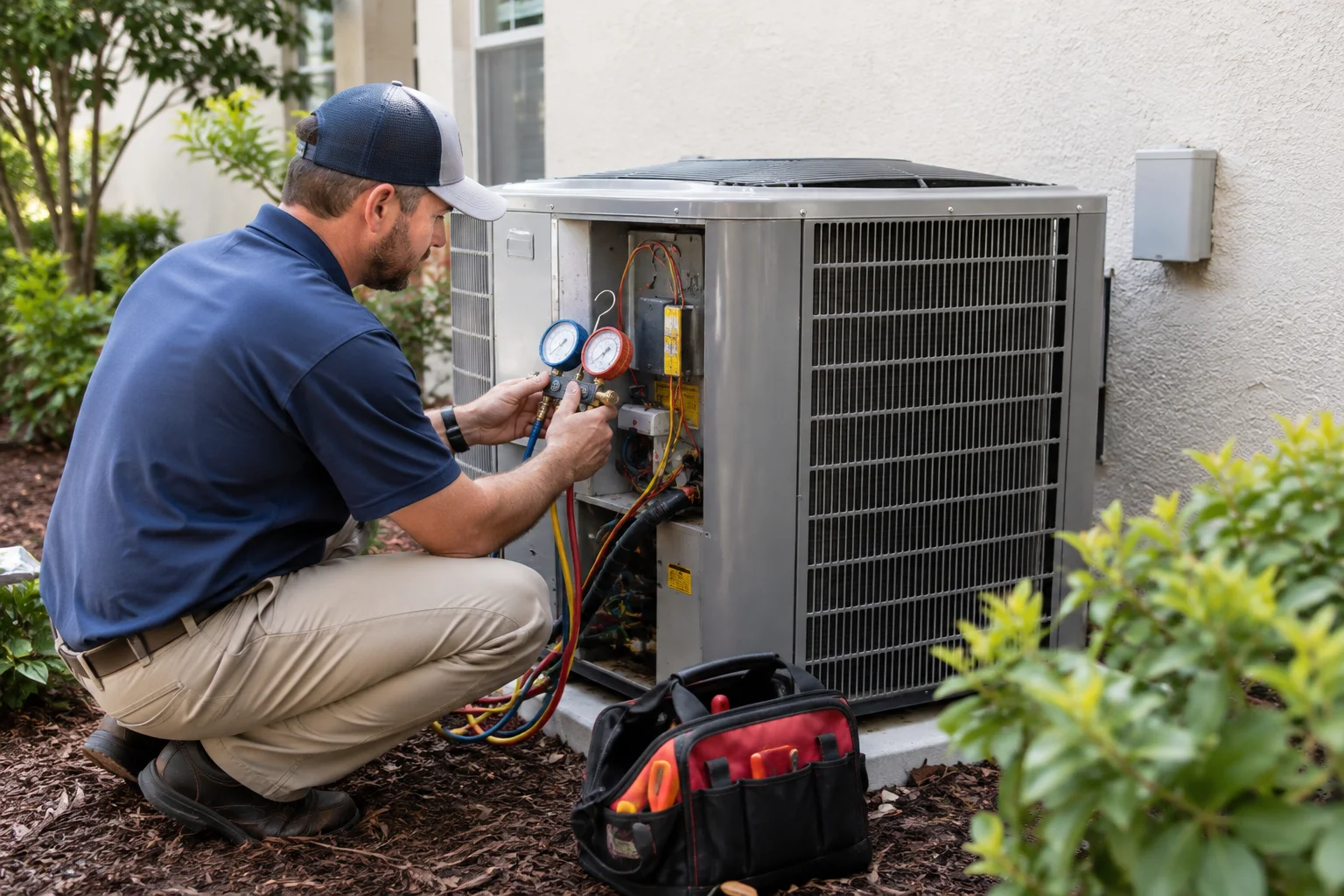
Commercial cooling systems use refrigerant to move heat. But refrigerant performance depends on the air side as well. If airflow is restricted, the system can struggle to meet comfort targets. That can lead to more wear on components and higher energy use.
A Superior Mechanical can evaluate the full system during installation planning. It is not appropriate to assume refrigerant needs, electrical capacity, or equipment replacement choices without an in-person assessment of airflow, ductwork condition, and operating conditions.
Newer construction: problems still happen when design misses real-world loads
Newer buildings are not immune. Sometimes the HVAC equipment is installed correctly, but the design assumptions do not match how the building is actually used. In Florida, daily swings in humidity and solar heat gain can create conditions that a design must handle year after year.
Installation planning details that matter in newer buildings
- Load calculations that reflect occupancy, equipment heat, and ventilation needs.
- Airflow balance between supply and return to prevent overcooling one area and undercooling another.
- Humidity control strategy so the system removes moisture effectively, not just temperature.
- Thermostat placement and control logic so sensors do not get influenced by direct sunlight, drafts, or equipment heat.
- Ductwork layout designed for performance, not just installation convenience.
If your facility has hot spots, frequent complaints, or persistent indoor humidity issues, it may not be the equipment alone. Many times, commercial HVAC installation details like ductwork sizing, airflow distribution, and control settings play a bigger role than expected.
Thermostats, controls, and scheduling: comfort depends on more than temperature
Thermostats in commercial settings often do more than turn cooling on and off. They can help manage energy use, coordinate ventilation and occupancy schedules, and support consistent comfort across multiple zones.
In Bid-A-Wee, where humidity control is essential, control strategy matters. A thermostat installation near me search can lead to quick answers for residential systems, but commercial installations benefit from a controls review that considers how the building actually operates. For example, a schedule that ignores after-hours humidity spikes can lead to discomfort even when daytime temperatures look acceptable.
For properties with multiple areas and varying usage, you may also want to explore solutions such as VRF multi-zone systems where appropriate. The right approach depends on the building layout, ducting strategy, and how you plan to manage zoning and indoor air quality.
Ductwork and airflow: the invisible drivers of performance
Ductwork is often the difference between a system that feels “strong” and a system that struggles. During commercial HVAC installation, technicians should evaluate duct size, routing, return air pathways, and the condition of existing ducts when a retrofit is planned.
Airflow problems that homeowners and managers notice
- Rooms that never reach set temperature
- Short cycling or frequent cycling that can increase wear
- Whistling, rattling, or airflow noise that suggests restrictions
- Dry air that does not feel comfortable, or high humidity that lingers
- Inconsistent comfort across zones or tenant spaces
These symptoms can also overlap with indoor air quality concerns. When airflow is uneven, some areas may receive less ventilation air, which can affect how fresh the space feels. That is one reason indoor air quality services near me searches often lead to a combined HVAC and filtration conversation, not just a filter swap.
Condensate drainage and moisture management in Florida
Air conditioners and many heat pump systems produce condensate as they cool and remove humidity. Condensate drainage must be correct and maintained. A clogged or poorly routed drain can lead to water damage, musty odors, and operational issues that affect comfort.
In Bid-A-Wee’s humid summers, condensate management is not optional. During installation, the drainage line routing, slope, and termination location should be verified. If condensate drainage is an afterthought, the building can pay the price later through recurring problems and higher maintenance demands.
Indoor air quality: comfort and health go together
Commercial HVAC installation influences indoor air quality services near me topics because airflow, filtration, and ventilation rates all affect what occupants breathe. In humid climates, systems that do not manage moisture can allow conditions that reduce perceived air cleanliness and comfort.
Preventive HVAC maintenance is where indoor air quality goals become realistic. Filters, coils, drain pans, and airflow performance need ongoing attention so the system can operate as intended. If you want a deeper look at how ongoing maintenance supports healthier indoor air, read How Preventive HVAC Service Supports Cleaner Indoor Air in Bid-A-Wee.
Energy use and operating costs: why design choices show up in your bills
In Florida, energy use is tied to how hard the system works to meet comfort targets. Poor airflow, inadequate humidity control, and incorrect control settings can increase runtime and energy demand.
Commercial HVAC installation should consider the building’s operating schedule, occupancy patterns, and the way conditioned air moves through the space. If you are comparing options for HVAC replacement near me or air conditioner replacement near me, it helps to ask for a plan that addresses airflow and controls, not just equipment selection.
Also consider that some buildings see load changes throughout the day due to sunlight exposure, tenant equipment, and occupancy. A properly planned system can reduce comfort swings and help avoid emergency cooling concerns.
Emergency cooling concerns: plan before the heat spikes
When cooling fails in the middle of a hot, humid day, the impact can be immediate for employees, customers, and equipment. Bid-A-Wee properties benefit from installation planning that includes redundancy considerations, maintenance access, and a realistic approach to service.
While no installation can eliminate the possibility of breakdown, professional installation reduces avoidable problems caused by airflow issues, drainage errors, control mismatches, or ductwork constraints. If your business relies on consistent cooling, it is smart to coordinate installation planning with your long-term maintenance schedule.
How professionals handle commercial HVAC installation for older vs. newer buildings
A licensed HVAC contractor near me should approach the job as a system evaluation, not a single equipment swap. For older buildings, that often means assessing how the existing ductwork and returns will perform with new equipment. For newer buildings, it often means confirming that the design matches actual usage patterns and that controls and airflow are tuned for comfort and humidity removal.
Questions to ask during the site visit
- How will you verify airflow and balance supply and return?
- What will you check for condensate drainage and moisture safety?
- How will thermostat placement and control settings support humidity comfort, not just temperature?
- Will ductwork improvements be needed for performance and indoor air quality?
- How do you plan preventive HVAC maintenance after installation?
- How will you coordinate installation for a facility that cannot shut down completely?
These questions help you focus on the details that protect occupant comfort and reduce repeat service needs.
Related installation considerations: heat pumps, mini splits, and property needs
Some commercial properties consider heat pump installation, ductless mini split installation, or multi-zone solutions depending on building layout and zoning needs. If your facility is evaluating options, it is important to match the approach to the airflow and humidity requirements of the space.
To explore one option that can be a fit in certain commercial setups, review Heat Pump Services. For properties managed by an organization that needs consistent upkeep across multiple locations, you may also want Property Management HVAC Services.
If financing is part of the planning conversation, HVAC financing options can help you manage system replacement responsibly without rushing decisions.
For more on planning and design details, these local reads can be useful: The Details That Get Missed in Commercial HVAC Installation in Freeport, FL and Commercial HVAC Installation in Laguna Beach, FL: The Issues Local Property Owners Should Not Overlook.
Preventive HVAC maintenance after installation: what to schedule
Once your commercial HVAC installation is complete, preventive HVAC maintenance helps protect performance through the next cooling season and supports indoor air quality. In Bid-A-Wee’s climate, that typically includes routine checks of filters, airflow, coils, drain systems, and controls.
If your building is near high moisture sources or you have noticeable humidity complaints, maintenance becomes even more important. Preventive service can also reduce the likelihood of emergency AC repair near me scenarios that disrupt operations.
For many commercial owners, maintenance is also where you catch small issues before they become comfort failures. That is the practical difference between a system that simply runs and one that runs well.
When to call a local HVAC team for installation support or upgrades
Call a professional commercial HVAC service team in Bid-A-Wee when you notice recurring comfort issues, humidity problems, or airflow symptoms that do not resolve with basic filter changes. It is also smart to schedule planning early if you are considering HVAC replacement near me searches for your facility.
Seek professional help if any of these are happening:
- Hot spots or uneven cooling across offices, retail areas, or hallways
- Indoor humidity remains high even when temperatures are set appropriately
- Condensate drainage concerns such as water around equipment or musty odors
- Frequent cycling or system noise that suggests airflow restrictions
- Tenant complaints that appear season after season
- Plans to remodel, add space, or change occupancy patterns that affect cooling load
And if you are comparing options for AC replacement estimate near me or air conditioner replacement near me, ask for an in-person evaluation. A professional should assess airflow, ductwork, thermostat controls, condensate drainage, and refrigerant system operation as part of the installation plan. It is not appropriate to diagnose refrigerant system issues or recommend equipment replacement without seeing the system and its operating conditions.
Choosing the right partner in Bay County
Commercial HVAC installation in Bid-A-Wee should be handled by a team that understands local conditions and can coordinate the details that protect comfort. A Superior Mechanical serves the Bay County area, and you can explore more about our coverage at /service-areas/bay-county.
When you choose a local HVAC company near me for installation, you are also choosing someone who can support preventive HVAC maintenance, air conditioning service, and system adjustments as your building needs evolve. That matters in Florida, where humidity, heat load, and salt air can turn small installation oversights into recurring problems.
If you are ready to plan a commercial installation that fits your building, start with commercial HVAC installation in Bid-A-Wee and connect your project goals to real airflow, moisture management, and indoor air quality priorities.
Find Commercial HVAC Installation in Bid-A-Wee, FL
If you need Commercial HVAC Installation in Bid-A-Wee, FL, visit our local service page or contact A Superior Mechanical today.
Map of Bid-A-Wee, FL
Frequently Asked Questions
What is different about commercial HVAC installation in Bid-A-Wee compared to other Florida areas?
Bid-A-Wee has a hot, humid cooling season and, depending on location, exposure to salt air. That combination makes moisture management, airflow balance, and corrosion-aware installation details especially important for comfort and equipment longevity.
Will replacing an older commercial system require ductwork changes?
Not always, but it often does. Older ductwork can be undersized, leaky, or have weak return paths that prevent proper airflow. A professional installation plan should verify airflow and balance supply and return before assuming a straight equipment swap will perform well.
How do thermostats and controls affect humidity comfort?
Controls influence how the system cycles and how it responds to occupancy schedules. In humid Florida conditions, a thermostat strategy that focuses only on temperature can still leave moisture behind. Proper sensor placement, scheduling, and control logic help improve overall comfort.
What should I watch for with condensate drainage after a commercial HVAC installation?
Look for water around equipment, recurring musty odors, or signs of overflow. Condensate drainage should be correctly routed and maintained. If you suspect drainage problems, have a licensed HVAC contractor evaluate it on site.
Can an HVAC company diagnose refrigerant or electrical issues without seeing the system in person?
Refrigerant system performance and electrical capacity need an on-site inspection. A reputable commercial HVAC contractor should assess the equipment, airflow, controls, and operating conditions before recommending refrigerant service or any equipment replacement decisions.
Related Articles
- How Preventive HVAC Service Supports Cleaner Indoor Air in Bid-A-Wee
- The Details That Get Missed in Commercial HVAC Installation in Freeport, FL
- Commercial HVAC Installation in Laguna Beach, FL: The Issues Local Property Owners Should Not Overlook
- Keeping Sandestin Buildings Comfortable Starts With Smarter Commercial HVAC Installation
Photo Gallery