Living in WaterColor means your HVAC system works hard. The combination of Florida heat, high humidity, and salt air can push ductwork and airflow paths beyond what most systems can handle on their own. When airflow drops or leaks develop, homeowners often blame the AC or heat pump. More often, the real issue is hidden inside the duct system.
Professional duct inspection in WaterColor, FL is a practical way to protect your home from HVAC problems that start quietly, then show up as uneven cooling, poor humidity control, and higher energy use. It also helps you plan repairs with clear information instead of guesswork.
Why ducts become a comfort problem in WaterColor
Ductwork is the delivery system for conditioned air. Even if your air conditioner or heat pump is performing correctly, damaged or leaky ductwork can prevent the right amount of air from reaching each room. In WaterColor, that matters because comfort problems often show up as:
- Hot spots or cold rooms, especially on the top floor or near exterior walls
- Weak airflow from vents that used to feel stronger
- Humidity that lingers, even when the thermostat is set correctly
- More frequent cycling of the AC or heat pump
- Dust buildup around registers and on nearby surfaces
Florida’s coastal environment adds another layer. Salt air can contribute to corrosion on metal components over time. Combined with warm, humid air, that corrosion can weaken parts of the system and increase the chance of leaks. Duct seams, connections, and transitions are common places where air escapes or where airflow becomes restricted.
What duct inspection actually checks (and why it matters)
A good duct inspection is more than a quick look at visible duct runs. It focuses on the airflow pathway from the air handler or furnace to the living space. For homeowners, the goal is simple: identify where comfort and indoor air quality are being lost so repairs can be planned before the system strains.
Airflow restrictions and uneven distribution
When ductwork is crushed, poorly routed, disconnected, or partially blocked, air cannot move the way the system was designed to move it. Restrictions can also increase pressure demands on the blower, which may show up as louder operation or short cycling.
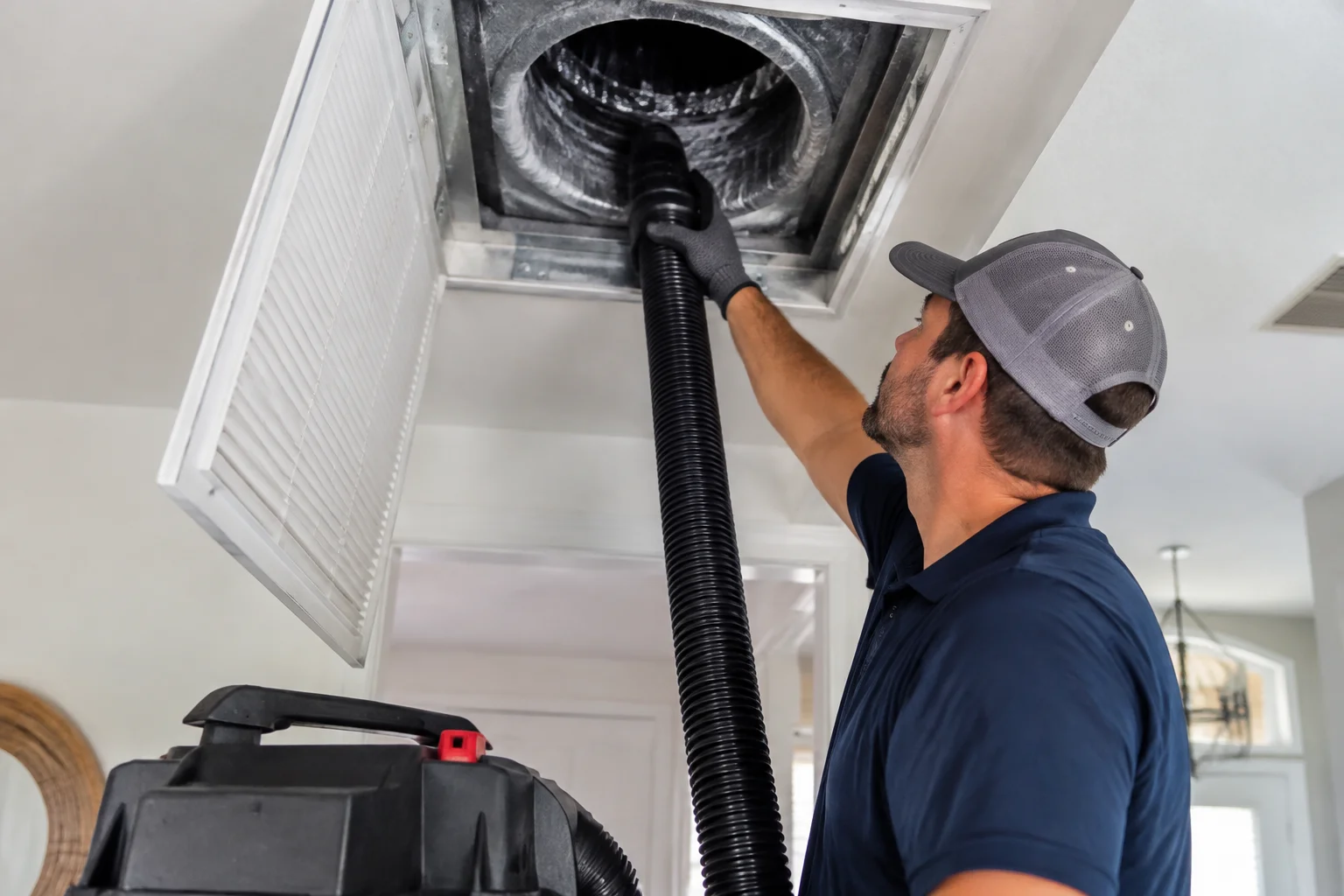
During inspection, technicians look for signs of restrictions such as damaged sections, collapsed flex duct, loose joints, or areas where airflow seems inconsistent. This is especially important in homes with multiple zones or rooms that feel consistently uncomfortable.
Leaks at seams, joints, and connections
Leaky ducts waste conditioned air. In a humid climate, that wasted air can also mean humid air is being pulled into the system, or conditioned air is escaping into spaces where it cannot help your home. Leaks can also contribute to higher energy use because the HVAC system must work longer to maintain the thermostat setting.
Inspection helps identify leak-prone areas around boots, takeoffs, transitions, and duct joints. If you have ever felt like your AC repair costs are tied to comfort complaints, duct leakage is one of the reasons that happens.
Condensate drainage concerns that affect performance
Air conditioning and heat pump systems remove moisture from indoor air. When condensate drainage is compromised, it can lead to water-related issues and comfort problems. While duct inspection is not the same as plumbing inspection, technicians often consider how moisture management interacts with airflow and system operation.
If condensate drainage is struggling, you may notice musty odors, recurring shutdowns, or inconsistent dehumidification. A professional HVAC service team can evaluate how the system handles condensate and how that relates to comfort and indoor air quality.
Indoor air quality impacts from duct contamination
Ducts can collect dust and debris from construction residue, normal household dust, and airflow patterns over time. When airflow is restricted, dust can remain suspended longer and build up faster. That can worsen allergies or respiratory irritation.
A duct inspection helps determine whether duct contamination is contributing to indoor air quality concerns. It also gives direction on whether the best next step is duct sealing, airflow correction, filter changes, or broader indoor air quality services. Homeowners searching for indoor air quality services near me often find that ducts are part of the story, not the whole story.
Comfort problems that often point back to ductwork
Some HVAC symptoms look like equipment failure but can be driven by duct issues. If you are dealing with any of the following, duct inspection can help you plan AC repair or heat pump service with better clarity.
Rooms that never feel right
If one bedroom stays warmer than the rest, or a living area never reaches the temperature you set on the thermostat, duct distribution may be uneven. Ductwork that is disconnected, partially blocked, or leaking near that room can cause the system to under-deliver conditioned air.
Airflow that feels weak at the registers
Weak airflow can come from multiple causes. Duct restrictions and leaks are common reasons. When airflow is restricted, the system may run longer to compensate, which increases energy use and can shorten equipment lifespan.
Humidity that persists during cooling season
In WaterColor, humidity control is a major comfort factor. Poor airflow, duct leaks into unconditioned areas, or airflow imbalance can reduce the system’s ability to maintain consistent moisture removal. Homeowners often respond by lowering the thermostat, but that can raise energy use without solving the root cause.
Dust and debris near vents
Visible dust near register openings can be a sign of duct leakage or contamination. Even small leaks can allow dust and particles to move through the system. If you are considering air duct service near me because of dust concerns, a duct inspection is the best starting point to understand where the issue is coming from.
How duct issues can raise energy use and strain refrigerant systems
It is tempting to think that comfort problems always mean a refrigerant system issue. Refrigerant systems are important, but duct problems can still create symptoms that look like equipment trouble. When airflow is restricted, the system may not absorb and move heat the way it should. That can increase runtime and stress components.
A professional inspection helps separate duct-related airflow problems from true refrigerant system performance concerns. This matters because the wrong assumption can lead to unnecessary repairs. Only an in-person evaluation can determine whether refrigerant performance is actually the limiting factor.
Thermostats and zoning: where duct inspection fits
Many WaterColor homeowners use modern thermostats to maintain comfort. Smart thermostats can improve control, but they cannot fix problems caused by duct leakage or restrictions. If airflow is uneven, a thermostat may show that the target temperature is reached while some rooms still feel uncomfortable.
That is why duct inspection pairs well with thermostat settings and zoning strategies. If you are considering upgrades like smart thermostats or you want better heating control, start with the airflow path. When airflow is corrected, thermostat control becomes more reliable.
Planning repairs without guesswork
Once duct inspection identifies the problem areas, homeowners can plan repairs logically. Depending on findings, recommendations may include duct sealing, ductwork repairs, airflow balancing, or adjustments to how air is distributed across rooms.
In some cases, duct sealing may help when leaks are localized. In other cases, damaged duct sections or disconnected runs may need repair or replacement. The right path depends on what the inspection finds in your home.
If you are searching for duct sealing near me or duct replacement near me, look for a service approach that begins with inspection and documentation. That reduces the risk of paying for work that does not address the actual comfort bottleneck.
Preventive HVAC maintenance that makes duct inspection more useful
Duct inspection is strongest when your HVAC system is maintained. Preventive maintenance helps ensure the air handler and heat pump or AC components are not creating additional airflow problems. It also helps keep filters and indoor air quality systems operating as intended.
If you want to get the most from an inspection, consider pairing it with preventive HVAC maintenance. For related guidance, read why preventive HVAC service matters for duct inspection in Miramar Beach homes and why better HVAC maintenance makes duct inspection more useful for Lynn Haven homes.
Why professional local HVAC service matters in Walton County
Local service teams understand what coastal Florida homes experience. In WaterColor and nearby areas in Walton County, ductwork may be exposed to humidity cycles, salt air effects, and the seasonal swing between heavy cooling and shoulder-season stress. A contractor who regularly services homes here will recognize patterns like:
- Airflow complaints that appear after humidity spikes
- Register and room discomfort that follows duct routing changes
- Wear and corrosion in areas exposed to coastal air
- Condensate-related comfort issues that overlap with airflow performance
It also matters because your HVAC system includes more than ducts. A complete comfort plan considers thermostats, blower operation, filter condition, and how the air conditioning cycle manages moisture. If duct inspection suggests a related HVAC repair, you want a team that can evaluate the full system safely and accurately.
If you are currently dealing with HVAC repair near me or AC repair near me, duct inspection can help you communicate the comfort issue clearly. It can also help technicians target the right work first, which is especially important during peak cooling demand when emergency cooling concerns are more likely.
When duct inspection should be on your seasonal checklist
Even if your system is still cooling, duct inspection can prevent future problems. Consider scheduling inspection when:
- You notice uneven cooling or airflow changes during the hottest weeks
- You recently moved into a WaterColor home and want to understand how the system is performing
- You are planning a larger comfort upgrade, like new HVAC equipment or major interior changes
- Indoor air quality concerns are increasing, such as dust buildup or allergy flare-ups
- You hear changes in airflow or system operation that suggest imbalance
If your home has seasonal HVAC stress, duct inspection becomes even more valuable. For a similar local perspective, see why duct inspection matters more in Callaway homes facing seasonal HVAC stress.
Emergency cooling concerns and the role of airflow
No one plans for a breakdown during the hottest days. When an AC or heat pump fails, it becomes an emergency cooling concern. Duct problems may not be the only cause, but they can contribute to system stress and longer runtimes leading up to a failure.
Preventive steps, including duct inspection and preventive HVAC maintenance, help reduce surprises. If you need help during an urgent period, contact an HVAC service provider for evaluation. Avoid attempts to diagnose refrigerant system problems or electrical issues yourself. Those require professional tools and safe procedures.
Related services that support better airflow and comfort
Duct inspection often pairs with other comfort-focused HVAC services. Depending on your needs, you may also benefit from:
- Smart thermostat installation to improve temperature control once airflow is corrected: Smart Thermostats
- Heating control systems for more consistent performance in cooler months: Heating Control Systems
- Commercial HVAC repair if you manage office or rental properties nearby: Commercial HVAC Repair
If your long-term plan includes system replacement, duct inspection can still be part of the planning. New HVAC equipment will not perform as intended if ductwork is severely leaking or restricted. Homeowners searching for HVAC replacement near me often find it useful to confirm airflow conditions first.
How to prepare for a duct inspection appointment
You can make your appointment more productive by gathering a few details beforehand:
- List rooms that feel warm or cool compared to the rest of the house
- Note when the problem started, such as after seasonal changes or after filter changes
- Share any indoor air quality concerns, like dust buildup or musty odors
- Bring up any thermostat behavior you have noticed, such as frequent cycling
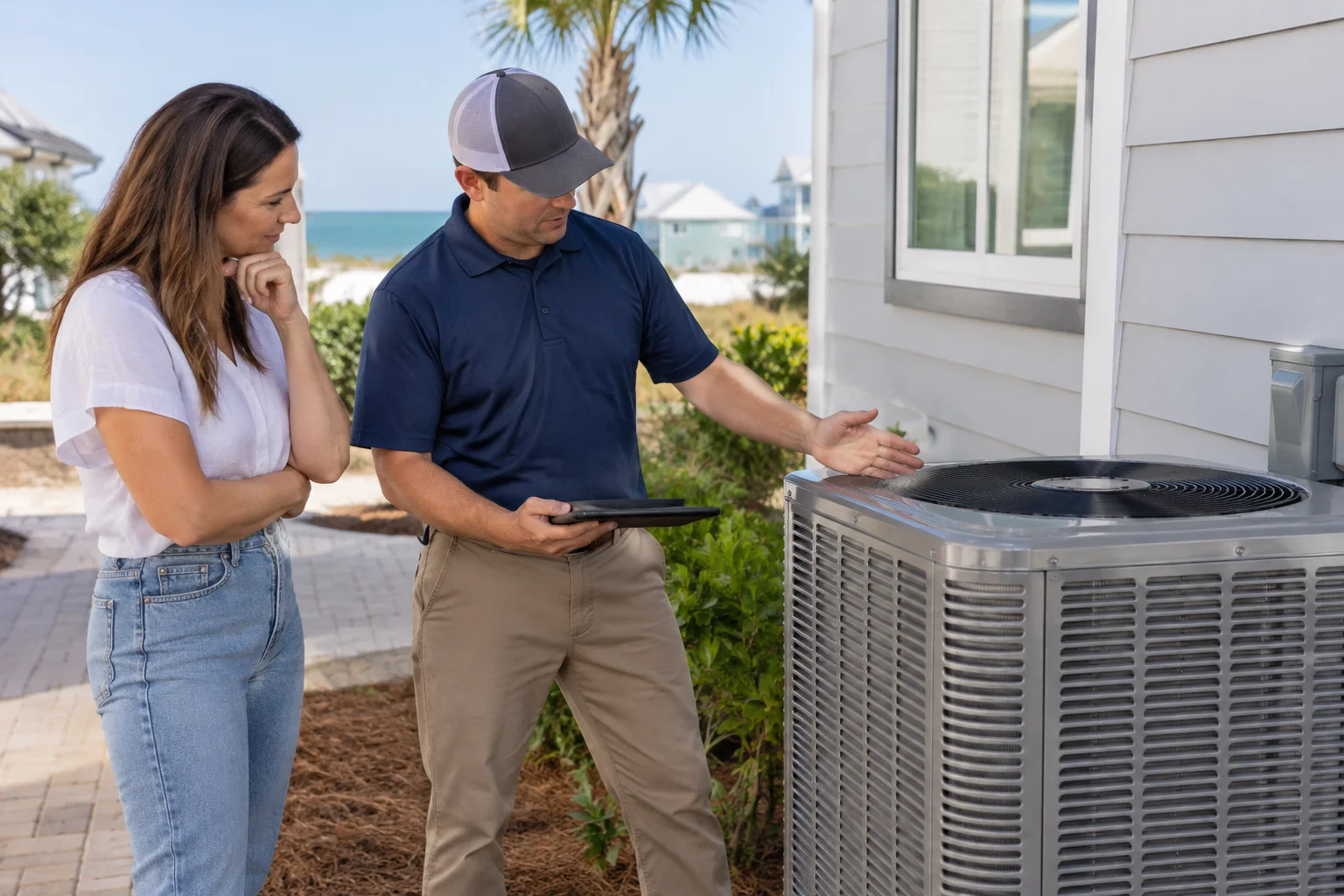
During the visit, a technician will inspect ductwork pathways and evaluate how the system delivers air. The goal is to identify airflow and indoor air quality issues that can affect comfort, energy use, and system reliability.
For homeowners in WaterColor, you can schedule duct inspection through A Superior Mechanical’s duct inspection service. If you want to explore broader HVAC services across the area, visit the WaterColor service area page or the Walton County service area page.
Find Duct Inspection in WaterColor, FL
If you need Duct Inspection in WaterColor, FL, visit our local service page or contact A Superior Mechanical today.
Map of WaterColor, FL
Frequently Asked Questions
How does duct inspection help with uneven cooling in a WaterColor home?
Duct inspection identifies airflow restrictions and leaks that prevent the right amount of conditioned air from reaching specific rooms. Fixing those duct issues can improve comfort without relying on thermostat changes alone.
Can duct problems affect indoor air quality and allergies?
Yes. Leaky or poorly performing ductwork can move dust and debris through the system and reduce effective filtration. A duct inspection helps determine whether duct-related contamination or airflow imbalance is contributing to indoor air quality concerns.
Will duct inspection replace the need for HVAC maintenance?
No. Duct inspection and preventive HVAC maintenance work together. Maintenance supports proper airflow at the equipment level, while duct inspection focuses on how air travels through ductwork to your living spaces.
What should I do if I suspect my AC is failing but the vents feel weak?
Weak vents can be caused by duct leaks or restrictions, but it can also involve equipment or airflow components. A professional evaluation is the safest way to separate duct-related issues from refrigerant system performance concerns.
Is duct sealing always better than duct replacement?
Not always. Sealing can help when leaks are localized and ductwork is otherwise in good condition. If duct sections are damaged, disconnected, or collapsed, repair or replacement may be necessary. The recommendation should follow an in-person duct inspection.
Related Articles
- Why Commercial HVAC Systems Struggle in WaterColor Homes and How to Stay Ahead of It
- Why Preventive HVAC Service Matters for Duct Inspection in Miramar Beach Homes
- Why Better HVAC Maintenance Makes Duct Inspection More Useful for Lynn Haven Homes
- Why Duct Inspection Matters More in Callaway Homes Facing Seasonal HVAC Stress
Photo Gallery