Adding an EV charger is one of the clearest signs a Fort Walton Beach home is keeping up with modern power needs. It is also one of the fastest ways to expose weak points in a panel, breaker, outlet, or older wiring that has been carrying more load than it should. In a coastal city where humidity, salt air, storms, and older housing stock all affect electrical systems, safe planning matters just as much as the charger itself.
For homeowners comparing options for EV charger installation in Fort Walton Beach, FL, the real job is bigger than mounting a unit on the wall. The system has to support dedicated charging demand, proper grounding, GFCI protection where required, and a panel that can handle the added load without overheating. If those parts are already stressed, the charger can turn a small issue into a fire risk.
That is why local electrical service matters. A charger installation often reveals whether a home needs breaker repair, outlet repair, panel upgrades, or wiring repair before the work can safely move forward. In some cases, it also uncovers code corrections that should be handled before the charger is energized. Homeowners searching for an electrician near me or an electrical contractor near me usually need more than one fix, especially in homes built before today’s power demands were common.
Why EV charging puts older electrical systems under pressure
EV chargers draw a steady, high load for long periods. That is different from a toaster, microwave, or other short burst appliance. A Level 2 charger can run for hours, which means the panel, feeder, conductors, and breaker all need to be in good condition. If a home already has flickering lights, warm outlets, tripping breakers, or a panel that feels crowded, those clues should not be ignored.
In Fort Walton Beach, older homes and remodels often have a mix of original wiring and later additions. That can mean one branch circuit serves too many rooms, a garage outlet was added without enough capacity, or a previous owner made a quick fix that does not hold up under new demand. When a homeowner starts looking into electrical panel upgrade near me or electrical repair near me, the charger project often becomes the reason the problem finally gets found.
Even newer homes can have limitations. Additions, detached garages, workshops, upgraded kitchens, and pool equipment can all reduce the spare capacity needed for an EV charger. If the service panel is near its limit, a dedicated circuit or panel upgrade may be the safer path.
Safety clues electricians look for before installing a charger
Breaker trips and warm equipment
A breaker that trips during normal use is not just annoying. It can point to an overloaded circuit, a failing breaker, or a wiring issue that needs attention. Heat around a breaker, panel cover, or outlet is another warning sign. Those conditions can worsen quickly once an EV charger is added. If a homeowner has already searched for circuit breaker repair near me, the panel should be inspected before charging equipment is installed.
Flickering or dimming lights
Lights that dim when large appliances start can mean the system is struggling to balance load. In some homes, the issue is simple and localized. In others, it suggests loose connections, aging conductors, or a panel that is not distributing power well. A charger installation should not be used to mask those symptoms. If the home already needs electrical safety attention in the details, the charger project is a good time to address it.
Outlets that feel loose or discolored
Discoloration, scorch marks, or loose receptacles can indicate heat buildup or worn connections. That matters for any load, but especially for charging equipment or a nearby outlet used with adapters and accessories. An outlet repair near me search may point to a bigger issue with the circuit, not just the receptacle itself. In some homes, the fix involves upgrading the outlet type, improving grounding, or correcting the wiring behind the wall.
Panels with no room for a dedicated circuit
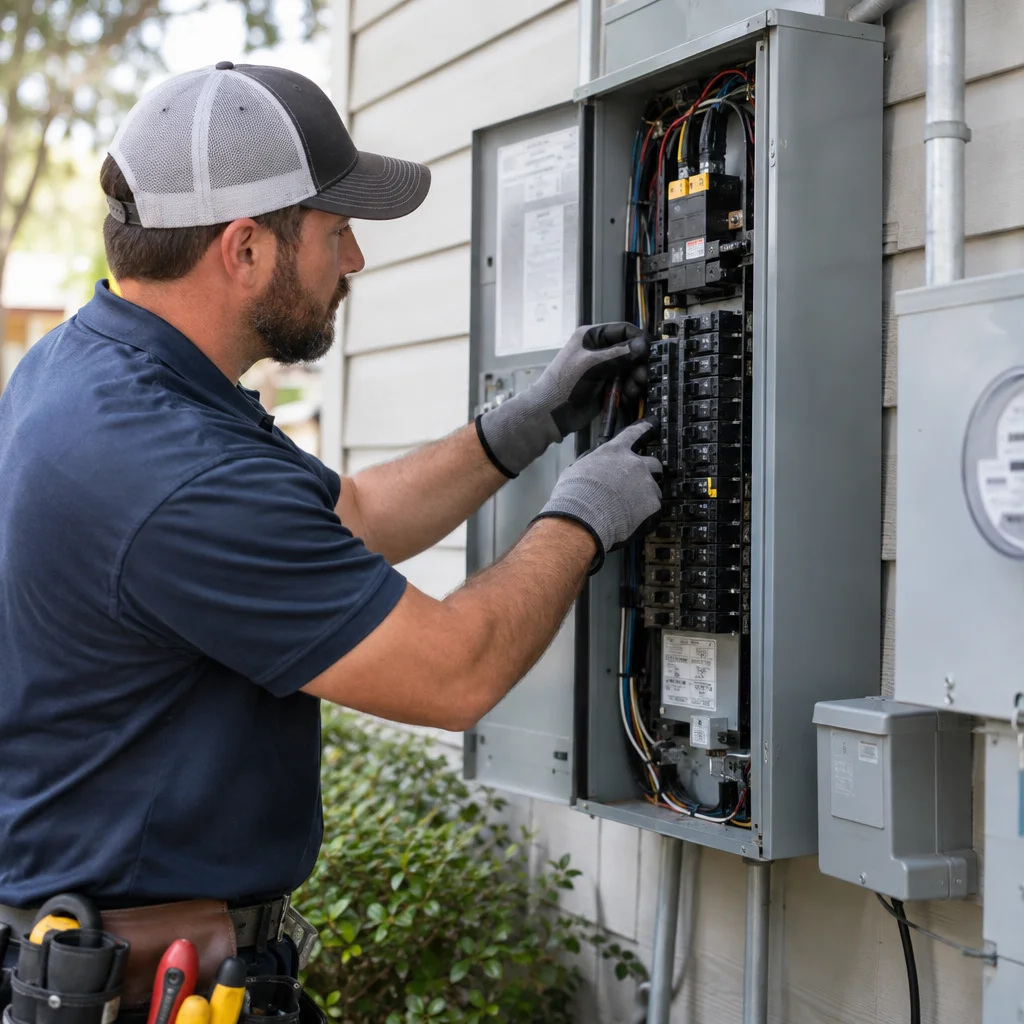
Many EV chargers need a dedicated circuit. If the panel has no open spaces, or if the existing layout is already crowded with tandem breakers and older equipment, the installation may call for an electrical panel and upgrades service. That is especially common in homes that have had additions, kitchen remodels, or garage conversions. A panel that looks full is not always unsafe, but it does need a professional load calculation before new charging equipment is added.
Fire risk prevention starts with the right electrical foundation
Fire prevention is one of the biggest reasons EV charger installation should be handled by a licensed electrician. The charger itself may be modern, but it still depends on older parts of the home working correctly. Loose neutral connections, undersized conductors, poor grounding, and aging breakers can all create heat. In a humid coastal environment, corrosion can make those problems worse over time.
Homes near the water or exposed to storm-driven moisture may also need extra attention to surge protection. Lightning and utility fluctuations are common concerns in Okaloosa County, especially during severe weather season. A whole-home surge protector can help protect the EV charger, panel, appliances, smart devices, and electronics. For many homeowners, it is a smart addition during a charger project.
If storm damage or a recent outage has already stressed the system, it may be wise to schedule an inspection before charging equipment is installed. A power outage electrician near me search often leads to repairs that should be completed before the next high-demand appliance goes online. That same logic applies to EV chargers.
What a safe charger installation usually includes
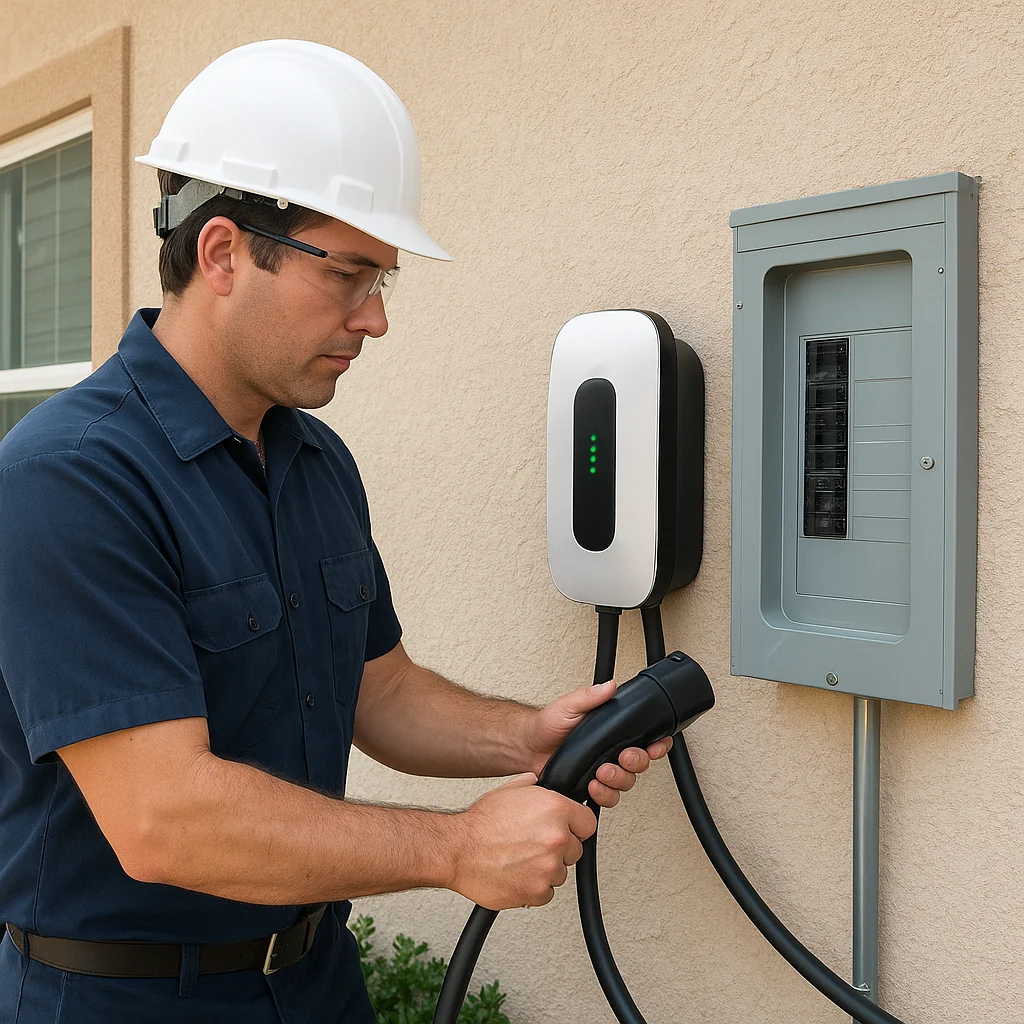
A proper installation starts with an assessment of the existing electrical service. That includes the panel rating, available capacity, breaker condition, circuit layout, grounding, and the route the wiring will take to the charger location. The electrician also checks whether the installation needs GFCI protection, weather-rated equipment, or conduit suited to the location.
In garages, carports, and exterior walls, moisture resistance matters. Fort Walton Beach homes deal with salt air, rain, and humidity that can wear on metal parts and connections. If the charger is installed outdoors, the enclosure, fittings, and wiring method must be selected for that environment. A shortcut here can lead to corrosion, nuisance tripping, or a damaged charger later.
Some homes also benefit from related electrical work during the same visit. That may include outlets and switches updates, indoor lighting installation, or smart home integration for energy monitoring and charger scheduling. If the garage or driveway area needs better visibility, lighting installation can make charging safer at night.
Local homes, local weather, and why the details matter
Fort Walton Beach has a mix of older neighborhoods, updated rentals, coastal cottages, and newer construction. That variety means no two charger projects are exactly alike. A home near the beach may have more corrosion concerns. A remodeled home may have added circuits that were not planned for current demand. A newer home might still need a load adjustment if the owner is adding an EV, a hot tub, a workshop, or other high-use equipment.
Storm season adds another layer. Power surges, outages, and utility fluctuations can stress breakers and sensitive electronics. If a home already has signs of aging wiring, it may be worth discussing electrical panel and upgrades before the charger is installed. In some cases, homeowners asking about house rewiring near me or old wiring replacement near me are really trying to solve the same problem: the home needs a stronger electrical foundation before modern loads can be added safely.
For properties in Okaloosa County, local code compliance also matters. Permits, proper circuit sizing, grounding, and inspection requirements help make sure the charger is not just convenient, but safe. A charger installed without the right electrical support can create repeated breaker trips, overheated conductors, or damage to the charging equipment itself.
Repair planning before and after the installation
Sometimes the smartest move is to repair first, install second. If the panel has corrosion, the breaker is failing, or the wiring shows signs of age, those issues should be corrected before the charger goes in. In homes with aluminum branch wiring, mixed wiring methods, or evidence of previous DIY work, the inspection may uncover more than expected. Homeowners searching for aluminum wiring repair near me or electrical wiring repair near me often need this kind of diagnostic approach.
After installation, maintenance still matters. Chargers should be checked for secure mounting, clean connections, and proper operation. The breaker should be labeled clearly. The circuit should remain dedicated to the charger unless the electrician designed it for another approved load. If the home later adds a generator, pool equipment, or a major remodel, the electrical system should be reviewed again so the charger still fits the overall load plan.
For households that want backup power planning too, generator installation near me searches often come up during the same conversation as charger installation. A generator does not replace EV charging, but it can support critical loads during outages if the system is designed correctly.
When an electrician should take a closer look
Call a licensed electrician if the panel is full, breakers trip, outlets are damaged, lights flicker, or the charger location is exposed to moisture or storm damage. It is also smart to schedule an inspection if the home is older, has a history of repairs, or has not been evaluated in years. A local electrician near me search should lead to someone who understands both the charger requirements and the condition of the existing electrical system.
For homeowners in Fort Walton Beach, the safest installations are the ones that account for the whole house, not just the charger. That means checking the panel, confirming grounding, verifying dedicated circuits, and making sure the wiring can handle the load long term. If the project also involves code corrections, smoke detector installation, or emergency electrical concerns, those should be handled in the same visit whenever possible.
A Superior Mechanical helps homeowners, rentals, and businesses across the area with Fort Walton Beach electrical service that is built around safety and code compliance. Whether the project is a charger, panel repair, outlet upgrade, or a broader inspection across Okaloosa County, the goal is the same: make sure the system is ready for the demand it actually carries.
For a home that is adding EV charging, that readiness is what keeps convenience from turning into a fire risk.
Find EV Charger Installation in Fort Walton Beach, FL
If you need EV Charger Installation in Fort Walton Beach, FL, visit our local service page or contact A Superior Mechanical today.
Map of Fort Walton Beach, FL
Frequently Asked Questions
Do I need a dedicated circuit for EV charger installation?
In most homes, yes. A Level 2 EV charger typically needs a dedicated circuit sized for the charger and the home's electrical capacity. A licensed electrician will confirm the right breaker, wire size, and protection before installation.
Can an older Fort Walton Beach home support a home EV charger?
Often it can, but older homes may need panel upgrades, breaker repairs, grounding corrections, or wiring repairs first. A load calculation and inspection will show whether the system can safely handle the added demand.
Why does my breaker trip when I try to charge my EV?
A tripping breaker can point to an overloaded circuit, a failing breaker, undersized wiring, or a panel that is already near capacity. The charger should not be forced onto a weak circuit without a professional evaluation.
Is surge protection a good idea with an EV charger?
Yes. Fort Walton Beach homes deal with storms, outages, and utility fluctuations that can damage chargers and other electronics. Whole-home surge protection can help reduce that risk.
Related Articles
Photo Gallery