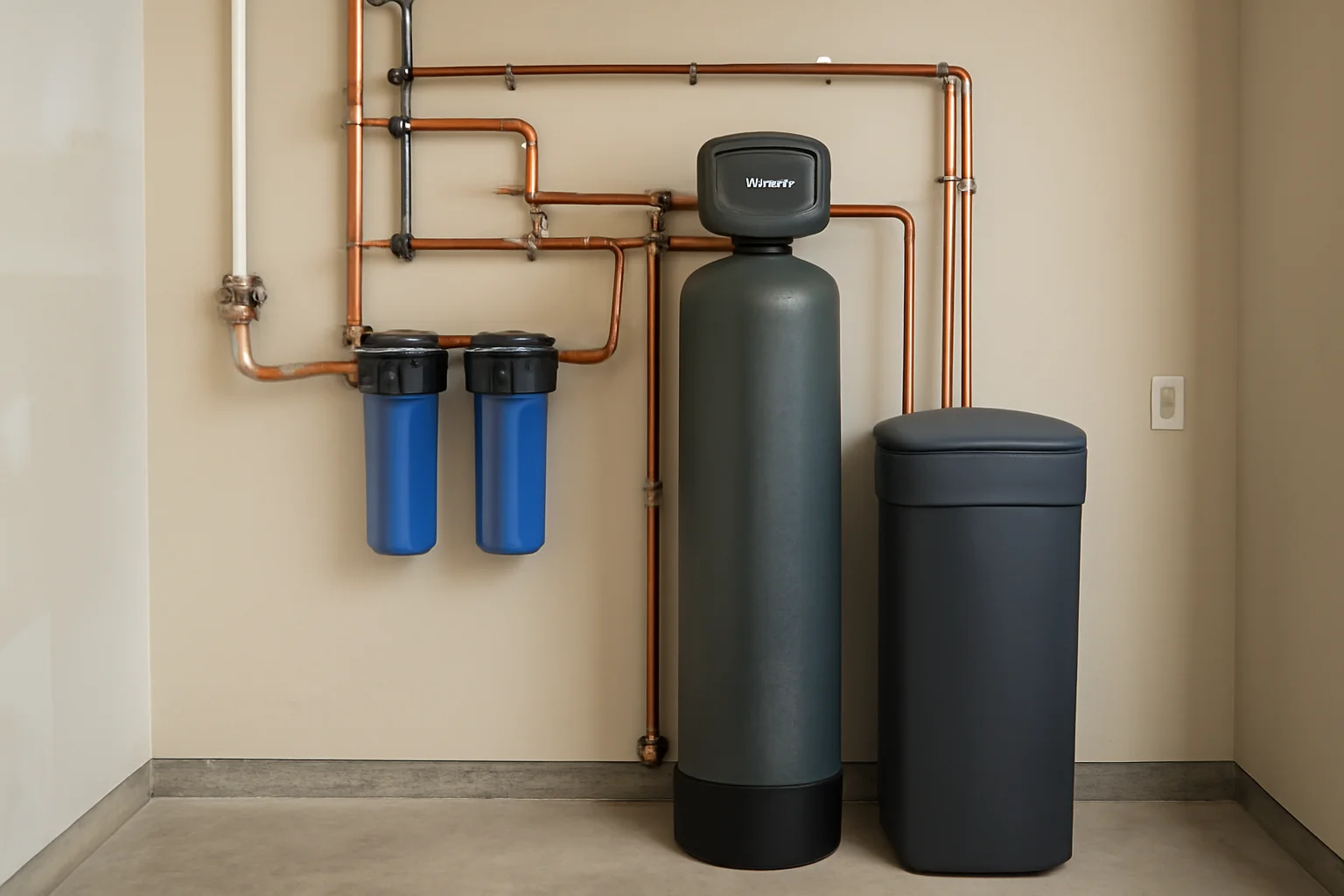
Fort Walton Beach homes often see big swings in water use through the year. Summers bring more showers, more laundry, and heavier outdoor watering. Winters can be quieter, with fewer occupants or shorter routines. That seasonal rhythm is normal, but it can also stress water softening systems and lead to noticeable water quality problems when you least expect them.
This matters because a properly working water softener is not just about comfort. It helps prevent scale buildup around faucets, showerheads, and plumbing, supports cleaner laundry, and can make bathing feel better. When the system is pushed out of balance, you may see hard water spots on glass, soap that does not lather, or dry skin and dull hair after bathing.
Why Fort Walton Beach seasonal water use can change how your softener performs
Water softeners work by exchanging hardness minerals, like calcium and magnesium, for sodium or potassium. To do that reliably, the system must have the right salt level, the right settings, and enough capacity to handle your household’s demand. Seasonal changes can affect all three.
In Fort Walton Beach, families often increase indoor water use during peak months. More showers, dishwashing, and laundry means more hardness minerals are being treated. If the softener is not regenerated often enough, or if it is not sized for your maximum demand, hardness can slip through. That is when scale starts showing up and water begins to taste or feel different.
Seasonal use can also create a “recovery gap.” If your household used to run the system heavily and then slows down, the softener may regenerate less frequently. While that can be fine, it can also lead to salt bridging or uneven salt dissolution if the system sits with low consumption for long periods. Those issues can reduce softening performance even when water use picks back up.
Common water quality problems homeowners notice after seasonal shifts
When water softening becomes inconsistent, the symptoms tend to show up in everyday places: the kitchen, the shower, the laundry room, and around plumbing fixtures.
Hard water spots and scale buildup around faucets and showerheads
One of the clearest signs is hard water spots on glass and cloudy or spotted dishes. You might also see scale buildup around faucets, showerheads, and the edges of sinks. Scale can form faster when the softener is not keeping up with demand during high-use weeks.
Over time, scale can also reduce water flow and make cleaning feel like a constant job. That is especially noticeable in homes where the family cooks and drinks filtered water, yet the rest of the home still sees hard water impacts on fixtures and appliances.
Soap that does not lather or rinse well
Hard water makes soap less effective. If you notice that soap does not lather, shampoo feels like it leaves residue, or laundry does not rinse clean, it can be a softening issue rather than a product problem. You may also see that towels feel stiff or that cleaning solutions require extra effort.
Dry skin or dull hair after bathing
Many homeowners describe dry skin or dull hair after bathing when hardness is not being controlled. Even if you use conditioner and moisturizer, softened water helps reduce the mineral film that can cling to skin and hair. During seasonal spikes, that comfort can disappear quickly if the softener is struggling.
Metallic, chlorinated, or unpleasant taste in drinking and cooking water
Some water quality issues are not only about hardness. If you notice a metallic, chlorinated, or unpleasant taste, it may indicate that your home water treatment strategy needs attention. A water softener can help with mineral scale, but it does not remove every taste and odor compound.
Many Fort Walton Beach homeowners also add whole home water filtration or a dedicated reverse osmosis drinking water system for better drinking water and better cooking water. If your coffee tastes off or your ice looks cloudy, that is a cue to evaluate the full clean water system, not just the softener.
Cloudy ice cubes and sediment concerns
Cloudy ice cubes can happen when water has air, fine particles, or mineral and treatment byproducts that affect clarity. You may also notice visible sediment, discoloration, and odor concerns at times, especially after changes in water use patterns or when other filters need maintenance.
Poor tasting coffee and cooking water
Kitchen routines are where water quality becomes obvious. If you are making coffee every morning and the flavor is not consistent, it could be related to mineral content, chlorine taste in water, or filtration that is past its ideal service window. Homeowners searching for water filtration near me often start here because the problem is easy to notice.
Even if you have a softener, scale and mineral buildup can still affect appliances. And if you do not have additional filtration, taste and odor can still reach your glass.
Appliances wearing out faster
Scale buildup does not just affect sinks and showerheads. It can reduce efficiency and shorten the life of water-using appliances. Homeowners often notice that water heaters, dishwashers, and other equipment seem to wear out faster when water is not properly softened. During seasonal peaks, the softener may be under more stress, and scale can build more quickly.
Seasonal stress points that can cause softener problems
Water softening systems are designed to work continuously, but they are not “set and forget” forever. Seasonal use can expose weak spots.
Salt level and salt bridging during low-use months
When households use less water, the softener may regenerate less often. If salt is allowed to bridge or form a hard crust, water can flow around it instead of dissolving it properly. That leads to low brine production and poor softening performance.
Salt bridging is especially common when salt is not checked regularly during times when the home sits at lower demand. When summer comes and everyone starts showering and doing laundry more, the system may not be ready.
Regeneration timing and settings that do not match real demand
Many systems can be set to regenerate based on time or usage. If the settings were correct for one season but not the next, you can get inconsistent results. A household that has seasonal visitors, a beach schedule, or changing occupancy can create demand patterns that differ from the original estimate.
If your system is regenerating too infrequently during peak use, hardness can slip through. If it regenerates too often, it may waste salt and water, and performance can still be uneven if other components are worn.
Clogging or wear in internal components
Over time, components such as valves, seals, and screens can wear. Sediment in household water can contribute to issues. If you also have a filtration system, maintenance intervals matter. If you do not, fine particles can move through and affect softener performance.
That is one reason homeowners who notice visible sediment, discoloration, and odor concerns should consider a full water treatment review. Clean water systems often work best as a coordinated setup rather than separate, disconnected devices.
Water chemistry changes and the role of local conditions
Fort Walton Beach homes are in a coastal region where water chemistry and source characteristics can vary. Even when changes are subtle, they can influence how quickly hardness minerals form scale, how filters perform, and how taste and odor show up. Seasonal changes in household demand then magnify those effects.
Because of that, local water treatment service matters. A technician who understands common Fort Walton Beach patterns can help you tune regeneration, check brine draw, and evaluate whether you need additional filtration beyond softening.
How to protect water quality during peak seasons
Good maintenance can prevent most seasonal surprises. Here are practical steps homeowners can take.
Check salt and keep an eye on the brine tank
Make sure you maintain adequate salt levels and use the recommended type for your system. If your softener sits with low use, inspect periodically for crusting or bridging. If you see salt that looks solid or unevenly dissolved, that can be an early warning that the system is not regenerating effectively.
Watch for “early tells” before the problem gets expensive
Small changes are easier to fix than full scale removal. Look for:
- More hard water spots on glass and dishes
- Scale buildup around faucets and showerheads
- Soap that does not lather or rinse well
- Dry skin or dull hair after bathing
- Cloudy ice cubes or changes in taste
If you catch these early, you can address settings, maintenance, or capacity before appliances begin to suffer.
Consider whole home water filtration for taste, odor, and particle control
Softening alone focuses on hardness. If you are dealing with chlorine taste in water, sediment in household water, or cloudy ice cubes, whole home water filtration can help. Many homeowners choose a whole house filter to protect fixtures and improve water quality throughout the home.
For Fort Walton Beach families, that can mean better drinking water at multiple taps, improved cooking water, and fewer surprises when guests arrive for summer weekends.
If you are searching for clean water systems near me or whole home water filtration near me, it is worth asking whether filtration should come before softening, after softening, or as a staged approach.
Add reverse osmosis for drinking and cooking water
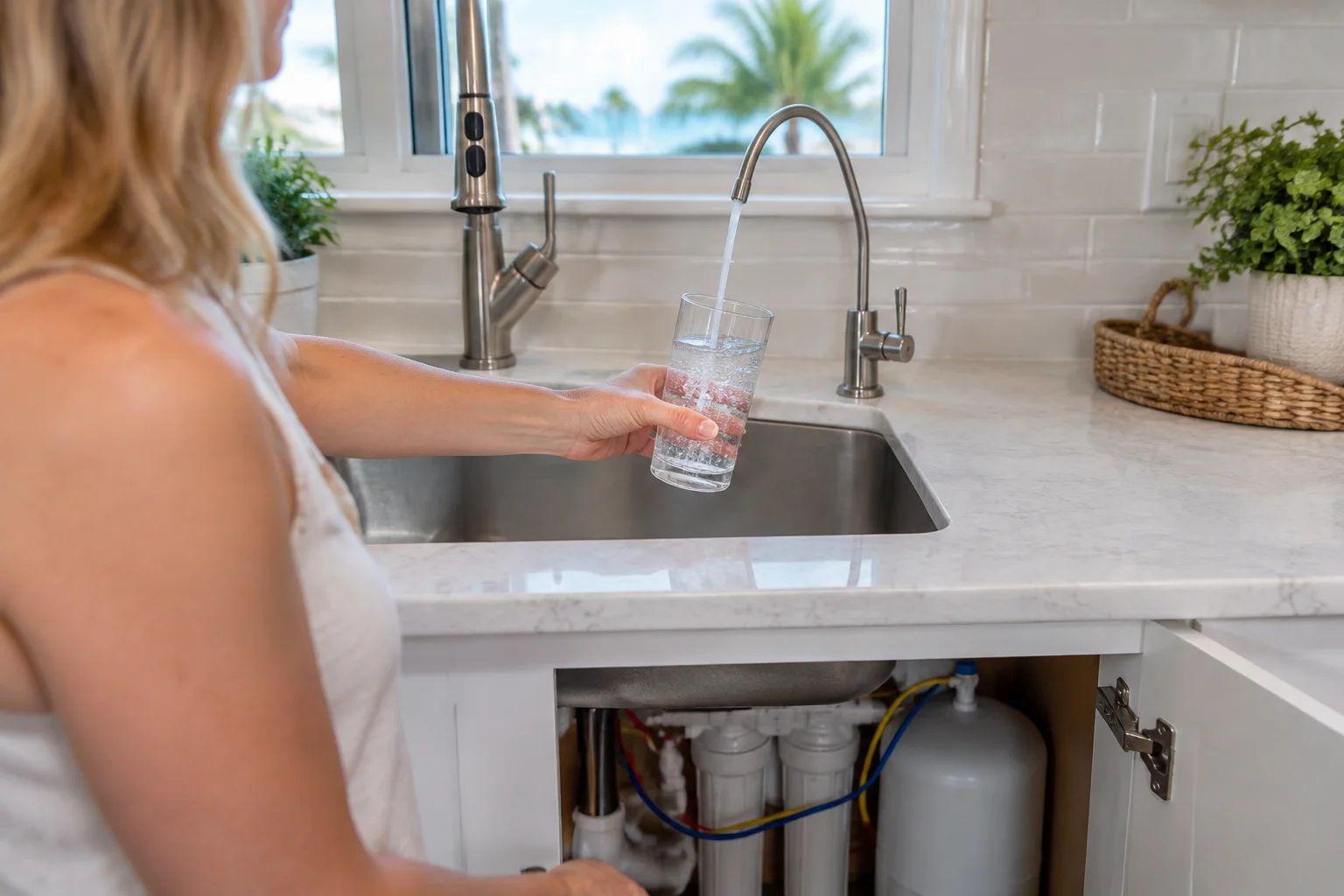
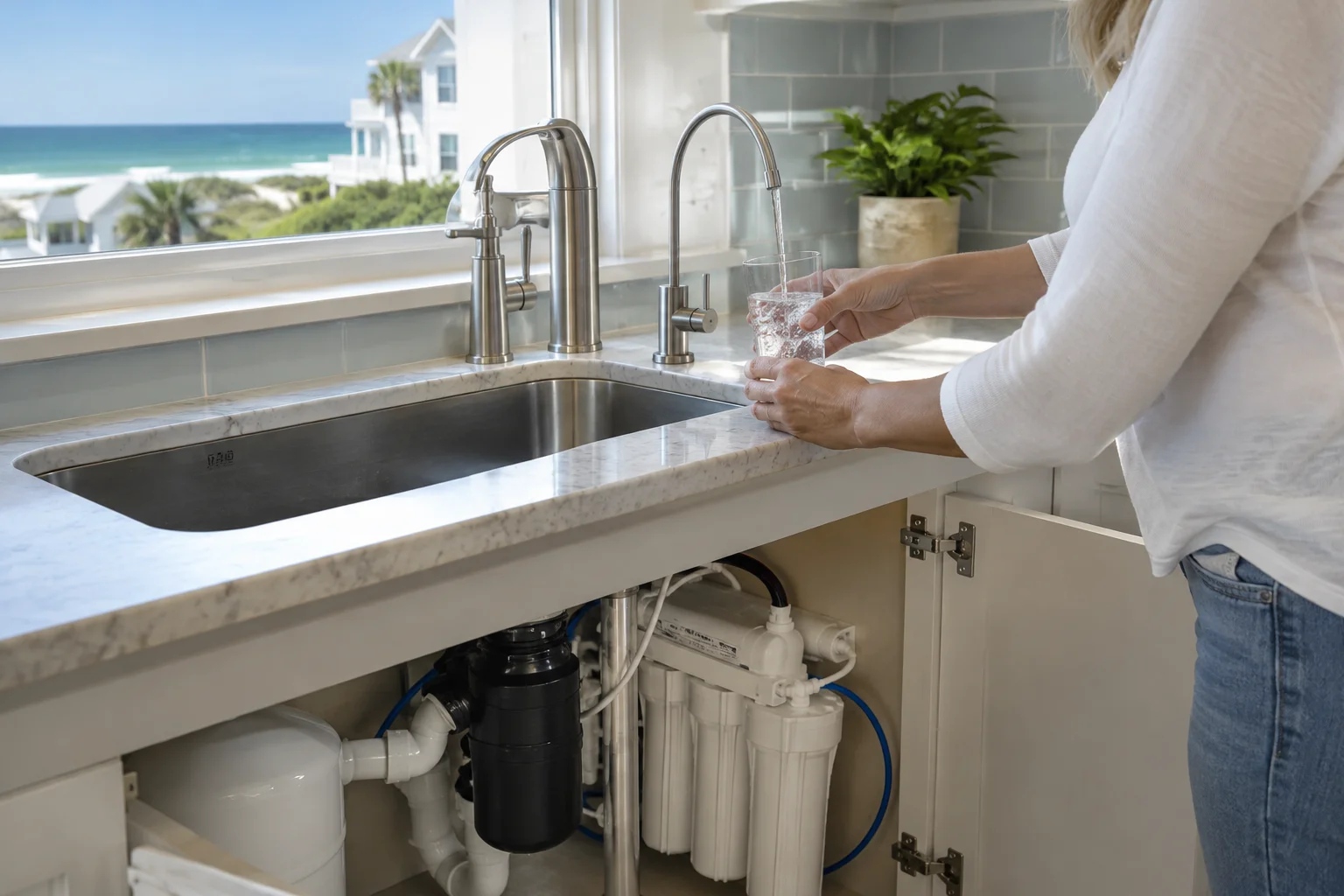
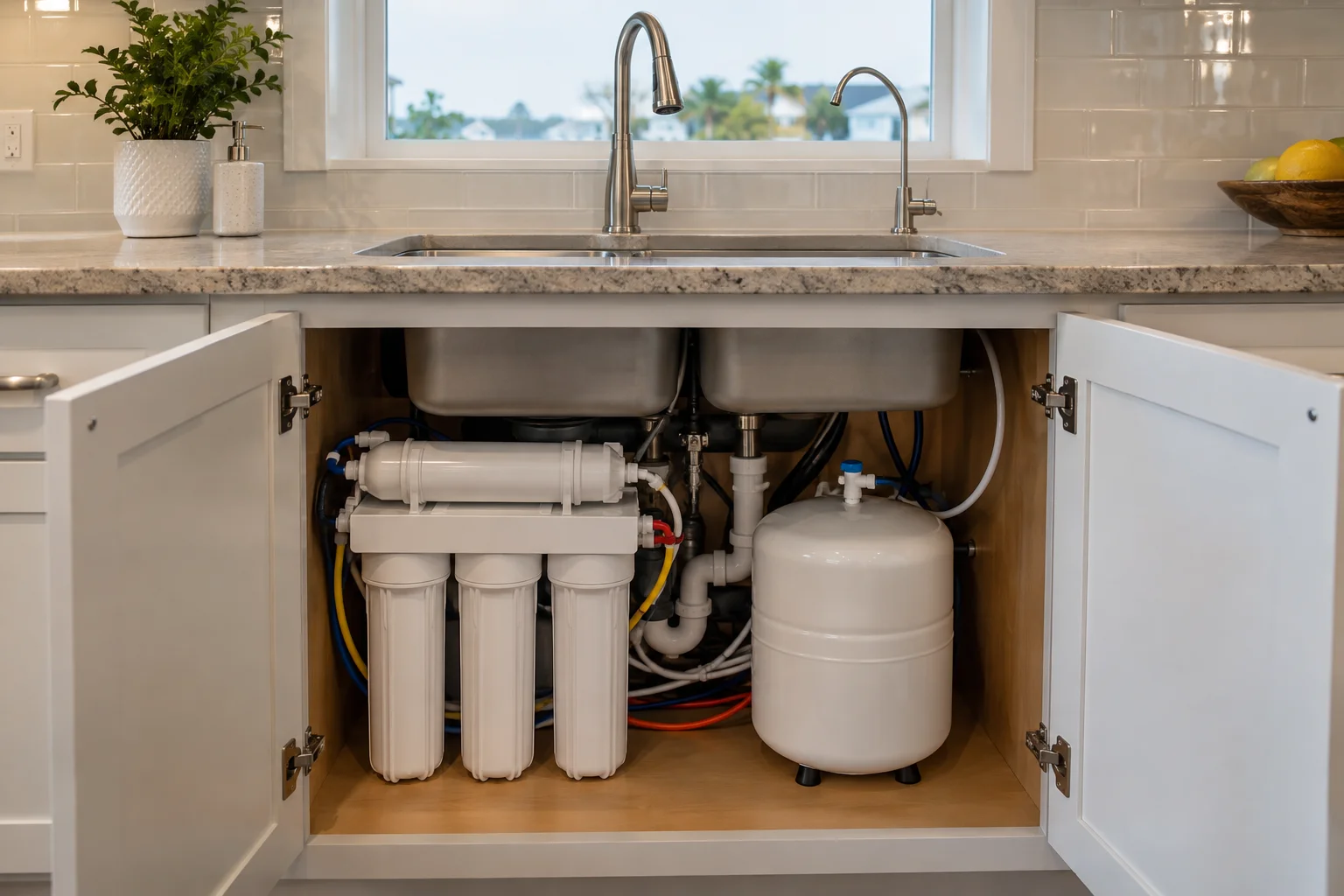
If your biggest concerns are taste, odor, and clarity for drinking water, a reverse osmosis system can be a strong option. Many homes pair softening with reverse osmosis for the kitchen. That way, you get reduced scale impacts throughout the plumbing, while the drinking water is cleaner and more consistent.
Homeowners searching for reverse osmosis installation near me often want reliable results for coffee, ice, and everyday drinking. If you notice poor tasting coffee and cooking water, reverse osmosis plus properly maintained filtration can make a noticeable difference.
Use reliable brands and system sizing that matches your household
System performance depends on correct sizing. If your softener is undersized for peak demand, you will see issues during high-use months even if the system works fine in winter.
A Superior Mechanical installs professional water softener installation in Fort Walton Beach, FL with Evolve and A. O. Smith systems for homes and light commercial properties across Okaloosa County. If you are evaluating options for water softener installation near me, ask about sizing for your plumbing layout and your seasonal water use patterns.
For additional filtration, AO Smith water filtration solutions may be part of the best fit for your goals. Pairing the right equipment can help you move from “it seems better” to consistently better water.
What to do if you suspect your softener is struggling right now
If you are seeing symptoms this season, do not just keep cleaning harder. A water softening system can often be repaired, adjusted, or serviced to restore performance.
Start with a quick household check:
- Are hard water spots increasing on glass and dishes?
- Is the shower feeling harsher or leaving skin dry?
- Do you notice soap that does not lather or rinse well?
- Has coffee taste or ice clarity changed?
- Do you see scale buildup around faucets and showerheads?
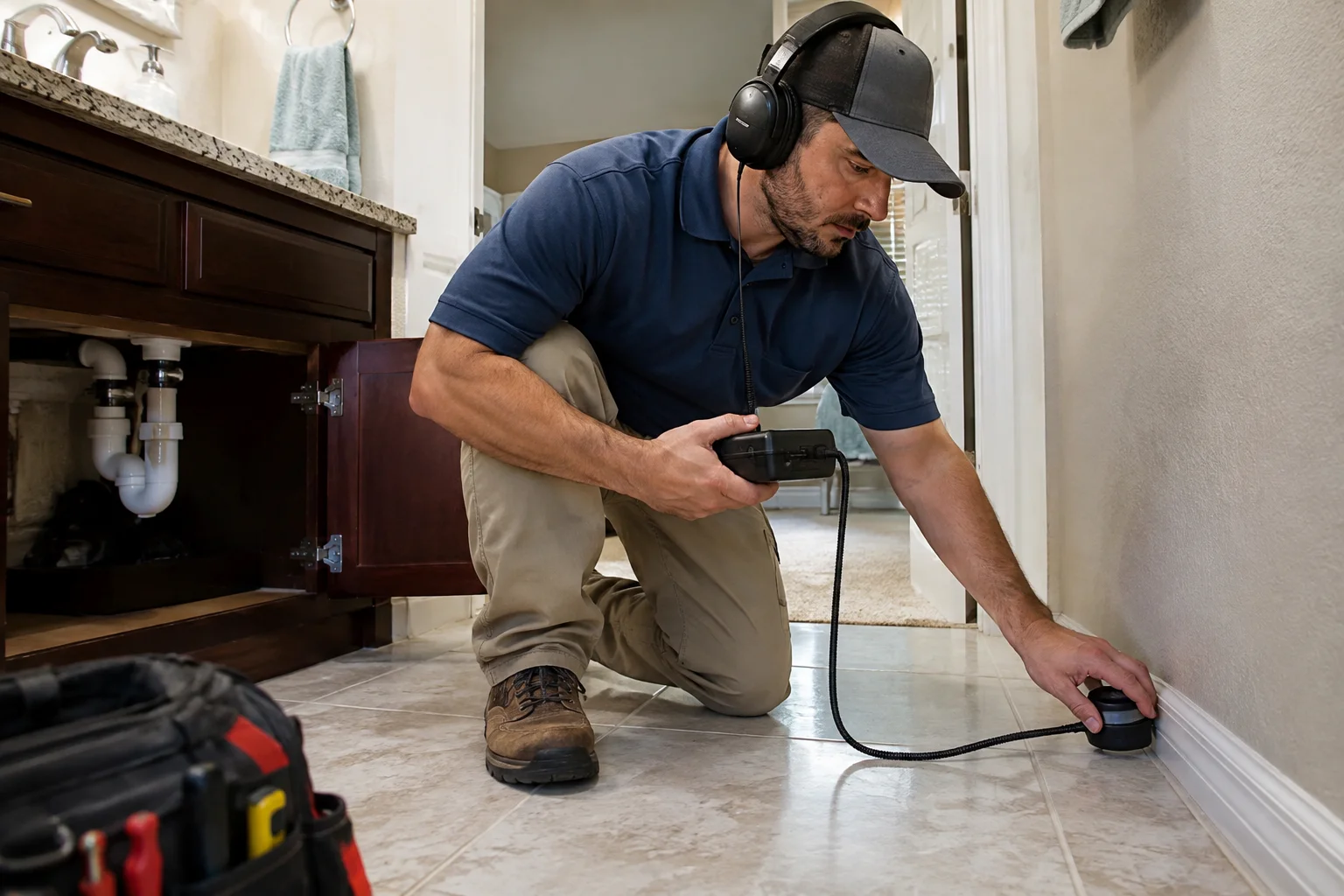
Next, schedule a water treatment assessment. A technician can test water hardness, inspect the brine tank and salt behavior, review regeneration settings, and check for internal component wear. If taste and odor concerns are present, they may also recommend a filtration upgrade or coordination with a reverse osmosis system.
If you want to focus specifically on softening performance, you can explore our dedicated service page here: water softening systems in Fort Walton Beach. For a bigger picture on how softening fits with other clean water systems, visit our water filtration and reverse osmosis options. If you want local context across the area, see our Fort Walton Beach service area and Okaloosa County.
Everyday examples from Fort Walton Beach homes
Water quality is not abstract. It shows up in scenes that families recognize instantly.
Morning coffee and the kitchen routine
Picture a typical weekday morning. Someone fills the kettle, drops in coffee grounds, and expects a familiar taste. If the water is not being properly treated, you might notice poor tasting coffee water or a lingering chlorine taste in water. If you also see cloudy ice cubes, it can make the whole beverage routine feel off.
A coordinated approach often helps. Softening can reduce scale impacts on plumbing and reduce buildup that affects flow. Whole home filtration can improve taste and odor at multiple taps. Reverse osmosis can deliver cleaner drinking and cooking water where it matters most.
After-work showers and family skin comfort
After a busy day, showers are where you feel the difference. Dry skin or dull hair after bathing can be linked to hardness minerals and residue. When seasonal use ramps up, softeners can struggle if regeneration timing or salt behavior is off. That is when soap does not lather, rinsing feels incomplete, and skin feels tight.
Fixing softener performance can improve comfort quickly, and adding appropriate filtration can further support better water quality for the whole home.
Laundry loads and how fixtures look after cleaning
When you run more laundry in summer, you learn fast whether water is soft. If clothes feel rough or towels do not rinse clean, it is often because soap is not working as expected. You may also notice more scale buildup around faucets and showerheads, which means mineral control is not keeping up.
Fixing your clean water systems helps laundry outcomes and can reduce the time spent scrubbing spots from glass and fixtures.
Related home maintenance topics that connect to water treatment
Water quality can affect more than what you see. Scale can contribute to plumbing strain and water heater efficiency. If you are dealing with water line issues or other plumbing concerns alongside hard water, it can help to address both.
You may find these reads useful:
- A Fort Walton Beach Homeowner’s Guide to Water Line Replacement Before Small Problems Spread
- Plumbing warning signs Fort Walton Beach homeowners should not ignore
- Planning Sewer Repair Around Fort Walton Beach Homes and Hard Water
If you are also dealing with broader plumbing service decisions, this guide can help: A Smarter Way to Handle Plumbing Services in Fort Walton Beach Homes.
When to call a water treatment professional in Fort Walton Beach
Seasonal water use should not force you into constant cleaning or leave your family dealing with dry skin. Call a professional if you notice performance dropping during high-demand months, or if you see multiple symptoms at once.
Reach out when you observe:
- Scale buildup around faucets and showerheads increasing quickly
- Hard water spots on dishes and glass becoming harder to remove
- Soap does not lather or rinse well
- Dry skin or dull hair after bathing
- Chlorine taste in water, metallic or unpleasant taste, or cloudy ice cubes
- Visible sediment, discoloration, or odor concerns in household water
A Superior Mechanical can help you evaluate water softening systems, coordinate filtration for better drinking water, and recommend upgrades such as AO Smith water filtration, whole home water filtration, or reverse osmosis based on what is happening in your specific home.
Find Water Softening Systems in Fort Walton Beach, FL
If you need Water Softening Systems in Fort Walton Beach, FL, visit our local service page or contact A Superior Mechanical today.
For a broader look at whole-home water filtration, reverse osmosis, and water softener options, visit our water filtration, RO, and water softener page.
Map of Fort Walton Beach, FL
Frequently Asked Questions
Can seasonal water use really make a water softener perform worse?
Yes. When summer or guest seasons increase showers, laundry, and dishwashing, the softener may regenerate too infrequently or be undersized for peak demand. Low-use months can also lead to salt bridging or uneven salt dissolution, which reduces brine production when you need it most.
If my water is tasting off, does that mean my softener is failing?
Not always. A water softener mainly addresses hardness scale. Taste and odor issues such as chlorine taste in water or metallic notes may require whole home water filtration or reverse osmosis for drinking and cooking water.
What are the most common signs of hard water slipping through a softener?
Look for hard water spots on glass and dishes, scale buildup around faucets and showerheads, soap that does not lather or rinse well, and dry skin or dull hair after bathing. Appliances may also wear out faster due to mineral buildup.
How often should I service or check my water softening system in Fort Walton Beach?
Many homeowners benefit from at least annual inspection, plus salt and brine tank checks during seasonal transitions. If you notice symptoms like increasing scale or cloudy ice cubes, schedule service sooner so adjustments or repairs can restore performance.
Related Articles
Photo Gallery