Shalimar homes depend on clean, comfortable water for everything from morning showers to evening cooking. When water softening is working well, you notice it right away: fewer hard water spots on fixtures, better lather from soap, and appliances that do not wear out as quickly. When it is not, problems can show up all over the house, including scale buildup around faucets, hard water spots on glass, and cloudy ice cubes.
This article breaks down what can cause water softening problems in Shalimar, FL, focusing on year round protection. You will also find practical ways to reduce sediment, odor, and chlorine taste in water, plus guidance on when to bring in a local water treatment professional from A Superior Mechanical.
Why Shalimar water can stress a softener and the rest of your clean water system
Water treatment in Northwest Florida is not one size fits all. Shalimar homes can experience seasonal changes in water quality, and the region is known for water that can be hard enough to leave visible residue. Hard water minerals, especially calcium and magnesium, are the main drivers of scale. Over time, scale buildup can form where water repeatedly heats and evaporates, including showerheads, faucet aerators, and inside water heater lines.
When the water is hard and also carries sediment, odor, or chlorine related concerns, your water softener may not be able to solve everything alone. That is why homeowners often need a layered approach that may include water softening plus whole home water filtration and, for drinking water, reverse osmosis or a dedicated drinking water filter.
Common signs your water softening setup is not protecting your home
If you recognize several of these issues, it usually points to a softener performance problem, insufficient filtration, or equipment that needs maintenance.
- Hard water spots on glass, especially after cleaning or when glasses sit in the sink.
- Scale buildup around faucets and showerheads, including crusty residue at aerators.
- Dry skin or dull hair after bathing, often paired with soap that does not lather well.
- Visible sediment, discoloration, and odor concerns coming from a faucet or shower.
- Metallic, chlorinated, or unpleasant taste in drinking water or cooking water.
- Cloudy ice cubes that form from cloudy water or suspended particles.
- Poor tasting coffee and cooking water, even when you use good ingredients.
- Appliances wearing out faster, such as scale related issues in dishwashers, water heaters, and laundry systems.
These symptoms show up in everyday life. Picture a Shalimar kitchen scene: a family rinses dishes, fills a kettle, and makes coffee. If the water has a chlorine taste or fine sediment, it can affect flavor, and hard water can leave spots that never fully come clean. In the laundry room, residue can make towels feel rough, and in the bathroom, scale can dull the feel of water even when pressure seems fine.
What causes sediment and odor problems even when you have a water softener?
Water softeners are designed to address hardness. They exchange calcium and magnesium for sodium or potassium, reducing scale forming minerals. But sediment and odor issues can come from other sources, including the incoming water supply, plumbing disturbances, or inadequate filtration upstream of the softener.
1) Sediment entering the system and overwhelming the softener
When fine particles get into the water line, they can settle in places that should stay clean. Over time, sediment can reduce flow, contribute to clogging, and create discoloration that homeowners notice at fixtures. This can lead to cloudy ice cubes and visible sediment in drinking water, especially after the water has sat or after local water system changes.
Homeowners often notice that the problem is worse at certain times of year or after municipal maintenance. If you are seeing sediment plus scale buildup, it can mean you need better filtration as part of your clean water systems near me plan.
2) A bypassed or aging pre filter
Many softener setups include a sediment pre filter or a filtration stage that protects the resin bed. If that stage is missing, worn out, or not functioning correctly, sediment can reach the softener media. The result can be reduced hardness control and increased nuisance issues like odor or discoloration.
In Shalimar, where homes may have different plumbing ages and service histories, a pre filter that is not maintained can quietly affect performance. You might still get “soft water” in some areas, but not the consistent results you want across showers, laundry, and drinking water.
3) Resin bed issues from poor regeneration or incorrect settings
Even a properly sized AO Smith water softener can struggle if the system is not regenerating on the correct schedule or if settings do not match your household water use. If regeneration is too infrequent, hardness can slip through. If it is too aggressive or poorly calibrated, you can end up with brine related performance problems that may contribute to odd tastes or lingering water quality concerns.
Homeowners sometimes describe this as “the softener works, then it does not.” That pattern often points to tuning and maintenance needs, not just the presence of hard water.
4) Odor and taste concerns that filtration should address separately
Hard water can leave residue, but odor and taste concerns often involve additional contaminants. Chlorine taste in water can become more noticeable when water sits in pipes or when water use patterns change. If your home is experiencing chlorine taste in water or a metallic or unpleasant flavor, softening alone will not remove those taste and odor compounds. That is where whole home water filtration and drinking water filtration come in.
Why chlorine taste, cloudiness, and “odd” drinking water need a different strategy
Many families in Shalimar want one thing: water that tastes clean for drinking, cooking, and coffee. Softening helps with scale, but it does not replace a dedicated drinking water filter or reverse osmosis system when your priority is flavor and clarity.
Chlorine taste in water: what it means for your kitchen
Chlorine is often used for disinfection. Even when it is within acceptable limits, the flavor can be noticeable. When the taste is strong, people stop enjoying water from the tap, and they may rely on bottled water. That is why homeowners searching for drinking water filter near me often end up evaluating reverse osmosis or point of use filtration.
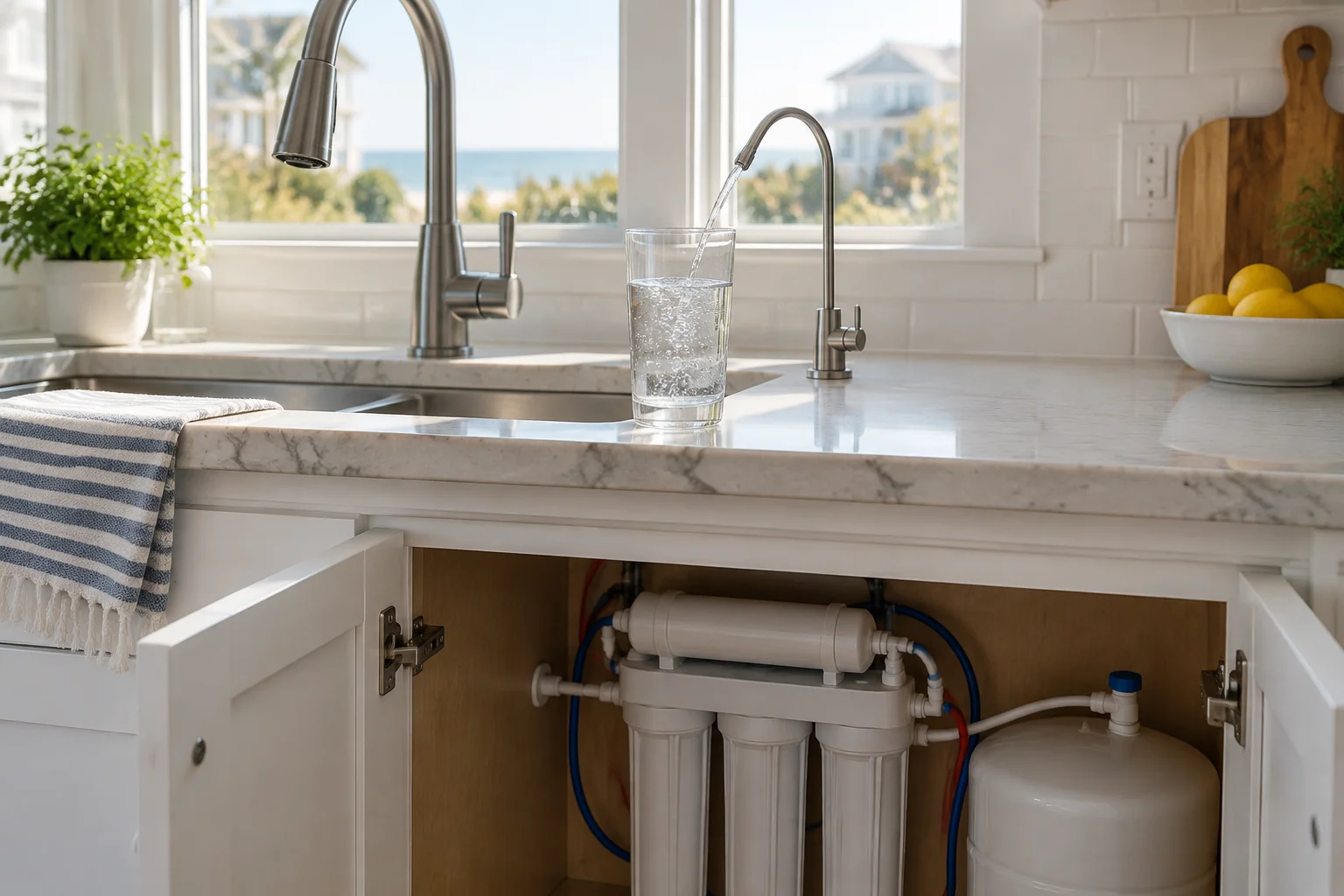
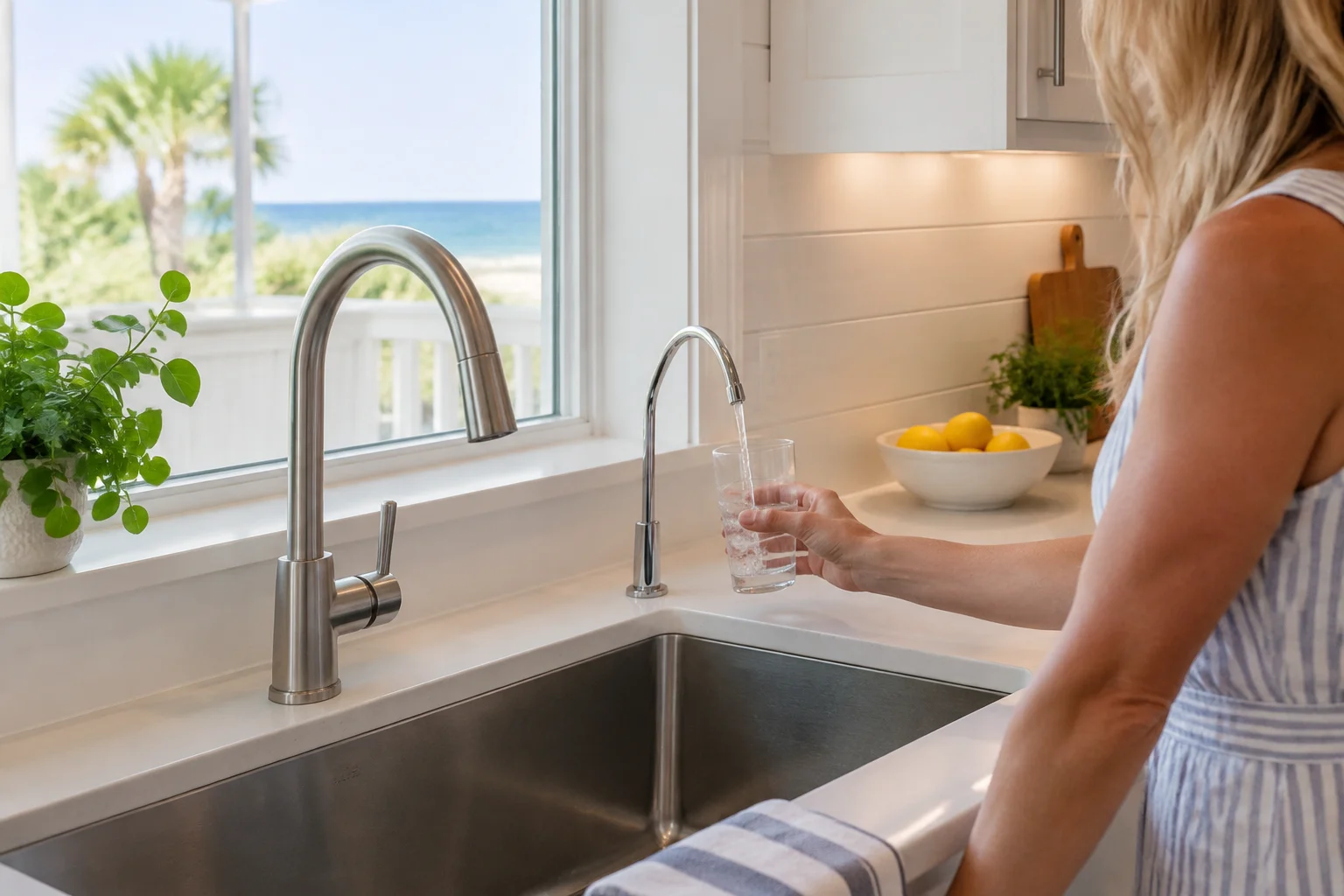
For many households, a reverse osmosis system near the kitchen sink helps reduce taste and improve drinking water quality. It can also help with concerns that show up as poor tasting coffee and cooking water.
Cloudy ice cubes and discoloration: common causes besides hardness
Cloudy ice cubes can be caused by suspended particles, air trapped in water, or changes in water chemistry. If you also see discoloration at fixtures, it is a strong hint that your system needs filtration attention. Whole home water filtration can help capture particles before they reach the softener and before they make it to faucets.
How scale buildup around faucets and showerheads forms, and what softening should prevent
Hard water minerals precipitate when water heats and evaporates. That is why you see residue around faucet handles, at showerheads, and on glass after a quick rinse. When the softener is properly configured and maintained, it reduces the mineral load that causes these issues.
But if the softener is not fully controlling hardness, you may still see scale buildup on faucets and scale buildup around faucets that keeps returning. That can also contribute to clogged showerheads and reduced water heater efficiency.
When hard water treatment becomes part of protecting fixtures and appliances, it is not only about appearance. It is about keeping water flowing freely, reducing maintenance, and extending the life of equipment that works hard in a home’s daily routine.
AO Smith water softener and whole home protection: where homeowners often get the most improvement
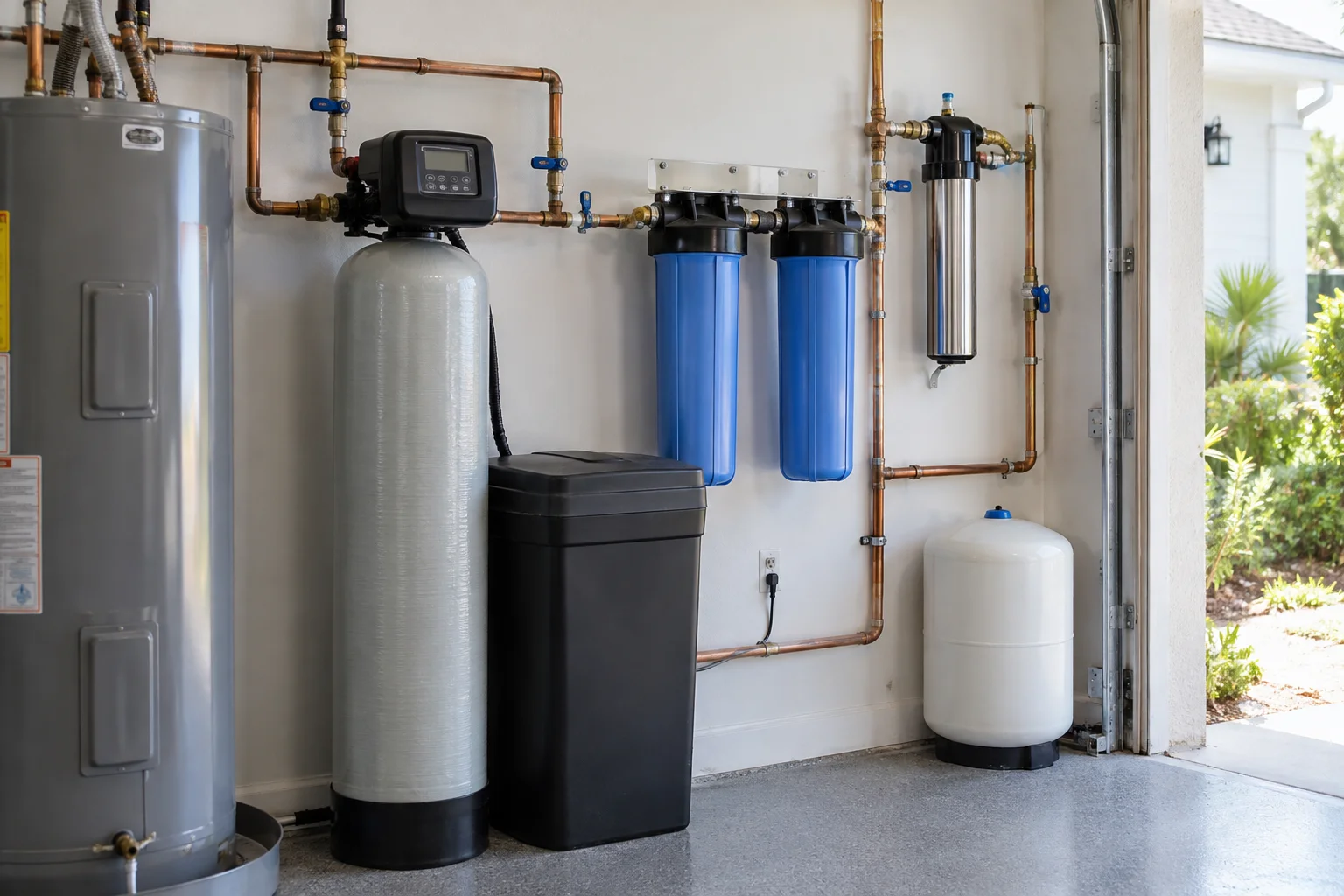
Many Shalimar homeowners choose an AO Smith water softener because it is built for reliable hardness control. When paired with the right filtration stages, it can protect plumbing and improve water feel. The biggest wins usually come from matching the system to the home, rather than assuming one tank solves every issue.
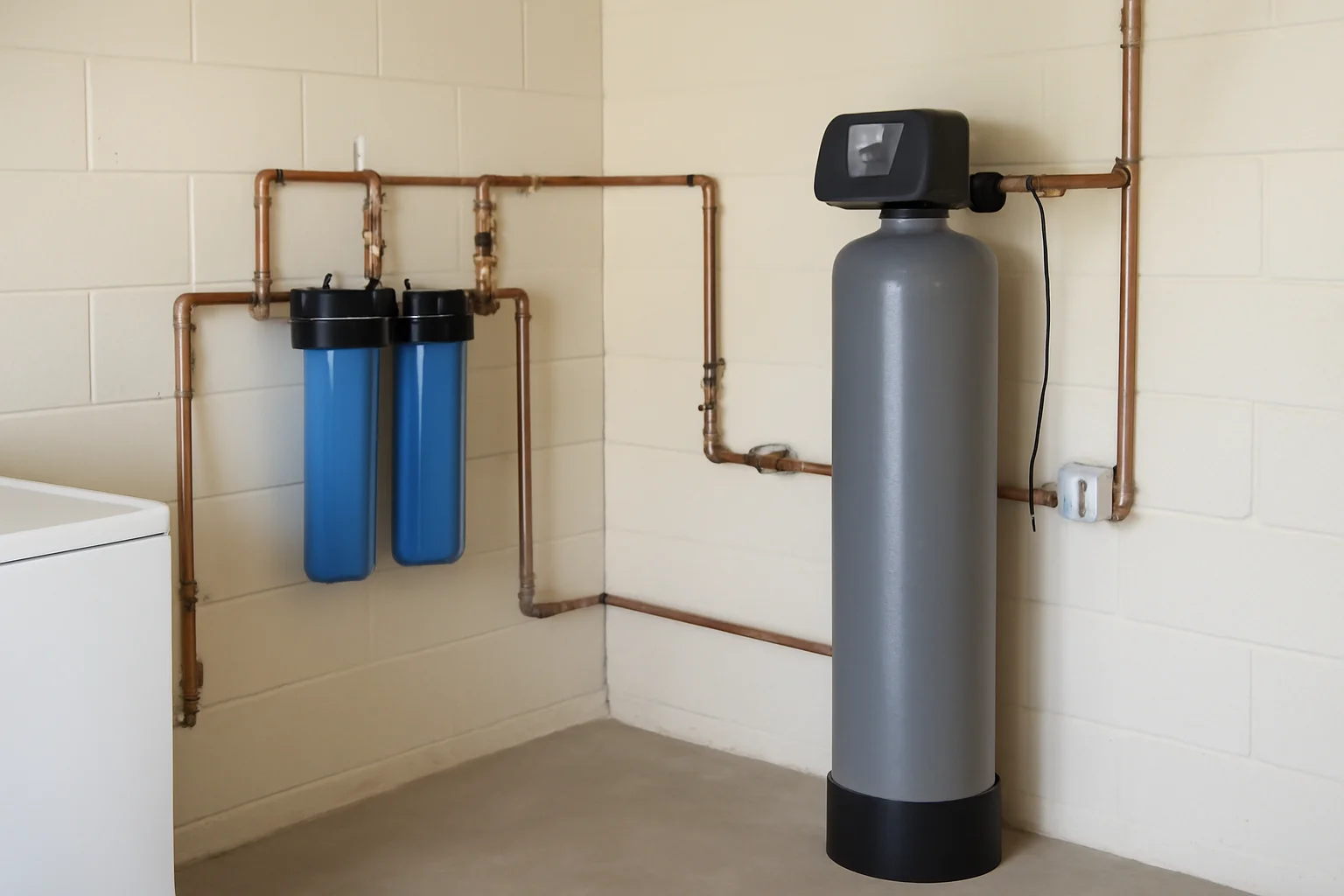
Whole home water filtration before or alongside softening
If you have visible sediment, discoloration, or recurring odor concerns, adding or upgrading whole house water filter stages can reduce the load on the softener. This can also help improve consistency at every tap, which is important for families that want predictable water for bathing, laundry, and cooking.
Homeowners often start with water softening, then realize they need a filtration layer to support it. A local water treatment provider can evaluate incoming water quality and recommend a setup that fits Shalimar conditions.
Whole home water filtration plus drinking water filtration
For drinking water and cooking water, you typically need a tighter target than what is required for scale prevention. Many households benefit from a combination of whole home water filtration and a dedicated drinking water system, such as reverse osmosis or an under-sink drinking water filter.
If you are considering options, you can explore more through /water-filtration-ro-water-softeners, which covers how water filtration and softening work together.
Reverse osmosis vs. softening for taste, odor, and sediment concerns
Reverse osmosis (RO) is designed to reduce a broader range of dissolved contaminants and can significantly improve taste and clarity for drinking water. Water softening primarily targets hardness minerals that cause scale. That is why homeowners often notice that their showers still feel better with softening, but coffee or cooking water still tastes “off.”
If you are searching for a reverse osmosis system near me, the goal is usually to improve what you taste and drink, while softening protects the rest of the home from scale buildup.
Maintenance habits that reduce problems year round in Shalimar
Even the best clean water systems need routine attention. The good news is that most maintenance is straightforward when you stay on schedule.
Check for performance changes and watch for pattern problems
Do you notice hard water spots more often on certain days? Is the problem worse after long stretches of low water use? Are laundry loads starting to feel different? These patterns can help identify whether the softener is keeping up with water demand or whether a filtration stage needs service.
Address scale early, not after it spreads
When you see early signs, take them seriously. Small scale buildup around faucets and showerheads can become bigger problems as it grows. Scale can also contribute to restricted flow, which may increase wear on fixtures and appliances.
If you have a softener plus filtration, you still want to keep an eye on fixtures. A quick look at faucet aerators and showerheads can reveal whether hardness control is consistent.
Keep an eye on soap lather and rinse performance
Dry skin from hard water often comes with soap that does not lather or rinse well. If the water starts behaving differently, it can indicate hardness control is slipping. That can be a sign of regeneration tuning issues, media exhaustion, or filtration imbalance.
Schedule professional service for system tuning and media performance
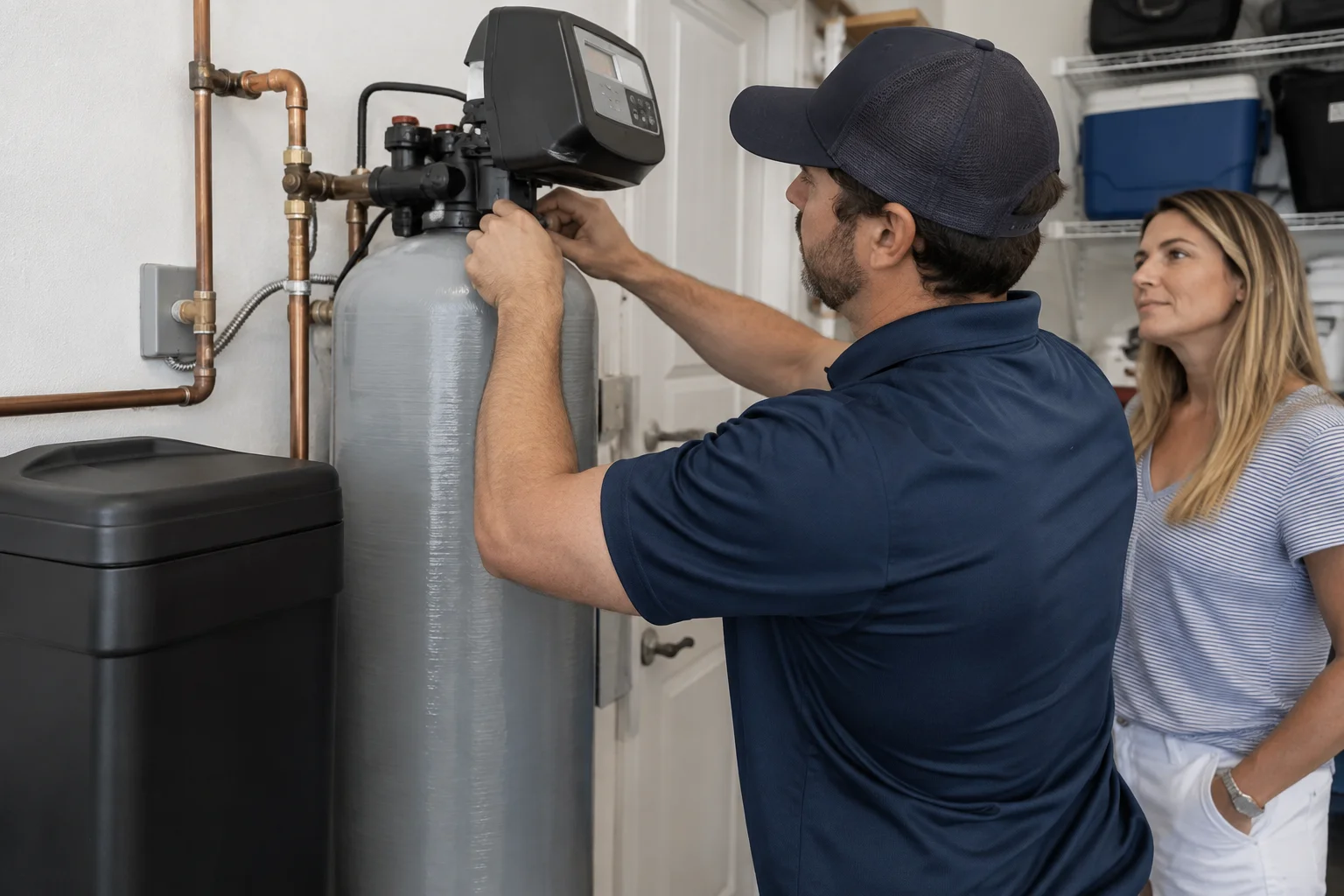
For year round protection, professional service matters. A technician can verify settings, check regeneration performance, inspect filtration components, and confirm that the system is working as designed. If you live in Shalimar or nearby in Okaloosa County, you can browse local details on the Shalimar service area page and then schedule water softener service through A Superior Mechanical.
How better water improves daily life for Shalimar families
It is easy to think water treatment is only about plumbing. For many homeowners, the real difference shows up in daily routines.
- Bath time: softer water can reduce the “tight” feeling some people associate with dry skin from hard water, and hair can feel less dull after rinsing.
- Kitchen time: improved water taste can mean better coffee and more enjoyable cooking water, especially when chlorine taste in water is reduced.
- Laundry: towels and clothes can feel cleaner and softer, with less residue that can come from mineral buildup.
- Dishwashing: you see fewer hard water spots on glass and dishes, and the dishwasher may run more efficiently over time.
- Fixture upkeep: scale buildup around faucets and showerheads slows down, so cleaning is less frequent and less frustrating.
When you combine softening with the right filtration, you get a cleaner, more consistent experience from shower to sink.
When to call a water treatment professional in Shalimar
Homeowners should contact a professional when water quality concerns persist after basic checks, when multiple symptoms appear together, or when you suspect the system is not regenerating properly. Call for service if you notice:
- Recurring odor concerns or discoloration at one or more faucets.
- Persistent cloudy ice cubes or visible sediment.
- Hard water spots on glass and dishes that keep returning quickly.
- Dry skin or dull hair after bathing that does not improve.
- Appliances experiencing scale buildup faster than expected.
- Drinking water taste issues such as chlorine taste in water that makes cooking and coffee unpleasant.
If you are also dealing with plumbing emergencies or small issues that can snowball, it can help to pair water treatment improvements with smart home maintenance. For related guidance, you can read Small Plumbing Problems in Shalimar Can Grow Fast if Homeowners Wait Too Long and A Shalimar Homeowner’s Guide to Emergency Plumbing and How to Keep Repairs from Getting Expensive.
And if you want a deeper look at how softening helps with scale control, this guide is a good companion: Better Water, Less Scale: A Homeowners Guide to Water Softening in Shalimar, FL. For nearby coastal comparisons, see How Water Softening Protects Rosemary Beach Plumbing from Costly Water Damage.
Reducing sediment, odor, and chlorine concerns with the right system design
Many Shalimar homeowners are trying to solve three different problems at once: hardness scale, sediment and cloudiness, and taste or odor. When those issues show up together, the most effective solutions usually involve a combination of:
- Water softening to protect plumbing and appliances from hardness related scale buildup.
- Whole home water filtration to reduce sediment and improve overall water clarity before it reaches fixtures and the softener.
- Reverse osmosis or dedicated drinking water filtration to improve drinking water taste, reduce chlorine taste in water, and support better drinking water quality for coffee and cooking.
- Regular maintenance so regeneration and filtration performance stays consistent year round.
This layered approach helps you stop chasing symptoms and start protecting your home. If you are comparing options for water filtration near me, home water purification near me, or a complete clean water system, it is worth working with a local team that understands Shalimar conditions and can recommend the right balance of softening and filtration.
For more information about water treatment services across the region, visit /service-areas/okaloosa-county.
Find Water Softening in Shalimar, FL
If you need Water Softening in Shalimar, FL, visit our local service page or contact A Superior Mechanical today.
For a broader look at whole-home water filtration, reverse osmosis, and water softener options, visit our water filtration, RO, and water softener page.
Map of Shalimar, FL
Frequently Asked Questions
Can a water softener fix cloudy ice cubes and sediment?
A water softener is mainly for hardness and scale. Cloudy ice cubes and visible sediment usually point to a filtration issue or suspended particles entering the home. In many Shalimar homes, adding or servicing whole home water filtration helps reduce sediment before it reaches faucets and the kitchen.
Why does my water taste chlorinated even though I have a softener?
Softening does not remove chlorine taste. Chlorine related concerns typically need a drinking water filter or reverse osmosis system. Many homeowners choose reverse osmosis for the kitchen to improve drinking water taste and cooking water quality.
What causes scale buildup around faucets if my water feels soft?
Scale buildup can still happen if hardness control is slipping due to incorrect settings, regeneration issues, or a problem with filtration stages that protect the system. It can also mean the softener is not fully treating all incoming water. A technician can check performance and make adjustments.
How often should I service an AO Smith water softener and filtration system?
Service intervals vary by household water use and local conditions. Most homeowners benefit from routine checks that confirm regeneration performance and inspect filtration components. If you notice odor, discoloration, or renewed hard water spots, it is a good time to schedule an inspection.
Is reverse osmosis worth it for a Shalimar home with hard water?
Often, yes, especially if you are focused on drinking water taste, chlorine taste in water, and better coffee and cooking water. Softening helps protect plumbing from scale, while reverse osmosis targets taste and a wider range of contaminants for the kitchen.
Related Articles
- Better Water, Less Scale: A Homeowners Guide to Water Softening in Shalimar, FL
- A Shalimar Homeowner’s Guide to Emergency Plumbing and How to Keep Repairs from Getting Expensive
- Small Plumbing Problems in Shalimar Can Grow Fast if Homeowners Wait Too Long
- How Water Softening Protects Rosemary Beach Plumbing from Costly Water Damage
Photo Gallery