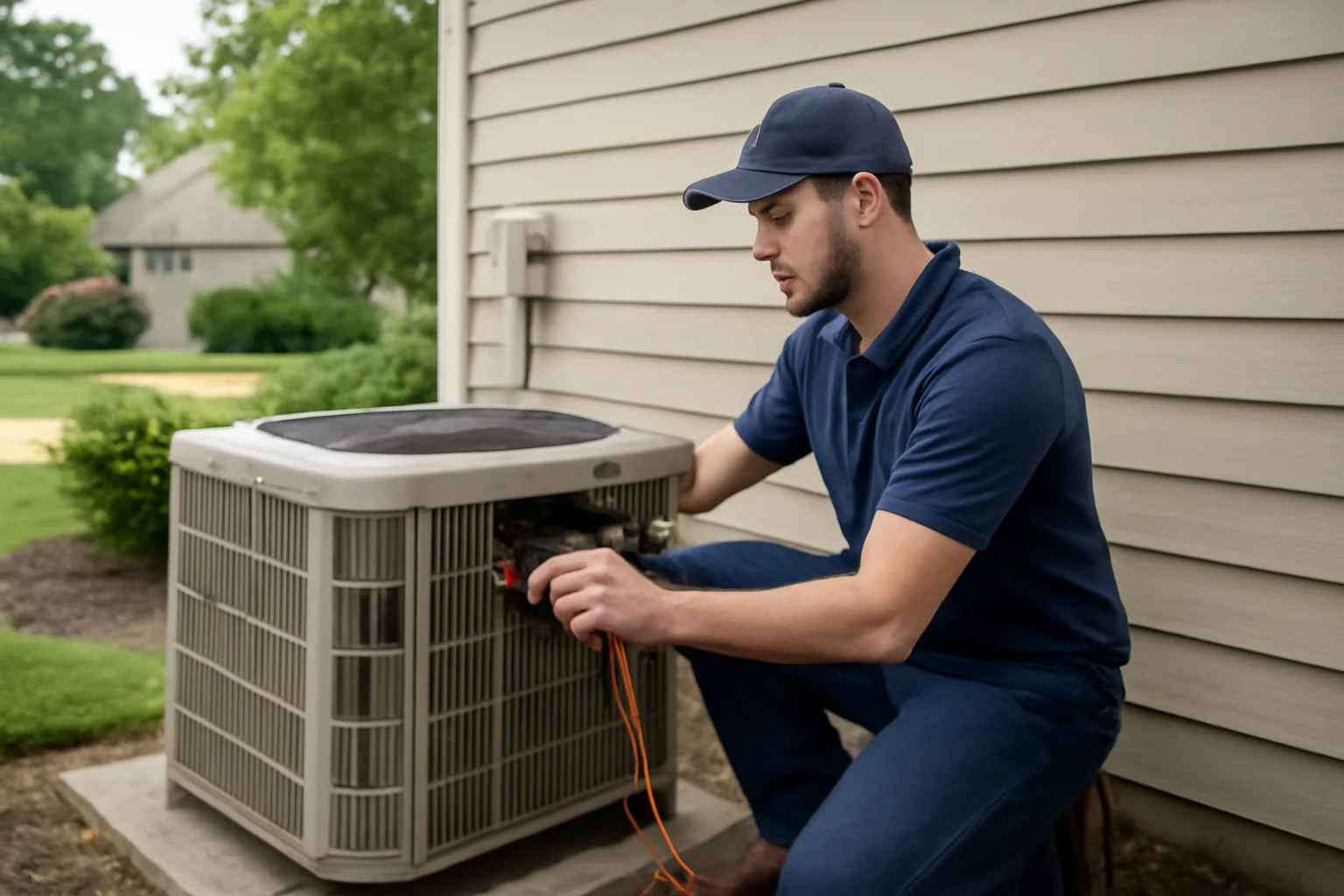
In Cinco Bayou, FL, HVAC problems rarely show up politely. Florida heat, steady humidity, and coastal salt air can push air conditioners, heat pumps, and ductwork to work harder than they would inland. For property managers, the goal is simple: catch warning signs early so tenants stay comfortable and maintenance downtime stays manageable.
If you oversee rental homes, vacation properties, condos, or commercial facilities, you already know that “small” HVAC issues can turn into emergency cooling concerns fast. Below are practical warning signs linked to airflow, humidity, condensate drainage, and refrigerant system performance, along with prevention steps that support fewer HVAC emergencies.
Why Cinco Bayou HVAC systems fail faster under Florida conditions
Cinco Bayou sits in Okaloosa County, where summers bring intense cooling demand and persistent moisture. Coastal exposure can also contribute to corrosion and faster wear on outdoor components. When HVAC systems run longer cycles to keep up, they can develop faults in:
Airflow paths like return grilles, supply vents, and ductwork.
Humidity control across the cooling coil and related drainage.
Thermostats and controls that manage staging, run time, and comfort setpoints.
Refrigerant systems that depend on correct operation of the compressor, metering components, and heat transfer surfaces.
Condensate drainage that removes moisture produced during cooling.
Property management HVAC services help by standardizing inspections, documenting issues, and addressing problems before they escalate into a full system shutdown. If you are comparing contractors, start with a local HVAC contractor who understands coastal climate impacts and rental turnover realities.
For a broader overview of how property management HVAC services fit into daily operations, see A Homeowner’s Guide to Property Management HVAC Services in Santa Rosa Beach and A Practical Look at Property Management HVAC Services for Local Property Owners in Sandestin, FL.
Cooling warning signs that often lead to emergency calls
When a tenant reports the AC “isn’t getting cold,” it can mean anything from airflow restrictions to control problems to refrigerant system issues. The key is to treat early signals as maintenance opportunities, not as complaints to wait out.
1) Warm air at the vents or weak cooling
What it looks like: air coming from vents feels warmer than usual, cooling takes much longer, or the system struggles to maintain the thermostat setpoint.
Common causes: restricted airflow, dirty coils, failing blower performance, thermostat misreads, or refrigerant system performance problems. Even if the outdoor unit runs, the system may not be transferring heat properly without correct airflow and coil condition.
Why it matters: under Florida heat, delays can quickly raise indoor temperatures and humidity levels, increasing occupant discomfort and potential indoor air quality issues.
2) Short cycling or frequent on-off cycles
What it looks like: the system turns on, runs briefly, then shuts off repeatedly. Tenants may hear clicking or notice inconsistent temperatures across rooms.
Common causes: airflow problems, sensor and thermostat issues, restricted returns, or other conditions that cause the system to protect itself. A refrigerant system that is not operating normally can also contribute, but only an in-person evaluation can clarify what is happening.
Property manager takeaway: short cycling is often a sign the HVAC is not operating efficiently. It can increase wear and energy use and lead to faster breakdowns.
3) Outdoor unit problems, unusual noises, or repeated shutdowns
What it looks like: rattling, grinding, or loud buzzing from the outdoor unit, or the unit shuts down after a short time.
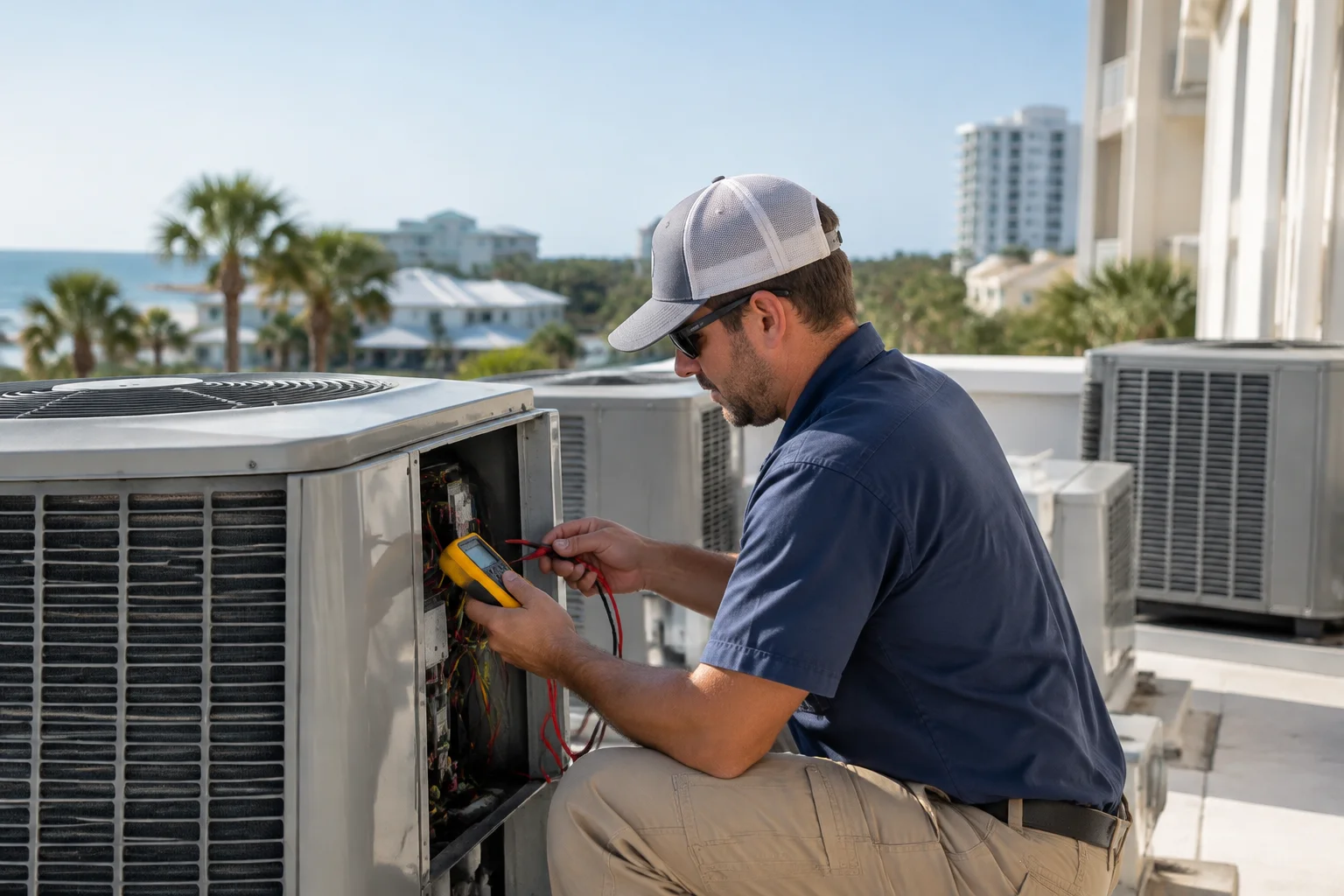
Common causes: debris buildup, fan or motor issues, electrical control faults, or component wear. Because these are safety-sensitive and performance-sensitive, troubleshooting should be handled by a qualified HVAC contractor.
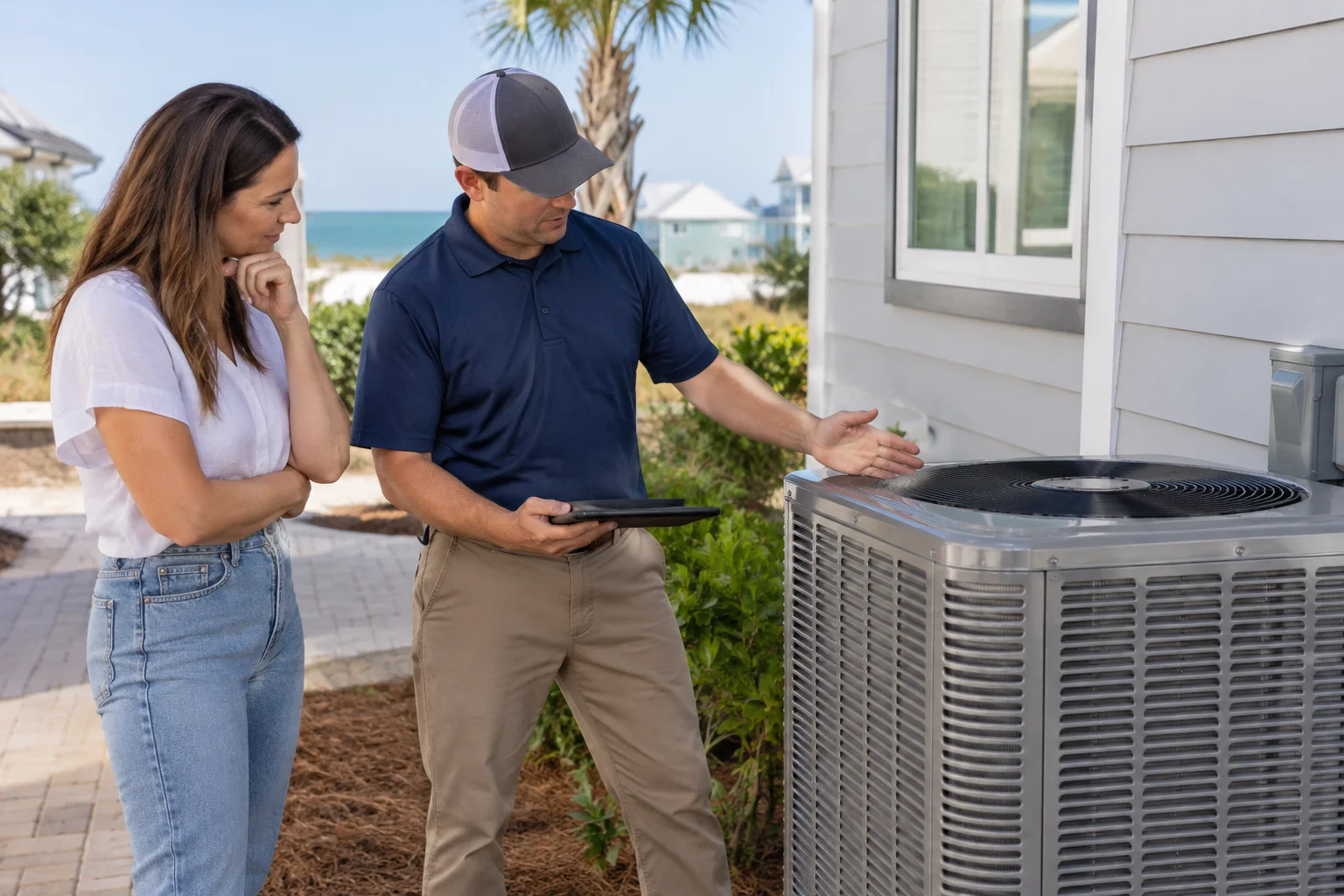
Action: document when it happens, which thermostat settings were used, and whether other units in the property are affected.
Airflow warning signs that point to ductwork and filter issues
In rental homes, airflow problems are common because filters may not be replaced on schedule, return paths can get blocked, and ductwork can be affected by age, renovations, or attic insulation conditions. In a humid coastal climate, airflow issues also make it harder to control moisture.
4) Rooms are uneven: some areas cold, others hot
What it looks like: one bedroom stays uncomfortable while the living areas feel fine, or temperatures vary widely between floors.
Common causes: blocked or undersized ductwork, supply or return register issues, closed dampers, dirty air filters, or blower performance problems.
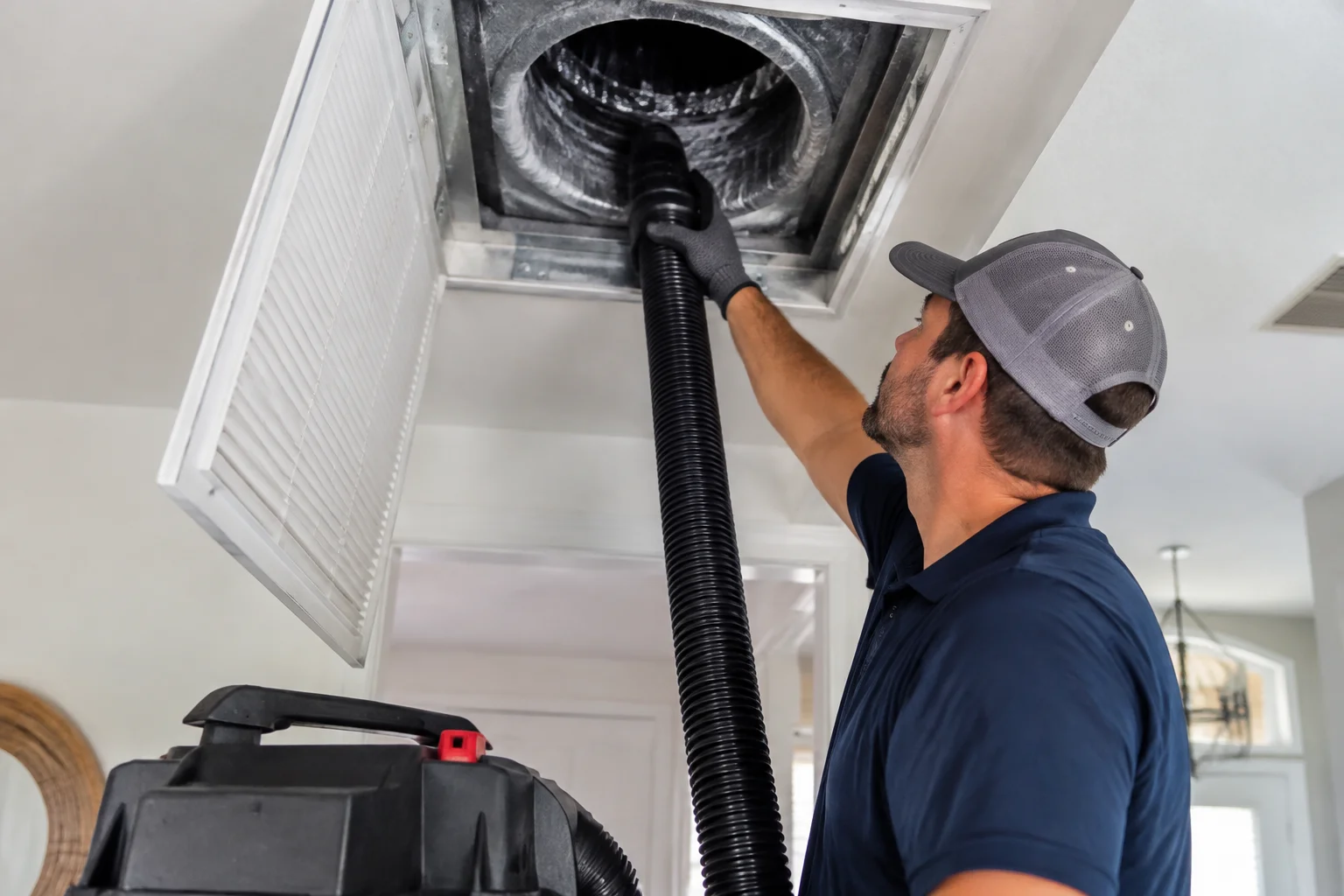
Next step: professional HVAC service can assess airflow balance and inspect ductwork. If ductwork is damaged or poorly designed for the home, you may need Duct Replacement rather than treating the symptoms with repeated thermostat tweaks.
5) Strong airflow on some vents, weak airflow on others
What it looks like: one vent blows hard while another feels barely open, even with the system running normally.
Common causes: duct restrictions, register obstructions, partially disconnected duct sections, or filter and blower limitations.
Why it matters: poor airflow can reduce cooling performance and contribute to humidity problems because the indoor coil may not reach the conditions needed for proper moisture removal.
6) Excess dust around vents or frequent filter clogging
What it looks like: unusually dirty filters, visible dust buildup near returns, or residents reporting more dust than usual.
Common causes: airflow restrictions causing higher dust loading, duct leakage, or inadequate filtration practices.
Prevention: a scheduled AC tune up near me approach often includes checking airflow-related components. For property managers, consistent filter schedules and documented filter replacements can reduce repeat service calls.
Humidity warning signs that can damage comfort and indoor air quality
In Cinco Bayou, humidity is not a side issue. When cooling is not removing moisture correctly, indoor humidity climbs, which can lead to musty odors, condensation, and comfort complaints. It can also affect indoor air quality by allowing conditions that encourage mold growth and trapping airborne particles.
7) Condensation on windows or damp smells
What it looks like: fogging windows, wet spots, or a musty odor in closets or near vents.
Common causes: reduced dehumidification due to airflow issues, coil performance problems, or drainage problems. In some cases, the condensate drainage path can be partially blocked.
Why it matters: moisture issues can escalate beyond comfort, affecting building materials and tenant satisfaction.
8) The system runs longer but the home still feels sticky
What it looks like: the AC keeps running, but humidity remains high and the home feels clammy.
Common causes: airflow restrictions, cooling coil performance issues, thermostat settings that do not align with humidity control needs, or problems that prevent the system from removing moisture effectively.
Professional note: while humidity can be “caused” by many factors, it requires an on-site assessment to determine whether the issue is airflow, coil operation, thermostat behavior, or condensate drainage.
9) Water pooling near the indoor unit or dripping from the drain
What it looks like: wet floors in closets or utility areas, water near condensate lines, or overflow concerns.
Common causes: condensate drainage blockage, drainage pan issues, or improper drainage routing. Florida humidity makes condensate production continuous during cooling seasons.
Action: address drainage issues quickly to prevent secondary damage. Property managers should ensure maintenance logs note any water incidents so the HVAC team can focus the inspection.
Thermostat and control warning signs tied to comfort, run time, and energy use
Thermostats are often blamed last, but in rental settings they can be a major driver of comfort and energy use. A thermostat that is reading incorrectly, set improperly, or not communicating as expected can make the HVAC system run longer than necessary or fail to reach stable comfort conditions.
10) Temperature setpoints change but comfort does not follow
What it looks like: tenants adjust the thermostat, but indoor temperatures do not respond in a predictable way.
Common causes: thermostat calibration issues, sensor placement problems, control configuration mismatches, or wiring and communication issues. Only a technician who can inspect the system in person can confirm.
Consider: if you are planning a thermostat update, search for HVAC service near me options that include thermostat installation near me support. A properly installed thermostat can improve comfort consistency and reduce unnecessary run time.
11) The system runs when it should not, or it never runs when expected
What it looks like: AC cycles at odd times, or the property stays warm even when setpoints indicate cooling demand.
Common causes: scheduling, control settings, or HVAC control faults. Because control faults can overlap with safety-related electrical components, professional evaluation is essential.
Refrigerant and compressor-related warning signs you should not ignore
Refrigerant systems are designed to move heat and maintain stable cooling performance. When performance drifts, tenants may describe symptoms that look similar to airflow problems. That is why property managers should avoid guessing and instead schedule HVAC repair near me when warning signs appear.
12) Cooling performance drops suddenly during peak demand
What it looks like: the AC was working, then suddenly cannot keep up during the hottest hours.
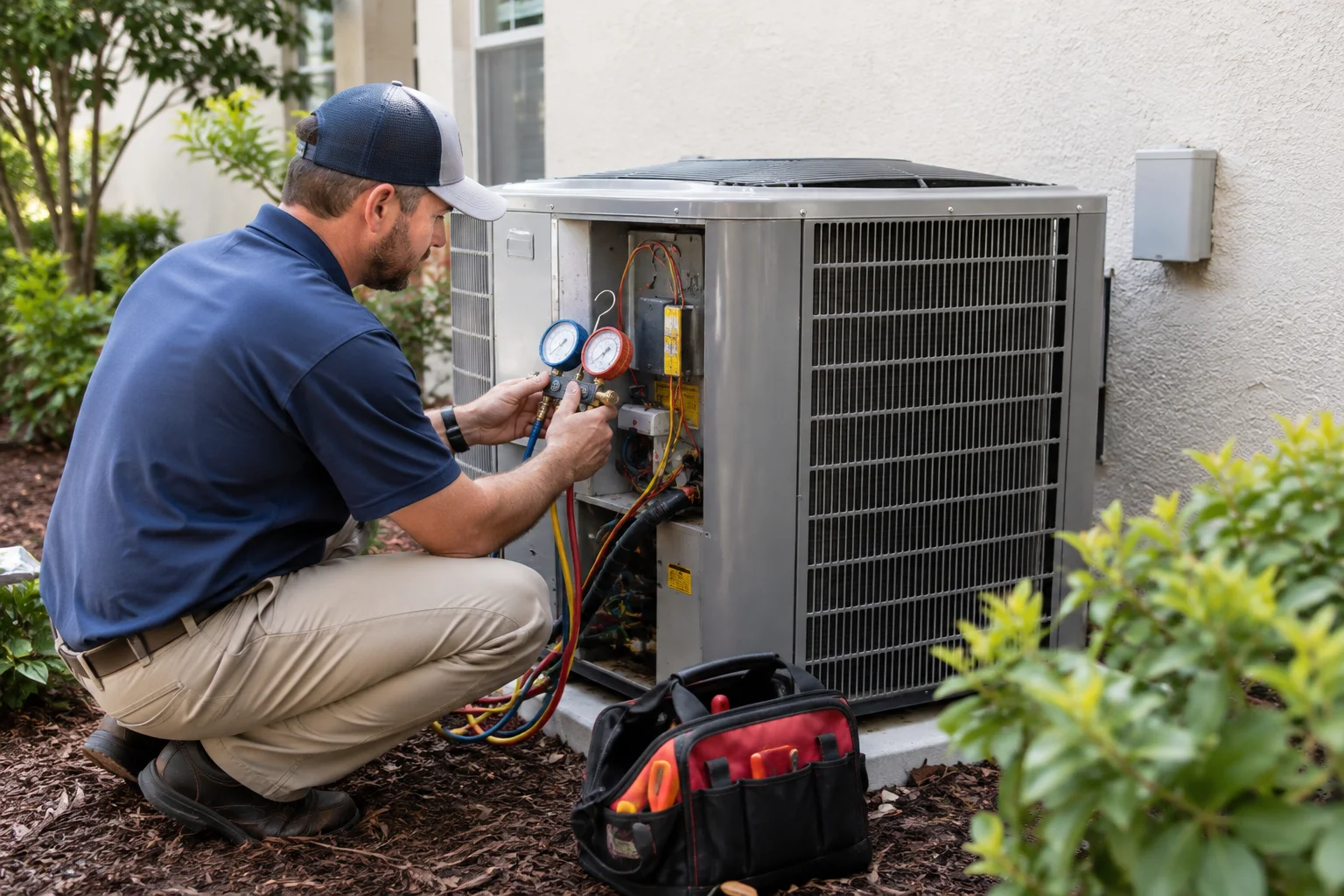
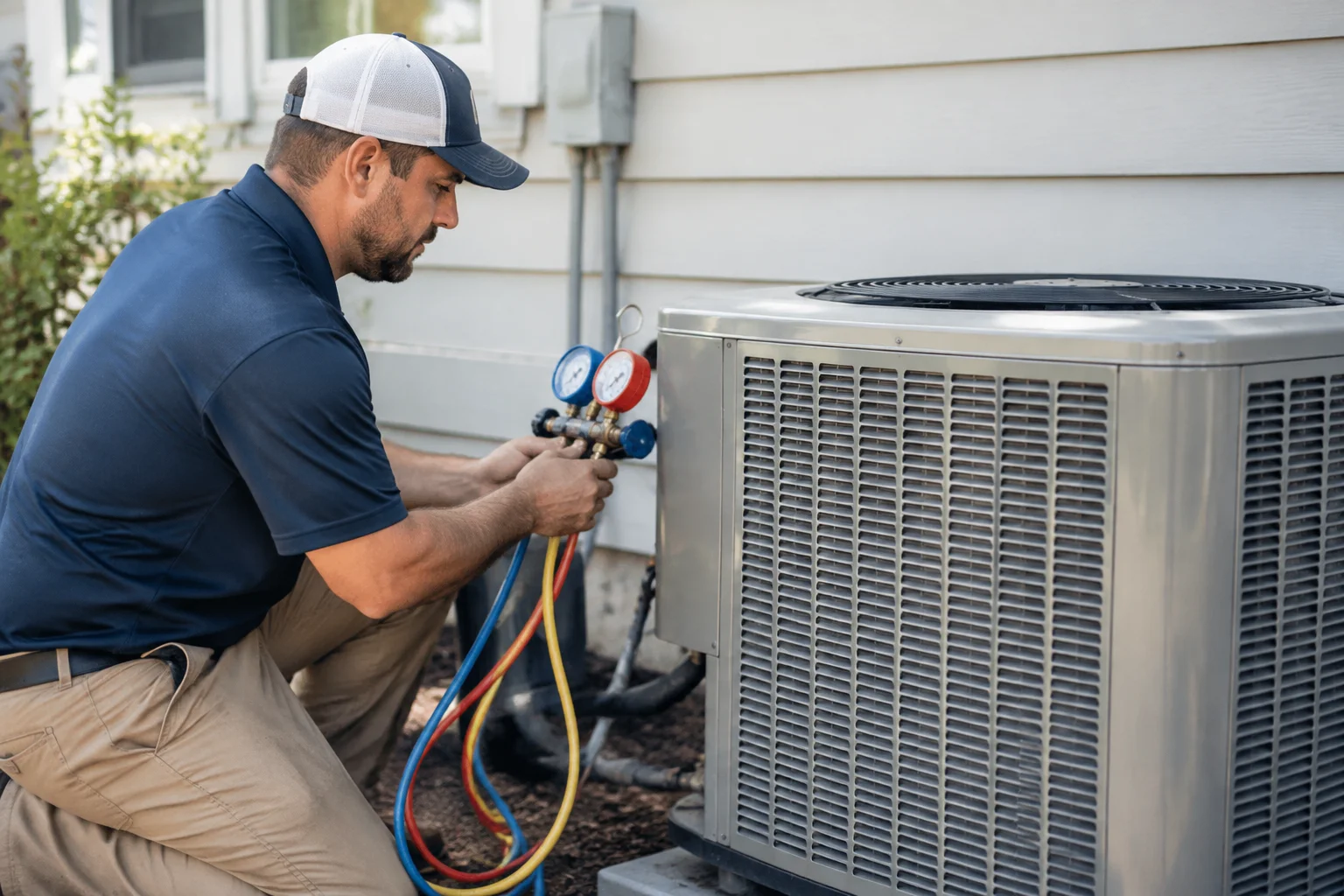
Common causes: coil fouling, airflow restrictions, or refrigerant system performance issues. A technician must evaluate system operation, airflow, and related components to determine what is happening. It is not appropriate for homeowners or property staff to attempt refrigerant diagnosis without on-site professional testing.
13) Ice buildup on the indoor coil or refrigerant lines
What it looks like: visible frost or ice on refrigerant lines or near the indoor unit during operation.
Common causes: airflow restriction is a frequent driver, but other system conditions can contribute. Ice can also indicate a cooling system that is not operating as intended, and it can lead to additional damage if the system continues to run.
Action: stop repeated “reset attempts” and schedule service. A technician can inspect airflow, coil condition, and system operation in person.
How preventive HVAC maintenance reduces emergencies for rentals
Preventive maintenance is the most reliable way to reduce emergency cooling concerns in a coastal Florida environment. For property managers, the best approach is consistent scheduling and clear documentation for each unit.
Build a maintenance checklist around the warning signs
Instead of a one-time inspection, use a seasonal plan that targets the most common failure points in Cinco Bayou:
Cooling performance and airflow: verify airflow delivery, check filters and return pathways, and inspect ductwork for issues that affect comfort.
Humidity control: evaluate coil performance and condensate drainage to prevent overflow, pooling, or persistent dampness.
Thermostat and controls: confirm settings, operation, and consistent temperature response.
Refrigerant system operation: professional technicians can evaluate system performance safely and accurately during service visits. Avoid DIY diagnosis.
Coastal protection: inspect and address corrosion-prone components and outdoor unit conditions impacted by salt air and debris.
Standardize filter and drainage monitoring between tenant stays
For rental turnovers, consider a documented process for filter inspection and replacement, along with a quick look for condensate drainage concerns. Tenants can report symptoms, but property teams can reduce emergency risk by catching issues early, especially before peak summer weeks.
Schedule HVAC maintenance near me before the hottest weeks
When homeowners search for HVAC maintenance near me and schedule early, they often avoid the worst-day scenario where a system fails during a heat wave. For property managers, early scheduling also supports smoother staffing and fewer last-minute service windows.
If you manage multiple units, ask about a maintenance plan and documentation process that helps you track recurring issues by property, unit, and season. For related planning ideas, read Smart HVAC Planning for Rosemary Beach Homes: Comfort, Airflow, and Coastal Protection.
When to call A Superior Mechanical for property management HVAC services
Some issues can wait for the next scheduled visit. Others should be handled promptly because they affect comfort, indoor air quality, and potential water damage. Call professional residential HVAC service near me or commercial HVAC service near me support when you notice:
Persistent warm air or rapidly worsening cooling performance.
Short cycling or repeated shutdowns.
Ice buildup on indoor components or refrigerant lines.
Water pooling, overflow concerns, or dripping from condensate drainage.
Sticky humidity and musty odors that suggest moisture control is failing.
Major airflow problems like uneven temperatures that do not improve after basic checks.
A Superior Mechanical provides property management HVAC services in Cinco Bayou, FL designed for rental homes, vacation properties, condos, and commercial facilities across Okaloosa County. You can review the service area details here: /service-areas/okaloosa-county/cinco-bayou/property-management-hvac-services-cbocfl.
If your situation includes ductwork problems, explore Duct Replacement as a way to improve airflow and comfort consistency. If a system is nearing end-of-life for a rental unit, discuss options for Air Conditioning Installation and coordinate planning with your property schedule. For seasonal comfort planning, you can also review Heating Services so the whole year stays covered.
Some property managers also need flexibility for larger HVAC work. If financing is part of your planning, check HVAC Financing.
How to document HVAC issues so technicians can diagnose faster
When you report a problem, the details help a technician focus on the right causes, especially in a humid coastal environment where multiple symptoms can overlap. Consider capturing:
Date and time: when the issue started and whether it is tied to temperature spikes.
Thermostat settings: cooling setpoint, fan mode, and any schedule changes.
System behavior: whether the outdoor unit runs, whether indoor air feels weak, and whether cycling is frequent.
Humidity and moisture clues: musty smell, condensation on windows, or water near condensate drainage.
Airflow observations: which rooms are affected and whether some vents are much weaker.
These notes can make the difference between a quick fix and an extended troubleshooting visit. For broader local context, visit /service-areas/okaloosa-county/cinco-bayou.
Preventive steps homeowners and property managers can take right now
You cannot replace professional evaluation, but you can reduce risk and improve outcomes by handling the basics consistently:
Keep filters current: clogged filters restrict airflow and can worsen humidity control and system performance.
Keep returns and vents clear: blocked airflow can lead to uneven cooling and comfort complaints.
Watch for drainage signs: if you see water where it should not be, treat it as urgent.
Use thermostat settings that match the season: avoid extreme setpoints that can create unnecessary run time.
Track recurring issues by unit: if the same problem returns each summer, it points to a specific maintenance need.
For property teams that also manage moisture-heavy environments, whole-home dehumidification and maintenance planning can be part of a comfort strategy. If that applies to your properties, read Why Better HVAC Maintenance Matters for Whole Home Dehumidifiers in Sandestin.
By treating early warning signs seriously, property managers can reduce emergency cooling concerns, improve indoor comfort, protect building materials from moisture, and help HVAC systems run efficiently through Florida’s heat and humidity.
Find Property Management HVAC Services in Cinco Bayou, FL
If you need Property Management HVAC Services in Cinco Bayou, FL, visit our local service page or contact A Superior Mechanical today.
Map of Cinco Bayou, FL
Frequently Asked Questions
What are the most common HVAC warning signs in Cinco Bayou rentals?
The most common signals include weak cooling, uneven airflow, sticky indoor humidity, musty odors, and water near condensate drainage. Any of these can escalate quickly during peak Florida heat.
Can airflow problems cause humidity issues?
Yes. When airflow is restricted through ductwork, returns, or filters, the cooling system may not remove moisture effectively. That can make the home feel humid even if the AC runs.
Should I try to diagnose refrigerant issues myself?
No. Refrigerant system performance issues require professional, in-person evaluation. Homeowners and property staff should focus on documenting symptoms and scheduling HVAC repair with a qualified technician.
When is condensate drainage a true emergency?
Water pooling, dripping from a drain, or signs of overflow should be treated as urgent because moisture can damage floors, walls, and indoor materials. A technician should inspect the condensate drainage path promptly.
How does preventive maintenance reduce emergency AC breakdowns for property managers?
Preventive HVAC maintenance helps catch airflow restrictions, humidity control problems, drainage concerns, and control issues before they lead to total cooling failure. Standardized seasonal service and documentation also improve troubleshooting when tenants report symptoms.
Related Articles
- A Homeowner’s Guide to Property Management HVAC Services in Santa Rosa Beach
- A Practical Look at Property Management HVAC Services for Local Property Owners in Sandestin, FL
- Smart HVAC Planning for Rosemary Beach Homes: Comfort, Airflow, and Coastal Protection
- Why Better HVAC Maintenance Matters for Whole Home Dehumidifiers in Sandestin
Photo Gallery