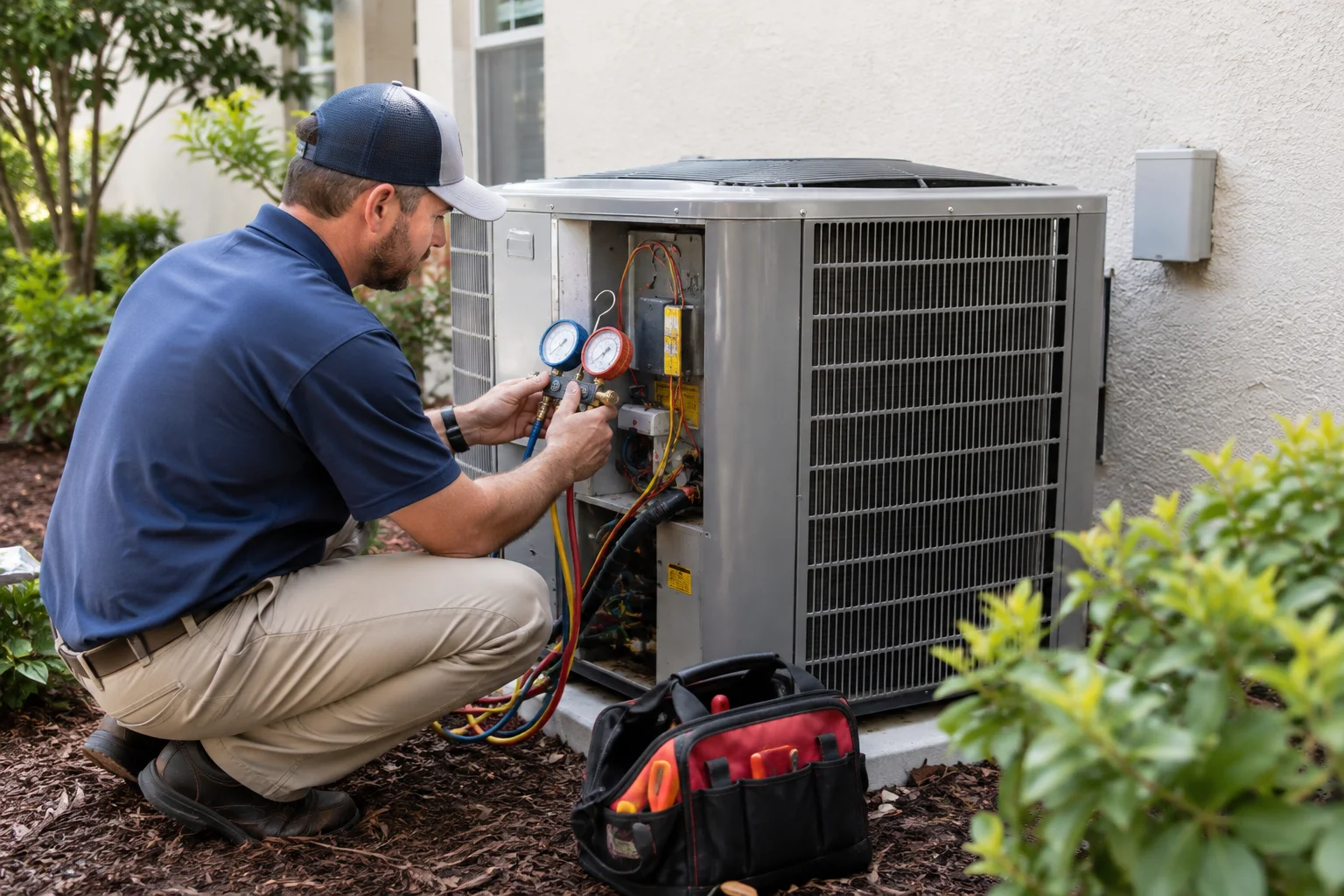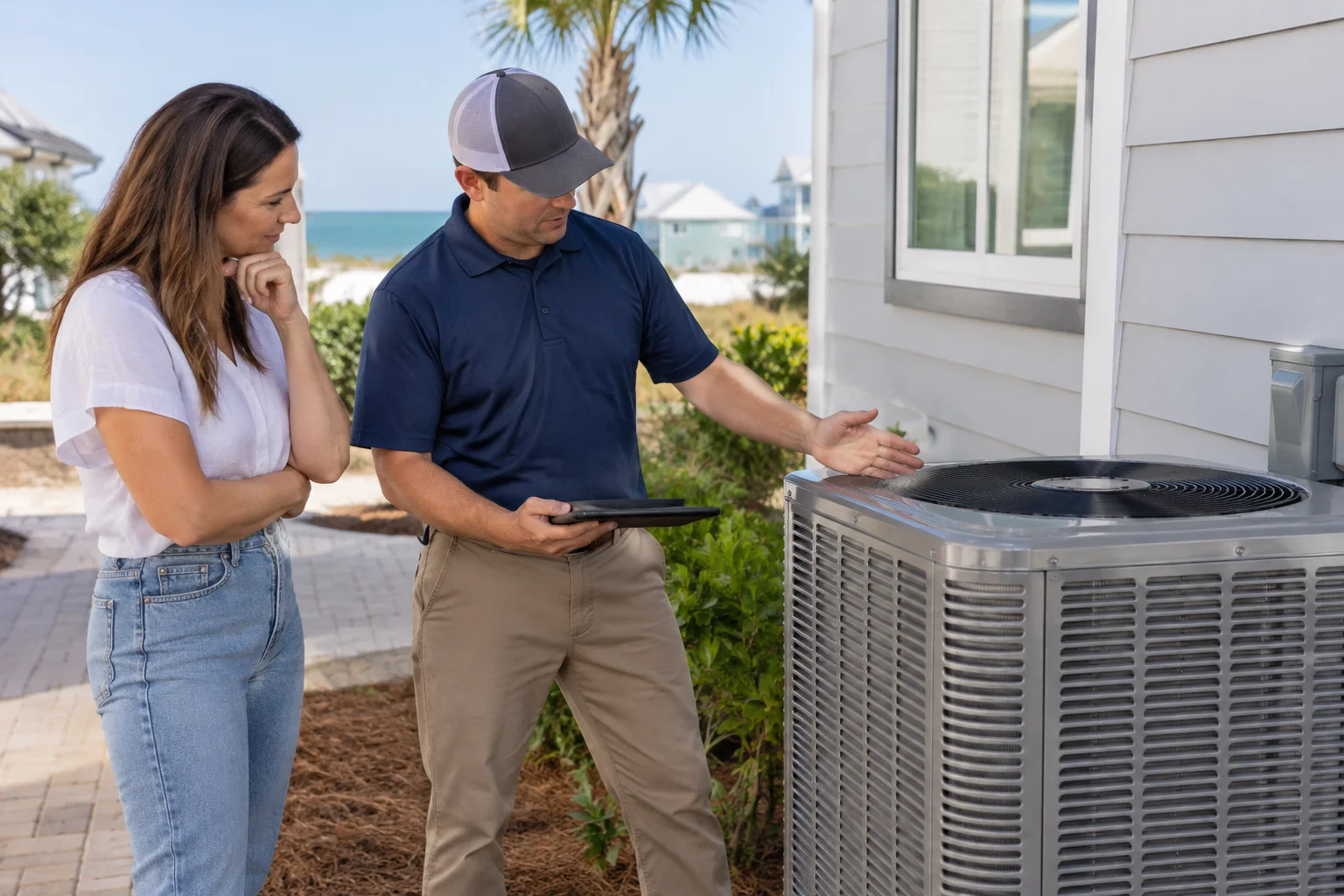
Florida weather can turn an average week at home into a constant battle with humidity, odors, and uneven airflow. In Upper Grand Lagoon, Bay County, those conditions are hard on HVAC systems and hard on indoor comfort. The good news is that indoor air quality testing can do more than measure comfort. When it is done correctly, it can help homeowners catch HVAC problems earlier, before they become emergency cooling concerns.
If you are searching for indoor air quality testing in Upper Grand Lagoon, FL, this guide will walk you through what to test, what results can reveal about your heating and cooling system, and how to turn findings into practical next steps.
Why indoor air quality becomes an HVAC issue in Upper Grand Lagoon
Indoor air quality is often treated as a separate topic from HVAC maintenance, but for many local homes they are tied together. Your air conditioner, heat pump, ductwork, and thermostat work as a system. When any part struggles, the rest may compensate. That can lead to:
Higher indoor humidity from reduced dehumidification during AC cycles or airflow problems across the coil.
More airborne allergens and irritants when filtration and ventilation do not match the home’s actual conditions.
Odors and growth risk when moisture lingers in ducts, around condensate drainage, or in hidden cavities.
Energy use creep when systems run longer to achieve temperature but still do not control humidity well.
Upper Grand Lagoon homes also face conditions that can make these issues more common: warm Gulf air, salty coastal exposure, and frequent humidity swings. Even when a system seems to be cooling, the air may not be clean or properly dried. That is where testing helps.
What “better indoor air” testing actually checks
Professional testing is more than a single reading. A good indoor air quality inspection considers the home’s comfort needs, HVAC operation, and ventilation balance. Depending on the property, testing may focus on:
Humidity and moisture behavior
Humidity control is a core part of indoor comfort and HVAC health in Florida. High indoor humidity can mean your system is not removing moisture effectively. Testing can reveal whether humidity levels stay high, fluctuate oddly, or do not respond to normal thermostat changes. That can point to airflow restrictions, coil performance issues, or problems with condensate drainage.
Airflow and ventilation effectiveness
Even a properly sized system can underperform if air distribution is off. Testing can help identify whether air is moving where it should. If certain rooms feel stuffy while others are cold, the issue may be ductwork related, filter related, or tied to blower operation and run time.
Airborne particles and filtration performance
Airborne allergens do not disappear because the weather got warmer. If filtration is undersized for the home, the HVAC air handler may move more particles than you realize. If you are comparing options like a whole home air purifier near me, testing can help you understand what levels you are starting with and whether filtration or ductwork improvements should come first.
VOCs and odor sources
Volatile organic compounds can come from household products, building materials, and sometimes ventilation imbalance. Testing helps separate “normal smells” from situations where ventilation and HVAC operation may be allowing irritants to build up.
Signs of mold and microbial growth risk
In humid coastal climates, moisture is a major driver of microbial growth. Testing can indicate whether conditions are favorable for growth, especially when combined with HVAC inspection findings. If you suspect hidden moisture, do not rely on odor alone. A professional evaluation is the safer route.
How indoor air quality testing can catch HVAC problems early
Homeowners often notice comfort issues before they understand what is happening mechanically. Testing can connect those comfort clues to HVAC behavior so you can address problems sooner, rather than after the system struggles through a hot week.
1) Humidity stays high even when AC runs
When humidity does not drop as expected, it can signal reduced dehumidification. Common causes include airflow restrictions, an issue with the indoor coil, blower operation problems, or condensate drainage that is not removing moisture properly. A proper indoor air quality inspection paired with an air conditioning inspection near me can help narrow down what is contributing to the moisture load.
2) Air feels uneven across rooms
Uneven airflow often points to ductwork issues, inadequate return airflow, or register problems. If some rooms stay stale while others overcool, your HVAC system may be struggling to balance comfort. This is also where homeowners searching for duct repair near me may find the root cause is not only the ducts, but the way the system distributes air through them.
3) Filter changes do not seem to help much
If you change filters regularly but still see poor air quality, it may be because the system is not moving enough air through the filter efficiently, or because the home has other sources of particles and VOCs. Testing can help you determine whether you need different filtration strategy, better airflow balance, or additional HVAC maintenance.
4) Odors return soon after cleaning
Some odors are tied to airflow and moisture behavior. If smells come back quickly, it can suggest moisture in ductwork, lingering condensate issues, or ventilation imbalances. Testing helps you avoid guesswork and focus on the likely HVAC-related drivers.
5) Comfort problems show up during peak heat
In Upper Grand Lagoon, the most intense heat stretches can expose weak components. When your system is already running long cycles and battling humidity, small issues can become bigger failures. Catching the underlying indoor air and airflow problems earlier can reduce the chance of a mid-summer breakdown and the urgency of AC repair near me during the hottest days.
Common Upper Grand Lagoon HVAC conditions that affect indoor air
Indoor air quality testing becomes even more valuable when you understand what local systems often deal with. While every home is different, these are common factors that can connect HVAC performance to indoor air quality.
Refrigerant system strain and coil performance
Cooling depends on a stable refrigerant system and proper heat transfer across the indoor and outdoor coils. If coil performance is compromised, dehumidification can suffer, and indoor humidity may rise. Testing can highlight the comfort outcomes, but refrigerant system diagnosis still requires an in-person HVAC evaluation by a qualified technician.
Condensate drainage and moisture control
Air conditioners and many heat pumps remove moisture as they cool. That moisture must drain properly. If condensate drainage is slow, blocked, or otherwise not working as intended, moisture can accumulate, affecting indoor air quality and potentially increasing mold risk. An HVAC professional should inspect drainage and related components when testing suggests moisture problems.
Thermostat settings and control behavior
Thermostats control temperature and, in many systems, can influence comfort and humidity management through fan and cycle behavior. If the thermostat is set in a way that shortens run times or changes fan operation, humidity control can suffer. Testing results can help you confirm whether comfort issues align with HVAC cycle behavior, but thermostat evaluation should be done alongside system inspection.
Ductwork leaks, restrictions, and poor returns
Ductwork affects both airflow and pressure balance. Leaks can draw in humid air from attics, crawlspaces, or other areas where moisture and particles are present. Restrictions can reduce airflow across the coil, impacting dehumidification and filter performance. If you are seeing indoor air concerns plus airflow complaints, it may be time to consider duct replacement or targeted ductwork service depending on what the inspection finds.
Heat pump operation and seasonal transitions
Many Florida homes use heat pumps for heating and cooling efficiency. During transitions between seasons, airflow and humidity control can feel inconsistent if the system is not performing as intended. If you are researching heat pump service or heat pump installation near me, indoor air quality testing can also help you understand whether your current system is delivering the comfort and moisture control you need.
When to test: practical triggers for Upper Grand Lagoon homeowners
Consider indoor air quality testing if you notice any of the following:
- Humidity feels high, even when the AC is running and the temperature seems right.
- Musty smells appear after rain, during long humid stretches, or after the system has run for days.
- Allergy symptoms flare at home, and filters alone do not seem to help.
- Airflow complaints are persistent, such as cold rooms, hot rooms, or strong drafts.
- Higher energy use shows up without a clear reason, such as longer run times or frequent cycling.
- Recent changes occurred, such as new flooring, fresh paint, renovations, or changes in ventilation use.
- You are preparing for a system replacement decision and want a clearer picture of what your current HVAC setup is doing to indoor air.
Testing is also a smart step after major HVAC repairs. If the system was serviced but comfort did not improve, indoor air quality testing can help identify whether the root cause is still tied to airflow, moisture, or ventilation.
What to ask an HVAC contractor during indoor air quality testing
Homeowners get the best results when they treat indoor air quality testing as part of an HVAC evaluation. If you are interviewing an HVAC contractor near me, ask questions like these:
How do you connect test results to HVAC operation?
Good technicians do not just hand you numbers. They explain how the findings relate to airflow, thermostat behavior, refrigerant system performance, and condensate drainage. They should also discuss ductwork impacts and where moisture could be coming from or accumulating.
Do you inspect the HVAC system during testing?
Indoor air quality testing is strongest when paired with an air conditioning inspection. That means checking filters, blower operation, coil condition, condensate drainage, and basic duct performance. If the testing suggests moisture or airflow issues, the inspection should follow.
What remediation steps are realistic for a home like mine?
Remediation might involve HVAC maintenance, ductwork attention, humidity control strategies, thermostat adjustments, or improved filtration. A professional should recommend actions based on your home’s specific conditions, not a one-size-fits-all package.
How do you handle results that suggest hidden moisture?
If results point toward moisture risk, the contractor should recommend the next best step, which may include additional investigation. They should not promise a diagnosis from a remote test. Hidden problems require an in-person look.
Preventive maintenance steps that support better indoor air
Testing can reveal what is happening now, but preventive HVAC maintenance is how you keep it from getting worse. In Upper Grand Lagoon, that often means staying ahead of humidity and airflow problems.
Schedule an AC tune up near me before peak heat
When an HVAC maintenance near me search is used early in the season, it can prevent small issues from turning into comfort problems. Routine maintenance supports airflow, helps the system manage humidity more effectively, and reduces the odds of unexpected downtime.
Keep filters matched to your home and system
Filters affect both indoor air quality and airflow. If a filter is too restrictive or not installed correctly, the system may move less air, which can impact dehumidification and comfort. Testing results can help you decide what filtration approach makes sense, but selection should be matched to your equipment.
Watch condensate drainage and indoor moisture behavior
Condensate drainage issues can be subtle until indoor air quality shifts. Pay attention to signs like recurring dampness or changes in humidity patterns. A maintenance visit can include checks that support proper drainage and moisture control.
Address ductwork problems rather than only treating symptoms
If ducts leak or are restricted, the HVAC system may run longer to achieve comfort targets. That can increase energy use and worsen humidity control. Homeowners who notice persistent airflow problems may benefit from duct service such as duct replacement or other ductwork repairs, depending on inspection findings.
Use thermostats to support comfort, not just temperature
In humid climates, temperature alone can be misleading. Thermostat settings that control fan behavior and cycle run time can influence humidity control and air quality outcomes. A technician can help you confirm settings match your system’s design.
How indoor air quality testing fits with AC repair, heat pump service, and system replacement
Testing can guide decisions, but it should not replace proper HVAC diagnostics. When results point to comfort and moisture problems, the next step is typically an HVAC inspection and targeted repair recommendations.
For example:
- If testing suggests humidity control issues, the evaluation may focus on airflow, coil performance, condensate drainage, and control behavior.
- If testing suggests uneven air distribution, the evaluation may include ductwork attention and air handler performance checks.
- If testing suggests filtration and particle control needs, the evaluation may include confirming the system can deliver adequate airflow through the filter setup.
If you are considering system replacement, indoor air quality testing can help you clarify what you need from a new setup, especially around humidity management, airflow distribution, and filtration strategy. That matters in Florida because the HVAC system has to handle both cooling and moisture removal year after year.
If your home already has ongoing comfort issues, you can also explore local options like Air Conditioning Services and Air Conditioning Maintenance while you plan testing and any repairs.
Why professional local HVAC service matters for indoor air quality
Upper Grand Lagoon homes share common challenges, but they also vary in layout, insulation, duct routing, and how air moves from room to room. A local HVAC company that understands Bay County conditions can interpret indoor air quality results with the right context. That includes how airflow behaves in your specific home, how humidity responds to your system, and how salt air and coastal humidity can influence comfort over time.
A Superior Mechanical provides professional indoor air quality testing to identify humidity, mold and allergen concerns, ventilation issues, and other hidden indoor comfort risks that can connect back to your HVAC system. For additional background on why this approach matters, read Why Better Indoor Air Quality Testing Matters for Upper Grand Lagoon Homes.
If you own a rental or manage a property, the testing can also help you make informed decisions about HVAC tune ups, ductwork attention, and filtration strategies that support consistent indoor comfort for different occupants.
Emergency cooling concerns: testing will not replace reliability, but it helps
Even well maintained systems can fail during the hottest weeks. Indoor air quality testing cannot guarantee that a system will never break. However, it can help you notice the early comfort signals that often come before major problems, such as humidity behavior changes, airflow problems, and moisture risk patterns. Addressing those issues through professional HVAC service can reduce the chances of being forced into last minute AC repair near me during peak demand.
For homeowners dealing with bigger HVAC problems, it can also help to review related guidance, such as Keeping Commercial HVAC Trouble Small in Upper Grand Lagoon, FL for property managers and Why Commercial HVAC Maintenance Matters More Than Most Upper Grand Lagoon Homeowners Realize for anyone managing multiple units or shared systems. While those posts focus on commercial setups, the indoor air and airflow fundamentals still apply.
To explore more HVAC options in your area, visit Upper Grand Lagoon HVAC service and Bay County HVAC service.
Find Indoor Air Quality Testing in Upper Grand Lagoon, FL
If you need Indoor Air Quality Testing in Upper Grand Lagoon, FL, visit our local service page or contact A Superior Mechanical today.
Map of Upper Grand Lagoon, FL
Frequently Asked Questions
How is indoor air quality testing different from just checking humidity?
Humidity is only one piece. A proper indoor air quality testing approach looks at how moisture, airflow, filtration, ventilation behavior, and potential irritants or VOCs are affecting your home. That helps connect comfort problems back to HVAC performance, ductwork, and condensate drainage.
Can indoor air quality testing help with AC repair decisions?
Yes. Testing can show whether the home’s comfort and air quality outcomes match what the HVAC system should be doing. That information can guide an in-person inspection and help prioritize HVAC repairs. It does not replace mechanical diagnosis, especially for refrigerant systems or electrical components.
What are common indoor air quality problems in Upper Grand Lagoon homes?
Many homes experience humidity that stays too high, musty odors tied to moisture, uneven airflow, and allergy flare-ups when filtration and ventilation do not keep up with Florida heat and coastal humidity. Ductwork leaks or restrictions and condensate drainage issues can also contribute.
How often should homeowners schedule indoor air quality testing?
There is no single schedule for every home. Testing is especially useful when comfort problems start, after HVAC repairs, before a system replacement decision, or when humidity and airflow issues persist. A technician can recommend a plan based on your home’s conditions.
Should I try DIY testing before calling an HVAC professional?
DIY tools can provide clues, but they often cannot connect results to HVAC operation, ductwork behavior, or condensate drainage. For issues that suggest moisture or airflow problems, professional indoor air quality testing plus an HVAC inspection is the more reliable path.
Related Articles
- Why Better Indoor Air Quality Testing Matters for Upper Grand Lagoon Homes
- Keeping Commercial HVAC Trouble Small in Upper Grand Lagoon, FL
- Why Commercial HVAC Maintenance Matters More Than Most Upper Grand Lagoon Homeowners Realize
- A Homeowner’s Guide to Commercial HVAC Repair in Upper Grand Lagoon, FL
Photo Gallery