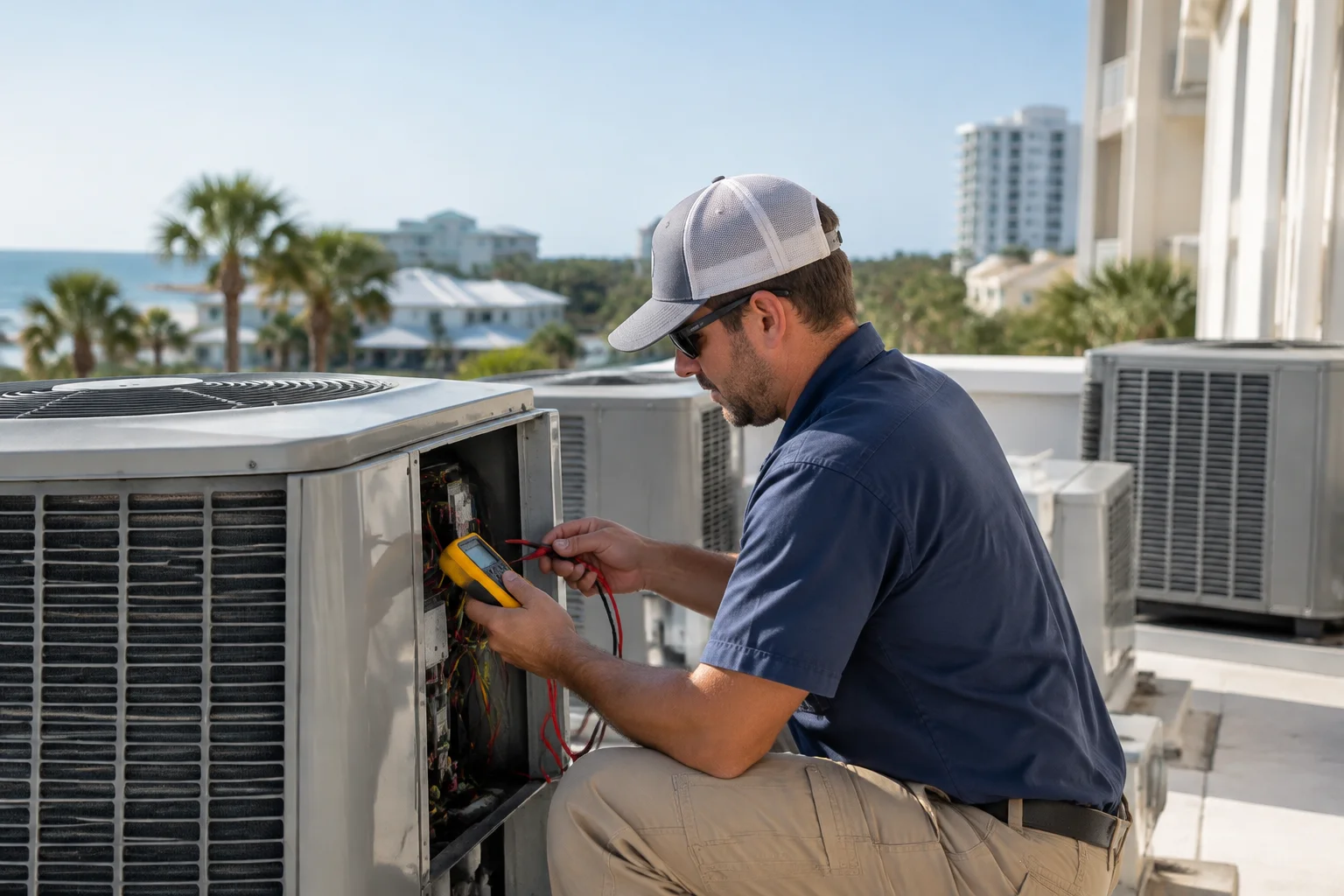
Panama City, FL summers can turn a small comfort problem into an all-out emergency fast. When your air conditioner struggles, the problem is not just temperature. Florida humidity, salt air exposure, and airflow restrictions can quickly affect indoor air quality, comfort, and even how hard your system works. That is why 24/7 Emergency HVAC Services in Panama City, FL matter for homeowners who want dependable cooling when the weather does not cooperate.
This guide walks you through common emergency cooling concerns, what often causes them, and how to plan repair decisions without guessing. It also covers preventive steps that reduce the chances of a mid-summer breakdown.
Why 24/7 emergency HVAC service is a real comfort issue in Panama City
In Bay County, cooling failures rarely feel convenient. The combination of heat, high humidity, and coastal conditions can stress air conditioning systems beyond what homeowners expect. Even if your system is not fully “broken,” it may still deliver weak airflow or struggle to remove moisture, leaving your home feeling sticky and uncomfortable.
Emergency HVAC service is not only about getting the temperature down. A good response also focuses on restoring proper airflow, supporting refrigerant system performance, and addressing related indoor comfort issues like condensate drainage and thermostat behavior. When those pieces do not work together, you can see symptoms such as:
- Hot rooms that do not cool evenly
- Air that feels cool at the vents but does not actually lower humidity
- Frequent cycling on and off
- Unusual noises from the outdoor unit
- Water where the condensate line should be draining
- Thermostat settings that do not seem to match what the system is doing
If you are searching for emergency AC repair near me or air conditioner repair near me, the goal is to get a licensed HVAC technician to evaluate the system in person and help you plan next steps based on real conditions, not online guesses.
Common comfort problems that often trigger emergency calls
Airflow that weakens over time or fails suddenly
Airflow problems can be caused by clogged or restricted ductwork, a dirty evaporator coil, a failing blower component, or issues with dampers and registers. In humid Florida weather, weak airflow can make the system run longer while still failing to cool effectively.
Homeowners sometimes notice that some rooms feel warmer than others, or that air coming from vents is weak. If you have ductwork concerns, it may help to start with duct inspection during a maintenance visit or after an emergency repair.
Humidity that stays high even when the thermostat is set correctly
Florida humidity is tough on comfort. A system that cannot remove moisture may still blow cool air, but the home feels damp and uncomfortable. Condensate drainage issues can contribute, especially if the condensate line is clogged or the drainage path is restricted.
Because humidity affects comfort and indoor air quality, this is a common reason homeowners look for air conditioning service near me during peak summer.
Short cycling and repeated restarts
Short cycling means the system turns on, runs briefly, and then shuts off again. This can happen for several reasons, including airflow restrictions, sensor and thermostat issues, or refrigerant system problems that require professional evaluation. Short cycling increases wear and can lead to additional failures if ignored.
Thermostat behavior that seems “off”
Modern thermostats control more than temperature. In some systems, thermostat settings can affect humidity control behavior, fan operation, and staging. If you notice that the thermostat reads one temperature while the home feels very different, it is worth having an HVAC contractor check calibration, wiring, and system response. Searching for thermostat installation near me can be useful later, but emergency cooling issues should still be evaluated on-site first.
Water leaks or condensate drainage problems
When condensate drainage does not work properly, water can collect around the indoor unit or in nearby areas. In humid climates, small drainage problems can become urgent quickly. A professional technician can inspect the drainage path and related system components to determine what is causing the issue.
What often causes emergency HVAC cooling failures in Panama City homes
Every system is different, but homeowners in Panama City often see similar patterns. Florida heat, coastal conditions, and long cooling seasons can contribute to faster wear on key components.
Florida heat and humidity stress on cooling equipment
Air conditioners are designed to move heat out of the home and remove moisture as part of normal cooling. When the outdoor conditions are extreme, the system runs longer. Over time, that can reveal problems like dirty coils, restricted airflow, and failing components that may not show up until the system is under heavy load.
Salt air and coastal exposure
Coastal environments can increase corrosion risk on outdoor equipment and metal components. Corrosion can impact performance and reliability, and it can also contribute to deterioration around connections and airflow paths. That is one reason professional HVAC maintenance near me visits matter in Bay County.
Refrigerant system performance issues that require on-site evaluation
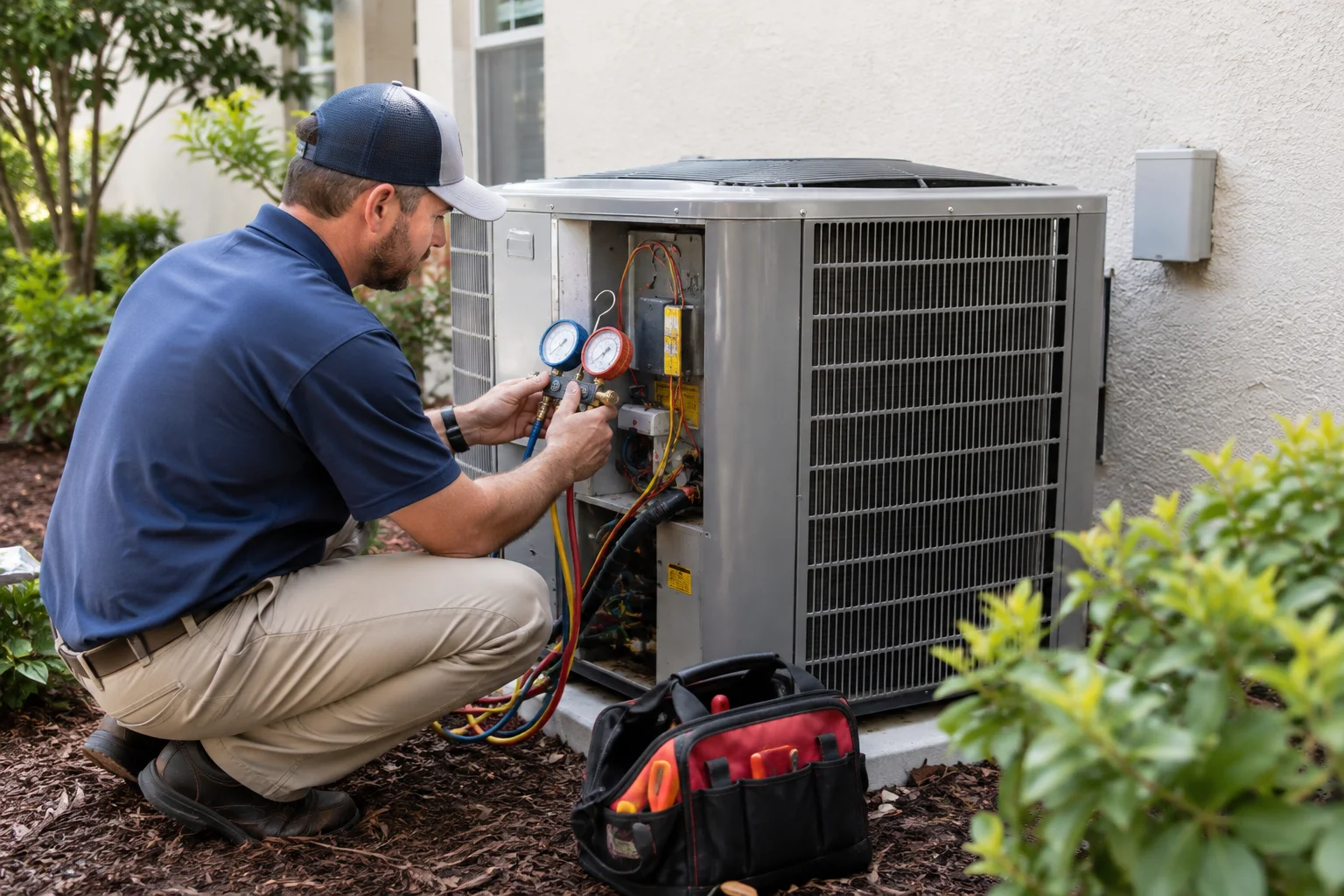
Refrigerant systems are designed to operate within specific conditions and airflow requirements. When airflow is restricted or other components are not performing, refrigerant system performance can become unstable. Homeowners should not attempt to diagnose refrigerant problems themselves. A licensed technician can evaluate the system safely and accurately based on measured conditions.
Ductwork and airflow restrictions
Even a well-functioning AC unit may struggle if ductwork is compromised. Leaks, disconnected sections, damaged insulation, or undersized ducts can reduce airflow and force the system to work harder. If you have uneven cooling, it is a strong clue that airflow needs attention.
If ductwork is part of the problem, the best next step is a structured assessment. Some homeowners benefit from pairing emergency cooling repairs with follow-up ductwork planning, such as duct inspection.
Condensate drainage breakdowns
Condensate drainage supports moisture removal. When drainage is blocked or improperly routed, it can affect humidity control and may lead to water problems. This is one reason technicians often check both comfort performance and condensate drainage during cooling emergencies.
How to prepare for an emergency AC repair without making things worse
You cannot control the weather, but you can control how quickly you respond and how well you communicate the problem. Preparation helps your technician focus on troubleshooting faster.
Document what you notice
Before the technician arrives, jot down what changed. Examples that help:
- When it started and whether it worsened quickly
- Thermostat settings and any recent changes
- Whether the indoor air feels humid, stale, or uneven
- Any water around the indoor unit or near vents
- Any unusual sounds or smells
This is especially useful if you are deciding between emergency service now versus scheduling routine HVAC maintenance near me later. Cooling emergencies are often time-sensitive, so being specific can speed up the evaluation.
Check basic safety and airflow basics
Do not try to open sealed panels or handle refrigerant. But you can do a few safe checks:
- Make sure supply and return vents are not blocked by furniture or curtains
- Replace a clearly clogged air filter if you can do so safely
- Confirm the thermostat is set to cooling and the system mode is correct
If the system is not running at all, or if there is water where it should not be, that is a strong reason to contact a licensed HVAC contractor immediately.
Know what not to do
- Do not add refrigerant or try to “top off” levels
- Do not bypass safety switches or panels
- Do not ignore water leaks or persistent drainage issues
These actions can increase damage risk and complicate repairs.
What a licensed HVAC technician will evaluate during emergency cooling issues
Homeowners often want a quick answer, but accurate troubleshooting takes measurements and inspection. A professional response typically focuses on:
- Airflow performance across the system, including supply and return pathways
- Indoor coil and system cleanliness factors that affect cooling and moisture removal
- Condensate drainage and the path water follows from the indoor unit
- Thermostat and control behavior that affects system operation
- Refrigerant system conditions that can only be confirmed with proper testing and safe procedures
For homeowners, the most important point is that diagnosis should happen in person. It is not appropriate for anyone to claim a refrigerant diagnosis, electrical diagnosis, or equipment replacement is needed without a physical evaluation.
Repair planning after emergency HVAC service
Emergency repairs restore comfort, but planning helps prevent the next breakdown. After the system is stabilized, use the technician’s findings to make informed decisions.
Ask about the root cause and what to watch for next
Good questions to ask:
- What caused the emergency cooling concern?
- Is the issue likely to return if we only do the quickest fix?
- Are there signs I should monitor between visits?
- Does this relate to ductwork, indoor air quality, or airflow?
If ductwork is involved, you may also want to plan for additional work like duct inspection or duct repair planning.
Consider indoor air quality impacts
When cooling systems struggle, indoor air quality can suffer. Stale air, uneven comfort, and excess moisture can contribute to discomfort for sensitive occupants. During emergency service, a technician can also look for factors that affect airflow and moisture control, which are closely tied to indoor air quality services.
Plan for preventive HVAC maintenance before the next heat surge
Emergency response is valuable, but preventive HVAC maintenance is what helps reduce the likelihood of another mid-summer issue. A maintenance visit can address things like coil cleanliness, airflow pathways, thermostat operation, and condensate drainage checks.
If you want more context on how emergency readiness impacts real homes, read Why 24/7 HVAC Response Matters in Panama City Homes.
Where ductwork, airflow, and zoning can change your cooling performance
Panama City properties vary widely, including older homes with aging ducts and newer builds with different airflow layouts. When ductwork is not balanced or is restricted, the system may run longer to achieve the thermostat setpoint. That increases energy use and can worsen humidity control.
Duct repair near me starts with inspection, not guessing
If you suspect duct leaks or damaged sections, the best approach is to have a technician inspect ductwork and airflow pathways. That helps you avoid spending on repairs that do not address the real limitation.
Multi-zone systems and airflow planning
Some homes use multi-zone setups to manage comfort across different areas. If a zone struggles, it can create uneven cooling and humidity issues. A professional evaluation can determine whether the problem is related to controls, airflow balance, or other components. If you have a multi-zone configuration, you can review VRF Multi-Zone Systems to understand how zoning impacts performance.
Energy use and comfort: why emergency HVAC matters for bills and humidity
When an air conditioner is not cooling effectively, it often runs longer and cycles more frequently. That can increase energy use, especially during Florida heat waves. Poor airflow can also cause the system to work harder to move the same amount of air, which can worsen wear and raise the chance of another failure.
In humid conditions, energy use is tied to moisture removal. A system that cannot properly remove humidity can keep the home feeling uncomfortable, even if the temperature seems “close enough.” That is why emergency cooling concerns should be treated as comfort issues, not just temperature issues.
Emergency readiness for different home setups in Bay County
Panama City homes and rentals may have different HVAC configurations. The planning approach stays similar, but the details can vary.
Vacation rentals and second homes
If you manage a rental property, emergency comfort problems can affect guest experiences quickly. Keeping service access ready and documenting system behavior can help reduce downtime during peak season. It also helps to schedule preventive maintenance before the hottest weeks arrive.
Older systems and duct aging
Older homes may have ductwork that has shifted, leaked, or accumulated debris over time. That can trigger airflow issues that become urgent during high humidity periods. If you notice persistent uneven cooling, it is worth planning ductwork evaluation alongside HVAC maintenance.
Commercial or multi-unit properties
If you manage a business or multi-unit building, HVAC emergencies can affect more than comfort. For additional perspective, see Keeping Commercial HVAC Trouble from Turning Into an Emergency in Panama City.
Choosing a local HVAC contractor for emergency cooling issues
When you search for HVAC contractor near me or local HVAC technician near me, focus on the ability to respond when conditions are urgent and the willingness to explain what is happening based on an on-site evaluation. A strong local service team understands how Florida heat and humidity affect cooling systems, and they know what to check for common Panama City comfort failures.
If you need 24/7 Emergency HVAC Services in Panama City, FL, A Superior Mechanical is built for fast, practical support for homes, rentals, and businesses across Bay County. You can also explore service coverage on the Panama City service area page and the broader Bay County service area.
Preventive steps that reduce emergency risk in Florida humidity
Emergency repairs are essential when something fails, but prevention is what keeps systems stable through the long cooling season.
Schedule HVAC maintenance before peak summer
When an HVAC maintenance near me search happens too late, homeowners often pay the price during the hottest weeks. Preventive maintenance can help keep airflow stable, support proper moisture removal, and reduce the chance of sudden failures.
Keep airflow clean and consistent
Replace air filters as recommended by your system requirements, keep vents clear, and make sure return pathways are not blocked. Airflow problems can quickly turn into emergency concerns when humidity rises.
Watch condensate drainage and indoor unit areas
If you notice water where it should not be, address it promptly. Condensate drainage issues can worsen indoor comfort and indoor air quality, and they can create conditions that lead to more problems.
Maintain thermostat settings and upgrade control if needed
Sometimes comfort issues come from control behavior, not just the cooling equipment itself. If you are dealing with inconsistent temperature or humidity control, ask about thermostat operation and whether upgraded heating control systems or control components are appropriate for your home. You can also review Heating Control Systems to understand how controls influence comfort.
Plan for system replacement discussions only after inspection
Sometimes emergency cooling leads to broader planning, including system replacement. But replacement decisions should be based on an in-person evaluation that considers performance, airflow, comfort results, and the condition of the overall system. It is not appropriate to assume replacement is needed without seeing the equipment and testing the system.
When to stop troubleshooting and call for emergency cooling help
If you are dealing with any of the following, it is time to contact an HVAC professional for 24/7 Emergency HVAC Services in Panama City, FL rather than waiting:
- The home is not cooling and the temperature is rising quickly
- Humidity feels extreme and the system cannot keep up
- There is water pooling around the indoor unit or signs of drainage failure
- The system repeatedly cycles or will not run at all
- You hear persistent abnormal noises or notice unusual odors
Florida weather does not pause, and neither should your comfort plan. A licensed local HVAC technician can evaluate what is happening, address the immediate cooling concern, and help you plan the next steps so your home stays comfortable through the rest of the season.
Find 24/7 Emergency HVAC Services in Panama City, FL
If you need 24/7 Emergency HVAC Services in Panama City, FL, visit our local service page or contact A Superior Mechanical today.
Map of Panama City, FL
Frequently Asked Questions
What should I do first when my AC stops cooling in Panama City?
Check the thermostat mode and settings, confirm vents are not blocked, and replace a clearly dirty filter if you can do so safely. If the home is not cooling, humidity is extreme, the system short cycles, or you notice water from condensate drainage, call for emergency AC repair so a licensed technician can inspect the system in person.
Can high humidity mean something is wrong even if the air feels cool?
Yes. In Florida humidity, an AC can blow air that feels cool but still fail to remove enough moisture. That can point to airflow restrictions, condensate drainage problems, or other refrigerant system performance issues that require on-site evaluation.
Is it safe for me to try to add refrigerant during an emergency?
No. Refrigerant issues need proper testing and safe handling. A technician should evaluate refrigerant system performance based on measurements and the system’s airflow conditions. Do not attempt to top off refrigerant yourself.
How does ductwork affect emergency cooling performance?
Ductwork problems can reduce airflow, which makes the system work longer and can worsen humidity control. If you have uneven cooling or weak airflow during an emergency, ask about duct inspection and whether duct repair near me is part of the solution.
What preventive steps help avoid another emergency HVAC call?
Schedule preventive HVAC maintenance before peak summer, keep airflow paths clear, monitor condensate drainage, and ensure thermostat operation is correct. A maintenance plan can help catch airflow and moisture control issues before they turn into emergency cooling concerns.
Related Articles
Photo Gallery