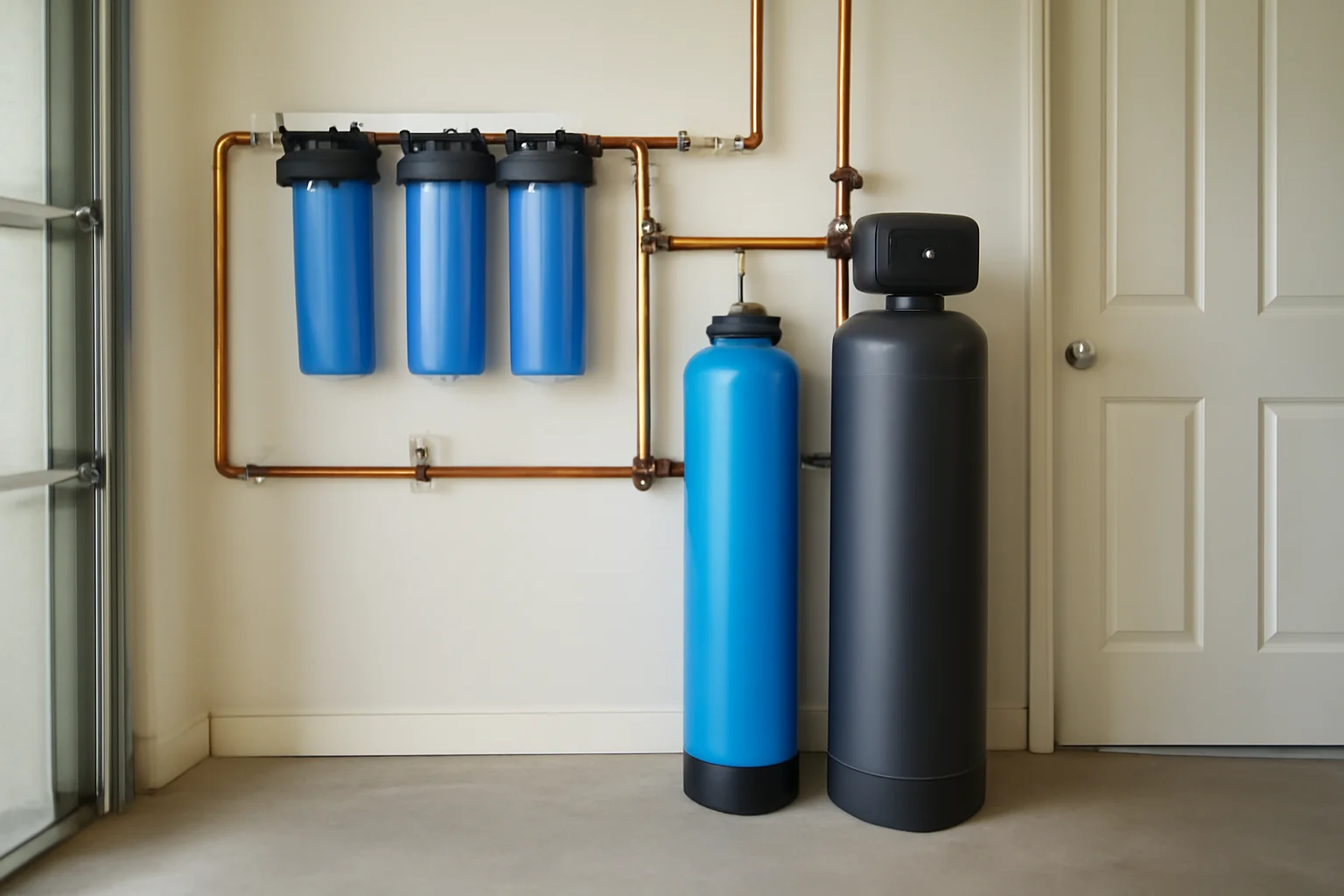
If you live on 30A, you know how quickly a home can show wear from the things you cannot always see. Hard water can leave glass looking cloudy, showerheads building up white scale, and laundry that never feels quite as clean as it should. Preventive water treatment service is one of the most practical ways to keep your water softening working consistently, protect plumbing and appliances, and support better drinking and bathing water for your family.
A Superior Mechanical provides water softening and water filtration solutions for homes, vacation rentals, and commercial properties across Walton County. The focus is simple: reduce hard water problems before they turn into costly repairs or replacement.
Why 30A homes tend to struggle with hard water
Hard water is not a “one size fits all” issue, but in coastal and inland parts of Walton County, many homes still experience water conditions that can cause mineral buildup. When water contains higher levels of hardness minerals, usually calcium and magnesium, those minerals deposit as water moves through your plumbing and appliances.
You notice it in everyday places:
Hard water spots on glass after showers or rinsing dishes.
Scale buildup around faucets and along showerheads.
Dry skin or dull hair after bathing, even when you are using the same products.
Soap that does not lather well or rinses off reluctantly.
Cloudy ice cubes and water that does not taste fresh.
Poor tasting coffee and cooking water that can affect the flavor of everything from soup to pasta.
Metallic, chlorinated, or unpleasant taste and odor concerns that make you want to use bottled water.
Visible sediment or discoloration that shows up in fixtures over time.
Preventive water treatment matters because the minerals do not just sit on the surface. Over time, they can coat internal plumbing components, reduce heat transfer, and shorten the life of water-using appliances.
What preventive water treatment does for water softening
Water softening is not just about installing a system. A preventive approach is about keeping the system tuned to your home’s water patterns, so it continues to protect your plumbing and improve water quality season after season.
In practical terms, preventive care typically includes:
Checking system performance so the softening media and brine cycle are working the way they should.
Verifying hardness reduction to confirm you are getting the right level of softening for your household size and water use.
Inspecting components like valves, connections, and drainage lines for early signs of wear.
Confirming salt and settings are matched to your water conditions and usage patterns.
Addressing taste and odor concerns with complementary filtration when needed, so your home has clean water systems near me that do more than soften.
This is especially important on 30A where many households include vacation schedules and variable occupancy. A softener that is not performing well may be fine for a few days, but the buildup can accelerate during peak use, after long absences, or when water demand changes.
How softening reduces scale buildup on fixtures and plumbing
When hard water flows through your home, minerals can deposit where water repeatedly evaporates or where heat concentrates minerals. That is why you see scale buildup around faucets, showerheads, and the edges of sinks. The same process can happen inside plumbing, water heaters, and appliance lines.
With preventive water softening service, your home is better protected from:
Scale buildup on faucets that becomes harder to remove over time.
White residue on shower glass and shower curtains.
Coating inside pipes that can reduce flow and efficiency.
Mineral deposits in water heaters that can lead to premature wear.
Faster appliance aging in dishwashers, washing machines, and ice makers.
That protection is not only about appearance. When scale builds up, appliances often need more energy to do the same job, and parts can wear sooner. Preventive water treatment helps you avoid the “everything is fine until it suddenly is not” scenario.
Better bathing and laundry results you can feel
Hard water can change how soap and shampoo work. If you have ever noticed that soap does not lather or rinses poorly, you are likely dealing with hard water. Soft water helps soap work the way it is supposed to, because it reduces the minerals that interfere with cleaning.
Homeowners often describe changes like:
Skin feels less dry after bathing.
Hair looks less dull and feels easier to manage.
Laundry comes out cleaner and fresher, with less residue on fabric.
Less spotting on glass shower doors and bathroom fixtures.
On 30A, many families and rental properties rely on consistent guest experience. When water quality is supported by a properly maintained softening system, showers feel better, towels and linens perform better, and bathrooms stay cleaner longer.
Drinking water and cooking water: softening plus filtration
Water softening targets hardness minerals. That helps with scale and soap performance, but many homeowners also care about taste, odor, and clarity for drinking and cooking water.
That is where whole home water filtration and reverse osmosis installation can play a role. Soft water can still benefit from filtration, especially if you notice:
Chlorine taste in water or an unpleasant odor.
Cloudy ice cubes that suggest particulates or air interactions.
Metallic tasting water or visible discoloration concerns.
Poor tasting coffee water and cooking water that does not bring out flavors.
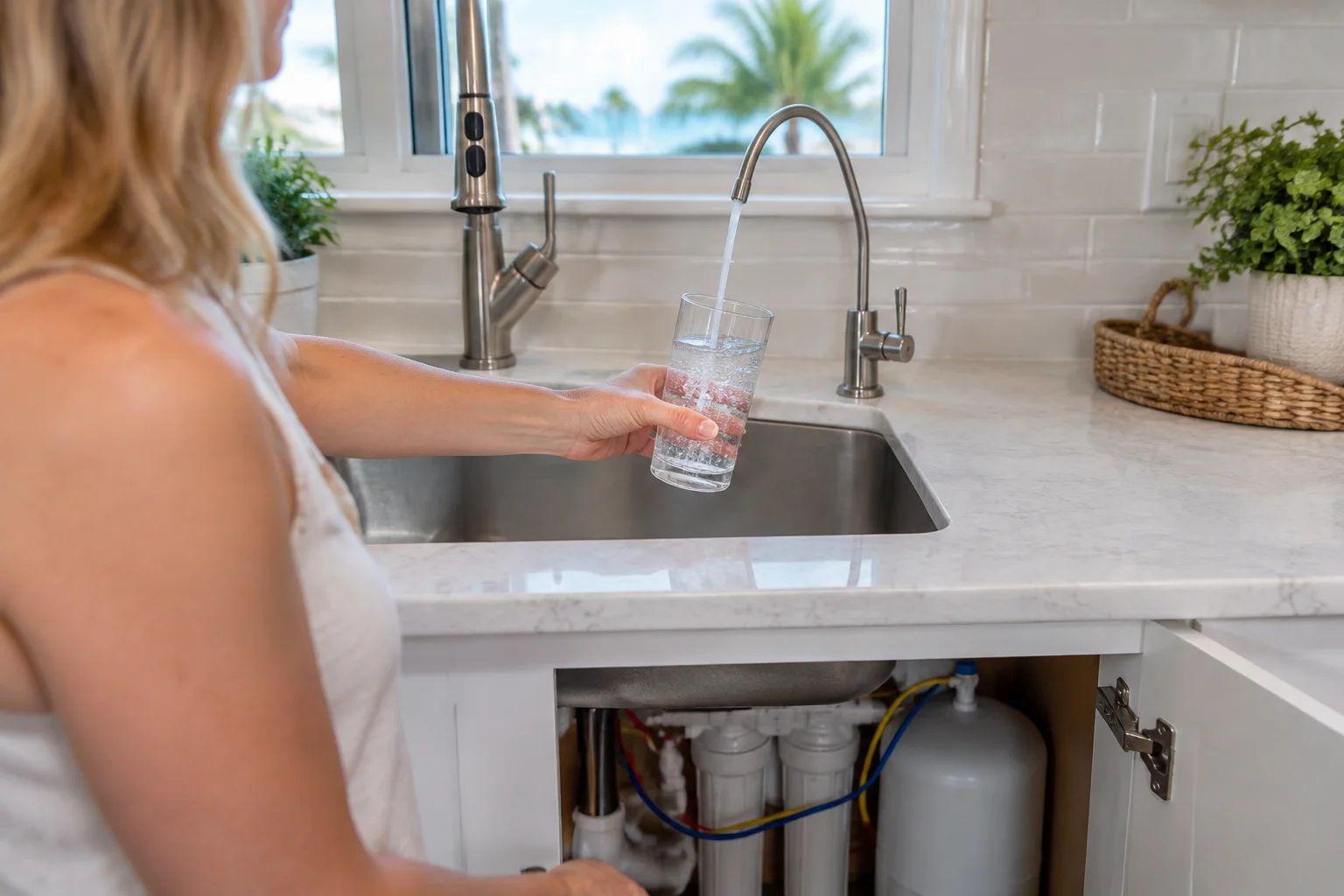
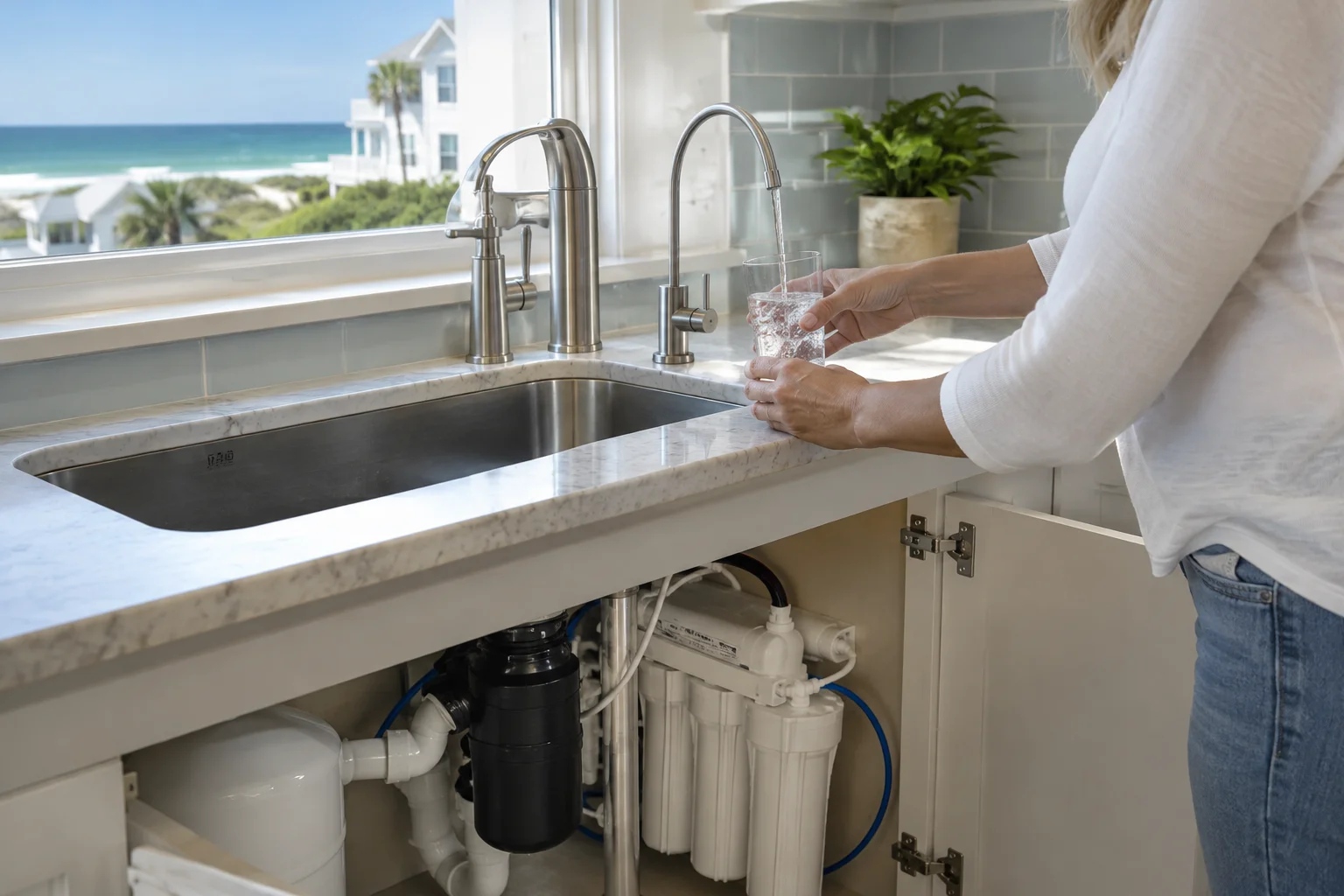
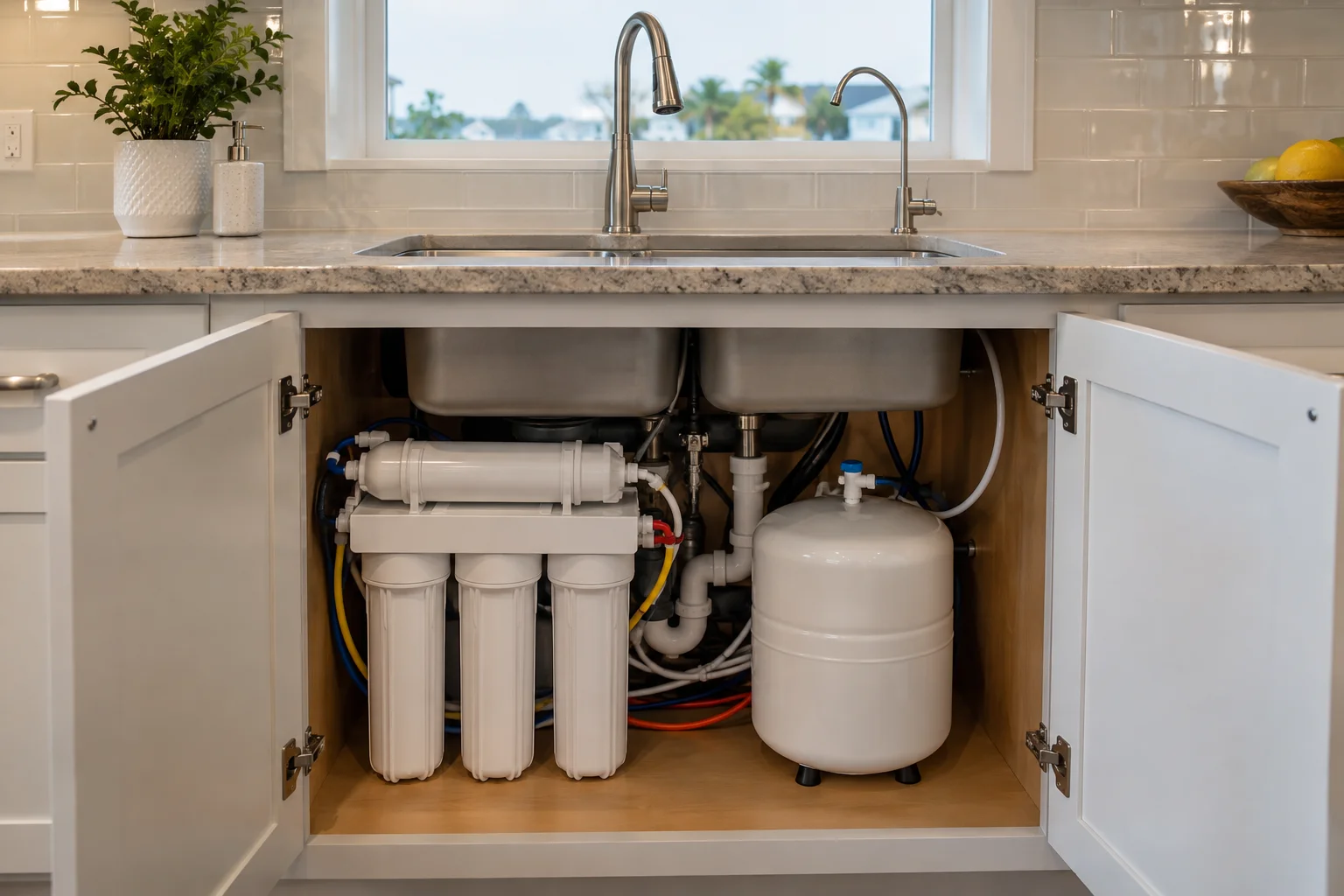
Many 30A homeowners build a clean water system in layers. For example, a water softener can protect plumbing and improve soap performance, while whole home filtration supports better water quality throughout the house. If you want drinking water filter near me results for the kitchen, reverse osmosis can be a strong option for everyday drinking and cooking.
AO Smith water filtration solutions can also help homeowners who want reliable, well-engineered filtration choices. When the goal is better drinking water and cleaner water for coffee, tea, and cooking, pairing water softening with the right filtration approach is often the most satisfying path.
Protecting appliances and extending service life
It is easy to underestimate how much hard water affects appliances until you start seeing early failures. When minerals build up, they can reduce efficiency and increase wear.
Preventive water treatment supports water softening in ways that help appliances last longer, including:
Dishwashers that leave spots on glassware.
Washing machines that struggle to rinse soap residue.
Water heaters that can become less efficient due to mineral scale.
Ice makers that produce cloudy ice cubes or inconsistent ice quality.
When hard water treatment becomes part of protecting fixtures and appliances, you often see fewer “mystery” issues like poor cleaning performance, higher energy use, and recurring maintenance. That is especially valuable for vacation rentals on 30A, where equipment has to perform reliably across busy seasons.
Whole home water filtration vs. water softening: how they work together
Homeowners sometimes assume one system solves everything. In reality, water softening and water filtration address different problems.
Water softening focuses on hardness
Water softening removes or reduces hardness minerals so they do not leave scale buildup on fixtures and inside plumbing. This is what helps with hard water spots on glass, scale buildup around faucets, and the residue that can make soap feel less effective.
Whole home water filtration targets additional water quality concerns
Whole home water filtration supports clean water systems by reducing sediment, improving clarity, and helping with taste and odor concerns depending on the filtration setup. For homeowners searching for whole home water filtration near me, this is often the best way to improve water quality throughout the house, not just at one faucet.
Reverse osmosis can refine drinking and cooking water
Reverse osmosis installation can be a strong choice when you want the cleanest possible water for drinking water and cooking water. It is commonly used for kitchen tasks where taste and clarity matter most, like coffee and family meals.
If you want to explore a complete approach, you can review the water softening service page for local guidance, including options tailored to Walton County homes: /service-areas/walton-county/30a/water-softening-30a-30A. For broader filtration planning, take a look at /water-filtration-ro-water-softeners.
Seasonal habits on 30A that affect softener performance
30A homes can have seasonal water usage patterns. A preventive approach accounts for real life, not just averages on paper.
Consider how these situations can influence water softening:
Vacation rental turnover: frequent laundry and dishwashing increases demand and can reveal performance issues quickly.
Long absences: if water usage pauses for extended periods, you may need a check after returning.
Guest spikes: more showers, more laundry, and more cooking water can change the softener’s workload.
Water usage changes: new landscaping irrigation or a household move can alter how often the system cycles.
Preventive water treatment service helps ensure your system is ready for the way your home actually runs.
Common “it might be hard water” clues homeowners notice first
If you are trying to connect the dots, these are some of the most common clues that water softening and filtration may be part of the solution:
Glass shower doors look permanently cloudy even after cleaning.
Scale buildup on faucets returns quickly after wiping it down.
Soap scum forms sooner than it should.
Dry skin or dull hair shows up after bathing.
Metallic, chlorinated, or unpleasant taste shows up in drinking water.
Cloudy ice cubes appear in the freezer.
Poor tasting coffee water makes meals less satisfying.
Appliances wear out faster than expected.
Visible sediment or discoloration and odor concerns keep coming back.
These clues are also why homeowners searching for water treatment near me often end up comparing softeners, filtration systems, and reverse osmosis options. The right answer depends on which water issues you are actually experiencing.
Why local service matters in Walton County
Water conditions can vary across neighborhoods, and home plumbing setups differ from property to property, especially on 30A where many houses have unique layouts, vacation rental plumbing demand, and different water usage patterns.
Working with a provider that serves Walton County means you get recommendations grounded in local experience. You can also review the broader 30A area coverage here: /service-areas/walton-county/30a and the full county service area: /service-areas/walton-county.
Maintenance checklist: keeping water softening dependable
Preventive water treatment does not mean you have to manage everything yourself. Still, homeowners can watch for early signals and support the system between service visits.
Helpful maintenance habits include:
Monitor water feel: if laundry seems harsher or soap stops lathering, it may indicate reduced softening.
Inspect fixtures: look for scale buildup around faucets and showerheads before it becomes stubborn.
Check taste and odor: if chlorine taste in water becomes more noticeable, filtration may need attention.
Keep an eye on ice clarity: cloudy ice cubes can point to water quality changes.
Schedule periodic service: preventive checks catch issues before performance drops.
If you are considering reverse osmosis installation or upgrading a clean water system, these habits pair well with smart installation and usage practices. You can also read: Smart Plumbing Habits for Reverse Osmosis Systems in 30A Homes and How Water Softening Protects Rosemary Beach Plumbing from Costly Water Damage.
Planning upgrades: fixtures, plumbing, and long-term water quality
Many 30A homeowners update bathrooms and kitchens alongside water treatment upgrades. That is a smart move, but it helps to think about the entire system, not just the visible parts.
Water softening and filtration can reduce the mineral stress that affects fixtures and finishes. If you are replacing plumbing fixtures, it helps to understand how water quality influences performance and longevity. This guide can help: What 30A Homeowners Should Know Before Replacing Plumbing Fixtures.
For homeowners thinking about broader plumbing resilience, preventive planning also matters. Pair water treatment with solid installation practices by reviewing Plumbing Installation That Helps 30A Homes Stay Ahead of Water Damage.
Choosing the right system for your home on 30A
Some homes need water softening primarily to stop scale buildup on faucets, improve bathing comfort, and protect appliances. Others need whole home water filtration to address sediment, odor, or discoloration concerns. Many homeowners want a reverse osmosis setup for drinking water and cooking water, especially when they dislike metallic tasting water or poor tasting coffee water.
A Superior Mechanical helps homeowners match the system to the problem. If you are dealing with hard water spots on glass, scale buildup around faucets and showerheads, and the “soap never works right” feeling, water softening is often the foundation. From there, filtration upgrades can create a complete clean water system.
For local water softening service in 30A, start with the dedicated page here: /service-areas/walton-county/30a/water-softening-30a-30A. If you want to explore the full range of options, including AO Smith water filtration and reverse osmosis, review /water-filtration-ro-water-softeners.
Find Water Softening in 30A, FL
If you need Water Softening in 30A, FL, visit our local service page or contact A Superior Mechanical today.
For a broader look at whole-home water filtration, reverse osmosis, and water softener options, visit our water filtration, RO, and water softener page.
Map of 30A, FL
Frequently Asked Questions
How do I know preventive water treatment will help my water softener?
If you see hard water spots on glass, scale buildup around faucets and showerheads, soap that does not lather well, or dry skin after bathing, your softener may not be performing at its best. Preventive service checks performance so softening stays consistent.
Will water softening fix chlorine taste in water or metallic tasting water?
Water softening mainly targets hardness minerals that cause scale. For chlorine taste in water, odors, or discoloration, whole home water filtration and sometimes reverse osmosis installation can help improve taste and clarity.
Is reverse osmosis worth it for 30A drinking water and cooking water?
Many homeowners choose reverse osmosis installation for drinking and cooking water because it can improve taste and reduce unwanted water quality concerns. It is especially helpful if you notice cloudy ice cubes, poor tasting coffee water, or unpleasant taste issues.
How often should water softeners be serviced in Walton County?
Most homes benefit from periodic preventive checks to confirm hardness reduction and keep components working properly. The right schedule depends on household size, water use, and system type, so a technician can recommend a plan after evaluating your setup.
Related Articles
Photo Gallery