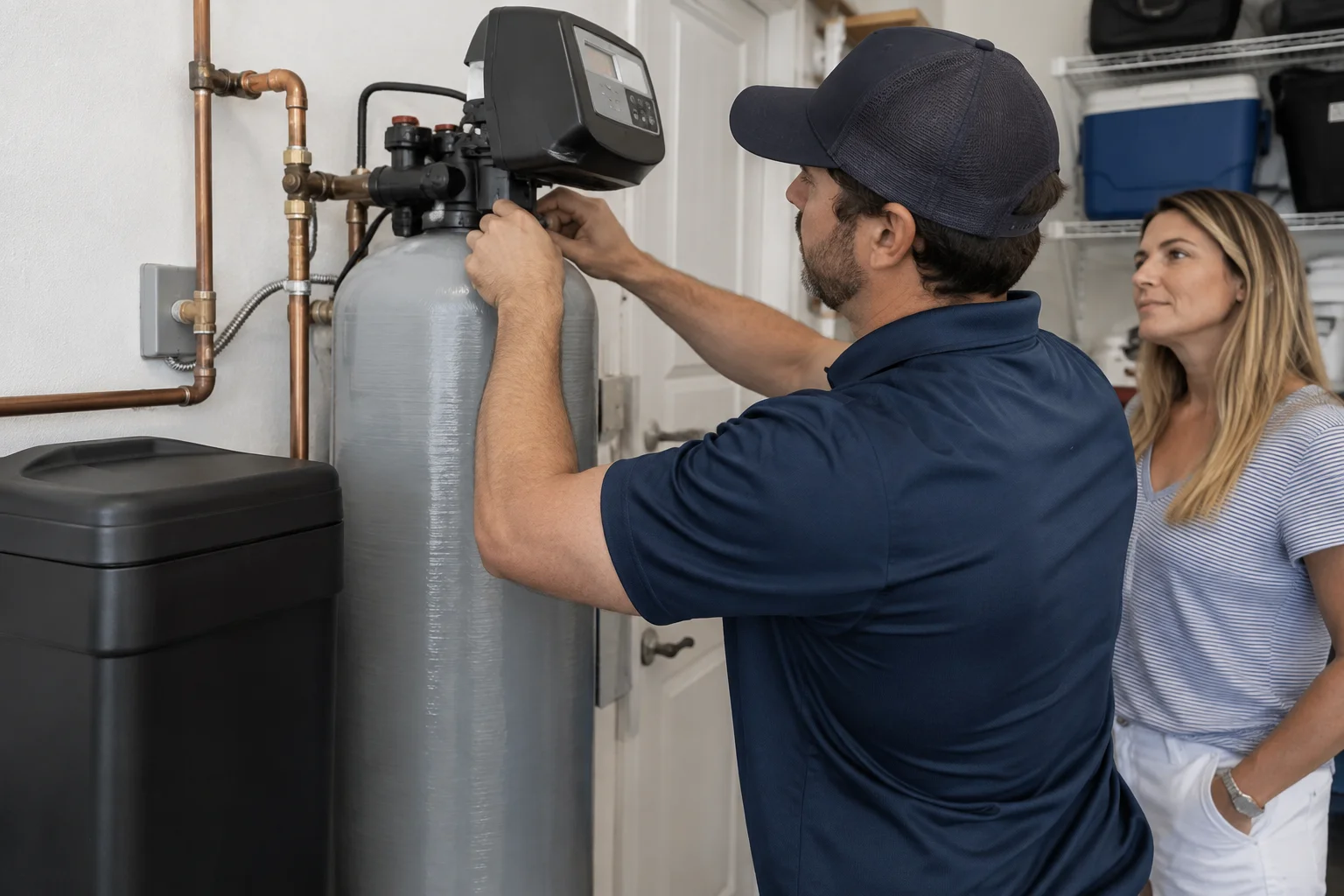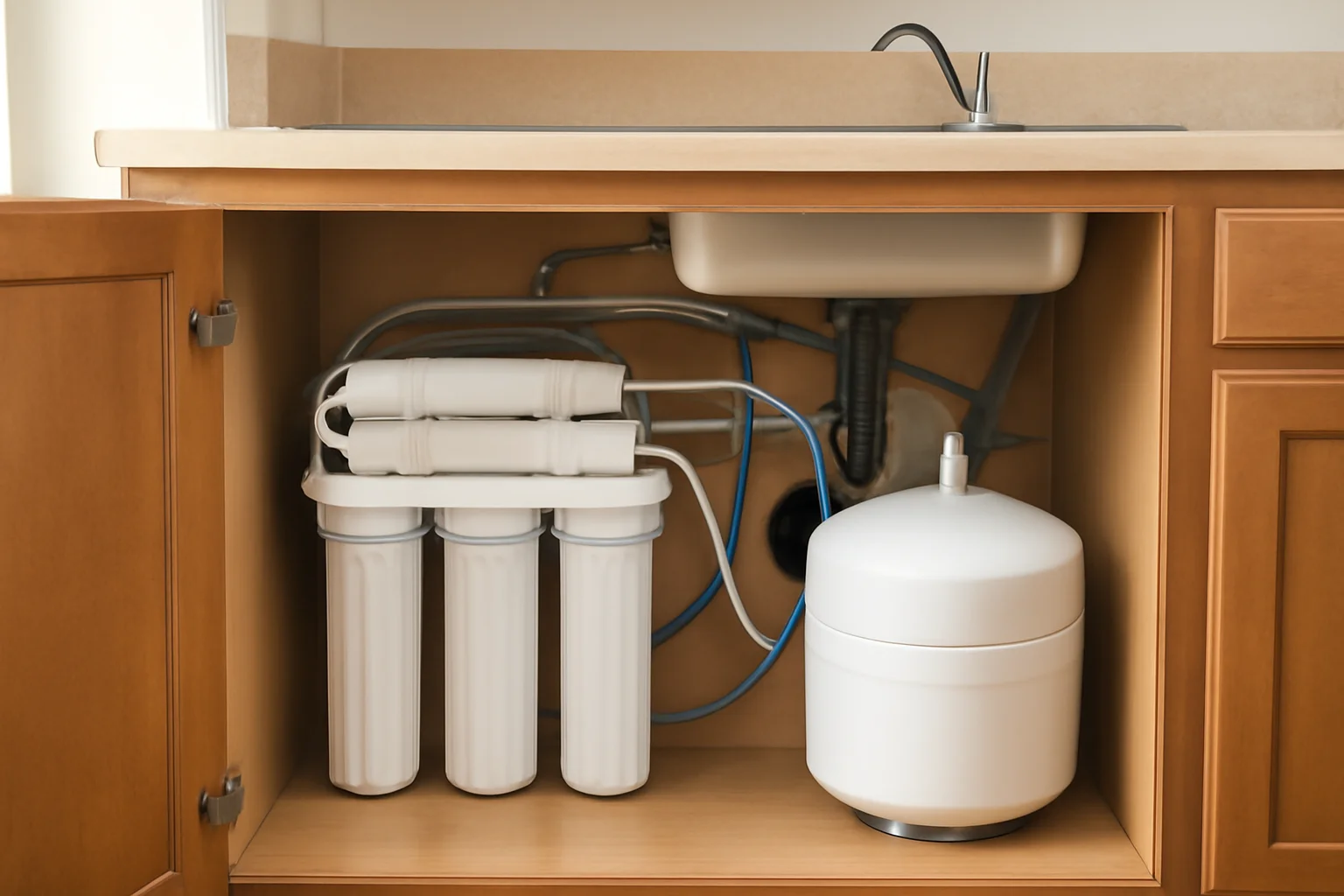
Lower Grand Lagoon homes rely on reverse osmosis to produce better drinking and cooking water, but RO systems do not operate in a vacuum. Local water chemistry, plumbing conditions, and even how a home is built and maintained can affect performance. When sediment builds up, odors linger, or chlorine shows up in taste, homeowners often notice it first in the kitchen and bathroom, then across laundry and fixtures.
This guide breaks down what commonly causes problems with reverse osmosis systems in both older and newer Lower Grand Lagoon homes, and what you can do to reduce sediment, odor, and chlorine concerns. It also explains how pairing RO with the right prefiltration and water softening strategy can protect appliances, improve everyday comfort, and extend the life of your clean water systems.
Why reverse osmosis can react differently in older versus newer Lower Grand Lagoon homes
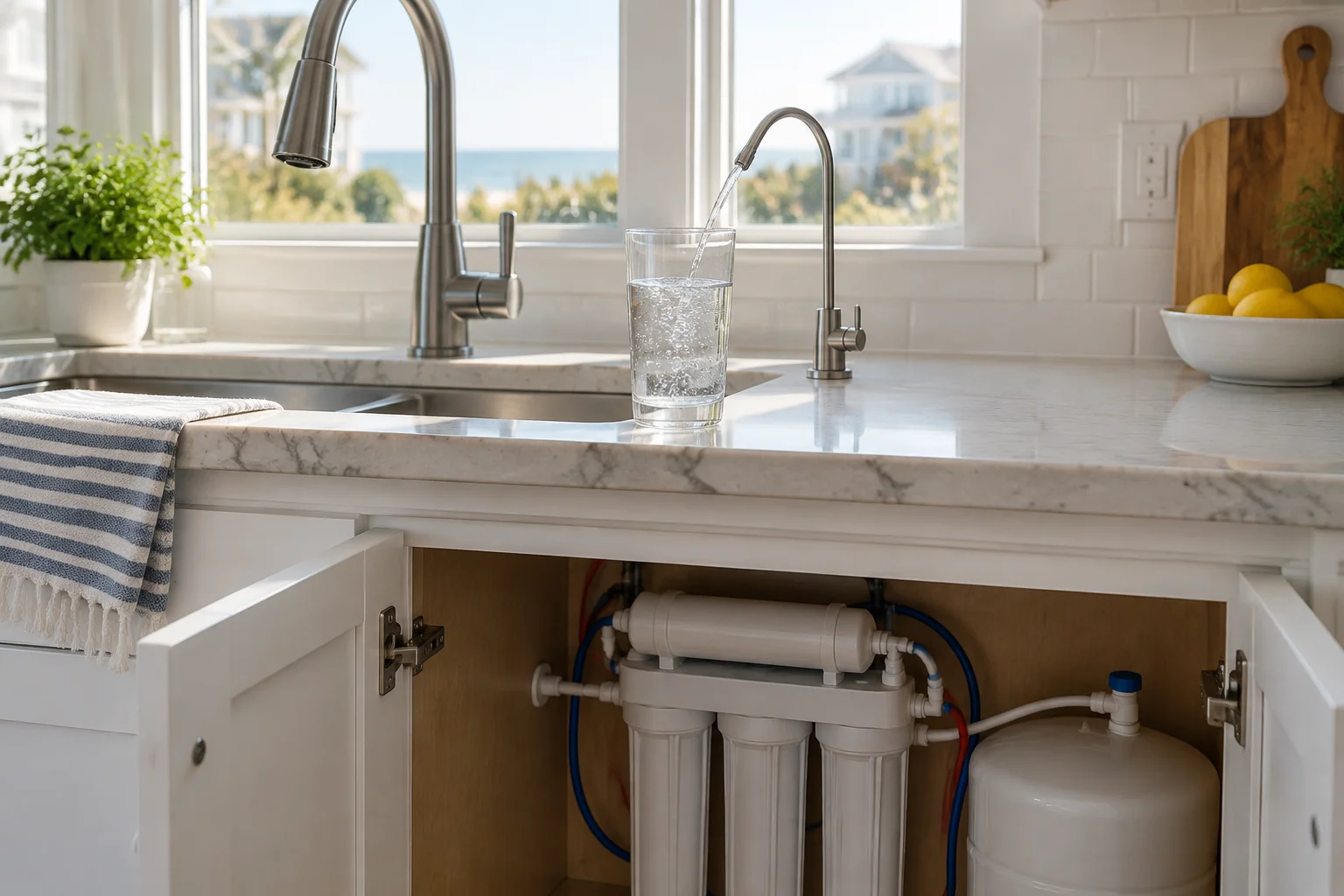
Reverse osmosis is a precise filtration process. It uses pressure to push water through a semi-permeable membrane that removes a wide range of dissolved impurities and many contaminants. But the membrane is also sensitive to what comes before it. That is why the “front end” of an RO system matters as much as the membrane itself.
In older homes, RO performance can be disrupted by legacy plumbing materials, long-standing sediment in water lines, and water that has already picked up minerals or particles. If you have seen hard water spots on glass, dishes, and fixtures, you are familiar with the mineral side of the problem. Scale buildup around faucets, showerheads, and plumbing is often the result of minerals that can also interfere with filtration and shorten the lifespan of RO components.
In newer builds, homeowners sometimes expect the water to be naturally cleaner. Yet new plumbing can still introduce issues. Construction debris, disturbed sediment in service lines, and inconsistent water chemistry during early occupancy can affect filters quickly. Even if the home is modern, the RO system still needs proper staging to protect the membrane.
Lower Grand Lagoon is in Bay County, and local water conditions can vary over time. That is why water treatment service matters. A system that worked well last year can start acting differently after changes to the source water, seasonal shifts, or changes in household water usage.
Common causes of sediment problems in RO systems
When sediment gets into a reverse osmosis system, it can clog prefilters, reduce flow rate, and increase stress on the membrane. Over time, this can lead to cloudy output water, reduced production, and more frequent maintenance.
1) Insufficient prefiltration before the RO membrane
Many RO systems include sediment and carbon filtration before the membrane. If the sediment filter is undersized, overdue for replacement, or bypassed, particles can reach the membrane. Homeowners may notice visible sediment, discoloration, or a musty or “off” smell that seems to come and go.
Prefilter maintenance is one of the most practical ways to reduce sediment in an RO system. If you are searching for “reverse osmosis systems near me” because your water looks worse, the fix is often not replacing the RO unit first. It is checking the prefilters and confirming they match the water conditions.
2) Hard water scale that turns into a RO performance issue
Hard water is not just an appearance problem. It can contribute to scale buildup around faucets, showerheads, and plumbing, and that same mineral tendency can foul RO components. If your glassware shows hard water spots, your shower leaves residue, or soap does not lather and rinse well, you are dealing with the kind of mineral load that can accelerate wear.
Some homeowners also report dry skin or dull hair after bathing when water is not treated well. While RO is focused on dissolved contaminants, scale and mineral management often require a broader plan, such as water softening or whole home water filtration depending on the home’s needs.
3) Sediment stirred up by plumbing changes or repairs
After a water line repair, replacing a faucet, or switching a water heater, sediment can loosen in lines. Even a small disruption can cause a short-term spike in particles. If your RO system suddenly starts producing cloudy water or your drinking water filter near me searches are increasing because the taste is off, recent work on plumbing is a clue.
Odor and taste issues: where they come from and what they mean
Odor and taste complaints are among the most common reasons homeowners call for water treatment near me help. RO systems can reduce many contaminants, but odor problems often originate from prefilters, storage tanks, or water that is not being conditioned properly.
1) Chlorine and chloramine concerns
In many municipal systems, chlorine or chloramine is used for disinfection. RO can remove a portion of these chemicals, but the carbon filtration stage is what usually handles much of the taste and odor. If the carbon filter is exhausted, the membrane can be overwhelmed, or the system is configured incorrectly, you may notice a metallic or chlorinated taste.
Homeowners often describe unpleasant taste in drinking water, poor tasting coffee and cooking water, or a lingering smell in the ice. Some even mention cloudy ice cubes, which can be a sign of dissolved contaminants or poor filtration performance.
2) Biofilm or stagnant water in the RO storage tank
If an RO system sits unused for long periods, water inside the tank can become stagnant. That can lead to odor that shows up in the first glass or first batch of ice. This is more likely when the tank pressure is off, the system cycles irregularly, or filters are overdue.
In busy Lower Grand Lagoon households, the RO tank may be used daily, but vacation schedules and seasonal occupancy can still create stagnation issues.
3) Filter media that is past its service life
It is easy to assume that “water still comes out” means the system is fine. But filters can degrade even if the flow looks normal. When carbon media is depleted, chlorine and odor compounds can pass through. When sediment filters are saturated, particles can contribute to discoloration and an off smell.
If your coffee tastes different or your cooking water does not behave the way it used to, the RO system may be producing water that is not as clean as you expect, even if it is technically “filtered.”
How hard water shows up in everyday life with RO system problems
Many homeowners start noticing water issues in the places they see and feel every day: kitchen glassware, bathroom fixtures, and laundry. These are the same areas where RO performance concerns often become obvious.
Hard water spots on glass, dishes, and fixtures
Hard water minerals leave spots that do not wipe away easily. If you are also seeing RO output that tastes off or looks slightly cloudy, it may indicate that mineral management and filtration stages are not aligned. A system that reduces dissolved contaminants but does not address mineral scale can still struggle to keep components clean.
Scale buildup around faucets and showerheads
Scale can build up around faucets, showerheads, and plumbing lines. That same mineral tendency can contribute to reduced RO flow, faster filter loading, and membrane fouling. When scale is heavy, it is often a sign you need stronger hard water treatment, not just more frequent filter swaps.
Dry skin or dull hair after bathing
Dry skin from hard water is a common complaint. Even if RO provides cleaner drinking water, your bathing water may still be hard. That is why some homeowners choose whole home water filtration near me solutions or water softener installation near me options in addition to RO at the kitchen sink.
Soap does not lather or rinse well
If soap does not lather or rinses poorly, minerals are interfering with cleaning. This can make laundry feel rough and can leave residue that shortens the lifespan of some appliances that rely on consistent water quality.
Appliances wearing out faster
Dishwashers, water heaters, and coffee equipment can experience scale-related wear. If you notice appliances aging sooner than expected, water quality is a likely contributor. Home water purification near me searches usually start after repeated repairs, but better water for drinking and cooking often begins with protecting the water pathways that appliances use.
Cloudy ice cubes and “why does my water look different?”
Cloudy ice cubes can be caused by several issues, including dissolved gases, air bubbles, and changes in filtration performance. When RO systems are not producing water consistently, ice may look cloudy even if the water seems acceptable at first sip.
If you are seeing cloudy ice cubes and metallic, chlorinated, or unpleasant taste, it is a strong sign that the carbon stage and filter timing need attention. It can also point to a need for improved pre-treatment to reduce sediment loading.
How to reduce sediment, odor, and chlorine concerns in your RO system
Homeowners can often improve RO performance with a few targeted steps. The best approach depends on whether your primary issue is sediment, taste and odor, or mineral scaling.
1) Keep a strict filter replacement schedule based on local performance
Many RO problems are really filter timing problems. A sediment filter that is overdue can allow particles to reach the membrane. An exhausted carbon filter can allow chlorine taste and odor to slip through.
In Lower Grand Lagoon, where water conditions can vary, the right schedule is not always the generic one printed on a filter box. A Superior Mechanical can evaluate your system and help set a realistic plan for your household, whether you are in an older home with legacy plumbing or a newer build that experienced early construction sediment.
2) Add or upgrade sediment filtration when particles show up
If you are seeing visible sediment or discoloration, sediment filtration should be the first area reviewed. Upgrading to the proper prefilter size and media can reduce the load on the RO membrane. That helps preserve production rate and reduces the chance of odor and taste problems caused by overloaded filtration stages.
3) Use carbon filtration to control chlorine taste and odor
For metallic or chlorinated taste and persistent odor, carbon filtration is often the key. When carbon media is fresh and properly sized, you are more likely to get better tasting drinking water and better water for drinking and cooking.
This is also where AO Smith water filtration solutions can fit well. Many homeowners choose AO Smith RO systems because the components and staging are designed to work together, especially when paired with correct maintenance.
4) Consider water softening or whole home water filtration for scale control
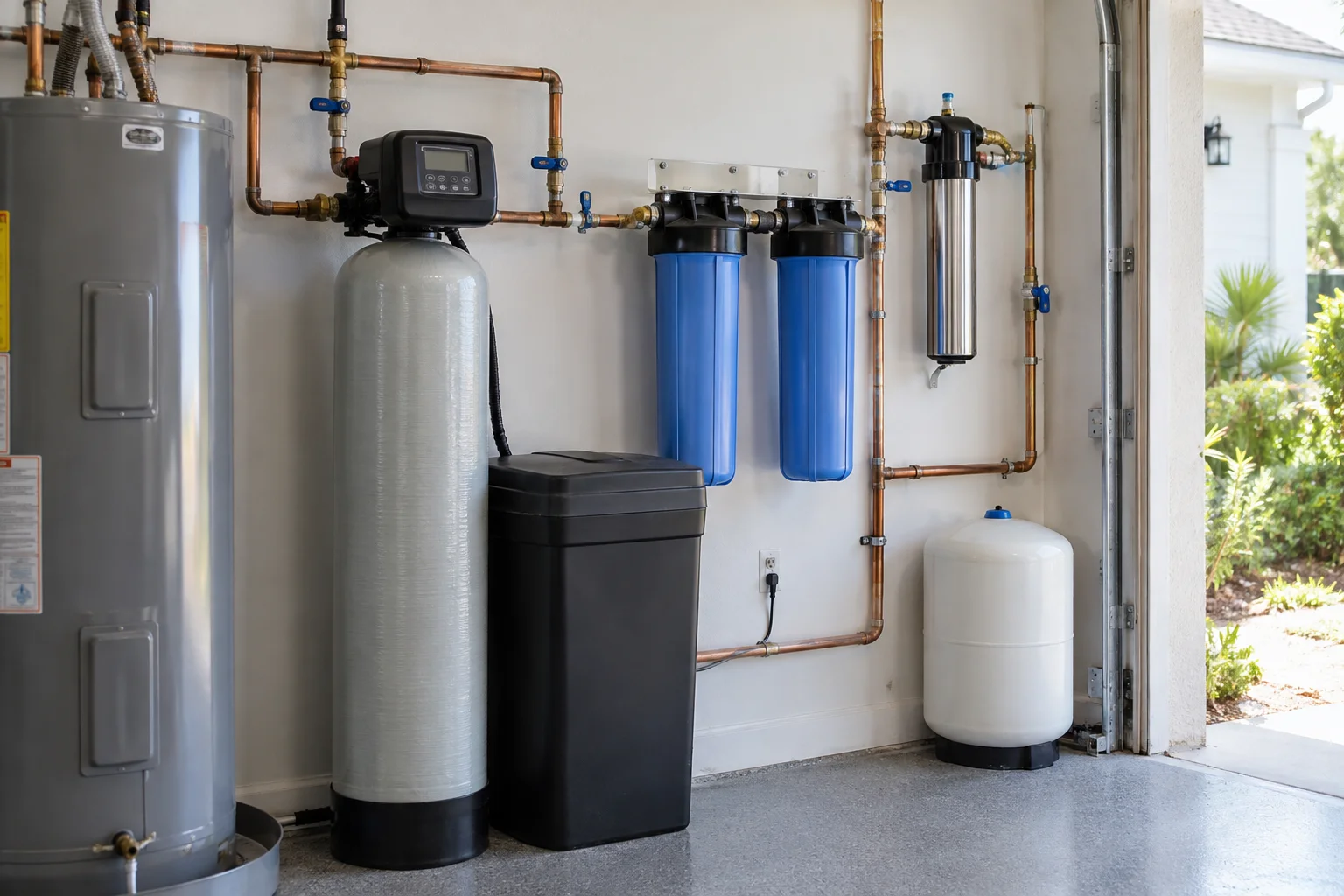
Kitchen RO can improve drinking water, but whole home water hardness still affects bathing, laundry, and fixtures. If you are battling hard water spots on glass and scale buildup around faucets and showerheads, a water softener installation near me may be worth discussing.
Some households benefit from AO Smith water softener solutions to reduce scale and protect plumbing and appliances. Others prefer whole home water filtration near me options to improve overall water quality before it reaches fixtures and appliances.
If you want a broader clean water system, you can explore the approach at /water-filtration-ro-water-softeners. For reverse osmosis specifically in Lower Grand Lagoon, review /service-areas/bay-county/lower-grand-lagoon/reverse-osmosis-systems-lglbc.
5) Address RO storage tank and system sanitation when odor appears
When odor shows up, especially if it is strongest in the first glass, sanitation and tank maintenance may be needed. Stagnant water can cause biofilm-related odors. Proper system cleaning and verifying the tank pressure and cycling pattern can reduce recurrence.
What happens in real Lower Grand Lagoon kitchens when RO water is not right
Picture a typical evening scene: a family member fills an ice tray, pours a glass for dinner, and makes coffee the next morning. If the water tastes chlorinated or has a metallic note, coffee can taste flat or harsh. Cooking water can affect how flavors develop, and ice that looks cloudy can make the whole process feel less clean.
Homeowners also notice when water does not rinse as expected. Dishes may still feel different, glasses may show spots faster, and appliances like kettles can accumulate residue sooner. When RO systems are not staged correctly for sediment and chlorine, the kitchen becomes the first place the problems show up.
That is why many homeowners start with reverse osmosis installation or repair, then realize they also need whole home water filtration or water softening to protect the rest of the water experience.
How to tell if your RO issue is a filter problem, a scaling problem, or a bigger system issue
You do not need lab equipment to narrow down what is happening. These observations can help you decide whether you can troubleshoot with maintenance or whether you should schedule a professional inspection.
Likely filter or pre-treatment issue
Look for:
- Odor or unpleasant taste that increases over time
- Metallic, chlorinated taste
- Cloudy ice cubes that correlate with RO output changes
- Visible sediment or discoloration
Likely hard water scaling and mineral management issue
Look for:
- Hard water spots on glass, dishes, and fixtures
- Scale buildup around faucets and showerheads
- Soap does not lather or rinse well
- Dry skin or dull hair after bathing
- Appliances wearing out faster
Possible membrane or system performance issue
Look for:
- Sudden reduction in RO production or flow
- Water quality changes that persist even after filter replacement
- Frequent clogging of prefilters
- Persistent odor that returns quickly
If you are seeing these performance red flags, it is a good moment to contact a local water treatment professional rather than continuing to replace parts without addressing the root cause.
Maintenance habits that reduce problems between service visits
Some simple habits can reduce sediment and odor recurrence:
- Check for timing consistency: If your household uses RO water daily, notice if issues appear after periods of low use.
- Pay attention to taste and ice: Cloudy ice cubes and chlorinated taste are often early warnings.
- Use the system as intended: Avoid bypassing filters or turning off components without understanding how the system cycles.
- Watch for changes after plumbing work: If you replace a faucet or repair a line, expect sediment disturbance and plan for inspection.
For homeowners planning upgrades, the guidance in A Homeowner’s Guide to Better Reverse Osmosis Systems in Lower Grand Lagoon, FL can help you compare options and maintenance needs.
Why Lower Grand Lagoon homeowners benefit from local water treatment service
Water treatment is not one-size-fits-all. Even within Bay County, water quality can shift. Seasonal changes, water usage patterns, and how a home’s plumbing is set up can all influence what your RO system experiences.
Local service means someone can look at your specific symptoms and your system configuration. That includes checking prefilters, verifying carbon filtration performance, evaluating the role of hard water, and confirming whether whole home water filtration or AO Smith water softener solutions are needed for scale reduction.
If you want to connect RO performance to overall plumbing protection, you may also find this helpful: Cleaner Water, Better Plumbing: Why Filtration Matters in Lower Grand Lagoon Homes.
When it is time to call A Superior Mechanical
Call a professional for reverse osmosis system installation, repair, or maintenance when:
- Your water has metallic, chlorinated, or unpleasant taste despite recent filter changes
- You see cloudy ice cubes or discoloration that does not improve quickly
- RO production drops noticeably
- Prefilters clog faster than expected
- You are dealing with hard water spots on glass and heavy scale buildup around faucets and showerheads and want a coordinated plan
For homeowners planning a service visit, it can also help to think about future maintenance decisions. You can reference Making Smarter Plumbing Maintenance Decisions in Lower Grand Lagoon Homes to understand how water quality ties into longer-term home protection.
And if your home has had recurring water problems, it may be worth reviewing Staying a Step Ahead of Plumbing Emergencies in Lower Grand Lagoon for practical guidance on keeping water systems stable.
Service coverage in Lower Grand Lagoon and Bay County
A Superior Mechanical supports reverse osmosis system needs across Lower Grand Lagoon and throughout Bay County. If you are browsing for water treatment near me, clean water systems near me, or drinking water filter near me options, working with a local team can help you address sediment, odor, and chlorine concerns with the right mix of reverse osmosis, AO Smith water filtration components, and hard water treatment strategies.
To learn more about reverse osmosis system services in your area, visit /service-areas/bay-county/lower-grand-lagoon and the RO service page at /service-areas/bay-county/lower-grand-lagoon/reverse-osmosis-systems-lglbc. For broader Bay County coverage, see /service-areas/bay-county.
Choosing the right approach: RO plus the right water conditioning
Many homeowners assume reverse osmosis alone will solve every water concern. RO can dramatically improve drinking water quality, but sediment, odor, and chlorine issues often point to prefiltration, carbon media needs, and sometimes hard water management. When those pieces align, you get the everyday benefits: better tasting drinking water, improved coffee and cooking water, clearer ice, and a more comfortable bathing experience.
Whether your home is older with established plumbing or newer with a fresh setup that still needs proper conditioning, the goal is the same: clean water systems that run reliably and protect the fixtures and appliances you use every day. With the right maintenance and the right combination of filtration and water softening when needed, your RO system can keep delivering the clean, refreshing water your family expects.
Find Reverse Osmosis Systems in Lower Grand Lagoon, FL
If you need Reverse Osmosis Systems in Lower Grand Lagoon, FL, visit our local service page or contact A Superior Mechanical today.
For a broader look at whole-home water filtration, reverse osmosis, and water softener options, visit our water filtration, RO, and water softener page.
Map of Lower Grand Lagoon, FL
Frequently Asked Questions
Why does my reverse osmosis water taste chlorinated even though it is filtered?
Chlorine taste is usually tied to the carbon stage before the membrane. If the carbon filter is exhausted, undersized, or overdue, chlorine or related odor compounds can pass through. A technician can check your prefilters and system configuration and recommend the right replacement schedule.
What causes sediment or discoloration in RO drinking water?
Sediment often means the pre-sediment filter is overloaded or not doing enough to protect the RO membrane. Hard water scale and disturbed plumbing lines can also contribute. If you see visible sediment or discoloration, it is best to have the RO system inspected rather than only replacing parts repeatedly.
Can hard water spots on glass and scale buildup mean my RO system is failing?
Not always. Hard water spots and scale buildup can be coming from the rest of your water supply, especially for bathing and cleaning. RO improves drinking water at the kitchen tap, but water softening or whole home water filtration may be needed to reduce scale throughout the home.
Why are my ice cubes cloudy when I use RO water?
Cloudy ice cubes can be caused by changes in filtration performance, dissolved gases, or inconsistent RO output. If cloudiness comes with metallic or chlorinated taste, it often points to carbon filter issues or prefilter loading. Checking filter condition and system production helps pinpoint the cause.
Related Articles
- A Homeowner’s Guide to Better Reverse Osmosis Systems in Lower Grand Lagoon, FL
- Cleaner Water, Better Plumbing: Why Filtration Matters in Lower Grand Lagoon Homes
- Staying a Step Ahead of Plumbing Emergencies in Lower Grand Lagoon
- Making Smarter Plumbing Maintenance Decisions in Lower Grand Lagoon Homes
Photo Gallery