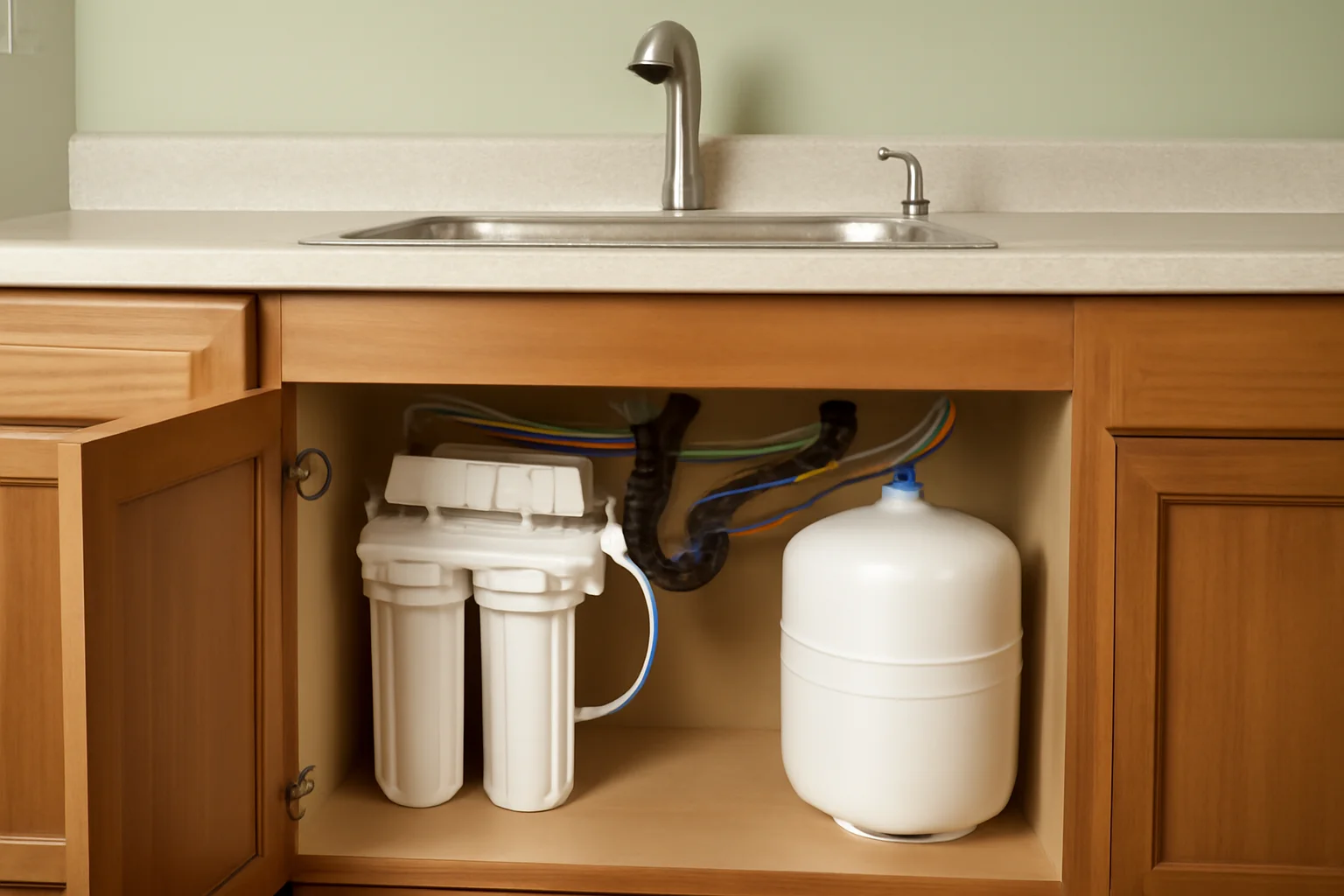
If you are shopping for a reverse osmosis system near me or you already have RO at home, you have probably noticed something familiar: water quality can feel different across the year. In Bluewater Bay, FL, seasonal changes in household routines, outdoor water use, and local water conditions can all influence how your reverse osmosis system performs.
This guide is built for homeowners who want reliable drinking water, better cooking water, and fresher-feeling baths, even when the weather and the way you use water changes. We will also cover common problems like chlorine taste in water, cloudy ice cubes, and scale buildup that can show up around fixtures.
Why reverse osmosis water can change with the seasons
Reverse osmosis is designed to reduce contaminants and improve taste and clarity by forcing water through a semipermeable membrane. But RO is not a set-it-and-forget-it appliance. Its performance depends on conditions upstream (your incoming water) and how your home uses water downstream.
1) Seasonal water use patterns affect RO storage and flushing
In many Bluewater Bay households, daily routines shift with the weather. Summer might mean more guests, more drinking water, more ice for coolers, and extra showering. Winter might mean fewer visitors, lighter kitchen use, and longer gaps between RO draws.
When RO water sits in the storage tank for longer periods, it can pick up stale characteristics depending on system design, temperature, and how well the filters are maintained. Even when the RO membrane is working, “first-draw” water after a long pause can taste slightly different than water pulled after regular use. This is one reason homeowners often describe a change in metallic or unpleasant taste during seasonal lull periods.
2) Incoming water conditions can shift with the local environment
Bluewater Bay is in Okaloosa County, and local water quality can vary with seasonal weather patterns. Rainfall, groundwater recharge, and temperature swings can change how minerals and dissolved materials behave. If your home sees more mineral content or higher dissolved solids during certain months, your RO system may work harder to produce the same level of clarity and taste.
When RO has to work harder, you may see symptoms that overlap with hard water issues: hard water spots on glass, scale buildup on faucets, and film on showerheads. Even if RO improves drinking water, hard water effects can still show up on fixtures if you are not addressing hardness at the whole-home level.
3) Temperature influences RO production and membrane efficiency
Water temperature affects flow rate and how quickly your system can produce RO water. In cooler months, RO production can slow. That can lead to longer periods between tank refills and more noticeable differences when you are making coffee, filling an ice tray, or running cooking water for pasta and soups.
Common seasonal RO symptoms Bluewater Bay homeowners notice
Below are the issues that often show up as families move between school schedules, summer travel, and slower winter weeks. Some of these symptoms point directly to reverse osmosis maintenance needs. Others hint that you may need additional water treatment beyond RO, like water softening or whole home filtration.
Cloudy ice cubes and “off” drinking water
Cloudy ice cubes can be caused by dissolved minerals, air, or sediment. If your RO system is producing water that still has higher-than-normal total dissolved solids, you may notice cloudy ice. You might also detect a chlorinated or metallic taste, especially in the kitchen when you first draw water.
Poor tasting coffee and cooking water
It is hard to make consistently great coffee when the water is inconsistent. Homeowners often report poor tasting coffee water or a “flat” flavor in cooking water when mineral balance and chlorine byproducts are not under control. RO typically improves taste, but if filters are aging or the membrane is nearing end-of-life, flavor can drift.
Soap does not lather and skin feels dry after bathing
Reverse osmosis improves drinking water, but it does not automatically solve hard water throughout the home unless the system is designed for that purpose. When hardness is high, you may see soap that does not lather or that rinses poorly. The result is often dry skin or dull hair after bathing, plus residue that can make towels feel less fresh.
Scale buildup around faucets, showerheads, and plumbing
If you are seeing scale buildup around faucets, showerheads, and plumbing, that is a strong indicator of hard water effects. RO can reduce certain dissolved solids for drinking water, but scale on fixtures usually points to hardness in the water that reaches those outlets.
Over time, scale can also contribute to reduced flow, worn shower components, and faster appliance wear, especially in water-heating equipment.
Visible sediment, discoloration, and odor concerns
Sometimes the problem is not the RO membrane. It can be sediment or carbon-related filtration upstream. If you notice visible sediment, water discoloration, or persistent odor concerns, the pre-filters and carbon stages may need inspection or replacement. This is also where homeowners should think about whether they need whole home water filtration to protect the RO system and improve water quality beyond the kitchen.
Appliances wearing out faster
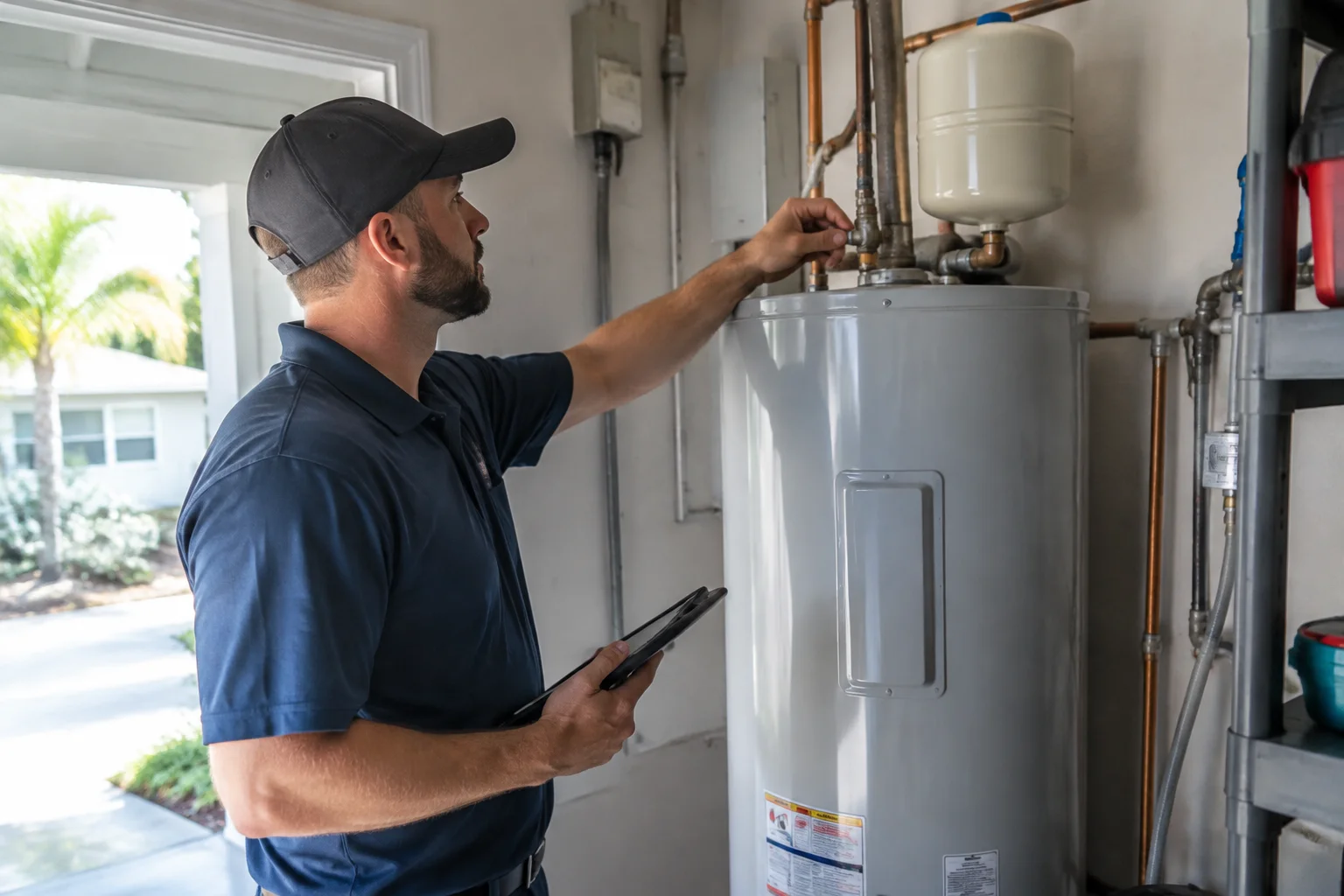
When scale builds up in water lines and heating components, appliances can lose efficiency. Homeowners often notice that equipment seems to age faster, from kettles and water heaters to ice makers and coffee equipment. Addressing hardness with appropriate treatment can help protect those investments.
Where reverse osmosis helps most in a Bluewater Bay home
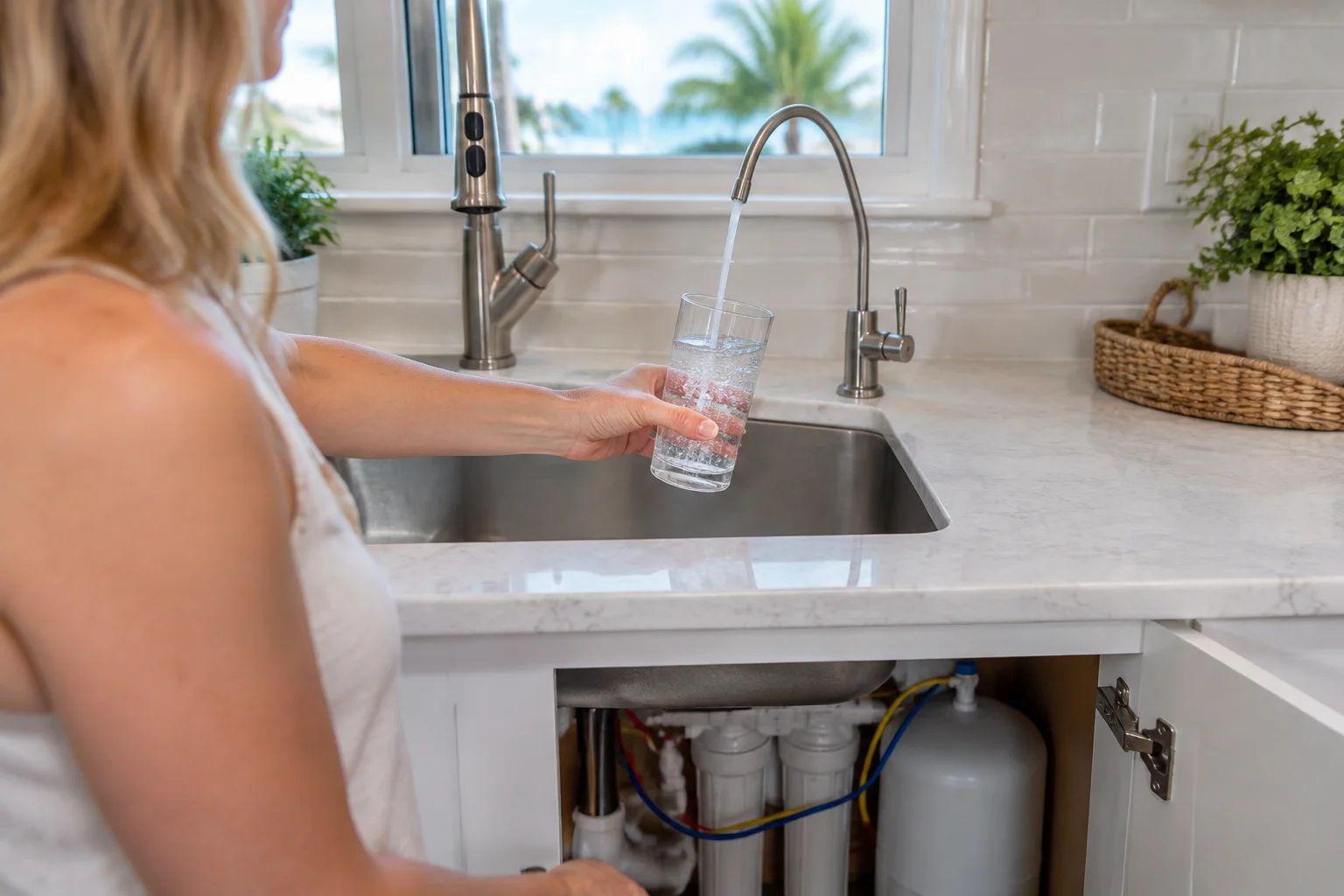
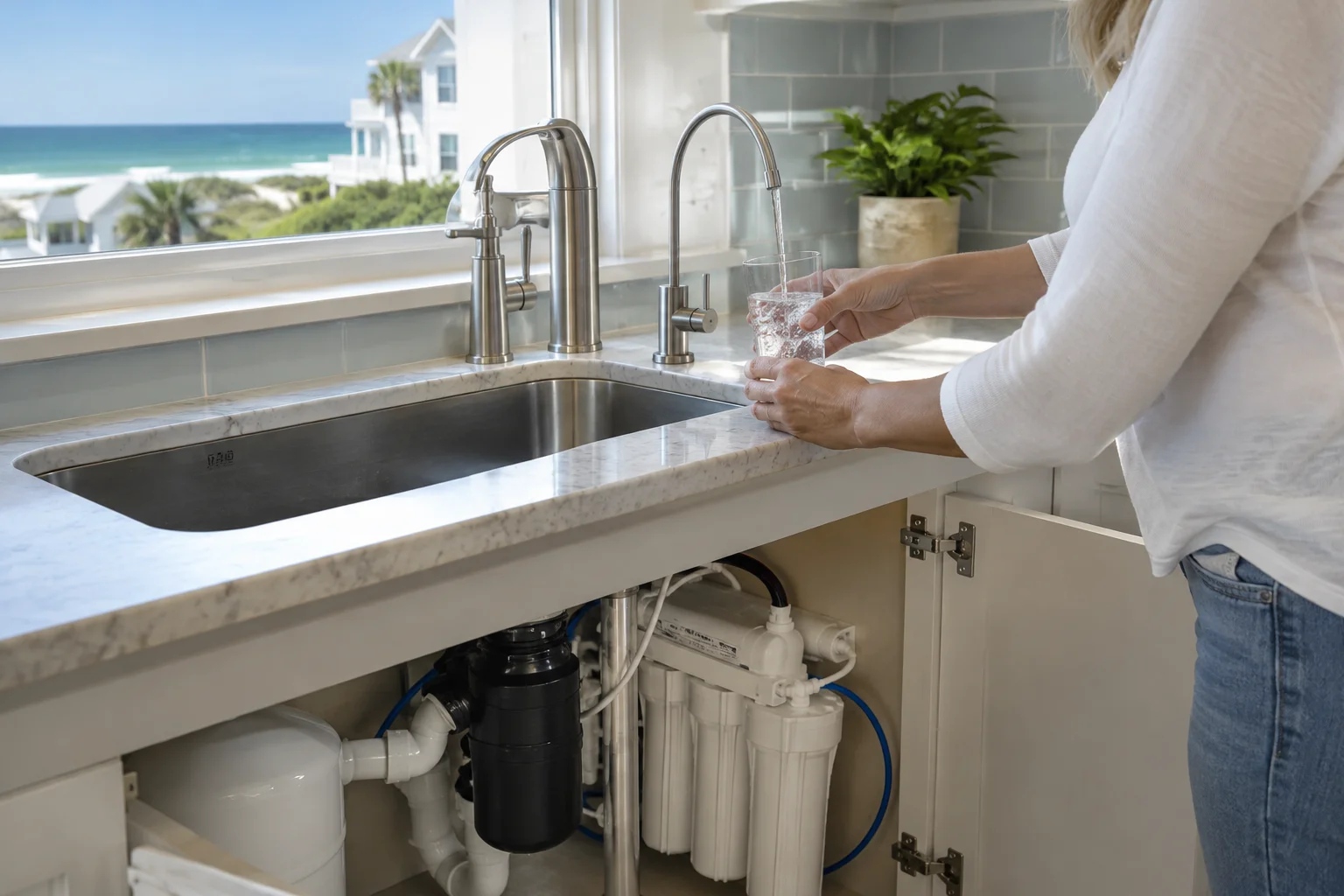
RO is a focused system. Many homeowners use it at the kitchen sink for drinking water and cooking. That is where taste and clarity matter most for family kitchen scenes: filling a glass, rinsing produce, making coffee, and cooking pasta or rice.
In a busy Bluewater Bay home, better water can mean fewer “Why does this taste different?” moments and more consistent results in coffee, tea, and cooking. When your RO system is maintained properly, you are more likely to enjoy clean, better-tasting water for:
- Drinking water that does not carry a harsh or metallic note
- Cooking water that improves flavor and reduces lingering odors
- Ice making that produces clearer ice cubes
- Filling kettles and coffee equipment with water that helps reduce scale-related buildup
How seasonal use changes RO maintenance needs
Reverse osmosis maintenance is not only about time. It is also about how much water the system produces and how long water sits before use. That is why seasonal changes matter.
Filter and membrane life depends on volume and water conditions
During peak months, your system may run more frequently. That increases filter utilization. During slower months, the system may run less, but the water sitting in the tank can still reveal taste issues if the system is not performing at its best.
If you are noticing problems like chlorine taste in water or cloudy ice, the likely culprits are often:
- Pre-filters that are past their useful life
- Carbon stages that are not removing taste and odor effectively
- A membrane that is nearing end-of-life or needs flushing
- Reduced production due to temperature and flow changes
Long gaps in use can make “first draw” taste more noticeable
If you travel, close up a rental, or simply use the RO system less in winter, you may notice that the first glass tastes different. A professional can help you determine whether the system needs a controlled flush routine, a check of the tank and valves, or a filter change.
RO vs. hard water: why you may need more than one solution
Many homeowners assume reverse osmosis will solve every water problem. In reality, RO and hard water treatment often work together.
Reverse osmosis targets dissolved contaminants in drinking water
RO is excellent for improving drinking water quality and taste. It can reduce many dissolved solids and contaminants that affect flavor, odor, and clarity.
Water softening targets hardness that causes scale
If you are dealing with scale buildup on faucets or hard water spots on glass, you are seeing hardness effects. That is where water softening becomes part of protecting fixtures and appliances. An AO Smith water softener can help reduce hardness and improve how soap lathers and rinses.
For many Bluewater Bay households, the best comfort and appearance improvements come from combining RO for drinking water with a hard water solution for bathing, laundry, and fixtures.
Whole home water filtration protects the entire system
Whole home filtration can reduce sediment and improve water quality before it reaches RO and your plumbing. If you are searching for a whole home water filtration near me, consider it especially if you have odor or sediment concerns, or if you want to protect appliances from mineral and particulate buildup.
Some families also choose AO Smith water filtration components as part of a layered approach, pairing whole home filtration with RO at the kitchen.
What seasonal “red flags” mean for your RO system
Use these as practical checkpoints during summer guests, winter slowdowns, and after any extended vacation.
Red flag: taste changes and chlorine notes
If you notice chlorine taste in water or a sudden shift in flavor, check the pre-filters and carbon stage performance. A system that is producing water with a harsh taste usually needs inspection soon, not guessing.
Red flag: cloudy ice cubes
Cloudy ice can indicate dissolved solids or air and can also show that the system is not filtering as effectively. If the ice looks cloudy consistently, schedule service to evaluate membrane performance and upstream filtration.
Red flag: sediment or discoloration
Visible sediment or discoloration is a reason to stop assuming it is “just taste.” It can point to filter failure, bypass issues, or sediment entering the system. A technician can confirm what is happening and whether you need whole home filtration or RO pre-stage correction.
Red flag: dry skin, dull hair, and residue
These symptoms are usually related to hard water effects and soap performance. If you are only treating the kitchen, the rest of your water may still be hard. Consider discussing water softener installation near me or a whole-home approach with your provider.
Simple homeowner habits that support better RO performance
You do not need to be a technician to protect your RO system. A few habits can reduce issues and help you catch problems earlier.
Use the RO water consistently or flush after long absences
If the system sits for weeks, the first draws may taste different. Many homeowners benefit from a controlled flush routine after extended periods. Your installer or service provider can recommend the right routine for your exact model.
Keep an eye on the drinking water “experience”
Pay attention to what you can taste and see: ice clarity, coffee flavor, and whether the water tastes clean or metallic. Homeowners often catch filter decline earlier this way than by waiting for a system error.
Watch for fixture scale as a separate clue
When you see scale buildup around faucets and showerheads, that is not the RO system failing. It is a signal that hard water treatment is needed for the rest of the home. Pairing solutions can make everyday life feel better.
Change filters on schedule, even if usage seems light
Seasonal use can trick homeowners into stretching maintenance. Filters can still lose performance due to water chemistry and time. If you are looking for reverse osmosis installation or service in Bluewater Bay, ask about a maintenance plan that matches your household’s seasonal patterns.
Why local RO service matters in Bluewater Bay and Okaloosa County
Water treatment is local because the incoming water, household routines, and home plumbing layouts are local too. In Bluewater Bay, many homes are built around beach-adjacent lifestyle, with summer entertaining and frequent outdoor water use. That can change how quickly your system produces RO water and how quickly filters age.
Local service also means your technician understands the common water quality concerns that homeowners report, including hard water staining, chlorine-related taste issues, and sediment concerns that can show up in kitchen and ice outputs.
If you are searching for water filtration near me or a reverse osmosis system near me, choosing a provider that services your area helps ensure you get the right system sizing, the right filter stages, and maintenance that fits your schedule.
Choosing RO equipment and the role of AO Smith systems
Many homeowners want dependable brands and proven components. AO Smith water filtration and related systems are often selected because they are designed for consistent performance and serviceability.
For households that want a complete approach, you might combine:
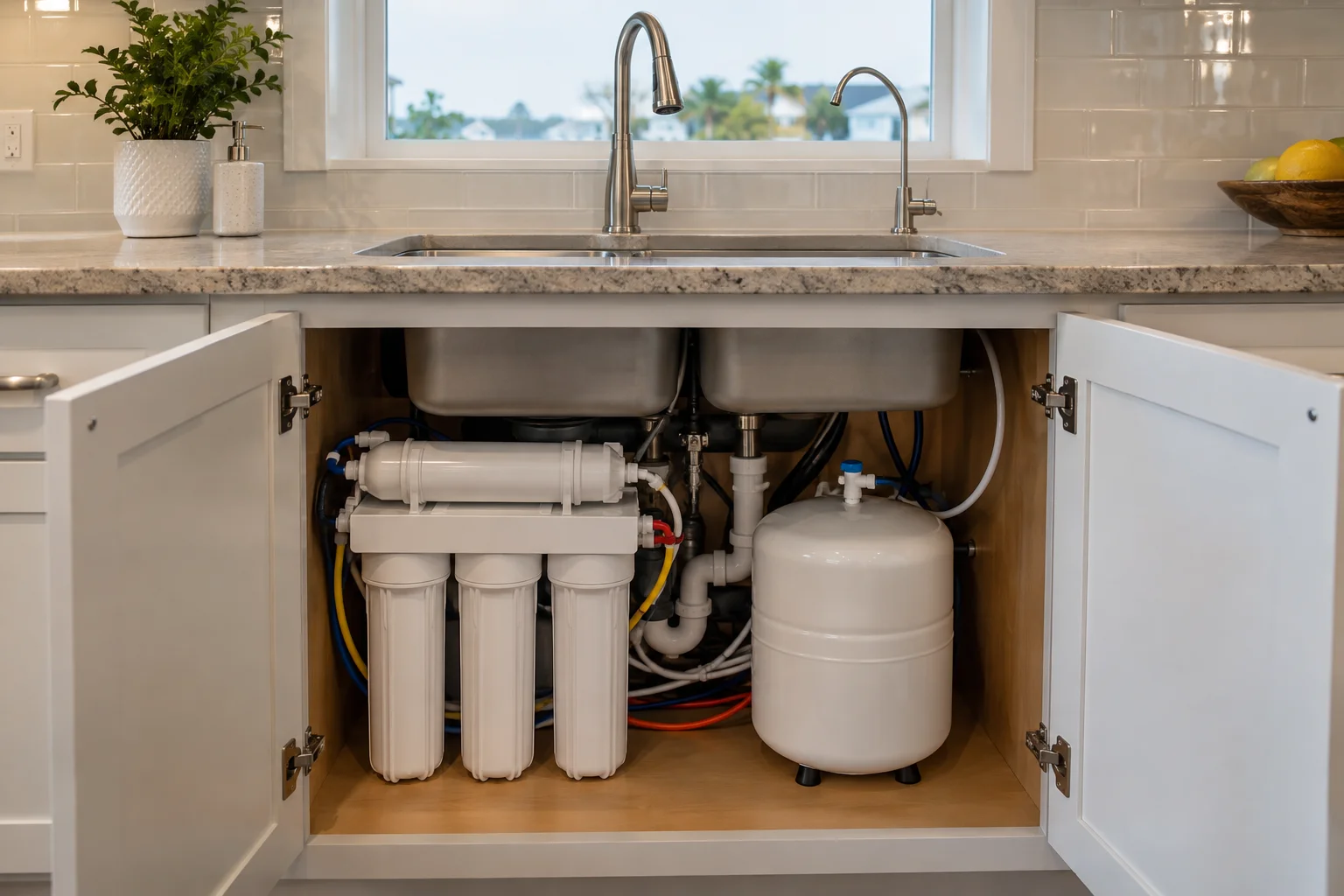
- Reverse osmosis at the kitchen for drinking and cooking
- Water softening to address scale, soap performance, and dry skin
- Whole home water filtration to reduce sediment and help protect plumbing and appliances
This layered approach is especially useful when you see both taste concerns and fixture scale. It is also a smart fit for families who want better water in every routine, from morning coffee to evening showers.
When to call A Superior Mechanical for RO service
If you are experiencing any of the issues below, it is time to schedule service:
- Chlorine taste in water or metallic or unpleasant taste
- Cloudy ice cubes that do not improve
- Visible sediment, discoloration, or persistent odor concerns
- RO water quality changes after seasonal breaks
- Scale buildup on faucets and showerheads that keeps worsening
- Soap does not lather and rinse well, along with dry skin or dull hair
You can learn about RO options and service coverage for your area by visiting /service-areas/okaloosa-county/bluewater-bay/reverse-osmosis-systems-bwbfl. For broader options across your home, explore /water-filtration-ro-water-softeners and the local service overview at /service-areas/okaloosa-county/bluewater-bay.
If you are building a full water protection plan, you may also find it helpful to read Cleaner Water, Fewer Plumbing Surprises: A Bluewater Bay Guide to Home Purification and Staying Ahead of Plumbing Problems in Bluewater Bay Homes. For homeowners thinking about how water quality ties into a reliable home system, Smart Plumbing Habits for Reverse Osmosis Systems in 30A Homes offers practical seasonal habits you can adapt.
Bringing it together for everyday life in Bluewater Bay
Seasonal weather in Bluewater Bay is beautiful, but it changes how people live in their homes. When kids are home more often, when guests arrive, and when routines shift between summer and winter, your water system experiences different demands. Reverse osmosis can still deliver great drinking water, but only when it is maintained and matched to your household and your local water conditions.
For many families, the “best water” feeling comes from a combination of solutions. RO improves the taste of drinking water, helps coffee and cooking water taste better, and can reduce cloudy ice. Water softening and whole home water filtration address the hard water problems you see on glass and fixtures, and help bathing and laundry feel better.
If you want clearer ice, better coffee, fewer taste complaints, and less scale buildup, start by paying attention to what changes across the year. Then get your system inspected so your RO output stays consistent, even when the seasons do.
Find Reverse Osmosis Systems in Bluewater Bay, FL
If you need Reverse Osmosis Systems in Bluewater Bay, FL, visit our local service page or contact A Superior Mechanical today.
For a broader look at whole-home water filtration, reverse osmosis, and water softener options, visit our water filtration, RO, and water softener page.
Map of Bluewater Bay, FL
Frequently Asked Questions
Why does my reverse osmosis water taste different in summer versus winter?
Seasonal use changes how often the RO system refills the tank, how long water sits, and how water temperature affects production. If taste shifts along with cloudy ice, it is often related to filter or membrane performance and should be inspected.
Can reverse osmosis fix hard water spots on glass and scale on faucets?
RO typically targets drinking water at the kitchen. Hard water spots on glass and scale buildup on faucets and showerheads usually require hard water treatment for the rest of the home, such as water softening and sometimes whole home water filtration.
What causes cloudy ice cubes even when I have RO?
Cloudy ice can be caused by dissolved minerals, reduced RO performance, or upstream filtration issues. If the cloudiness is consistent, the pre-filters, carbon stage, and membrane should be evaluated.
How often should RO filters and membranes be replaced in Bluewater Bay?
Replacement timing depends on usage volume, incoming water conditions, and system design. Seasonal demand can accelerate wear. A professional can test performance and recommend a schedule tailored to your household.
Do I need whole home water filtration if I already have reverse osmosis?
Many homeowners choose whole home water filtration to reduce sediment and improve water quality throughout the plumbing. This can help protect appliances and improve the overall water experience, especially when you also deal with odor, discoloration, or fixture scale.
Related Articles
Photo Gallery